Storms can trigger panic in dogs. Get practical, vet-informed steps to help: create a safe storm spot, use white noise, try enrichment and pressure wraps, pr...
Article
•
Designer Mixes
How to Calm a Dog During a Storm

Shari Shidate
Designer Mixes contributor
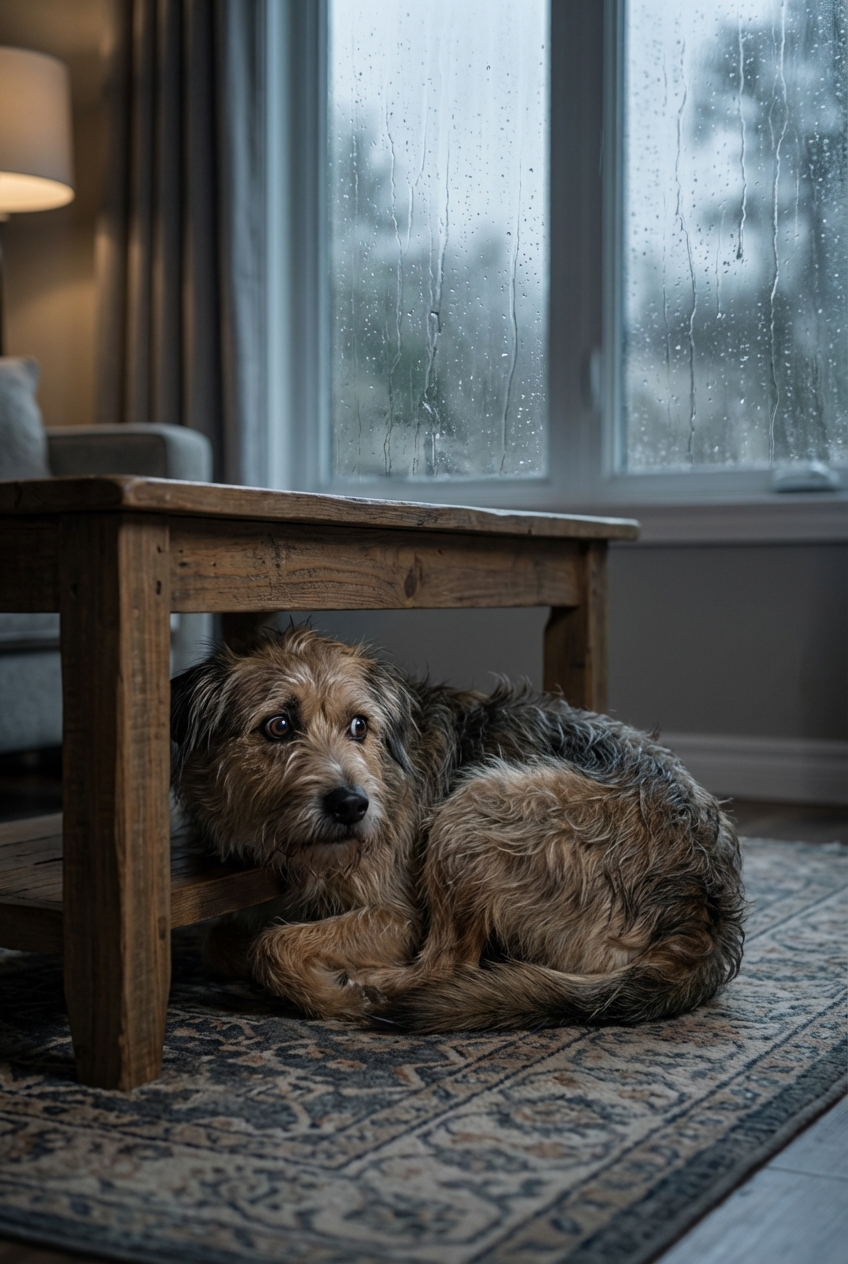
Storm season can be rough on dogs. Thunder, lightning, wind, pressure changes, and even the smell of rain can trigger real fear. If your dog is pacing, panting, shaking, hiding, or trying to escape, they are not being dramatic. Their nervous system is in overdrive.
The good news is you can make storms more manageable with a few research-informed tools that are commonly recommended by veterinarians and qualified trainers. Start with safety and comfort today, then build longer-term confidence over time.
Why storms scare dogs
Storm anxiety is common, and it can be caused by more than noise alone. Dogs may react to:
- Sudden loud sounds like thunder or hail.
- Vibrations that travel through floors and walls.
- Flashes of light from lightning.
- Barometric pressure changes that some dogs seem to notice before we do.
- Static electricity that may be uncomfortable for some dogs, especially long-coated dogs. Evidence is limited, but it is a commonly reported factor.
- Learned associations from a previous frightening storm experience.
Storm fear can also intensify over time if a dog repeatedly panics without relief. That is why early support matters.
First priority: keep your dog safe
Before you focus on “calm,” focus on preventing injury and escape. A panicked dog can break nails, chew doors, jump fences, or run through a screen.
- Bring dogs indoors early if storms are predicted.
- Close windows, blinds, and curtains to reduce sound and lightning flashes.
- Secure doors and gates, and consider a baby gate to limit access to risky areas.
- Update ID: collar tag and microchip info should be current in case your dog bolts.
- Crate safety: if your dog crates happily, it can help. If they panic in a crate, do not force it, as it can cause self-injury.
Set up a storm safe space
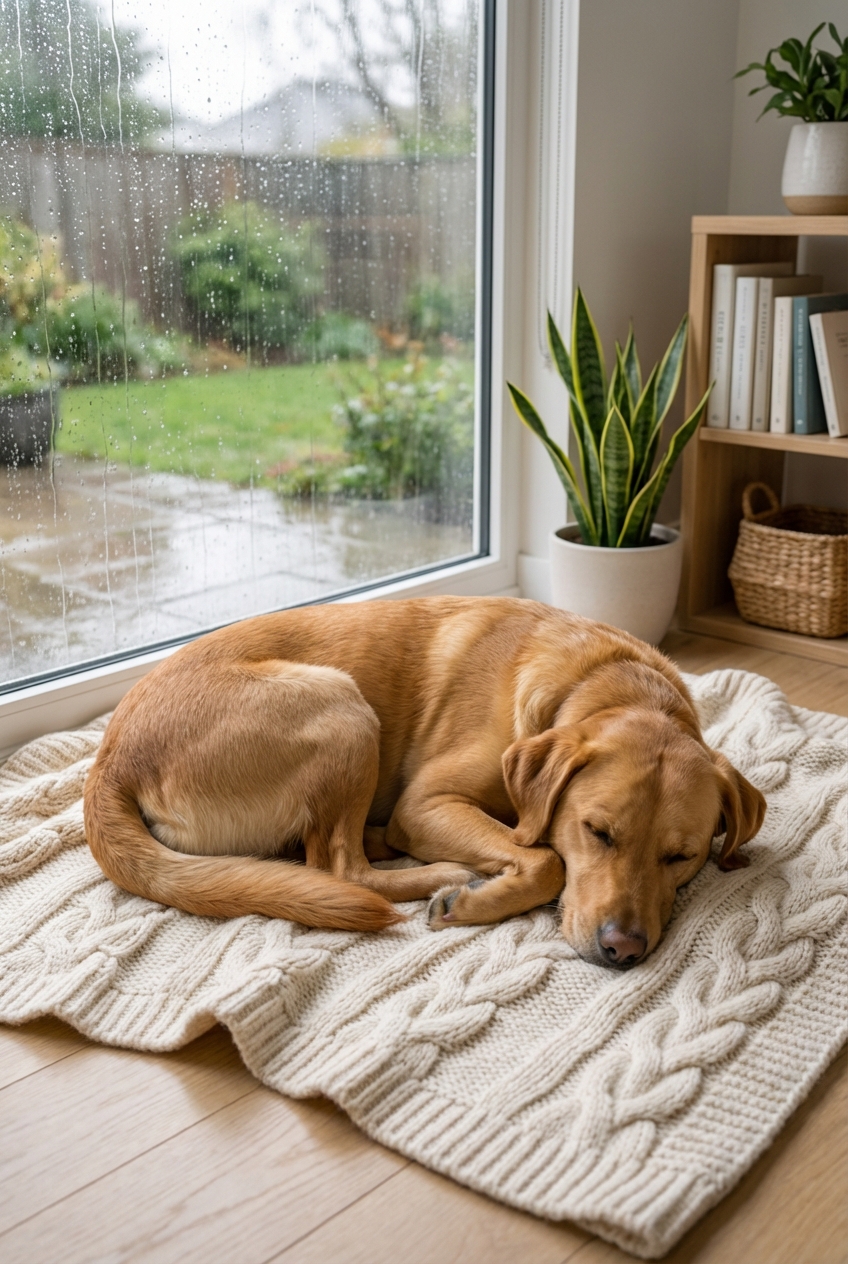
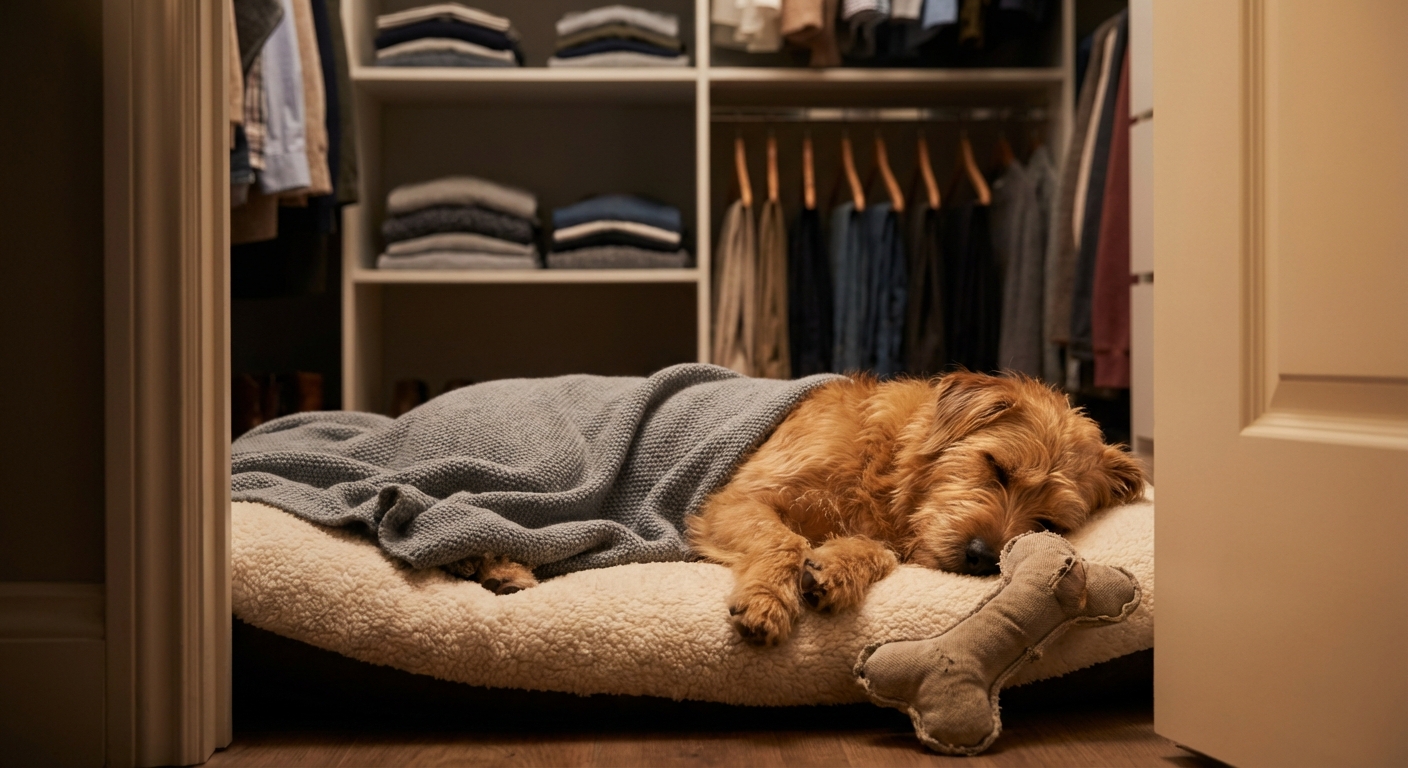
A dedicated safe space is often a helpful, low-cost first step for reducing anxiety. Pick a spot where sound is naturally dampened and where your dog can choose to settle.
Best locations
- Interior closet (door cracked for airflow and never latched or locked)
- Bathroom
- Laundry room
- Basement (if you have one and it is safe)
Make it comforting
- Soft bedding and a familiar blanket that smells like home
- Dim lighting or no lighting, whichever your dog prefers
- Water bowl nearby
- A “job” like a stuffed food toy or chew (more on that below)
Safety check: Remove hazards in the safe space, including cleaning chemicals, laundry pods, sharp tools, and small items that can be swallowed. Make sure the area has good ventilation and a comfortable temperature.
Use sound and light
You usually cannot eliminate thunder, but you can reduce how intense it feels for your dog.
- White noise: fan, air purifier, or a white noise track.
- Music: calm, steady music may help mask sudden peaks of thunder.
- TV: a normal speaking show can provide predictable background sound.
Keep volume moderate. The goal is steady coverage, not blasting sound.
Calming enrichment
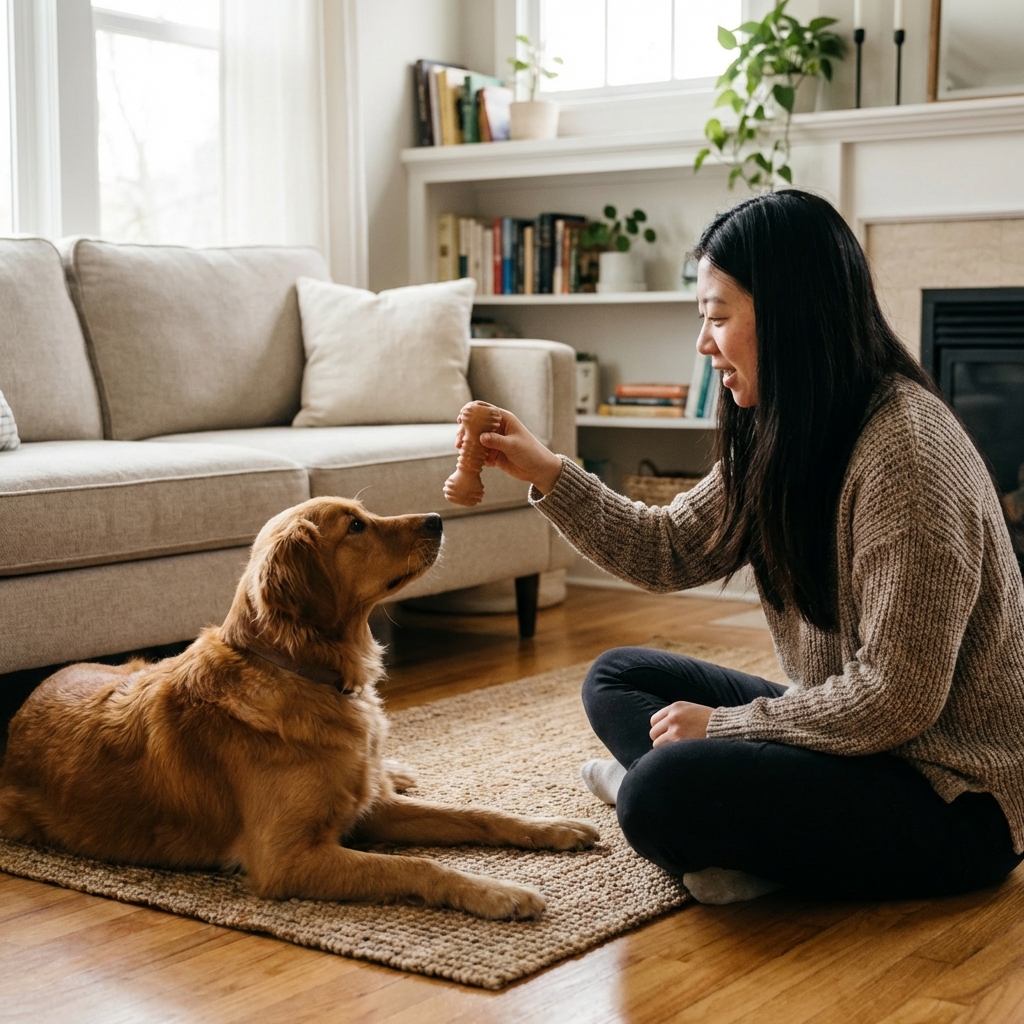
Many dogs do better when they have something safe to focus on. Licking, chewing, and sniffing are naturally soothing behaviors.
Try these options
- Stuffed food toy with wet food or a small amount of plain yogurt, then freeze it for longer-lasting licking.
- Lick mat with a thin smear of peanut butter (xylitol-free), pumpkin, or canned dog food.
- Long-lasting chew that your dog already tolerates well.
- Scatter feeding kibble or treats in a snuffle mat to encourage sniffing.
Safety notes: Use chews and toys you have already tested when your dog is calm, and supervise chewing. Keep portions small and skip high-fat options if your dog has had pancreatitis or a sensitive stomach. Yogurt does not agree with every dog, so avoid it if your dog is lactose intolerant. If your dog is too panicked to chew or lick safely, skip enrichment and focus on comfort and management.
Gentle pressure therapy
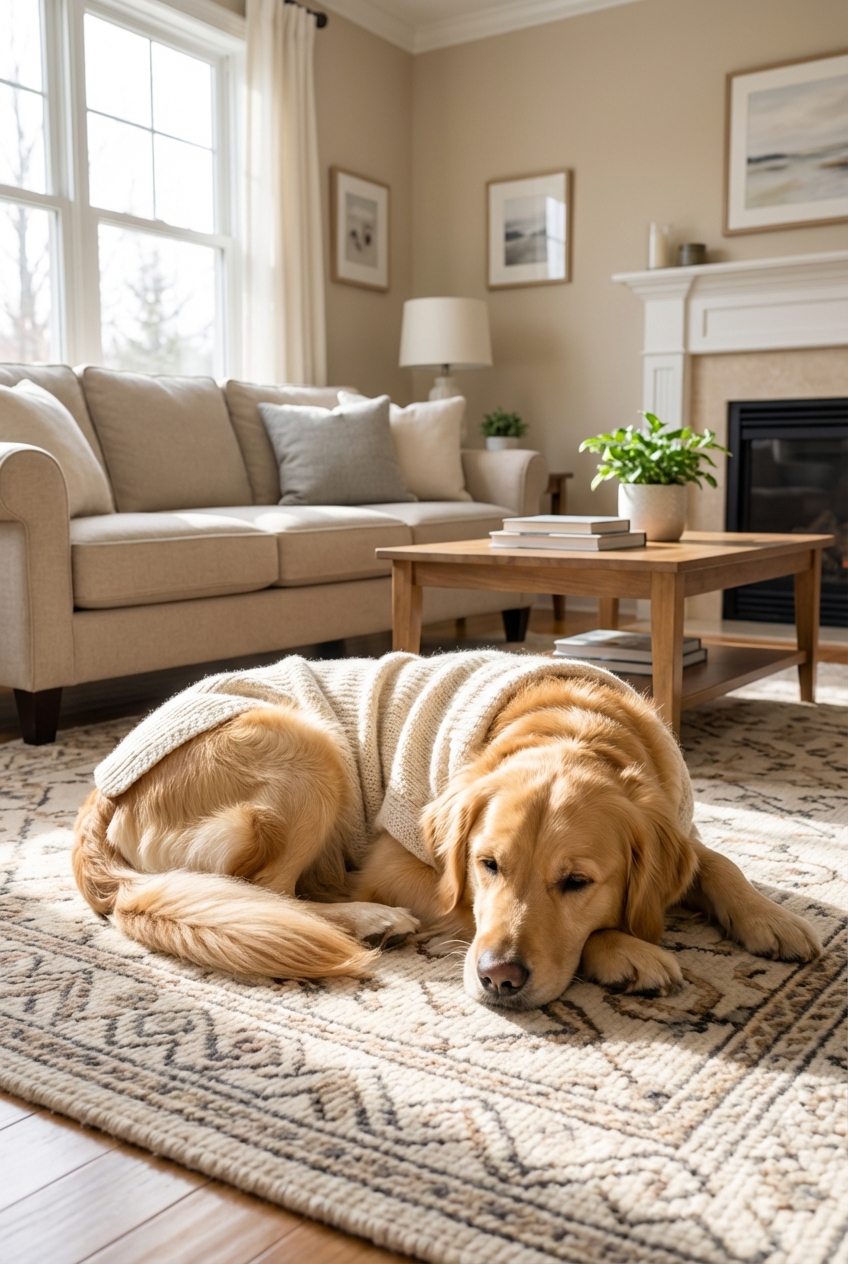
Some dogs respond well to steady, gentle pressure, similar to swaddling a baby. This can be done with:
- A properly fitted calming wrap (ThunderShirt-style)
- A snug T-shirt (a simple at-home option)
Put it on before the storm starts if possible. The goal is for your dog to associate it with comfort, not with panic.
In the moment
When thunder hits, your calm energy matters. Dogs take cues from us, and predictable routines help the brain feel safer.
- Move to the safe space with your dog, or invite them there.
- Reduce triggers: close curtains, turn on white noise, keep lighting steady.
- Stay neutral and steady: speak softly, move slowly, avoid frantic fussing.
- Offer a calming activity like licking or sniffing if your dog can engage.
- Allow hiding if your dog chooses it. Do not drag them out.
- Comfort is okay: petting and reassurance do not “reward fear.” Aim for calm, steady support and avoid accidentally escalating arousal with fast, repetitive soothing or excited baby talk.
What not to do
These common approaches can make storm anxiety worse or create safety risks.
- Do not punish barking, trembling, accidents, or destructiveness. Fear is not disobedience.
- Do not force exposure like taking your dog outside to “see there is nothing wrong.”
- Do not trap a panicking dog in a crate if they are trying to break out.
- Do not use essential oils on or around pets without veterinary guidance. Some oils can irritate airways and some are toxic to cats and dogs.
- Be cautious with OTC calming products: many are poorly studied. If you want to try one, ask your vet first.
Train between storms
Long-term improvement often comes from desensitization and counterconditioning. This means pairing a low-level storm sound with something wonderful, then slowly increasing intensity as your dog stays relaxed.
Simple at-home plan
- Find a high-value reward (tiny chicken, cheese, or a favorite toy).
- Play a storm soundtrack at very low volume.
- Feed treats steadily while the sound plays.
- Stop the treats when the sound stops.
- Repeat in short sessions, 3 to 5 minutes, a few times per week.
If your dog shows stress (lip licking, panting, leaving, tucked tail), the volume is too high. Back up and go slower. Progress is built on relaxed reps, not endurance.
Extra supports
Some dogs benefit from additional tools alongside training and management.
- Pheromone support: dog-appeasing pheromone products (like Adaptil) may help some dogs and are generally low risk.
- Household planning: in multi-pet homes, separate pets if one dog’s panic ramps up the others. Give each pet access to a safe option.
- Special cases: puppies and senior dogs may need more help. Dogs with hearing loss can still be storm-sensitive due to vibrations and pressure changes.
When to call your vet
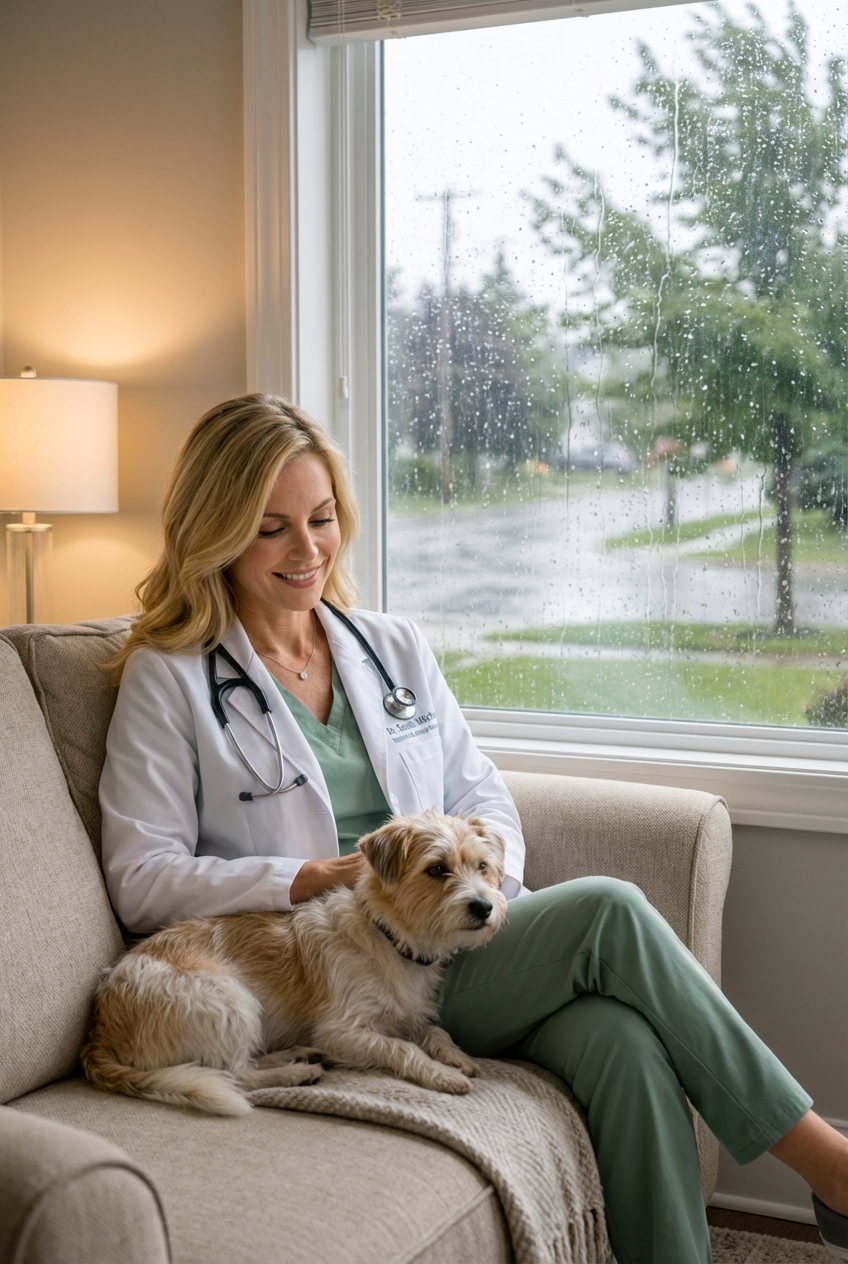
Some dogs need more than home strategies, and that is completely okay. Talk to your veterinarian if your dog:
- Tries to escape, breaks doors or crates, or injures themselves
- Stops eating for long periods during storms
- Has diarrhea or repeated accidents with every storm
- Cannot settle even hours after the storm ends
- Has anxiety that is worsening each season
Veterinarians can discuss behavior medications (short-acting for storms or daily options), supplements with evidence behind them, and referrals to a qualified trainer or a board-certified veterinary behaviorist for severe cases. If medication is part of the plan, ask your vet about timing. Many options work best when given before panic peaks, not after your dog is already in full distress. For many dogs, the best results come from combining training plus medical support.
Storm anxiety is not a character flaw. It is a nervous system response. Your goal is safety first, then comfort, then confidence built over time.
Quick checklist
- Safe space ready (bedding, water, familiar items, hazards removed)
- White noise or music queued up
- Calming wrap or T-shirt on early (if helpful for your dog)
- High-value treats and a lick option available (small portions)
- Doors, windows, and gates secured
- Vet plan on hand if your dog needs medication support
With consistency, most dogs improve. Start small, stay gentle, and celebrate every calmer minute your dog earns.