Your cat in heat? Learn the most common signs, how long estrus lasts, safe ways to calm her and prevent escape, what not to do, when to call your vet, and wh...
Article
•
Designer Mixes
How to Calm a Cat in Heat Without Breeding

Shari Shidate
Designer Mixes contributor
If you have a female cat in heat, you already know how intense it can feel: loud vocalizing, restless pacing, rolling, and that “please let me out” urgency that can break your heart (and your sleep). The good news is that there are kind, practical ways to help her feel calmer and safer without breeding, and without doing anything that could put her health at risk.
As a veterinary assistant, I want to start with one important truth: you usually cannot fully “stop” a heat cycle at home. Heat is driven by hormones, and the cycle runs its course. In some cases, a veterinarian can medically suppress estrus, but those medications can come with meaningful risks and are not a DIY option. What we can do at home is reduce stress, prevent escape, and support comfort until it passes, then make a long-term plan so neither of you has to go through it again.
How long does it last? Many cats stay in heat for about 3 to 7 days, but it can be shorter or longer. If she does not mate, heats can return every 2 to 3 weeks during breeding season.
Heat signs (what is normal)
Most cats do not bleed like dogs. Instead, you will usually see behavior changes. Common signs include:
- Very loud yowling, especially at night
- Increased affection, rubbing, and head-butting
- Rolling and crouching with the rear end elevated
- Restlessness, pacing, and decreased appetite
- Trying to escape through doors, windows, or screens
- Spraying urine (some females do this too)
Cats are seasonally polyestrous, meaning they cycle more when days are longer. Indoor cats exposed to long daylight hours or household lighting can cycle longer into the year.
Important: Spotting is uncommon. If you see blood, pus-like discharge, or a bad smell, call your veterinarian.
First priority: prevent pregnancy
A cat in heat can become surprisingly determined and fast. Before focusing on soothing techniques, lock in your safety plan.
- Keep her strictly indoors. Skip porch time, open-window lounging, and supervised yard time.
- Check screens and doors. Repair loose screens and add a reminder sign for family members.
- Separate from intact males. If there is an unneutered male anywhere nearby, assume he can smell her.
- Use a double-barrier entry. If possible, keep her in a room with a closed door before opening exterior doors.
Mating can happen quickly, and cats can slip through surprisingly small opportunities. Even a brief escape can lead to pregnancy, injury, or getting lost.
How to calm her at home
These strategies are safe and low-stress, and they tend to work best in combination. Think of it as a simple routine you repeat through the day.
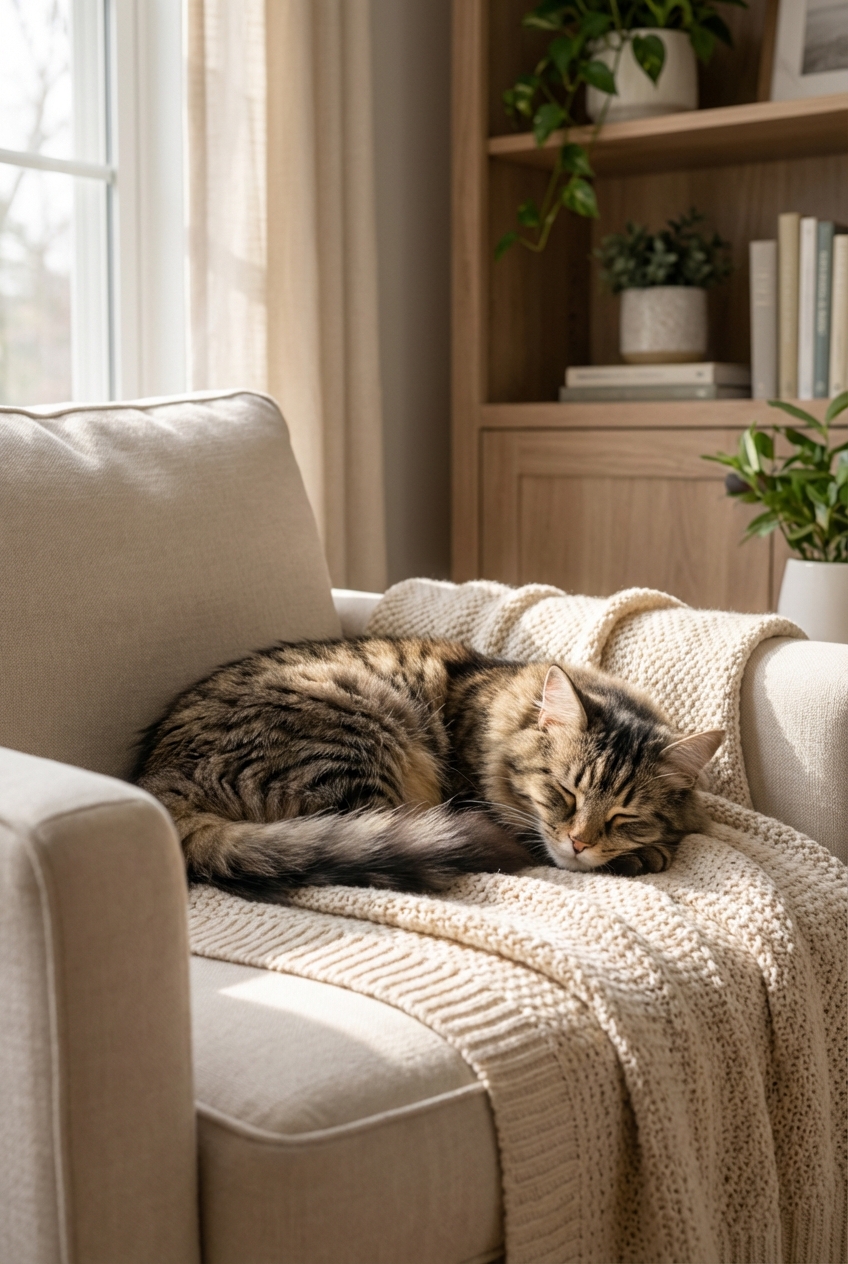
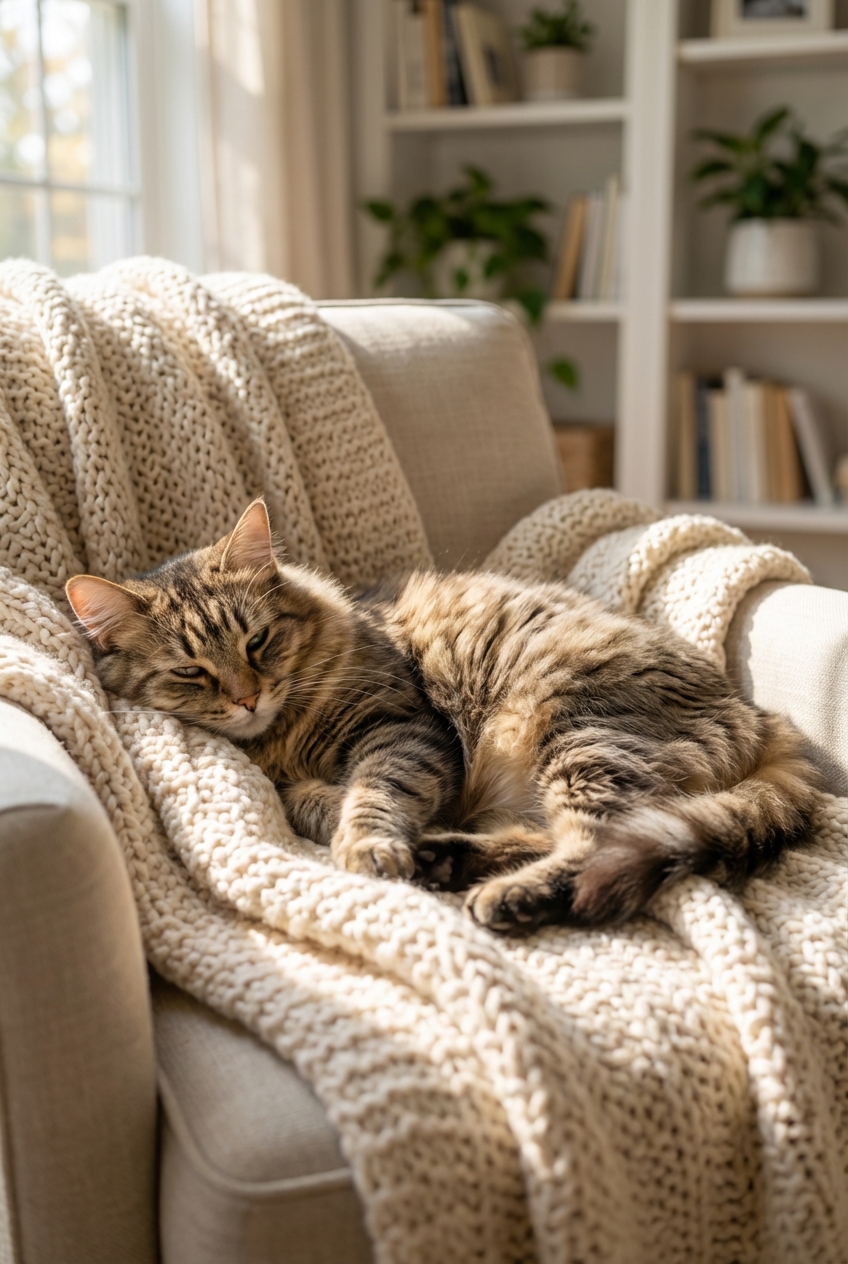
1) Set up a quiet comfort zone
Many cats settle better when they have a predictable, cozy space away from stimulation.
- Choose a quiet room with dim lighting.
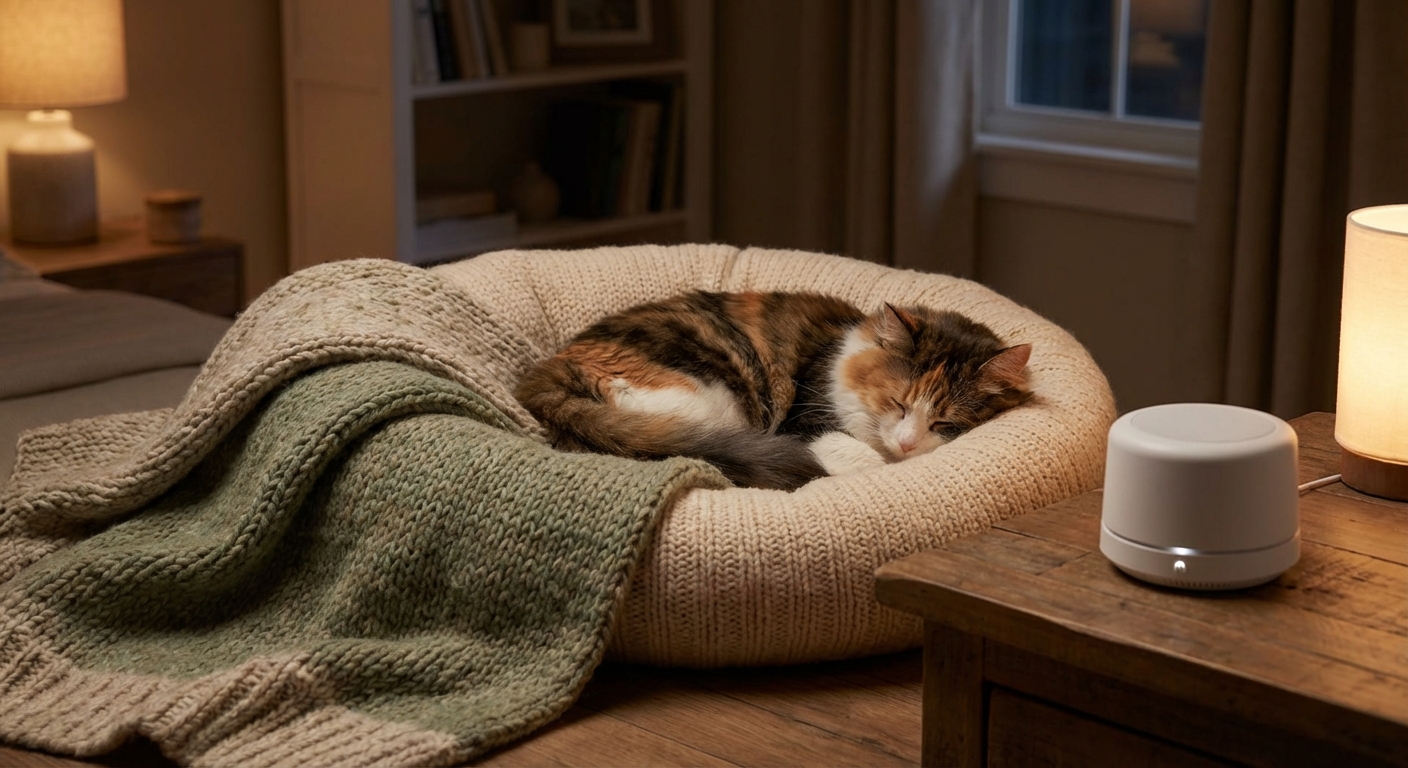
- Offer a covered bed or box with a soft blanket.
- Add white noise (a fan or sound machine) to reduce outside triggers.
2) Use feline pheromones
Synthetic feline facial pheromones (often sold as plug-in diffusers or sprays) can help some cats feel more secure. They do not sedate, but they can take the edge off stress-driven behavior.
- Plug-ins work best when used continuously in the main area she stays in.
- Sprays can be used on bedding (let it dry first).
If you try pheromones, give it a few days to see the full effect.
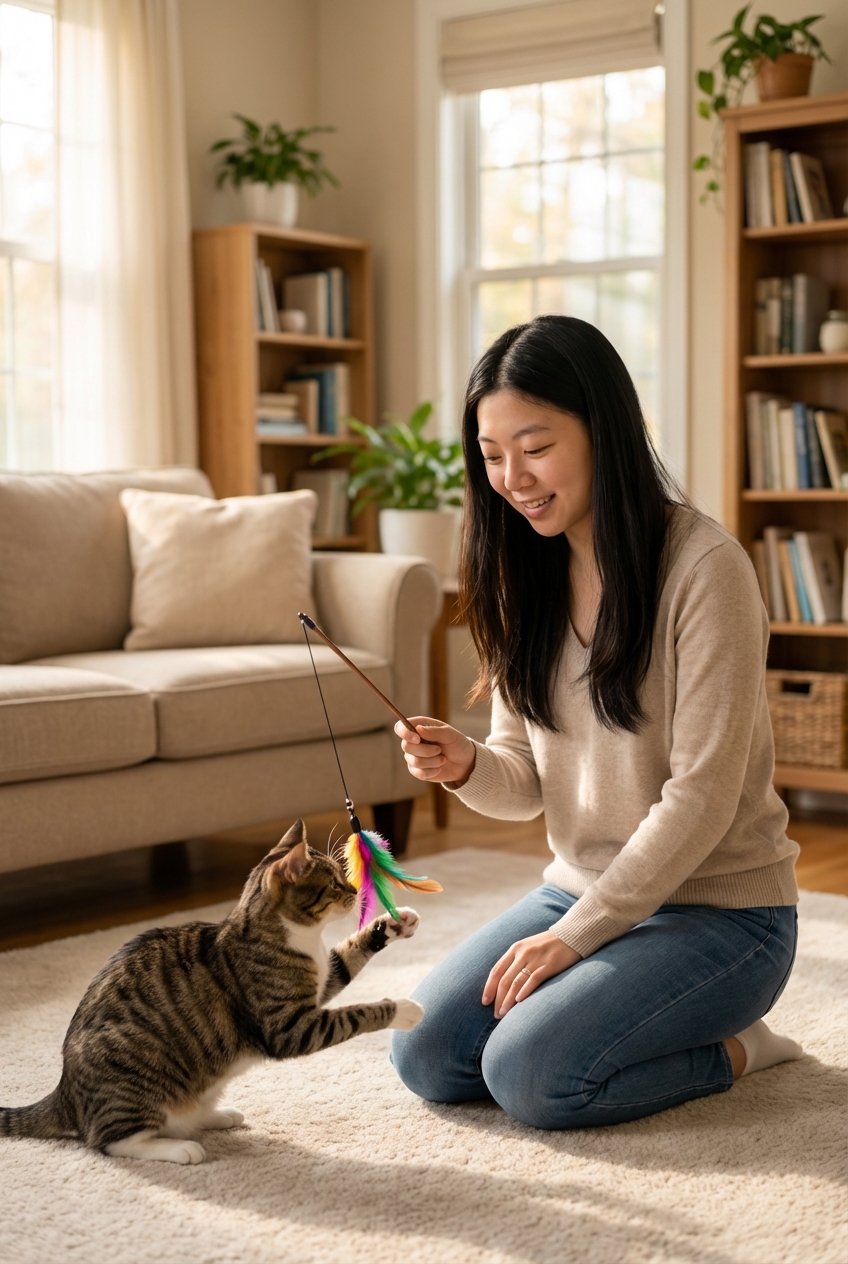
3) Structured play sessions
Heat can look like agitation, and that energy needs somewhere to go. In clinic, we often see cats settle after predictable bursts of play followed by food and rest.
- Do two to four short play sessions daily (5 to 10 minutes).
- Use wand toys, feather toys, or a laser pointer followed by a toy she can “catch.”
- If you use a laser, never shine it in eyes and always end with a physical catch toy.
- End with a small meal or treat to encourage the natural “hunt, eat, groom, sleep” rhythm.
4) Gentle attention (on her terms)
Some cats want constant affection in heat, and some become overstimulated quickly.
- Pet her where she enjoys it most, usually cheeks and head.
- If she becomes frantic when you touch her back or tail area, stop and redirect to play or a treat puzzle.
- Keep interactions calm and predictable.
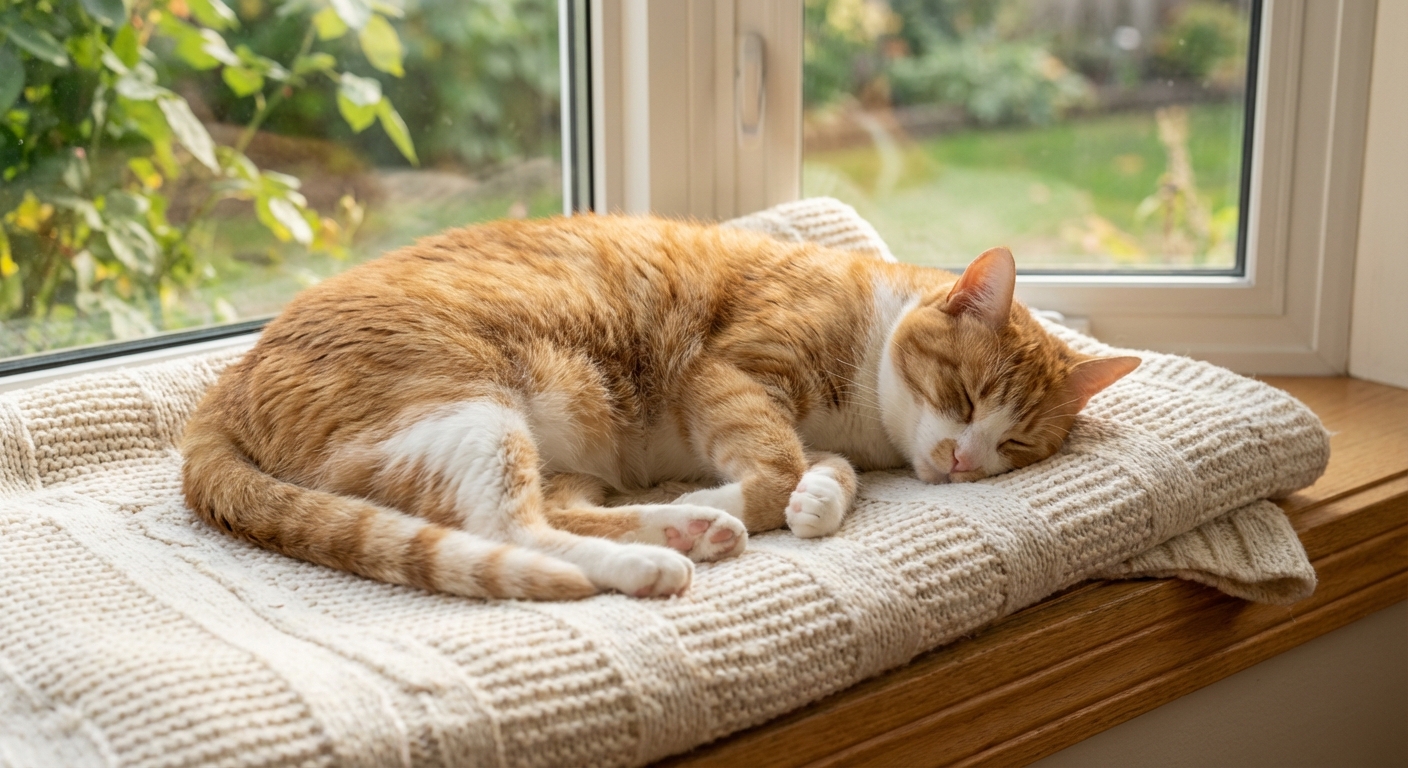
5) Try warmth
Warmth can be soothing for many cats.
- Offer a heating pad made for pets on a low setting, or a warm blanket.
- Always give her room to move away so she can regulate her comfort.
6) Enrichment to redirect the urge
Vocalizing and restlessness are heavily hormone-driven, and they can also be amplified by boredom or stimulation outside. Enrichment gives her something else to focus on.
- Treat puzzles or a snuffle mat
- Food “treasure hunts” (small portions hidden around the room)
- Cat-safe climbing spaces and window perches (with secure screens)
7) Reduce outside triggers
Sometimes the biggest “on switch” is an outdoor tom cat you cannot even see.
- Keep windows closed or securely screened, and block access to flimsy screens.
- Close curtains at night if she fixates on outdoor movement.
- Clean areas near doors and windows where outdoor cats may spray, and use an enzymatic cleaner if odor gets inside.
8) Litter box support
Heat can increase marking behavior and cause changes in litter box habits.
- Scoop at least once daily, more if she is spraying.
- Add an extra box in a quiet area.
- Clean accidents with an enzymatic cleaner to fully remove odor.
What not to do
When you are tired and your cat is crying, it is tempting to try anything. A few common ideas can backfire or be unsafe:
- Do not give human medications (including pain relievers or sleep aids). Many are toxic to cats.
- Do not use essential oils to “calm” her. Several are dangerous to cats, especially when diffused.
- Do not punish vocalizing. It increases stress and can worsen the behavior.
- Do not attempt hormonal products without a veterinarian. Hormone manipulation can carry serious risks.
When to call your vet
Most heat behaviors are noisy and stressful but not medically dangerous. Call your veterinarian promptly if you notice:
- Any blood, pus-like discharge, or a foul odor
- Lethargy, fever, vomiting, or not eating for more than 24 hours
- A swollen belly, sudden weight gain, or concern for pregnancy
- Straining to urinate, blood in urine, or frequent trips to the litter box with little output
These signs can indicate problems like infection or urinary issues that need treatment.
Long-term answer: spaying
If you want to calm a cat in heat without breeding, the most reliable, evidence-based solution is spaying. Spaying prevents future heat cycles and eliminates the risk of accidental litters. It also eliminates pyometra (a life-threatening uterine infection) and reduces the risk of mammary tumors, especially when done before the first heat or early in life.
If your cat is currently in heat, ask your clinic about timing. Many veterinarians prefer to spay when she is not actively in heat because blood supply to the reproductive tract can be increased. Some clinics will spay in heat when needed, but it may involve higher bleeding risk, different scheduling, or additional cost. Your veterinarian can advise what is safest for your cat.
If you are overwhelmed right now, you are not failing. Heat is hormonally driven, and it is intense. Focus on safety, comfort, and getting through this cycle, then schedule the spay consult so this becomes a one-time chapter in your cat’s story.
Quick checklist
- Keep her indoors with escape-proof screens and doors
- Set up a quiet room with cozy bedding and white noise
- Use a pheromone diffuser or spray
- Do short play sessions and end with a snack
- Offer a warm, safe resting spot
- Add enrichment, reduce outside triggers, and keep the litter box extra clean
- Call your vet if you see blood or discharge, illness signs, or urinary trouble
- Plan for spaying to prevent repeat cycles