Periodontal disease is common and often hidden. Learn the 4 stages, at-home warning signs, how dental cleanings work, typical costs, and prevention steps to ...
Article
•
Designer Mixes
How to Brush Your Dog’s Teeth

Shari Shidate
Designer Mixes contributor
As a veterinary assistant here in Frisco, Texas, I can tell you one thing I see every day: dental disease is incredibly common. The good news is that with consistent home care and regular veterinary checkups, you can often prevent or significantly reduce plaque and gum disease, and slow the progression that leads to painful periodontal problems.
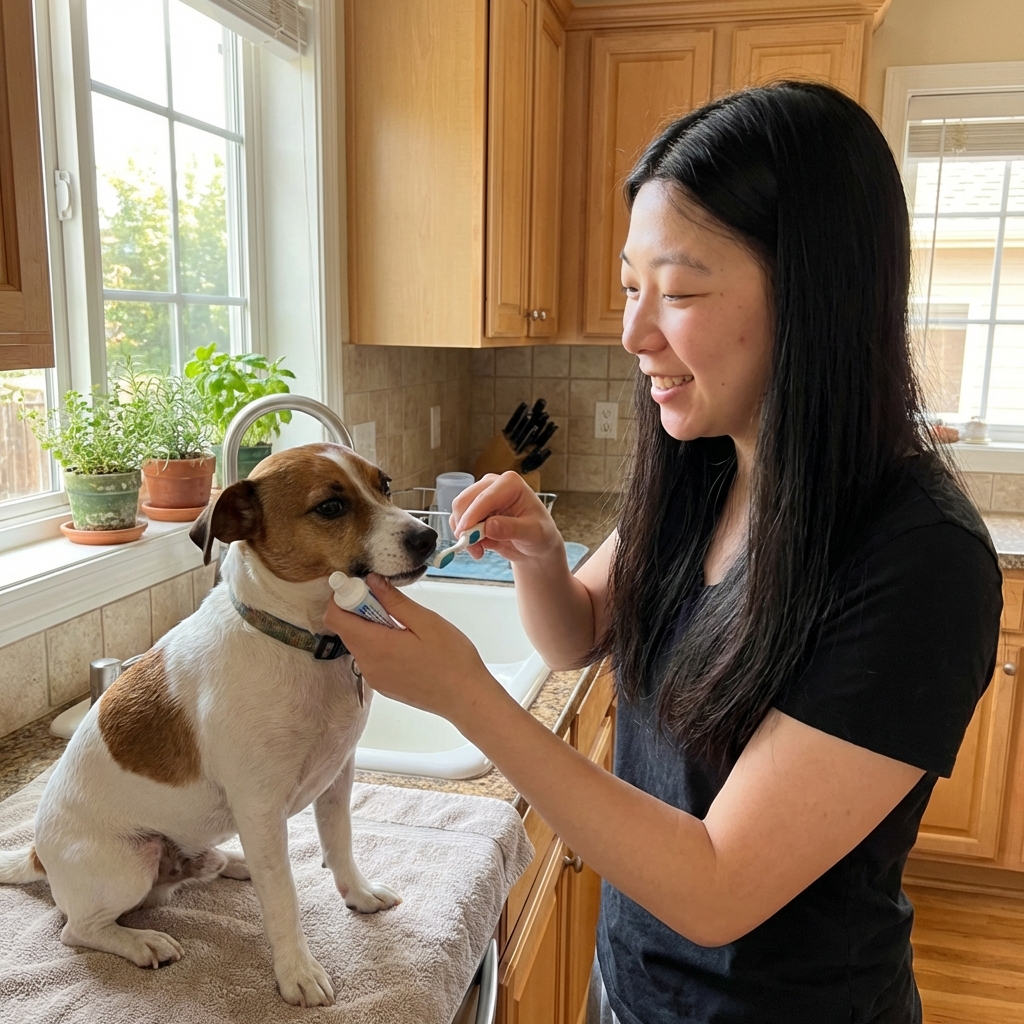
Brushing your dog’s teeth is one of the most effective at-home steps you can take to reduce plaque, slow tartar buildup, and help protect the gums. If brushing feels intimidating, you are not alone. The secret is to start small, keep it positive, and build a routine your dog can tolerate. Consistency matters more than perfection.
Quick safety note: If your dog is growling, snapping, or panicking, stop the session. Ask your veterinarian for help, and consider working with a qualified trainer so you can keep everyone safe while you build comfort.
Why brushing matters
Plaque is a soft film of bacteria that forms on teeth daily. If plaque is not removed, it can harden into tartar, which is much harder to manage at home. Over time, bacteria and inflammation can lead to gingivitis and periodontal disease, which can cause pain, bad breath, bleeding gums, and tooth loss.
Many dogs keep eating even when their mouths hurt, so dental pain can be easy to miss. Preventive brushing helps you catch changes early and can reduce the need for more frequent dental procedures.
It also helps to know that dental risk is not equal for every dog. Small breeds, brachycephalic dogs, dogs with crowded teeth, and older dogs often need earlier and more frequent dental support even with great home care.
What you need
Use these supplies
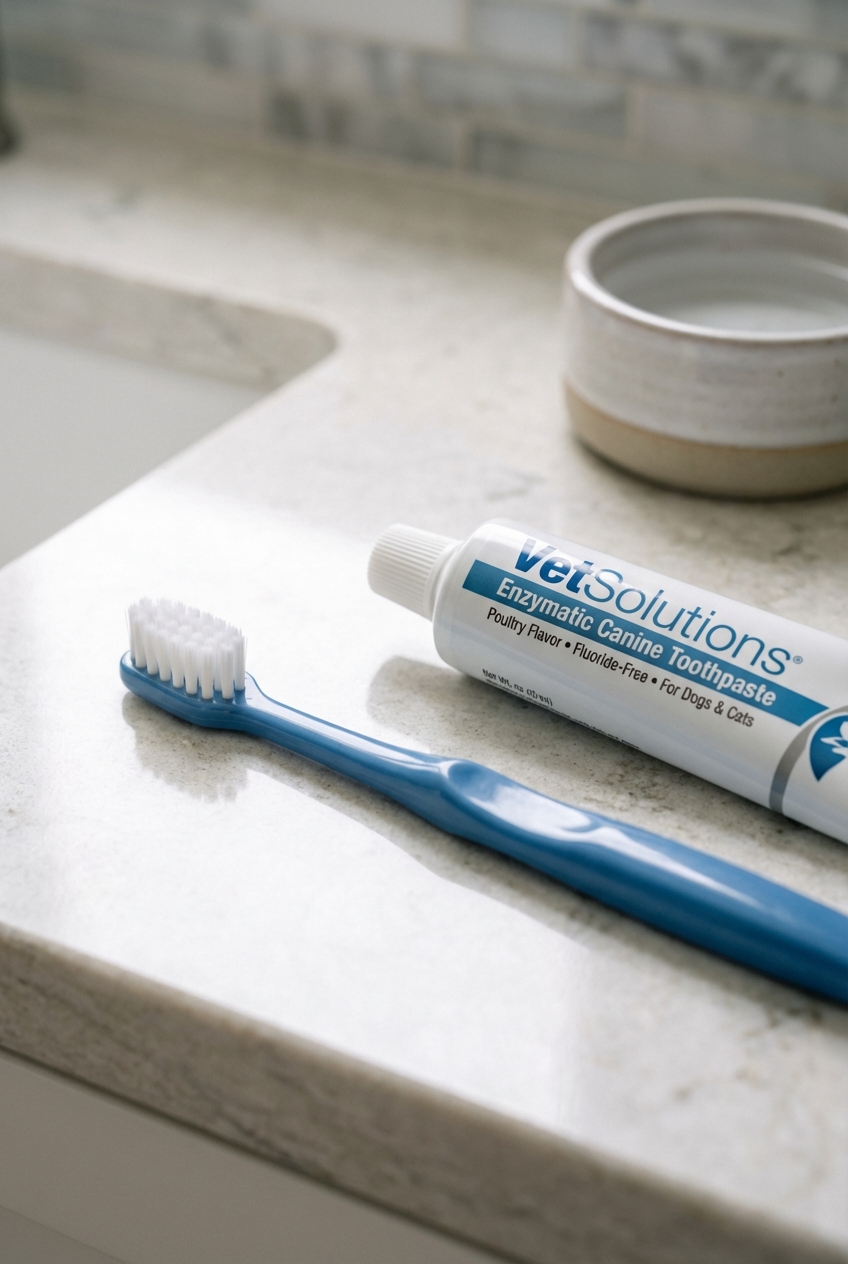
- Dog toothbrush (soft bristles). A finger brush can help beginners, but a small brush head often cleans better once your dog accepts it.
- Veterinary toothpaste in a pet-safe flavor. These are designed to be swallowed in small amounts.
- High-value rewards (tiny treats) for each step, especially during training.
- Good lighting so you can see the gumline.
Avoid these common mistakes
- Do not use human toothpaste. It is not formulated to be swallowed and can cause stomach upset. Some products contain xylitol, which is highly toxic to dogs, and many contain foaming agents and fluoride levels meant for spitting, not swallowing.
- Do not scrape tartar with tools at home. You can injure gums or crack a tooth. Leave scaling tools to veterinary professionals.
- Do not force the mouth open. Restraint can create fear and make brushing harder long-term.
How to brush your dog’s teeth
Aim for the outer surfaces of the teeth and the gumline. This is where plaque tends to build up fastest, and it is often all you can comfortably reach at home.
- Pick the right moment. Choose a calm time, like after a walk or play session.
- Start with a taste test. Let your dog lick a tiny amount of dog toothpaste from your finger, then reward.
- Touch and lift, then reward. Gently lift the lip, touch a tooth for one second, reward, and stop. Repeat.
- Introduce the brush slowly. Let your dog sniff the toothbrush, then touch it to a few teeth, reward, and end on a win.
- Brush in small circles. Use gentle circular motions along the gumline. Start with 5 to 10 seconds.
- Build up gradually. Work toward 30 to 60 seconds per side. Most dogs do best with short sessions.
How often to brush
Daily is ideal because plaque forms every day. If daily is not realistic, aim for at least 3 to 4 times per week. Even that can make a noticeable difference in breath and gum health.
If you are restarting after a break, treat it like training again. Go back to shorter sessions and build up.
Training plan for dogs who hate it
If your dog is sensitive about their mouth, you can still make progress. Think in weeks, not days. Keep sessions short, end on a win, and do not push through fear.
Week 1: Lip lifts
- Lift the lip for 1 to 2 seconds.
- Reward immediately.
- Repeat once or twice a day, then stop.
Week 2: Finger brushing
- Wrap gauze around your finger or use a finger brush.
- Rub the outer teeth for 5 seconds total.
- Reward and end.
Week 3: Toothbrush
- Brush 2 to 3 teeth per side.
- Keep sessions under 20 seconds at first.
- Increase duration slowly.
Progress tip: If your dog pulls away, you went too fast. Back up one step, make it easier, and rebuild confidence.
Technique tips
- Angle the bristles toward the gumline at about 45 degrees. That is where plaque hides.
- Focus on the back molars. These teeth often collect heavy tartar.
- Use gentle pressure. Think massage, not scrubbing a pan.
- Keep it short and positive. A 30-second brush done happily beats a 3-minute wrestling match.
- Try different toothpaste flavors. Poultry or peanut butter flavors can be easier for picky pups.
Signs of dental disease
If you notice any of the symptoms below, schedule a veterinary exam. Brushing is great prevention, but it cannot reverse advanced disease under the gumline.
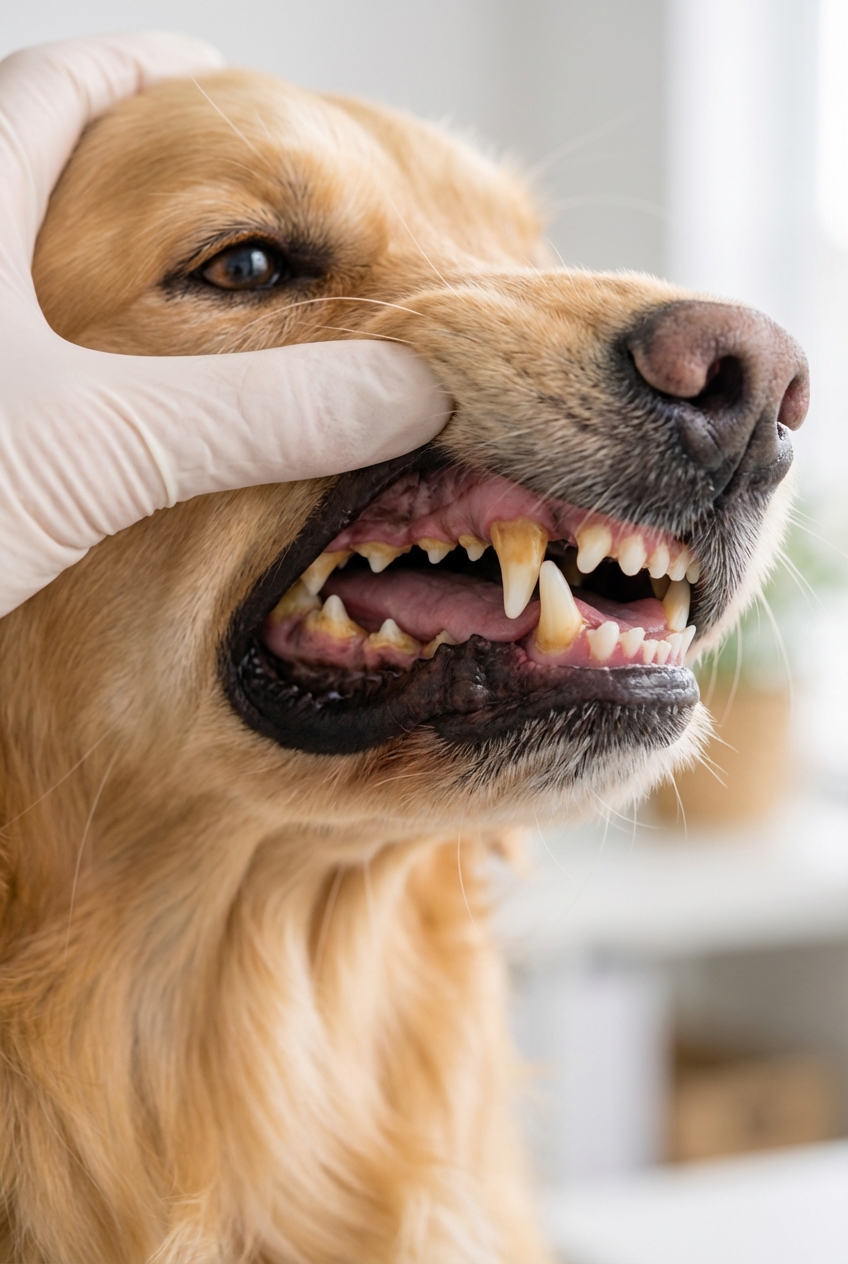
- Persistent bad breath
- Red, swollen, or bleeding gums
- Yellow or brown tartar buildup
- Pawing at the mouth or face rubbing
- Dropping food, chewing on one side, or reduced appetite
- Loose teeth or visible gum recession
When a cleaning is needed
At-home brushing is maintenance, not a substitute for a professional dental cleaning. Many dogs need periodic cleanings because tartar can build up below the gumline where toothbrushes cannot reach.
In most clinics, a professional dental cleaning is performed under anesthesia so the team can clean thoroughly and safely. It typically includes a full oral exam, scaling above and below the gumline, polishing, and dental X-rays, which are commonly performed and often considered standard of care for a complete assessment. If your veterinarian recommends a cleaning, it is usually because they see changes that could lead to pain or infection if left untreated.
Helpful add-ons
If your schedule is packed, you can still support oral health between brushings. These tools can help, but think of them as backup, not the main plan.
- Dental chews sized for your dog, ideally with the VOHC (Veterinary Oral Health Council) Accepted seal when available.
- Dental diets formulated to reduce plaque and tartar (ask your veterinarian for options).
- Water additives made for pets, used exactly as directed.
- Safe chew toys that are firm but not rock-hard. If you cannot indent it with a fingernail, it may be too hard for teeth. In general, avoid very hard chews like bones, antlers, hooves, and extra-hard nylon that can fracture teeth.
Quick FAQ
Do I need to brush the inside teeth?
For most dogs, focusing on the outer surfaces and gumline gives you the biggest payoff because that is where plaque and tartar build up fastest. If your dog tolerates more, you can also brush the inside surfaces, but do not let perfect be the enemy of consistent.
My dog’s gums bleed when I brush
Mild bleeding can happen with gingivitis, but it is also a sign you should schedule a veterinary exam. Use a softer touch, and do not push through pain.
Can puppies get their teeth brushed?
Yes, and it is a wonderful time to build a lifelong habit. Use gentle handling and puppy-safe toothpaste, and keep sessions very short.
The bottom line
Brushing your dog’s teeth does not have to be perfect to help. Start small, keep it positive, and aim for a routine you can actually maintain. Your dog gets fresher breath, healthier gums, and a more comfortable mouth.
If you want, bring your toothbrush and toothpaste to your next vet visit. Many clinics are happy to show you the best angle and technique for your dog’s mouth shape.