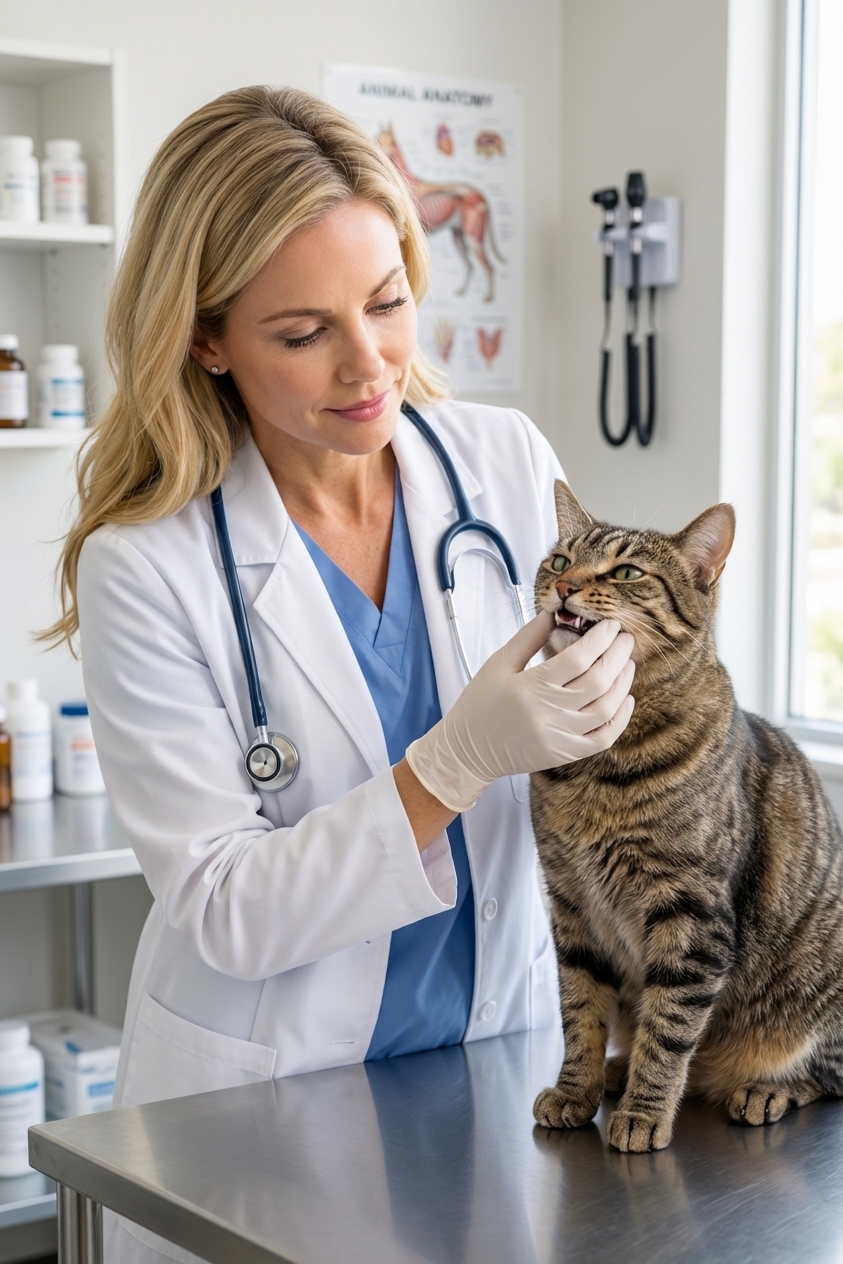
Periodontal disease is common in cats and often hides in plain sight. Learn the 4 stages, subtle warning signs, and how to prevent pain with brushing, VOHC p...
Article
•
Designer Mixes
How to Brush a Cat’s Teeth Daily

Shari Shidate
Designer Mixes contributor
As a veterinary assistant, I can tell you this with lots of love: most cats do not wake up hoping for a toothbrushing session. But brushing is one of the most powerful, evidence-based ways to protect your cat’s mouth, comfort, and long-term health. The trick is to make it quick, predictable, and rewarding.

Below are fun facts, simple steps, and realistic tips you can actually do regularly, even if you are starting from zero.
Quick fun facts
- Dental disease is common and starts young. Veterinary groups like the AVMA and AAHA note that most adult cats develop some level of dental disease over time. A large percentage show signs by around age 3.
- Bad breath is not normal. “Kitty breath” is often a sign of plaque, tartar, gum inflammation, or infection.
- Dental pain is sneaky. Cats are experts at hiding discomfort. Some will still eat even with painful mouths, but may chew on one side, drop kibble, or become cranky.
- Brushing targets plaque, not tartar. Once tartar hardens, it usually needs professional removal. Brushing helps stop plaque before it mineralizes.
- The gumline is the main event. The most important area to brush is where the tooth meets the gum.
Before you start
Keep it simple. If you make this a whole production, your cat will sense it and disappear.
- Cat toothpaste only. Skip human toothpaste. It can cause stomach upset if swallowed, and some ingredients (like xylitol) are toxic to pets.
- A tiny brush. A cat toothbrush, a soft child toothbrush, or a finger brush can work. For some cats, a piece of gauze wrapped around your finger is a great starter option.
- A high-value reward. Use a treat your cat goes wild for, or a lickable puree. This is not bribery. This is training.
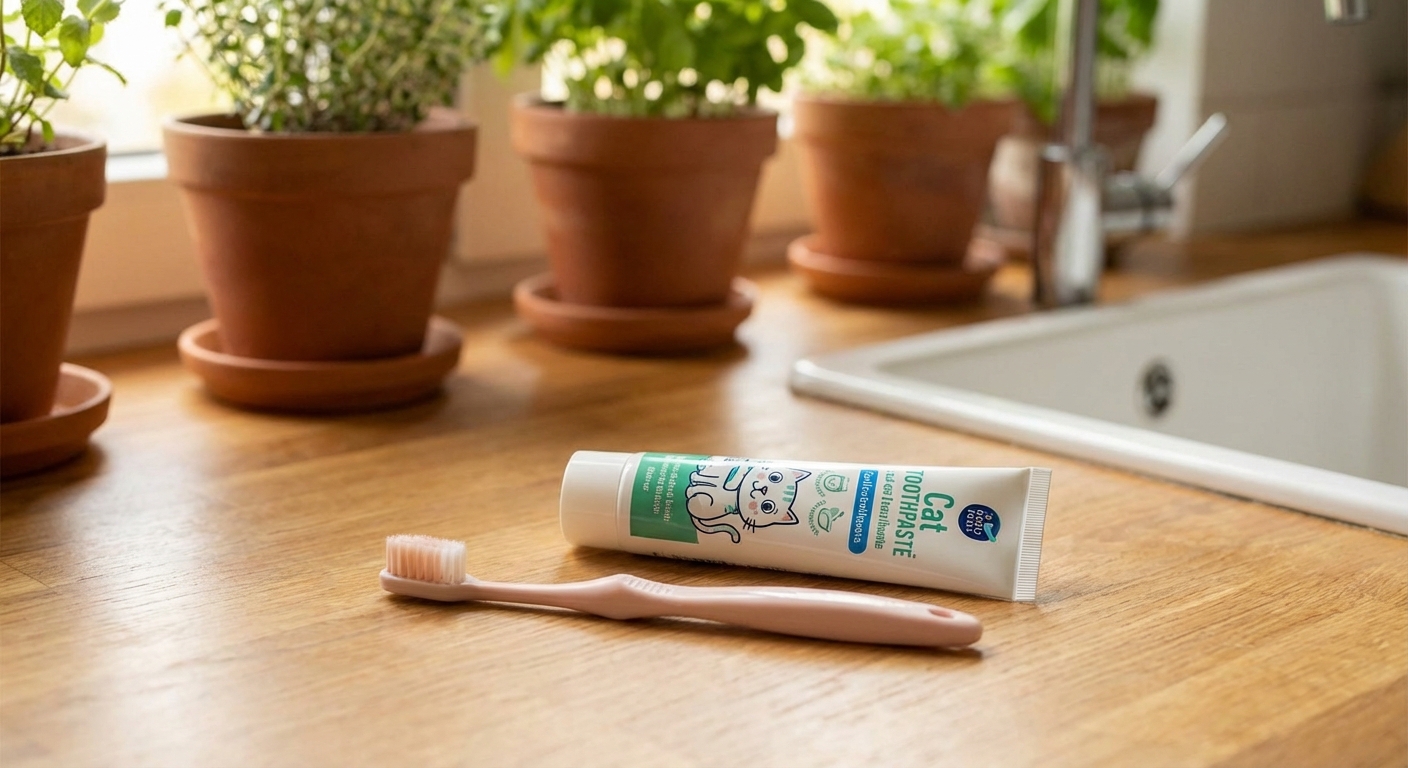
Tip: Choose a toothpaste flavor your cat likes, usually poultry or seafood. If your cat hates the taste, daily brushing becomes a daily wrestling match. If you are shopping for dental products beyond toothpaste, look for the VOHC seal when it applies.
Daily routine (2 minutes or less)
Here is the simplest, most cat-friendly method. The goal is progress, not perfection.
Step 1: Pick the right moment
Go for a time your cat is naturally calm, like after a meal or a nap. Keep the environment quiet. Sit on the floor or a couch so nobody feels trapped.
Step 2: Start with lip lifts
Gently lift the lip for one second, then treat. Do that a few times. This teaches your cat that hands near the mouth predict something good.
Step 3: Let your cat taste the toothpaste
Put a tiny dab on your finger. Let them lick it. Offer a reward again. You are building cooperation.
Step 4: Brush the outside only
Most cats will not tolerate you brushing the inside surfaces, and that is okay. Focus on the outer sides of the teeth, especially the back teeth (premolars and molars) where tartar builds fastest.
- Angle the bristles toward the gumline.
- Use small circles or gentle back-and-forth strokes.
- Count to 5 on each side if that is all your cat will allow at first.
Step 5: End on a win
Stop before your cat gets fed up. Reward immediately. Then go on with your day like it was no big deal.

Goal: 30 to 60 seconds of brushing is a fantastic start. Work up to about 1 to 2 minutes total.
Reality check: Daily is ideal, but anything is better than nothing. Even 3 to 4 times per week can help reduce plaque compared to no brushing at all.
Make it stick
Use a tiny habit loop
Attach brushing to something you already do every day, like morning coffee or your cat’s dinner. Consistency lowers stress for both of you.
Keep your setup visible
Store the brush and toothpaste where you can see them, like next to the cat food. Out of sight often becomes out of routine.
Train in micro-steps
If your cat is sensitive, break it down across days:
- Days 1 to 3: lip lift and treat.
- Days 4 to 6: toothpaste lick and praise or treat.
- Days 7 to 10: brush one or two teeth and offer a lickable reward.
- After that: slowly add more teeth as tolerated.
Try one side today
On busy days, brush only the left or right side and alternate. Regular contact still builds the habit and reduces plaque compared to doing nothing.
Common mistakes
- Mistake: Holding your cat too tightly.
Fix: Use gentle support, not restraint. Many cats do best sitting facing away from you on your lap. - Mistake: Forcing the mouth open.
Fix: You usually do not need to open the mouth. Lift the lip and brush the outer surfaces. If your cat is stressed, stop and try smaller steps later. - Mistake: Brushing like you brush your own teeth.
Fix: Soft strokes at the gumline. No scrubbing. - Mistake: Waiting until you see tartar.
Fix: Start now, even if it is just training steps. Prevention is easier than treatment. - Mistake: Stopping after a bad session.
Fix: Scale down. Do one tooth, reward, and stop. Keep the routine positive.
When not to brush
If your cat shows signs of pain or high stress, brushing can make things worse and may teach them to fear the routine. Pause and check in with your veterinarian if you notice:
- Bleeding gums that do not improve quickly
- Drooling, pawing at the mouth, or chattering
- Not eating, chewing strangely, or dropping food
- Facial swelling or a foul odor from the mouth
- Very red gums or visible sores
- Strong stress signals like growling, panting, ears pinned back, tail lashing, or trying to bolt
Also, brushing does not replace veterinary dental exams or cleanings. Many cats need periodic professional dental care, and brushing is the best way to protect those results at home.
If brushing is a hard no
Some cats have a hard no on toothbrushes. You are not failing. You are learning your cat.
- Dental wipes or gauze can remove some plaque at the gumline.
- VOHC-accepted dental treats or diets can help mechanically reduce plaque and tartar. Look for the VOHC seal on the package.
- Water additives may help some cats, especially VOHC-accepted options, but results vary. Make sure your cat keeps drinking normally. If they stop, discontinue and ask your vet.
- Skip DIY essential oils. Many are irritating or unsafe for cats, and they can make oral issues worse.
Even if you can only do “better than yesterday,” you are still improving your cat’s health.
Little wins add up
Toothbrushing can feel intimidating at first, but it becomes surprisingly normal once your cat understands the routine. Start small. Keep it calm. Reward generously. And remember, you are not just caring for teeth, you are protecting comfort, appetite, and quality of life for years to come.
If you want one simple goal: brush the outer back teeth regularly, even for 20 seconds. Consistency beats perfection.