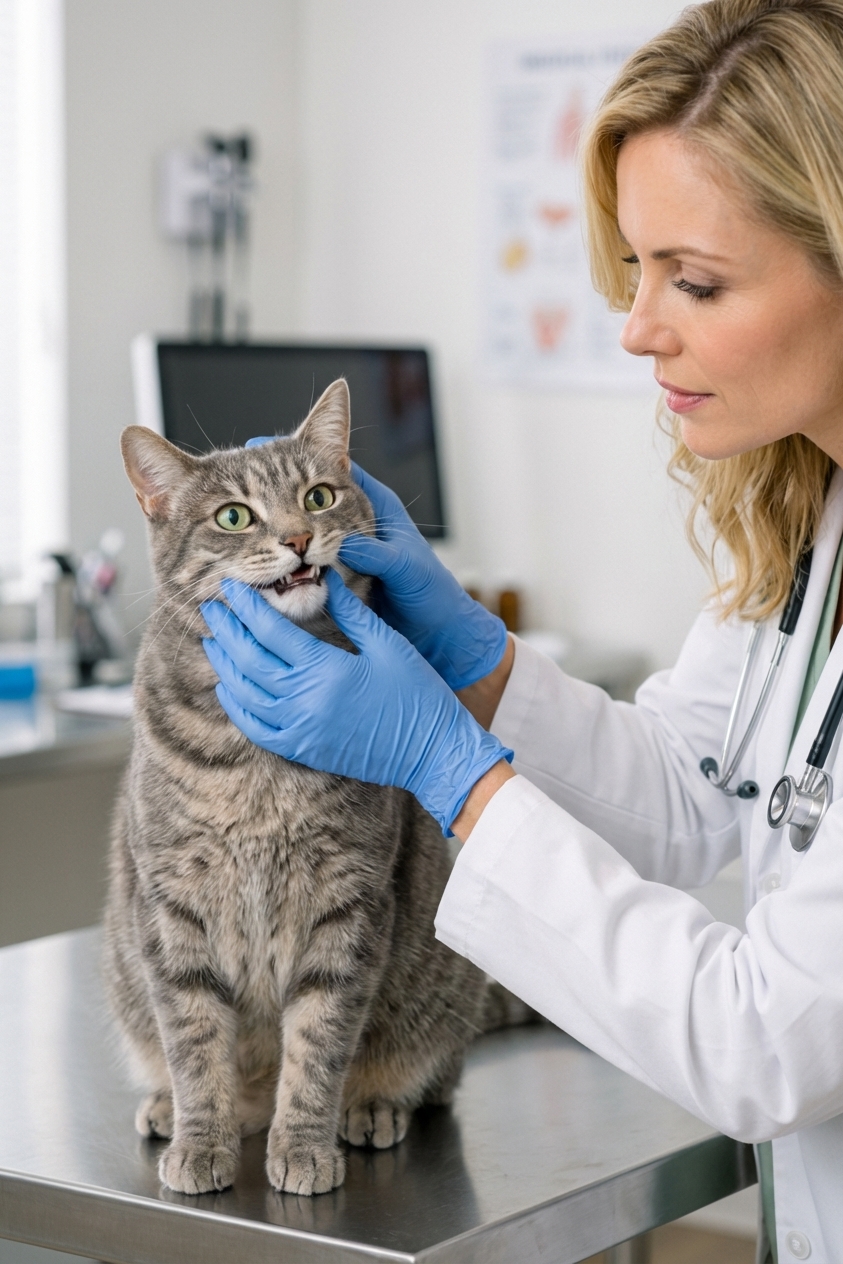
Bad breath in cats isn’t just “stinky”—it can signal dental disease, stomatitis, kidney disease, or diabetes. Learn odor clues, safe home checks, and...
Article
•
Designer Mixes
How to Brush a Cat’s Teeth

Shari Shidate
Designer Mixes contributor
Cat breath should not be noticeably foul. A mild, occasional odor can happen, but persistent bad breath usually means something in the mouth needs attention. In many cats, the most common culprit is plaque and tartar building up on the teeth and irritating the gums. The good news is that brushing is one of the most effective, evidence-based ways to slow dental disease, and it can be surprisingly doable when you go slowly and make it a calm, positive routine.

Why brushing matters
Most cats develop dental disease as they age, and many start showing signs early in adulthood. Plaque is a soft bacterial film that forms on teeth daily. If it is not removed, it hardens into tartar, which sits at the gumline and contributes to gingivitis and periodontal disease.
Brushing helps by physically disrupting plaque before it mineralizes. It can reduce inflammation, improve breath, and help your veterinarian keep your cat’s mouth healthier between professional cleanings.
Important note: Brushing is not a replacement for veterinary dental care. Many cats still need professional cleanings as they get older. Home brushing works best as prevention and maintenance paired with regular checkups.
What you need
Best tools
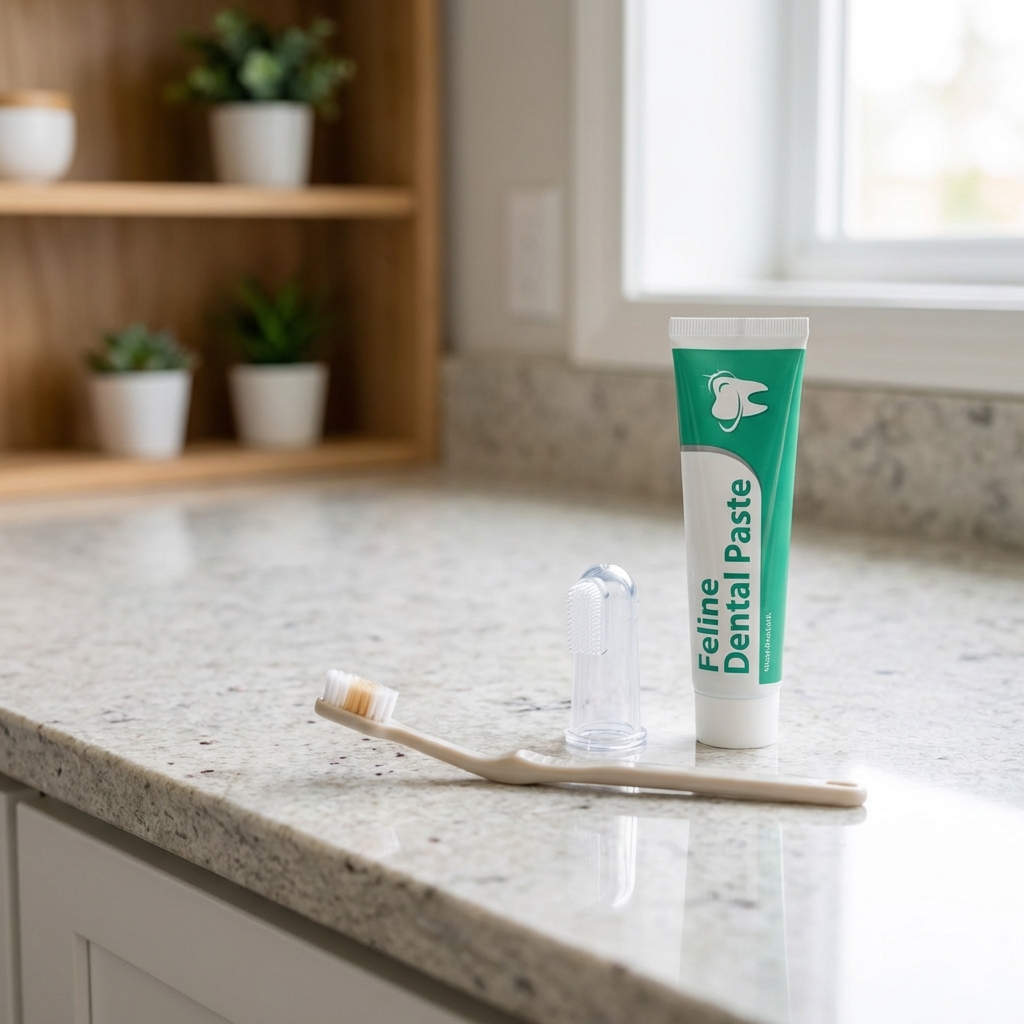
- Cat-specific toothpaste (poultry, seafood, or malt flavors often go over best).
- Soft bristled cat toothbrush or a finger brush for beginners.
- Gauze or a cotton swab for the first training steps.
- Small treats to reward calm cooperation.
Avoid these
- Human toothpaste. Ingredients like foaming agents, detergents, and fluoride are not meant to be swallowed. Xylitol is also a concern and is unsafe for pets, so avoid it entirely.
- Hard tools or rough scrubbing that can irritate gums.
- Forcing the mouth open. It increases stress and can create a long-term battle.
Check for red flags
If your cat already has mouth pain, brushing can be uncomfortable and may make them more resistant. Before beginning, take a quick look and watch behavior.
Pause and call your vet if you notice
- Bleeding gums or very red gumlines
- Drooling, pawing at the mouth, or dropping food
- Obvious tartar buildup, loose teeth, swelling, or a mouth odor that is suddenly worse
- Reluctance to eat or only chewing on one side
- Ulcers, a strong “rotting” smell, or any lump or growth
These signs often mean your cat needs a veterinary oral exam and possibly a professional cleaning before home care will feel comfortable.
When bad breath is not dental
Dental disease is common, but it is not the only reason cats get bad breath. If the smell is strong, unusual, or sudden, your veterinarian may also want to rule out issues like oral infections, resorptive lesions, stomatitis, foreign material stuck in the mouth, kidney disease (uremic breath), diabetes (a sweet or acetone-like odor), and some gastrointestinal problems.
If your cat seems “off” in any way along with bad breath, schedule a vet visit rather than pushing through brushing.
Train first, brush second
With cats, the most reliable way to succeed is to go slowly. Think in tiny steps, each one lasting 10 to 30 seconds. If your cat gets stressed, stop, reward calm behavior, and back up to the previous step for a few days.
Step 1: Mouth touches
When your cat is relaxed, gently touch the cheek area and lift the lip for one second, then reward. Repeat once daily until your cat stays calm.
Step 2: Toothpaste taste
Offer a rice-grain to pea-sized dab of cat toothpaste on your finger and let your cat lick it. This builds a positive association without any brushing yet.
Step 3: Gauze rub
Wrap a small piece of gauze around your finger, add a tiny bit of toothpaste, and gently rub the outer surfaces of the back teeth in small circles.
Step 4: Add a brush
Once your cat tolerates gauze rubbing, switch to a soft toothbrush or finger brush. Keep sessions short and end on a win.
How to brush
You do not have to brush every surface to get real benefit. The highest priority is the outer surface near the gumline, especially the upper back teeth. Inside surfaces are typically less critical for home brushing, so focus where it counts and keep it stress-free.
Step-by-step
- Pick the right moment. After a meal or a play session is often easier because your cat is calmer.
- Position gently. Many cats do best facing away from you on your lap or on a counter with a non-slip mat.
- Lift the lip, not the jaw. Use one hand to lift the lip and keep your touch light.
- Angle toward the gumline. Use small, soft circles for 5 to 10 seconds per side.
- Take the win. If your cat only allows the upper canines and one side of the back teeth, that is still progress.
- End with a reward. Treat, affection, or a favorite toy helps your cat feel like they “won.”
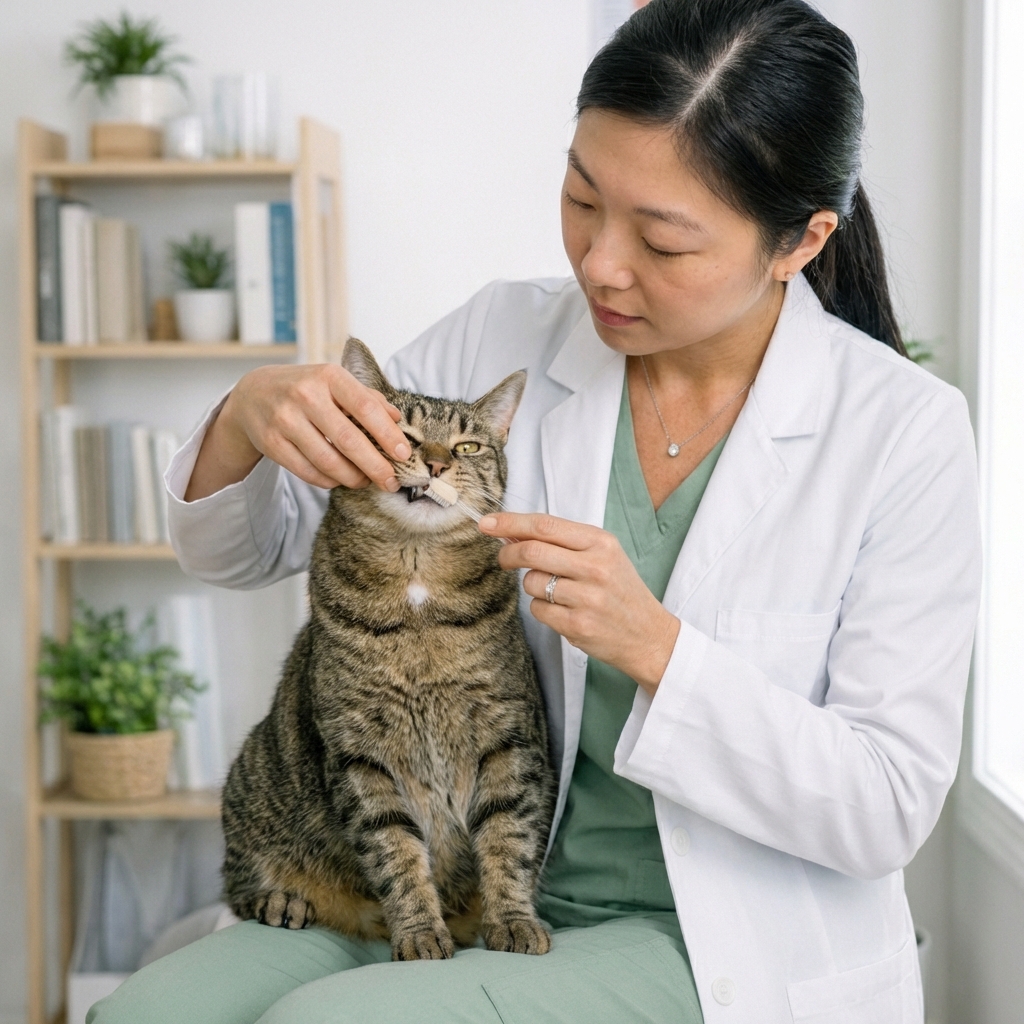
My veterinary assistant tip: aim for consistency over perfection. Ten calm seconds done regularly beats two minutes of wrestling once a month.
How often to brush
Daily brushing is ideal because plaque forms every day. If that is not realistic, try for three to four times per week as a strong starting goal. Even twice weekly is better than not brushing at all.
If you are building a brand-new habit, begin with every other day for two weeks, then increase as your cat becomes more comfortable.
Common problems
“My cat bites the brush.”
This is common and not always aggression. Try a finger brush, use less toothpaste, and keep the session shorter. You can also let your cat lick toothpaste first, then brush for just a couple of seconds.
“My cat runs away when they see the toothbrush.”
Leave the toothbrush out near the feeding area for a few days so it becomes part of the environment. Pair it with treats without brushing at first.
“The gums bleed.”
A tiny bit of spotting can happen with mild gingivitis, but persistent bleeding is a reason to stop and schedule a vet dental exam. Pain is the enemy of training.
“My cat hates toothpaste flavors.”
Try a different flavor or brush with water temporarily while you build tolerance. The mechanical action is what matters most.
“My cat gets wiggly or stressed.”
Keep it short and stop before your cat hits their limit. Trim nails ahead of time if your cat tolerates it, and consider a non-slip mat for footing. If you need more control, ask your vet or a feline-friendly groomer to show you low-stress positioning. Avoid turning brushing into a restraint battle.
Extra dental support
Brushing is top tier, but you can support your cat’s mouth health with other options that have evidence behind them.
- Veterinary dental diets designed to reduce plaque and tartar through kibble structure.
- VOHC-accepted dental treats (the Veterinary Oral Health Council lists products with demonstrated benefit).
- Water additives that are VOHC-accepted or specifically recommended by your veterinarian. Follow label directions and skip products with big claims but no proof.
- Regular veterinary exams to catch resorptive lesions, gingivitis, and painful teeth early.
If your cat is prone to dental disease, your veterinarian may recommend professional cleanings on a schedule that fits your cat’s needs. Also, keep in mind that “anesthesia-free cleanings” do not replace a full veterinary dental cleaning with proper scaling below the gumline and dental X-rays.
Brush hygiene
- Rinse the brush after each use and let it dry.
- Replace the brush regularly, especially if bristles look worn.
- Do not share toothbrushes between pets.
Quick starter routine
- Day 1 to 3: lip lift for one second, treat.
- Day 4 to 7: toothpaste lick, treat.
- Week 2: gauze rub on outer back teeth for 5 seconds, treat.
- Week 3 and beyond: toothbrush, 10 to 30 seconds total, treat.
Slow is smooth, and smooth becomes easy. Your cat does not have to love toothbrushing. They just need to tolerate it, and you can get there with patience and gentle consistency.
Safety reminders
- Never use human toothpaste.
- Stop if your cat seems painful or highly stressed and book a vet visit.
- Do not attempt brushing right after anesthesia or dental surgery unless your veterinarian instructs you to.
- Keep sessions short to reduce stress.