Need to bathe a kitten? Follow safe, vet-aware steps for warm water, kitten shampoo, careful rinsing and drying, plus flea-bath cautions and calm training tips.
Article
•
Designer Mixes
How to Bathe a Kitten

Shari Shidate
Designer Mixes contributor
As a veterinary assistant here in Frisco, Texas, I get it: the idea of bathing a tiny kitten can feel intimidating. The good news is that most kittens do not need frequent baths. When they do, a calm setup and a gentle, step-by-step plan can make the experience safer, quicker, and far less stressful for both of you.
This guide walks you through when a kitten actually needs a bath, what supplies to gather, how to bathe safely, and what to do if your kitten panics. I will also share a few vet-team tips that can help prevent common mistakes like chilling, ear irritation, or accidental scratches.
Quick safety note: If your kitten seems sick, very young, underweight, or chilled already, skip the bath and call your veterinarian. Keeping kittens warm and stable matters more than getting them perfectly clean.
Do kittens need baths?
Most healthy kittens are excellent self-groomers, and their mom helps keep them clean too. In many cases, a warm washcloth and a quick spot-cleaning is the best choice.
When a bath helps
- Fleas or flea dirt (especially for kittens found outdoors)
- Diarrhea or poop stuck to fur
- Grease, paint, food, or sticky substances in the coat
- Strong odors from something they rolled in
When to skip and call your vet
- Very young kittens, especially under about 6 to 8 weeks, or any kitten that is small or underweight and may struggle to regulate body temperature
- Lethargy, coughing, sneezing, eye or nose discharge, or any signs of illness
- Open wounds, skin sores, or severe dandruff
- Heavy flea infestation in a small kitten, because anemia can become serious quickly
If you are unsure about age, weight, or which products are safe, check with your veterinarian first. With kittens, safety is all about the details.
Before you start: set up for success
The biggest bath-time problems I see are not about shampoo. They are about temperature, timing, and handling. Kittens get cold fast, and a slippery sink can make them panic. A few simple prep steps make a huge difference.
Pick the right spot
- Sink: Great for small kittens because you can control water and keep them close.
- Counter with a basin: Helpful if your sink is deep or awkward.
- Bathtub: Better for larger, confident kittens, but it can feel too big for some.
Keep things calm
- Warm the room so your kitten does not chill.
- Close doors and windows so there is no escape dash.
- Have everything within reach so you never need to step away.
- If your kitten is anxious, avoid loud running water. Many kittens do better with a quiet basin and a cup for rinsing.
Supplies checklist
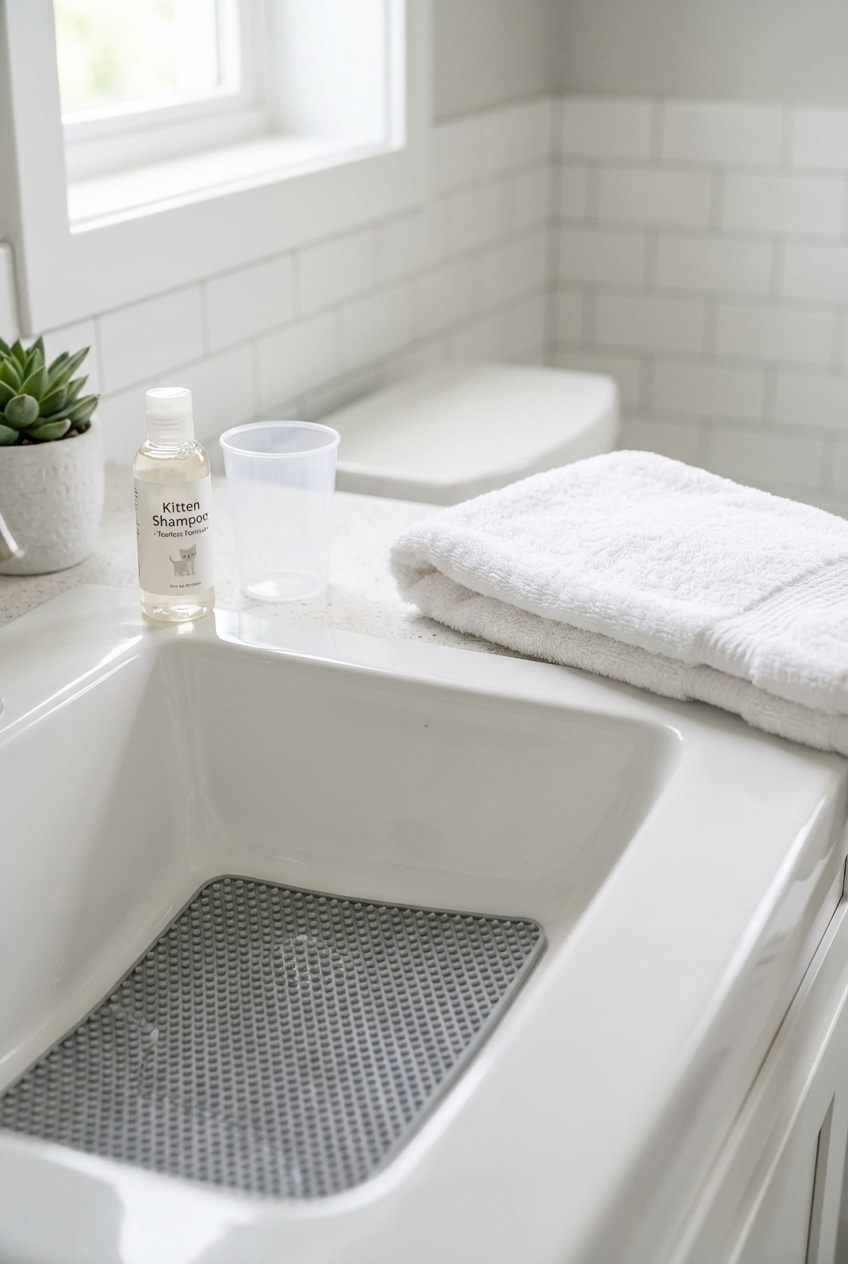
Here is your simple “ultimate kit” so bath time stays quick and gentle.
- Kitten-safe shampoo (mild, cat-specific, and ideally fragrance-free)
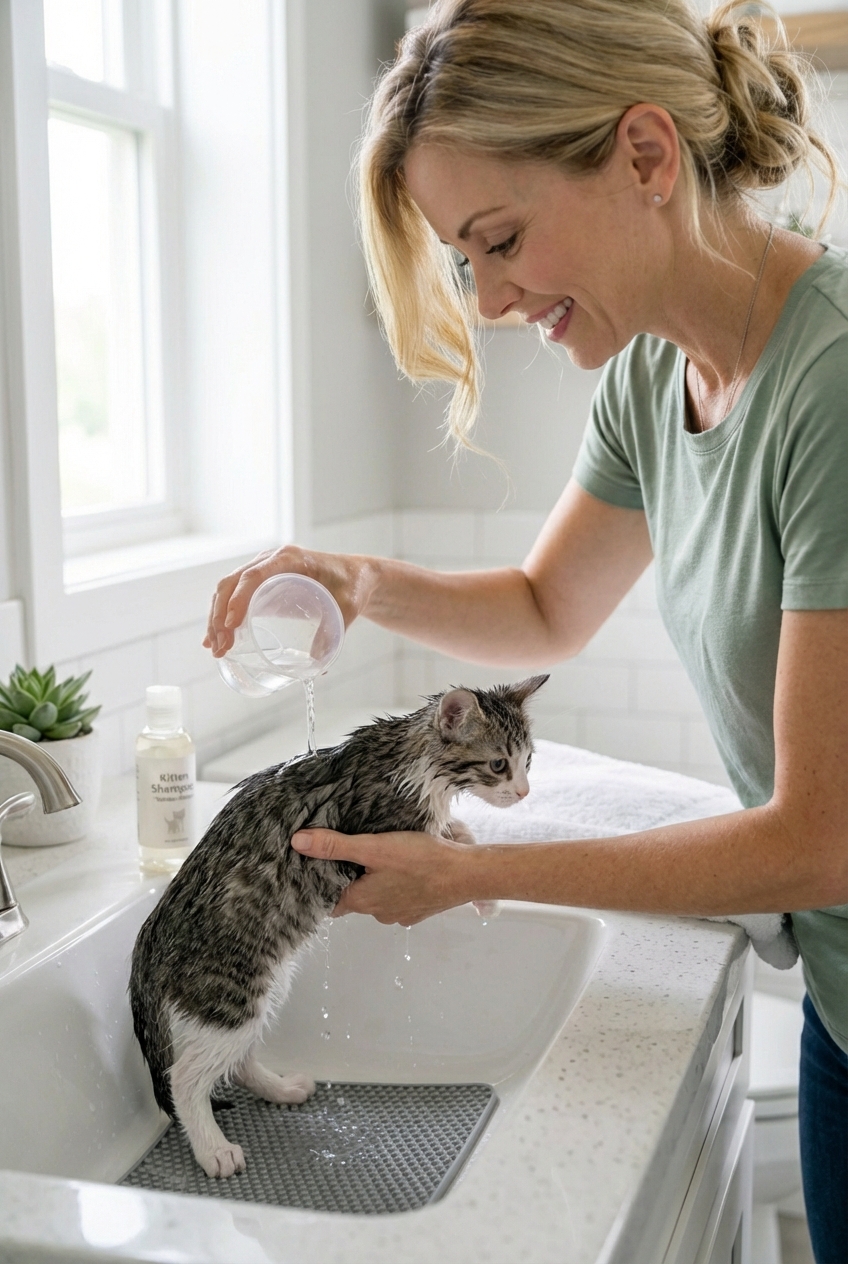
- Rubber sink mat or folded towel for traction
- 2 to 3 towels (one for the counter, one for wrapping, one backup)
- Plastic cup or gentle sprayer for rinsing
- Washcloth for the face and sensitive areas
- Cotton balls (optional). If you use them, place them loosely at the ear opening only, never into the canal, and remove them immediately after the bath. If you are unsure, skip this step.
- Comb or soft brush
- Treats for after (or a small meal)
- Nail clippers (optional, but trimming tips beforehand can help)
Avoid: human shampoo, essential oils, harsh degreasers, and dog flea shampoos. Also avoid any dog flea products that contain permethrin or pyrethroids, which can be toxic to cats.
How to bathe a kitten
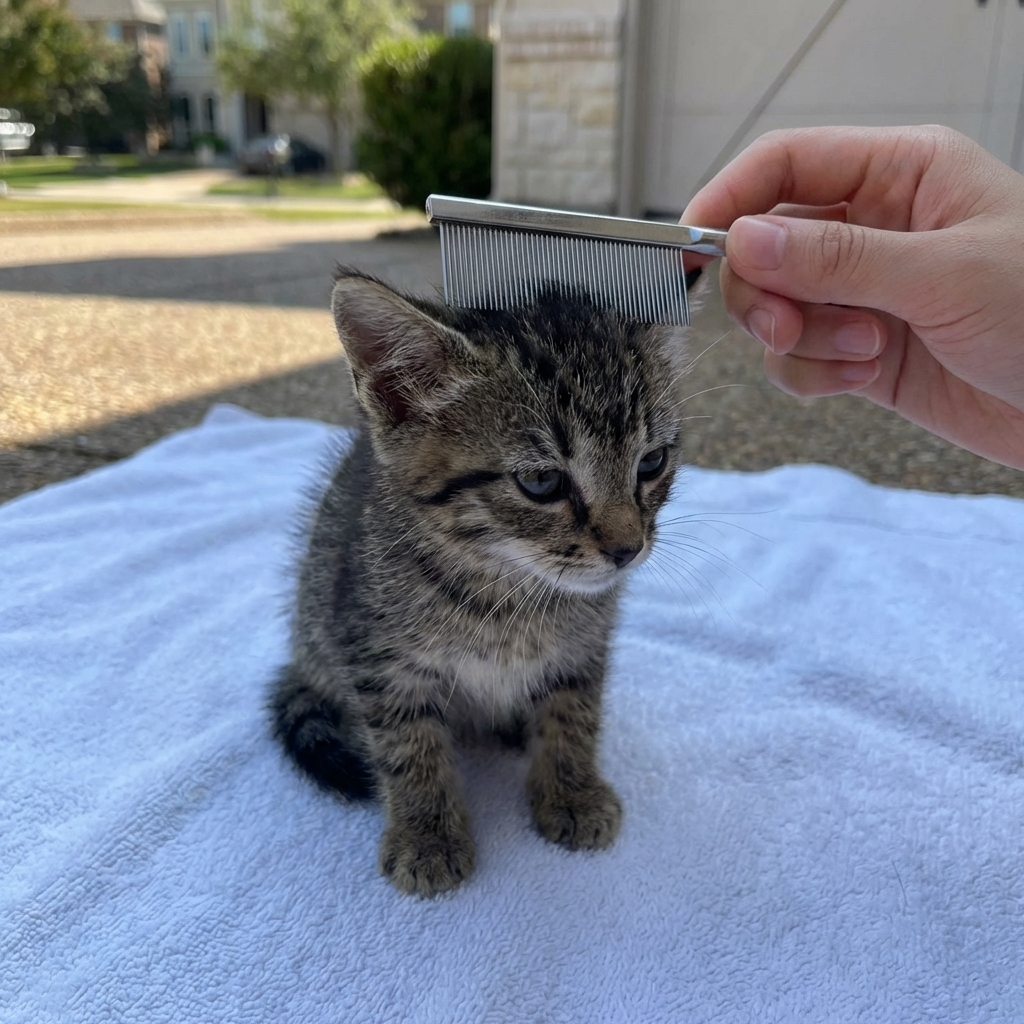
1) Brush first
Brush out tangles and remove debris before the coat gets wet. Wet mats tighten and can be painful.
2) Use lukewarm water
Fill the sink or basin with just 1 to 2 inches of water. Aim for lukewarm, not hot. A good rule is to test it on your wrist like you would for a baby bath.
3) Wet slowly
Support your kitten with one hand under the chest and use a cup to wet the body. Start at the shoulders and back and work toward the tail. Many kittens hate water on the head, so save the face for a washcloth at the end.
4) Lather gently
Use a small amount of kitten shampoo and massage into the coat, avoiding eyes, nose, mouth, and ear canals. Focus on the dirty areas first. Keep your touch steady and calm.
5) Rinse well
Rinsing is the step many people rush. Leftover soap can irritate skin and make the coat feel grimy. Rinse until the water runs clear and no slippery residue remains.
6) Face and paws last
Use a warm, damp washcloth for the face. Wipe outward from the eyes and whisker pads. For paws, gently wipe between toes if needed.
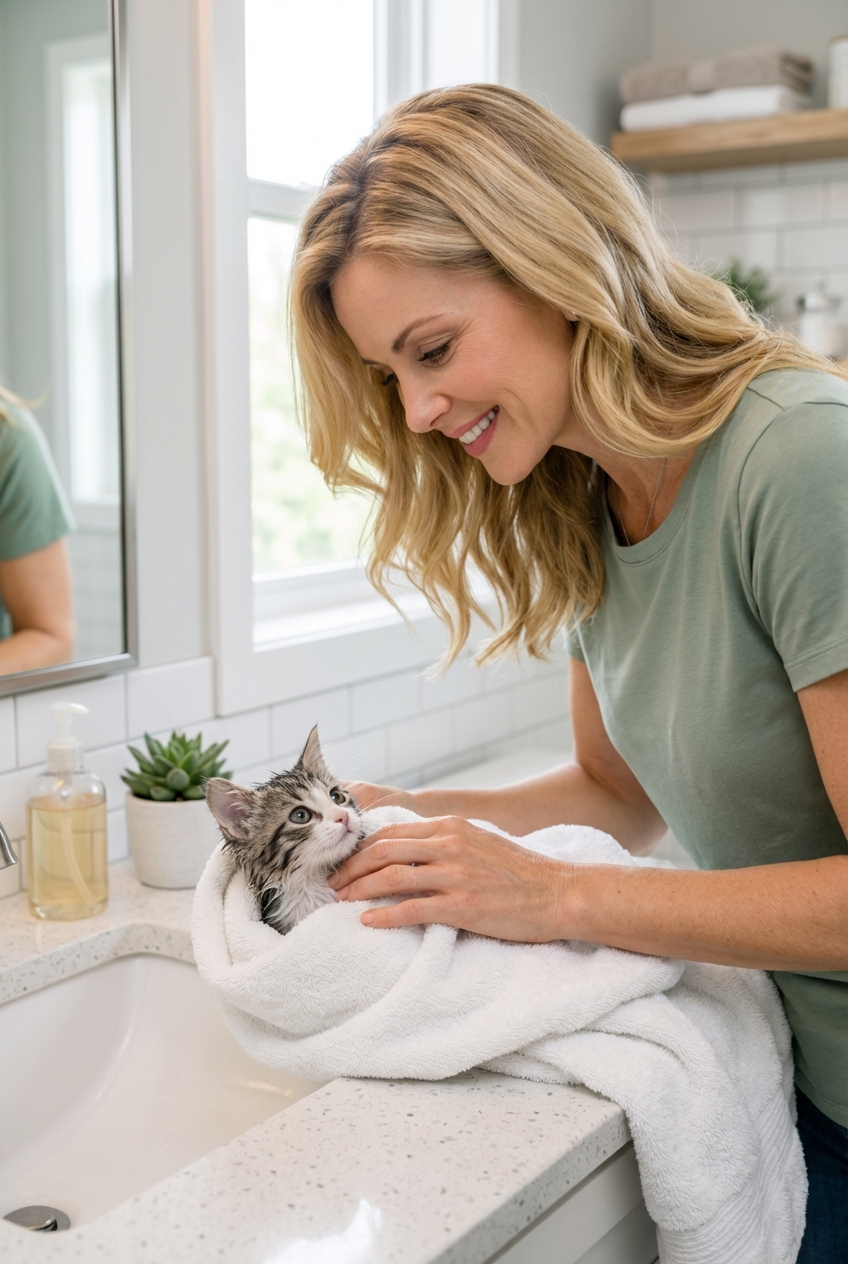
7) Wrap, blot, and warm
Lift your kitten into a towel “burrito” and blot, do not rub. Rubbing can tangle fur and can feel scary. Swap to a dry towel if the first towel gets soaked.
Drying and warmth
Kittens can lose body heat quickly. Your goal is a warm, cozy dry-down.
Towel-dry first
- Keep the kitten wrapped with the head out.
- Blot the coat in sections, especially the belly, chest, and legs.
- Offer a calm voice and a short break if needed.
Can you use a hair dryer?
Sometimes, yes, but only if your kitten tolerates it and you use smart settings:
- Low heat or cool setting only
- Low airflow (high airflow can panic kittens)
- Keep it 12 inches away, keep it moving, and test the air on your wrist first
- Stop immediately if your kitten shows stress
A warm room and towels are often enough. If you do use a dryer, think “gentle and quick,” not salon-style.
Vet-team tip: After the bath, keep your kitten in one warm room until fully dry. Avoid drafts, outdoor trips, and cold tile floors. If your kitten is still shivering, seems unusually quiet, or cannot warm up, call your veterinarian.
Fleas: baths are not the whole fix
If you are bathing due to fleas, the bath can help remove flea dirt and offer short-term relief. But bathing alone rarely solves an infestation. In most cases, the cornerstone is vet-approved flea prevention based on your kitten’s exact age and weight, plus environmental cleanup.
Comb plus a gentle bath
- Start with a flea comb on a dry coat to remove as many fleas as possible.
- During the bath, a gentle kitten shampoo can help lift flea dirt and rinse away fleas.
- Comb again after towel-drying.
Be careful with flea products
Many over-the-counter flea treatments are not safe for kittens under a certain age or weight. Some dog products are toxic to cats. If you are not 100% sure, call your veterinarian and ask what is safe for your kitten’s exact weight and age.
Also remember: fleas live in the environment, not just on your kitten. Bedding, carpets, and other pets may need treatment too.
How often to bathe
For most kittens, bathing should be rare. Frequent baths can dry the skin and disrupt the coat’s natural oils.
- Spot-cleaning with a warm cloth: as needed
- Full bath: only when truly necessary
- Flea situations: follow your vet’s plan rather than repeating baths often
If your kitten hates it
Signs to stop
- Open-mouth breathing, frantic struggling, or freezing stiff
- Growling, hissing, or escalating fear
- Trying to climb your body to escape
If you see these signs, it is okay to stop. A half-bath that ends safely is better than forcing it.
Make next time easier
- Use a non-slip mat so feet feel stable.
- Keep the bath under 5 minutes when possible.
- Practice “happy handling” on non-bath days: touch paws, ears, and belly briefly, then reward.
- Try a two-person setup: one supports and reassures, one washes and rinses.
If you are dealing with a medical mess like diarrhea stuck in fur, your vet clinic or a cat-experienced groomer may be able to help safely. You are not failing by asking for support.
Safety reminders
- Never submerge a kitten’s head or pour water into the ears.
- Avoid essential oils and strong fragrances around kittens.
- Do not use human shampoo or dish soap unless a veterinarian specifically instructs it for a special situation.
- Prevent chilling: warm room, quick bath, thorough towel dry.
- Supervise the entire time. Kittens are fast and slippery.
Bath time does not have to be perfect. It just needs to be safe, calm, and short. With a gentle approach, most kittens learn that cleaning up is not so scary after all.