A vet assistant’s kitten-bathing guide: when a bath is needed, what supplies to gather, how to wash and rinse safely, drying/warmth tips, and what to do if...
Article
•
Designer Mixes
How to Bathe a Kitten

Shari Shidate
Designer Mixes contributor
Kittens are tiny, curious, and wonderfully messy. Most of the time, they keep themselves clean, but there are moments when they truly need a bath, like stepping in something sticky, getting flea dirt on their coat, or having a messy bowel movement. The key is to keep it calm, quick, warm, and safe so your kitten learns that handling and grooming are nothing to fear.
Good news: with the right setup and a gentle approach, bathing a kitten is absolutely doable at home, even for first-time pet parents.
Do kittens really need baths?
In general, healthy kittens do not need regular baths. Cats are skilled groomers, and frequent bathing can dry out the skin and cause stress. That said, a bath can be appropriate when:
- They have something unsafe on the fur (grease, paint, chemicals, litter dust stuck to wet fur).
- They have fleas, especially very young kittens who are too small for certain flea medications.
- They are too young or unwell to groom effectively (ask your veterinarian if you are unsure).
- They have diarrhea or fecal contamination around the rear end.
If your kitten is simply a little dusty, a warm, damp washcloth is often the best first choice.
Safety first
How young is too young?
Very young kittens can chill quickly. In general, avoid full baths for kittens that are especially under 6 to 8 weeks, very small (often under about 2 lb / 0.9 kg), or orphaned, unless your veterinarian, rescue, or shelter team instructs you to do so. Spot-cleaning is usually safer, and urgent flea or contamination situations should come with a strict warming plan.
Keep them warm
Kittens lose body heat fast when wet. Plan to bathe only when you can:
- Keep the room warm and draft-free
- Use warm water (not hot)
- Dry thoroughly right away
When not to bathe
Skip the bath and call your veterinarian if your kitten is lethargic, having trouble breathing, shivering, weak, or has open sores or inflamed skin. Also avoid bathing right after vaccinations or surgery unless your vet says it is safe.
Alternatives to a full bath
Many messes do not require a full shampoo bath. These options are often easier and less stressful:
- Spot clean with a warm, damp cloth for dusty fur or a small dirty patch.
- Pet wipes made for cats (unscented is best) for light grime.
- Waterless cat shampoo can help for mild odor or dirt, but choose a product specifically labeled for cats and avoid anything medicated unless your vet recommends it.
- Rear-end cleanup: use warm water on a soft cloth, then dry well. For stuck-on feces, soaking the area briefly with warm water is often gentler than scrubbing.
What you need before you start
Preparation is everything. Once your kitten is wet, you do not want to be searching for supplies. Most baths can be done in about 5 to 10 minutes, plus drying time.
- Kitten-safe shampoo or a gentle pet shampoo labeled for cats (avoid human shampoo, dog flea shampoos, and medicated shampoos unless your vet prescribed them). Fragrance-free or lightly scented is often best.
- 2 to 3 towels (one for the counter, one for drying, one extra)
- Non-slip mat or a folded towel for the sink
- Plastic cup or gentle sprayer for rinsing
- Cotton balls (optional, to reduce water entry into ears)
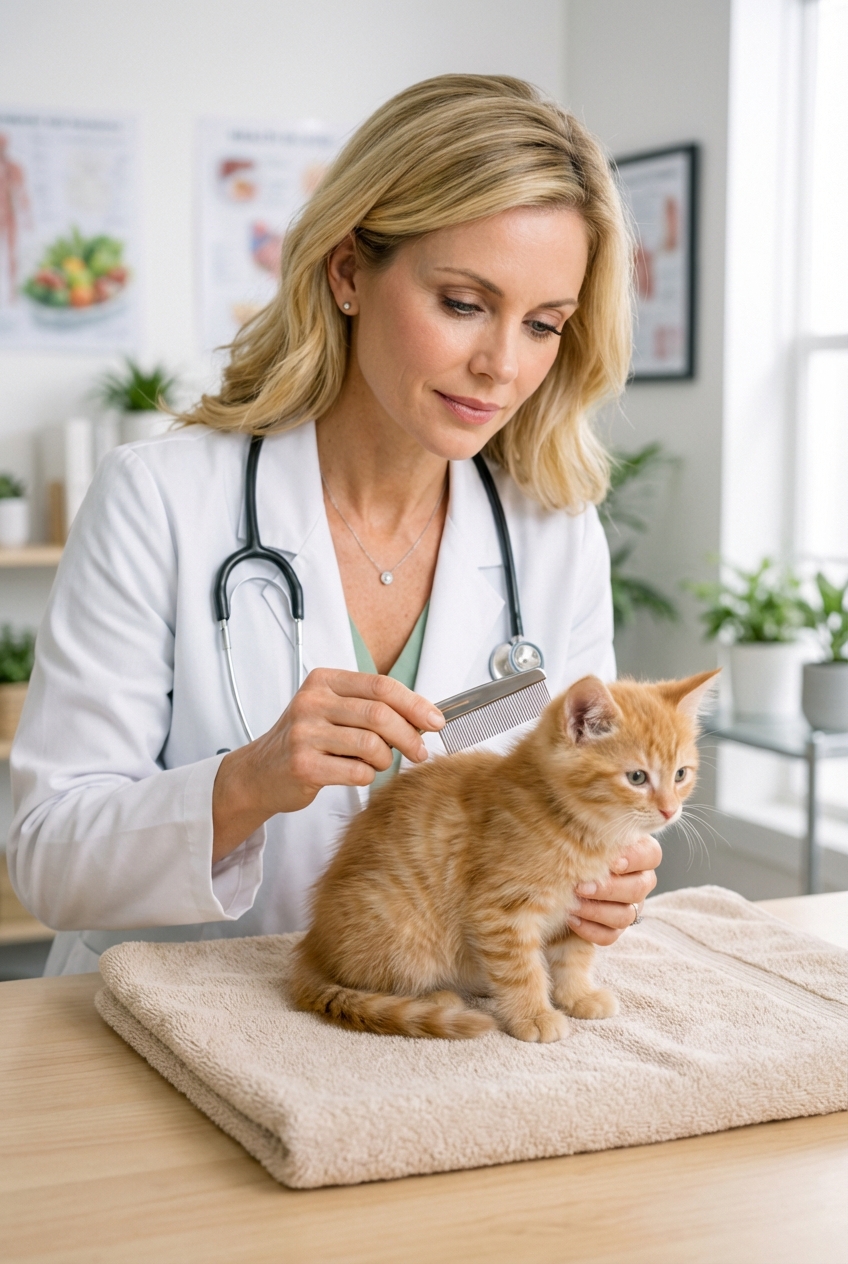
- Brush or flea comb
- Treats for after (or a small meal if that motivates your kitten)
Pro tip: Choose a sink over a bathtub. It is easier on your back, and kittens often feel more secure in a smaller space.
Quick safety setup: Close the bathroom door, remove anything breakable from counters, and have everything within reach. If your kitten is wiggly, having a second person to gently assist can make the bath much safer.
Step-by-step: how to give a kitten a bath
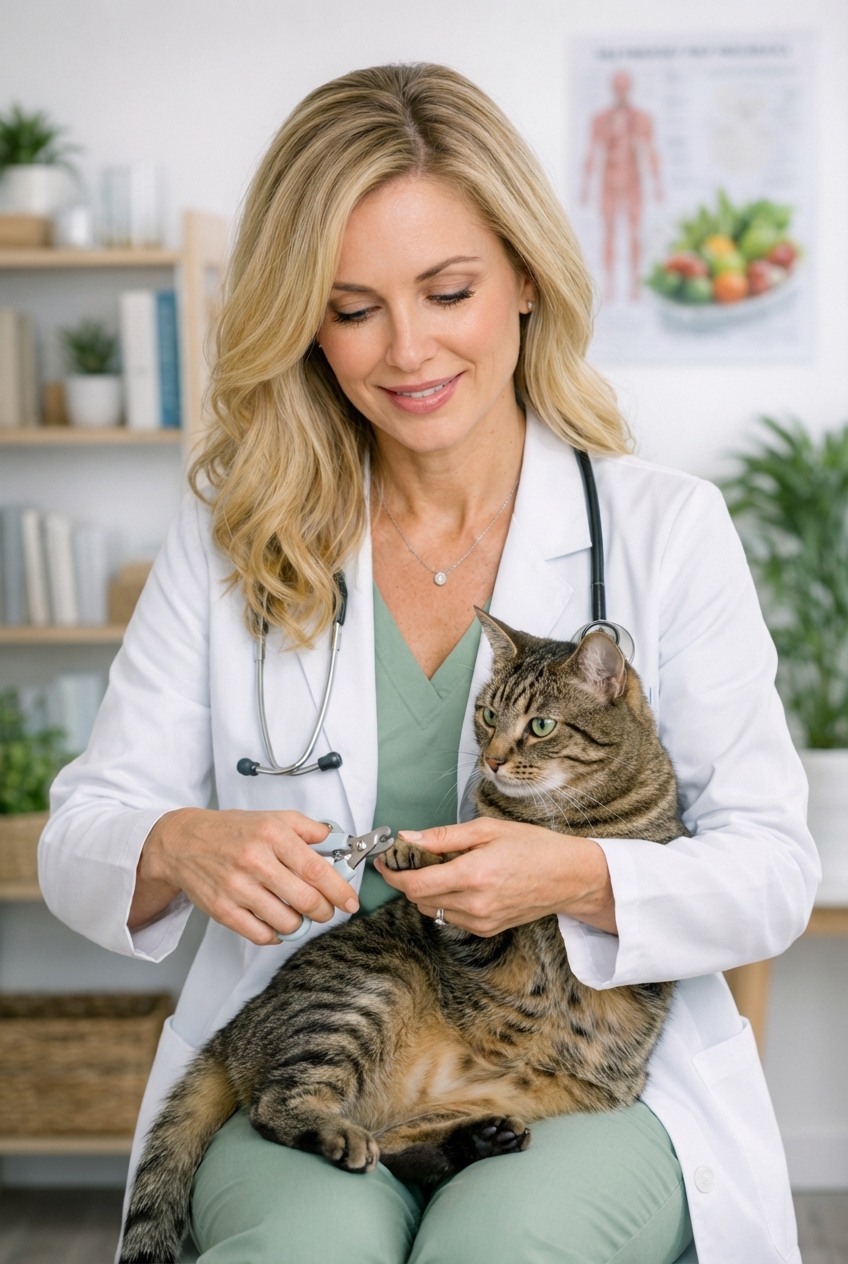
1) Trim nails first (if possible)
If your kitten is comfortable with paw handling, trim the sharp tips before bathing. This protects you and reduces panic if they try to climb out. If nail trims are stressful right now, skip it and focus on a calm bath.
2) Brush and detangle
Brush out any loose hair or small tangles before water hits the coat. Mats tighten when wet and become harder to remove.
3) Set the water level and temperature
Use just a few inches of warm water. You can also run the faucet very gently, but many kittens dislike the sound. Aim for water that feels like warm bathwater on the inside of your wrist.
4) Start on a non-slip surface
Place your kitten on the towel or non-slip mat in the sink and let them sniff around for a moment. Speak softly. Keep your hands steady and supportive under the chest and belly.
5) Wet the body, not the head
Use your cup or hand to wet from the neck down. Do not submerge your kitten, and avoid pouring water over the face. Keep water away from the eyes, nose, and inside the ears. For the face, use a damp washcloth instead of pouring water.
If you are using cotton balls in the ears, place them loosely and remove them right after the bath.
6) Lather quickly and gently
Apply a small amount of kitten-safe shampoo and massage it in with your fingertips. Focus on dirty areas like paws, belly, and rear. Keep the session short.
7) Rinse extremely well
Leftover shampoo can cause itching and flaky skin. Rinse until the water runs clear and you can no longer feel any slipperiness or residue on the coat.
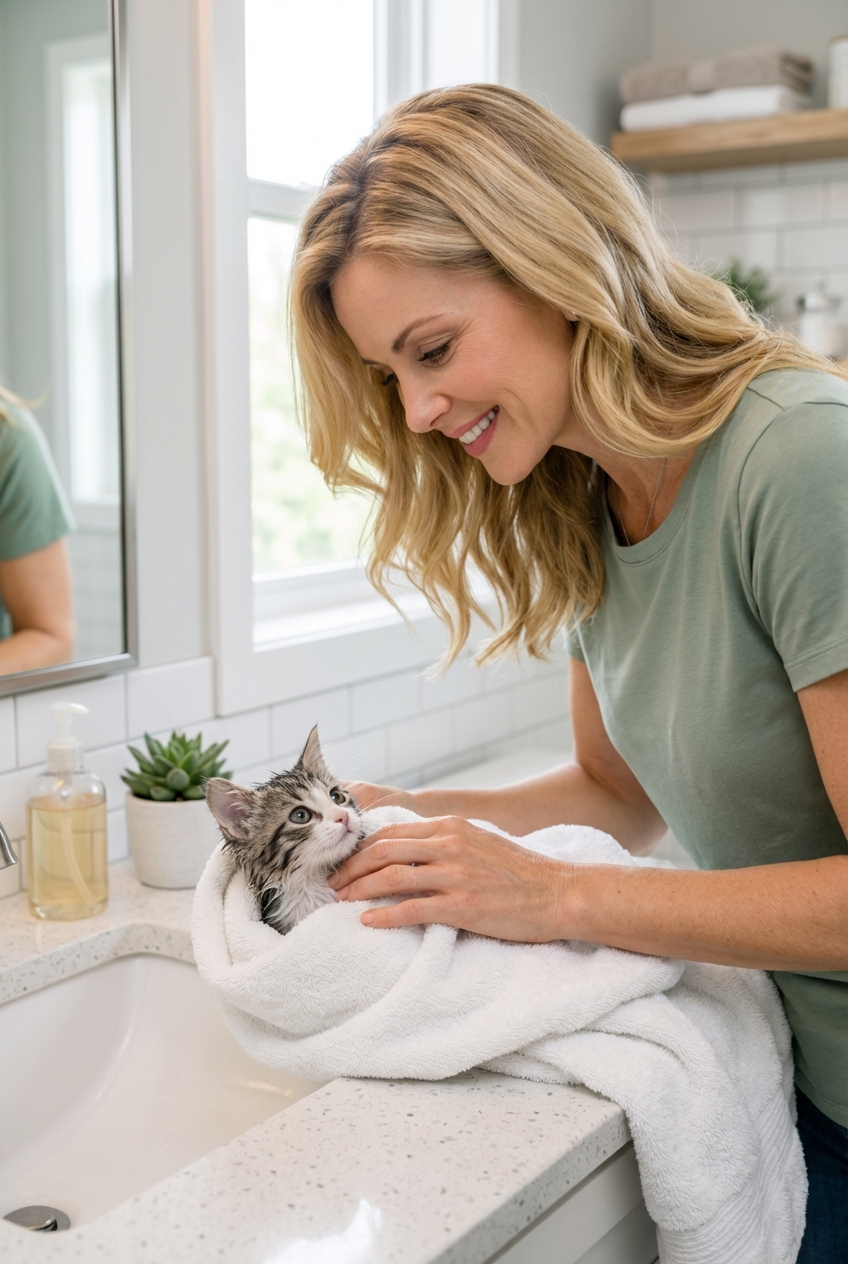
8) Wrap immediately and dry thoroughly
Lift your kitten out and wrap in a towel right away. Press and blot, do not vigorously rub. Swap to a dry towel if needed.
If your kitten tolerates it, you can use a hair dryer on low heat, low airflow, and from a safe distance. Keep it moving so you do not overheat one spot, and stop immediately if your kitten shows signs of stress or breathing difficulty. Many kittens find dryers scary, so towels and a warm room are often the better plan.
Flea baths
Fleas are common in kittens, especially those found outdoors. A bath can help remove fleas, but it is only one part of flea control. Always talk with your veterinarian about the safest flea prevention for your kitten’s age and weight, and use only vet-approved products.
If you see fleas on a kitten
- Use a flea comb daily, especially around the neck and tail base.
- Consider a gentle bath using kitten-safe shampoo if your vet says it is appropriate.
- Wash bedding frequently and vacuum floors and furniture.
- Treat other pets and the environment as recommended by your vet, since fleas rarely stay on just one animal.
Important cautions
- Do not use essential oils like tea tree, peppermint, or eucalyptus. Many are toxic to cats.
- Do not use dog-only flea products on kittens.
- Never use permethrin on cats. It is toxic to cats and can be life-threatening.
- Be cautious with over-the-counter flea products. Some are not safe for kittens by age or weight. When in doubt, do not apply anything until you have veterinary guidance.
- Do not use dish soap routinely. Some vets may suggest it in very specific rescue situations, but it can be harsh and drying and is not a long-term solution.
Training tips
Bathing is less about the bath itself and more about building your kitten’s confidence with touch, gentle restraint, and new sensations. Think of it as simple training you can do in tiny steps.
Start with dry practice sessions
- Place your kitten in an empty sink for 10 to 30 seconds
- Give calm praise and a treat afterward
- Repeat a few times over a week
Desensitize to water sounds
- Let the faucet run at a trickle while your kitten is across the room
- Gradually decrease distance over multiple sessions
Handle paws, belly, and tail daily
Brief, gentle handling helps your kitten tolerate grooming and vet exams. Aim for 10 to 20 seconds at a time, then reward with play or food.
Keep your energy steady
Kittens read our bodies. Move slowly, speak softly, and avoid sudden grip changes. If your kitten is escalating into panic, it is okay to stop, towel-dry, and try another day.
After-bath care
Warmth and quiet time
Keep your kitten in a warm, calm area until fully dry. A cozy room with a clean blanket and a little space to decompress is ideal.
Check the skin and ears
Look for redness, dandruff, bumps, or excessive scratching after the bath. Itching can happen if shampoo was not fully rinsed or if the skin is irritated. If you notice head shaking, pawing at ears, or a bad ear odor, contact your veterinarian.
Reward the experience
Offer a small meal, a favorite toy, or a gentle play session. The goal is for your kitten to learn: bath time ends with comfort and good things.
Common mistakes
- Using human shampoo: It can disrupt skin pH. Use a cat or kitten shampoo.
- Water too deep: Shallow water feels safer and reduces slipping.
- Rushing the rinse: Rinse until water runs clear and there is no residue.
- Bathing too often: Most kittens only need occasional baths or spot cleaning.
- Trying to power through stress: If your kitten is panicking, pause and reset. Calm training beats force.
When to call your veterinarian
Please get veterinary guidance if:
- Your kitten has fleas and is very young, underweight, or seems anemic (pale gums, unusual weakness)
- You see hair loss, scabs, or sores
- Your kitten smells strongly foul even after cleaning (possible skin infection)
- Your kitten becomes chilled, trembles, or seems weak after a bath
- Diarrhea is ongoing or severe
Your vet can help you choose safe products and rule out underlying issues like parasites, food intolerance, or skin infections.
A gentle bottom line
If your kitten needs a bath, you can absolutely do it at home with a warm room, the right shampoo, and a calm, supportive hold. Keep it short, rinse well, dry thoroughly, and reward afterward. Over time, those small, positive experiences build a kitten who is easier to groom, easier to medicate, and often less stressed at the vet.