Most cats don’t need regular baths—but skunks, fleas, sticky messes, or seniors may. Follow a quick, low-stress, vet-assistant guide to prep, bathe, dry,...
Article
•
Designer Mixes
How to Bathe a Cat Safely

Shari Shidate
Designer Mixes contributor
Bathing a cat can feel like an Olympic sport, but most of the struggle comes from two things: going too fast and being under-prepared. As a veterinary assistant, I can tell you that when you set the scene correctly and keep the bath short, many cats tolerate it far better than their reputation suggests.
Before we jump in, a quick truth: most healthy cats do not need frequent baths because they are excellent self-groomers. Baths are most useful for specific situations like fleas, sticky or oily messes, skunk odor, medical skin conditions, or when a senior or overweight cat cannot groom well anymore.
Quick note: This is general guidance and not a substitute for veterinary advice. If your cat has a painful skin problem, is medically fragile, or gets extremely stressed, a vet or professional groomer may be the safest option.
When a bath helps
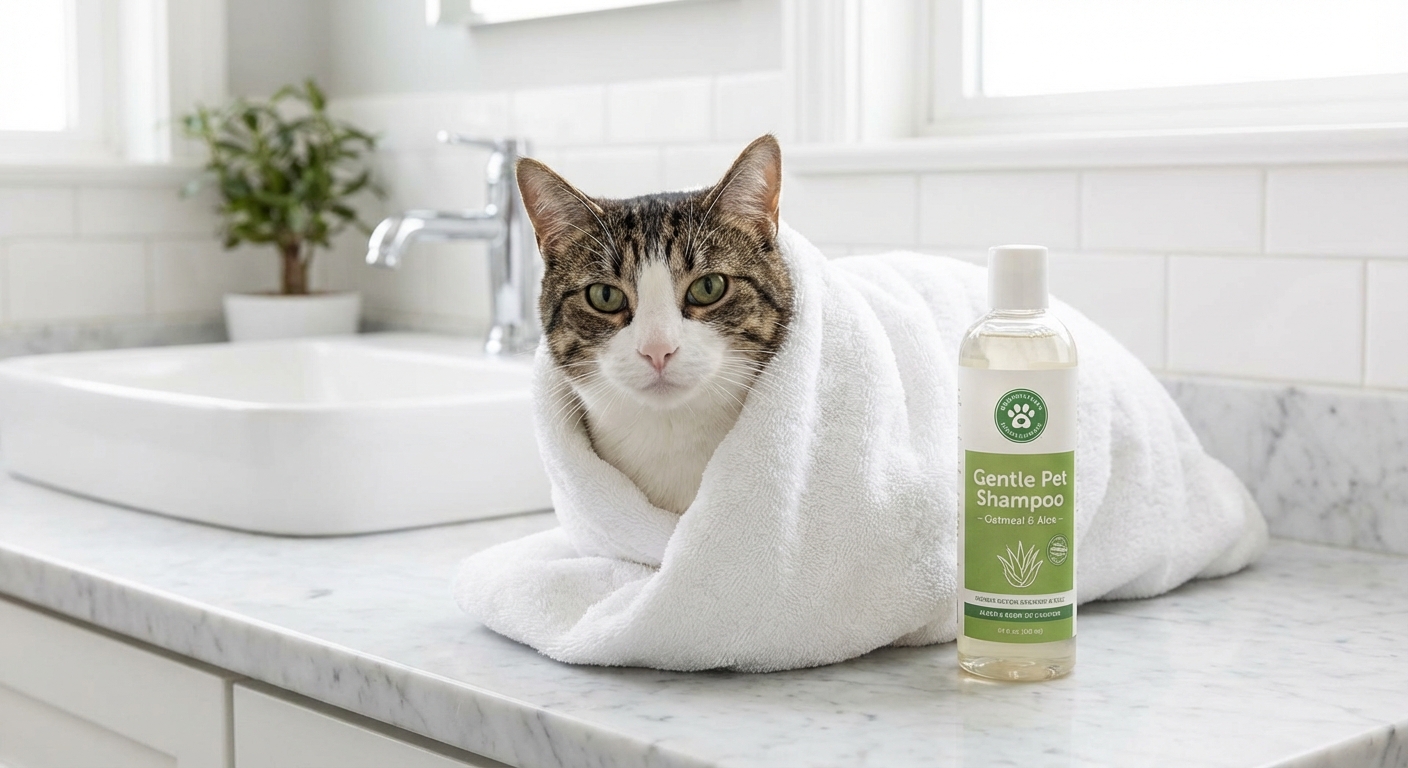
In clinic, we recommend bathing only when there is a clear reason, because unnecessary bathing can dry out skin and increase stress.
- Fleas: A bath can help remove live fleas and flea dirt, but it does not replace monthly flea prevention.
- Something sticky or smelly: Grease, food, litter box accidents, or skunk spray.
- Medical skin issues: Your veterinarian may prescribe a medicated shampoo for infections, allergies, or seborrhea.
- Limited self-grooming: Older, arthritic, obese, or long-haired cats may need help keeping clean.
Skip the bath and call your vet first if your cat has open wounds, severe redness, oozing skin, sudden hair loss, is very sick, or if you suspect ringworm. Ringworm is contagious, and bathing at home can spread spores around your bathroom if you are not careful. Your vet can confirm the diagnosis and give you a home cleaning plan.
Before you start
Gather supplies
Have everything within arm’s reach so you never have to step away from your cat.
- Cat-safe shampoo (or veterinarian-prescribed medicated shampoo)
- 2 towels (one for drying, one as a non-slip surface)
- Non-slip mat or folded towel for the tub or sink
- Pitcher or handheld sprayer on gentle setting
- Cotton balls (optional, to loosely place at the ear opening to reduce splashing, but do not push into the ear canal and remove them right after)
- Treats or a lickable treat (for cats who will take it)
- Comb or brush
Shampoo safety: Choose a mild, cat-labeled shampoo, ideally fragrance-free. Avoid dog shampoos unless they explicitly say they are safe for cats.
Never use human shampoo. It is formulated for human skin and hair and can irritate or dry a cat’s skin. Also avoid essential oils, especially tea tree oil. Cats are more sensitive to many oils and can become ill if they ingest residues while grooming.
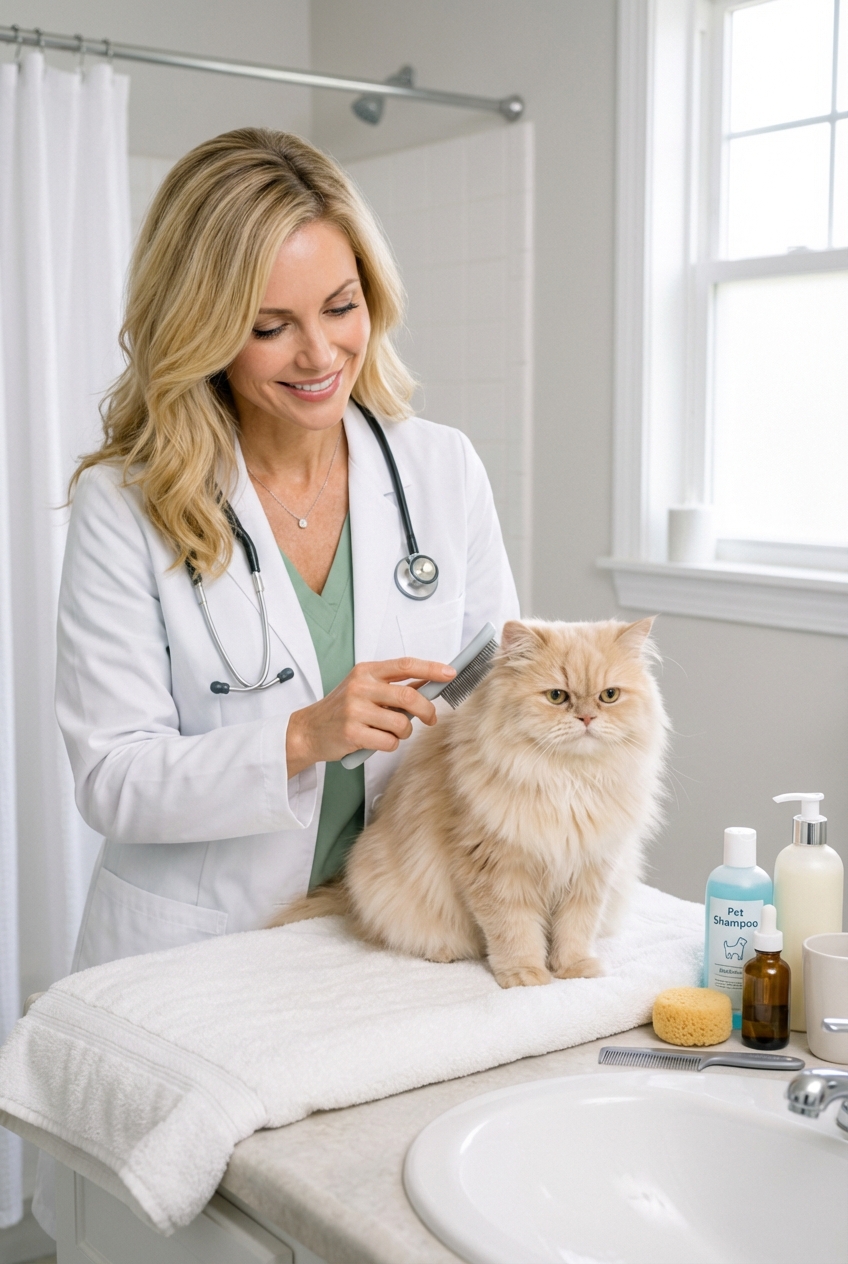
Trim nails and brush
Trim the sharp tips of nails if you can do it safely. Then brush thoroughly to remove loose fur and mats. Water tightens mats, making them worse and more painful.
Pick a secure setup
A sink is often easier than a big tub because it feels more secure. Close the bathroom door. Turn off loud fans. Keep your voice calm and your movements slow. If your cat tends to launch, a harness can give you an extra layer of control without gripping tightly.
Steps for a low-stress bath
If at any point your cat is escalating and you are worried about being bitten or scratched, it is okay to stop. A partial clean, wipes, or a pro bath is still a win if it keeps everyone safe.
1) Use shallow, lukewarm water
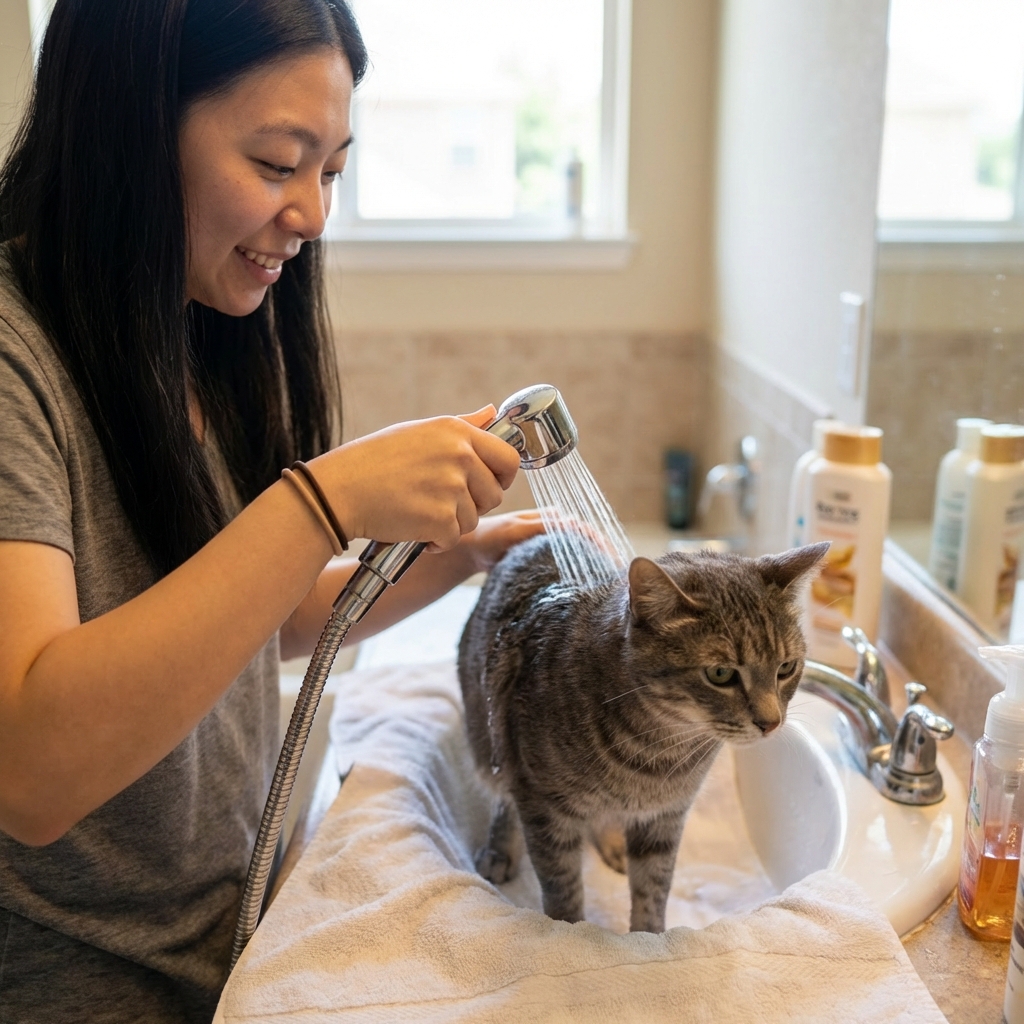
Fill the sink or tub with just 2 to 4 inches of lukewarm water, similar to a baby bath. Cats usually panic when they feel like they are floating.
2) Lower your cat in gently
Support the chest and hindquarters. Let paws touch the bottom right away. Many cats calm down when they realize they have footing.
3) Wet the body slowly
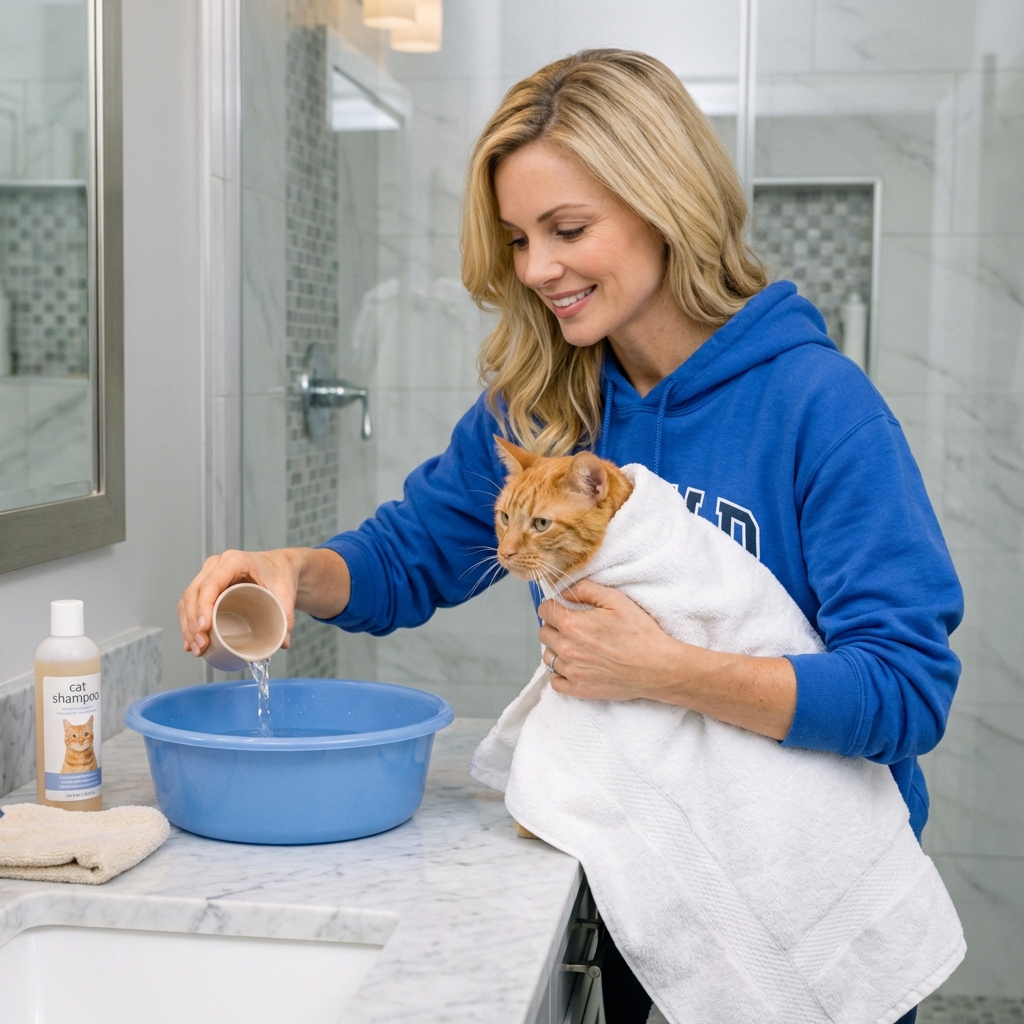
Use a cup or gentle sprayer. Start at the shoulders and work down the back, sides, and belly. Avoid spraying directly at the head, ears, and eyes.
4) Shampoo in small amounts
Massage shampoo into the coat like you are petting, not scrubbing. Pay attention to the problem areas like the rear end, belly, or paws.
5) Rinse very well
Leftover shampoo is a common cause of itchiness after a bath. Rinse until the water runs clear and there is no slippery residue left in the coat.
6) Clean the face separately
Use a warm, damp washcloth for the chin, cheeks, and around the eyes. Do not pour water over the face.
7) Towel dry right away
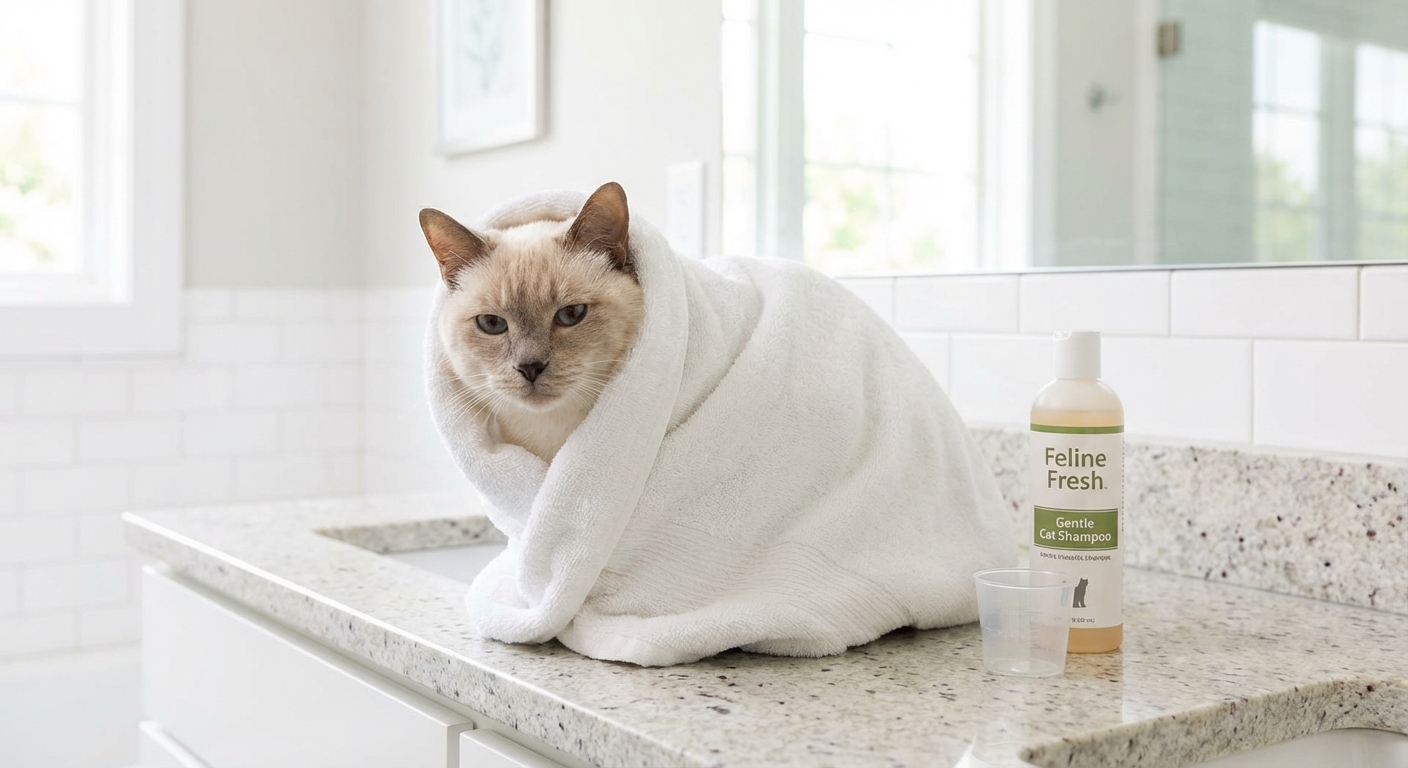
Wrap your cat in a towel burrito and blot. Rubbing can tangle long coats and make cats more irritated. Swap for a dry towel as needed.
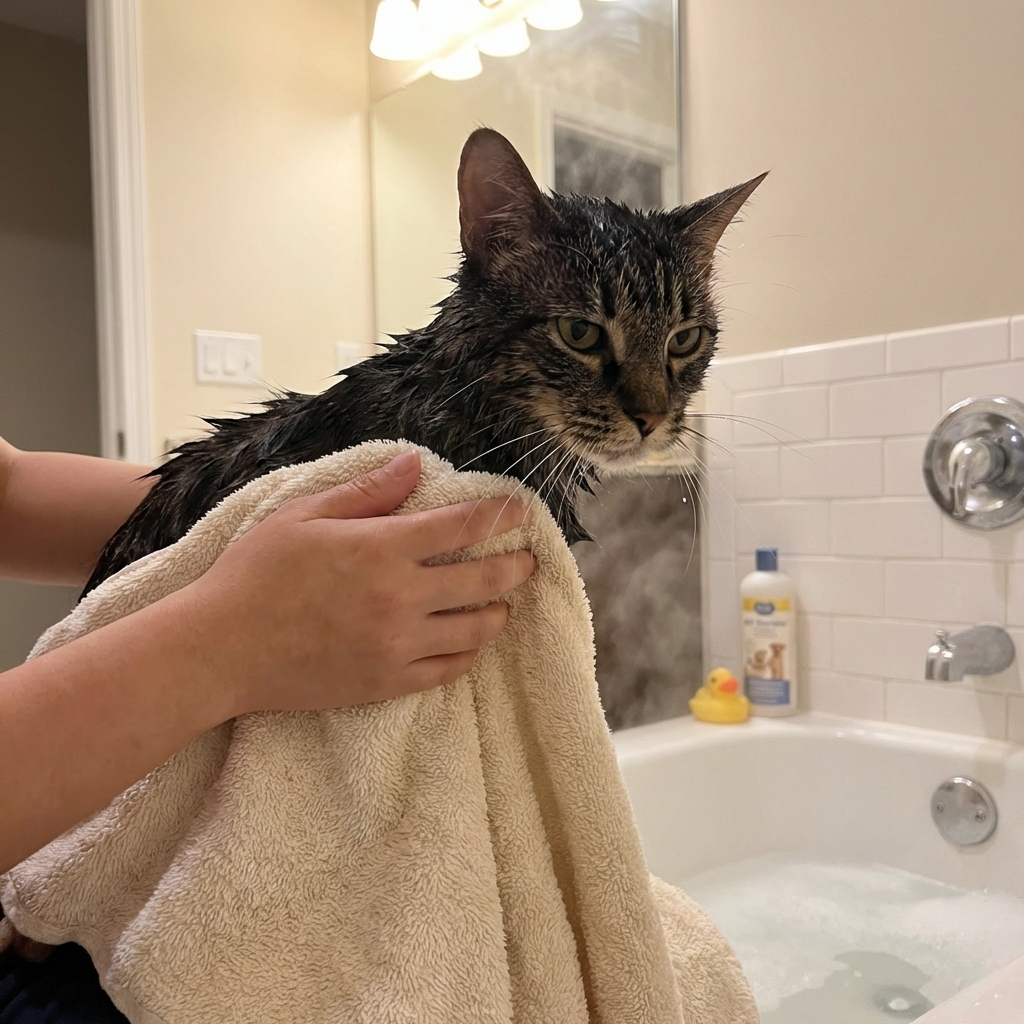
8) Finish drying safely
Move to a cozy room with no drafts and keep your cat warm until fully dry. If your cat tolerates it, you can use a hair dryer on the lowest heat and lowest noise setting, held far away and constantly moving. Never use high heat. Stop immediately if your cat seems distressed, is panting, or is trying to escape. Many cats do better with towel drying and time instead.
FAQs and special cases
“My cat has fleas. Should I bathe them?”
A bath can remove some fleas, but it is not enough by itself. Fleas live in the environment too. The most effective plan is veterinarian-recommended flea prevention for every pet in the home, plus washing bedding and vacuuming. If you use a flea shampoo, make sure it is specifically labeled for cats and follow directions carefully. Never use permethrin-containing dog flea products on cats, as they can be dangerous.
“Can I use Dawn dish soap?”
For an emergency grease situation, a small amount of plain, original blue dish soap is sometimes used by professionals to cut oil. It can be drying, so it is not ideal for routine bathing. Rinse extremely well, and avoid using it on broken or irritated skin. If your cat has been exposed to a chemical, toxin, or unknown substance, call your veterinarian or pet poison control before bathing, since some exposures require specific handling.
“What if my cat gets aggressive?”
Some cats escalate fast and can seriously injure you. If you see warning signs like growling, hard staring, ears pinned back, or thrashing, stop the bath. You can ask your veterinarian about options like grooming support, mild sedation for medically necessary baths, or safer alternatives like waterless shampoos and wipes.
How often can you bathe a cat?
For most cats, occasional baths only. If a vet prescribes a medicated shampoo, the schedule might be once or twice weekly for a short period. Over-bathing can dry skin, so follow professional guidance when treatment is involved.
What to watch for after a bath
Call your vet if you notice persistent redness, intense itching, hives, lethargy, repeated shaking, head tilt, or ongoing ear scratching after a bath. Mild grumpiness is common. Ongoing discomfort is not.
Bath alternatives
If the goal is “clean enough,” these can be game-changers, especially for cats who hate water:
- Pet wipes for paws, rear end, and dander
- Waterless foam shampoo that you towel out
- Spot cleaning with a damp washcloth
- Sanitary trim for long-haired cats (best done by a groomer or veterinary team)
If your cat is matted, please do not try to cut mats with scissors at home. Cat skin is thin and easy to nick. A groomer or vet can shave mats safely.
Safety tips
- Keep baths short: 5 to 10 minutes is plenty.
- Never restrain by the scruff to force compliance. It increases fear and can cause pain.
- Avoid the ears: Try to keep water out of the ear canal to reduce the risk of irritation.
- Check temperature: Lukewarm water only, not hot.
- Protect yourself: Long sleeves can help. If your cat is panicking, stop and reassess.
- Reward and release: End on a calm note with a treat, a quiet room, and space.
Your goal is not a perfect bath. Your goal is a safe bath that keeps trust intact. You can always do a second, better bath another day if you need to.
When to call a pro
Reach out for help if:
- Your cat has matted fur close to the skin
- Your cat has skin redness, sores, strong odor, or persistent dandruff
- You suspect ringworm, mites, or an infection
- Your cat is elderly, has heart or breathing issues, or gets stressed easily
- Anyone in the household is immunocompromised and the cat has a contagious skin concern
Professional grooming, or a vet-supervised bath, can be safer for everyone in these situations.