A vet assistant’s guide to the best way to bathe a cat without the drama—when to bathe, what to prep, cat-safe shampoo tips, rinsing, towel drying, and a...
Article
•
Designer Mixes
How to Bathe a Cat (If You Must)

Shari Shidate
Designer Mixes contributor
As a veterinary assistant, I can tell you this up front: most cats do not need regular baths. They are expert groomers, and for many cats, a bath is more stressful than it is helpful. But sometimes life happens. A skunk encounter, a medical mess, a sticky substance on the coat, flea dirt, or a senior cat who cannot groom well can make a bath the kindest option.
The goal is not a perfect spa day. The goal is a quick, safe clean-up that protects your cat’s skin, keeps you from getting scratched, and gets everyone calm again.
Quick note: This is general guidance. If your cat has medical issues, skin disease, or extreme fear, your veterinarian is the best source for a plan that fits your cat.
Decide if a bath is necessary
Before you turn on the faucet, consider a lower-stress option. Many cats do great with spot cleaning instead of a full bath.
Try this first
- Warm damp washcloth for a small dirty area, followed by towel drying.
- Pet-safe wipes (unscented, made for cats) for light grime.
- Waterless cat shampoo foam if your cat tolerates rubbing and brushing.
- Careful brushing to remove debris and distribute oils, especially for long-haired cats.
If your cat is contaminated with something potentially toxic (paint, essential oils , certain insecticides, automotive fluids), do not wait. Call your veterinarian right away for product-specific guidance. In the US, you can also contact ASPCA Animal Poison Control or Pet Poison Helpline. Some substances require immediate bathing, and some can spread or worsen if you use the wrong method.
Set up for a calmer bath
Most cat bath disasters happen because we are not prepared. Set up first, then bring the cat in last.
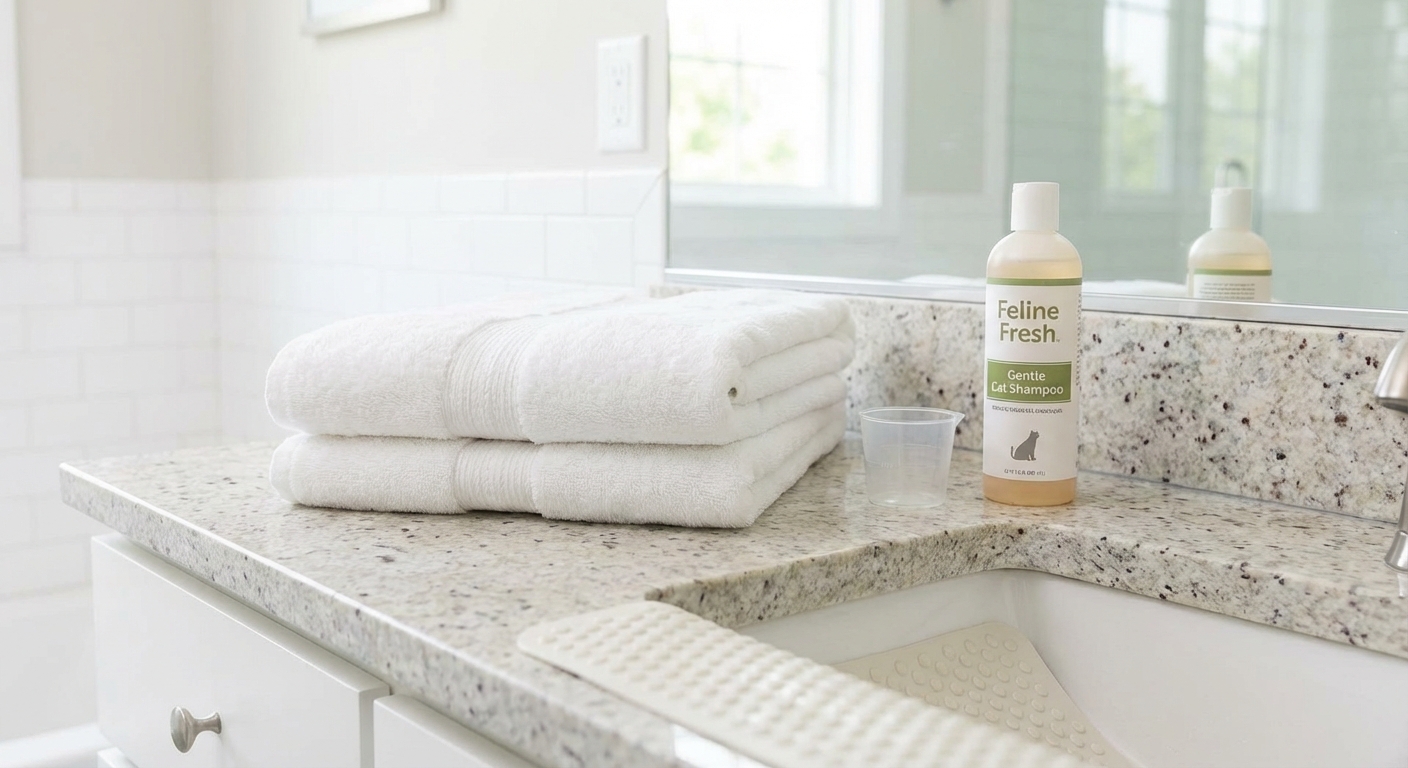
What you will need
- Cat-safe shampoo (cat-specific, fragrance-free is ideal, or a vet-recommended gentle pet shampoo). Avoid human shampoo, dish soap, and products with essential oils unless your vet specifically instructs it. Avoid medicated shampoos unless prescribed.
- 2 to 3 towels (one for the counter or floor grip, one for drying, one spare).
- Non-slip mat for the sink or tub if you have one.
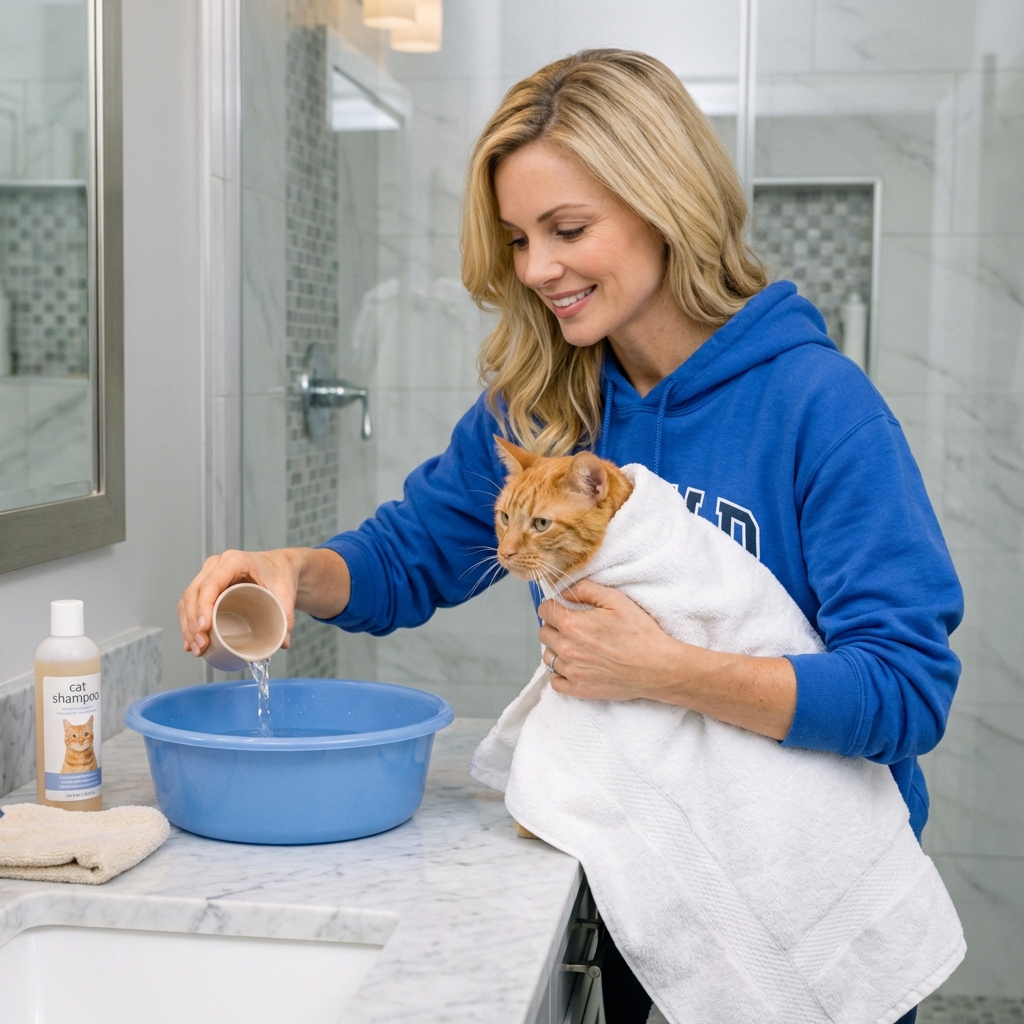
- Plastic cup or handheld sprayer for gentle rinsing.
- Cotton balls to loosely place in ears to reduce water entry (remove immediately after).
- Brush or comb for after.
- Treats and a calm voice.
Choose the right location
A sink is often easier than a big tub because it feels more contained. Close the bathroom door so there is no escape route for a sprint through the house.
Safety first
Your cat’s skin is more sensitive than many people realize. You want lukewarm water, gentle handling, and minimal time wet.
- Trim your cat’s nails earlier in the day if possible, or ask your vet or groomer to do it. Even a calm cat can panic when wet.
- Wear long sleeves and consider thick, snug-fitting gloves if you are worried about scratches. Avoid bulky gloves that make you clumsy.
- Keep water out of ears and eyes. Do not pour water over the face.
- Avoid scruffing. It often increases fear and can be painful for adult cats. Use the least restraint possible, and stop if your cat is struggling.
If your cat is already hissing, open-mouth breathing, or thrashing when you try to handle them, it is okay to stop. A stressed cat can overheat, especially if they are struggling or panting in a warm bathroom, and you can get badly scratched. In those cases, call your vet and ask about safe grooming support or medication for future baths.
Step-by-step bath
Aim for 5 to 10 minutes of actual bathing time. The longer it drags on, the harder it gets for everyone.
1) Brush first
Brush out loose fur and small tangles while the coat is dry. Wet mats tighten and become harder to remove.
2) Use lukewarm water
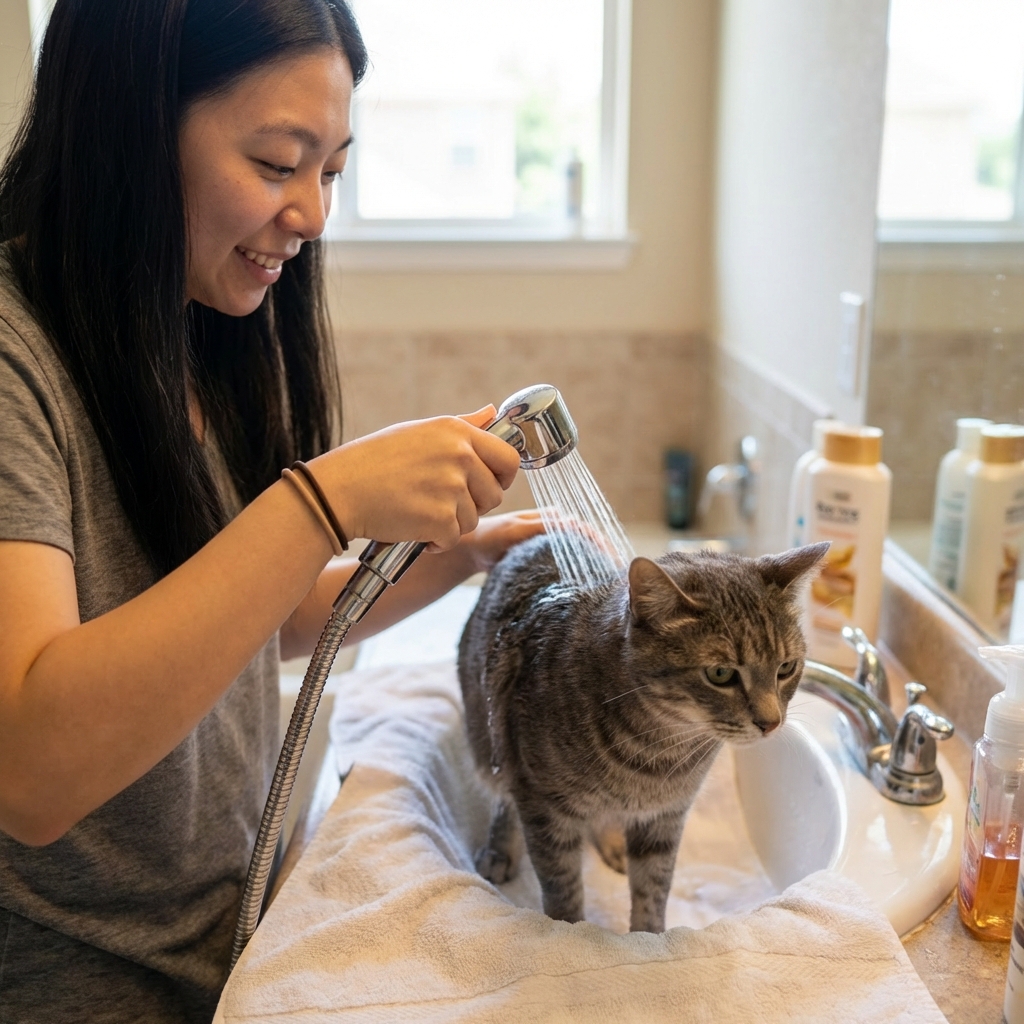
Use lukewarm water and test it with your wrist. Fill the sink or tub with just a few inches, or use a gentle spray. Many cats panic when they hear rushing water, so turn the faucet off before bringing your cat in if that helps.
3) Wet the body slowly
Support your cat’s chest and belly. Wet from the neck down, focusing on the dirty area. Keep the face dry. Use a damp cloth for the chin or cheeks if needed.
4) Lather, then rinse well
Use a small amount of shampoo and work it in with your fingertips. Then rinse thoroughly. Leftover soap can cause itching, skin irritation, and dryness or flaking.
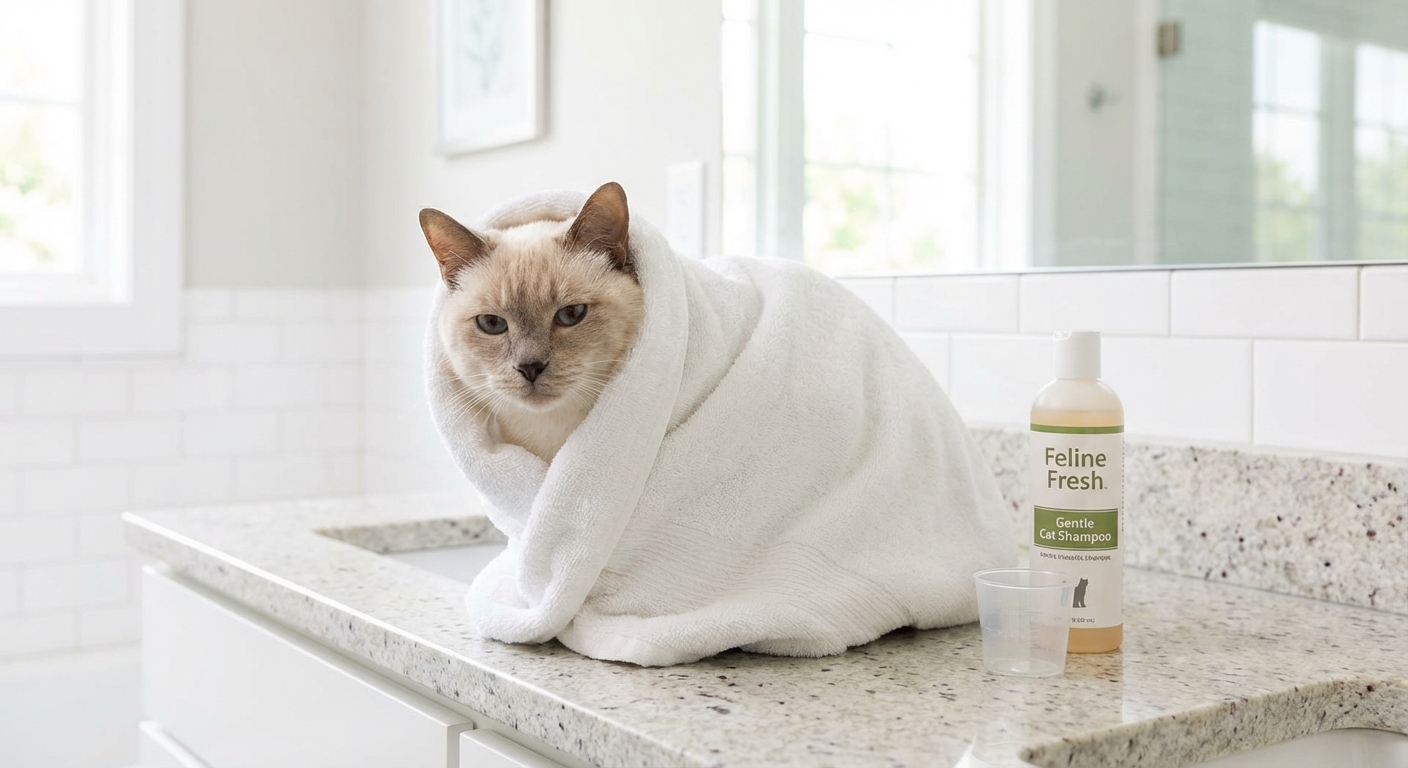
5) Towel burrito right away
Lift your cat onto a towel and wrap snugly, leaving the face out. Press and blot. Do not rub aggressively, especially for long-haired cats.
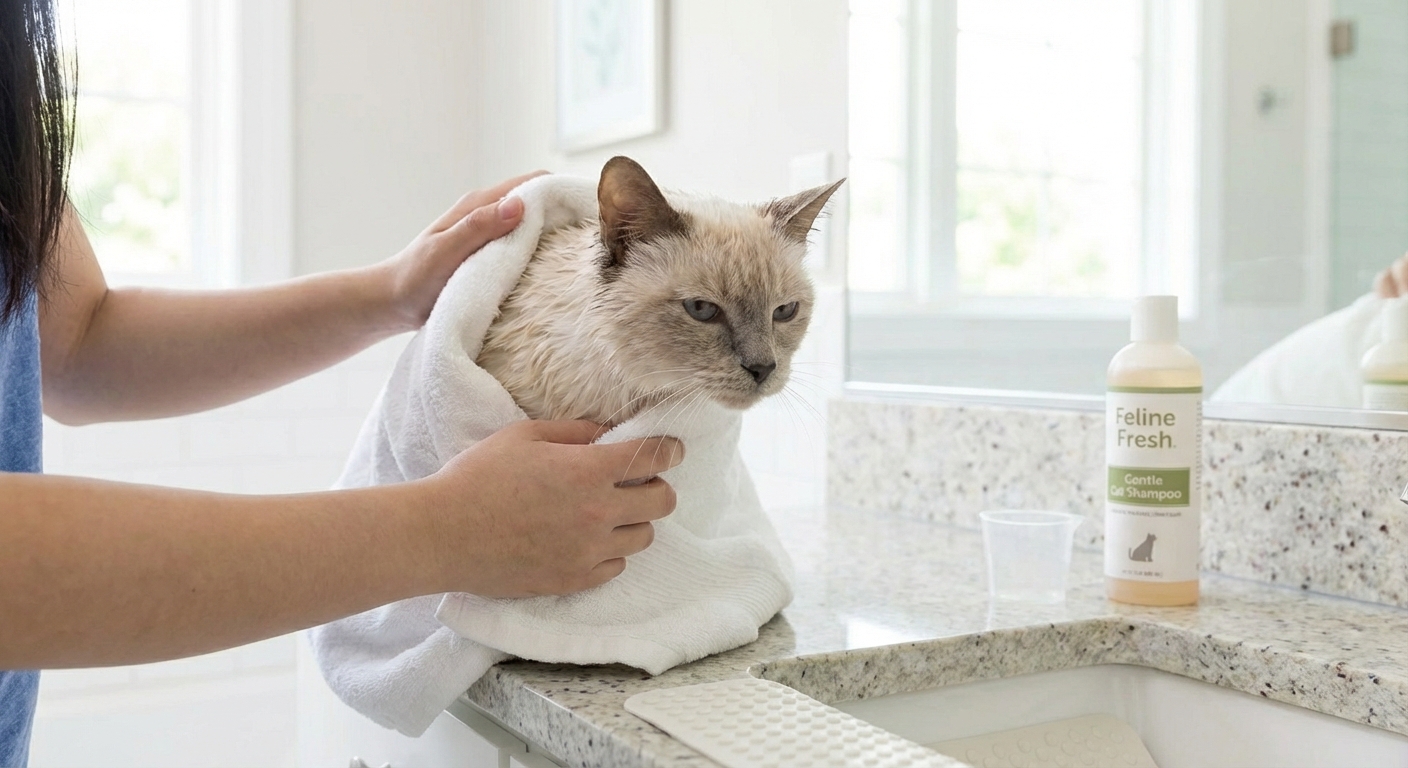
6) Dry in a warm room
Many cats hate hair dryers. If you use one, keep it on low heat, low airflow, and at a distance, and stop if your cat becomes stressed. Often, towel drying plus a warm, draft-free room is the best compromise.
After drying, offer a high-value treat and let your cat retreat somewhere quiet.
After-bath check: Call your vet if you notice persistent shivering , lethargy, weakness, continued drooling, fast breathing, or open-mouth breathing after the bath.
Special situations
Fleas
Bathing alone rarely solves a flea problem. It can remove some fleas and flea dirt, but you will still need a vet-recommended flea preventive and environmental cleaning. If you bathe a flea-infested cat, lathering a gentle shampoo band around the neck may help reduce flea migration toward the head, but it does not prevent it. Keep soap away from the eyes, nose, and mouth.
Sticky or greasy substances
For gum, sap, or adhesives, do not pull. Often, careful trimming or a pet-safe approach is needed. Some oils and solvents can be dangerous for cats. Call your vet before applying anything new to the coat, especially if your cat might lick it.
Senior cats
These cats may need more help grooming, especially with arthritis. Keep baths short, use warm towels, and consider frequent spot cleaning instead of full baths.
Long-haired cats with mats
Mats are painful and can hide skin infections. Bathing a matted coat can make matting worse. A vet or groomer may need to clip the mats safely.
Kittens
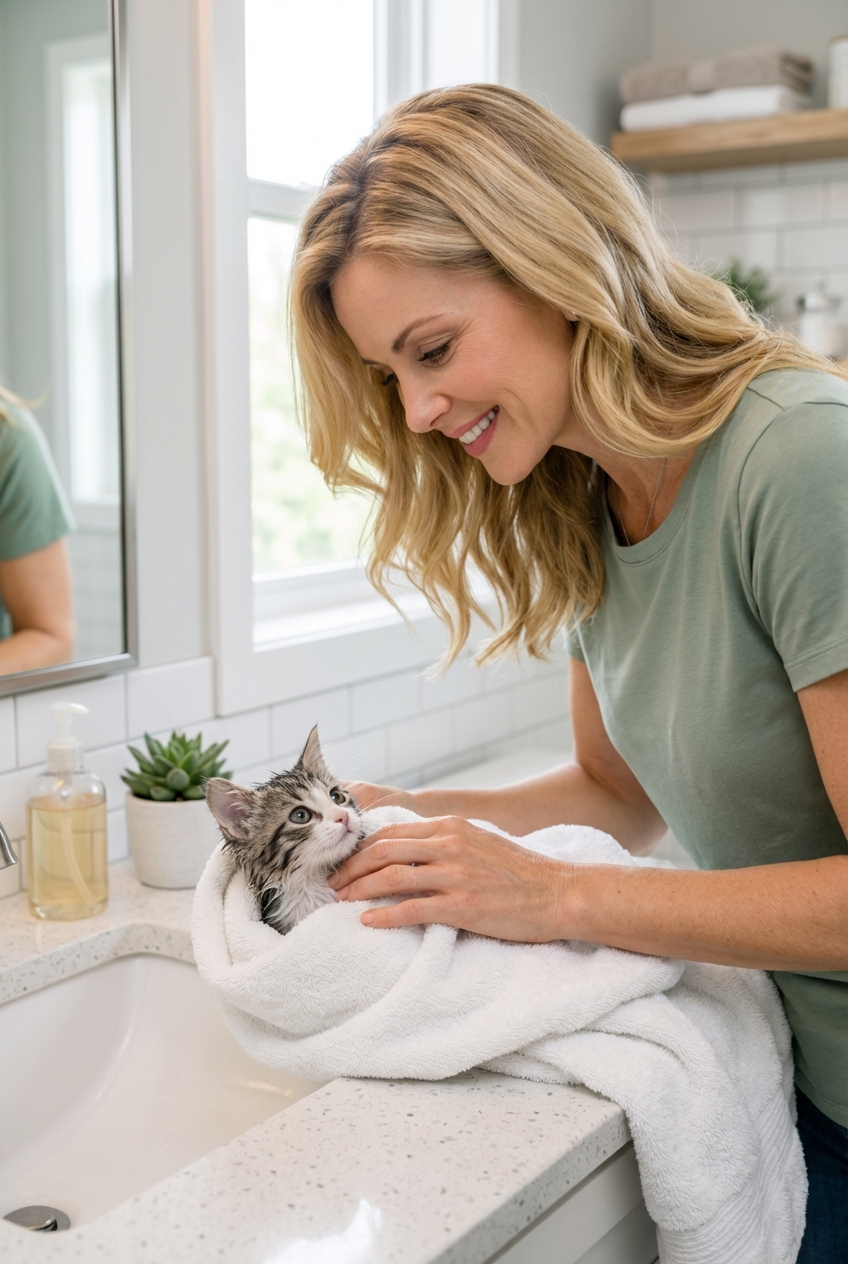
Kittens chill easily. If you truly need to bathe a kitten, keep the room warm, work fast, and dry thoroughly. If you are unsure, ask your veterinarian for the safest option.
What not to do
- Do not use essential oils on or around your cat. Many are toxic to cats, and cats metabolize certain compounds differently than dogs and people.
- Do not use human shampoo or heavily fragranced products. Cats are sensitive to scents and skin pH matters.
- Do not submerge your cat or pour water over the face.
- Do not chase your cat around the house when it is bath time. It increases fear and makes future handling harder.
- Do not fight through panic. If you are losing control of the situation, stop and call your vet.
When to call the vet
Skip the DIY bath and get professional help if:
- Your cat has open sores, severe flaking, scabs, or hair loss .
- Your cat is elderly, sick, or very stressed with handling.
- You suspect exposure to a toxin (including topical dog medications, certain plants, or chemicals).
- Your cat’s coat is severely matted.
- Your cat is breathing fast, drooling excessively, or seems weak during stress.
Sometimes the safest bath is the one done at the clinic, where we can prevent injuries and keep your cat’s temperature and stress under control.
Make next time easier
If your cat may need future baths, small training steps can help:
- Practice sitting in the empty sink for treats.
- Touch paws and legs briefly, reward, then stop.
- Do mini-clean sessions with a damp cloth so water is not scary.
- Choose calm times of day, not right after a household disruption.
Your cat does not need to love baths. They just need to feel safe enough that it can be done quickly when it truly matters.