A vet assistant’s guide to the best way to bathe a cat without the drama—when to bathe, what to prep, cat-safe shampoo tips, rinsing, towel drying, and a...
Article
•
Designer Mixes
How to Bathe a Cat

Shari Shidate
Designer Mixes contributor
Bathing a cat can feel like a full-contact sport, but it does not have to be. As a veterinary assistant in Frisco, Texas, I have seen plenty of cats tolerate baths calmly when we set them up for success. The key is this: most cats do not need frequent baths, so when you do bathe, make it as low-stress, warm, and efficient as possible.
This guide walks you through when a bath is truly needed, how to prep like a pro, the safest step-by-step bathing method, and what to do if your cat panics. You will also learn simple alternatives, like spot cleaning, that often work just as well.
Do cats really need baths?
Most healthy adult cats are excellent self-groomers. In many homes, routine bathing is unnecessary and can add stress that outweighs any benefit. That said, there are times when bathing is the healthiest choice.
Common reasons a bath helps
- Something sticky, greasy, or smelly that you cannot safely cut out or wipe off.
- Flea dirt or heavy flea exposure (with guidance from your veterinarian on safe products).
- Medical or mobility issues such as obesity, arthritis, or dental pain that reduce grooming.
- Long-haired cats who get recurring mats or fecal contamination around the rear end.
- Skin conditions where your veterinarian recommends a medicated shampoo.
When to skip the bath and call your vet
- Open wounds, hot spots, or significant skin redness.
- Sudden dandruff, hair loss, scabs, or intense itching.
- Any cat that is lethargic, not eating, or seems painful.
- Kittens or seniors with trouble maintaining body temperature.
If your cat has a medical skin issue, always ask about the exact shampoo, whether it needs to be diluted, and the contact time before rinsing. Human shampoos and many dog products are not safe for cats.
Before you start: low-stress setup
The biggest mistake I see is trying to “figure it out” while the cat is already wet. Preparation reduces total bath time, which reduces stress for everyone.
Supplies checklist
- Cat-safe shampoo (fragrance-free is usually best). Use a medicated shampoo only if prescribed.
- 2 to 3 large towels, plus one extra for you.
- Non-slip surface like a rubber bath mat or folded towel for the sink or tub.
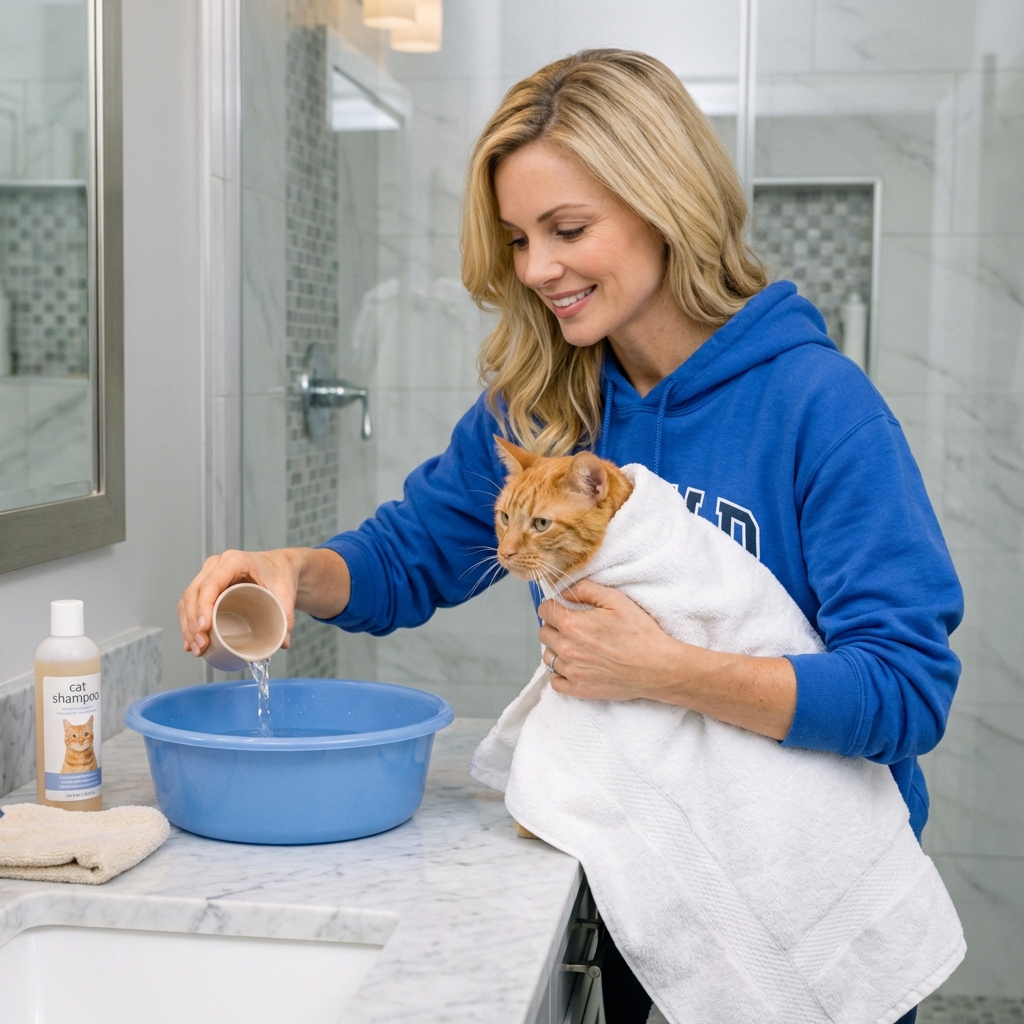
- Rinse tool: a cup, pitcher, or handheld sprayer on low.
- Cotton balls to place loosely at the ear opening (do not push into the ear canal, and remove immediately after to avoid irritation).
- Treats your cat loves, or a lickable treat for after.
- Optional: a grooming brush, blunt-tip scissors for severe rear-end mess (only if you are confident), and a second adult helper.
Choose the right location
Many cats do best in a sink because it can feel more secure than a slippery bathtub. Close the door to prevent escapes. Keep the room warm and quiet. Turn off loud fans and keep other pets away. Never leave your cat unattended near standing water.
Trim nails and brush first
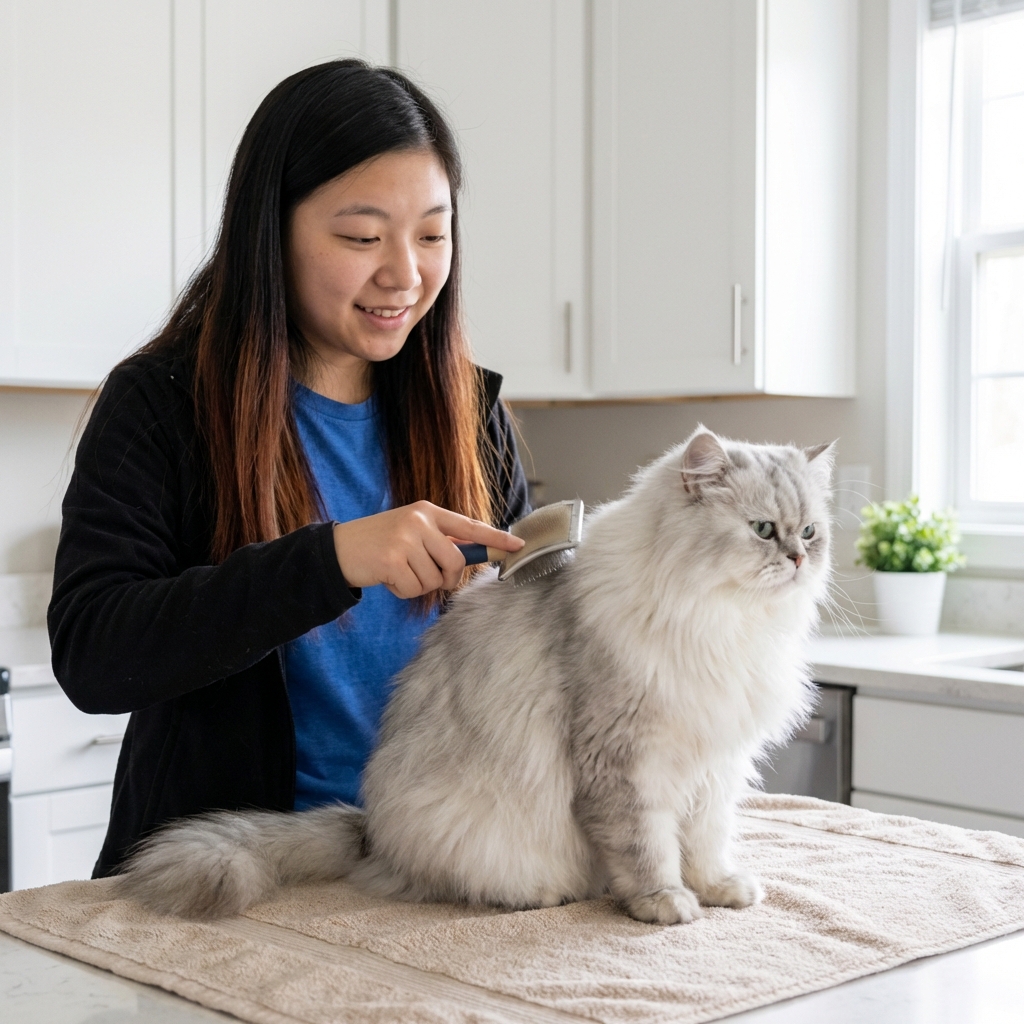
Trim nails earlier the same day if possible. Brush thoroughly before bathing. Water tightens mats, so a bath can make tangles worse if you skip this step.
Water, shampoo, and safety
Use lukewarm water
A good rule is “baby-bath warm.” Too cool can chill your cat, and too warm can be uncomfortable and increase struggling. Fill the sink or tub with just a few inches if you plan to use standing water, but many cats do better with gentle wetting and rinsing instead.
Protect the ears and eyes
- Do not pour water over the face.
- Use a damp washcloth for the head and cheeks if needed.
- Place cotton balls at the ear opening to help block splashes, then remove them right after.
Choose the right shampoo
Pick a shampoo labeled for cats. Avoid essential oils unless explicitly approved for cats by your veterinarian. Cats are especially sensitive to many ingredients found in “natural” products.
Important: Never use dog flea and tick products on cats, especially products that contain permethrin. If you are not sure what is in a product, do not use it.
How to bathe a cat
Your goal is a short bath that gets the job done. Most cats tolerate 5 to 10 minutes far better than a long “perfect” bath.
Before you start, read the shampoo label and follow your veterinarian’s instructions. Some products need dilution, and medicated shampoos may require a specific contact time before rinsing.
1) Calm entry and secure footing
Place your non-slip mat or towel in the sink or tub. Bring your cat in wrapped in a towel if needed. Set them down gently so their paws feel traction.
Support your cat’s body and keep a steady, gentle hold. Avoid forcing joints into awkward positions. If you have a helper, have them stabilize the shoulders and chest while you wash and rinse.
2) Wet the body first
Start at the neck and work back. Use a cup or sprayer on low. Keep one hand on your cat for reassurance and control.
3) Lather from neck to tail
Apply a small amount of shampoo and massage it in. Focus on greasy areas like the base of the tail, belly, and rear end. Avoid the eyes, mouth, and ear canals.
4) Rinse thoroughly
Rinse until the water runs clear and you no longer feel slippery residue. Leftover shampoo can cause irritation or flaking.
5) Face wipe only if needed
Use a warm damp cloth to wipe the face. For crusty debris around eyes or nose, use gentle strokes and stop if your cat becomes upset.
6) Towel-dry right away
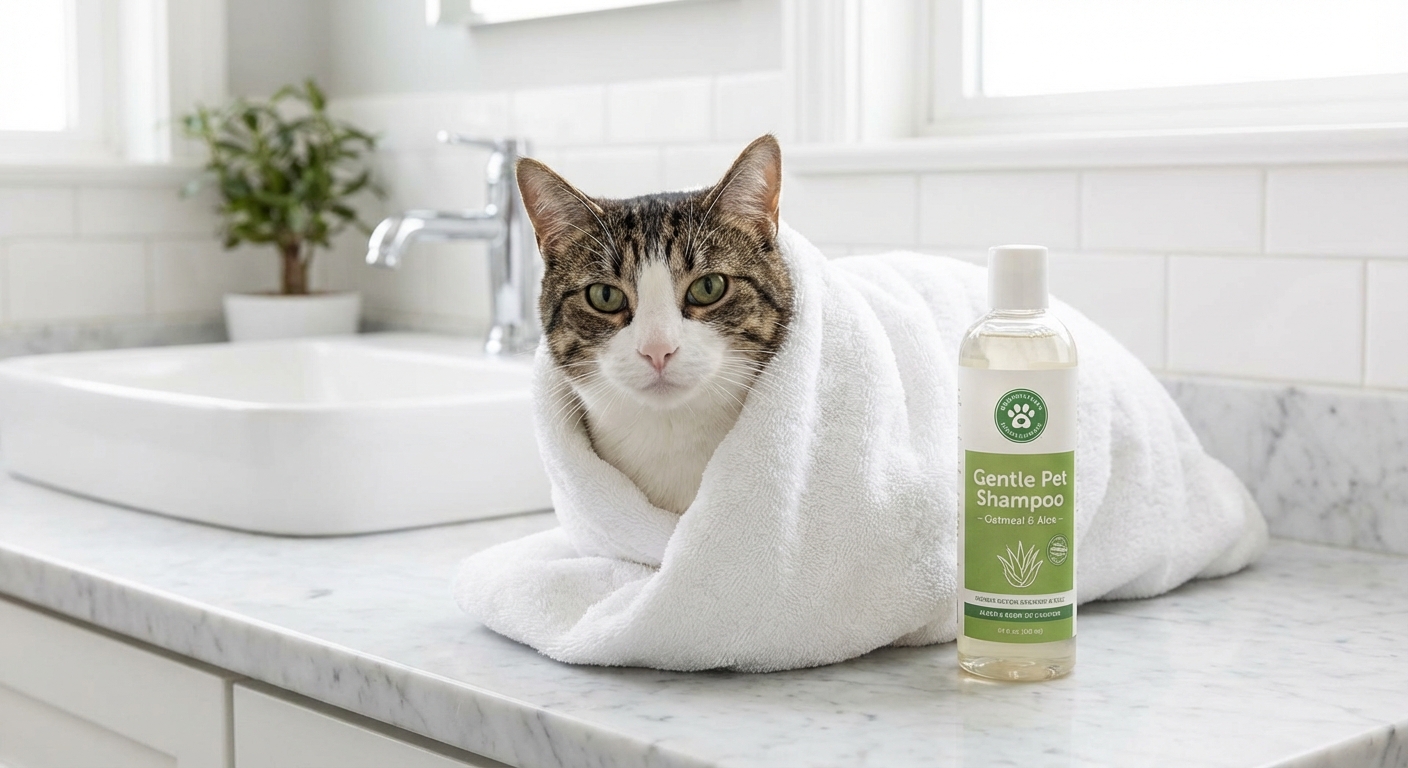
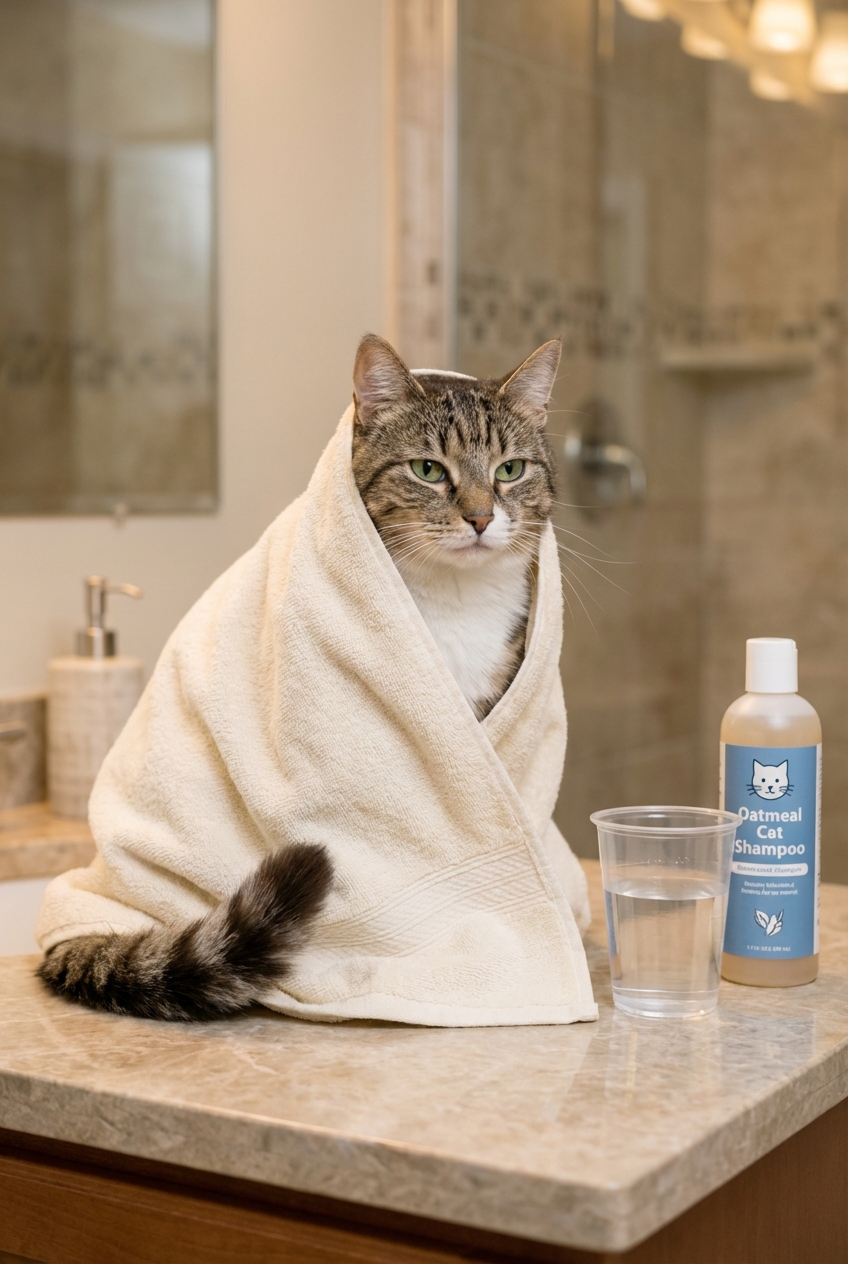
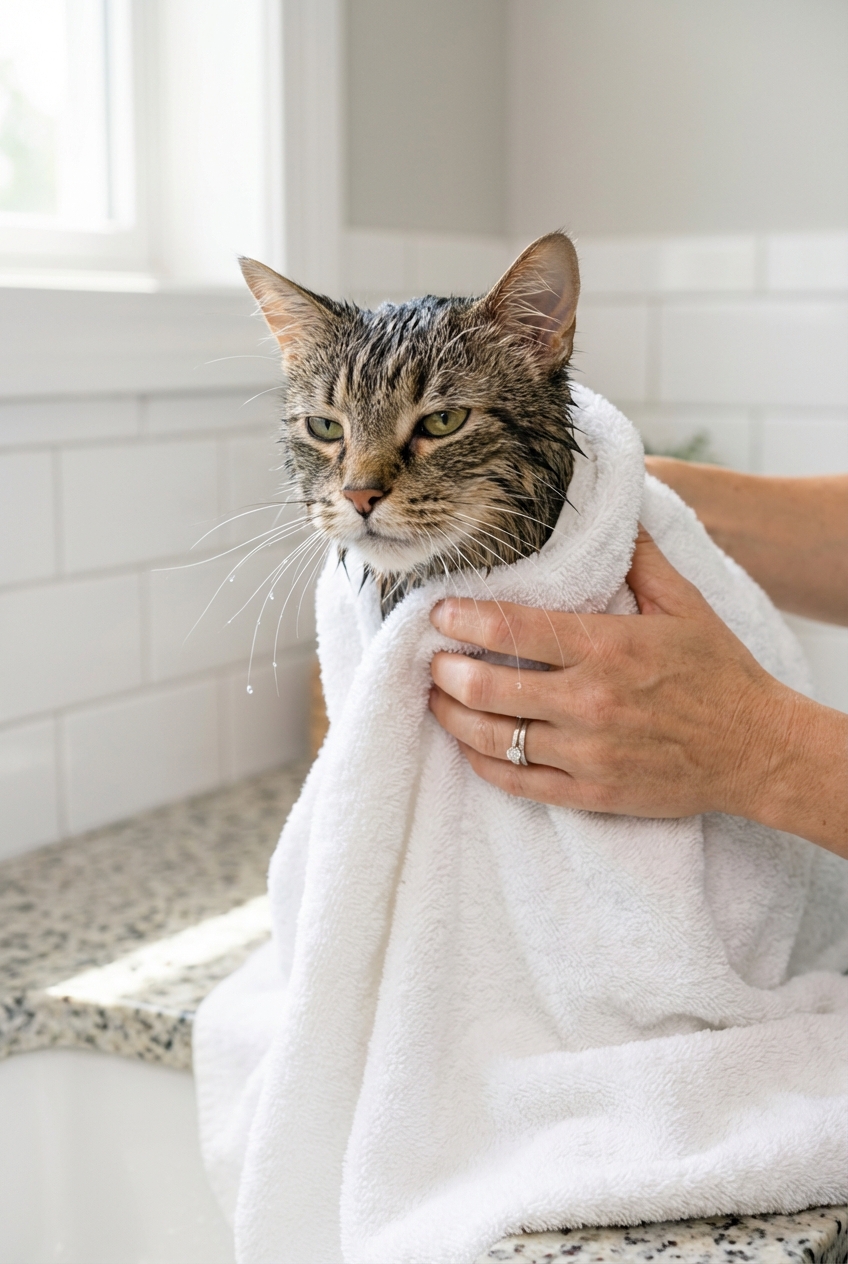
Lift your cat onto a towel and wrap snugly, like a kitty burrito. Press and blot rather than rub. Swap to a dry towel if the first becomes soaked.
Drying without a meltdown
Many cats hate blow dryers because of noise and air pressure. Towel drying is often enough, especially for short-haired cats.
Best drying options
- Towel burrito with gentle blotting.
- Warm room with no drafts. Keep them indoors until fully dry.
- Brush as they dry for long-haired cats to prevent tangles.
- Blow dryer only if tolerated, on low heat and low airflow, held far away. Stop at any sign of distress.
After drying, reward with calm praise and a high-value treat. Ending on a positive note helps future grooming go more smoothly.
Monitor for shivering. If your cat cannot warm up with extra towel drying and a warm room, or if shivering is persistent, contact your veterinarian.
How often to bathe
For most cats, only as needed is best. Over-bathing can strip oils, leading to dry skin and a dull coat.
- Healthy short-haired cats: rarely, unless dirty.
- Long-haired cats: occasional baths may help, but regular brushing matters more.
- Medical shampoo cats: follow your veterinarian’s schedule exactly.
Alternatives to a full bath
If your cat is only mildly dirty, you may not need a full soak.
Gentle options
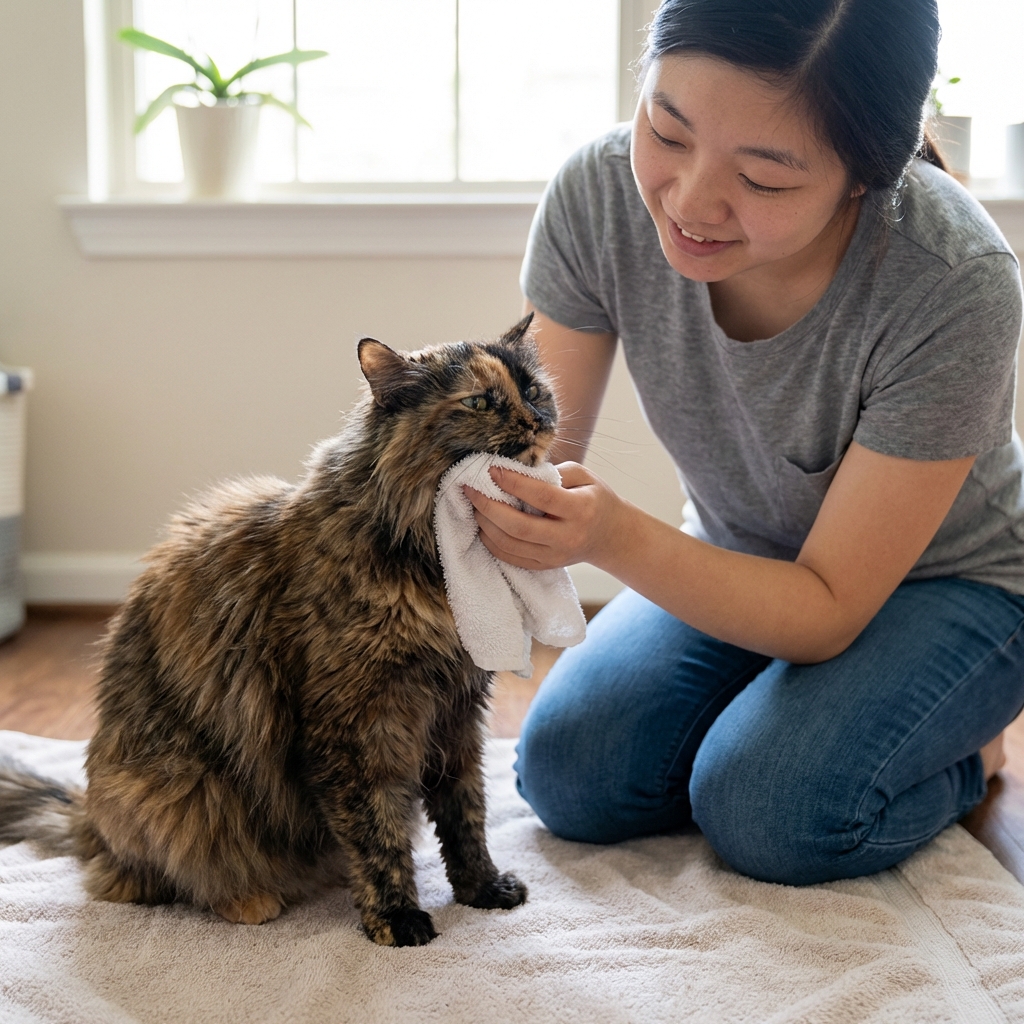
- Spot cleaning with a warm damp cloth and a tiny drop of cat shampoo, then wipe with plain water.
- Pet wipes made for cats (unscented is best).
- Waterless foam shampoo for cats, used sparingly and brushed out well.
- Sanitary trim around the rear end for long-haired cats, ideally done by a groomer or veterinary team if matting is severe.
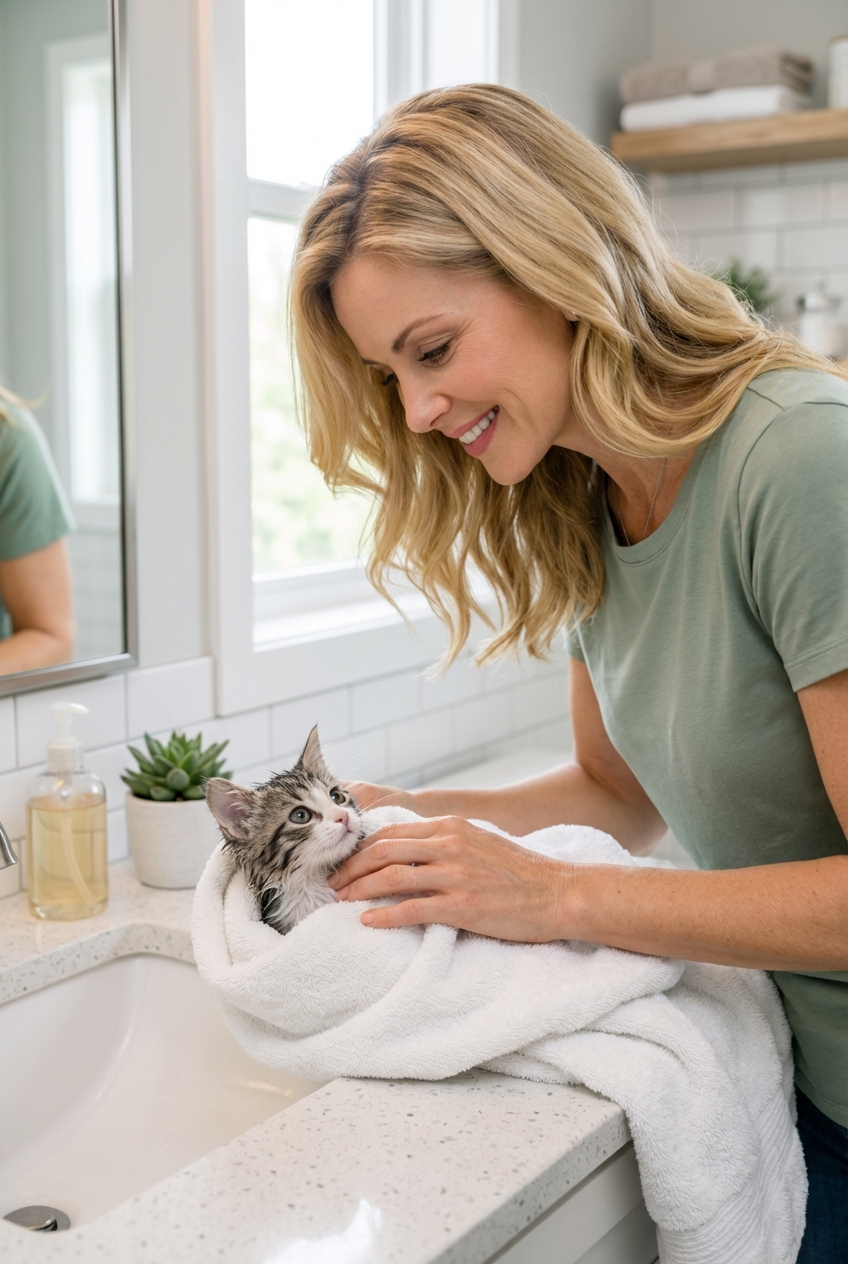
For very young kittens, skip full baths unless your veterinarian instructs you to do one. A warm damp cloth and careful towel drying are often the safest approach at home.
Fleas and other situations
If you see fleas
A bath may remove some fleas, but it rarely solves the problem by itself. The most effective path is vet-approved flea prevention for every pet in the household, plus environmental control. Avoid dog flea shampoos and never use products not labeled for cats (especially anything containing permethrin).
If your cat was sprayed by a skunk
Skunk odor is a special challenge. Ask your veterinarian what is safe for cats before trying home mixtures. Many popular DIY recipes can irritate skin or be dangerous if ingested during grooming.
If your cat got into something toxic
If your cat has oil-based paint, chemicals, or unknown substances on the coat, do not automatically bathe first. Call your veterinarian or a pet poison hotline right away for the safest steps. In some cases, you may be advised to rinse with plain water right away, but in other cases water can spread a substance or worsen exposure, so get guidance before you act.
If your cat panics
Safety comes first. If your cat is thrashing, vocalizing intensely, or trying to bite, it is okay to stop. A partial clean is better than an injury.
De-escalation tips
- Pause and towel wrap for 30 to 60 seconds.
- Lower stimulation: quieter water, dimmer light, fewer movements.
- Use a helper to steady gently and keep the bath short.
- Switch to spot cleaning if the mess is localized.
Ask your vet about calming support
For cats who truly need baths for medical reasons, your veterinarian can recommend a plan that may include behavior strategies, pre-visit pharmaceuticals, or professional grooming in a controlled setting. You are not failing if you need help. You are protecting your cat.
What not to do
- Do not use human shampoo or dog products on cats.
- Do not use essential oils unless your veterinarian has explicitly okayed them for cats.
- Do not scrub, “scruff,” or wrestle your cat into submission. Use steady support and take breaks.
- Do not blast the sprayer or use loud running water if your cat is fearful. Keep water gentle.
- Do not force a blow dryer if your cat is distressed.
After-bath health check
A bath is also a great moment to notice changes you might miss day-to-day.
- Check for new lumps, scabs, or tenderness.
- Look for ear debris or bad odor (do not clean deep at home unless instructed).
- Watch for excessive scratching after the bath, which can signal irritation or leftover shampoo.
- Watch for red flags like persistent shivering, trouble breathing, or extreme lethargy.
If you see anything concerning, take a clear photo and contact your veterinarian.
Simple plan to start
If you are nervous, try this gentle plan:
- First attempt: spot clean only plus treats.
- Next time: quick rinse of the back end only if needed.
- Full bath: only when you have supplies ready, time blocked off, and a warm room.
The bottom line is that a calm, short, safe bath beats a long, stressful one every time.