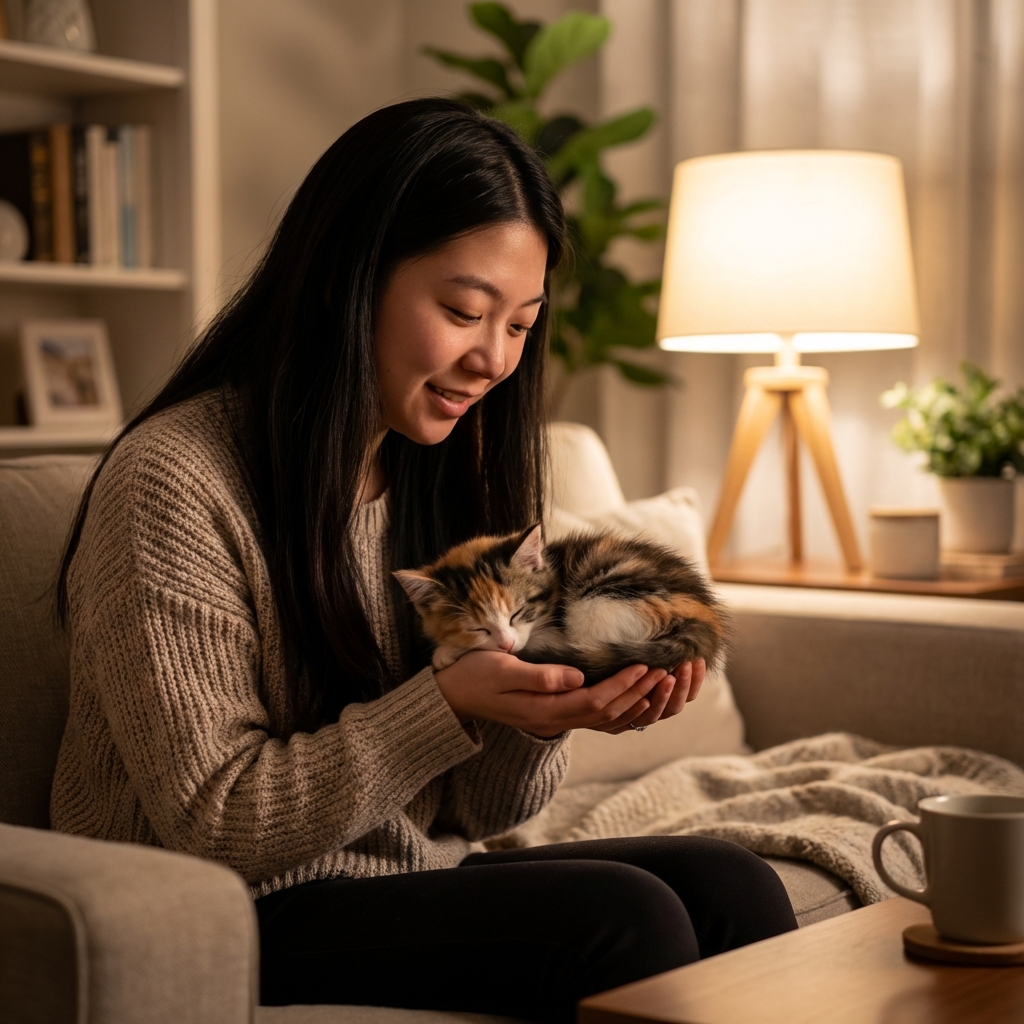
Get ready for your new kitten with a vet assistant’s practical guide: safe room setup, kitten-proofing to prevent emergencies, must-have supplies, feeding ...
Article
•
Designer Mixes
How to Acclimate a Kitten to a New Home

Shari Shidate
Designer Mixes contributor
Bringing home a kitten is exciting and, honestly, a little overwhelming for everyone involved. Your kitten just left their mom, littermates, and familiar smells. Even the most confident baby cat can act shy, vocal, or extra restless those first days. The good news is that with a calm setup and a few practical care and training steps, most kittens settle in quickly and build trust fast.
Quick note on age: This guide assumes a typical adoption age of about 8 to 12 weeks. If your kitten is younger than 8 weeks, tiny, or underweight, they may need help with warmth, feeding frequency, and faster veterinary support.
Before they arrive: set up a safe room
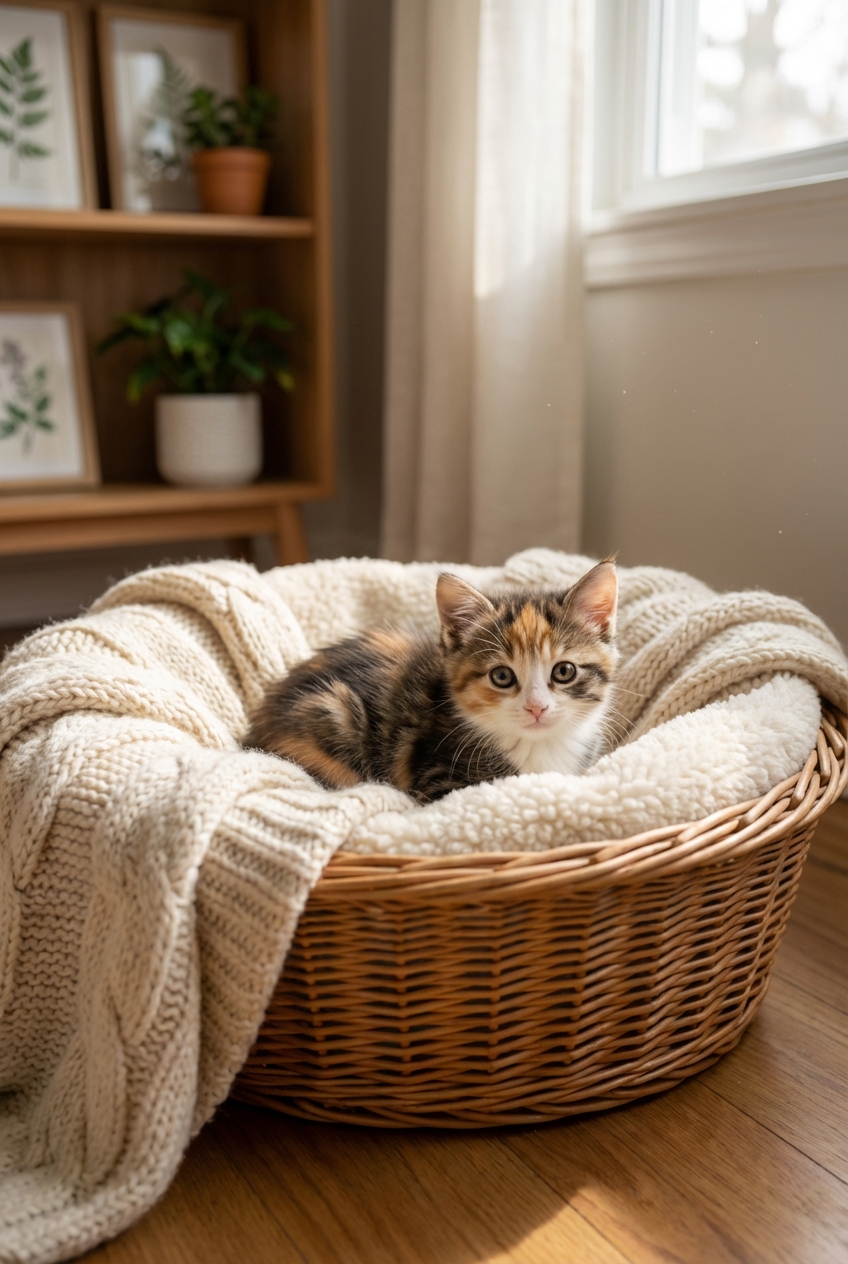
For the first several days (often about a week), many kittens do best with a single “home base” room. This reduces stress and makes litter training much easier. Some kittens are ready sooner, and some need longer. Follow your kitten’s comfort level.
What to include
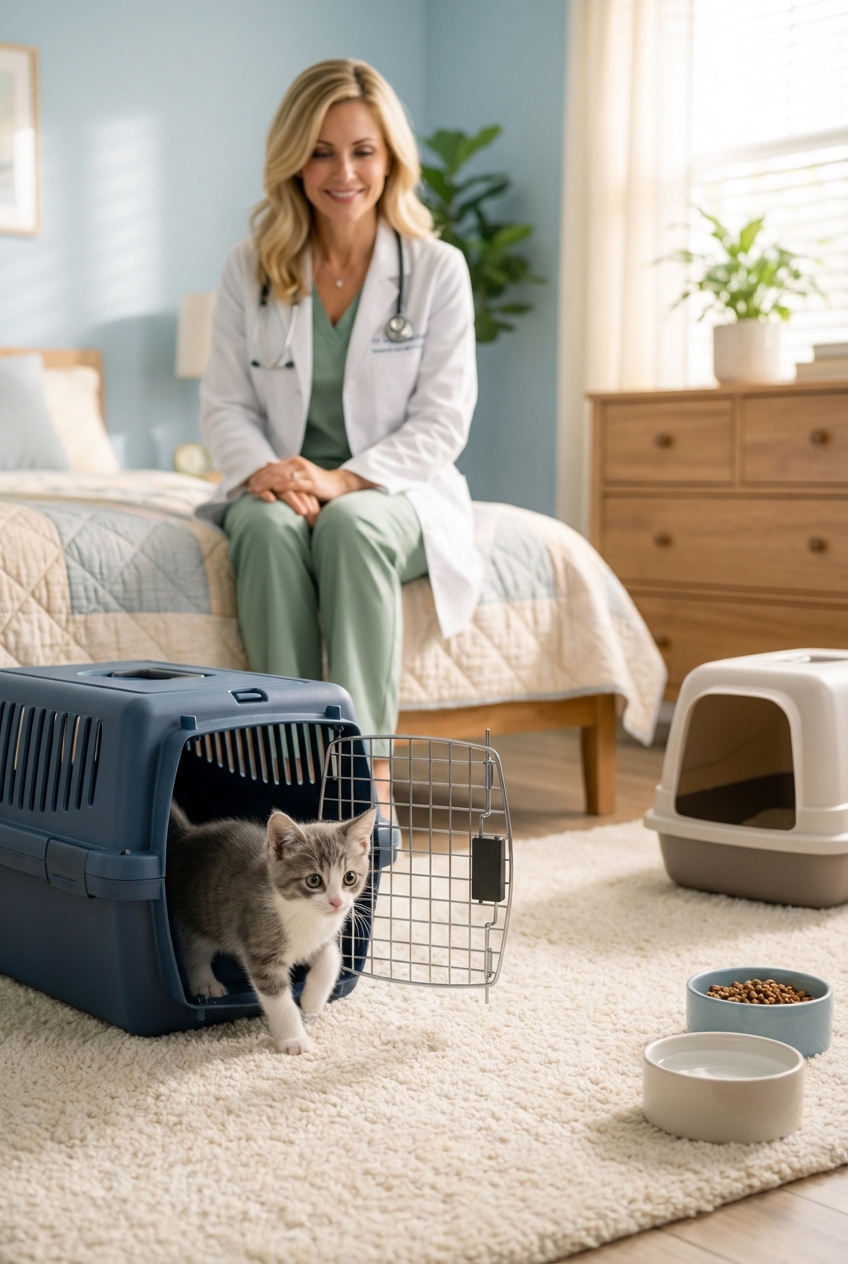
- Litter box in a quiet corner, far from food and water.
- Food and water in shallow bowls. Some cats drink more when water is placed a little away from food, so it can be worth trying both setups.
- Soft bed and hiding spots like a covered cat bed or a cardboard box on its side.
- Scratching options like a vertical scratch post and a horizontal scratch pad.
- Safe toys like wand toys (used with supervision) and lightweight balls.
Make the room kitten-proof
- Hide or cover electrical cords.
- Remove toxic plants, string, hair ties, and small items they could swallow.
- Avoid reclining and rocking chairs in the kitten room, or keep them fully blocked off. Kittens can crawl into mechanisms and get seriously hurt when the chair moves.
- Check windows and ensure screens are secure.
- Block access behind appliances or tight gaps where a kitten could get stuck.
- Keep washer and dryer doors closed and check inside before use.
- Keep toilet lids closed.
In my experience as a veterinary assistant, many “first-week accidents” are really environmental issues. A calm, simple space prevents a lot of problems before they start.
Day 1: the first hour matters
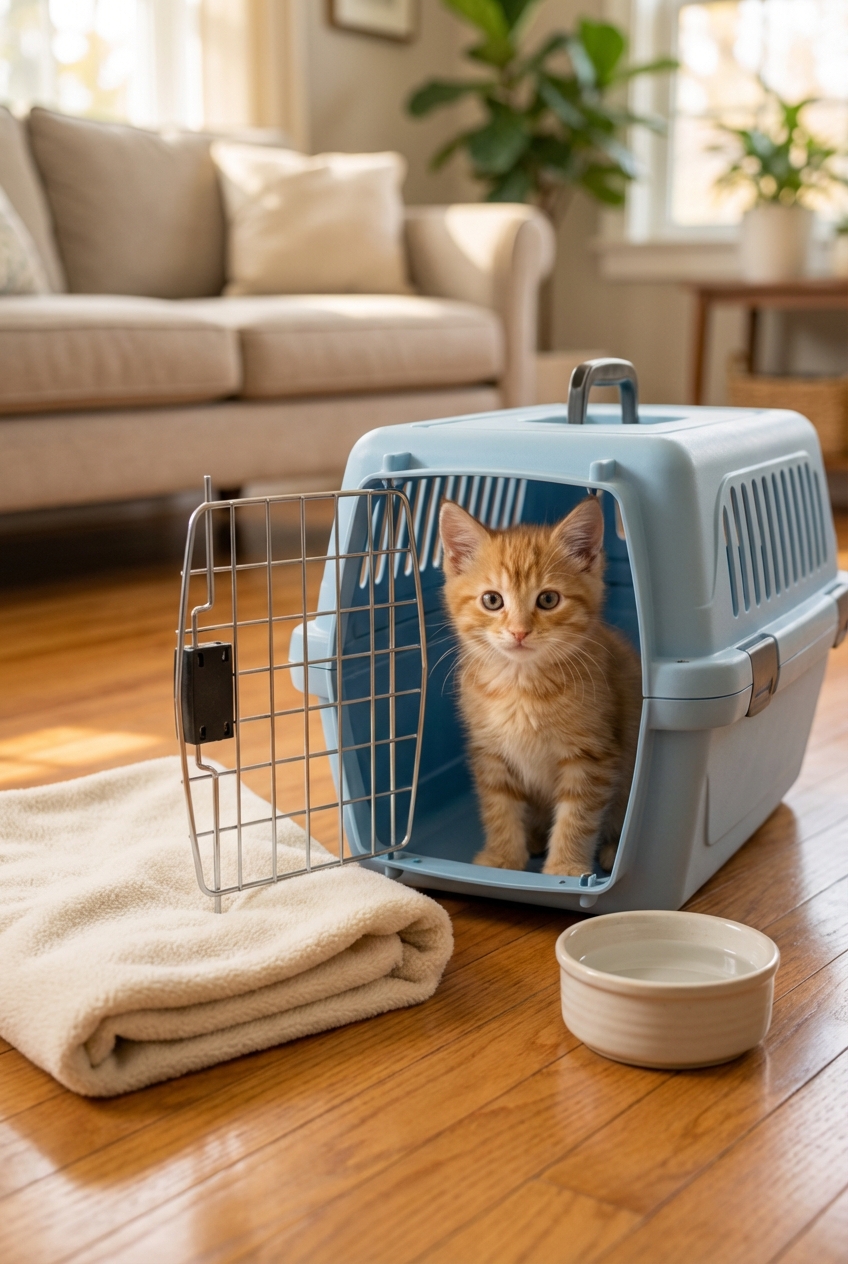
When you bring your kitten home, keep things quiet. Limit visitors. Avoid loud music, vacuuming, or excited chasing. Set the carrier in the home base room, open the door, and let your kitten come out on their own timeline.
- Let them hide. Hiding is a normal stress response and helps them feel safe.
- Offer food and water. Some kittens will not eat right away. A short delay can be normal, but young kittens should not go long without food (see feeding section below).
- Show the litter box by gently placing them in it once or twice, without forcing.
Comfort and bonding: build trust
Kittens learn that humans are safe through gentle, predictable interactions. Think short sessions, many times a day.
Do this
- Sit on the floor and let the kitten approach you.
- Use slow blinks and a soft voice. Slow blinking is a friendly feline signal.
- Pair your presence with good things like meals, treats, or play.
- Pet briefly around the cheeks and head, then pause. Let your kitten decide if they want more.
Avoid this early on
- Picking up constantly, especially if the kitten squirms or freezes.
- Chasing them out of hiding.
- Letting children handle the kitten unsupervised.
If your kitten is very fearful, you can start by offering treats from a spoon or tossing treats gently nearby. Trust is built in tiny steps.
One more safety tip: keep your kitten indoors during this adjustment period (and ideally long-term). The first weeks are when lost-kitten accidents happen most.
Litter box success (and accidents)
Most kittens naturally use a litter box, but stress, box setup, and dirty boxes can derail things.
Best practices
- One box per cat, plus one extra is the gold standard, especially in multi-cat homes.
- Scoop daily and fully change litter regularly. For many households, that means about weekly for clumping litter (more often with multiple cats), and as directed for non-clumping litter.
- Choose unscented litter to start. Strong scents can be aversive.
- Use a low-sided box for tiny kittens so entry is easy.
If your kitten has an accident
- Clean with an enzymatic cleaner made for pet urine.
- Do not punish. Punishment increases fear and does not teach the right spot.
- Temporarily reduce space again. Too much freedom too soon is a common cause.
If accidents are frequent, or you notice straining, crying, blood, or very small urine clumps, contact your veterinarian promptly. In young kittens, straining can be urinary trouble, constipation, or irritation from diarrhea, and it is worth checking out quickly.
Feeding and hydration: keep it steady
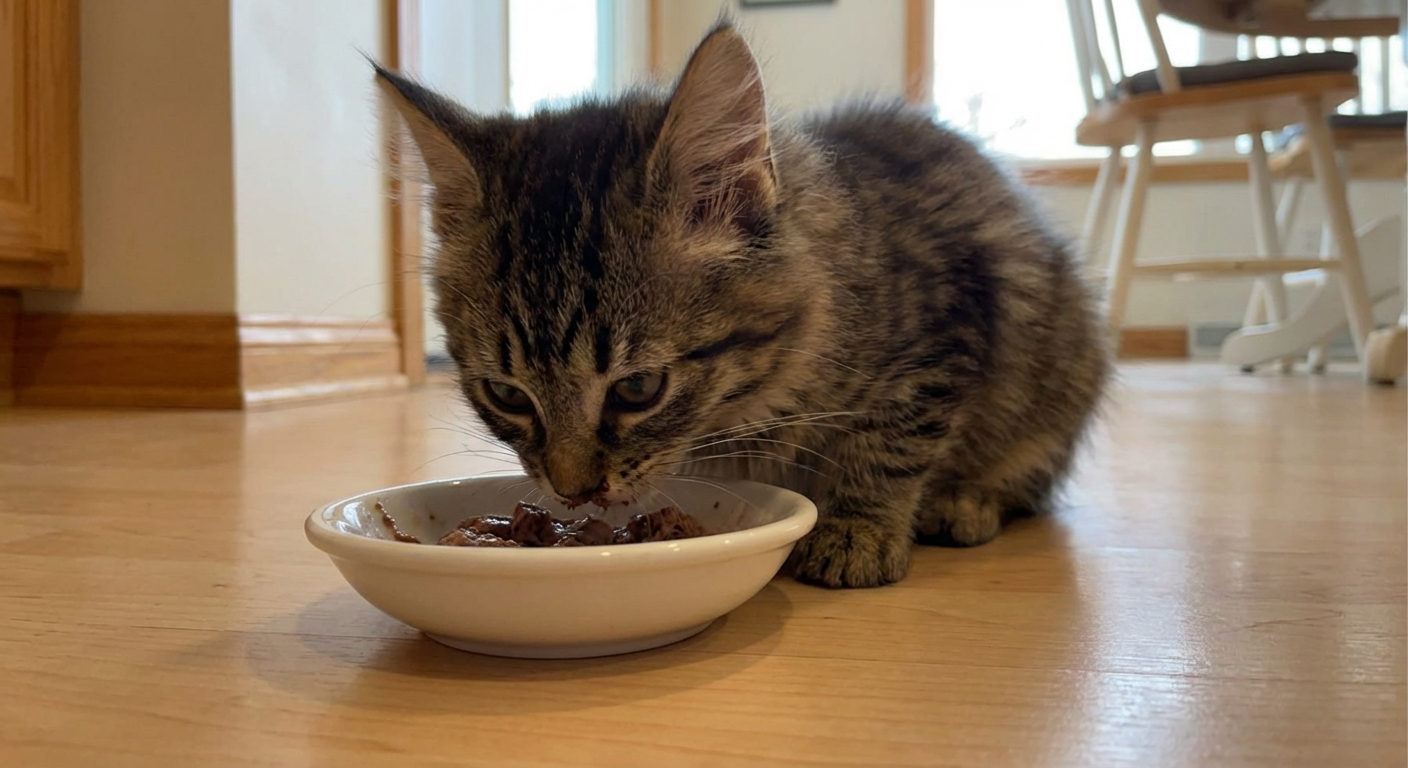
A sudden diet change can cause diarrhea, which makes the first week harder than it needs to be. If possible, start with the food your kitten was already eating, then transition slowly over 7 to 10 days.
General tips
- Kittens need kitten-formulated food for growth. Look for a statement indicating it is complete and balanced for growth.
- Feed multiple small meals per day. Young kittens do better with frequent meals.
- Wet food helps hydration and can be especially useful for kittens that do not drink much.
When to call the vet: If your kitten skips multiple consecutive meals or refuses food for more than about 12 hours, contact your veterinarian the same day. This is especially important for smaller, younger, or underweight kittens, since they can develop low blood sugar and dehydration faster than adult cats.
Play and training: teach good habits
Play is not just fun. It is how kittens learn coordination, confidence, and appropriate biting behavior.
Use play to prevent biting and scratching
- Never use hands as toys. If you teach a kitten that hands are prey, they will keep doing it as they grow.
- Use wand toys to create distance and let them chase safely.
- End play with a small meal or treat to mimic the natural hunt, catch, eat sequence.
Reward what you want
Kittens respond beautifully to positive reinforcement. When your kitten uses the scratch post, calmly praise and offer a treat. If they scratch furniture, redirect to the post and reward.
Simple scratch training setup
- Place a scratcher near sleeping areas (cats often scratch after waking).
- Place one near any furniture they target.
- Many kittens will not respond to catnip until they are a bit older (often closer to 3 to 6 months). If you try catnip or silvervine, use a tiny pinch of the dried herb on the scratcher and avoid concentrated essential oils or diffusers around cats.
Introducing your kitten to other pets
Go slow. Most pet-to-pet problems happen because introductions move too fast.
Cat to cat
- Scent first: swap bedding, then switch rooms briefly so they can smell without meeting.
- Visual next: use a baby gate or cracked door for short sessions with treats.
- Short supervised meetings only when both are calm.
Kitten to dog
- Use a leash on the dog and keep the kitten with a safe escape route.
- Reward calm behavior in the dog continuously.
- End the session before either pet gets overexcited.
Hissing can be normal communication. What you do not want is sustained stalking, cornering, swatting escalation, or a dog that cannot disengage.

Sleep, nighttime, and crying
Kittens often cry at night because they are alone and adjusting. You can help by meeting needs during the day and making bedtime predictable.
- Play session in the evening followed by a small meal.
- Warm bed and a soft toy for comfort.
- Keep them in the home base room at night until litter habits and safety are consistent.
If crying continues, check the basics: hunger, litter box cleanliness, room temperature, and whether they are overstimulated. Many kittens settle within a few nights when routines are consistent.
Health checklist for the first week
Scheduling a new-kitten vet visit early is one of the kindest things you can do. Your veterinarian can confirm health, discuss vaccines, parasite prevention, microchipping, and spay or neuter timing. Vaccine schedules vary by region and risk, but many kittens start core vaccines around 6 to 8 weeks with boosters every few weeks until the series is complete.
Contact a veterinarian promptly if you notice
- Skipping multiple consecutive meals or not eating for more than about 12 hours
- Vomiting repeatedly, or diarrhea lasting more than a day
- Sneezing with thick discharge, coughing, or labored breathing
- Eye discharge, squinting, or swollen eyes
- Fleas, visible worms, or a bloated belly
- Lethargy, weakness, or dehydration (sticky gums, sunken eyes)
Gentle routines, a small safe space, and positive reinforcement are the three biggest tools for a smooth kitten transition. You do not need perfection. You just need consistency.
A simple 7-day acclimation plan
Days 1 to 2
- Home base room only
- Quiet bonding, short play sessions
- Establish feeding schedule and litter routine
Days 3 to 4
- Increase play and handling gently
- Begin scent introductions to other pets (if applicable)
- Add a second litter box if expanding space soon
Days 5 to 7
- Gradually expand access to additional rooms with supervision
- Start brief visual pet introductions, reward calm behavior
- Reinforce scratch post use and keep hands out of play
If your kitten seems overwhelmed at any step, go back to the previous stage for a day or two. Slow is not failing. Slow is smart.