A practical, evidence-based kitten feeding guide from a veterinary assistant: choose kitten food, set age-based meal schedules, portion by calories, transiti...
Article
•
Designer Mixes
How Often to Feed Kittens

Shari Shidate
Designer Mixes contributor
Bringing home a kitten is pure joy, and it also comes with a very real question: how often should I feed them? In my work as a veterinary assistant here in Frisco, Texas, I see it all the time. People do their best, but kittens’ needs change fast because kittens grow fast.
The good news is this: if you match meal frequency to your kitten’s age and watch their body condition and energy, you can feel confident you are feeding them well.
Quick answer by age
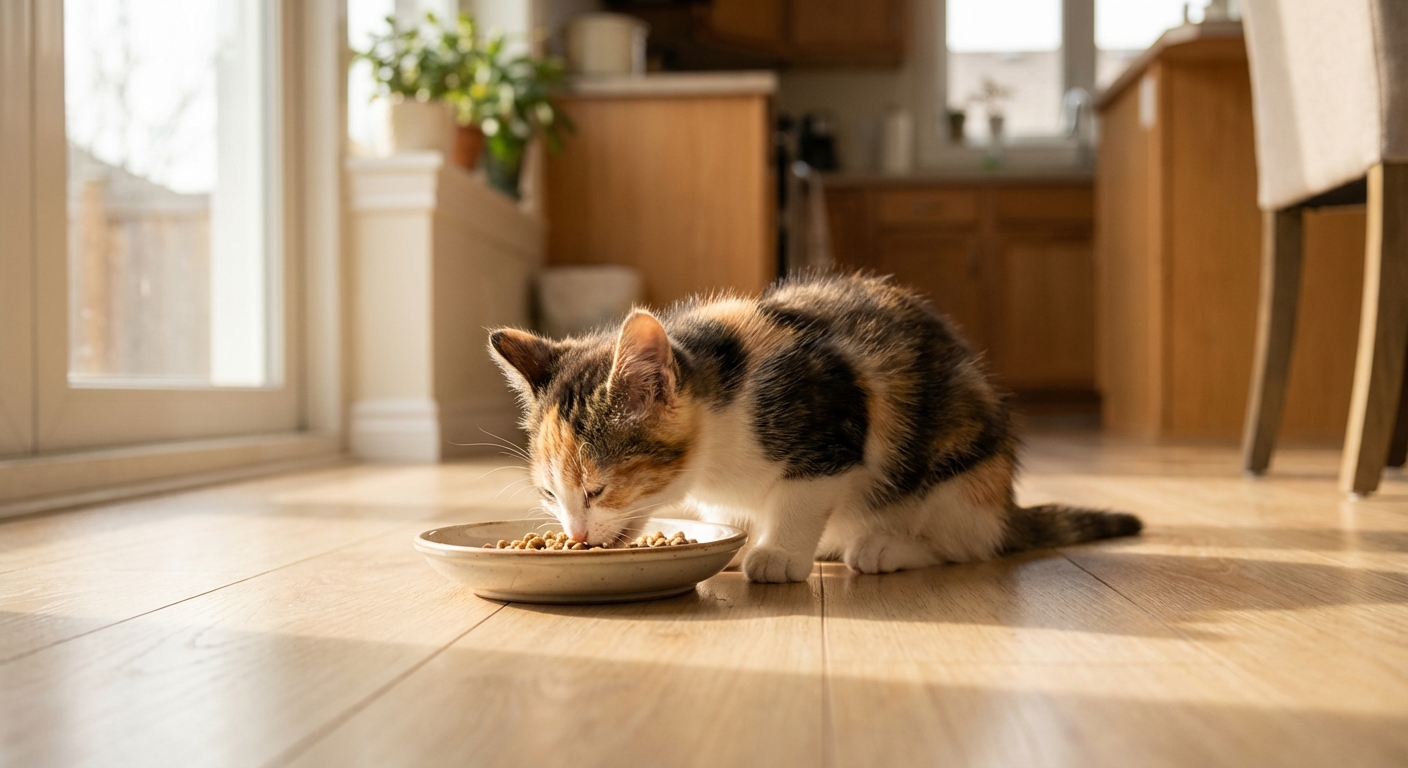
Kittens have small stomachs and high calorie needs, so they do best with multiple meals per day. Use this as a starting point, then adjust based on your kitten’s appetite, growth, and your veterinarian’s guidance.
- 0 to 4 weeks: Mom cat nursing or kitten milk replacer only. If orphaned, feed about every 2 to 4 hours depending on age and size (closer together for newborns, longer stretches as they approach 4 weeks). Follow your vet or rescue’s neonate plan.
- 4 to 8 weeks: At least 4 meals per day, and often 4 to 6 small meals during weaning. Fresh water always available. Weaning is gradual.
- 8 to 12 weeks: 3 to 4 meals per day. Most kittens are fully weaned by about 8 weeks, but some need a little longer.
- 3 to 6 months: 3 meals per day.
- 6 to 12 months: 2 meals per day (some kittens still do well with 3 smaller meals).
- Adult cats (around 12 months): usually 2 meals per day, depending on lifestyle and health. Some large, slow-maturing breeds may stay on kitten food longer. Ask your vet if you have a Maine Coon or similar breed.
Best simple rule: younger kittens eat more often. As they mature, you can reduce frequency while keeping total daily calories appropriate.
Why kittens need frequent meals
Kittens are not just small cats. They are in a rapid growth phase that demands:
- More calories per pound than adults
- More protein and specific nutrients to build muscle, organs, and immune strength
- Steady energy to support play, learning, and temperature regulation
Spacing meals out too far can lead to low energy, irritability, and in some cases stomach upset from overeating at the next meal.
Wet food, dry food, or both?
Most families choose one of these approaches, and each can work when the diet is complete and balanced for growth.
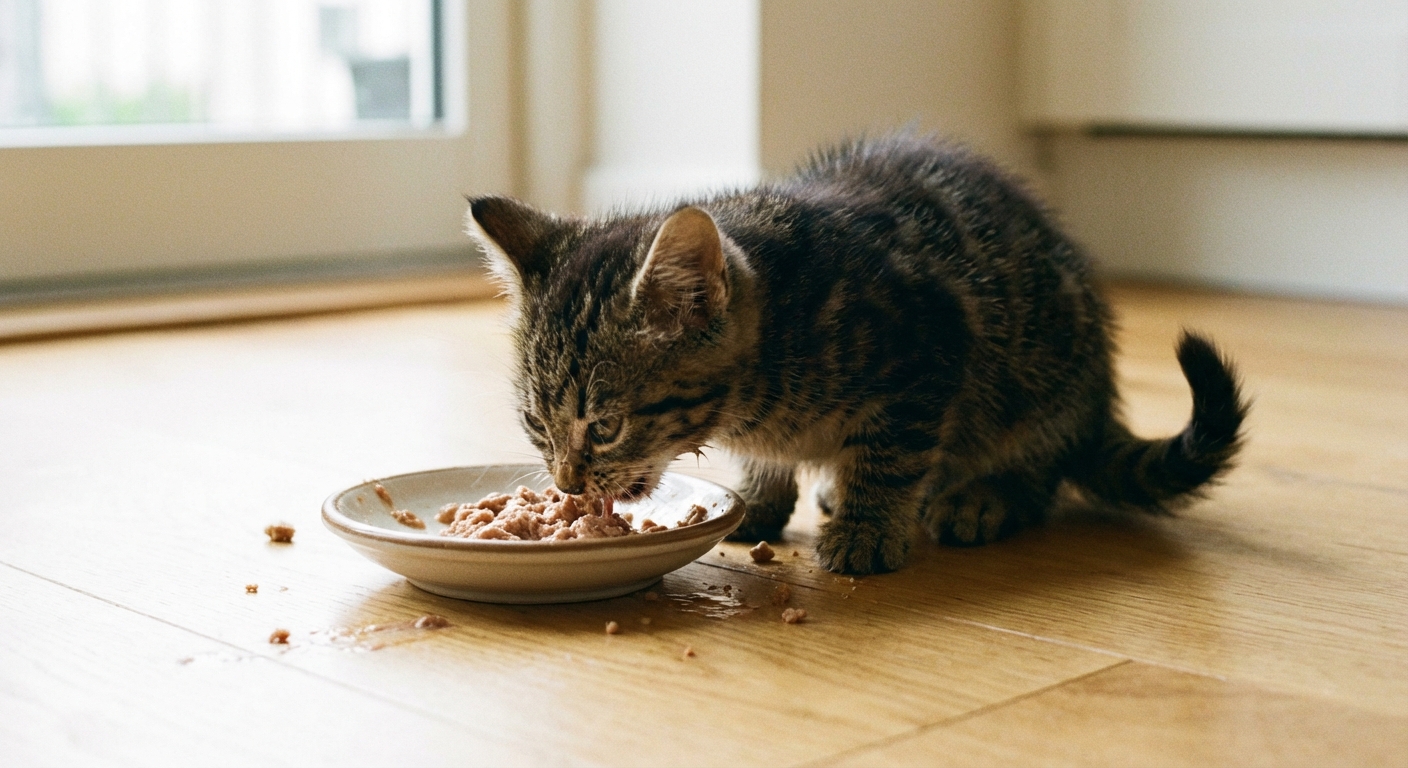
Wet food
Wet kitten food supports hydration and is often easier for young kittens to eat. It can be especially helpful if your kitten is not a big water drinker.
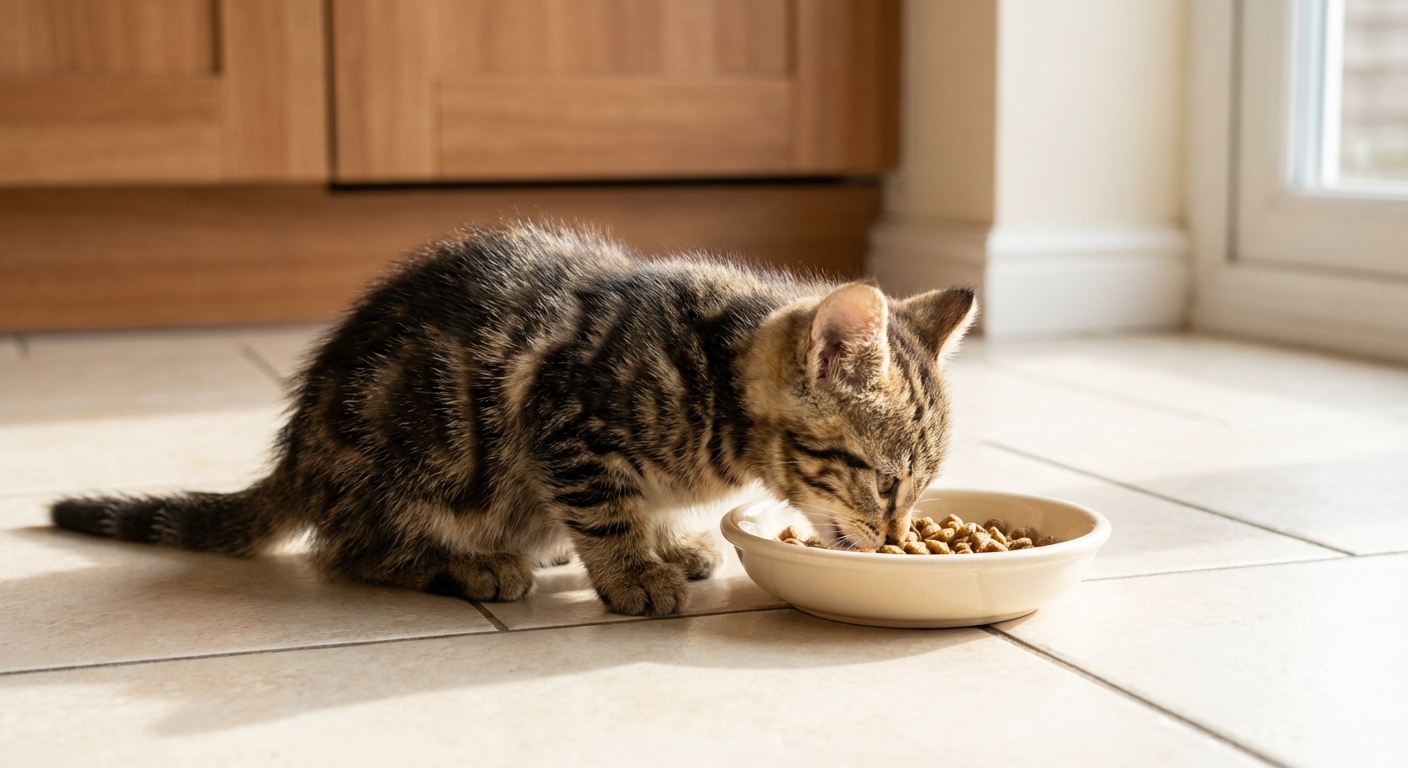
Dry food
Dry kitten food is convenient and calorie-dense. If you feed dry, make sure fresh water is always available.
Combination feeding
This is my go-to for many households: wet meals on a schedule and a measured amount of dry food as part of the daily plan. The key word is measured. Free-pouring kibble all day can quietly lead to overfeeding.
Look for: a label that states the food is complete and balanced for growth or all life stages (growth is ideal for kittens).
One more important note: if you change foods, transition gradually over 5 to 7 days to reduce diarrhea and tummy upset. Go slower if your kitten has a sensitive stomach.
How much to feed
Meal frequency answers the “how often” part. The “how much” part depends on calorie density, your kitten’s age, and body condition.
Start with the feeding guide on the package for your kitten’s current weight and age, then make small adjustments.
A practical method that works
- Pick a daily total based on the label.
- Divide it by meals. Example: 1/2 cup kibble daily divided into 3 meals equals about 1/6 cup per meal.
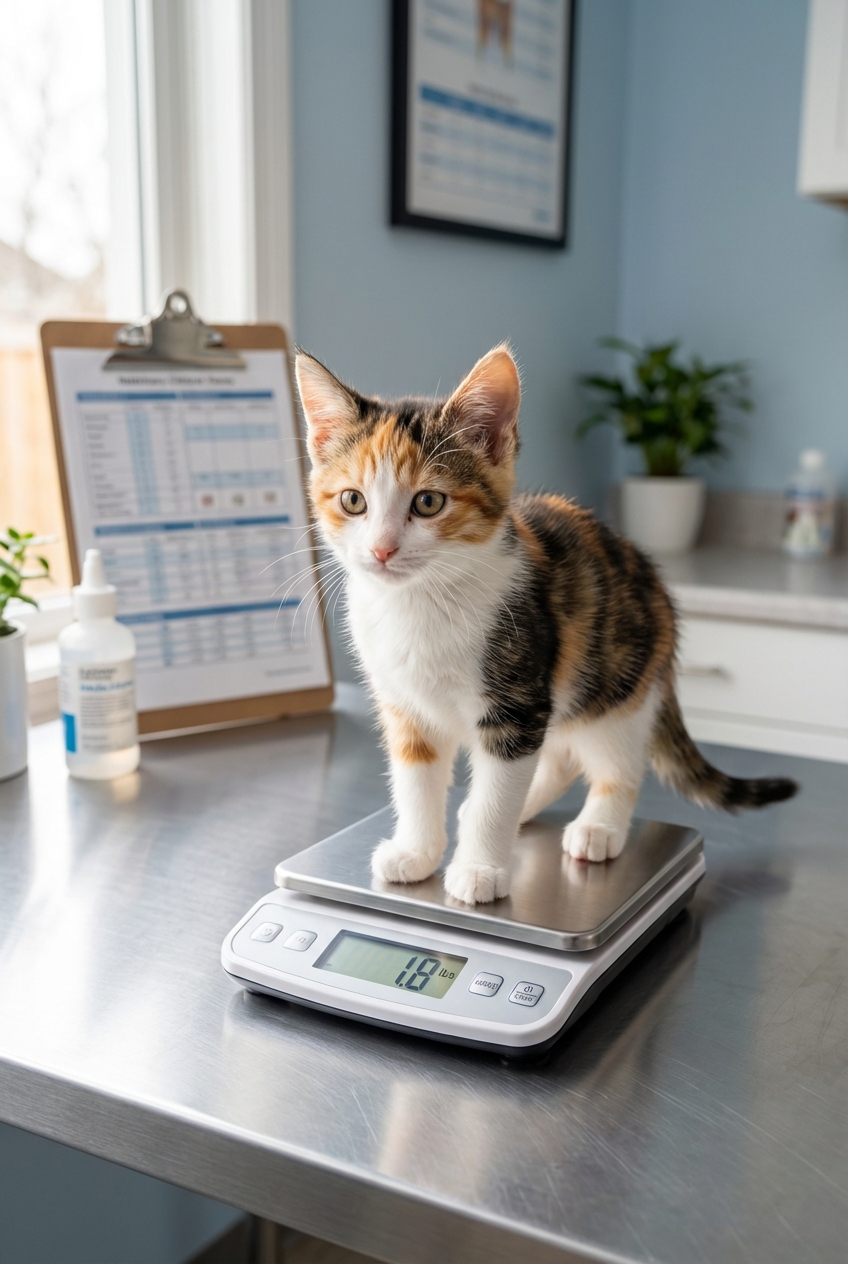
- Measure consistently. Use the same measuring cup every time, or even better, a kitchen scale for accuracy. Wet and dry foods can differ a lot in calories per serving.
- Re-weigh weekly at the same time of day.
- Adjust every 1 to 2 weeks as your kitten grows.
If you want a super clear checkpoint, ask your veterinary team to show you a body condition score (BCS). It is one of the most helpful tools we use in clinic.
Sample schedules
Here are simple schedules many kitten families love. If your household routine is different, shift the times. Consistency matters more than the exact clock time.
8 to 12 weeks (3 to 4 meals)
- 7:00 am: wet food meal
- 12:00 pm: wet or dry meal
- 5:00 pm: wet food meal
- 10:00 pm: small wet or dry meal (optional, helpful for early morning hunger)
3 to 6 months (3 meals)
- 7:00 am: meal
- 3:00 pm: meal
- 8:00 pm: meal
6 to 12 months (2 meals)
- 7:00 am: meal
- 7:00 pm: meal
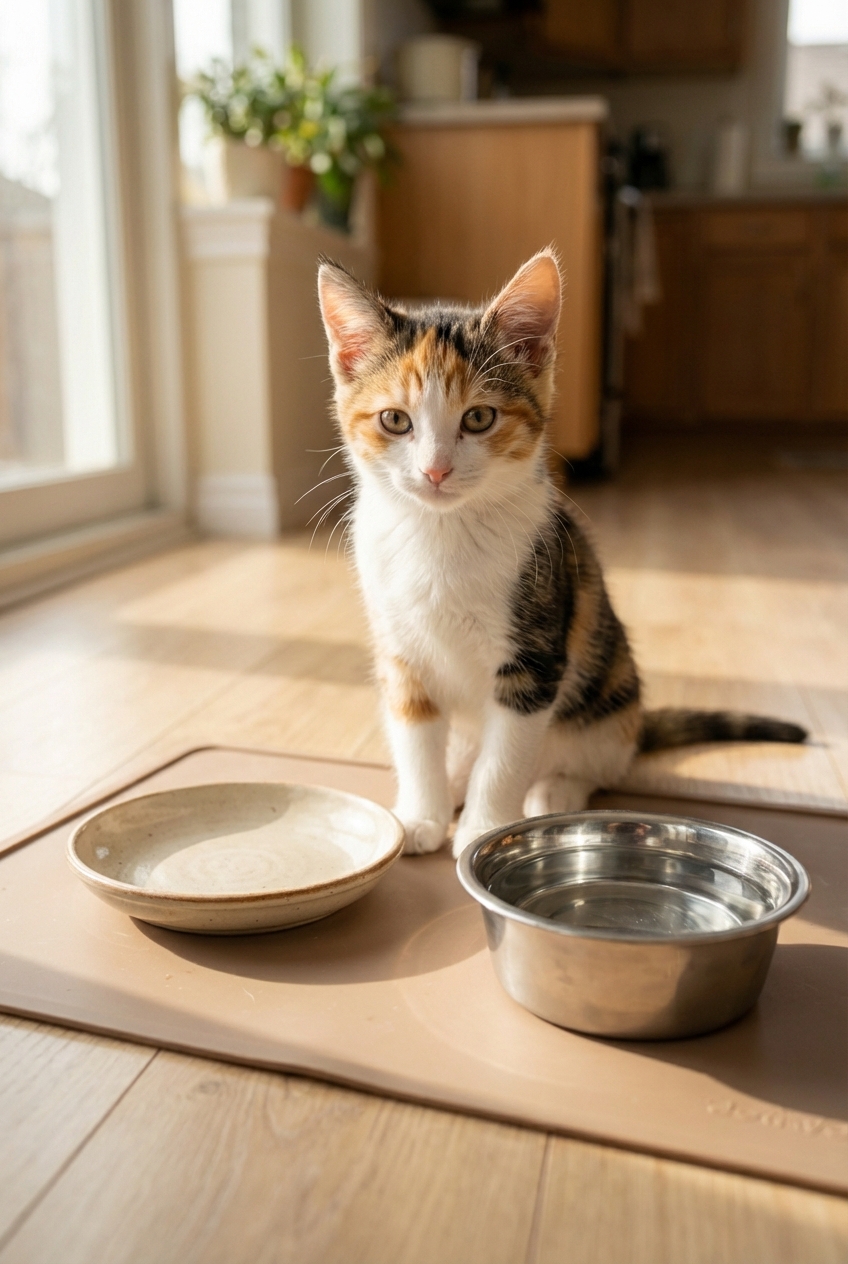
Tip: If your kitten acts ravenous at meal times, it does not always mean they need more food. It can also mean they need more frequent meals or more play and enrichment.
Free-feeding and when to stop
Some kittens can handle free-feeding dry food during early growth, but many cannot. In clinic, we often suggest transitioning to measured meals by 4 to 6 months because it helps prevent overeating and makes it easier to monitor appetite and health.
That said, it is not one-size-fits-all. Very active, naturally lean kittens may do fine with more flexibility. The deciding factor is your kitten’s weight trend and body condition score.
Scheduled meals also help you notice early warning signs. A kitten who suddenly eats less can be telling you something important.
Signs the plan is off
Kittens should be energetic, curious, and steadily gaining weight. Call your veterinarian promptly if you notice:
- Not eating or eating dramatically less for more than 12 to 24 hours (kittens can get into trouble quickly)
- Vomiting, repeated regurgitation, or frequent diarrhea
- Bloated belly, especially with poor weight gain (possible parasites)
- Lethargy or weakness
- Rapid weight gain with a rounding body shape
Kitten feeding is not just nutrition. It is also a daily health check. Their appetite is one of the first things that changes when something is off.
Treats and extras
Treats are fun, but kittens do best when treats stay a small part of the day.
- Keep treats to 10 percent or less of daily calories.
- Choose kitten-appropriate treats or tiny bits of their regular food.
- Avoid cow’s milk. Many cats are lactose intolerant and it can cause diarrhea.
- Avoid toxic human foods, including onions, garlic, grapes, raisins, alcohol, and anything sweetened with xylitol. (Xylitol toxicity is better documented in dogs, but it is still smart to keep it away from cats.)
If you want to add variety, talk with your veterinarian first, especially for kittens under 6 months.
Special situations
Orphaned kittens
Orphaned kittens need kitten milk replacer and an age-appropriate schedule. Early on, that can mean feeding every 2 to 4 hours, including overnight, and then slowly spacing feedings as they grow. This is one situation where I always recommend working closely with your vet or a rescue that has neonate experience.
Most kittens transition fully off milk replacer around 7 to 8 weeks, but the timeline can vary. Cow’s milk is not a safe substitute.
Multi-cat homes
If adult cats are around, feed the kitten separately or use a microchip feeder if needed. Adult maintenance food does not have the same nutrient profile as kitten food.
Spay and neuter
After spay or neuter, it is common for appetite to increase while calorie needs drop a bit. Keep the same meal routine, watch body condition, and be ready to tighten portions if weight starts creeping up. Your vet can help you adjust a post-op plan.
Bottom line
For most kittens, the sweet spot is:
- 3 to 4 meals per day through about 12 weeks
- 3 meals per day from 3 to 6 months
- 2 meals per day from 6 to 12 months and beyond
If you are ever unsure, bring your kitten’s food label and your current schedule to your next vet visit. With a quick weight check and a body condition score, we can usually fine-tune a plan in minutes.