Feed your puppy with confidence using age, current weight, and body condition. Includes toy to giant breed charts, meals-per-day guidance, wet vs dry tips, a...
Article
•
Designer Mixes
How Often to Feed a Puppy

Shari Shidate
Designer Mixes contributor
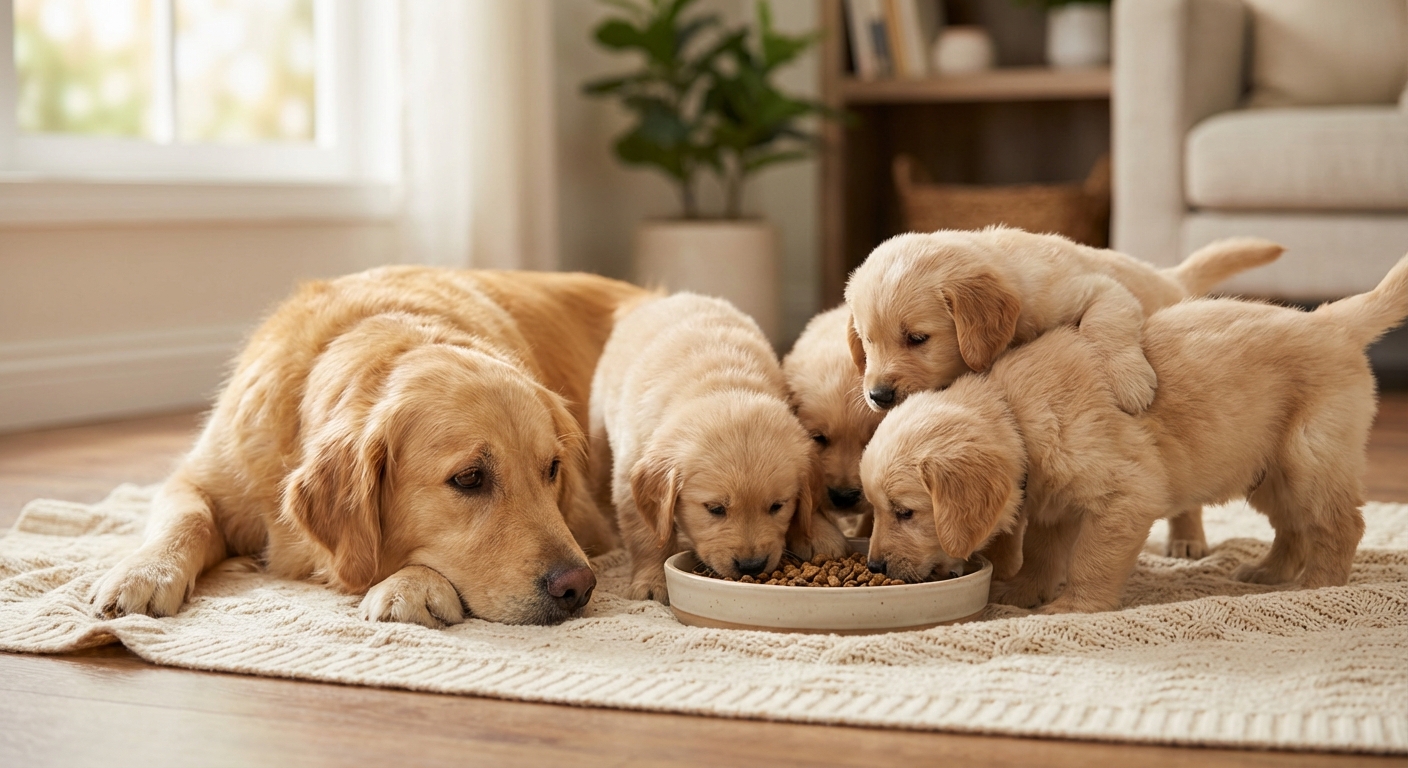
Bringing home a puppy is equal parts joy and mystery, especially at mealtimes. How often should they eat? How much is too much? And why does your puppy act like they are starving five minutes after finishing a bowl?
As a veterinary assistant here in Frisco, Texas, I can tell you this: feeding schedules matter. Puppies grow fast, burn energy like little athletes, and have tiny stomachs. The right routine supports healthy growth, steadier energy, fewer tummy upsets, and much easier potty training.
Quick note: This is general guidance. Your veterinarian may recommend a different plan based on your puppy’s breed, size, and medical history.
The quick answer by age
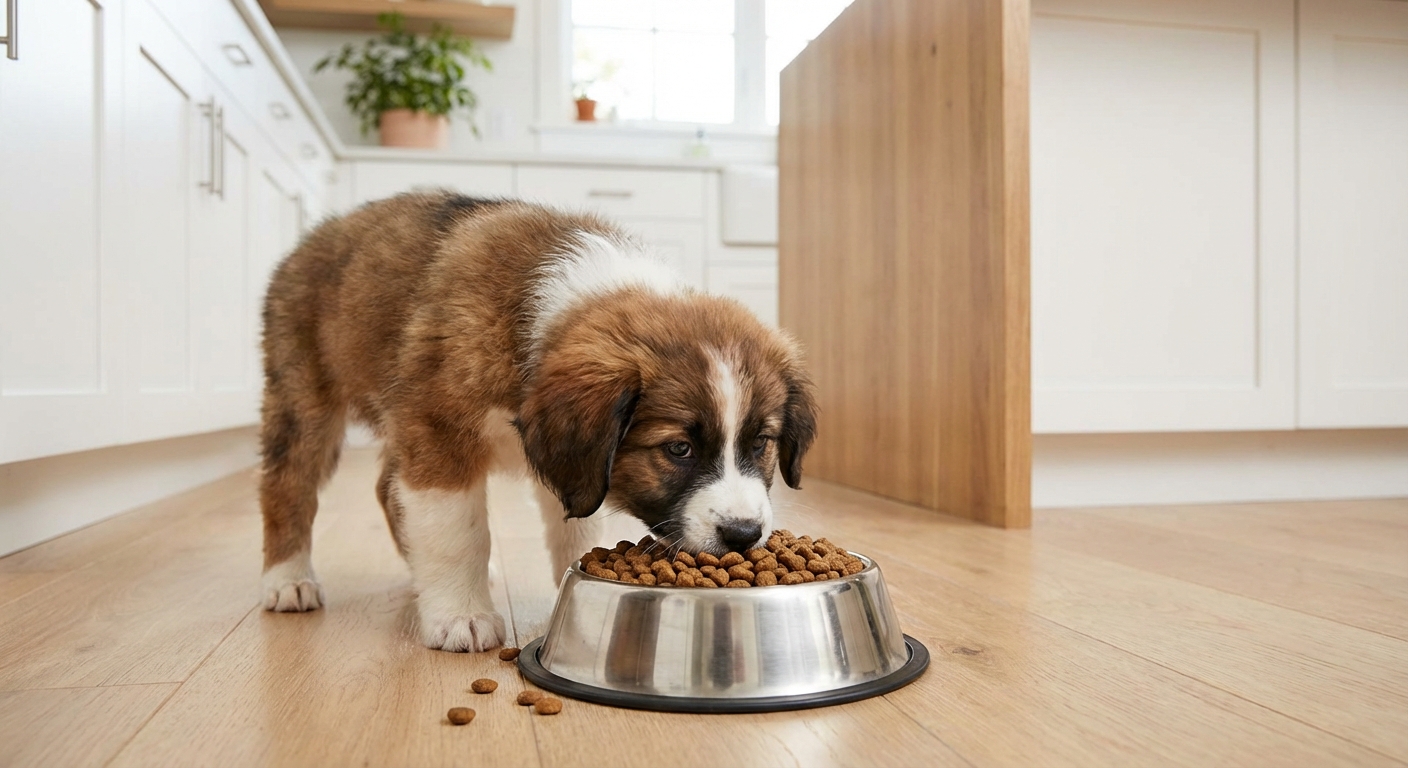
Puppies generally need more frequent meals than adult dogs. Here is the schedule many veterinarians recommend for healthy puppies.
- 6 to 12 weeks: 4 meals per day
- 3 to 6 months: 3 meals per day
- 6 to 12 months: 2 meals per day (some small breeds do better staying at 3 a bit longer)
- After 12 months: usually 2 meals per day (breed and lifestyle can shift this)
Why so often? Puppies are growing rapidly and their stomach capacity is small. Frequent meals can help prevent blood sugar dips, reduce gulping, and make training easier because your puppy is not overly hungry or overly full.
Why meal frequency matters
1) Steadier blood sugar (especially in very small puppies)
Small and toy breeds in particular can be prone to low blood sugar, especially when they are very young. It is more likely if a puppy misses meals, is stressed, has intestinal parasites, or is sick. Signs can include weakness, shaking, acting “spacey,” or extreme sleepiness. If you see these signs, contact your veterinarian right away.
2) Better digestion and fewer accidents
Feeding multiple smaller meals is often gentler on a puppy’s GI tract than one or two big meals. It also creates predictable potty timing, which is gold during house training.
3) Healthier growth
Puppies need the right calories and nutrients for their stage of life. A steady feeding routine helps you notice changes early, like reduced appetite (illness), increased hunger (growth spurts), or picky behavior (often a schedule issue, not a food issue).
What times to feed
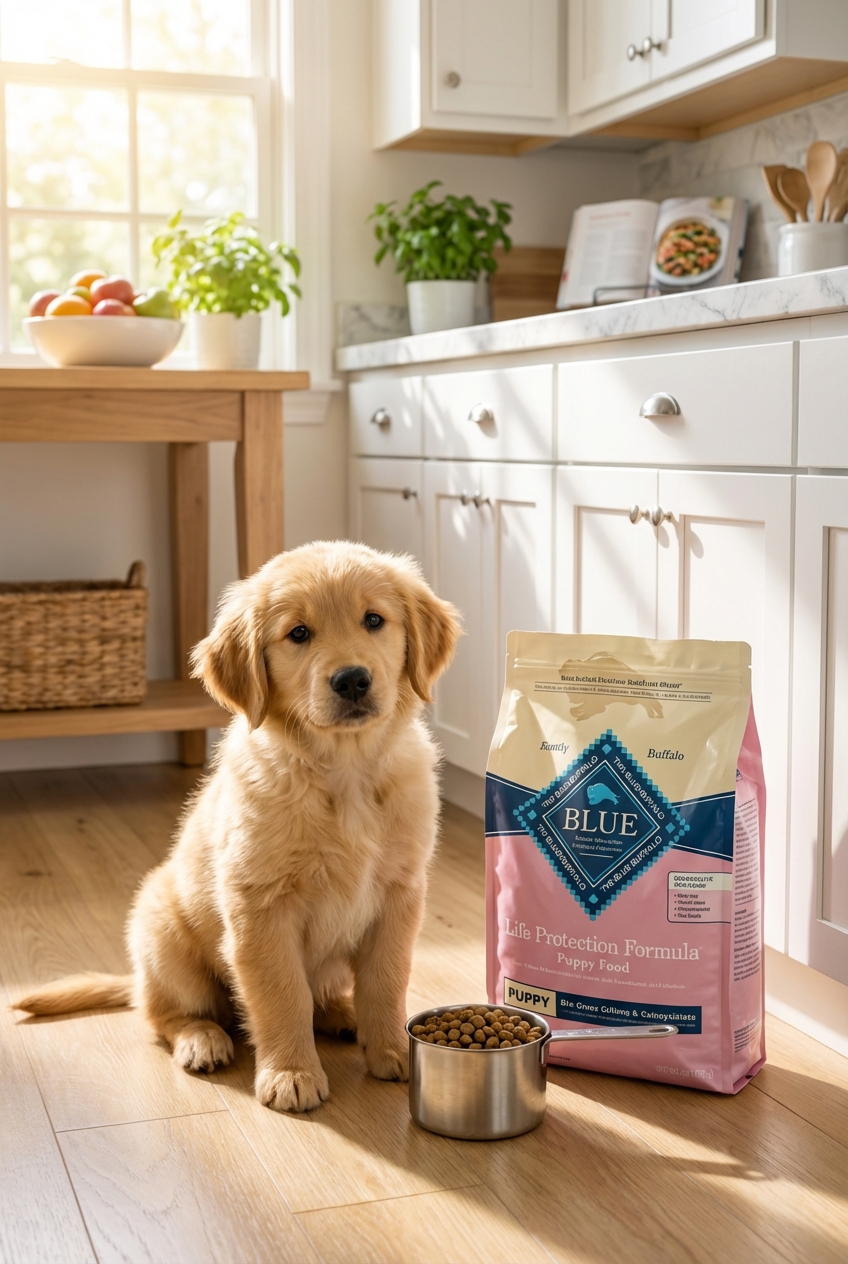
Consistency is your best friend. If your puppy is eating three meals per day, a simple schedule could look like this:
- Breakfast: 7 to 8 a.m.
- Lunch: 12 to 1 p.m.
- Dinner: 5 to 6:30 p.m.
For four meals daily, add a mid-morning or mid-afternoon meal. Try to feed dinner early enough that your puppy has time to potty before bed.
Helpful potty-training tip: Many puppies need to go out within 10 to 30 minutes after eating, then again a little later. Track the pattern for your individual pup.
How much per meal
Meal frequency is only half the story. Amount matters too, and it depends on your puppy’s:
- Age and current weight
- Expected adult size (a Goldendoodle mix is very different from a Maltipoo)
- Activity level
- Food type (kibble, canned, fresh, homemade, or mixed feeding)
Start with the feeding guide on the puppy food label as a baseline, then adjust based on body condition and your vet’s guidance. Label charts are often generous, so consider them a starting point, not a final answer.
Use body condition, not the bowl
- You should be able to feel ribs easily with a light touch. Depending on coat type and age, you might see a hint of ribs in some lean, short-coated puppies, but prominent ribs usually mean it is time to reassess portions.
- From above, your puppy should have a visible waist.
- From the side, the belly should tuck up behind the ribs.
If you are unsure, ask your veterinarian to show you how to score body condition at a wellness visit. It takes two minutes and can prevent months of overfeeding.
Free-feeding vs. scheduled meals
Leaving food down all day (free-feeding) sounds convenient, but for most puppies it causes problems:
- Makes potty training harder because bowel movements become unpredictable
- Can encourage picky eating or grazing
- Increases risk of overeating and excess weight gain
- Makes it harder to notice early illness (reduced appetite is an important clue)
Scheduled meals are usually best. Put the bowl down, let your puppy eat for about 15 to 20 minutes, then pick it up. Fresh water should be available throughout the day unless your veterinarian advises otherwise. (Some toy breeds or puppies with certain medical needs may do better with a modified approach, so ask your vet if you are unsure.)
Does food type change the schedule?
The schedule is mostly the same regardless of food type. The biggest difference is portion size and calorie density.
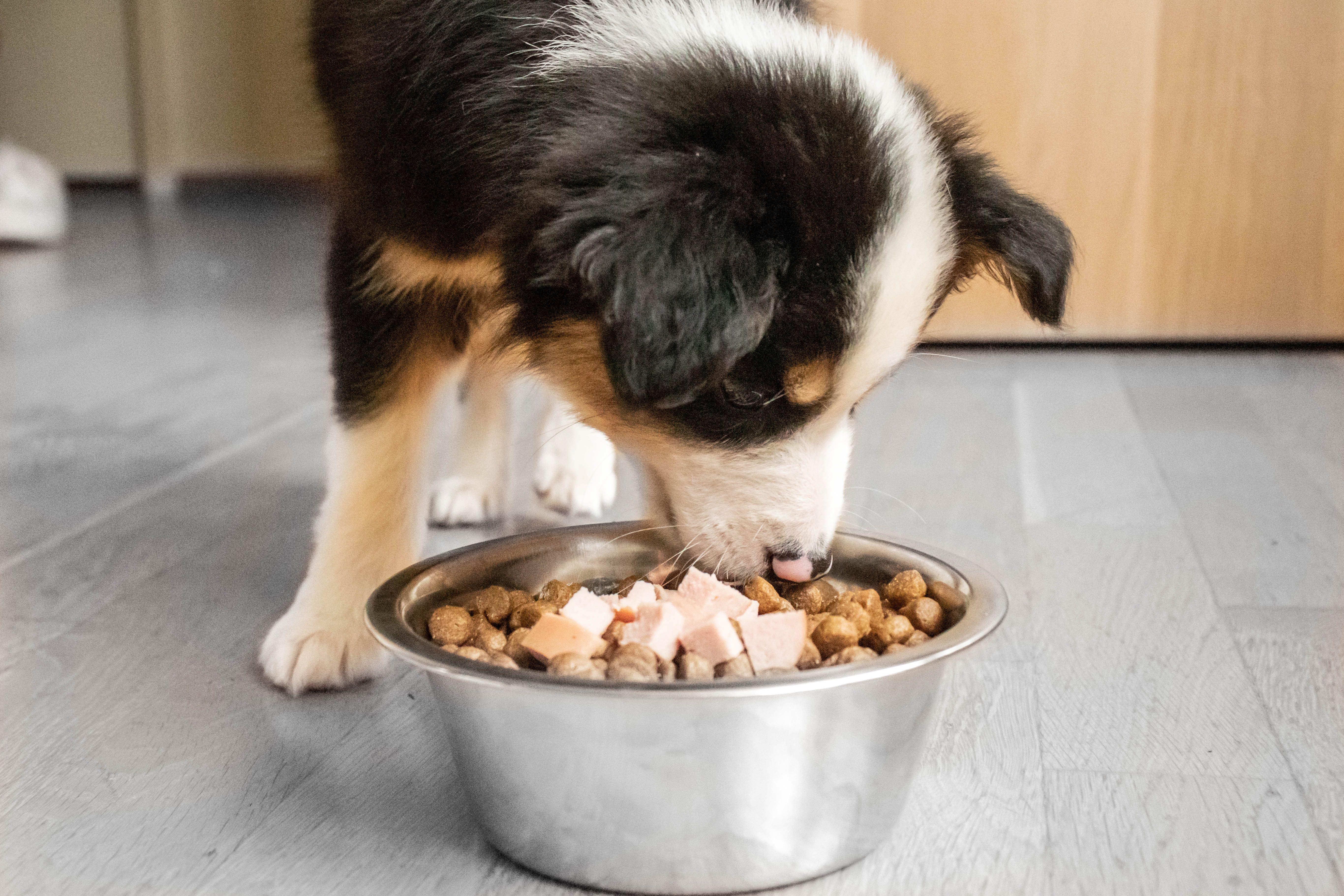
- Kibble: Often easiest to measure and budget friendly.
- Wet food: More palatable for some puppies, but can be easier to overfeed if you are not measuring.
- Fresh or homemade: Can be great when it is complete and balanced for growth. Puppies have very specific calcium and phosphorus needs, so do not guess. Work with your veterinarian or a board-certified veterinary nutritionist.
If you are mixing foods, measure the total daily calories, not “a little of each.” This is one of the most common ways well-meaning owners accidentally overfeed.
Switching foods safely
If you need to change foods, do it slowly. A gradual transition over about 5 to 7 days can help reduce diarrhea and tummy upset. Mix a little more of the new food in each day until the switch is complete (unless your veterinarian tells you to change right away for a medical reason).
Treats count too
Treats are wonderful for training, but they should generally make up no more than 10% of daily calories. For small puppies, even a few big treats can be a whole extra meal.
Easy, puppy-friendly training options:
- Use part of your puppy’s measured kibble as treats
- Choose soft, pea-sized training treats
- Break treats into tiny pieces
If your puppy gets frequent treats, reduce the meal portion slightly so total calories stay appropriate.
When to adjust
Puppies are not robots. Your routine might need adjusting if you notice:
- Loose stool after increasing meal size too quickly (or after a fast diet switch)
- Vomiting yellow foam early morning, which can be linked to an empty stomach overnight in some dogs
- Constant hunger plus rapid weight gain (overfeeding) or weight loss (underfeeding, parasites, or illness)
- Skipping meals routinely (timing, stress, too many treats, or possible illness)
Recurrent vomiting has many possible causes, including parasites, dietary intolerance, GI disease, and pancreatitis, so do not assume it is “just an empty stomach.” If vomiting, diarrhea, lethargy, refusal to eat, or signs of dehydration show up, call your veterinarian. Puppies can get sick faster than adult dogs.
Breed and size notes
Designer mixes can vary a lot in adult size, even within the same litter. That means feeding needs can vary too.
That is also why the “right” schedule and food choice sometimes depends less on your puppy’s current size and more on their projected adult weight.
Small and toy mixes
- Often do best with more frequent meals longer into puppyhood
- Watch closely for low blood sugar signs in very young, very small pups, especially during stress or missed meals
Medium to large mixes
- Need controlled growth to support developing joints
- Choose a large-breed puppy formula if your vet expects an adult weight around 70 pounds or more
Large and giant breeds are especially sensitive to excess calories and improper mineral balance during growth. Large-breed puppy diets are formulated to support steady growth with appropriate calcium and phosphorus levels, which matters for bone and joint development.
A simple routine to start
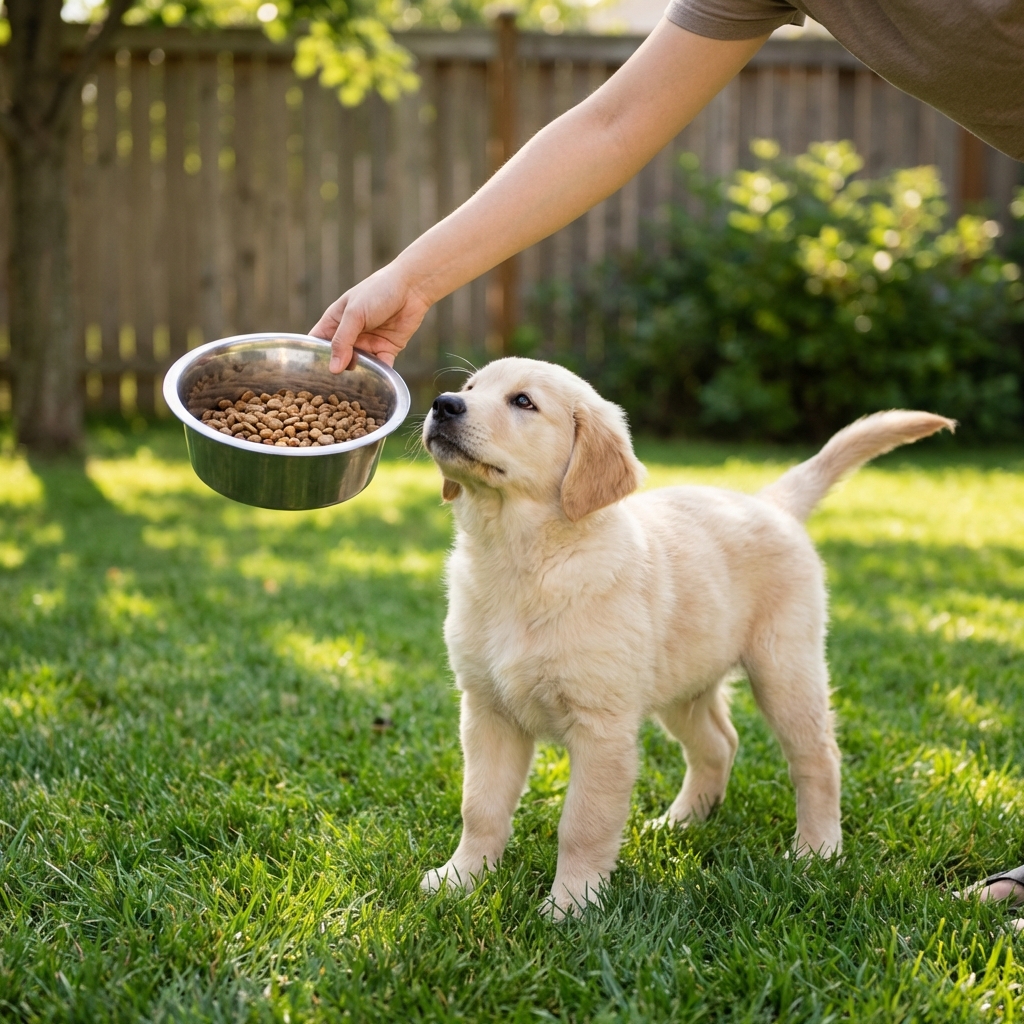
If you are feeling overwhelmed, try this straightforward plan:
- Pick the right puppy food for your puppy’s expected adult size
- Measure the total daily amount once each morning
- Split it into the correct number of meals for your puppy’s age
- Feed at consistent times
- Use part of the measured food for training treats
- Weigh your puppy weekly and track body condition
The bottom line is that a good feeding schedule supports good energy. And good energy supports a happy, healthy puppy who is ready to learn.
When in doubt, bring your puppy’s food label (or the exact brand and formula) to your next vet visit and ask for a personalized daily amount and schedule. It is one of the simplest ways to get feeding right.
FAQ
Should I feed my puppy right before bed?
Usually no. A late meal can increase nighttime potty needs. If your puppy seems nauseated in the morning or vomits yellow foam, ask your vet whether a small, earlier evening snack would help.
When can my puppy switch to two meals a day?
Many puppies transition to two meals a day around 6 months. Small breeds may do better a bit longer on three meals. Your veterinarian can help you choose the best timing based on growth and weight.
Is it normal for my puppy to act hungry all the time?
Often yes, especially during growth spurts. But persistent extreme hunger can also be caused by intestinal parasites, diet imbalance, or too much exercise for the calories offered. Parasites are common in puppies, which is why routine deworming and fecal checks matter. A stool test and a quick vet check can be very reassuring.