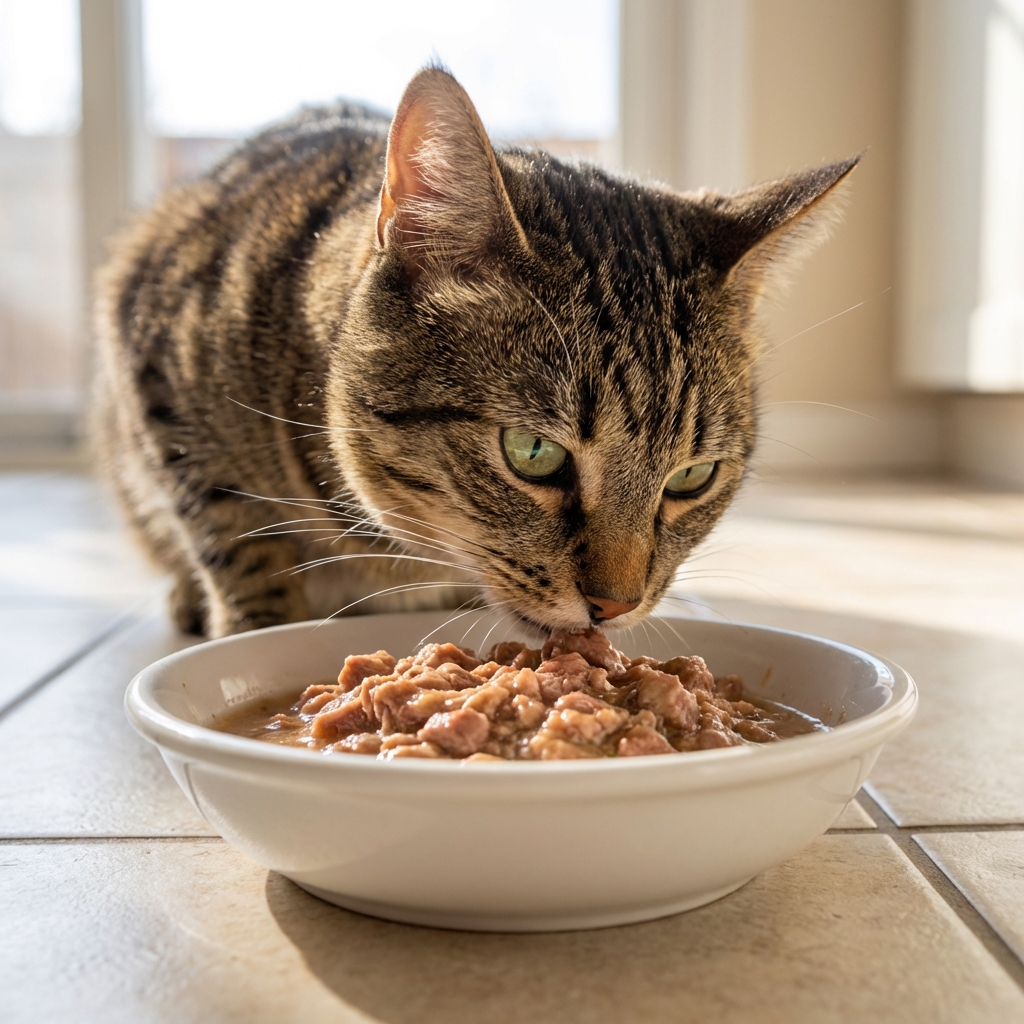
Stop guessing with cups. Learn to set a daily calorie target, convert kcal to portions for wet and dry food, limit treats, and use body condition cues to adj...
Article
•
Designer Mixes
How Much Wet Food Should a Cat Eat Daily

Shari Shidate
Designer Mixes contributor
If you are standing in the pet food aisle staring at cans and wondering, “How much wet food should my cat eat daily?” you are not alone. As a veterinary assistant, I hear this question constantly, and the honest answer is: it depends on your cat’s calories, not just the number of cans.
The good news is you can figure this out at home with a few simple steps, then fine-tune based on your cat’s body condition, appetite, and litter box habits.
Start with calories, not cans
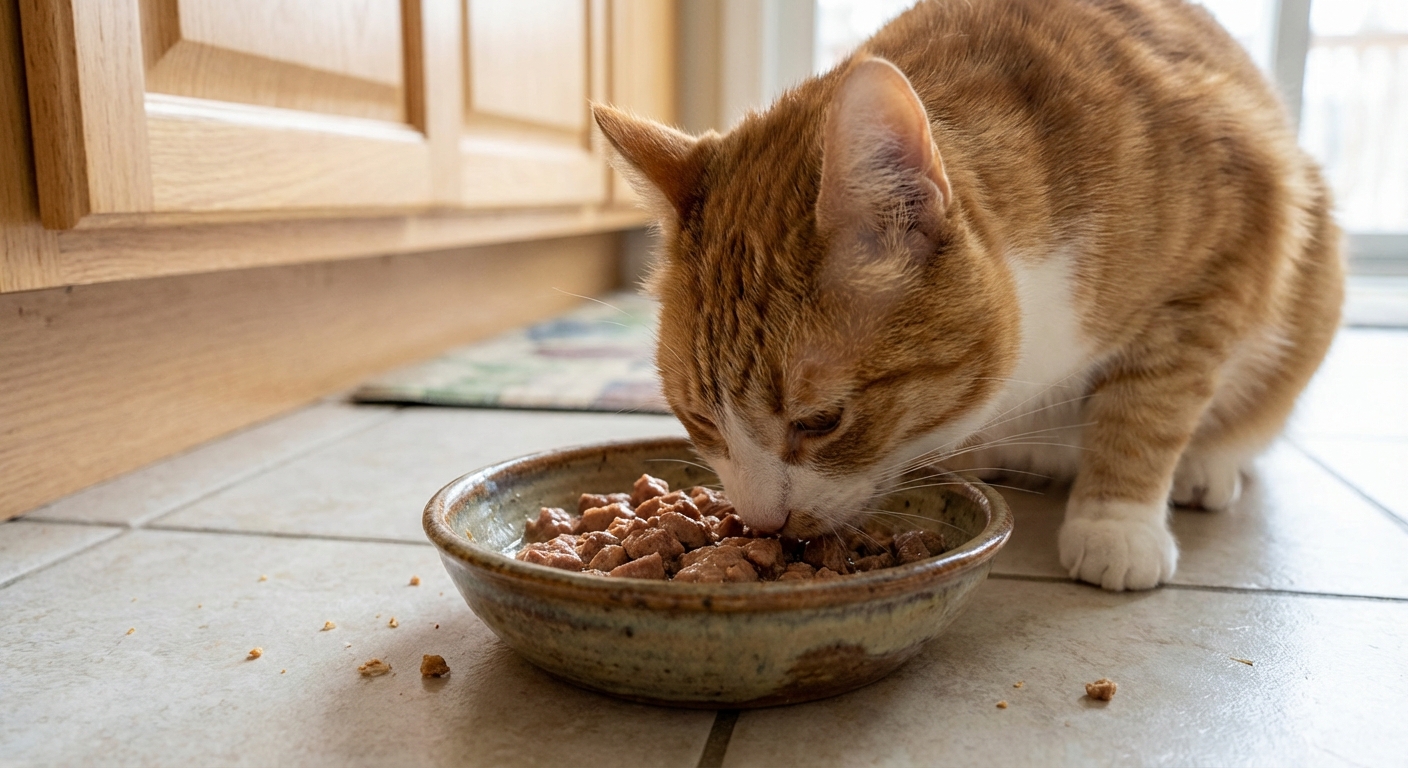
Wet food portions vary wildly because calories per can or pouch vary. One 3 oz can might be 60 calories, while another 3 oz can might be 110 calories, depending on the brand and recipe. That is why the best first step is to check the label for kcal.
Quick definition: kcal means kilocalories. Pet food labels may also say kcal ME (metabolizable energy), which is the calorie number used for feeding.
Look for one of these on the can:
- kcal per can (easy)
- kcal per pouch (easy)
- kcal per kg or kcal per 100g (still usable, but you may need a quick conversion)
If you can only remember one thing, remember this: your cat should eat the amount of wet food that matches their daily calorie needs.
Typical daily amounts
For many adult, indoor, neutered cats, a common veterinary starting estimate is roughly 20 to 25 calories per pound of ideal body weight per day for maintenance. Some cats do need more (very active cats, some young adults) and some need less (very sedentary cats, some seniors), but this range matches the examples below.
Here is a practical starting range for a healthy adult cat at an ideal weight:
- 8 lb cat: about 160 to 200 kcal/day
- 10 lb cat: about 200 to 250 kcal/day
- 12 lb cat: about 240 to 300 kcal/day
Then convert calories into cans. For example:
- If your cat needs 220 kcal/day and the food is 90 kcal per 3 oz can, that is about 2.5 cans per day.
- If your cat needs 220 kcal/day and the food is 70 kcal per 3 oz can, that is about 3.1 cans per day.

Calculate portions (3 steps)
Step 1: Pick a goal weight
If your cat is overweight, base feeding on their ideal weight, not their current weight. If you are unsure, your vet team can help you choose a realistic target and assess body condition score (BCS).
Step 2: Estimate daily calories
Option A (simple starting point): For many adult indoor cats, start with 20 to 25 kcal per pound of ideal body weight per day for maintenance, then adjust based on results.
Examples:
- 10 lb cat at maintenance: about 200 to 250 kcal/day
- 15 lb cat but ideal is 12 lb: start around 240 to 300 kcal/day, then adjust slowly
Option B (more precise method): You can also estimate needs using the RER/DER approach used in many veterinary resources:
- RER = 70 × (body weight in kg)0.75
- DER = RER × life-stage factor (your vet team can help you pick a factor for weight loss, weight gain, or a specific life stage)
If math is not your thing, do not worry. The label calories and the 20 to 25 kcal/lb starting range get most healthy adult cats into the right neighborhood, and your cat’s weight trend tells you how to adjust.
Step 3: Convert calories into cans or pouches
(Daily calories needed) ÷ (kcal per can) = cans per day
Split the total into 2 to 4 meals for most cats.
If you feed dry too
Combination feeding is common, but it is easy to overfeed because kibble is calorie-dense.
Important: kibble calories vary a lot by brand and formula. It is common to see roughly 300 to 500+ kcal per cup. Always check the bag or manufacturer site for the exact kcal/cup (or kcal/kg) for your food.
Here is a simple way to keep it balanced:
- Calculate your cat’s total daily calories.
- Decide how many calories come from kibble.
- The remaining calories come from wet food.
Example for a cat needing 220 kcal/day:
- 1/4 cup kibble might be around 80 to 130 kcal (varies by brand)
- That leaves roughly 90 to 140 kcal for wet food
- If wet food is 90 kcal per can, that is about 1 to 1.5 cans per day
Tip: Use a real measuring cup for kibble, and ideally weigh it with a kitchen scale for best accuracy.
Special situations
Kittens
Kittens need significantly more calories for growth. Many do best with multiple meals per day and kitten-formulated diets. Follow the feeding guide on the label and check weight gain with your veterinarian.
Seniors
Some senior cats need fewer calories due to lower activity, while others lose muscle and need more protein and careful calorie support. Sudden weight loss in a senior cat is always worth a vet visit.
Spayed and neutered cats
After spay or neuter, calorie needs often drop. If you keep feeding the same portions as before, weight gain can happen fast.
Highly active cats
Cats that go outdoors (safely supervised) or are extremely playful may need more calories than an indoor couch cat.
Medical conditions
Diabetes, kidney disease, hyperthyroidism, GI disease, dental pain, and food allergies can all change what and how much your cat should eat. In these cases, the best plan is one you build with your vet team.
Pregnant or nursing cats
These cats have much higher calorie needs. Follow your veterinarian’s guidance and use a life-stage appropriate food.
Signs you are on track
Because cats are individuals, you will want to watch the cat, not just the calculator.
Good signs
- Weight stays steady (or changes slowly in the direction you want)
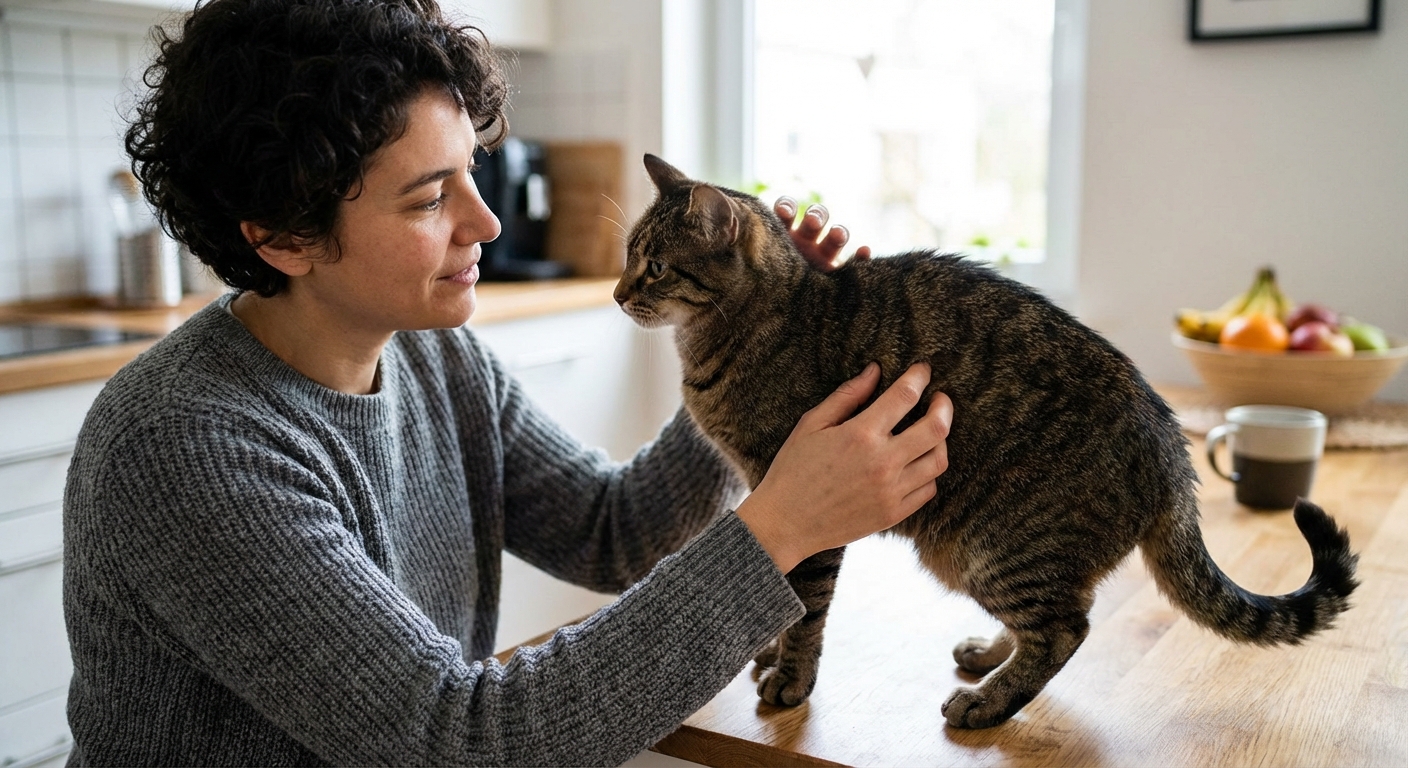
- You can feel ribs with a light touch but they are not sharply visible
- Waistline is visible when viewed from above
- Normal energy, normal stool, normal coat
Signs you may be feeding too much
- Gradual weight gain over 4 to 8 weeks
- Less interest in play or grooming
- Soft stool from overfeeding or too-rapid diet changes
Signs you may be feeding too little
- Persistent hunger and agitation between meals
- Weight loss (especially fast loss)
- Occasional vomiting from an empty stomach in some cats (if this is frequent or your cat seems unwell, talk to your vet)
Treats and toppers count
Treats, lickable tubes, table scraps, and “just a little extra” toppers can quietly add up. A simple rule: try to keep treats to 10% or less of your cat’s daily calories, especially if weight is a concern.
Weight loss notes
If your goal is weight loss, start conservatively and aim for slow changes. Safe weight loss is typically gradual, and aggressive calorie cuts can be risky for cats. Work with your vet team for a plan, especially if your cat is obese or has other health issues.
Switch to wet food safely
If your cat is new to wet food, go slow. Sudden diet changes can upset the digestive tract.
- Days 1 to 3: 25% new wet food, 75% current diet
- Days 4 to 6: 50% new, 50% current
- Days 7 to 9: 75% new, 25% current
- Day 10+: 100% new diet (if tolerated)
If stools become loose, pause at the current step for a few days before increasing again.
Common clinic questions
Is wet food better than dry?
Wet food can be a great choice for many cats because it is typically higher in moisture, which supports hydration. That said, the “best” food is the one your cat does well on and that meets their nutritional needs. Your veterinarian can help if your cat has urinary or kidney concerns.
How often should I feed wet food?
Most cats do well with 2 meals per day, but some cats prefer 3 to 4 smaller meals. The total daily calories matter most.
How long can wet food sit out?
For food safety and freshness, 1 to 2 hours at room temperature is a safe, conservative guideline (sooner in hot environments). In a cool, clean indoor setting, some people stretch this up to 4 hours max, but shorter is safer. Refrigerate opened cans promptly and use within the timeframe listed on the label, commonly 24 to 48 hours.
The bottom line
Many adult cats end up around a few 3 oz cans per day, but it can be more or less depending on your cat’s calorie needs and the kcal per can.
By identifying your cat’s age, current weight, ideal weight (if you know it), and the kcal per can on your wet food, you can calculate a solid starting portion in minutes. Then adjust slowly every couple of weeks based on weight and body condition.
When in doubt, aim for slow, steady changes. Cats do best with consistency, measured portions, and a plan you can stick to.