Hydration made simple: how much water dogs need, quick dehydration checks, why some dogs drink less, and proven tips like extra bowls, fountains, meal moistu...
Article
•
Designer Mixes
How Much Water Does a Puppy Need?

Shari Shidate
Designer Mixes contributor
Bringing home a puppy is equal parts joy and worry, and hydration is one of the easiest health wins you can give them every day. Water supports digestion, temperature control, normal kidney function, and normal joint function. The tricky part is that puppies are still learning their bodies, their routines, and even where the water bowl lives.
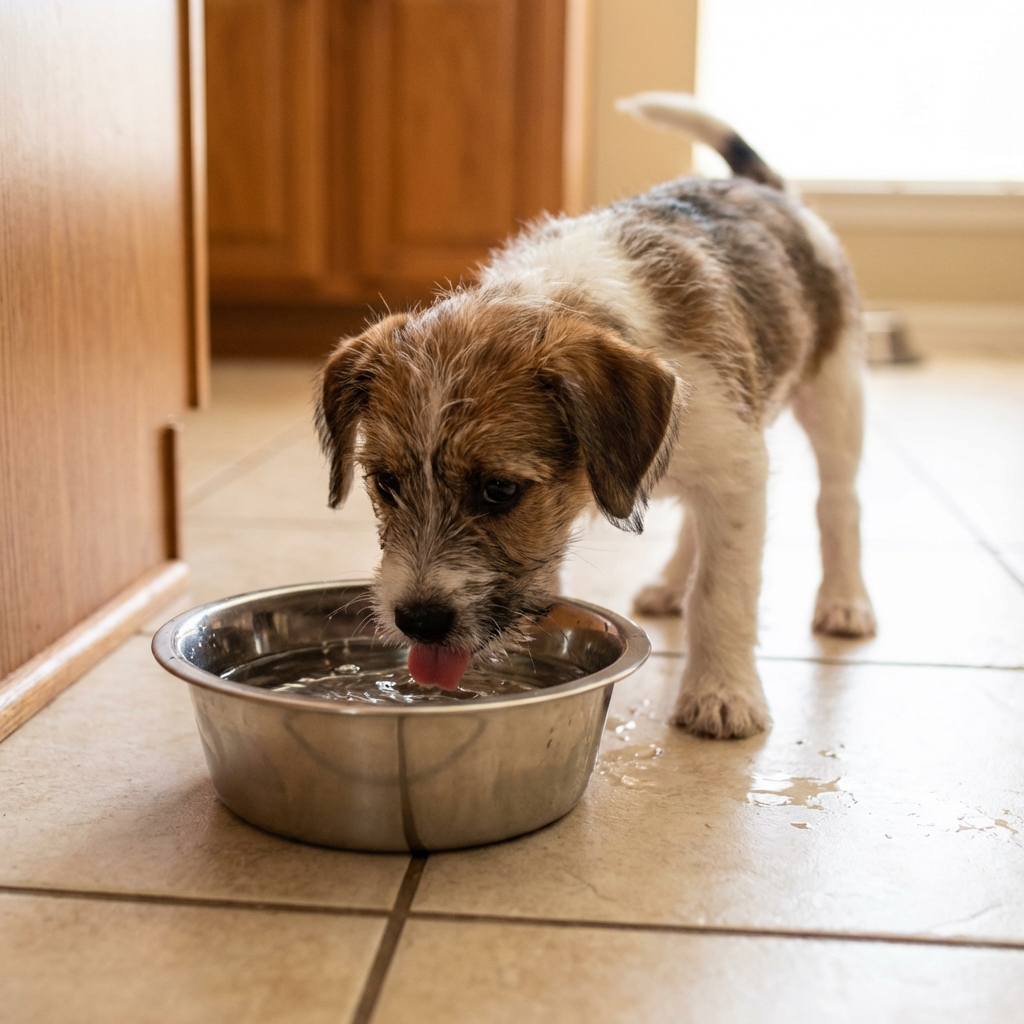
Below is a simple, vet-style way to estimate how much water your puppy may need, plus how to spot dehydration early and when to call your veterinarian.
The quick answer
A common daily range for many healthy puppies is around 1 to 2 ounces of water per pound of body weight per day (about 30 to 60 mL per pound).
Important: That is a broad range. Some puppies, especially larger breeds and those eating wet or fresh diets, may do fine closer to the low end. Needs often rise with heat, heavy play, dry-kibble diets, and growth spurts. If you are unsure what is normal for your puppy, your veterinarian can help you dial in a realistic target.
- 5 lb puppy: ~5 to 10 oz/day (150 to 300 mL)
- 10 lb puppy: ~10 to 20 oz/day (300 to 600 mL)
- 20 lb puppy: ~20 to 40 oz/day (600 to 1,200 mL)
This is a daily range, not a strict goal. Your puppy may drink more on hot days, after zoomies, or if they eat dry kibble only.
Why puppies dehydrate faster
In the clinic, we pay extra attention to puppies because they have less body reserve, higher metabolism, and often more GI upsets during training and transition.
- Small bodies: A little fluid loss matters more.
- More play, more panting: They lose water faster.
- Higher risk of diarrhea: New foods, stress, parasites, and infections can cause rapid fluid loss.
- Still learning habits: Some puppies simply forget to drink.
What changes water needs
Diet (kibble vs. wet vs. fresh)
Puppies eating mostly dry kibble usually drink more because kibble contains far less moisture than canned or fresh diets. If you feed wet food or add water to meals, total bowl drinking may go down even though hydration is fine.
Weather and activity
Hot weather is no joke. Warm days and heavy play increase panting and water needs. Always offer extra water after play sessions and during walks.
Age and size
Younger puppies and small-breed puppies can dehydrate quickly. They may need more frequent access to water, especially during active parts of the day.
Medical factors
Vomiting, diarrhea, fever, kidney issues, diabetes, and some medications can all change thirst and hydration needs. If you notice sudden increased drinking that persists for more than 24 to 48 hours, or a sudden refusal to drink, it is worth a call to your vet.
Hydration and potty training
I hear this all the time: “Should I limit water to stop accidents?” That is understandable, but for most puppies, restricting water can backfire by increasing the risk of dehydration and constipation, and it can make your puppy gulp water when it finally appears.
A healthier approach is:
- Keep water available during the day.
- Take your puppy out more often, especially after drinking, eating, playing, and waking up.
- For many puppies, you can pick up the water bowl 1 to 2 hours before bedtime if your veterinarian agrees and your puppy is healthy.
If your puppy is very young, has had diarrhea, or is recovering from illness, do not restrict water unless your veterinarian instructs you to.
Signs of dehydration
These are the common at-home clues I share with pet parents. One sign alone can be misleading, but a cluster of signs is meaningful.
- Dry or tacky gums instead of slick and moist
- Sunken-looking eyes
- Low energy, reluctance to play
- Reduced urination or very small urine amounts
- Darker yellow urine than usual
- Skin tent test: gently lift skin over the shoulders; if it stays “tented” or returns slowly, dehydration is possible
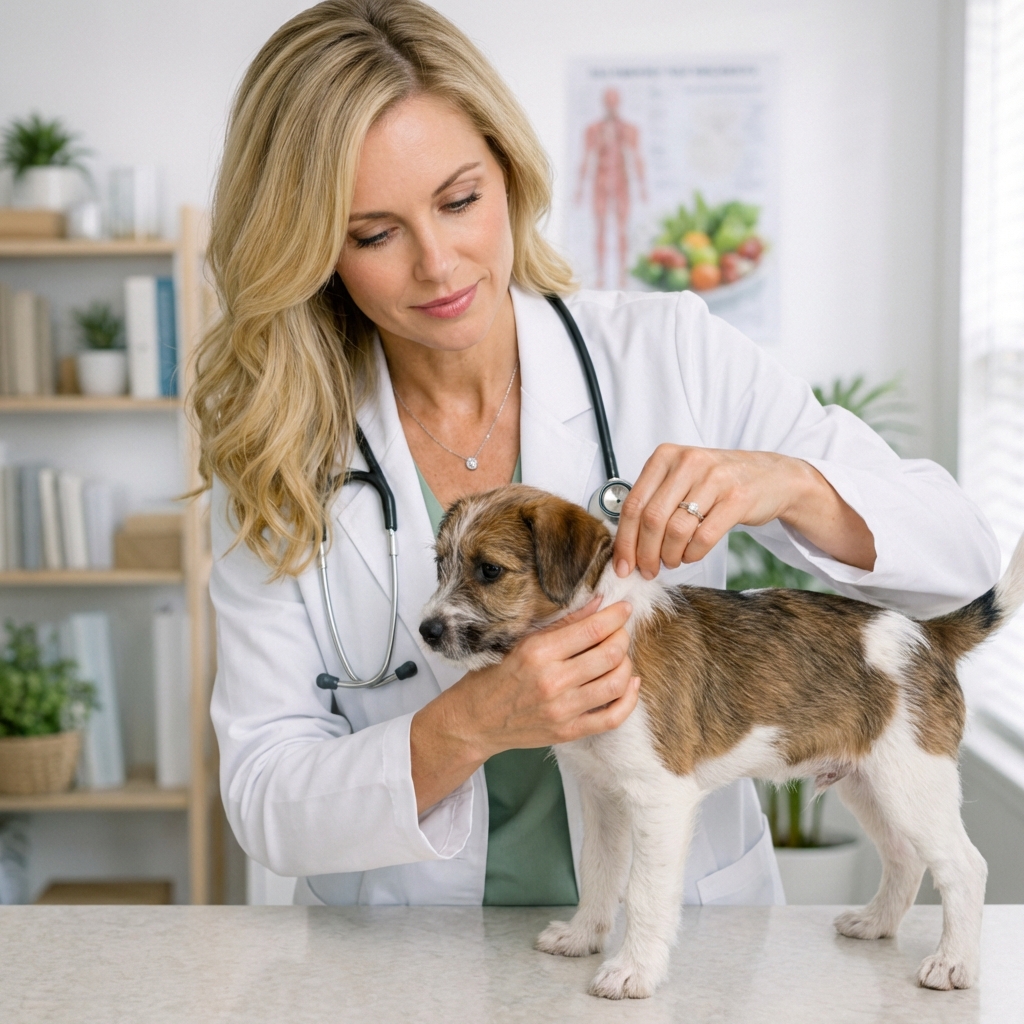
Quick note on the skin tent test: It can be less reliable in very young puppies, very small puppies, and some body types. If your puppy also has vomiting or diarrhea, seems weak, or cannot keep water down, treat that as urgent even if the skin test looks “okay.”
When to call the vet
Please contact your veterinarian promptly if you notice any of the following:
- Vomiting multiple times in a day, or vomiting plus refusing water
- Diarrhea that is frequent, watery, bloody, or lasts more than 24 hours
- Signs of dehydration (like the ones listed above), especially with low energy
- Your puppy is very young (under 12 to 16 weeks) and has GI signs
- Excessive thirst with large volumes of urine, new accidents, or weight loss
- Any concern about heat stress: heavy panting, drooling, weakness, bright red gums, or collapse
Help your puppy drink enough
Make water access easy
- Place a bowl where your puppy spends time and add a second bowl in another area.
- Use a heavy, tip-resistant bowl so play does not end hydration.
- Refresh water at least twice daily.
Keep bowls clean
- Wash bowls daily with hot, soapy water and rinse well.
- Replace water if you notice slime, debris, or drool buildup. Puppies are more prone to stomach upset, and dirty bowls do not help.
Try safe hydration boosters
- Add a splash of water to kibble to increase moisture.
- Offer ice cubes as a supervised treat for some puppies.
- Use a small amount of plain broth only if it is onion-free and garlic-free, and low sodium. Many store-bought broths contain onion or garlic, so when in doubt, skip it or choose a pet-safe option.
Track drinking for a few days
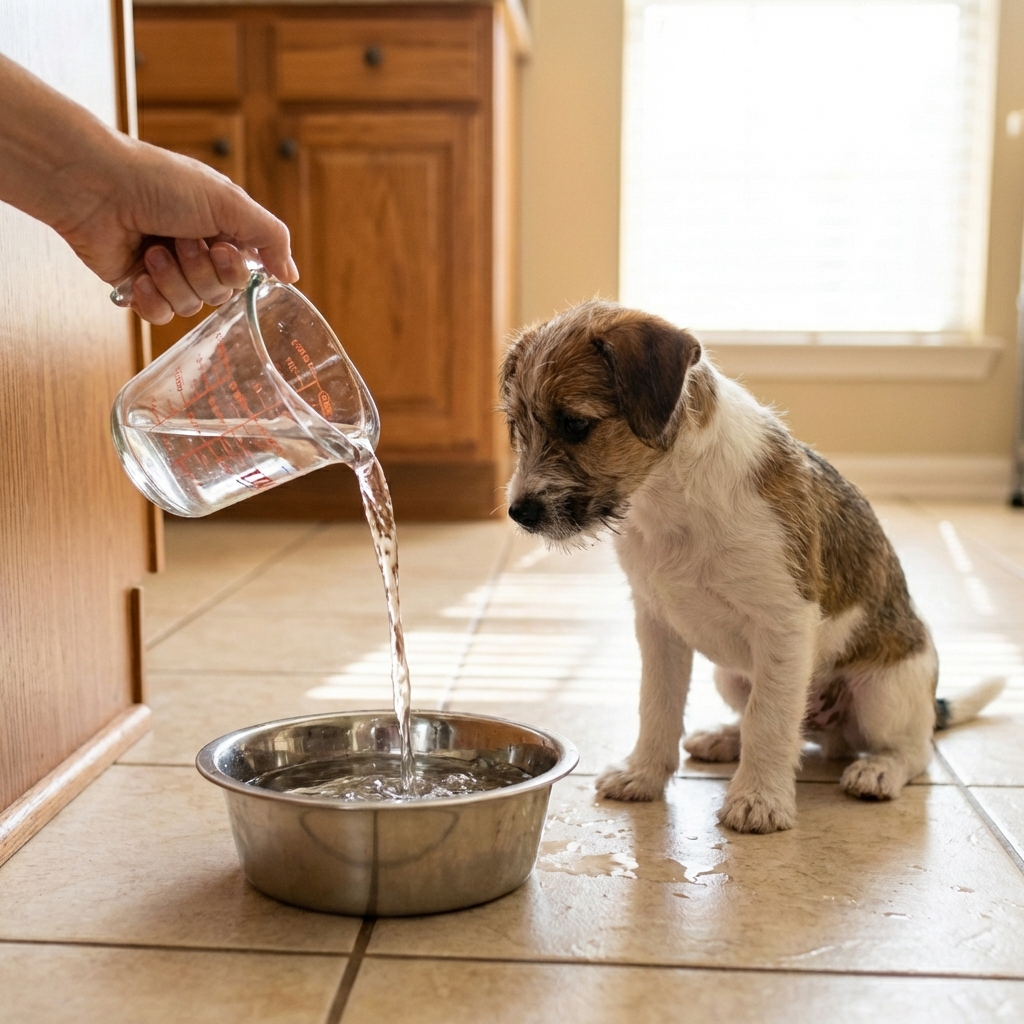
If you are unsure, measure your puppy’s daily intake for 2 to 3 days. Pour a known amount into the bowl each morning and subtract what is left (accounting for spills). This helps you spot true changes instead of guessing.
FAQ
Can a puppy drink too much water?
Yes. Rarely, excessive water intake can be a medical issue, or a puppy may gulp water after being restricted. Also, drinking a lot all at once can trigger vomiting. If your puppy is suddenly drinking much more than normal and it lasts more than a day or two, talk with your veterinarian.
How often should my puppy drink?
There is no perfect schedule. Many puppies drink after meals, after play, and after waking up. The goal is steady access and a normal daily total.
Does water need change after vaccines?
Some puppies are a bit sleepy after vaccines and may drink less for a short period. That is usually fine if they are otherwise normal. If your puppy is lethargic, vomiting, has facial swelling, hives, or trouble breathing, seek veterinary care immediately.
The bottom line
A good everyday range for many puppies is 1 to 2 ounces of water per pound per day (about 30 to 60 mL per pound), with extra during heat, play, and dry-kibble feeding. Keep water available, focus on frequent potty breaks rather than restriction, and trust your instincts. If your puppy is vomiting, has diarrhea, or seems “off,” dehydration can sneak up fast, so it is always okay to call your vet.
Good hydration supports good energy. And good energy supports growth, learning, and a healthier life.