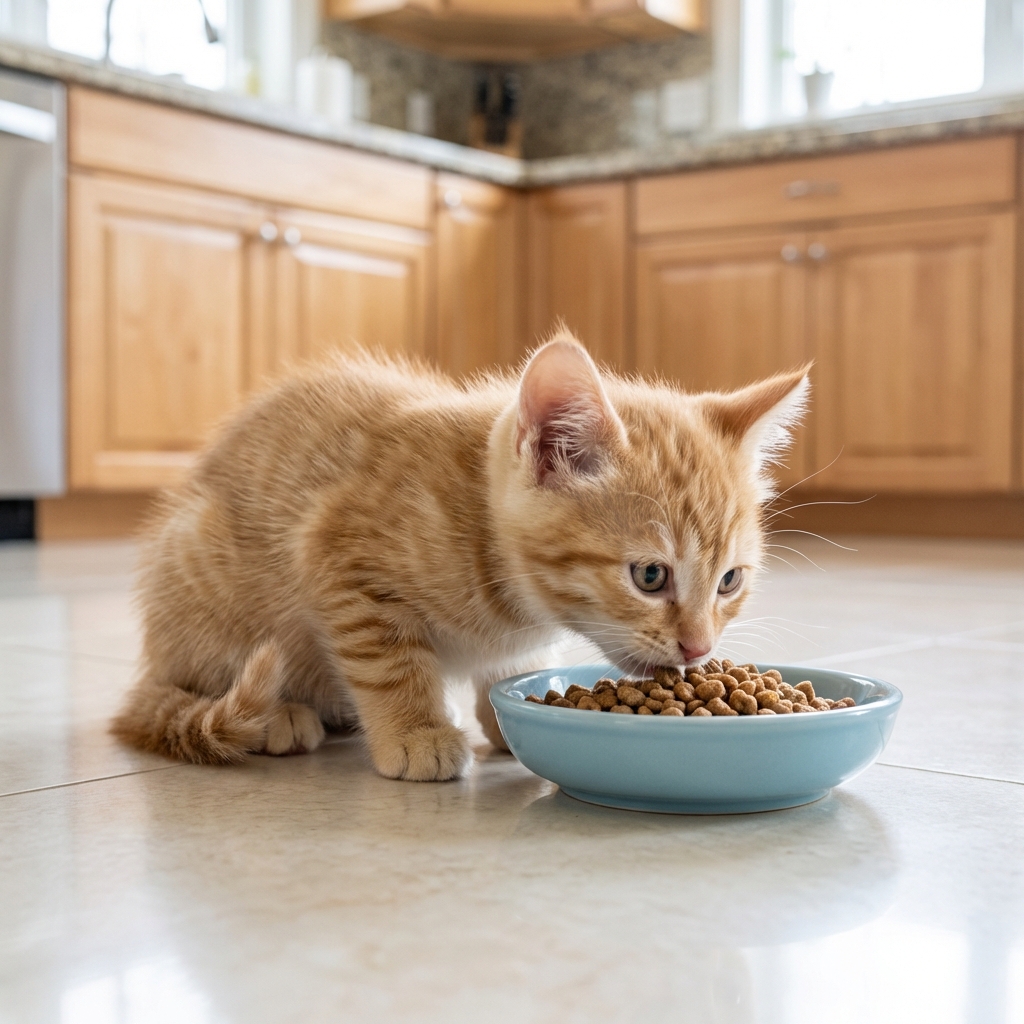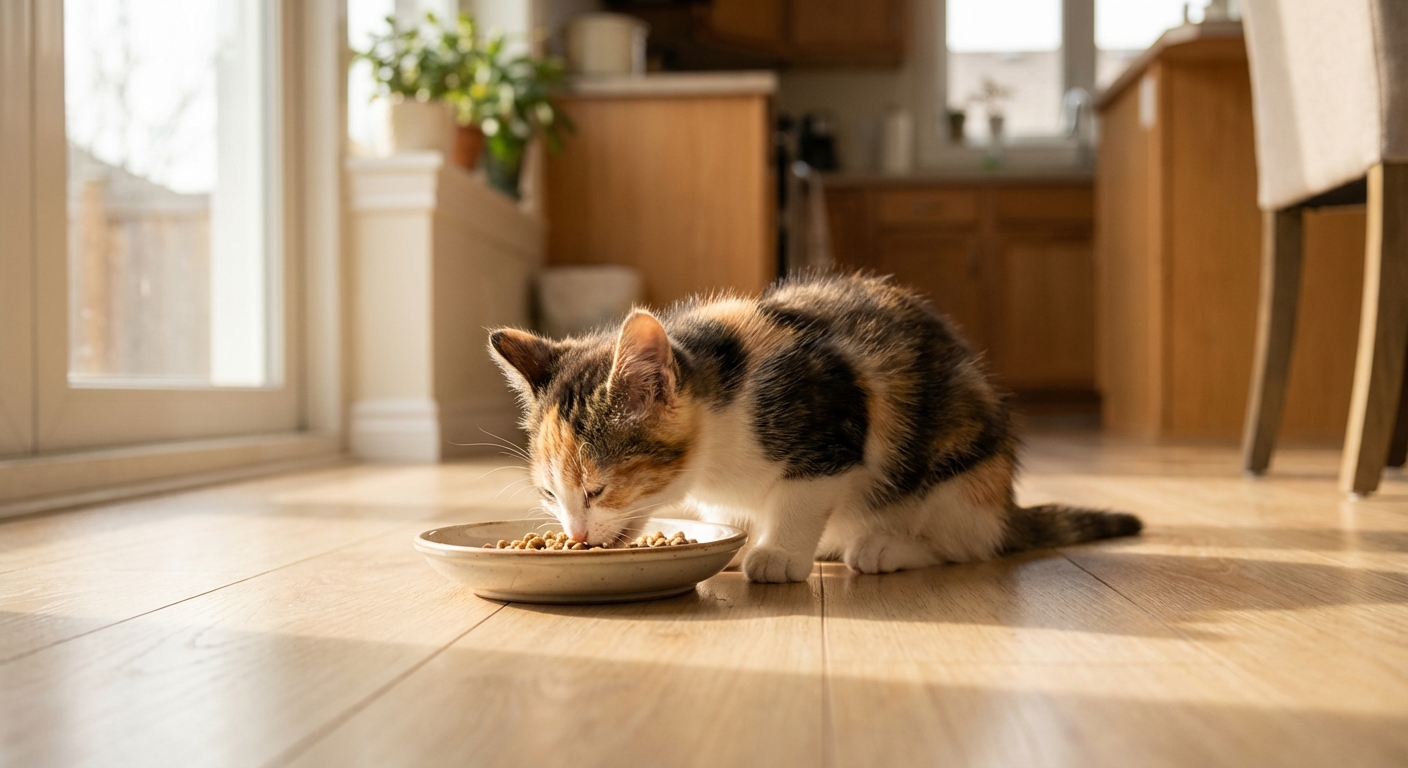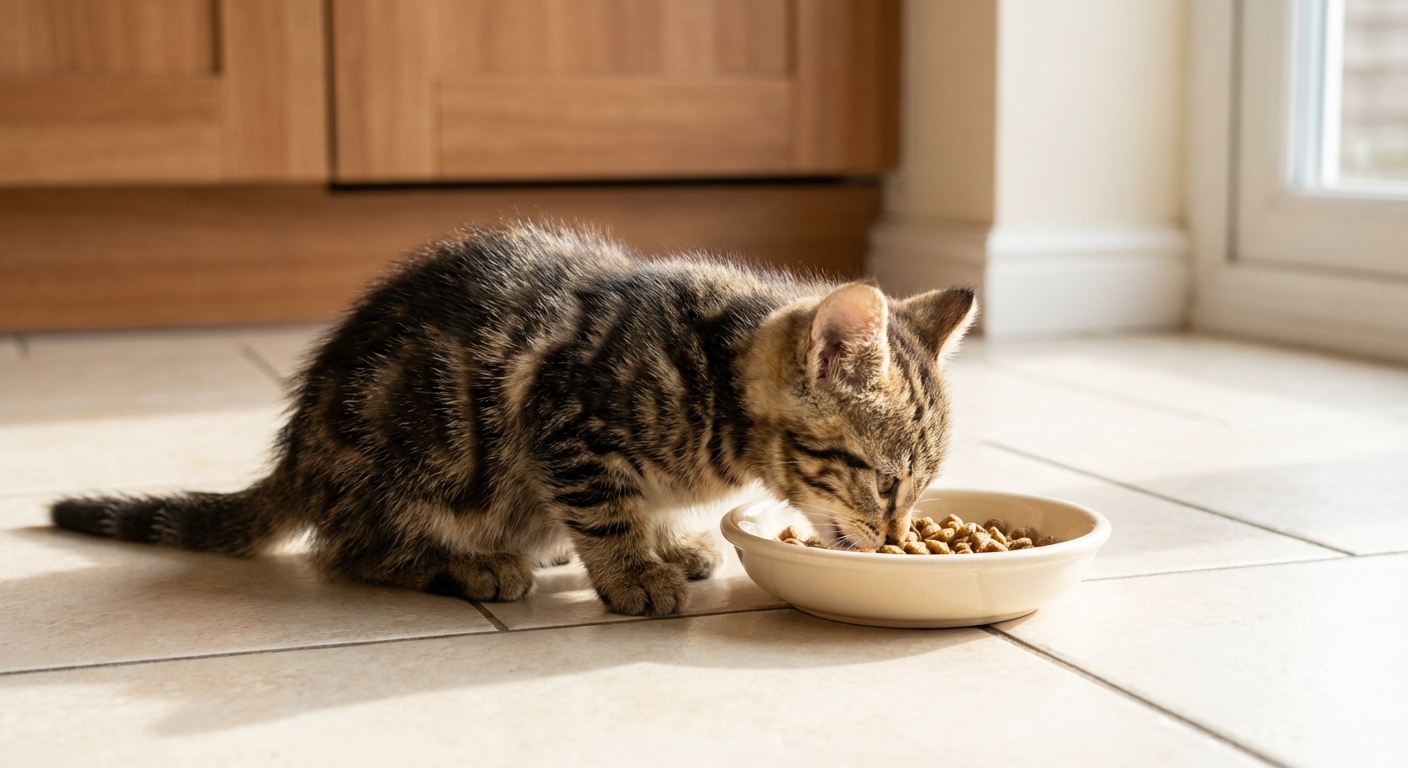
A practical, evidence-based kitten feeding guide from a veterinary assistant: choose kitten food, set age-based meal schedules, portion by calories, transiti...
Article
•
Designer Mixes
How Much to Feed Kittens

Shari Shidate
Designer Mixes contributor
Kittens grow fast, and their little bodies have big nutritional demands. As a veterinary assistant in Frisco, Texas, I see it all the time: people do their best, but kittens can be confusing. One day they act ravenous, the next day they nibble, and suddenly you are wondering if you are underfeeding or overfeeding.
The good news is this: once you understand a few simple guidelines, you can feed your kitten with confidence. In this article, I will walk you through how much to feed by age and weight, how often to feed, what to watch for, and how feeding ties into care and training.
Quick feeding basics
Most healthy kittens do best with a kitten-formulated growth diet and frequent meals. Your goal is steady growth, good energy, and normal stool, not a perfectly empty bowl every time.
- Choose a kitten-formulated (growth) food (not adult cat food). Look for an AAFCO or FEDIAF statement indicating it is complete and balanced for growth (or “all life stages”).
- Feed by calories when possible. “How much” depends on the food’s calorie density.
- Weigh your kitten weekly. A small kitchen scale is perfect.
- Make changes slowly over 5 to 7 days to protect the gut.
- Skip supplements unless your vet recommends them. Extra calcium, vitamins, and “boosters” can create imbalances in growing kittens.
How much to feed (most helpful rule)
If you want one practical shortcut that works across brands, it is calories per day based on weight, then adjusting based on growth and body condition. Energy needs vary a lot with age, activity, health, and spay or neuter status, so treat the numbers below as broad starting estimates, not a strict prescription. Your food label feeding guide is also a good starting point.
Daily calories by weight (starting range)
- 1 lb (0.45 kg): ~110 to 130 kcal/day
- 2 lb (0.9 kg): ~180 to 220 kcal/day
- 3 lb (1.4 kg): ~240 to 280 kcal/day
- 4 lb (1.8 kg): ~290 to 340 kcal/day
- 5 lb (2.3 kg): ~330 to 390 kcal/day
- 6 lb (2.7 kg): ~370 to 440 kcal/day
How to use this: Find the calories in your kitten food (look for “kcal ME per cup” for dry food, or “kcal per can” or “kcal per pouch” for wet). Then divide the total daily calories into multiple meals.
Tip from the clinic: If your kitten is leaving food consistently and staying at a healthy body condition, that can be okay. If your kitten is begging constantly, losing weight, or acting low-energy, you likely need to increase calories or check in with your veterinarian.
Quick reality check: Many kittens gain roughly 0.25 to 0.5 lb per week in the early months, but there is plenty of normal variation. Weekly weights help you see the trend.
How often to feed by age
Kittens have small stomachs and high needs, so meal frequency matters just as much as portion size.
0 to 4 weeks
Most kittens at this stage should be with mom. Orphans need kitten milk replacer and a strict schedule, plus help with warmth and elimination. This is not a “wing it” phase. If you have an orphan kitten, contact a vet or rescue for a plan. Bottle-feeding also carries an aspiration risk if milk is given too fast or in the wrong position, so getting hands-on guidance is worth it.
4 to 8 weeks (weaning)
- Offer a gruel made from wet kitten food mixed with warm water.
- Feed 4 to 6 small meals/day.
- Expect a messy learning curve.
8 to 12 weeks
- Feed 4 meals/day if possible.
- Wet food can be a helpful hydration support, especially for kittens that do not drink much.
3 to 6 months
- Feed 3 meals/day.
- Growth is still rapid, so do not restrict calories like you would for an adult cat.
6 to 12 months
- Many kittens do well with 2 meals/day by this point.
- Some high-energy kittens still benefit from a third small meal.
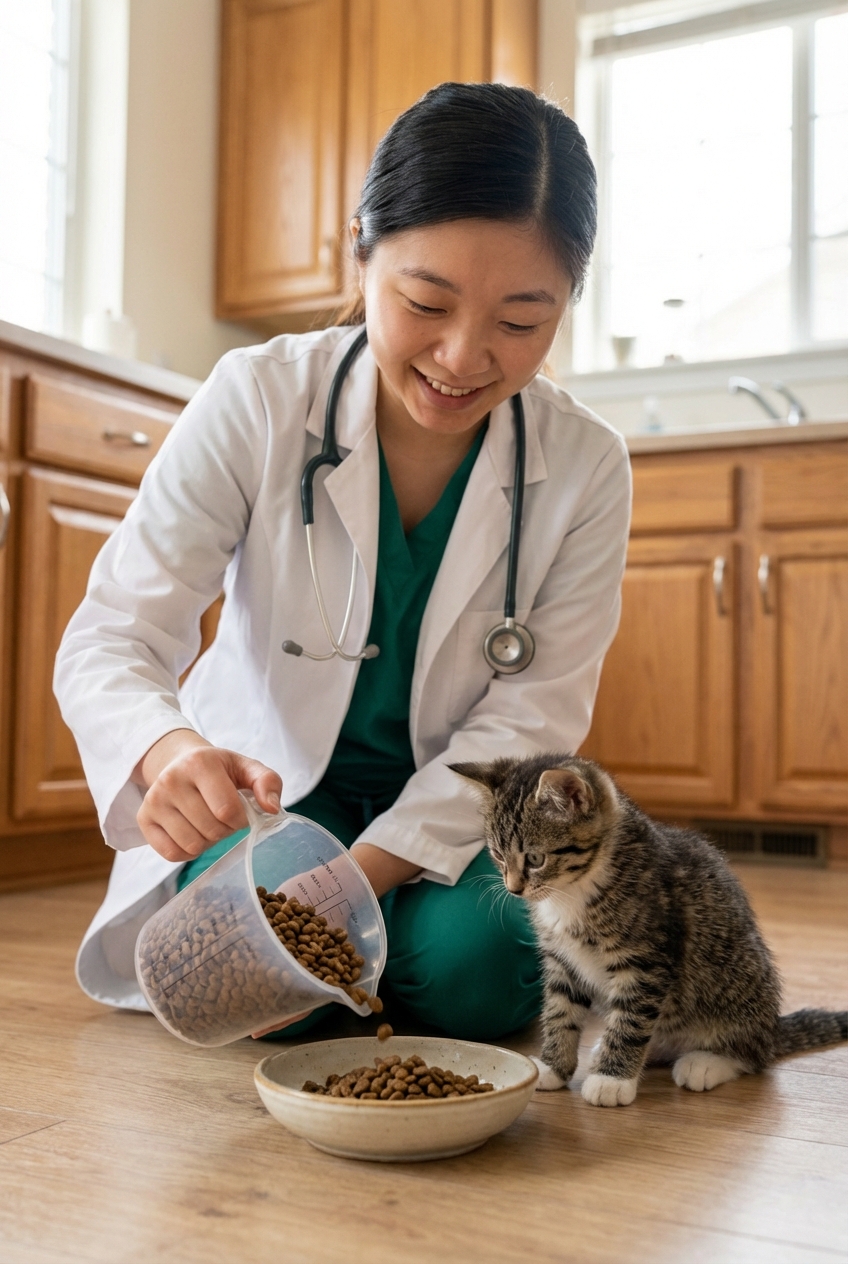
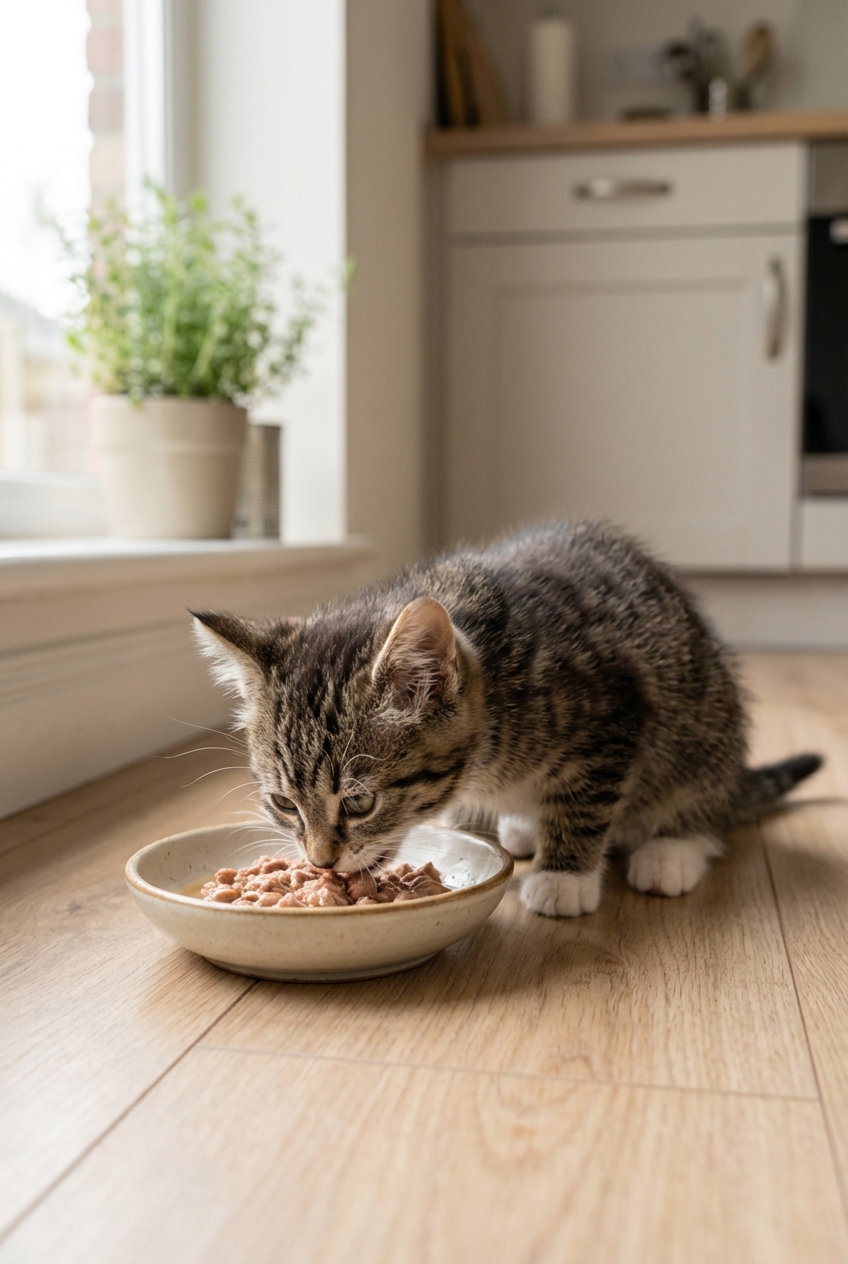
Wet vs dry: what is best?
Both can work well, and many families choose a mix. Here is how I explain it to pet parents in an easy, practical way.
Wet food benefits
- Hydration support, which may help support urinary health long-term
- Often more palatable for picky kittens
- Easier to portion by calories with cans and pouches
Dry food benefits
- Convenience for busy schedules
- Can be used for training as tiny rewards if your kitten tolerates it well
A balanced approach: Two wet meals daily plus a measured portion of dry food can be a realistic, healthy routine for many kittens. Just avoid leaving unlimited dry food out all day if your kitten is gaining too quickly or you cannot track intake.
Portioning made simple
Because food calorie counts vary, here is how to think it through with your label.
Example 1: Wet food
If your 2 lb kitten needs about 200 kcal/day and your wet food is 90 kcal per 3 oz can, you would feed about 2.25 cans per day, split into 4 meals.
Example 2: Dry food
If your kitten needs 280 kcal/day and the dry food is 400 kcal per cup, your kitten would need about 0.7 cups per day. Divide that into multiple meals, and measure it. Eyeballing is where overfeeding sneaks in.
Signs you are on track
Numbers help, but your kitten’s body and behavior are the truth.
Green flags
- Steady weight gain week to week
- Bright eyes, playful energy, good sleep
- Coat looks clean and glossy
- Stool is formed and easy to scoop
Body condition quick check
- You should be able to feel the ribs easily with light pressure, but they should not look sharply visible.
- From above, many kittens have a gentle waist behind the ribs (not a straight tube, not an obvious belly bulge).
Signs your kitten may need more food
- Weight plateau or weight loss
- Constant hunger and frantic eating
- Low energy or poor muscle development
Signs you may be feeding too much
- Rapid weight gain or a round belly that persists beyond a meal
- Loose stool (can also be parasites or food intolerance)
- Vomiting after meals (can also be eating too fast)
Important: A “pot belly” can also mean intestinal parasites, which are common in kittens. If the belly is swollen and your kitten has diarrhea, poor coat quality, or doesn’t gain weight normally, schedule a vet visit and bring a stool sample if you can.
Care tips for safer feeding
Fresh water always
Even if your kitten eats wet food, keep water available. Choose a wide, shallow bowl to reduce whisker stress, and wash it daily.
Food storage and hygiene
- Refrigerate opened cans covered and use within 24 to 48 hours (or follow the label if it differs).
- Do not leave wet food out for hours. It can spoil.
- Wash bowls with hot, soapy water daily.
Parasite prevention
Worms and fleas can change appetite and growth. Follow your veterinarian’s deworming schedule and use kitten-safe parasite prevention products only. Sudden appetite changes can also be a sign of illness, so when in doubt, call.
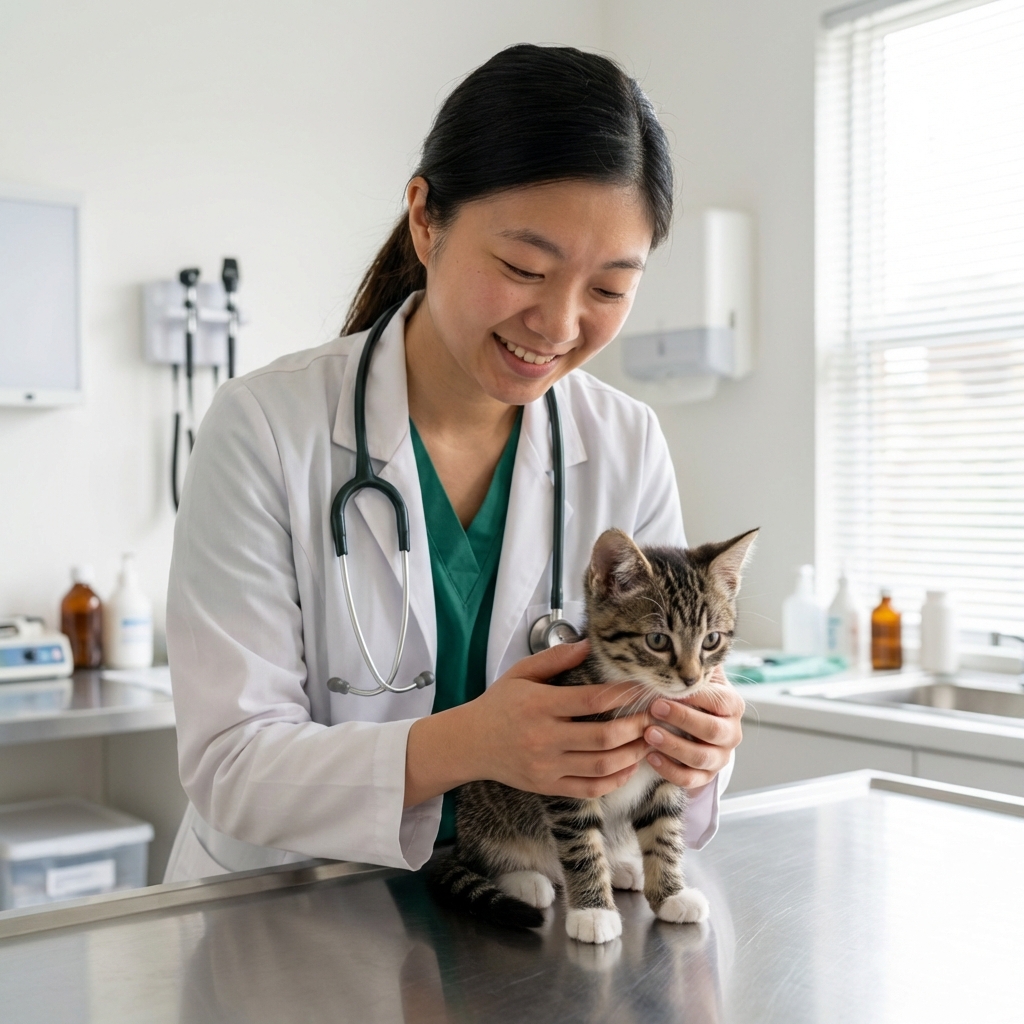
Training tips tied to feeding
Feeding time is more than nutrition. It is also your best training tool.
Use meals to build trust
Quietly sit nearby while your kitten eats. This helps shy kittens feel safe and helps social kittens learn calm manners around food.
Reward calm behavior
If your kitten is jumping on counters or grabbing at hands, do not reward the chaos with food. Wait for four paws on the floor, then offer a small portion or a tiny treat.
Food puzzles for enrichment
A simple puzzle feeder can slow fast eaters and burn kitten energy in a positive way. Start easy so your kitten does not get frustrated.
Do not use cow’s milk
This comes up constantly. Many kittens and cats are lactose intolerant after weaning, and cow’s milk can cause diarrhea. If you want a “special” treat, ask your vet about kitten-safe options.
Common feeding questions
Should I free-feed my kitten?
Some kittens do fine with free-choice food, but many do not. If your kitten is gaining too quickly, becomes picky, or you cannot track intake, switch to measured meals.
When should I switch to adult cat food?
Most kittens transition around 12 months. Large breeds may benefit from kitten food longer. Your veterinarian can guide you based on growth and body condition.
My kitten acts hungry all the time. Is that normal?
Sometimes yes, especially during growth spurts. But constant hunger can also mean parasites, a food that is too low in calories, or meal portions that are not meeting needs. A quick weight check and stool test can be very helpful.
Can I feed homemade or raw food?
I would be cautious here. Many homemade and raw diets are not balanced for growth. If you want to go that route, do it with a veterinarian and ideally a board-certified veterinary nutritionist to formulate a complete plan for a growing kitten.
When to call the vet
Do not wait on these signs in kittens. They can become dehydrated quickly.
- Not eating for 12 to 24 hours
- Repeated vomiting or diarrhea
- Lethargy or hiding more than usual
- Bloated belly with poor appetite
- Slow growth or weight loss
If you are unsure, call your veterinarian. It is always okay to ask early, especially with kittens.