Vet-backed kitten feeding guide covering the best wet vs dry foods, how much to feed by age, meal schedules, safe food transitions, hydration tips, and warni...
Article
•
Designer Mixes
How Much to Feed a Kitten

Shari Shidate
Designer Mixes contributor
Feeding a kitten can feel surprisingly confusing because the rules change fast. One week your kitten seems to inhale every bite, and the next week they walk away like they are “done.” As a veterinary assistant here in Frisco, Texas, I can tell you this is completely normal. Kittens grow in spurts, and their nutrition needs are higher than adult cats, but the goal is still the same: steady growth, lean muscle, a healthy stool, and a playful, bright-eyed kitten.
This vet-informed guide will help you estimate how much to feed, choose a feeding schedule, and spot signs you should adjust portions.
The quick answer
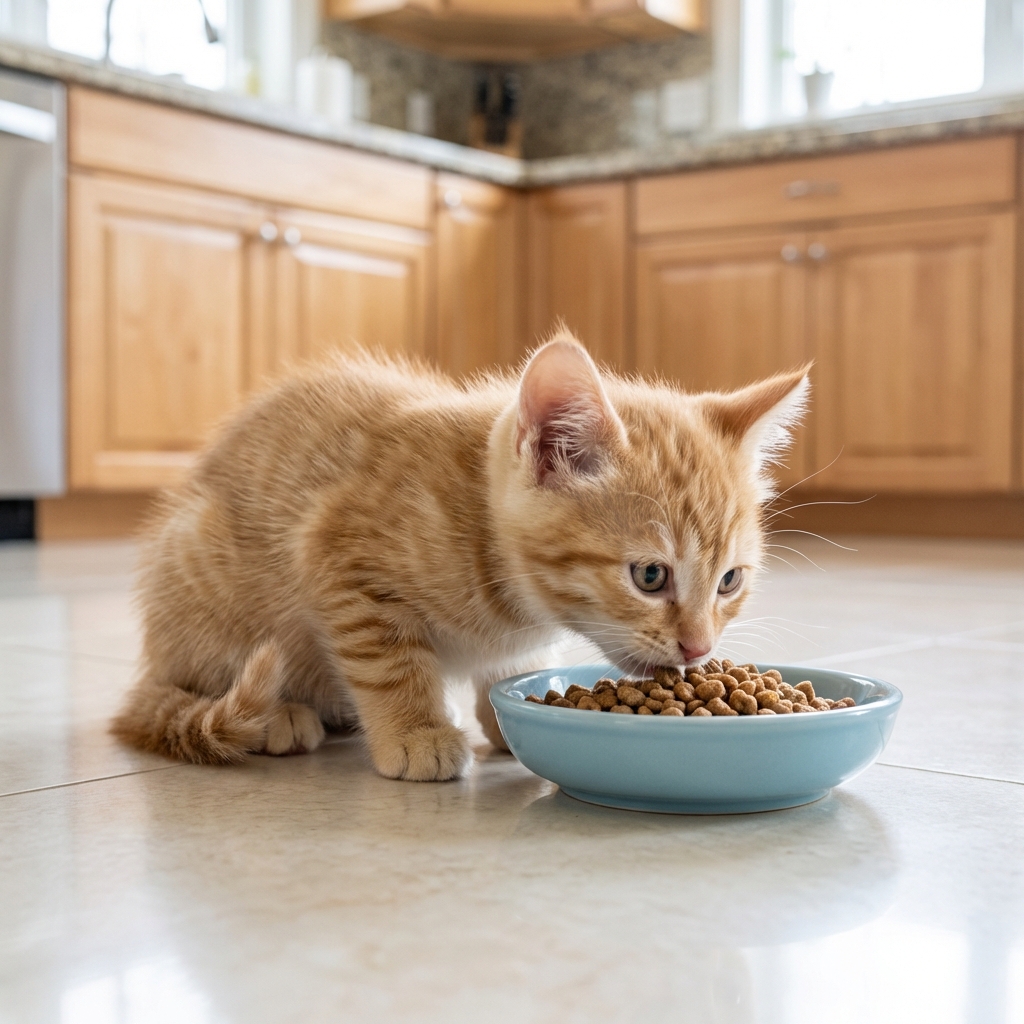
Most healthy kittens do best with:
- 3 to 4 meals per day until about 6 months of age
- A complete and balanced kitten diet (look for an AAFCO statement for growth or all life stages)
- Portions guided by kcal, body condition, and weekly weigh-ins rather than “one scoop forever”
Rule of thumb: kittens often need significantly more calories per pound than adult cats, sometimes close to about 2x during peak growth. The most reliable way to dial it in is to use the food label calories, track body condition, and adjust gradually as your kitten grows and after spay or neuter.
Start with the label
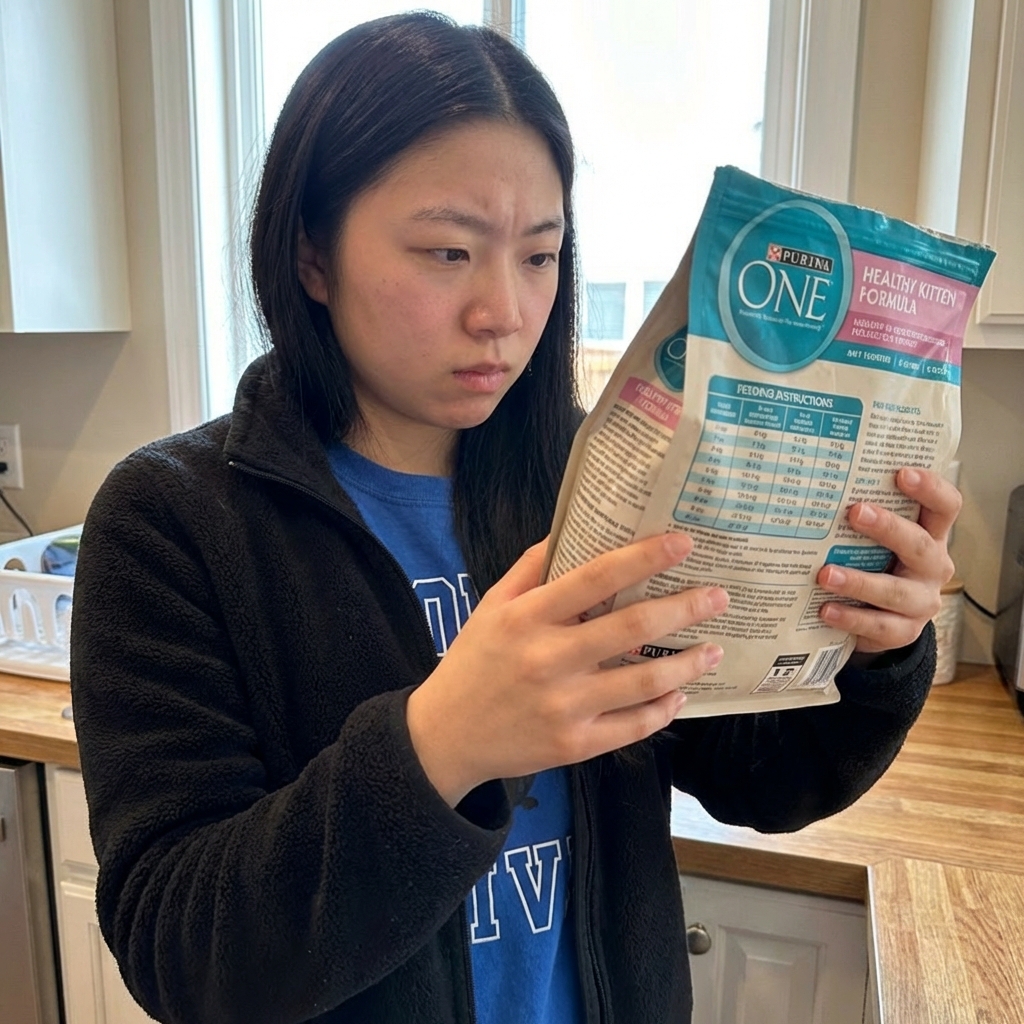
The feeding chart on your kitten food bag or can is a helpful starting point because it is based on that brand’s calorie density. Two foods can look like the same portion size but deliver very different calories.
What to look for
- AAFCO statement: “Complete and balanced for growth” (or “all life stages”).
- Calories: often written as “kcal/cup” for dry food and “kcal/can” for wet food.
- Feeding guide by age or weight: use it as a baseline for week one.
If the label only provides portions and not calories, you can usually find the kcal info on the manufacturer’s website or by contacting them.
How to estimate daily kcal
If you want a more precise starting point than a generic chart, you can estimate calories using a common veterinary calculation:
- RER (resting energy requirement) = 70 × (body weight in kg)0.75
- Daily kcal for kittens is often a multiple of RER, commonly around 2.0 to 3.0 × RER depending on age and growth rate
This is not a perfect formula, but it helps you avoid big overfeeds or underfeeds, especially for tiny 8-week-olds and for larger-framed kittens.
A quick portion example
Let’s say your goal is 240 kcal/day. If your wet food is 80 kcal per can, that is 3 cans per day, split into 3 to 4 meals. If you add 40 kcal of dry food for enrichment, reduce the wet food by about half a can so your daily total stays close to 240 kcal.
Feeding amounts by age
These are practical starting points many clinics use for healthy kittens, with the understanding that individuals vary. If your kitten is underweight, recovering from illness, has parasites, or is a very large breed, your veterinarian may recommend a different target.
0 to 4 weeks
This is a bottle-feeding stage unless the mother cat is nursing reliably.
- Food: commercial kitten milk replacer (not cow’s milk)
- Schedule: every 2 to 4 hours at first
- Vet note: neonates can decline quickly. If you are bottle feeding, get hands-on guidance from a clinic or an experienced foster. Proper positioning and pacing matter to reduce aspiration risk, and many neonates need help with elimination after meals.
4 to 8 weeks
- Food: wet kitten food mixed with warm water or milk replacer into a soft “gruel,” gradually thickened
- Schedule: 4 meals/day
- Goal: smooth transition to solid food with normal stools and good hydration
8 to 16 weeks
- Food: complete and balanced kitten diet, often with a wet-food focus for hydration
- Schedule: 3 to 4 meals/day
- Typical intake: varies a lot by size. A helpful reality check is about 60 to 80 kcal per pound per day for many kittens in this phase. For example, an 8-week-old around 2 lb often lands closer to 120 to 160 kcal/day, while a bigger, older, high-energy kitten may need 200 to 300 kcal/day.
4 to 6 months
- Schedule: 3 meals/day (some do fine on 2 to 3)
- Typical intake: commonly falls around 200 to 350 kcal/day depending on body weight, activity, and growth spurts
6 to 12 months
- Schedule: 2 meals/day is usually fine
- Typical intake: often around 200 to 330 kcal/day, but needs may drop after spay or neuter
Important: these numbers are examples and starting points. The same kcal look like very different portions depending on whether you feed dry, wet, or a mix. When in doubt, use the label, weigh weekly, and adjust slowly.
Wet vs dry
Both wet and dry can be healthy if they are complete and balanced. The best choice is the one you can feed consistently, measure accurately, and that keeps your kitten thriving.
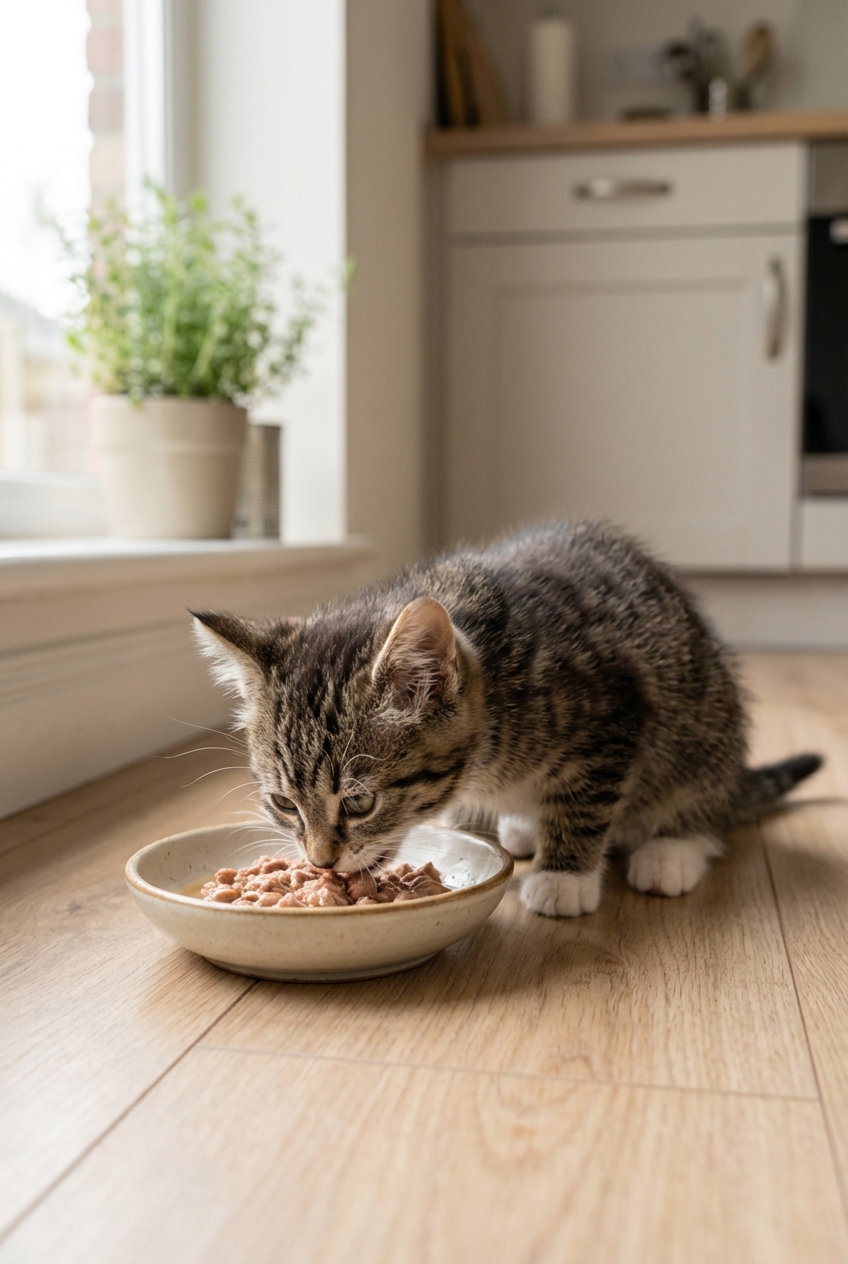
Wet food pros
- Higher moisture helps support hydration, which may benefit urinary tract health.
- Often easier for tiny mouths and newly weaned kittens.
- Portioning can be straightforward when calories are listed per can.
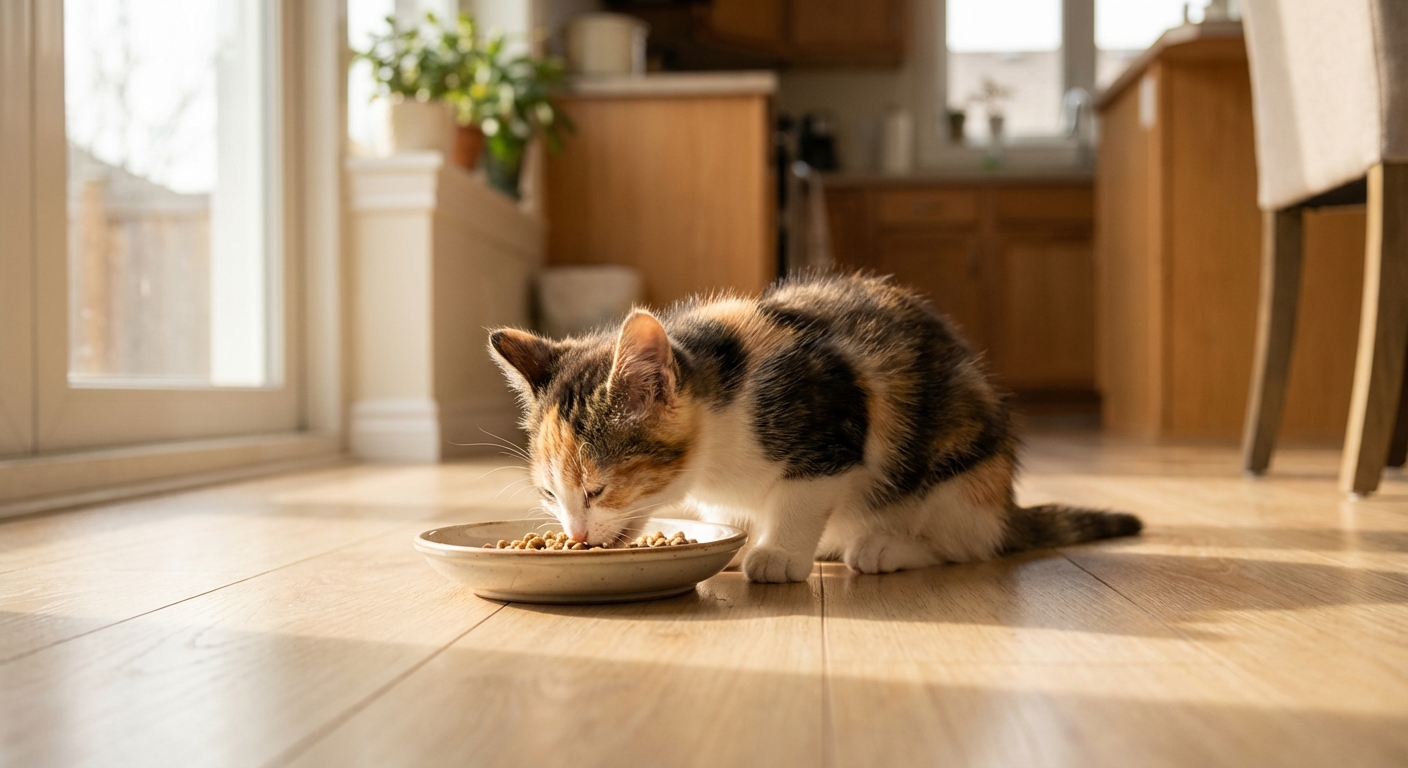
Dry food pros
- Convenient and often more budget-friendly per calorie.
- Easy to use in puzzle feeders for enrichment.
Do not forget water: always provide fresh, clean water, even if your kitten eats wet food. This is especially important if you feed any dry food.
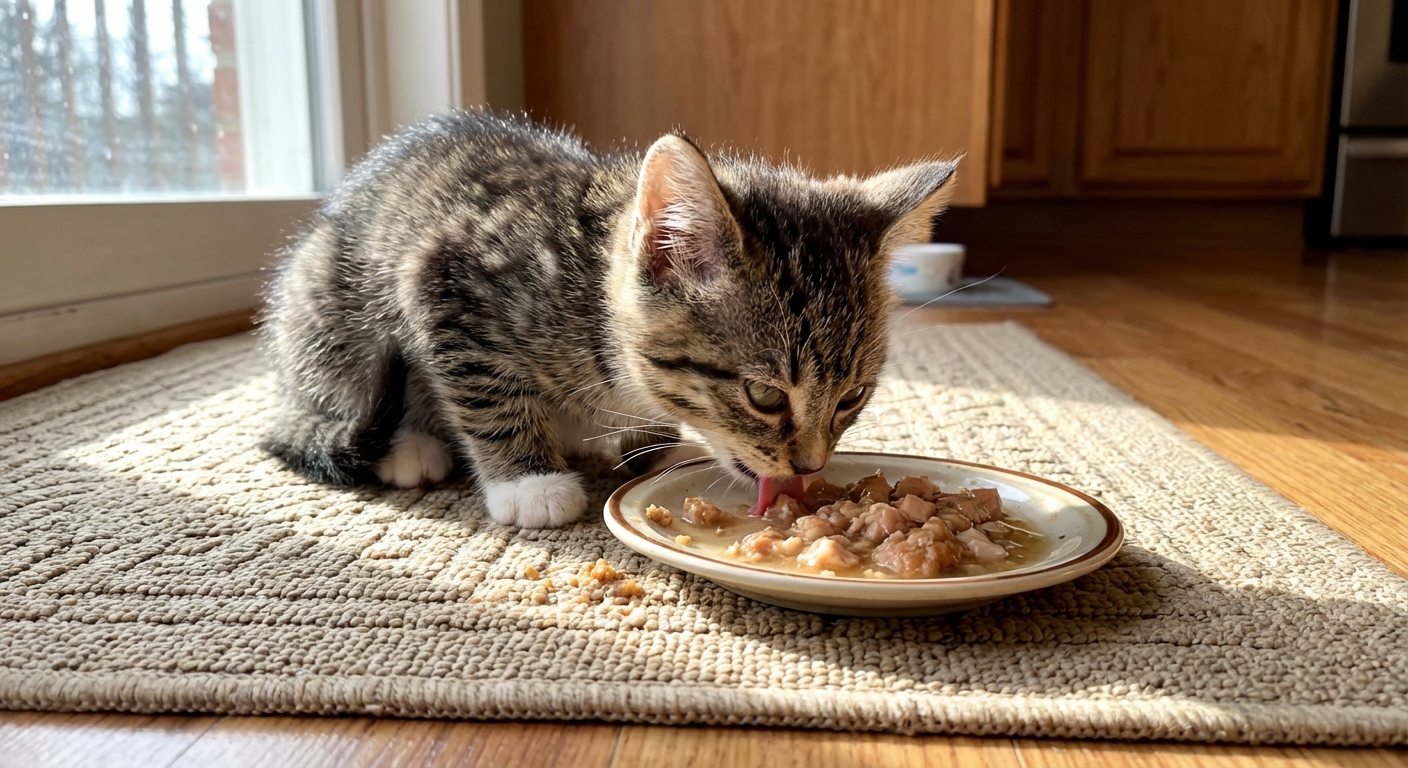
A common balanced approach: feed scheduled wet meals, and use a measured amount of dry food for one meal or for enrichment. Avoid leaving a full bowl out all day once your kitten is reliably eating meals, especially after spay or neuter.
A simple daily plan
Here is an example you can adapt. Always match portions to the calorie info on your specific foods.
Example for 10 to 16 weeks
- Breakfast: wet kitten food
- Lunch: wet kitten food
- Dinner: wet kitten food
- Enrichment: a measured amount of dry food in a puzzle toy
If your kitten is waking you at 4 a.m., a small, measured bedtime snack can help. Just take those calories out of another meal so the total stays consistent.
Are you feeding enough?
Instead of focusing only on the bowl, focus on your kitten’s body and behavior.
Body condition cues
- Ribs: you should be able to feel them with gentle pressure, but they should not be visibly sticking out.
- Waist: a slight waist behind the ribs when viewed from above.
- Abdominal tuck: a gentle upward tuck when viewed from the side.
Track growth
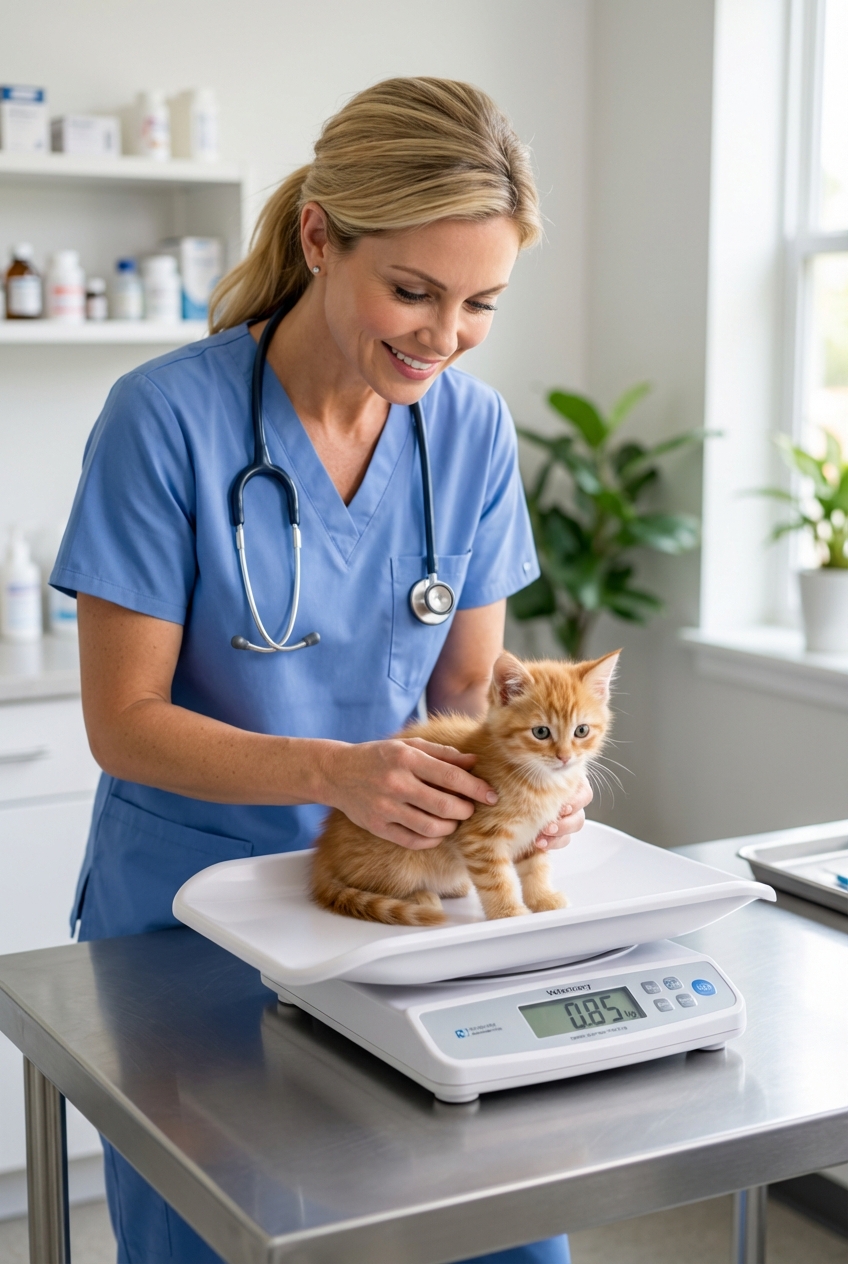
Weigh your kitten once a week on a kitchen scale (small kittens) or bathroom scale (hold kitten, subtract your weight). Many kittens gain roughly 3 to 4 ounces per week early on, but it varies by age, genetics, and health status.
Digestion signs
- Formed stools, not watery
- No persistent vomiting
- Good appetite with normal energy
If you are seeing chronic soft stool, frequent vomiting, a pot-bellied look, or poor weight gain, talk with your veterinarian. Parasites are common in kittens, and nutrition plans may need to change.
Free-feeding
For very young kittens, leaving food out can be helpful if they are underweight or struggling to eat enough. However, as kittens approach 4 to 6 months, structured meals often prevent overeating and make it easier to notice appetite changes early.
Best middle-ground: meal feed most calories, then offer a small measured dry portion for a limited time or in a puzzle feeder.
Common mistakes
“My kitten acts hungry all the time”
Some kittens are truly hungry during growth spurts. Others have learned that crying brings snacks. Try these steps:
- Confirm kcal: calculate total daily kcal from all sources, including treats.
- Add a meal: move from 2 meals to 3 meals temporarily.
- Increase kitten food, not treats: raise total kitten-food calories slightly or choose a higher-protein kitten formula, rather than adding extra treats.
- Use enrichment: puzzle feeders, play sessions before meals.
Measuring with the wrong “cup”
Dry food is easy to overfeed. Use a true standard measuring cup (8 oz volume), level it, or use a kitchen scale for best accuracy. Also note that some pet food bags include a scoop that is not a standard cup, so “one scoop” does not always equal “one cup.”
Too many treats
For kittens, treats should be minimal. Aim for less than 10% of daily calories. If you are training, use tiny pieces or reserve part of the measured kibble as “treats.”
Switching foods too fast
If you are changing brands or formulas, transition over 5 to 7 days when possible by gradually mixing the new food with the old. Sudden changes are a common reason for diarrhea.
When to adjust portions
Increase or decrease total daily food by about 5% to 10% and reassess after 7 to 14 days. Make changes gradually to protect your kitten’s digestion.
Increase if you notice
- Slow weight gain or weight loss
- Visible ribs or a sharp-looking spine
- Low energy and constant food seeking
Decrease if you notice
- Rapid fat gain, no visible waist
- Difficulty feeling ribs
- Vet notes that body condition is trending high, especially after spay or neuter
Ask your vet about
- Orphaned kittens and bottle feeding plans
- Diarrhea lasting more than 24 to 48 hours, or diarrhea with lethargy
- Vomiting more than once or any vomiting with poor appetite
- Parasites (roundworms, hookworms, coccidia, giardia)
- Spay or neuter timing and post-surgery appetite changes
- Large breed cats (like Maine Coons) who may need a longer growth plan
If your kitten stops eating, treat it as urgent. For very young kittens (especially under about 12 weeks), I consider same-day guidance the safer choice because dehydration and low blood sugar can happen quickly.
Bottom line
Feed a complete and balanced kitten diet, start with the label’s guide or a simple kcal estimate, then adjust based on body condition and weekly weight checks. Most kittens thrive on 3 to 4 meals per day in the early months, with portions that shift as they grow. If you ever feel unsure, bring your kitten’s food label and your current portions to a vet visit. We can do quick math together and make a plan that fits your kitten, not just the average kitten.