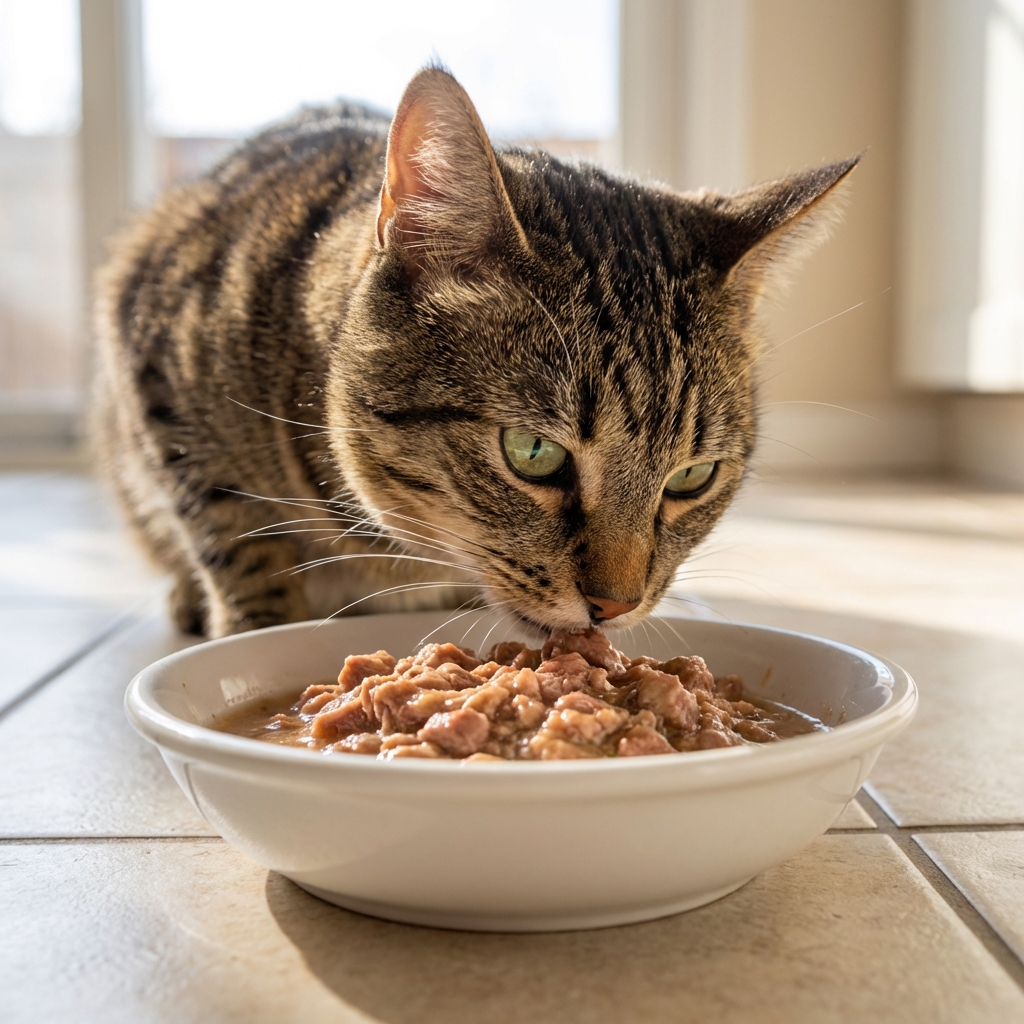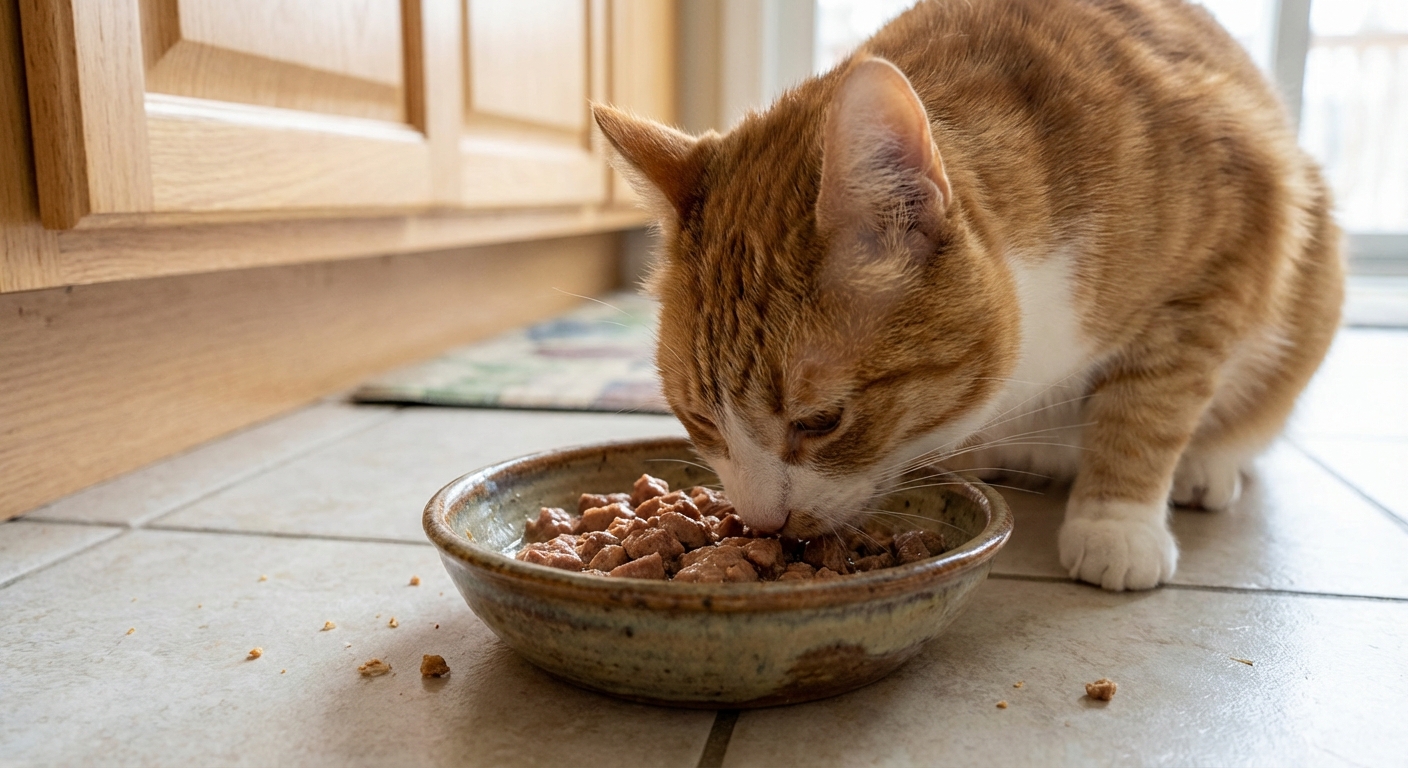
Stop guessing portions. Learn to calculate your cat’s daily wet food by calories, read kcal on labels, convert to cans, and adjust for weight, age, and com...
Article
•
Designer Mixes
How Much Should I Feed My Cat?

Shari Shidate
Designer Mixes contributor
If you have ever looked at a cat food label and thought, “This cannot possibly be right,” you are not alone. As a veterinary assistant here in Frisco, Texas, I have seen that portion sizes are one of the biggest everyday factors that affect a cat’s weight, energy, and long-term health.
The good news is that portion control is very doable once you know what actually changes a cat’s calorie needs and how to check your plan with a few simple body cues at home.
Why portions matter
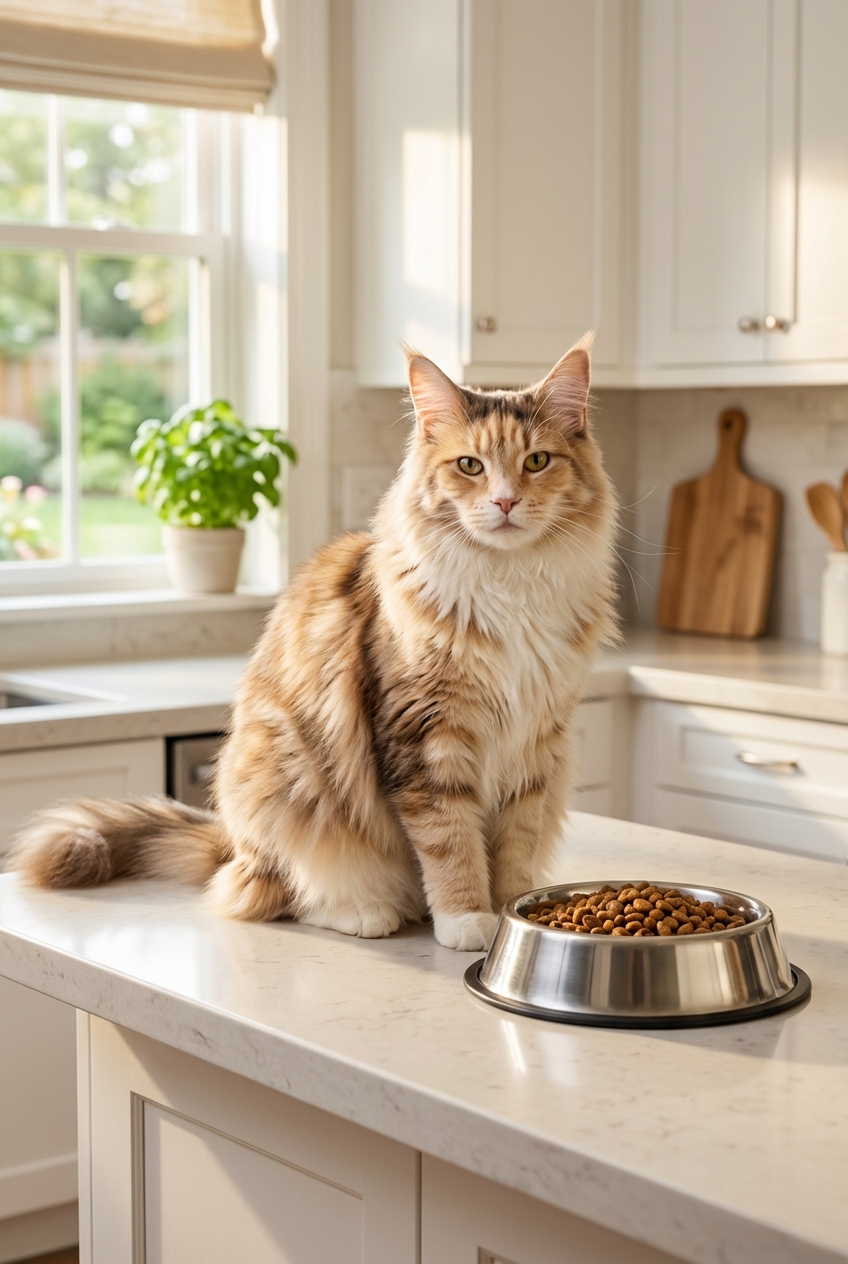
Cats are masters at convincing us they are starving. But many indoor cats burn fewer calories than we think, especially if they spend most of the day napping, watching birds, and making short sprints between rooms.
Consistently overfeeding can contribute to:
- Weight gain and obesity, which increases the risk of arthritis and mobility issues
- Diabetes in susceptible cats
- Urinary problems, especially in cats who take in less total water day to day
- Shorter lifespan and reduced quality of life
On the flip side, underfeeding or feeding an unbalanced diet can lead to muscle loss, poor coat quality, and nutrient deficiencies. The goal is not “less food.” The goal is the right amount for your cat.
Start with calories
Many people want a simple answer like “feed 1 cup per day.” I totally understand. But cups can be misleading because different foods have very different calorie densities. One dry kibble might be 350 kcal per cup, while another is 500 kcal per cup. That is a big swing.
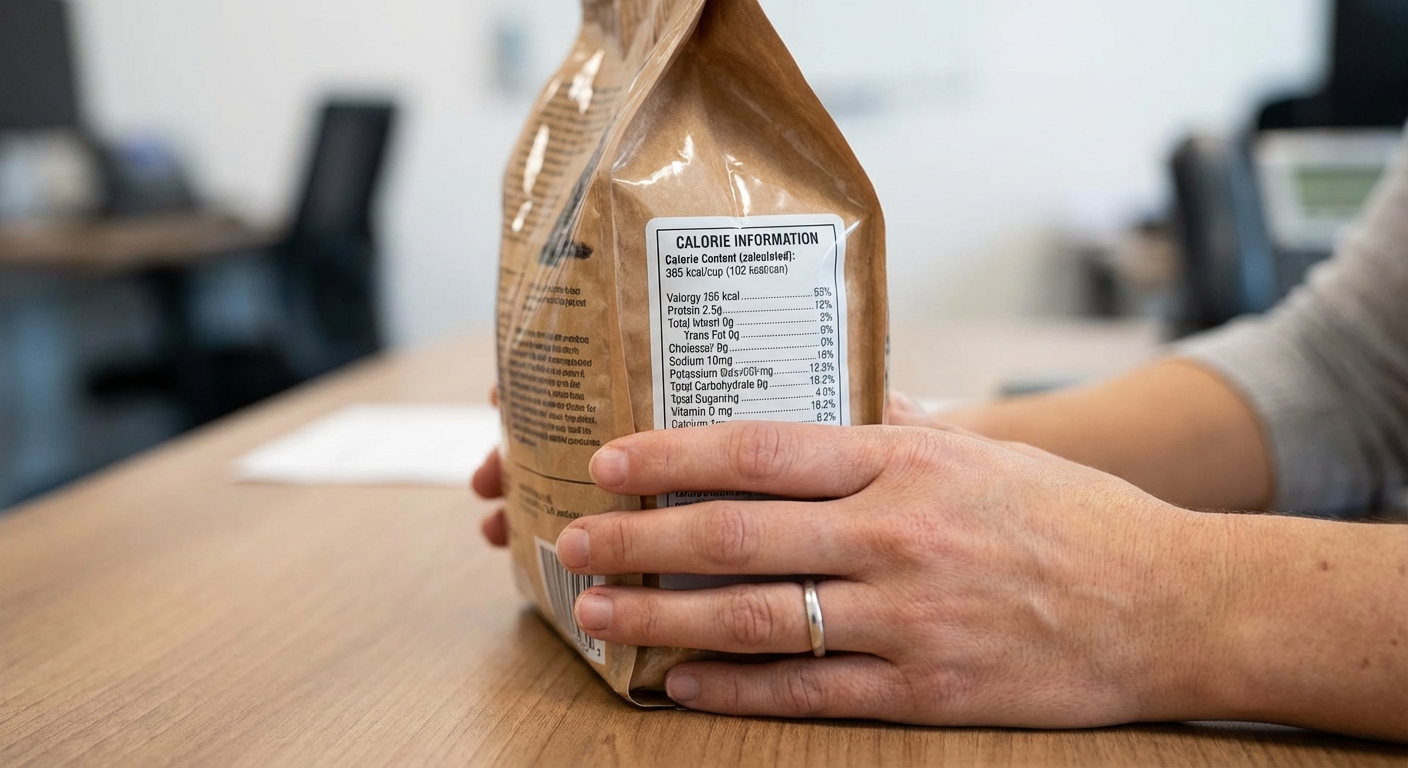
What to do instead: look for the calorie statement on the package. It is usually written as kcal/cup for dry food and kcal/can or kcal/3 oz for wet food.
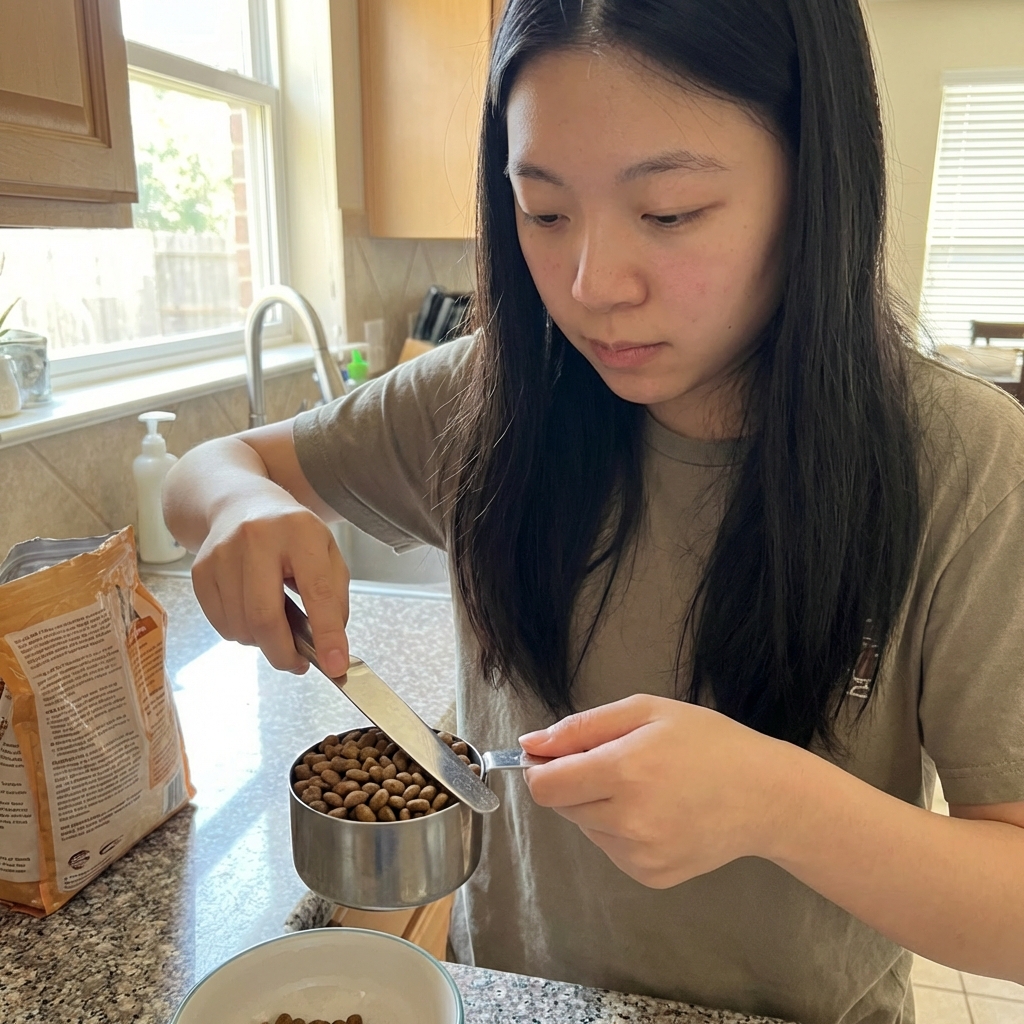
Quick tip: If you can, use a small kitchen scale to weigh dry kibble in grams. Measuring cups vary a lot depending on kibble shape and how packed the cup is.
General calorie ranges
These are common starting ranges for adult cats. They are approximations, and many vets use formulas like RER and MER that often land lower for sedentary indoor cats. Your cat may need more or less based on body condition, age, and activity.
- 8 lb cat: about 180 to 220 calories per day
- 10 lb cat: about 200 to 260 calories per day
- 12 lb cat: about 230 to 300 calories per day
Cats who are very active, young adults, or naturally lean may need more. Senior cats, indoor-only cats, and cats who have been gaining weight usually need less.
What changes needs
Two cats can weigh the same and still need different portions. Here are the biggest factors that change feeding needs.
Age
- Kittens: need more calories per pound for growth and usually do best with multiple meals daily
- Adults: maintenance calories vary based on activity and body type
- Seniors: may need fewer calories, or in some cases more nutrient-dense calories if they are losing muscle
Spay or neuter
After spay or neuter, energy requirements often decrease and appetite can increase. Many cats need a portion adjustment to prevent gradual weight gain.
Indoor activity
Most indoor cats are “low to moderate activity.” If your cat does not have daily play sessions, puzzle feeders, or climbing opportunities, their calorie needs are often lower than label feeding guides assume.
Body and muscle
The scale is helpful, but body condition score tells the real story. A muscular cat can weigh more and still be healthy. A cat with little muscle can weigh “normal” but carry extra fat.
How to check portions
Here is a simple at-home check I recommend to many pet parents.
Ribs and waist
- Ribs: You should be able to feel ribs under a light layer of fat, similar to feeling the bones on the flat back of your hand.
- Waist: Looking down from above, there should be a gentle “in” behind the ribs.
- Belly tuck: From the side, the abdomen should tuck up slightly behind the ribcage.
Watch trends
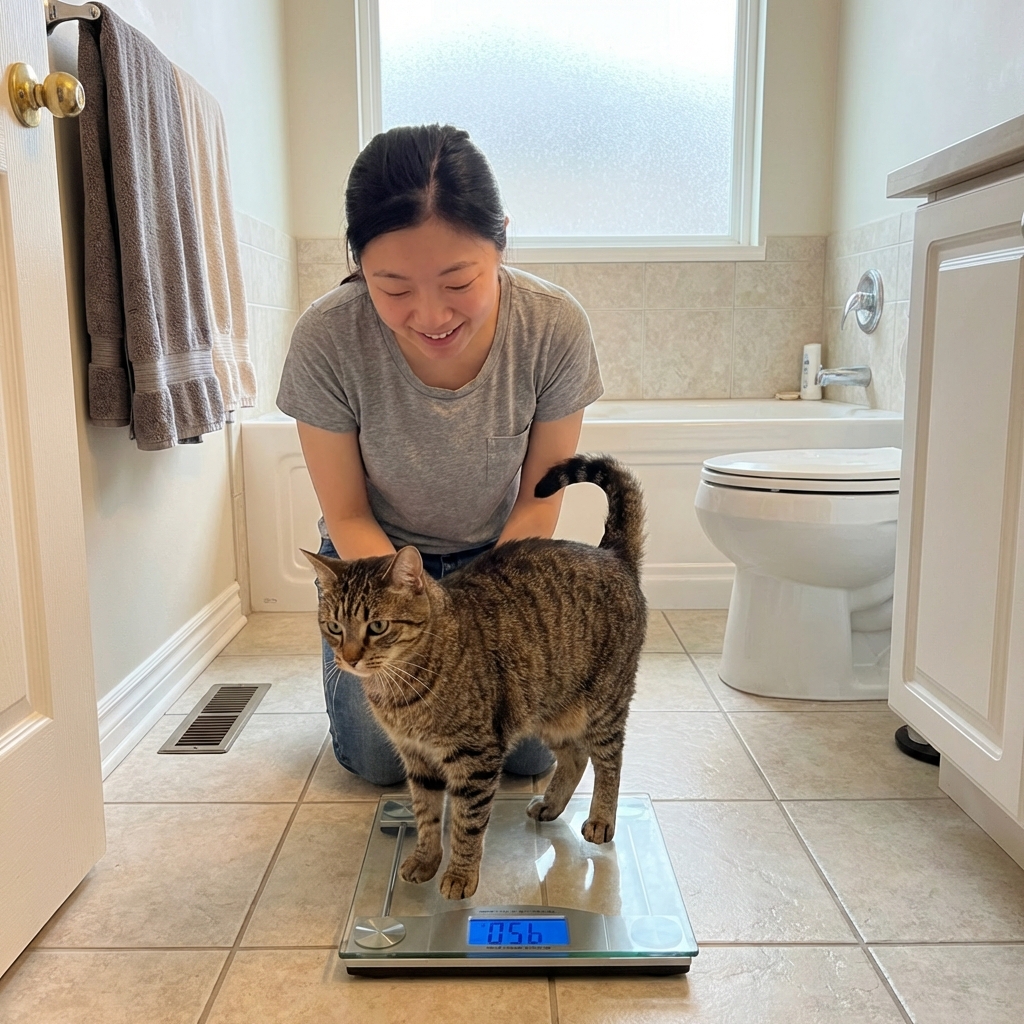
Weigh your cat monthly if possible. A slow creep up of even half a pound matters for cats. For a 10 pound cat, one extra pound is a 10% weight change.
Wet vs dry
Both wet and dry diets can work, but they behave differently in the real world.
Wet food
- Typically lower in calories per volume and higher in moisture
- Can help cats feel fuller
- Supports hydration, which many cats benefit from
Dry food
- Easy to measure, store, and use with puzzle feeders
- More calorie-dense, so small “extra” amounts add up quickly
- Free-feeding often leads to unnoticed overeating
A practical middle ground: Many families do well with scheduled meals using a mix of wet and dry, as long as the total daily calories are controlled.
Portion steps
If you want a clear process, here is one that works well for most healthy adult cats.
Step 1: Pick a calorie target
If your cat is currently at a healthy body condition, start with the middle of the daily range for their weight. If your cat is overweight, ask your veterinarian for a safe weight-loss calorie goal. Cats should lose weight slowly and safely, because rapid weight loss can be dangerous for them.
A commonly used safe rate is about 0.5% to 2% of body weight per week, but your vet should tailor this to your cat.
Step 2: Read the kcal statement
Examples:
- Dry food: “400 kcal per cup”
- Wet food: “90 kcal per 3 oz can”
Step 3: Convert calories to portions
Example for a 10 lb adult cat eating 240 kcal/day:
- If dry food is 400 kcal/cup, then 240 kcal is 0.6 cups per day.
- If wet food is 90 kcal/can, then 240 kcal is about 2.5 cans per day.
Step 4: Split into meals
Most cats do well with 2 to 4 meals per day, as tolerated by your schedule and any medical needs. More frequent smaller meals can reduce begging and help cats who tend to scarf and vomit.
Step 5: Count treats
Treats should ideally stay under about 10% of daily calories. For a 240 kcal/day cat, that is roughly 24 calories. That can disappear fast with crunchy treats.
Step 6: Adjust slowly
If weight is moving the wrong direction, adjust the total daily calories by about 5% to 10%, then reassess in 2 to 4 weeks. Small changes are easier on everyone, including your cat.
Free-feeding
Some cats can self-regulate with a bowl always available, but many cannot, especially after spay or neuter or if there are multiple cats in the home.
Free-feeding tends to cause problems when:
- Your cat is gaining weight, even slowly
- There is food competition between cats
- You cannot tell which cat is eating what
- Your cat snacks all night and sleeps all day
Alternatives that feel generous without overfeeding:
- Use an automatic feeder to split the same daily portion into smaller meals
- Try puzzle feeders for part of the dry food portion
- Add play sessions before meals to mimic natural hunt then eat behavior
Multi-cat homes
If you have multiple cats with different calorie needs, consider feeding separately, using timed meals in different rooms, or using microchip feeders. It is one of the easiest ways to prevent the “one cat eats everyone’s leftovers” problem.
When to call your vet
Portion control becomes especially important, and sometimes more complex, with certain health conditions.
- Overweight cats: should follow a vet-guided plan to avoid unsafe rapid weight loss
- Diabetes: meal timing and calories matter, and insulin schedules may be involved
- Kidney disease: may require a prescription diet with specific nutrient targets
- Hyperthyroidism : can cause increased appetite and weight loss
- Food allergies or IBD : need careful diet consistency and limited treats
If your cat is losing weight without you trying, eating a lot more than usual, vomiting frequently, or drinking much more water, please call your veterinarian. Those signs are worth checking out sooner rather than later.
Daily example
Here is a realistic plan for an indoor adult cat targeting about 220 to 250 calories per day. Adjust based on your cat’s needs and your food’s calorie label.
- Morning: 1 small can wet food
- Evening: 1 small can wet food
- Midday or overnight: measured portion of dry food offered in a puzzle feeder
- Treats: a few low-calorie treats, deducted from the day’s total
The biggest takeaway is this: you can keep your routine simple as long as the portions are consistent and your cat’s body condition stays healthy.
Quick checklist
- Find your food’s kcal on the label and use that to set portions
- Remember bag and can feeding guides are starting points and often run high for indoor cats
- Feed measured meals instead of guessing
- Check body condition monthly and adjust by small amounts
- Keep treats under 10% of calories
- Ask your vet before starting a weight-loss plan
If you tell me your cat’s age, current weight, whether they eat wet or dry (or both), and the kcal listed on your food, I can help you estimate a sensible starting portion you can fine-tune with your veterinarian.