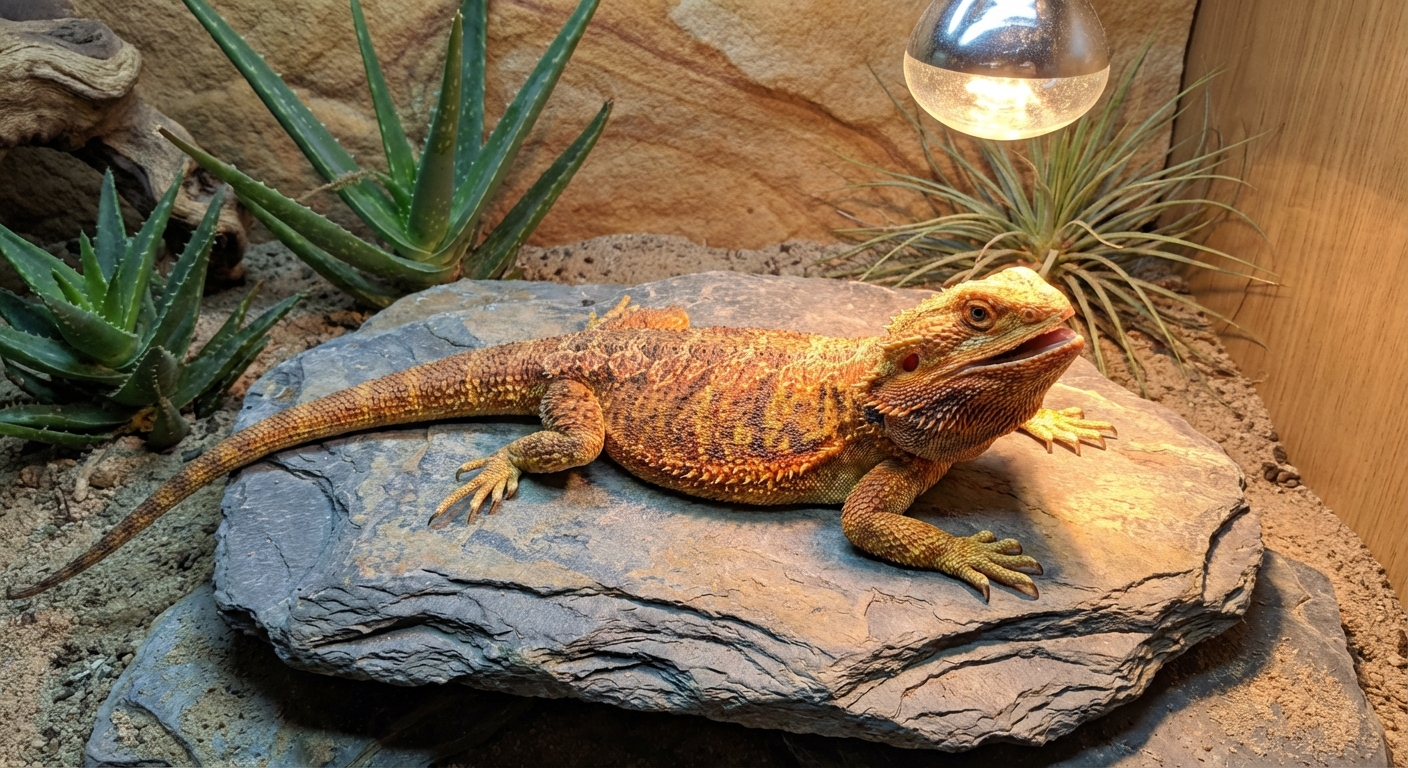
Follow a practical, vet-informed bearded dragon feeding schedule for babies, juveniles, and adults. Learn best feeding times, portions, safe foods, supplemen...
Article
•
Designer Mixes
How Much Should I Feed My Bearded Dragon?

Shari Shidate
Designer Mixes contributor
Feeding a bearded dragon can feel confusing at first because their needs change fast as they grow. The good news is that you do not have to guess. With a few simple rules around age, portion size, and what “balanced” really means, you can build a routine that supports steady growth, a healthy weight, and a long, active life.
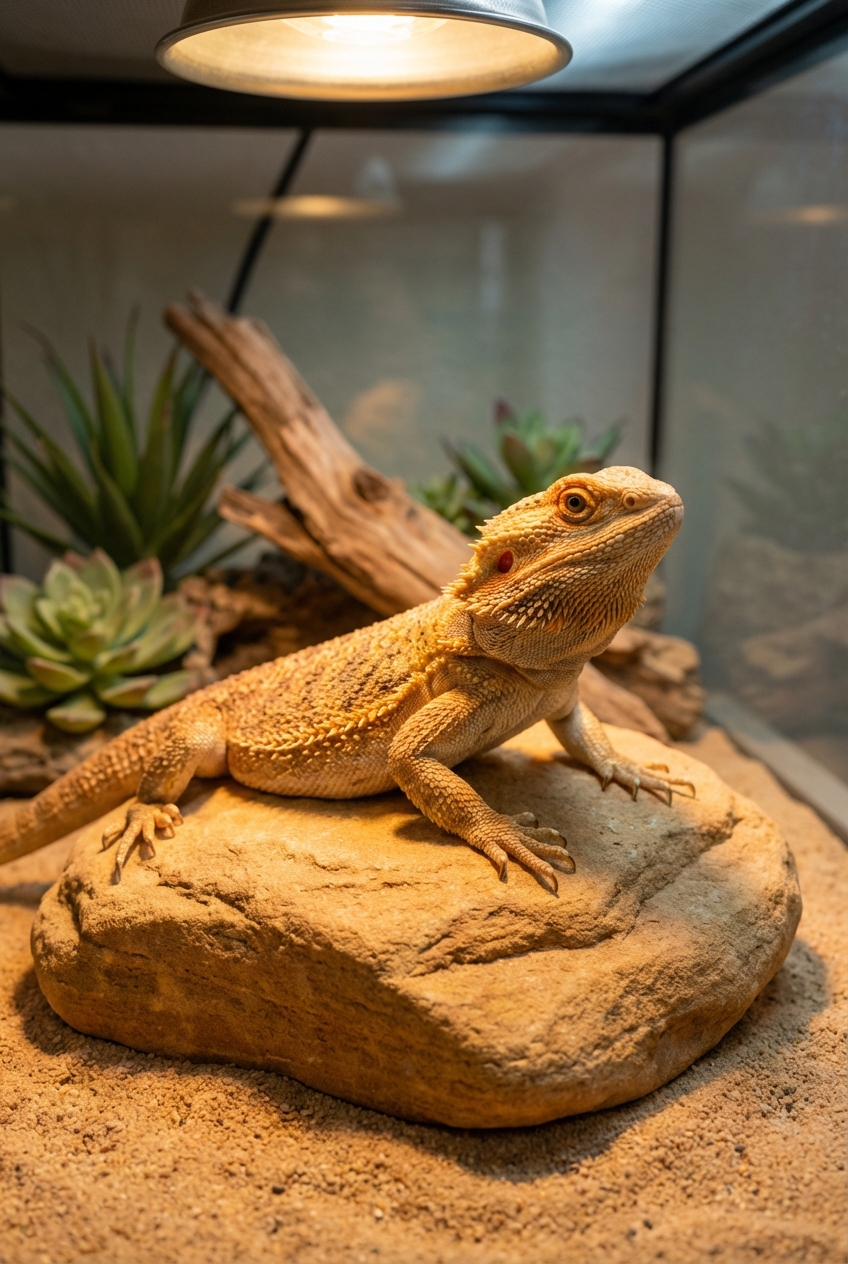
Quick note: As a veterinary assistant, I always encourage you to use this guide alongside your reptile veterinarian’s advice, especially if your beardie is a baby, a rescue, gravid (carrying eggs), or has any medical issues.
What feeding amount depends on
There is no single perfect number of crickets or salad leaves that fits every bearded dragon. Feeding amounts depend on a handful of factors.
- Age and growth stage: Babies and juveniles need more protein and more frequent meals. Adults need more greens and fewer insects.
- Body condition: A lean, active dragon and an overweight dragon can eat very differently even at the same age.
- Insect type and size: 10 small crickets is not the same as 10 dubia roaches. Calories and fat content vary.
- Temperatures and UVB: If basking temps or UVB are off, appetite and digestion can change, sometimes dramatically.
- Seasonal behavior: Appetite often drops during brumation-like periods. Some adults simply eat less in winter.
If you want one evidence-based “north star,” aim for steady, controlled growth in juveniles, and stable, lean body condition in adults, with normal stool and strong activity levels.
Feeding schedule by age
Below are practical starting points many keepers and exotic vets use. Adjust up or down based on your dragon’s body condition, your husbandry, and your veterinarian’s guidance.
Baby bearded dragons (0 to 3 months)
Goal: Growth, bone development, and consistent energy.
- Insects: 2 to 3 meals per day.
- Salad/greens: Offer daily, even if they ignore it at first.
- Portion guide: Instead of unlimited “as many as they will eat,” aim for a controlled portion and stop before the belly looks distended. A common starting point is a small meal of appropriately sized feeders, then reassess in 10 to 15 minutes and offer a little more only if they are still actively hunting.
Babies can be enthusiastic eaters, but portion control still matters. Chronically overfeeding can contribute to excess weight, and high protein intake can raise concern for issues like gout risk in susceptible animals, especially when hydration, UVB, or calcium support is not ideal. If you are unsure, your exotics vet can help you set a growth pace that is healthy, not just fast.
Juveniles (3 to 12 months)
Goal: Strong, controlled growth and healthy habits.
- Insects: 1 to 2 meals per day.
- Salad/greens: Offer daily.
- Portion guide: Many juveniles do well with a measured feeding rather than unlimited insects. If you want a simple cap, keep insect time limited and stop while they are still interested, rather than feeding until they quit.
This is often the “hungry stage.” Keep the diet varied, but do not let insects crowd out greens completely.
Adults (12 months and older)
Goal: Lean muscle, stable weight, and long-term organ health.
- Greens: Offer a fresh salad daily.
- Insects: Typically 2 to 4 times per week (sometimes less for dragons prone to weight gain).
- Portion guide: Many adults do best with a modest, consistent insect portion per feeding, not unlimited feeders.
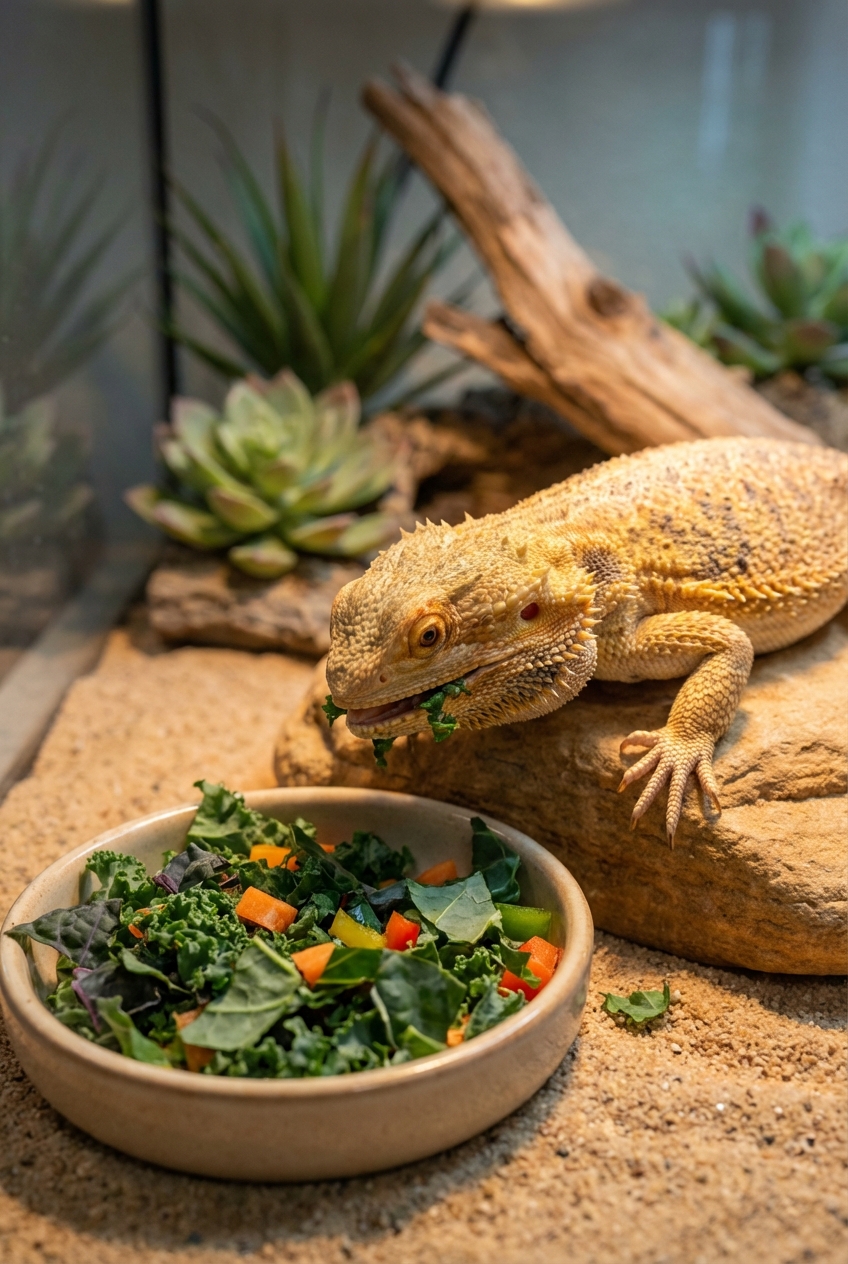
A common mistake: continuing a juvenile, insect-heavy plan into adulthood. In adults, too many insects, especially fatty feeders, often leads to obesity and fatty liver disease.
Greens vs insects
These ratios are widely used starting points for a healthy bearded dragon with correct husbandry. They are not the only “right” way to feed, and some vets and modern care standards recommend pushing greens earlier and using fewer insects overall to reduce obesity risk.
- Babies: About 60 to 80% insects, 20 to 40% greens.
- Juveniles: About 40 to 60% insects, 40 to 60% greens.
- Adults: About 70 to 85% greens, 15 to 30% insects.
Think of these as “weekly patterns,” not a rule you must hit at every meal.
Safe insect size
Use this simple sizing rule:
Do not feed insects larger than the width of the space between your bearded dragon’s eyes.
This is a practical safety guideline, not a physics law, but it helps reduce the risk of choking and difficult digestion. Oversized feeders can raise the risk of gut irritation and impaction, especially if temperatures and hydration are not ideal.
Best feeder insects
Variety matters for nutrition and for appetite. Rotate feeders when possible.
Staple options
- Dubia roaches: Excellent staple for many dragons, good protein, generally less messy than crickets.
- Crickets: Widely available and a solid staple when gut-loaded properly. Remove leftovers, since loose crickets can stress a dragon and may nip at them.
- Black soldier fly larvae: Often well accepted and naturally higher in calcium than many feeders.
Limit to occasional
- Mealworms and superworms: Higher fat and tougher exoskeleton. Better as occasional feeders, especially for adults.
- Waxworms: Very high fat. Best as a rare treat or for underweight dragons under veterinary guidance.
Gut-loading vs dusting: Gut-loading means feeding your insects nutritious foods (leafy greens, squash, quality gut-load diets) for 24 to 48 hours before offering them. Dusting means lightly coating feeders in calcium or vitamin powder right before feeding. Doing both is one of the easiest ways to improve nutrition.
Greens and veggies
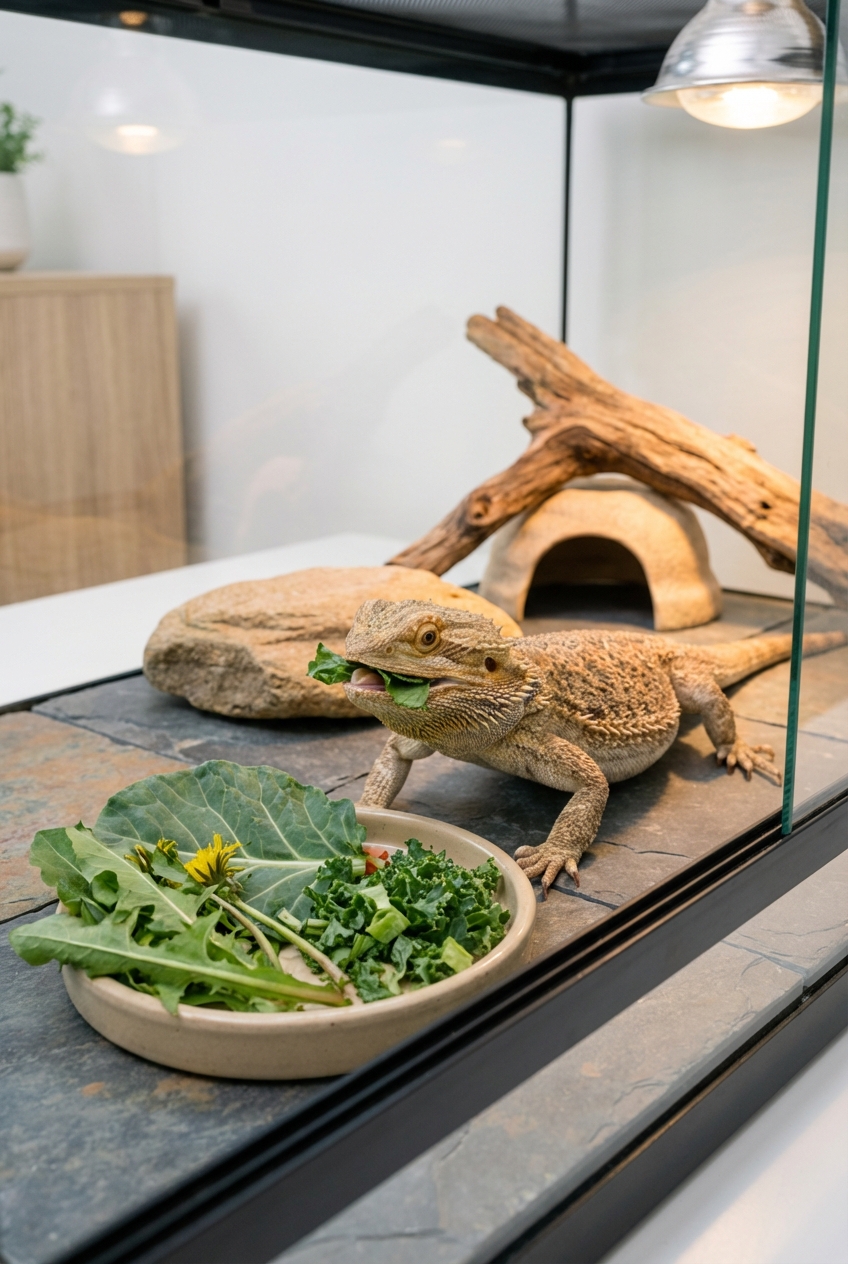
For adults especially, the salad bowl is the foundation. Aim for a mix of leafy greens plus a small amount of colorful vegetables.
Staple greens
- Collard greens
- Mustard greens
- Turnip greens
- Dandelion greens (pesticide-free)
- Endive and escarole
Veggies to rotate
- Butternut squash
- Acorn squash
- Bell pepper
- Green beans
- Okra
Use sparingly
- Spinach: Occasional only due to oxalates.
- Fruit: Small amounts, occasional. Too much can contribute to loose stools and excess sugar intake.
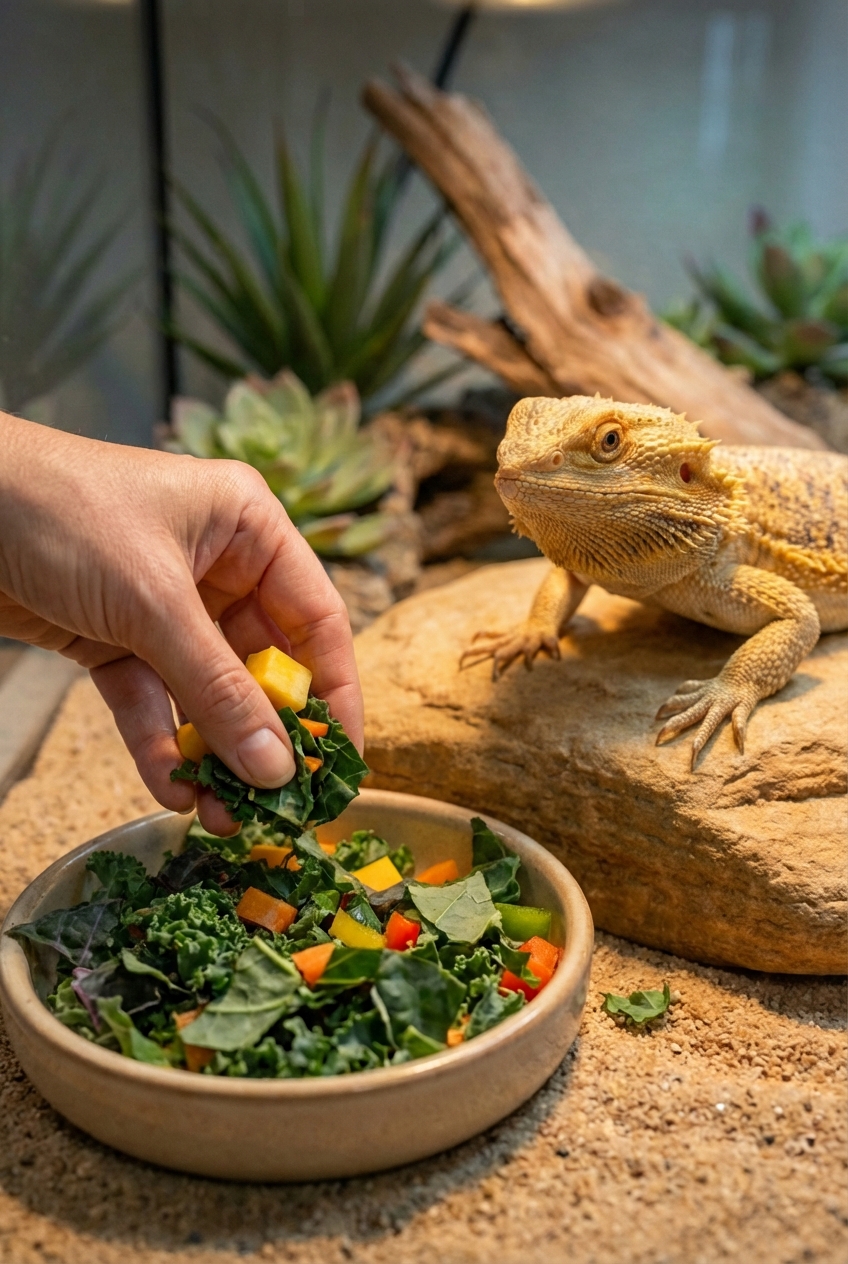
Tip: Chop salads into bite-sized pieces and mix colors and textures. Many beardies eat better when the salad looks “interesting.”
Foods to avoid
A few foods and feeder choices are risky enough that they deserve a clear callout.
- Fireflies or lightning bugs: Toxic.
- Wild-caught insects: High pesticide and parasite risk.
- Avocado, rhubarb, onion, garlic: Avoid.
- Iceberg lettuce: Low nutrient and mostly water, not helpful as a staple.
Supplements
In captivity, supplementation helps fill the gap between wild and home environments. Your exact plan should be guided by your UVB, diet variety, and your veterinarian, but these are common starting points.
- Calcium powder (without D3): Often used most days for growing dragons and several days per week for adults when UVB is correct.
- Calcium with D3: Used less often, especially if you have strong UVB. Too much D3 can be harmful, so follow your vet’s guidance.
- Multivitamin: Commonly 1 to 2 times per week.
Example cadence (general): Many juveniles do well with calcium on feeders most insect days and a multivitamin 1 to 2 times weekly. Many adults do well with calcium a few times weekly (often on insect meals) and a multivitamin about once weekly. If your UVB setup is unusual, your dragon has a medical condition, or you are seeing poor appetite or poor growth, get a vet plan rather than guessing.
Why this matters: Inadequate calcium or UVB can lead to metabolic bone disease, a painful and sometimes life-threatening condition. If your dragon has soft jaw, tremors, weakness, or odd posture, do not wait. Call an exotics vet.
Too much or too little
Possible overfeeding signs
- Rapid weight gain or a very round belly most of the time
- Thick fat pads behind the head, or a very wide tail base
- Low activity not explained by brumation
- Frequent refusal of greens because insects are always available
Possible underfeeding or imbalance signs
- Noticeable weight loss or thin tail base
- Low energy, weakness, poor growth in juveniles
- Hard, dry stools or infrequent stooling (can also be dehydration or temps)
- Ravenous behavior paired with poor body condition
Best habit: Weigh your bearded dragon weekly on a kitchen gram scale and keep a simple note in your phone. Trends tell the truth long before you can see changes by eye.
Feeding and husbandry
I see this all the time: owners offer great food, but the dragon is not thriving because the setup is off. Digestion, appetite, and nutrient absorption depend on heat and UVB.
- Basking temperature: Most bearded dragons do best with a basking surface temperature around 100 to 110 F for many adults, and often 105 to 115 F for many juveniles and babies. The cool side is commonly kept around 75 to 85 F. Measure basking surface temp with an IR temp gun, and measure ambient temps with a reliable probe thermometer.
- UVB lighting: Essential for vitamin D synthesis and calcium metabolism. Replace UVB bulbs based on manufacturer guidance, and ideally confirm output with a UV meter (many keepers use a Solarmeter) since brand, bulb type (T5 HO vs T8), distance, and screen tops all affect UVB.
- Hydration: Offer water in a dish if your dragon uses it, and include moisture-rich veggies. Lightly misting greens is fine. You do not need to mist the dragon. Baths can help some individuals, but should be used based on your dragon’s needs and veterinary guidance.
If appetite suddenly changes, double-check temperatures with a reliable probe thermometer and review your UVB type, distance, and replacement date.
Sample feeding plans
Adult example week
- Daily: Fresh salad in the morning
- Mon, Wed, Fri: Insect feeding (measured portion) plus calcium dusting as directed
- One day per week: Multivitamin dusting
- Optional: A treat feeder like a few waxworms no more than occasionally
Juvenile example day
- Morning: Salad offered first
- Late morning: Insect meal plus calcium as directed
- Afternoon: Second insect meal if needed for growth, plus salad refreshed
These are templates, not rules. Your dragon’s body condition and your veterinarian’s guidance should always lead.
When to call an exotics vet
Please do not “wait it out” if you notice any of the following. Reptiles hide illness until they cannot.
- No eating for several days in a young dragon (or significant appetite drop in any age)
- Weight loss, weakness, tremors, or trouble walking
- Swollen jaw, soft bones, or deformities
- Persistent diarrhea, blood in stool, or repeated vomiting-like behavior
- Straining to poop, bloating, or signs of pain
New dragon tip: If you just brought your beardie home, ask your vet about a fecal exam. Parasites are common, and they can quietly affect appetite, growth, and stool quality.
Parasites, husbandry issues, and metabolic problems are all treatable, especially when caught early.
Bottom line
For most bearded dragons, feeding success comes down to three things: age-appropriate balance (more insects when young, more greens as adults), safe insect size and variety, and excellent UVB and heat. Start with the guidelines above, track weight and body condition, and adjust gently over time. Your beardie will tell you how you are doing.