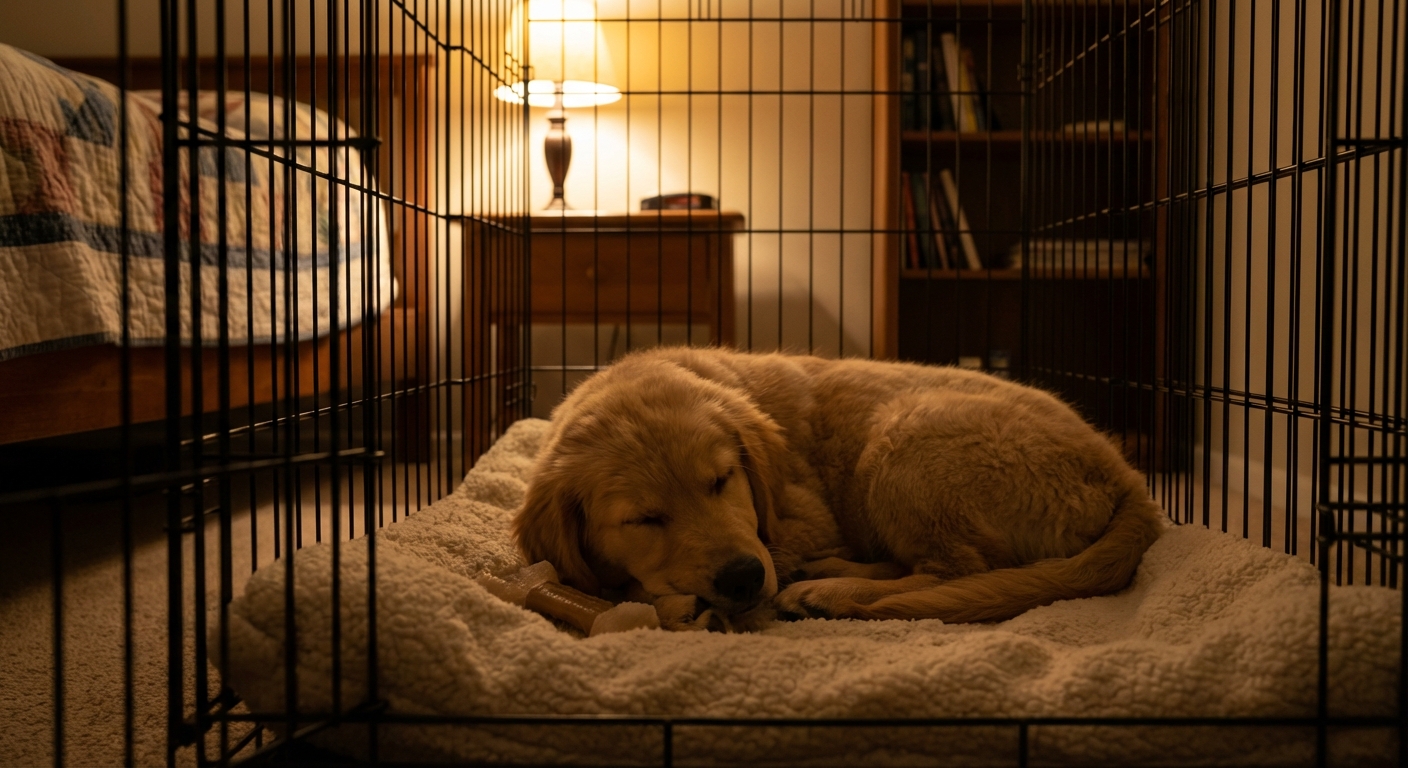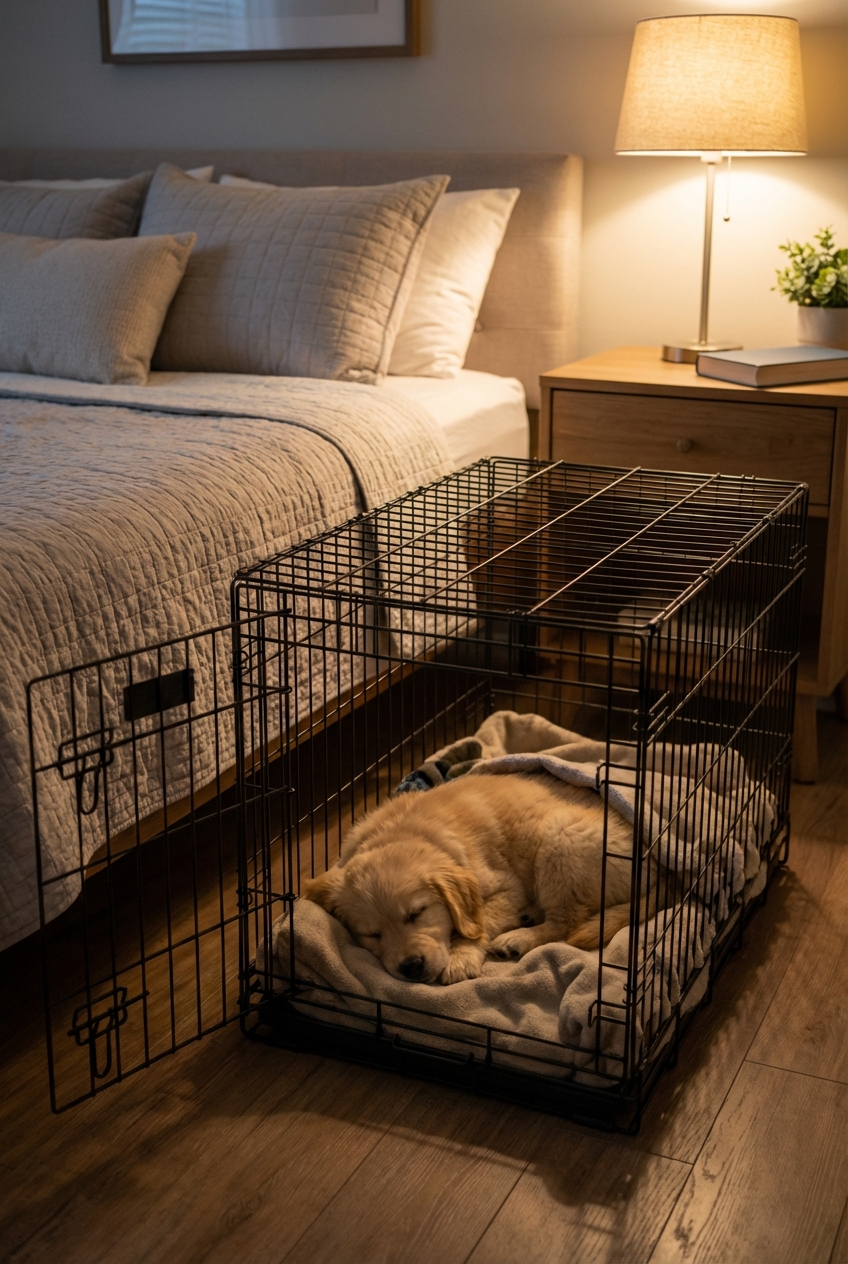
A vet-assistant guide to getting puppies to sleep at night: ideal sleep setup, step-by-step bedtime routine, what to do when they cry, potty timing, naps, an...
Article
•
Designer Mixes
How Much Should a Puppy Sleep?

Shari Shidate
Designer Mixes contributor
Puppies are basically tiny athletes in training. They run hard, learn fast, grow nonstop, and then crash. If you are wondering how much should a puppy sleep, the answer is usually: a lot more than most new pet parents expect. As a veterinary assistant here in Frisco, Texas, I hear the same worry all the time: “Is my puppy sleeping too much?” In many cases, that sleep is exactly what their body and brain need.
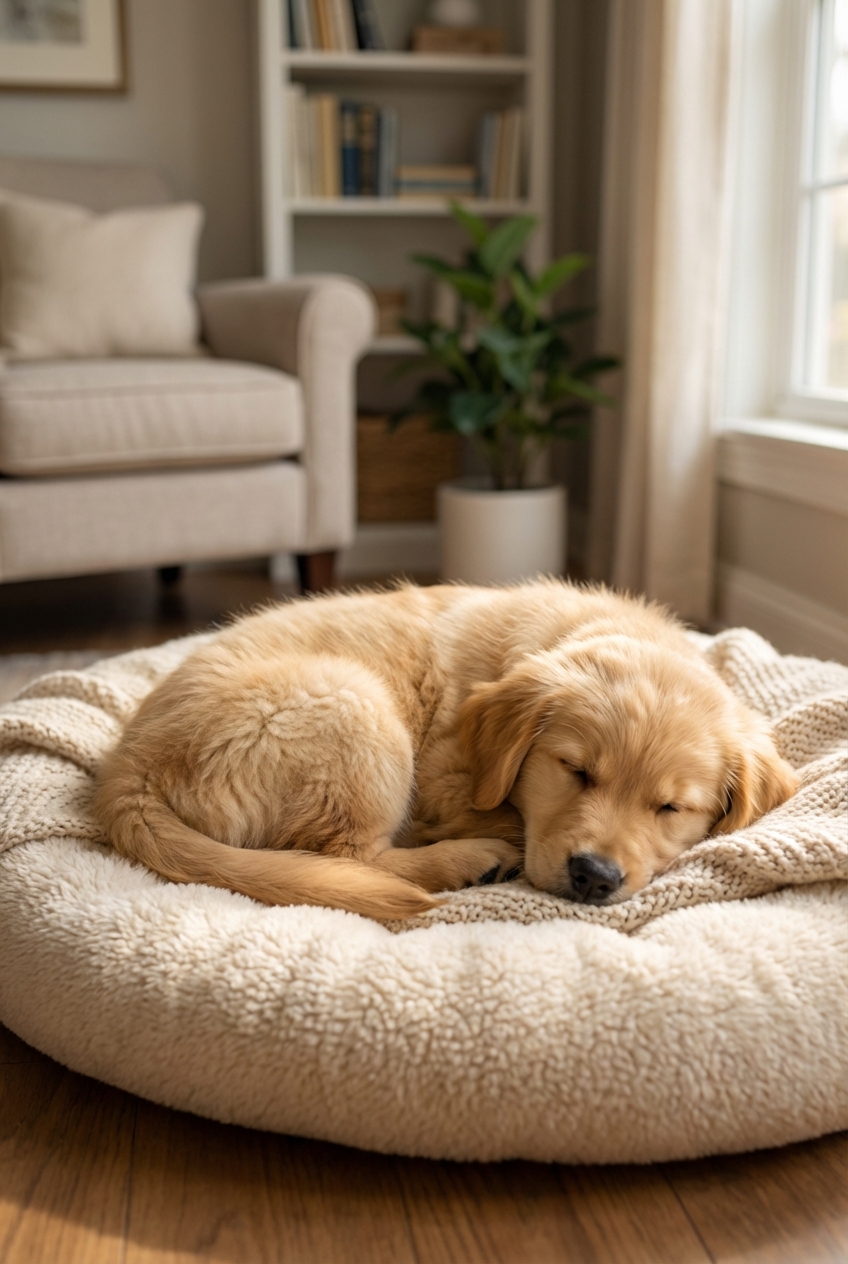
In this guide, I will walk you through what is normal, what affects sleep needs, how to set a simple schedule, and the red flags that should prompt a call to your vet.
Quick answer: puppy sleep needs
Many puppies sleep 18 to 20 hours per day, especially in the first few months. Some will sleep a little less, some a little more. That total includes overnight sleep plus many naps.
- Very young puppies (under 8 weeks): often sleep most of the day and night, waking mainly to eat and potty
- 8 to 12 weeks: often 18 to 20 hours daily
- 3 to 6 months: often 16 to 18 hours daily
- 6 to 12 months: often 14 to 16 hours daily, depending on breed and activity
Sleep supports healthy growth, recovery, and learning. In other words, sleep is not “lazy.” Sleep is development.
Why puppies need so much sleep
1) Rapid physical growth
Puppies are building bone, muscle, tendons, and organs at a remarkable pace. Deep, consistent rest supports that growth and recovery, especially after play.
2) Brain development and learning
During sleep, the brain processes and consolidates what your puppy learned during the day. That means your puppy is literally “saving” training sessions while they snooze.
3) Emotional regulation
Overtired puppies often look like they have extra energy, but it is usually the opposite. When a puppy is exhausted, you may see zoomies, nipping, barking, and trouble settling. A nap can fix what a lecture cannot.
If your puppy turns into a bitey little tornado in the evening, it is often a sign they need sleep, not more exercise.
What affects puppy sleep
Sleep needs vary, so it helps to know what can push the number up or down.
Age
The younger the puppy, the more sleep they need. Sleep slowly decreases as they mature.
Breed and size
There is plenty of individual variation, but many large-breed puppies can seem extra sleepy because they are growing so quickly. High-energy working breeds often act like they can go all day. In reality, they may just need more help settling.
Daily activity and enrichment
Short training sessions, sniff walks, and safe play can lead to better naps. Too much intense exercise, especially in young puppies, can backfire and create an overtired, overstimulated pup.
Environment
A noisy home, lots of children, or constant interruptions can reduce quality sleep. Puppies do best with a quiet, predictable nap space.
Health and stress
Vaccines, a new home, parasites, tummy upset, or anxiety can change sleep patterns. A slightly sleepier puppy for up to about 24 hours after vaccines can be normal. If sleep changes come with other symptoms, or if your puppy stays unusually quiet beyond a day, take it seriously and call your veterinarian.
A simple puppy sleep schedule
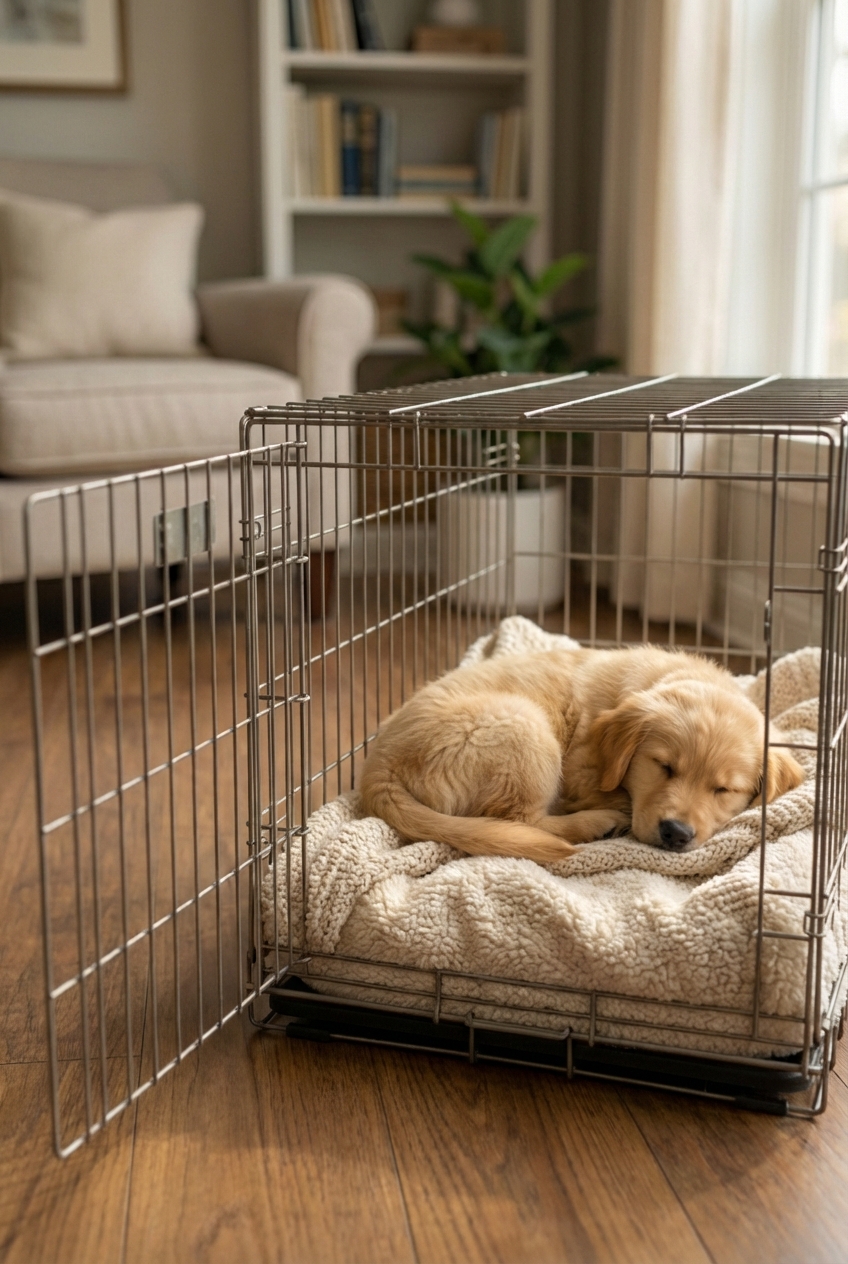
Puppies do best when we plan naps on purpose, not just hope they happen. One of the simplest routines is an “awake for a bit, then nap” rhythm. It also helps to be consistent about where naps happen (crate, pen, or a quiet bed), because puppies nap better when the routine is predictable.
Common awake windows
- 8 to 12 weeks: 45 to 60 minutes awake, then nap
- 3 to 6 months: 1 to 2 hours awake, then nap
- 6 to 12 months: 2 to 3 hours awake, then nap
These are averages. Your puppy might need a nap sooner if they get mouthy, hyper, clumsy, or stop listening.
How to transition from play to nap
- Potty break
- One to two minutes of calm connection (gentle petting, a few treats for “sit,” or a quiet cuddle if your puppy enjoys it)
- Offer a safe settle option (a soft bed or crate with a light cover, white noise if helpful)
- Keep your energy low so your puppy can switch off
Sample day for a 10-week-old puppy
- 6:30am: potty, short play
- 7:00am: breakfast, potty
- 7:30am to 9:00am: nap (crate, pen, or quiet bed)
- 9:00am: potty, gentle training for 3 to 5 minutes
- 9:30am to 11:00am: nap
- Midday: repeat a cycle of potty, play, food, then nap
- Evening: calm play, chew time, short potty breaks, then bedtime
Think in cycles, not strict times. Your goal is consistency, not perfection.
Should you wake a sleeping puppy?
Usually, no. Letting puppies sleep supports growth and mood. The main exceptions are:
- House training management: very young puppies may need a potty break if they have been asleep a long time, especially right after meals
- Medical instructions: your vet may advise waking for medications or monitoring after illness
If you do need to wake them, do it gently and go straight outside for a calm potty break.
Night sleep: what is normal
Most puppies cannot sleep through the night right away. Their bladders are small, and new environments can feel scary.
Typical overnight expectations
- 8 to 10 weeks: often need 1 to 2 potty breaks overnight
- 10 to 12 weeks: may drop to 1 potty break
- 3 to 4 months: many can sleep longer stretches, but it varies
You may hear the “1 hour per month of age” bladder rule. Treat it as a rough guideline, not a promise. Size, bedtime routine, water intake, and whether your puppy is asleep or awake all matter. For example, a 10-week-old puppy (about 2.5 months) often still needs a potty trip every 2 to 3 hours overnight, especially early in training.
Tips to help your puppy sleep at night
- Use a crate or safe pen for a cozy, den-like space
- Keep bedtime consistent
- Offer a final calm potty trip right before bed
- Avoid high-energy play right before bedtime
- Keep nighttime potty breaks boring, no play, no bright lights
Healthy nap setup
You do not need anything fancy, just a space that helps your puppy switch off.
- Quiet location: away from heavy foot traffic
- Comfort: a supportive bed or blanket
- Temperature: not too warm, not too cold
- Crate training: make the crate positive with treats and calm praise, never as punishment
- Chews: if you use a chew to help your puppy settle, choose a puppy-safe option and use it only when you are confident it is appropriate for your individual dog (some chews are not safe for unsupervised crate time)
If your puppy struggles to nap outside the crate, structured crate naps can be a lifesaver for both your puppy and your sanity.
Signs your puppy is overtired
Overtired puppies rarely look sleepy. They often look wild.
- Sudden zoomies or frantic running
- Increased nipping, biting, or chewing
- Barking, whining, or fussiness
- Ignoring cues they normally know
- Clumsy movement, bumping into things
- Difficulty settling even after potty and food
If you see these, try a simple nap reset: potty break, then a quiet space, then crate or bed.
When sleep is too much: red flags
Lots of sleep is normal. Lethargy is not the same as healthy sleep. Call your veterinarian if sleepiness comes with any of the following:
- Poor appetite or refusing multiple meals
- Vomiting or diarrhea, especially if repeated
- Coughing, labored breathing, or nasal discharge
- Fever (confirmed by a temperature) or your puppy seems unusually hot and unwell
- Pale gums or sticky gums
- Weakness, wobbliness, or collapse
- Not interested in play during normal awake periods
- Sudden change from their normal sleep pattern
Puppies can get dehydrated and sick faster than adult dogs. If your gut says something is off, it is worth a quick call.
Sleep, behavior, and training
If you are working on house training, biting, or basic cues, sleep is part of the plan.
Use naps to prevent problem behaviors
Many “behavior problems” in young puppies improve dramatically when you add structured naps. A well-rested puppy learns faster and mouths less.
Keep training short
Try 3 to 5 minutes, a few times a day. End on a win, then let them rest. Puppies learn best in tiny, positive repetitions.
FAQ
My puppy sleeps all day. Is that normal?
If your puppy wakes up bright, eats well, drinks, plays, and has normal poop, long sleep totals are often normal. If they seem hard to wake or uninterested in life, call your vet.
Why does my puppy wake up at night?
Most commonly: potty needs, discomfort, or they have learned that crying gets attention. A consistent bedtime routine and boring potty breaks help a lot.
Should I let my puppy sleep in my bed?
This is a personal choice. From a training and safety standpoint, many families find it easier to start with a crate or pen near the bed, then decide later. Whatever you choose, prioritize safe sleep and reliable potty habits.
The bottom line
Many puppies sleep 18 to 20 hours a day, especially in the first few months. That sleep is doing real work, building your puppy’s body, brain, and emotional resilience. Your best move is to plan for regular nap breaks, watch for overtired behavior, and stay alert for illness signs that look more like lethargy than normal rest.
If you want, tell me your puppy’s age, breed mix, and your daily routine, and I can help you sanity-check a sleep schedule that fits your home.