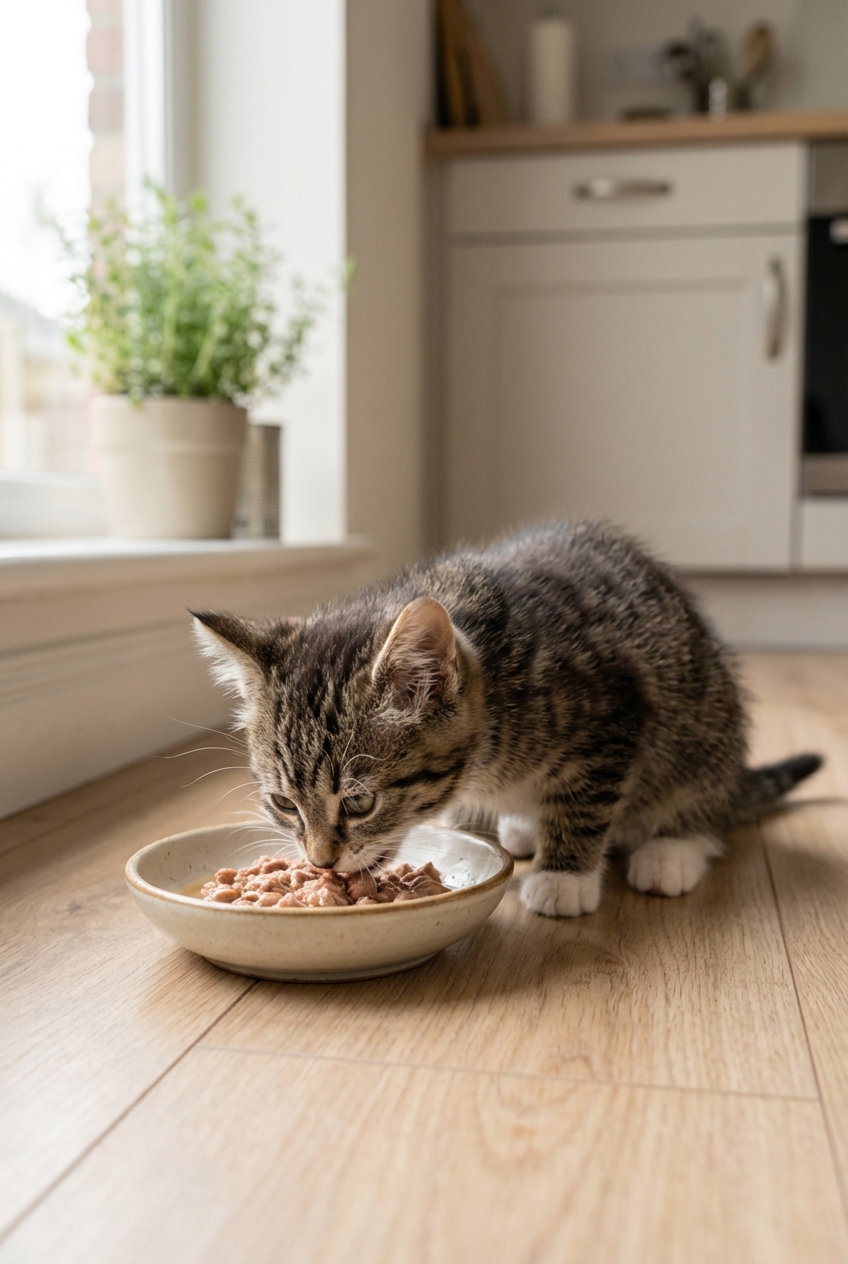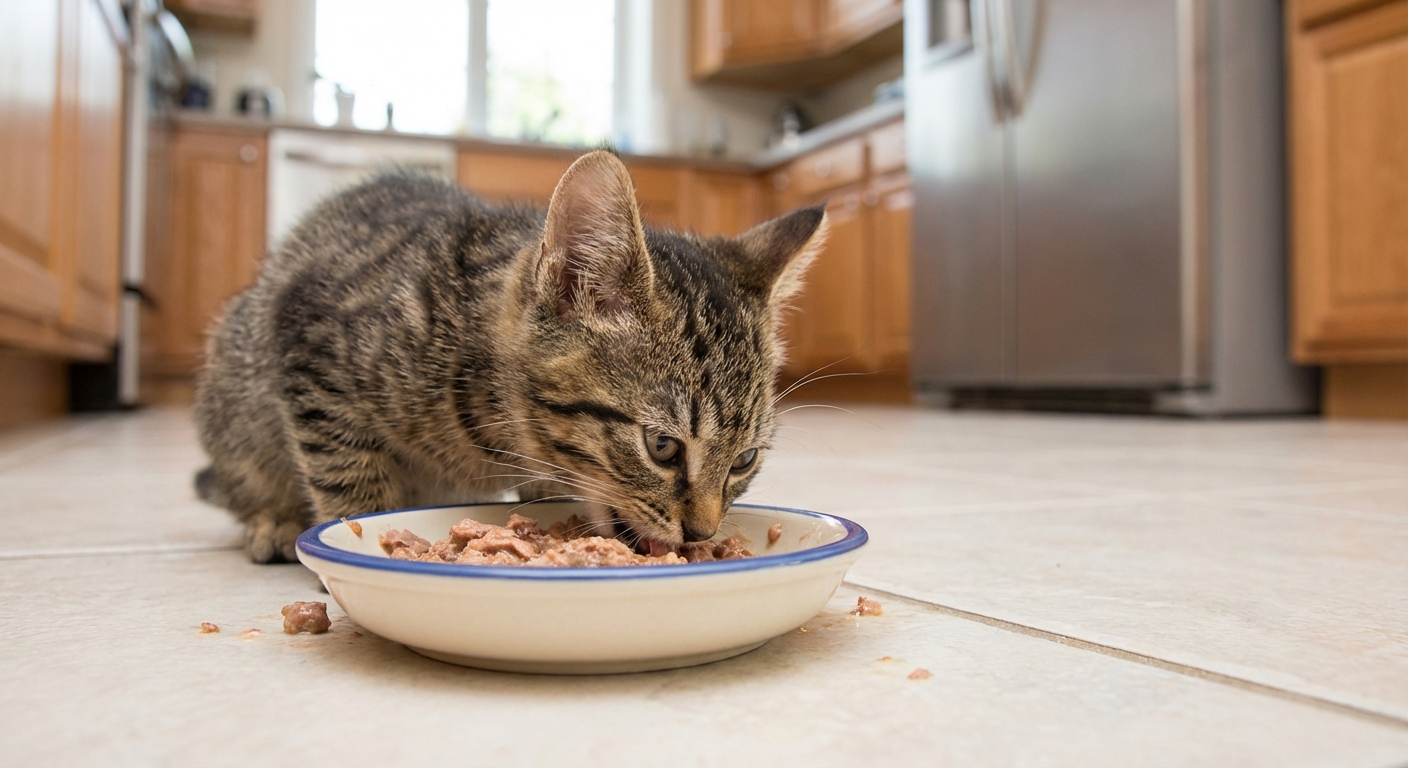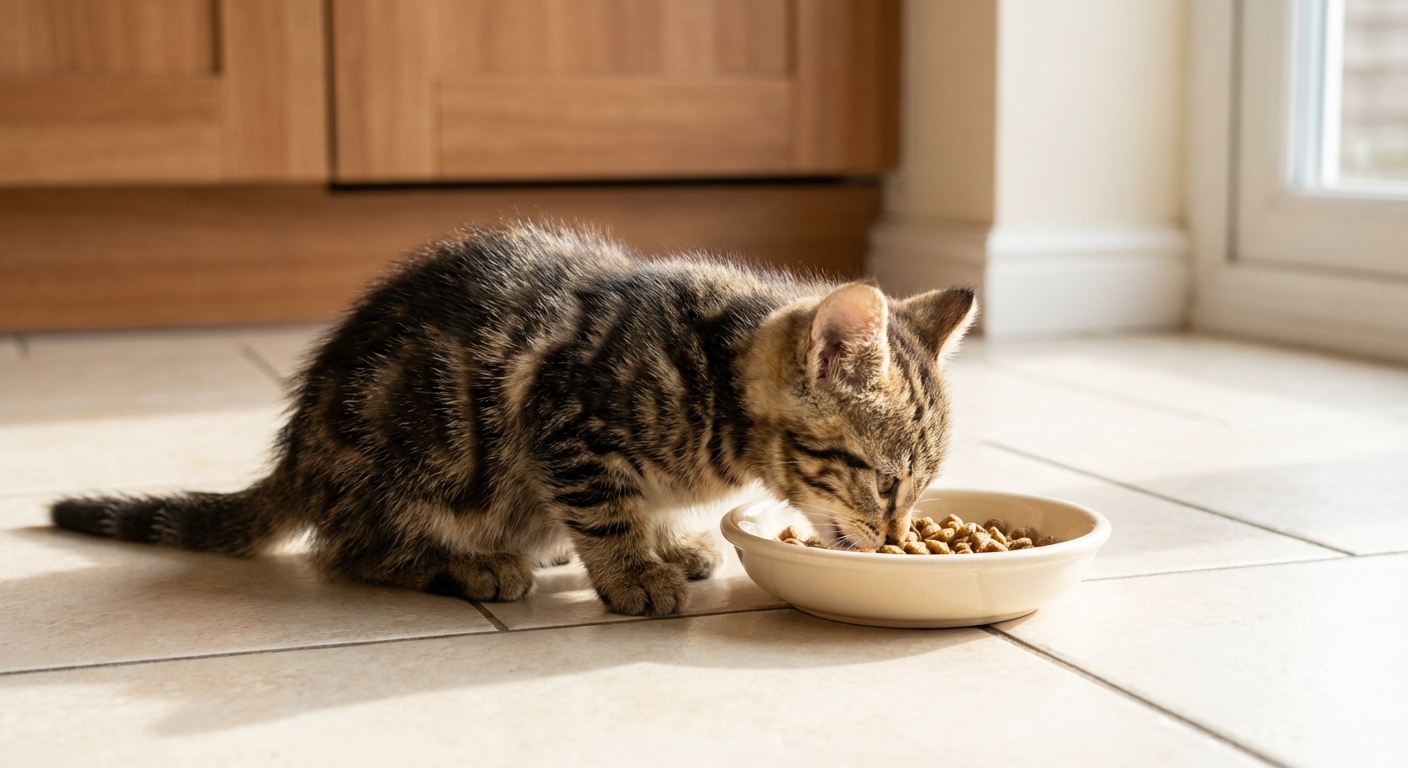
A practical, evidence-based kitten feeding guide from a veterinary assistant: choose kitten food, set age-based meal schedules, portion by calories, transiti...
Article
•
Designer Mixes
How Much Should a Kitten Eat

Shari Shidate
Designer Mixes contributor
Kittens are basically tiny athletes. They grow fast, burn energy fast, and their nutrition needs change rapidly, especially in the first few months. If you have ever wondered, “Am I feeding enough?” or “Am I overdoing it?”, you are not alone. I work with pet parents every week who want a simple answer that still protects their kitten’s health.
This quick guide will help you figure out how much your kitten should eat based on age, weight, and the food you are using, plus the most common feeding mistakes I see.
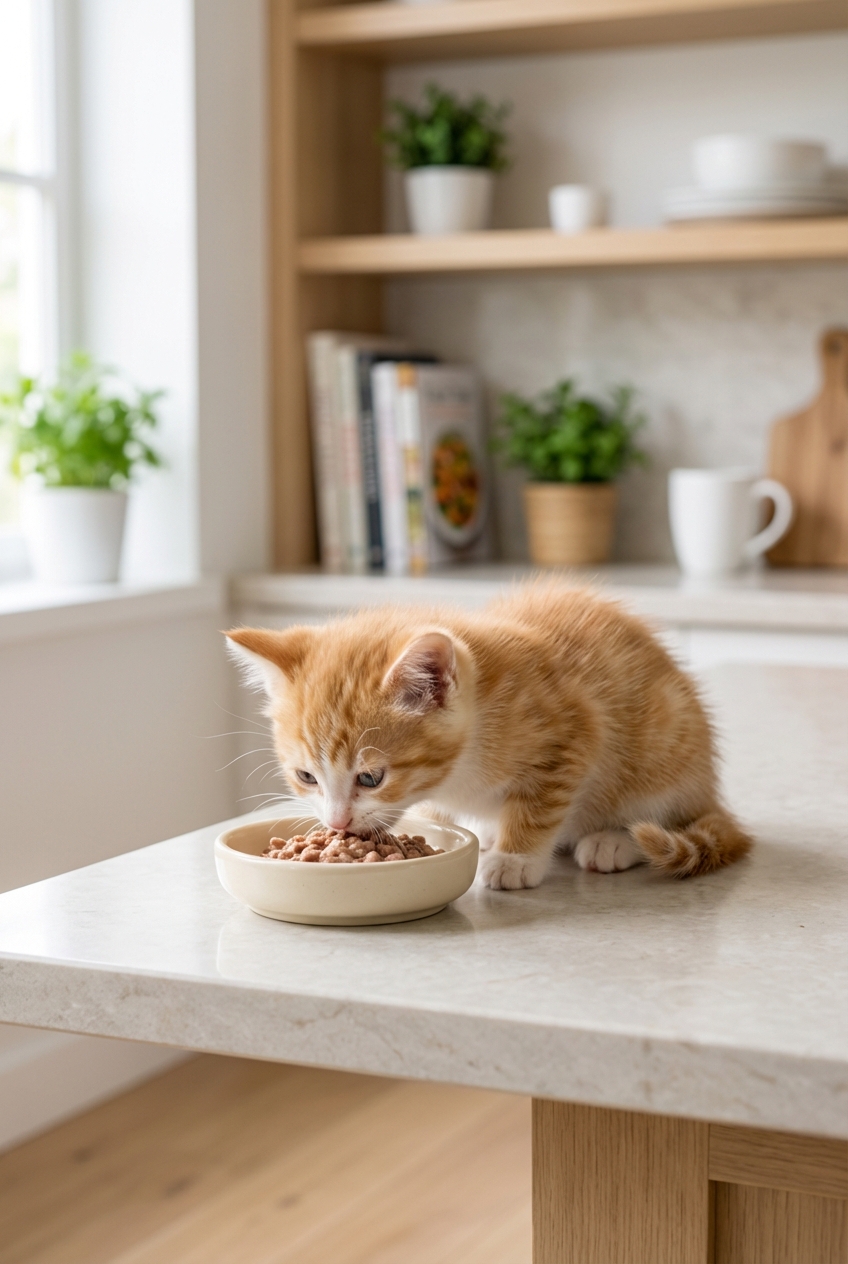
The short answer
Most healthy kittens need multiple meals per day and enough calories to support steady growth. Instead of one perfect number for every kitten, the safest approach is to combine:
- Age-based meal frequency (how often to feed)
- Calorie targets (how much energy per day)
- Body condition and growth (how your kitten is actually doing)
If you are feeding a commercial kitten diet, your bag or can guidelines are a good starting point. Then you adjust based on your kitten’s weight trend, stool quality, and body condition.
How often to feed by age
0 to 4 weeks (neonatal)
Newborn kittens should be with mom if possible. If you are bottle-feeding, they typically need kitten milk replacer about every 2 to 4 hours depending on age and veterinary direction.
Vet note: Neonates can decline quickly if underfed, chilled, or dehydrated. If you are caring for an orphaned kitten, partner with a veterinarian or rescue right away.
4 to 8 weeks (weaning)
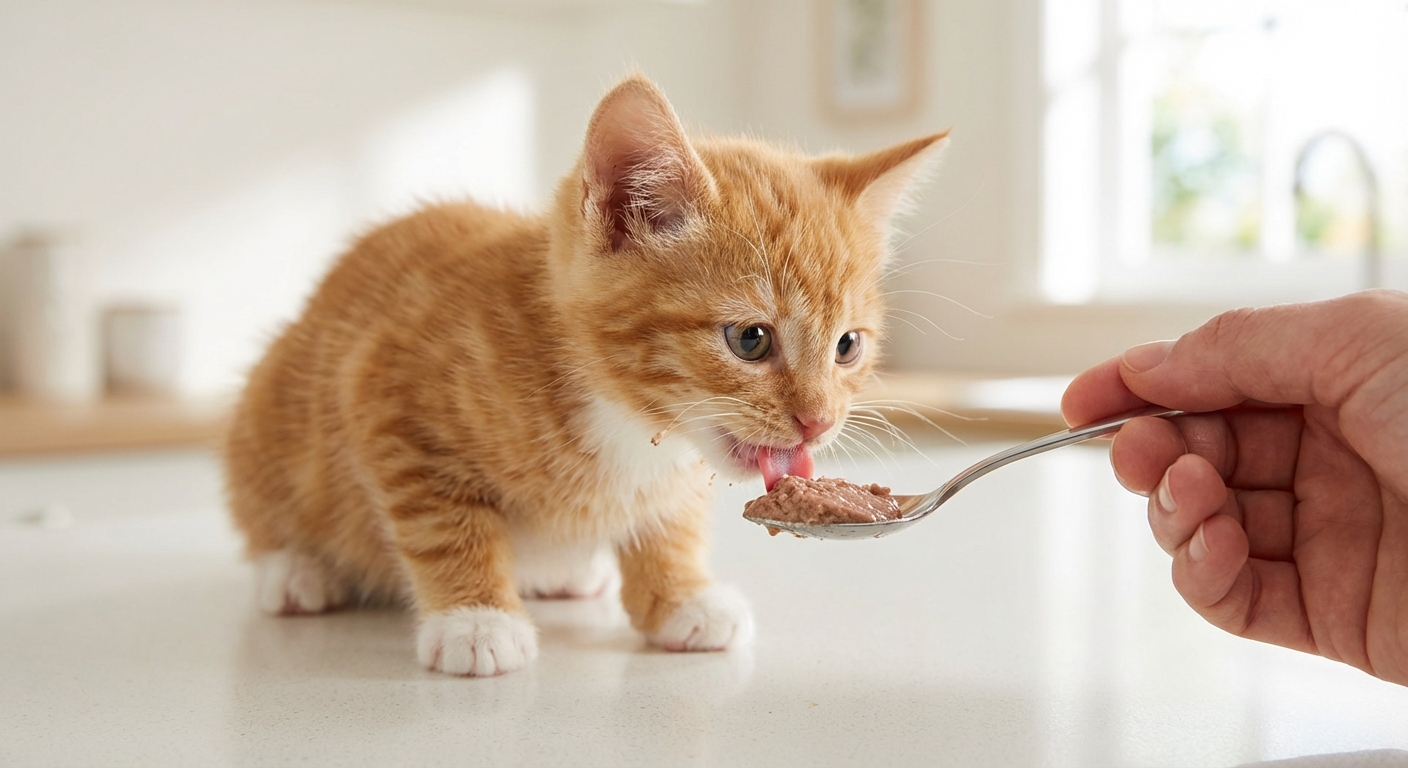
This is the transition stage. Many kittens do well with 4 small meals per day. They may start with a gruel (wet food mixed with water or formula) and gradually move to regular wet food and some dry if desired.
8 to 12 weeks
Aim for 3 to 4 meals per day. Their stomachs are small, but their calorie needs are big.
3 to 6 months
Most kittens thrive on 3 meals per day. Some households do 2 meals plus a small midday snack if growth is steady.
6 to 12 months
Many kittens can move to 2 meals per day, but higher-energy kittens may do better with 3 smaller feedings.
How much to feed by calories
Calories vary wildly between foods, so measuring “cups” alone can be misleading. A better method is to estimate daily calories, then match that to the label’s calories per can or per cup.
Important: Growth “multipliers” vary by guideline, kitten age, and expected adult size. The ranges below are common veterinary nutrition rules of thumb, but your food label and your veterinarian’s guidance come first.
As a general guide, many kittens fall around:
- Under 4 months: often 2 to 2.5 times adult maintenance calories for their current weight
- 4 to 12 months: often 1.6 to 2 times adult maintenance calories for their current weight
Adult maintenance is often estimated using resting energy requirements (RER), a formula used in veterinary nutrition as a starting point:
RER = 70 x (body weight in kg ^ 0.75)
Then multiply by a growth factor in the ranges above. If math is not your thing, that is okay. Use this section as a reality check and lean on your food label plus your vet’s input.
Example: A 2 lb kitten is about 0.9 kg. RER is roughly 70 x (0.9^0.75) which is about 65 calories/day. A very young kitten might need around 2.5 x that, or about 160 to 165 calories/day. Some kittens need more, especially if they are extremely active, recovering from illness, or still catching up on growth.
Quick portion reality check
This is not a substitute for your label directions, but it can help you sanity-check portions:
- If your wet food is about 90 calories per 3 oz can, then 160 calories/day is roughly 1.75 cans/day (split into 3 to 4 meals).
- If your dry food is about 400 calories per cup, then 160 calories/day is roughly 0.4 cups/day (split into multiple meals).
Wet vs dry portions
Portions depend on the calorie density of the food, so always check the label. Here are practical tips I recommend in real homes.
Mostly wet food
- Wet food is often around 70 to 110 calories per 3 oz can (varies by brand).
- Many kittens end up eating 2 to 4 small cans per day at peak growth, split into multiple meals.
- Wet food supports hydration, which may help support urinary tract health over time.
Mostly dry food
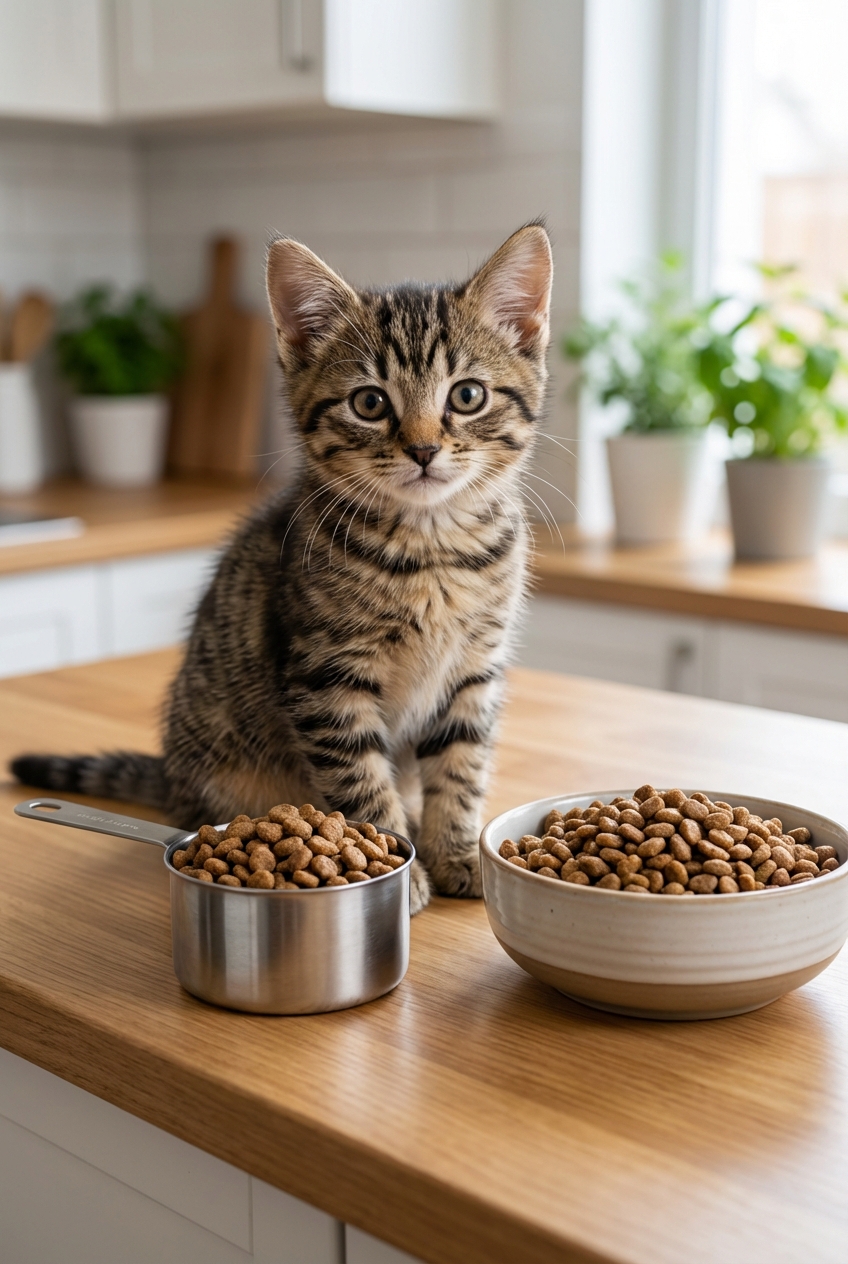
- Dry food is typically more calorie-dense, often 350 to 500 calories per cup.
- Measure with a real measuring cup, not a mug. Small over-scoops add up fast.
- Consider scheduled meals over free-feeding if your kitten starts gaining too quickly.
Mix of wet and dry
This is very common and can work beautifully. The key is to avoid feeding a full daily ration of wet food and a full daily ration of dry food at the same time. Count both toward the daily total.
How to tell if it is right
Signs your kitten is getting enough
- Steady weight gain and growth over weeks
- Bright eyes, good energy, playful behavior
- Normal stool that is formed and easy to pass
- Body feels lean but not bony, with a slight waist behind the ribs
Signs you may need to feed more
- Ribs and spine are very prominent
- Low energy or constant hunger that does not improve
- Poor coat quality
- Slow or stalled growth
Signs you may be overfeeding
- Rapid weight gain with a round belly that persists beyond post-meal fullness
- No waistline, pads of fat over the ribs
- Frequent soft stool or very large-volume stool (this can also be caused by parasites, food intolerance, stress, or infection, so check in with your vet if it persists)
Tip from the clinic: Weigh your kitten weekly on a kitchen scale (for tiny kittens) or a bathroom scale (hold kitten, subtract your weight). Track it in your phone notes. Trends matter more than one number.
Common mistakes
- Switching foods too fast. Sudden changes often trigger diarrhea. Transition over 7 to 10 days when possible.
- Feeding adult cat food. Kittens need higher calories, protein, and key nutrients like DHA for brain and eye development. Choose a food labeled for growth or all life stages.
- Too many treats. Treats should stay under about 10% of daily calories. For kittens, that includes lickable tubes, table scraps, and “just a few bites” of human food.
- Not enough water. Even if you feed wet food, keep fresh water available. A cat fountain can help.
- Assuming a pot belly is normal. Some roundness after meals is normal, but a persistent pot belly can also suggest parasites. Talk with your vet about deworming and fecal testing.
- Not choosing a complete diet. Look for a statement that the food is “complete and balanced” for growth (or all life stages). This helps ensure key nutrients are present at the right levels.
Schedule you can copy
8 to 12 weeks
- Breakfast
- Lunch
- Dinner
- Small bedtime meal if needed
3 to 6 months
- Breakfast
- Midday meal
- Dinner
6 to 12 months
- Breakfast
- Dinner
If you are gone during the day, a timed feeder can be a lifesaver for kittens who do better with smaller, more frequent meals.
One more real-world note: After spay or neuter surgery, appetite and metabolism can change. Recheck portions with your veterinarian and keep up the weekly weigh-ins for the next month.
When to call your vet
Feeding questions are normal, but certain signs should be addressed quickly in kittens:
- Refusal to eat for more than 12 hours, or skipping more than two meals
- Vomiting repeatedly
- Diarrhea lasting more than a day, or any diarrhea with lethargy
- Bloated belly with poor appetite
- Weight loss or failure to gain
Kittens are more fragile than adult cats, and they can become dehydrated fast. When in doubt, call.
Bottom line
A healthy kitten typically needs more meals and more calories than most people expect. Start with your kitten food label, feed on an age-appropriate schedule, and adjust based on weekly weigh-ins and body condition. If something feels off, trust your gut and check in with your veterinarian. Early nutrition is one of the best gifts you can give your kitten for lifelong health.