Vet-assistant guide to CBD oil for dogs: what research suggests for arthritis pain and anxiety, safe starting doses, side effects, THC toxicity signs, and ho...
Article
•
Designer Mixes
How Much Melatonin Can You Give a Dog?

Shari Shidate
Designer Mixes contributor
Melatonin is one of the most common over-the-counter supplements pet parents ask me about here in North Texas. It can be genuinely helpful for some dogs, but the safest answer always starts the same way: use the lowest effective dose, choose a dog-safe product, and talk with your veterinarian first, especially if your dog takes other medications or has any ongoing health conditions.
In this article, I will walk you through commonly used veterinary starting doses, when melatonin makes sense, when it does not, and how to use it more safely at home. (Research in dogs is still limited, and dosing can vary based on why you are using it and what formulation you choose.)

What melatonin does for dogs
Melatonin is a hormone the body naturally produces to help regulate sleep and circadian rhythm. In dogs, supplemental melatonin is most often used for:
- Situational anxiety (like mild storm stress or travel nerves)
- Sleep support for dogs that seem restless at night
- Certain hair-loss conditions (alopecia) under veterinary guidance
It is not a sedative in the same way prescription anxiety medications can be. Some dogs get sleepy, some just get a little calmer, and some do not respond much at all.
For alopecia in particular, melatonin is sometimes tried for conditions like seasonal flank alopecia or alopecia X, but results are mixed and it is important to get the right diagnosis first.
How much melatonin can you give a dog?
For short-term, occasional use, many veterinarians use a simple weight-based approach as a starting point. A commonly referenced guideline is:
- Small dogs (under 10 lb): 1 mg
- Medium dogs (10 to 25 lb): 1.5 mg
- Larger dogs (26 to 100 lb): 3 mg
- Giant dogs (over 100 lb): 3 to 6 mg
For most family dogs, that puts typical doses in the 1 to 6 mg range. Many pet parents give it about an hour before bedtime or before a predictable stressor.
Start low and do not stack doses
If you are unsure where your dog falls, start at the lower end for their size and see how they do. Avoid giving multiple doses close together.
For most dogs, melatonin is typically given once daily for sleep support or situational use. Some conditions may be managed differently, but that should be directed by your veterinarian.
Important: These are general educational guidelines, not a substitute for individualized veterinary dosing. Dogs with medical conditions, very young puppies, and seniors should be dosed only with veterinary input. If your dog is under about 6 months old, ask your vet before using melatonin.
Immediate-release vs extended-release
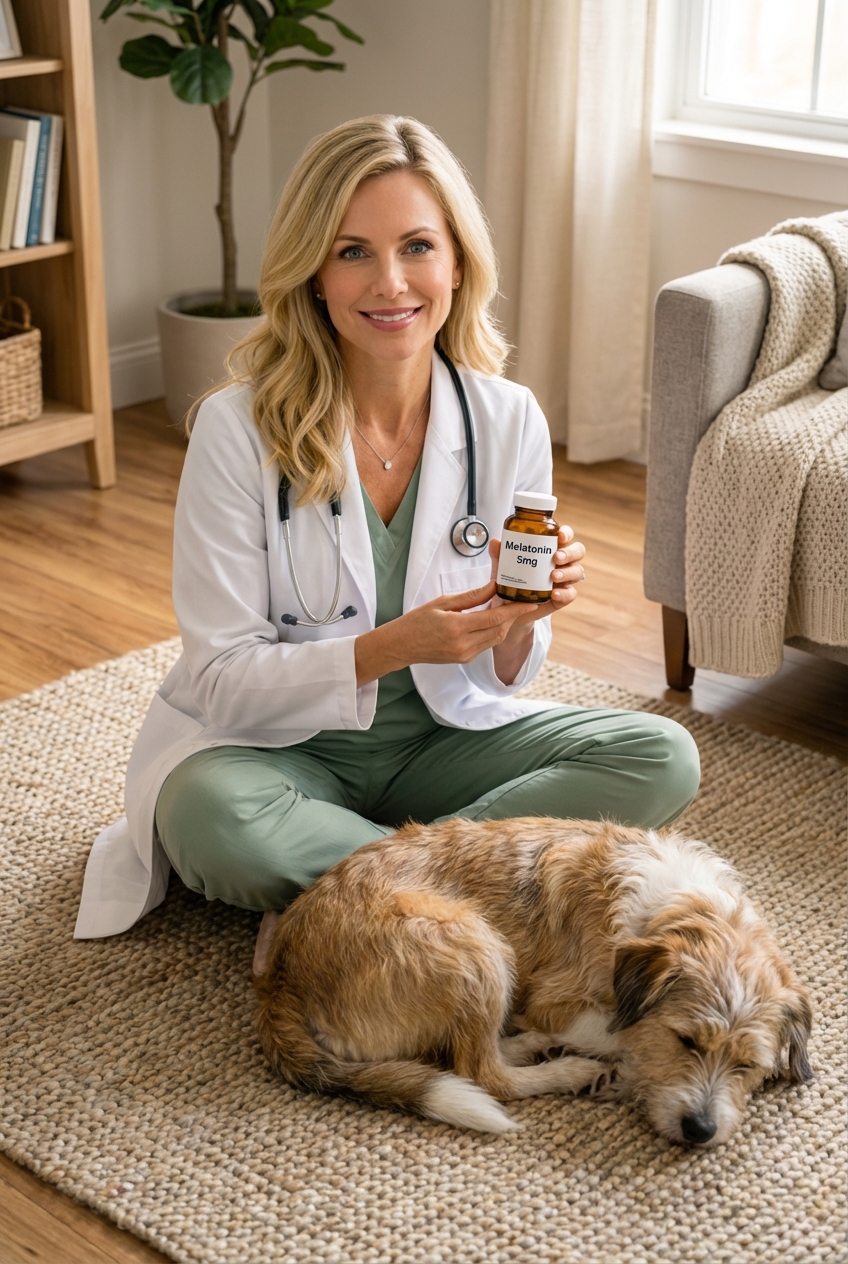
Many over-the-counter products are immediate-release, but some are extended-release. Extended-release products may last longer and can change how soon you see an effect. If the label says extended-release, timed-release, or prolonged-release, check with your veterinarian about timing and whether it fits your goal.
Choosing a safer melatonin product
This part matters as much as the dose. Some human melatonin products contain ingredients that are unsafe for dogs.
Avoid xylitol completely
Xylitol is highly toxic to dogs and can be found in some fast-dissolve tablets, gummies, flavored chewables, and sugar-free products. It may also be listed as birch sugar. Ingredient lists can change, even within the same brand, so check every time.
Pick the simplest formula
- Choose plain melatonin, unflavored if possible
- Avoid blends that include caffeine, essential oils, or multi-ingredient “sleep blends” unless your vet approves
- Be cautious with add-ins like L-theanine, GABA, valerian, chamomile, and similar ingredients. They are not automatically unsafe, but dosing and quality vary, and combinations increase the chance of side effects or interactions.
- Use a reputable brand with clear labeling and consistent dosing per tablet
Tip from the clinic: if you cannot confidently read every ingredient, do not give it.
When melatonin can help
It may help if your dog has:
- Mild, predictable anxiety (storm season, visitors, car rides)
- Difficulty settling at night without signs of pain
- Some hair-loss conditions where your veterinarian suggests a trial
It is not the right first step if your dog has:
- Severe panic (destructive behavior, self-injury, escape attempts)
- Sudden nighttime restlessness that could be pain, arthritis, cognitive changes, or stomach upset
- Underlying medical issues that have not been evaluated
If your dog’s anxiety is intense, melatonin alone is often too mild. In those cases, your veterinarian can discuss prescription options and a behavior plan that actually targets the root of the problem.
How long to try it
For situational anxiety, try it on a low-stakes day first so you can see how your dog responds. For sleep support, if you do not see a meaningful improvement after several nights (or a few attempts for predictable triggers), pause and check in with your veterinarian rather than automatically increasing the dose.
Possible side effects
Most dogs tolerate melatonin well, but side effects can happen. Watch for:
- Sleepiness or grogginess the next day
- Upset stomach (vomiting, diarrhea)
- Increased itching in some dogs with allergies
- Behavior changes (rare, but some dogs get more restless)
If you notice anything that worries you, stop the supplement and call your veterinarian.
Interactions and extra caution
Melatonin may interact with certain medications and may not be appropriate for every dog. Talk to your veterinarian before using melatonin if your dog:
- Is pregnant or nursing
- Has diabetes or is on glucose-regulating medications (melatonin can affect glucose regulation in some patients)
- Has liver disease or is on multiple long-term medications
- Takes medications that cause drowsiness (there can be additive sedation with some drugs)
- Takes seizure medications or behavior medications (interaction risk depends on the specific medication and patient)
- Has a diagnosed endocrine condition (like Cushing’s disease) unless your vet OKs it
This is especially important because supplements are not regulated the same way prescription drugs are, so quality and dosing can vary by brand.
Care tips that help it work better
Melatonin works best when you pair it with calming routines. Here are simple, actionable steps that make a real difference:
1) Use a consistent schedule
Give melatonin at roughly the same time for sleep support, or give it ahead of a known trigger like fireworks.
2) Build a calming environment
- Dim the lights in the evening
- Use white noise during storms
- Offer a covered crate or quiet room if your dog likes den spaces
3) Add daytime enrichment
Many “can’t sleep” dogs are under-stimulated or stressed. Sniff walks, puzzle feeders, short training sessions, and gentle play can improve nighttime settling.
4) Track results
Keep a quick note on dose, timing, formulation (immediate vs extended-release), and response. If it helps, great. If it does not, you will have useful details to share with your vet.
Red flags to watch for
If your dog is pacing, panting, whining, suddenly needs to go out more, is drinking more, seems painful when getting up, or has new accidents in the house, treat that as a cue to schedule a vet visit. Melatonin should not be used to cover up a new medical problem.

If your dog ate too much
If your dog accidentally eats melatonin, especially gummies or flavored tablets, check the label immediately for xylitol (also called birch sugar) and the total amount consumed.
- If xylitol is listed or you are unsure, call your veterinarian or an animal poison control service right away.
- Even if there is no xylitol, call for guidance if a large amount was eaten, especially in small dogs.
- If your dog is extremely sleepy, vomiting repeatedly, unsteady, or acting unusual, seek urgent veterinary care.
If your clinic is closed, you can contact ASPCA Animal Poison Control or Pet Poison Helpline (fees may apply). It is always better to call early and be told everything is fine than to wait and hope.
Bottom line
For many dogs, melatonin can be a gentle, short-term tool for mild anxiety or sleep support, with typical starting doses often ranging from 1 to 6 mg based on size. The safest approach is to start low, use it no more than once daily unless your vet directs otherwise, choose a simple product with no xylitol, and loop in your veterinarian, especially if your dog has health issues or takes other medications.
If your dog is struggling with bigger anxiety or sudden sleep changes, treat that as a sign to get a full checkup. The right plan can be life-changing for both of you.