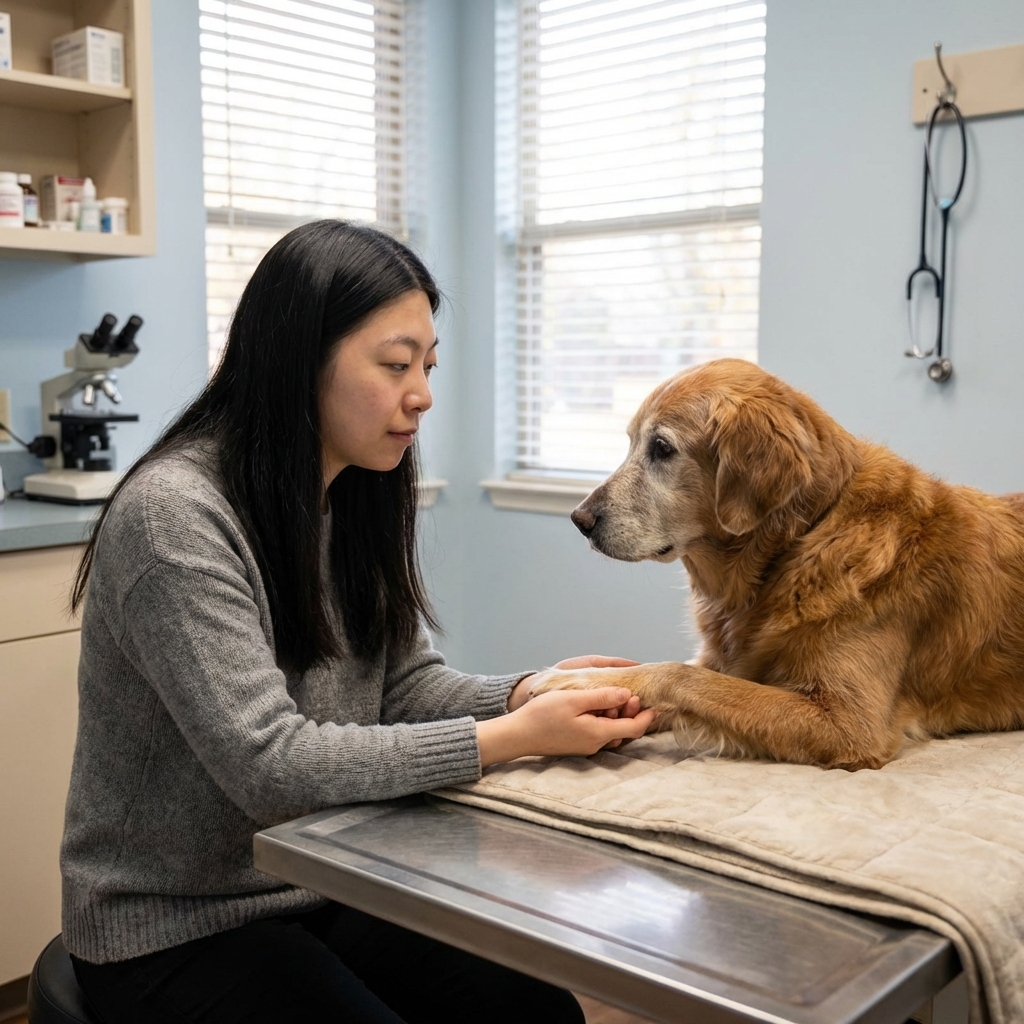
As a veterinary assistant, I can tell you this is one of the most loving decisions a family can make, and one of the hardest. The cost question often lands on top of grief, and that can feel overwhelming. My goal here is to give you realistic price ranges, explain what commonly changes the bill, and help you ask the right questions so there are no surprises.

Typical cost ranges (clinic vs at-home)
Prices vary widely by region, clinic type, time of day, and what aftercare you choose. Think of these as typical ballpark ranges I see in many parts of the U.S., not a guaranteed fee schedule. These are also 2026-era estimates, and your local market may be meaningfully higher or lower. Coastal metros and emergency hospitals tend to run higher than small-town general practices.
In-clinic euthanasia
- Often: $100 to $300
- Sometimes lower: $50 to $150 through municipal shelters or humane societies (often limited scheduling)
- Can be higher: $300 to $500+ at specialty hospitals, urgent care, or when extra support is needed
At-home euthanasia
- Often: $300 to $700
- Can be higher: $700 to $1,000+ for large dogs, longer travel distances, after-hours visits, or complex situations
Important note: Many quotes you see online do not include aftercare (like cremation) or other add-ons. And if this is happening the same day through an ER, the total can exceed the “high end” once triage or exam fees and aftercare are added.
What affects the price the most
Most invoices are built from a few moving parts: the appointment and doctor time, medications, and aftercare. Here are the biggest factors I see change the total.
1) Clinic type and location
Costs tend to be higher in major metro areas, at emergency hospitals, and at specialty centers. A small general practice may be less expensive, and shelters or humane societies are often the lowest-cost option.
2) Time of day (after-hours and emergency visits)
If euthanasia is happening through an ER, overnight, on a holiday, or as an urgent house call, you may see additional fees such as:
- Emergency exam or triage fees
- After-hours doctor fees
- Higher house-call travel fees
3) Sedation and comfort medications
Many veterinarians use a calming injection first, especially if a dog is anxious, painful, having trouble breathing, or cannot safely be handled. Sometimes sedation is itemized, and sometimes it is bundled into the euthanasia fee, so it is worth asking how your clinic structures it. Even when it increases the cost, it can make the experience much more peaceful.
4) Dog size and handling needs
The euthanasia solution and sedation doses are weight-based, so larger dogs often cost more. Additionally, if a dog cannot walk, needs to be carried, or requires extra staff support, the clinic may add assistance fees.
If you are considering at-home care for a large dog, it is also okay to ask practical questions up front: whether the veterinarian comes with a technician, whether they can help with moving your dog after, and what the plan is for transport if you choose cremation. Some families also arrange a second adult to be present, a blanket as a stretcher, or a plan for a room with easy access (no stairs) to reduce stress in the moment.
5) Your choice of aftercare
Aftercare can be a similar cost to the euthanasia itself. Private cremation is typically the most expensive, communal cremation is usually less, and burial (where legal) has its own costs and rules.
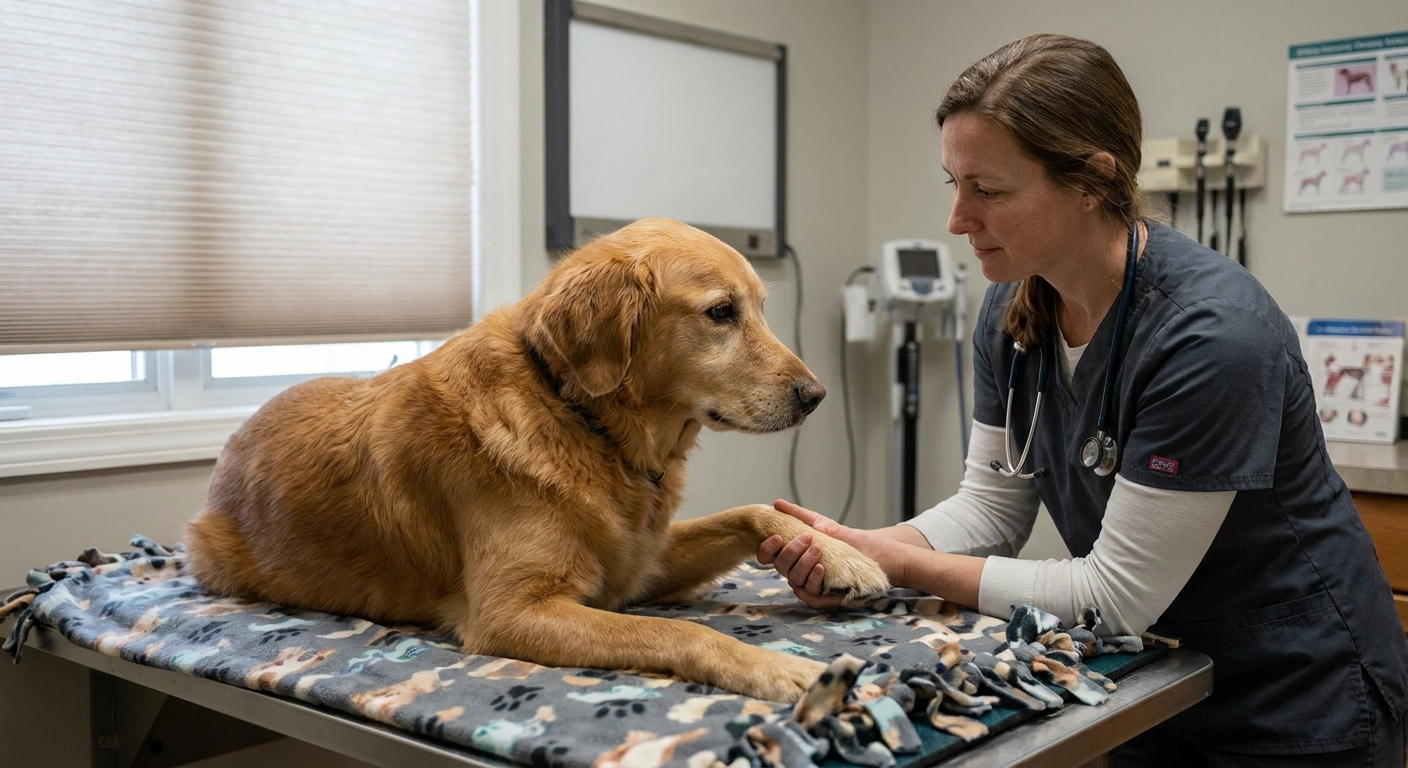
Aftercare options and typical costs
After euthanasia, you will be asked what you would like done with your dog’s body. Some clinics coordinate everything through a cremation service. Others may offer additional memorial options.
Communal cremation
- Typical: $50 to $200
- What it means: Your dog is cremated with other pets, and ashes are not returned.
Private cremation (ashes returned)
- Typical: $150 to $400+
- What it means: In many areas, “private” means your dog is cremated alone and you receive only your dog’s ashes back. In other areas, a crematory may use terms like “partitioned” or “semi-private” for pets cremated in the same chamber but separated.
If ashes being returned matters to you, ask the clinic or crematory to define exactly what they mean by “private,” and whether your pet is alone in the chamber. Also ask whether “partitioned” or “semi-private” still returns ashes, and how they handle separation and identification.
Home burial or pet cemetery burial
- Home burial: May be low cost, but depends on local rules and your property situation.
- Pet cemetery: Commonly $500 to $2,000+ depending on the cemetery, plot, services, and memorial choices.
Ask specifically: Whether pricing is based on weight, and what urn or container is included. Some places include a basic container and charge extra for urn upgrades, paw prints, or fur clippings.

Common add-ons to watch
I like to prepare people for the line items that can show up unexpectedly so you can plan and choose what matters most to you.
- Exam fee: Some clinics require an exam if you are not an established client, if they need to evaluate quality of life, or if they are required to establish a veterinarian-client-patient relationship (VCPR). In some states and situations, a clinic cannot legally provide services without an exam first.
- Emergency hospital fee: ERs often charge a triage or urgent care fee even if you are only coming for euthanasia.
- Catheter placement: Some clinics place an IV catheter for smoother medication administration, which can be an extra cost.
- Memorial items: Clay paw prints, ink paw prints, fur clippings, engraved plaques, special urns.
- At-home travel fee: Often included in a radius, then charged beyond that, or priced by mileage.
- Removal or transport: Some at-home services include transport for aftercare, others itemize it.
Questions to ask for an accurate quote
When emotions are high, it helps to have a simple checklist. You can read these right off your phone when you call.
- What is the total cost range for my dog’s weight?
- What is included in that price? (for example: euthanasia injection, sedation, catheter placement, doctor time, and any aftercare pickup or transport)
- Is sedation recommended in my dog’s case, and is it included or separate?
- What aftercare options do you offer, and what are the prices for each?
- If I choose private cremation, how do you define “private,” and what container is included?
- Are there any additional fees for weekends, holidays, or after-hours?
- How soon can we be seen? (and how long is the appointment block)
- Can my family be present, and how many people can come?
- Can we bring a blanket or favorite bed?
- How will payment work? (up front vs after, payment plans, CareCredit acceptance)
If cost is a concern, it is okay to say so directly. Many clinics would rather help you find a workable option than have you carry this alone.
Low-cost options (and how to find them)
If you need a more affordable option, you still deserve compassionate care. These are the most common places to check:
- Municipal animal shelters (city or county shelters sometimes offer low-cost euthanasia)
- Humane societies (many have community assistance programs)
- Nonprofit low-cost clinics in your area
- Veterinary schools (some have community clinics or referral resources)
- Your regular vet (often less expensive than an ER, and they already know your dog)
If you are facing an urgent situation after-hours and cost is the biggest barrier, you can ask the ER whether they offer a “euthanasia only” pathway or reduced diagnostics. Some ERs will still require a triage or exam fee to see your pet, even if you decline additional testing.

At-home vs in-clinic
Families sometimes feel guilty choosing a clinic euthanasia because at-home sounds more peaceful. In truth, both can be gentle and loving.
- At-home can be ideal for dogs who panic at the vet, have mobility issues, or do best in familiar surroundings. Availability can be limited, especially for same-day visits, so it can help to call early if you think you may want this option.
- In-clinic can be a good choice when cost matters, when your dog needs medical support right away, or when logistics at home are difficult.
If you are unsure, ask your vet what they recommend based on your dog’s comfort, breathing, pain level, and ability to travel.
What happens during euthanasia
Every clinic has its own flow, but in general:
- You will review and sign a consent form, including aftercare choices.
- Many dogs receive a sedative first to ease anxiety and relax the body.
- The euthanasia medication is given, often through a vein. It is typically very fast, and your veterinary team will focus on comfort throughout.
- Your veterinarian will listen for the heart to confirm passing, and you will have time with your dog afterward.
If you are worried about what you might see or hear, ask the veterinarian to walk you through normal body reflexes ahead of time. Sometimes things like muscle tremors, changes in breathing, or a reflexive sound can happen even when a pet is no longer aware. Knowing what is expected can prevent extra fear in an already emotional moment.
Planning ahead helps
If you have time to plan, even a little, these steps often help:
- Call your regular vet first. They may offer the most straightforward pricing.
- Ask for a written estimate. Many clinics can email or text an itemized estimate.
- Decide on aftercare before the appointment. It is easier to choose when you are not in the room saying goodbye.
- Bring your own blanket or bed. It may help some dogs feel more secure.
If your dog is on hospice or palliative care, ask whether a quality-of-life visit or hospice consult is recommended and how it is priced. Some practices bundle support into hospice care, and others bill it as a separate appointment.
FAQ
Does euthanasia cost more for big dogs?
Often, yes. Medication dosing is based on weight, and aftercare fees like cremation are commonly weight-based too.
Can I request sedation?
Yes. In many cases, the veterinarian will recommend it, but you can absolutely ask about it and discuss benefits, timing, and cost. Also ask whether it is included in the euthanasia fee or billed separately.
Is it cheaper to euthanize at a shelter?
Usually, yes. Municipal shelters and humane societies often have the lowest-cost services, but they may have limited appointment availability and fewer personalization options.
Does pet insurance cover euthanasia and cremation?
Some policies reimburse euthanasia when it is medically necessary, and some offer cremation or burial benefits. Call your provider and ask what documentation they need before the appointment if possible.
What if I cannot afford euthanasia right now?
Tell the clinic. Ask about low-cost referrals (shelters, humane societies), payment options, or whether a nonprofit in your area offers assistance. If your dog is suffering and it is after-hours, an ER can sometimes help you prioritize comfort care decisions without running a full workup.
A gentle final thought
When families ask me about price, what I hear underneath is love and responsibility. If you are trying to prevent suffering and do right by your dog, you are already showing up in the most meaningful way. Get a clear estimate, ask for what you need, and lean on the professionals around you. You do not have to carry this alone.