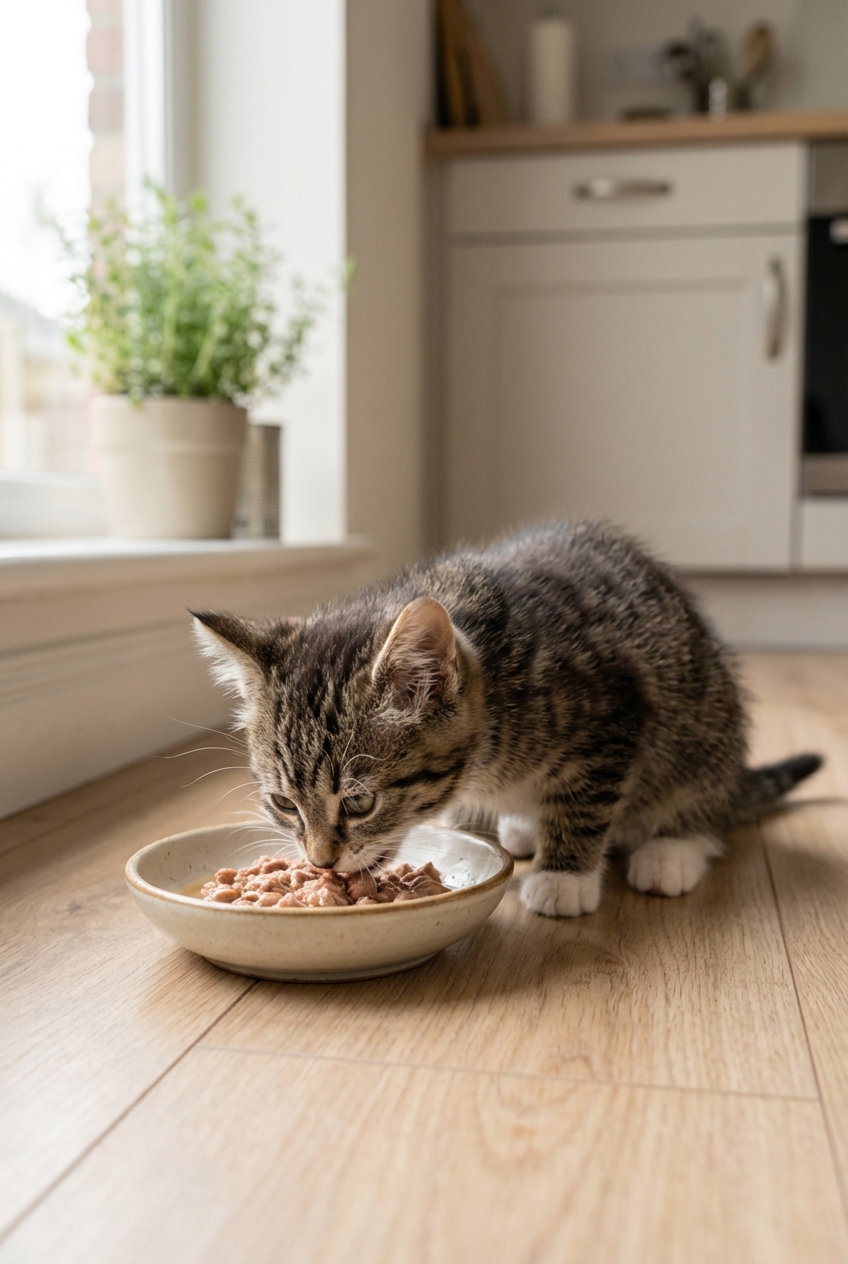
A practical, evidence-based kitten feeding guide from a veterinary assistant: choose kitten food, set age-based meal schedules, portion by calories, transiti...
Article
•
Designer Mixes
How Much Canned Food to Feed a Kitten

Shari Shidate
Designer Mixes contributor
Bringing home a kitten is pure joy, but feeding can feel surprisingly confusing. If you are staring at a can of kitten food and thinking, How much is enough, you are not alone. As a veterinary assistant here in Frisco, Texas, I can tell you the goal is simple: steady growth, a happy tummy, and a body condition that stays lean and healthy.
This handbook will walk you through how to estimate portions, how often to feed, what changes as your kitten grows, and the red flags that mean it is time to call your veterinarian.
Why canned food is a great choice
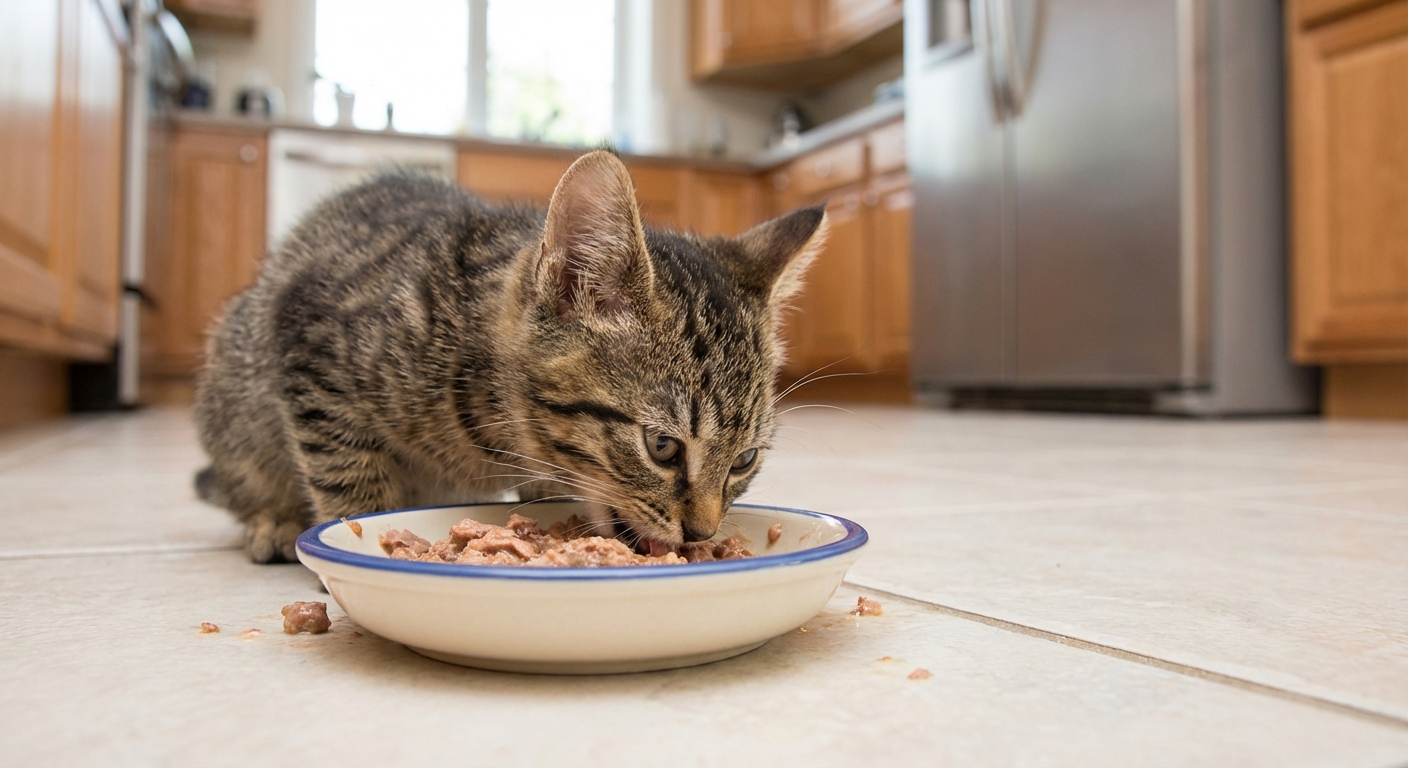
Kittens have high calorie needs for their size, plus they benefit from extra moisture. Quality canned kitten food can help support:
- Hydration, which is important for urinary health
- Growth, because kitten formulas are typically more calorie-dense and nutrient-rich than adult cat food
- Palatability, which matters if your kitten is picky or adjusting after weaning
Evidence-based note: look for a statement on the label indicating the food is complete and balanced for growth (AAFCO in the U.S.). That wording matters more than marketing terms.
How much per day?
Most kittens do best with multiple small meals per day and enough total food to meet their daily calorie needs. Because every brand has different calories per can, the most accurate method is calorie-based feeding.
First, a crucial clarification: the amount of canned food your kitten needs is very different for a wet-only diet versus mixed feeding (wet plus dry). If your kitten is eating only canned food, they typically need more cans per day than many people expect.
As a safety check, many healthy growing kittens land somewhere around about 60 to 70 kcal per pound per day (roughly 130 to 155 kcal per kg), then you adjust based on weekly weights and body condition. Age, activity, and whether they are spayed or neutered all matter.
Wet-only (exclusive canned)
Useful starting points for many healthy kittens eating a typical 3-ounce kitten canned food (often 75 to 100 kcal per can):
- 8 to 12 weeks: often about 1 1/2 to 2 1/2 3-ounce cans per day, split into 4 meals
- 3 to 6 months: often about 2 to 3 3-ounce cans per day, split into 3 to 4 meals
- 6 to 12 months: often about 2 to 3 1/2 3-ounce cans per day, split into 2 to 3 meals
Quick reality check example: a 2.5 lb kitten who needs roughly 150 to 175 kcal/day would need about 2 cans/day if each can is 85 kcal.
Mixed feeding (wet plus dry)
If your kitten also gets dry food (especially if it is offered freely), the wet portion is usually lower. A common range is:
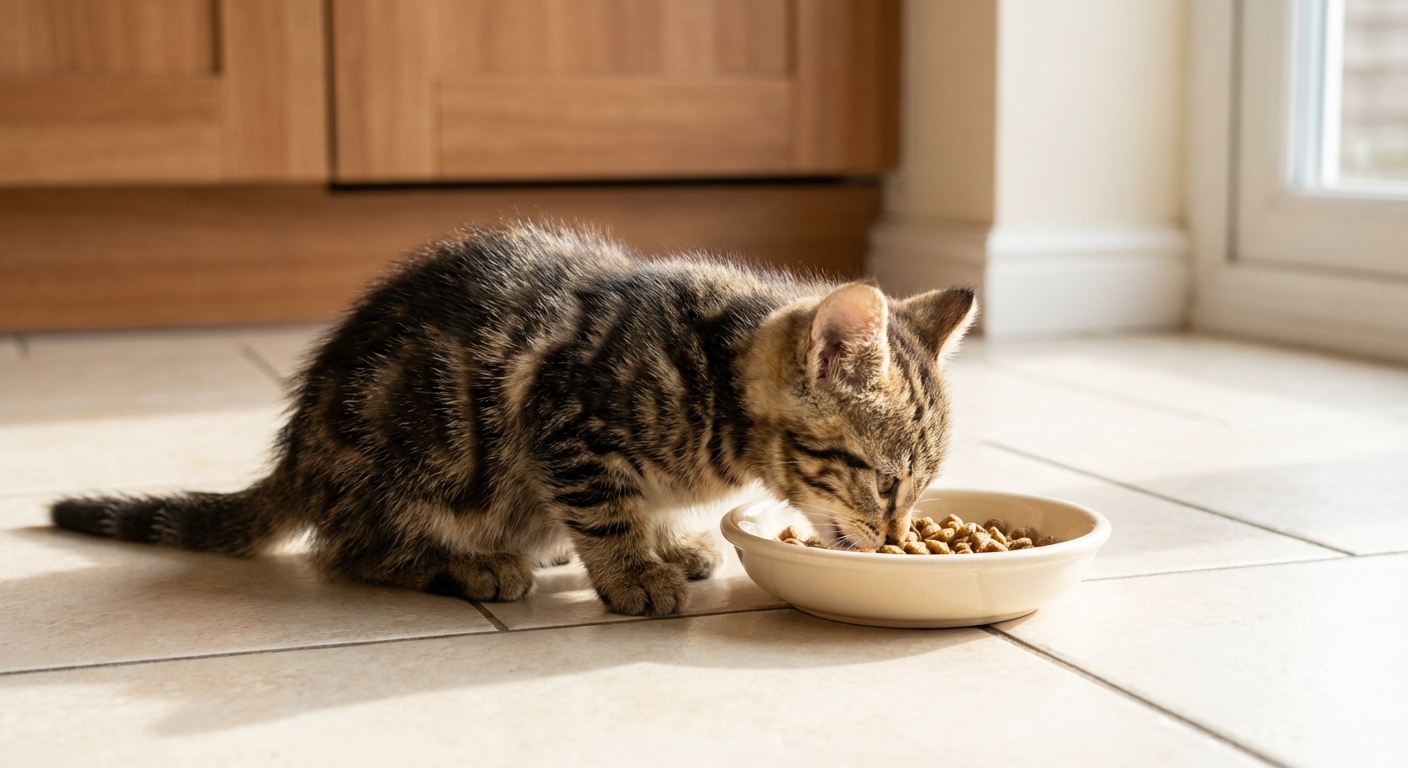
- 8 to 12 weeks: about 3/4 to 1 1/4 of a 3-ounce can per day, plus a measured dry portion based on label calories, split into 4 meals
- 3 to 6 months: about 1 to 2 3-ounce cans per day, plus a measured dry portion based on label calories, split into 3 to 4 meals
- 6 to 12 months: about 1 to 2 1/2 3-ounce cans per day, plus a measured dry portion based on label calories, split into 2 to 3 meals
Important: these are general ranges, not a prescription. Your kitten’s ideal amount depends on body weight, activity, metabolism, and the calorie content of the specific food. If you feed wet plus dry, make sure the combined calories meet your kitten’s daily needs.
Best method: feed by calories
Two foods can look identical and have very different calories. So when you see “How much to feed” on the label, it is really a calorie guideline in disguise.
Step 1: Find calories on the can
Look for something like:
- kcal per can
- kcal per 3-ounce
- kcal per kg (less user-friendly, but still workable)
Step 2: Estimate daily calories
A common veterinary nutrition approach is to use the kitten’s resting energy requirement (RER) and apply a growth factor. For practical home use, these are commonly used starting points for healthy kittens:
- Under 4 months: about 2.5 to 3 times RER
- 4 to 12 months: about 2 times RER
RER formula: RER = 70 × (body weight in kg)^0.75
If math is not your thing, that is okay. Many veterinarians can give you a target calorie range, and many pet parents do perfectly well starting with the label directions and adjusting based on body condition and growth.
Step 3: Convert calories into cans
Example: Your kitten needs about 200 kcal/day and the canned food is 85 kcal per 3-ounce can.
200 ÷ 85 = about 2.35 cans per day
Then split into meals based on age.

Meal schedule by age
Kittens are built for frequent meals. Think of it like fueling a tiny athlete who is growing bones, muscles, and a brain all at once.
8 to 12 weeks
- Meals: 4 per day is ideal
- Goal: consistent growth and easy digestion
- Tip: warm the food slightly to boost aroma (never hot)
3 to 6 months
- Meals: 3 to 4 per day
- Goal: maintain a lean body condition while growth continues
6 to 12 months
- Meals: 2 to 3 per day
- Goal: avoid overfeeding as growth rate starts to slow
Most cats transition to adult feeding routines around 10 to 12 months, but some large breeds may mature more slowly. Your veterinarian can guide timing.
How to tell it is enough
Portion sizes are only “right” if your kitten’s body and behavior agree.
Signs your kitten is on track
- Steady weight gain and growth, without looking round all the time
- Bright eyes, playful energy, good coat quality
- Normal stools that are formed and easy to scoop
Signs you may be feeding too little
- Ribs or spine very prominent, little muscle over the hips
- Constant hunger, frantic behavior around food
- Slow growth or weight plateau
Signs you may be feeding too much
- Stools become large and softer
- Rapid weight gain with a round belly and poor waist definition
- Less interest in play
A quick note on bellies: some mild post-meal roundness can be normal, especially in very young kittens. A persistent pot-bellied look with poor muscle tone, diarrhea, or slow growth is when I start thinking about parasites or other issues.
If you want one actionable habit: weigh your kitten weekly using a baby scale or a home scale (weigh yourself, then weigh yourself holding kitten, subtract). Bring those numbers to your vet visits.
Quick body condition check
If you have heard your vet mention “BCS” (body condition score), here is the at-home version:
- You should be able to feel ribs easily with light pressure, but they should not look sharply visible.
- From above, your kitten should have a little waist behind the ribs.
- From the side, the belly should tuck up slightly, not hang.
Mixed feeding tips
Many kitten households do a combination of wet and dry, and that can work beautifully. The key is remembering that calories add up fast.
If you feed both:
- Decide the split (example: 70% wet calories, 30% dry calories)
- Calculate each portion so the total daily calories stay appropriate
- Keep treats minimal and kitten-appropriate (treat calories still count)
Helpful tip: if your kitten free-feeds dry all day, it becomes harder to know how much they actually ate. For many kittens, measured meals make tracking easier.
Leftovers and food safety
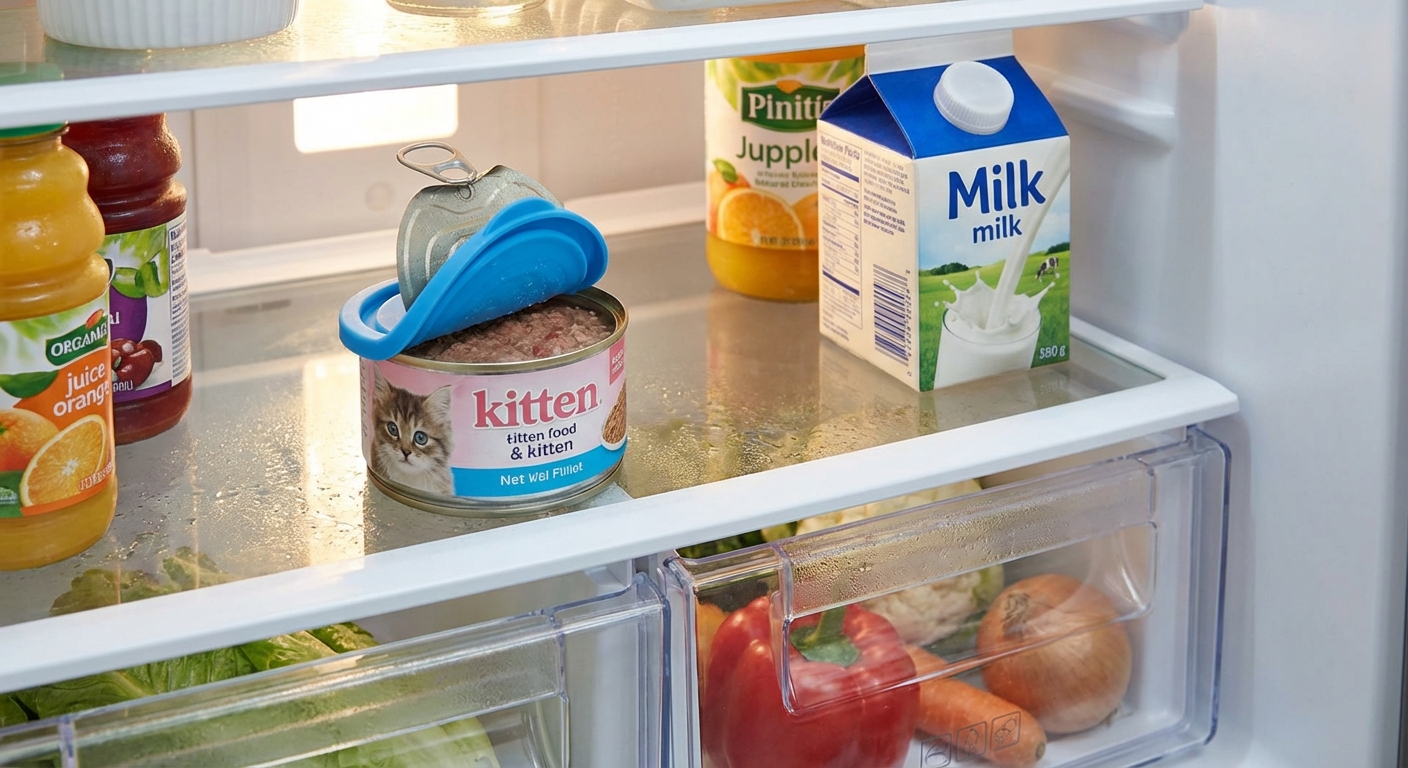
Canned food spoils more quickly once opened.
- Refrigerate opened cans promptly, covered
- Use within 24 to 48 hours (follow label guidance if listed)
- Do not leave wet food out for more than 1 to 2 hours at room temperature (discard sooner in hot weather)
If your kitten dislikes cold food, scoop the portion into a bowl and let it sit at room temp briefly, or warm it gently by placing the bowl in warm water.
Special cases
Orphaned or very young kittens
Kittens under about 4 weeks generally need a kitten milk replacer schedule, not canned food. If you are caring for an orphan, contact a veterinarian or rescue group for a feeding plan. Timing and temperature matter a lot.
Newly adopted kittens
Stress can reduce appetite. Start with the food they were already eating if possible, then transition slowly over 7 to 10 days.
Parasites, diarrhea, or vomiting
Intestinal parasites are common in kittens and can affect appetite and weight gain. If your kitten has diarrhea lasting more than 24 hours, vomiting, blood in stool, or seems lethargic, call your veterinarian promptly.
Spay or neuter
After surgery, calorie needs can drop. Ask your vet when to adjust portions, and re-check body condition over the next month.
Kitten to adult food
Most kittens can switch to adult food around 10 to 12 months (later for some larger breeds). Your veterinarian can help you pick the right timing based on growth and body condition.
When it is time, transition gradually to prevent tummy trouble:
- Days 1 to 3: about 75% kitten food, 25% adult food
- Days 4 to 6: about 50% and 50%
- Days 7 to 10: about 25% kitten food, 75% adult food
Then reassess portions after the switch, especially if your cat was recently spayed or neutered.
Quick checklist
- Label says complete and balanced for growth (AAFCO statement)
- Made specifically for kittens or “all life stages”
- Protein-forward recipe with named animal proteins
- Clear calorie information (kcal per can)
- Your kitten tolerates it well (good stool, good appetite)
If you only do one thing today, do this: read the calorie line on your can. It turns guesswork into a plan.
When to call your vet
Please reach out if you notice any of the following:
- Your kitten is not gaining weight, or is losing weight
- Ongoing diarrhea or vomiting
- Refusal to eat for more than 12 to 24 hours (sooner for very young kittens)
- A pot-bellied appearance with poor muscle tone (possible parasites or other issues)
- Any concern that your kitten seems “off” or unusually quiet
Kittens can go downhill quickly, and it is always better to ask early.
Bottom line
There is no one perfect number of cans for every kitten, but there is a perfect process: feed a growth-appropriate canned kitten diet, use the calorie info to guide portions, offer frequent meals, and adjust based on weekly weights and body condition.
You are doing the right thing by learning this now. Good nutrition in kittenhood sets the stage for a healthy adult cat.