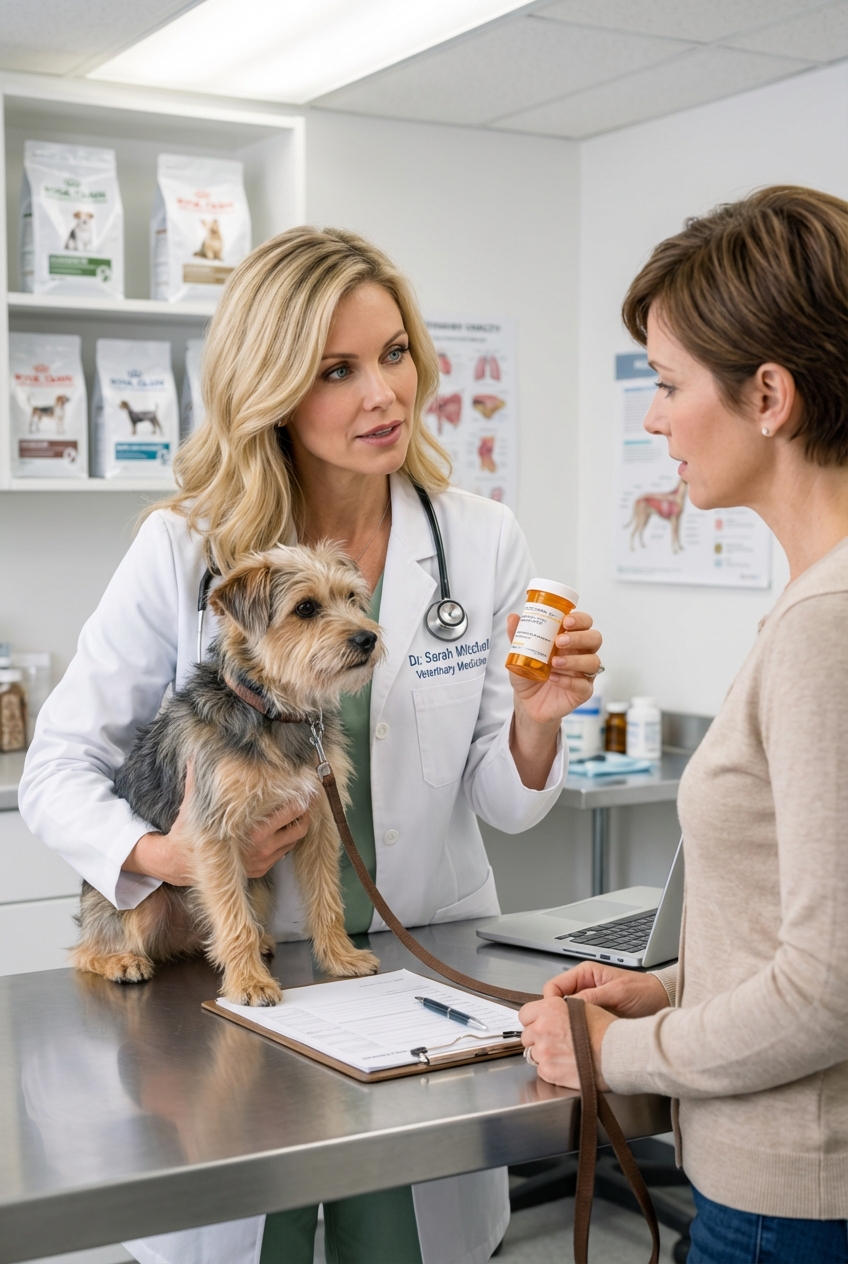
Wondering if Benadryl is safe for your dog’s itching or hives? Get vet-informed diphenhydramine dosing (1 mg/lb), a weight chart, product warnings, side ef...
Article
•
Designer Mixes
How Much Benadryl to Give a Dog

Shari Shidate
Designer Mixes contributor
As a veterinary assistant here in Frisco, Texas, I hear this question all the time: “How much Benadryl can I give my dog?” Benadryl (diphenhydramine) is a common, often helpful medication for mild allergic reactions, itching, and some vaccine reactions. But the right dose depends on your dog’s weight, the exact product you have, and what your dog is experiencing.
Important: This article is general education, not a substitute for veterinary care. If your dog has facial swelling, trouble breathing, repeated vomiting, collapse, pale gums, or extreme weakness, skip the Benadryl and seek emergency care immediately.
Benadryl basics for dogs
Benadryl is an antihistamine. It can reduce symptoms caused by histamine release, such as:
- Mild itching and hives
- Seasonal allergies
- Mild facial puffiness from insect bites
- Some mild vaccine reactions (under veterinary guidance)
- Motion sickness in some dogs (results vary)
It is not a cure-all. Benadryl often does not resolve severe allergy emergencies, and it will not treat infections, mange, or pain.
Typical Benadryl dose for dogs
This is the general guideline many veterinarians use for plain diphenhydramine (not combo products):
Diphenhydramine: about 1 mg per pound (mg/lb) by mouth every 8 to 12 hours.
Please do not treat this as a one-size-fits-all rule. Dogs with certain health conditions, very small dogs, senior dogs, and dogs on other medications may need a different plan. If you are unsure, call your vet or an emergency clinic and confirm the dose for your specific dog.
Extra safety note: Some clinics also set a maximum per dose based on the individual dog. If your dog is very large, has medical issues, or you are considering a higher dose or more frequent dosing, confirm the plan with your veterinarian first.
Quick examples (using 1 mg/lb)
- 10 lb dog: 10 mg per dose
- 25 lb dog: 25 mg per dose
- 50 lb dog: 50 mg per dose
- 75 lb dog: 75 mg per dose
Practical note on tablets: Many Benadryl tablets are 25 mg. That means a 25 lb dog often lines up neatly with one 25 mg tablet, but smaller dogs may need a half tablet or a liquid measured carefully. If you split tablets, do it cautiously. Many tablets are not scored, and uneven splitting can lead to an inaccurate dose.
Choosing the right product
Not every “Benadryl” product on the shelf is safe for dogs. You want diphenhydramine only as the active ingredient.
Usually acceptable (with correct dosing)
- Diphenhydramine 25 mg tablets (plain)
- Diphenhydramine liquid (only if it does not contain unsafe additives)
Avoid these unless your vet directs you
- Benadryl-D (often contains pseudoephedrine, which can be dangerous for dogs)
- Multi-symptom cold products (frequently include decongestants, pain relievers, or cough suppressants that may be unsafe)
- Sugar-free or flavored liquids/chews that contain xylitol (highly toxic to dogs)
- Alcohol-containing liquids (some liquid formulations may contain alcohol, so avoid any product that lists alcohol in the inactive ingredients)
Tip: Before giving a liquid, read both the active and inactive ingredients. Xylitol is not in every children’s liquid, but it can show up in some sugar-free medications and flavored products. If you are not 100 percent sure it is xylitol-free and alcohol-free, do not use it. Call your veterinarian and ask what product they prefer.
How often can I give it?
Benadryl is commonly given every 8 to 12 hours. Many dogs do fine on an every-12-hour schedule, while others need every 8 hours for itch control.
Do not stack doses early because your dog still looks itchy. If symptoms are not improving, that is your signal to check in with your veterinarian. Persistent itching can mean fleas, skin infection, food sensitivity, or environmental allergies that need a different plan.
When it starts working
Every dog is a little different, but many owners notice drowsiness or mild symptom relief within 1 to 2 hours of a dose. The effect typically wears off over several hours, which is why dosing intervals are commonly in the 8 to 12 hour range.
If your dog is still uncomfortable, do not increase the dose on your own. Call your vet for next steps.
When not to give Benadryl
Skip Benadryl and talk to a veterinarian first if any of these apply:
- Your dog has had a prior reaction to diphenhydramine
- Your dog is having severe symptoms (trouble breathing, collapse, rapidly worsening facial swelling, repeated vomiting)
- Your dog is a very young puppy and you have not checked with your vet
- Your dog has chronic medical conditions or is on prescription medications and you have not confirmed it is appropriate
When Benadryl is not enough
Benadryl is best for mild symptoms. It may not be enough for:
- Anaphylaxis or severe allergic reactions
- Severe facial swelling or swelling that is worsening quickly
- Difficulty breathing or noisy breathing
- Repeated vomiting after a sting or new exposure
- Severe ear infections or hot spots
In these cases, dogs often need prescription medications (like corticosteroids, Apoquel, Cytopoint, or antibiotics if infection is present), and they may need oxygen or injectable medications in urgent cases.
Side effects to watch for
Most dogs tolerate diphenhydramine well, but side effects can happen.
Common side effects
- Sleepiness or a “drugged” look
- Dry mouth
- Mild stomach upset
Less common but concerning
- Hyperactivity (some dogs get wired instead of sleepy)
- Urinary retention or straining to urinate
- Fast heart rate
- Severe lethargy, weakness, or collapse
If you see severe symptoms, call your veterinarian or an emergency clinic right away.
Dogs who need extra caution
Always check with your vet first if your dog has:
- Glaucoma
- Heart disease or high blood pressure
- Prostate enlargement (can worsen urination problems)
- Seizure history
- Liver disease
- Pregnancy or nursing puppies
- Hyperthyroidism
- Chronic breathing or lung disease
Also be cautious if your dog takes other sedating medications, including certain anxiety meds or pain meds. Combining sedatives can make a dog overly drowsy or unsteady.
How to give it safely
- Weigh your dog as accurately as possible. A 5 pound difference matters in small dogs.
- Use plain diphenhydramine only. Avoid combo products.
- Measure carefully, especially liquids.
- Give with a small snack if your dog tends to get an upset stomach.
- Observe for 1 to 2 hours after the first dose, especially if you are giving it for a possible allergic reaction.
- Store medications securely. Many pet ER visits start with a curious dog and an open bottle.
If you are giving Benadryl because of a bite or sting, take a clear photo of the area when you first notice it. That makes it easier to judge whether swelling is spreading.
If you think you gave too much
If you suspect an overdose, contact:
- Your regular veterinarian
- A local emergency veterinary hospital
- Animal Poison Control (ASPCA or Pet Poison Helpline)
Be ready to share your dog’s weight, the product name, the strength (mg), how many tablets or milliliters were given, and the time of dosing.
FAQs
Can I give my dog the same Benadryl I take?
Sometimes yes, if it is plain diphenhydramine with no added active ingredients and your vet agrees it is appropriate for your dog.
Is Benadryl safe for puppies?
Puppies are more delicate and dosing mistakes happen easily. Call your veterinarian before giving Benadryl to a puppy.
Will Benadryl make my dog sleepy?
It often does. That is a normal side effect. Some dogs, however, become more energized.
My dog is still itching after Benadryl. Now what?
Itching is commonly caused by fleas, environmental allergies, yeast or bacterial skin infections, ear infections, and food sensitivities. If Benadryl is not helping, schedule a vet visit. The “right” fix is usually targeted treatment, not more antihistamine.
A final word from me
Benadryl can be a helpful tool in the right situation, but the safest approach is to treat it like any other medication: dose by weight, use the correct product, and know when it is time to go to the vet. If you want, tell me your dog’s weight, age, and what symptoms you are seeing, and I can help you put together a short list of questions to ask your veterinarian.