Wondering if Zyrtec can help your dog’s itching? Learn when plain cetirizine may work, what to avoid (Zyrtec-D), dosing basics, side effects, and red-flag ...
Article
•
Designer Mixes
How Much Benadryl to Give a Dog

Shari Shidate
Designer Mixes contributor
As a veterinary assistant here in Frisco, Texas, I get this question a lot: “How much Benadryl can I give my dog?” Benadryl (diphenhydramine) can be helpful for some dogs, but it is not a one-size-fits-all medication. Before you give any, make sure you have the right product and confirm the right dose with your veterinarian, especially if your dog has health conditions or takes other medications.
Quick note: I am not a veterinarian. This is general education, and your vet should guide dosing for your dog.
This article will walk you through a typical dosing starting point, when Benadryl is appropriate, when it is not, and the red flags that mean you should call a vet right away.
What Benadryl is used for in dogs
Benadryl is an antihistamine. In dogs, it is most often used to help with mild allergy-type symptoms, such as:
- Itchy skin from environmental allergies
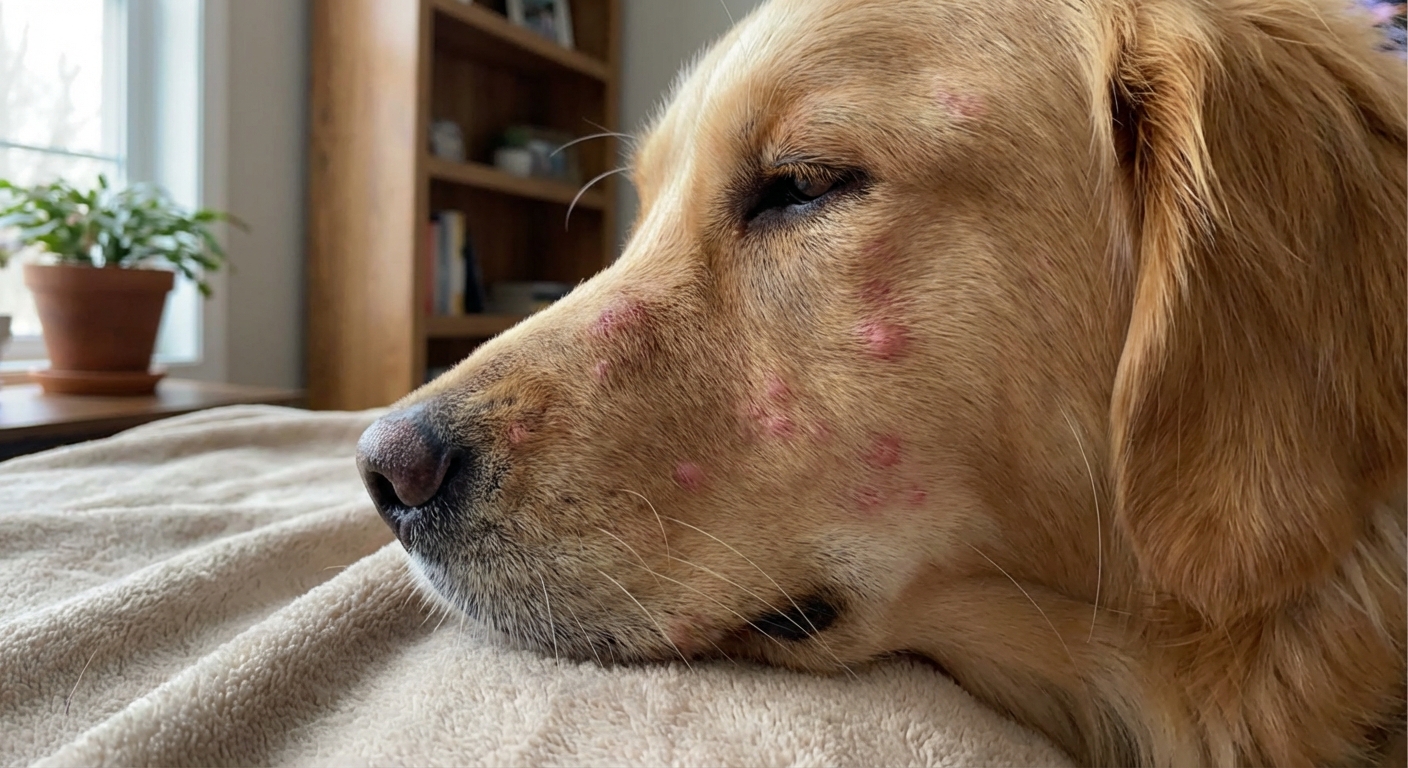
- Hives or mild swelling after an insect bite or sting
- Sneezing or watery eyes in some allergy cases
- Mild vaccine reactions (only under veterinary guidance)
It is not a cure for the underlying cause of itching, ear infections, or chronic skin disease. Also, Benadryl can be hit-or-miss for environmental allergies in dogs. If your dog is itchy often, it is worth investigating food sensitivities, fleas, secondary infections, and environmental triggers with your vet. Your clinic may also discuss newer options like Apoquel or Cytopoint when appropriate.
Typical Benadryl dosage for dogs
A commonly used veterinary dosing range for diphenhydramine is:
- 2 to 4 mg per kilogram (mg/kg) per dose (about 0.9 to 1.8 mg per pound (mg/lb))
- Given 2 to 3 times per day (often every 8 to 12 hours)
In many clinics, a simple starting point you will hear is 1 mg per pound of your dog’s body weight per dose, given every 8 to 12 hours as needed. Your vet may choose a different dose within the range based on your dog’s age, size, medical history, and what you are treating.
Important: “1 mg/lb” is per dose, not the total for the day. Do not increase the dose or frequency beyond what your veterinarian recommends.
Quick examples (using 1 mg per pound per dose)
- 10 lb dog: about 10 mg per dose
- 25 lb dog: about 25 mg per dose (often one 25 mg tablet, if your vet says it is appropriate)
- 50 lb dog: about 50 mg per dose (often two 25 mg tablets)
- 75 lb dog: about 75 mg per dose (this may involve multiple tablets, so confirm a plan with your vet)
Practical tip: Many over-the-counter Benadryl tablets are 25 mg. Some are 50 mg. Always confirm the strength on the package, and do not guess.
Capsule note: If you have capsules, do not try to split them. Ask your vet about a tablet option or a different product strength if you need a smaller, more precise dose.
Choose the right product
Not every “Benadryl” on the shelf is safe for dogs. You want plain diphenhydramine as the only active ingredient.
Avoid combination products
- Benadryl-D or any product with pseudoephedrine (can be dangerous for dogs)
- Cold and flu combinations (often contain multiple ingredients that are unsafe)
- “Multi-symptom” products
Avoid extended-release and topicals
- Extended-release diphenhydramine (often labeled ER) is generally not recommended unless your veterinarian specifically instructs you
- Topical diphenhydramine creams, gels, or sprays are also not a great DIY choice because dogs can lick them and ingest more than intended
Tablets vs. liquids
Tablets are often easier because some liquid formulas may contain xylitol (highly toxic to dogs) or alcohol. If you must use liquid, read the inactive ingredients carefully, confirm it is xylitol-free, and measure with an oral syringe.
When Benadryl may not be appropriate
Benadryl is not a good fit for every dog or every symptom. Check with your veterinarian first if your dog has medical issues, especially:
- Glaucoma
- Heart disease or high blood pressure concerns
- Urinary retention risk or prostate enlargement
- Liver disease or significant kidney issues
- Pregnancy or nursing puppies
Some other conditions may also require extra caution or dose adjustments. If your dog has a history of endocrine disease (including thyroid conditions), bring it up with your vet so they can guide you based on your dog’s full history.
Also, if your dog is on other medications (including anxiety meds, pain meds, seizure meds, sleep aids, or other antihistamines), drug interactions and additive sedation are possible. Do not combine Benadryl with other sedating meds unless your vet tells you to.
What to expect after you give it
For many dogs, the most noticeable effect is drowsiness. Some dogs, especially younger dogs, can have the opposite reaction and become restless or wired.
Common side effects
- Sleepiness or sedation
- Dry mouth
- Stomach upset (drooling can happen too, and it can be a nausea sign or a taste reaction)
- Urinary retention in some dogs
If you are giving Benadryl for itching and you see no improvement after a couple doses, do not keep escalating. It may be the wrong tool for the job, and your dog may need a different allergy plan.
Emergency situations
Benadryl is sometimes used as part of emergency allergy care, but it should not delay real treatment. Serious allergic reactions can progress fast, and Benadryl is not a substitute for emergency veterinary care (or epinephrine when a veterinarian deems it necessary).
Call your veterinarian or an emergency clinic immediately if your dog has:
- Trouble breathing, wheezing, or excessive coughing
- Facial swelling that is progressing quickly
- Vomiting repeatedly or severe diarrhea
- Collapse, severe weakness, or pale gums
- Seizures
- Signs of overdose like extreme sedation, agitation, tremors, or a very fast heart rate
Important: If you suspect your dog ingested the wrong product (especially one with pseudoephedrine), an extended-release product, or too much diphenhydramine, contact a veterinarian or a pet poison helpline immediately. Fast action truly matters.
Dosing tips that keep dogs safer
- Weigh your dog if you can. A guess can be off by 10 to 15 pounds easily.
- Use plain diphenhydramine only and double-check the label for active ingredients.
- Start low when your vet agrees, especially for small dogs or seniors.
- Do not exceed your vet’s recommended dose or schedule. Overdoses can be serious.
- Do not use as a long-term itch plan without guidance. Chronic itch is usually a bigger issue than “just allergies.”
- Keep a notes page on timing, dose, and response. This helps your vet fine-tune a safer plan.
Benadryl FAQ
Can I give my dog children’s Benadryl?
Sometimes, but only if it is plain diphenhydramine and does not contain xylitol or other added ingredients. Because liquids vary so much, many vets prefer tablets for easier, safer dosing.
How long does Benadryl take to work in dogs?
Many dogs begin to feel effects in about 30 to 60 minutes. Sedation may be the first thing you notice.
Is Benadryl safe for puppies?
Puppies are more sensitive to medications, and dosing must be exact. Please call your veterinarian before giving Benadryl to a puppy.
Bottom line
A common starting point for Benadryl in dogs is 1 mg per pound of body weight per dose every 8 to 12 hours, using plain diphenhydramine only. Many veterinarians also reference a broader dosing range of about 0.9 to 1.8 mg per pound per dose, depending on the situation.
Your dog’s safety depends on the full picture: their health history, current medications, and the symptom you are trying to treat. If you are unsure, call your vet and ask, “Is Benadryl appropriate for this situation, and what dose do you recommend for my dog’s exact weight?” That quick call can prevent a lot of stress and keep your best friend safe.