As a veterinary assistant here in Frisco, Texas, one of the most common questions I hear once a pregnancy is confirmed is: “How many puppies are we talking about?” It is such an exciting question, and it is also a practical one. Knowing whether you are expecting one puppy or a dozen changes how you plan for whelping, newborn care, and even emergency readiness.

Typical litter size
A lot of dogs fall somewhere around 1 to 8 puppies in a litter, but there is a wide range of normal. Some dogs deliver a single puppy (a singleton), and others can deliver well into the double digits.
In general, body size strongly influences litter size:
- Toy breeds often have 1 to 3 puppies.
- Small breeds often have 2 to 5 puppies.
- Medium breeds often have 4 to 7 puppies.
- Large and giant breeds often have 6 to 10+ puppies.
Think of those as helpful ballparks, not guarantees. Breed genetics, mom’s age, whether it is her first litter, and individual fertility all play a role.
Typical by breed
Here are some reality-based examples. These are common ranges you may see in practice, but any individual dog can land outside them.
Toy and small breeds
- Chihuahua: often 1 to 3
- Yorkshire Terrier: often 2 to 4
- Pomeranian: often 1 to 4
- Dachshund (mini): often 1 to 4
- Shih Tzu: often 2 to 5

Medium breeds
- Beagle: often 4 to 7
- Border Collie: often 4 to 8
- Bulldog (English): often 3 to 5, sometimes fewer
- Cocker Spaniel: often 3 to 7

Large and giant breeds
- Labrador Retriever: often 6 to 10
- Golden Retriever: often 6 to 10
- German Shepherd: often 5 to 10
- Boxer: often 6 to 8
- Great Dane: often 6 to 12

Designer mixes: With mixes (including doodles), litter size often falls somewhere between the parents’ typical ranges. If the mom is significantly smaller than the male, the bigger concern is that she may be carrying relatively large fetuses for her pelvic size, which can increase the risk of dystocia (difficult birth). Your veterinarian will usually flag this early so you can plan safely.
What affects litter size?
Litter size is influenced by several factors, and some are within your control while others simply are not.
1) Size and genetics
Bigger dogs generally have more uterine space, and certain breeds are known for more consistently larger or smaller litters.
2) Mom’s age
Very young first-time moms and older moms may have smaller litters. In many dogs, prime reproductive years tend to produce more predictable outcomes.
3) Health, nutrition, and body condition
Dogs that are underweight, overweight, or dealing with untreated illness can have fertility problems and pregnancy complications. Keeping mom at a healthy body condition and following your vet’s prenatal guidance can support a healthier pregnancy overall.
4) Timing and quality of breeding
Successful conception and litter size can be influenced by when breeding occurs relative to ovulation. In breeding programs, progesterone timing can improve accuracy. In accidental breedings, timing is often unknown, and outcomes can be more variable.
5) Litter history
If your dog (or her close female relatives) tends to have small or large litters, that pattern can repeat. It is not guaranteed, but it is a clue.
6) First litter
First litters can be smaller, although plenty of first-time moms have average or larger litters too.
When to do ultrasound or X-ray
If you are trying to plan for whelping, the best thing you can do is talk with your veterinarian early about when to schedule imaging and what information each option gives you.
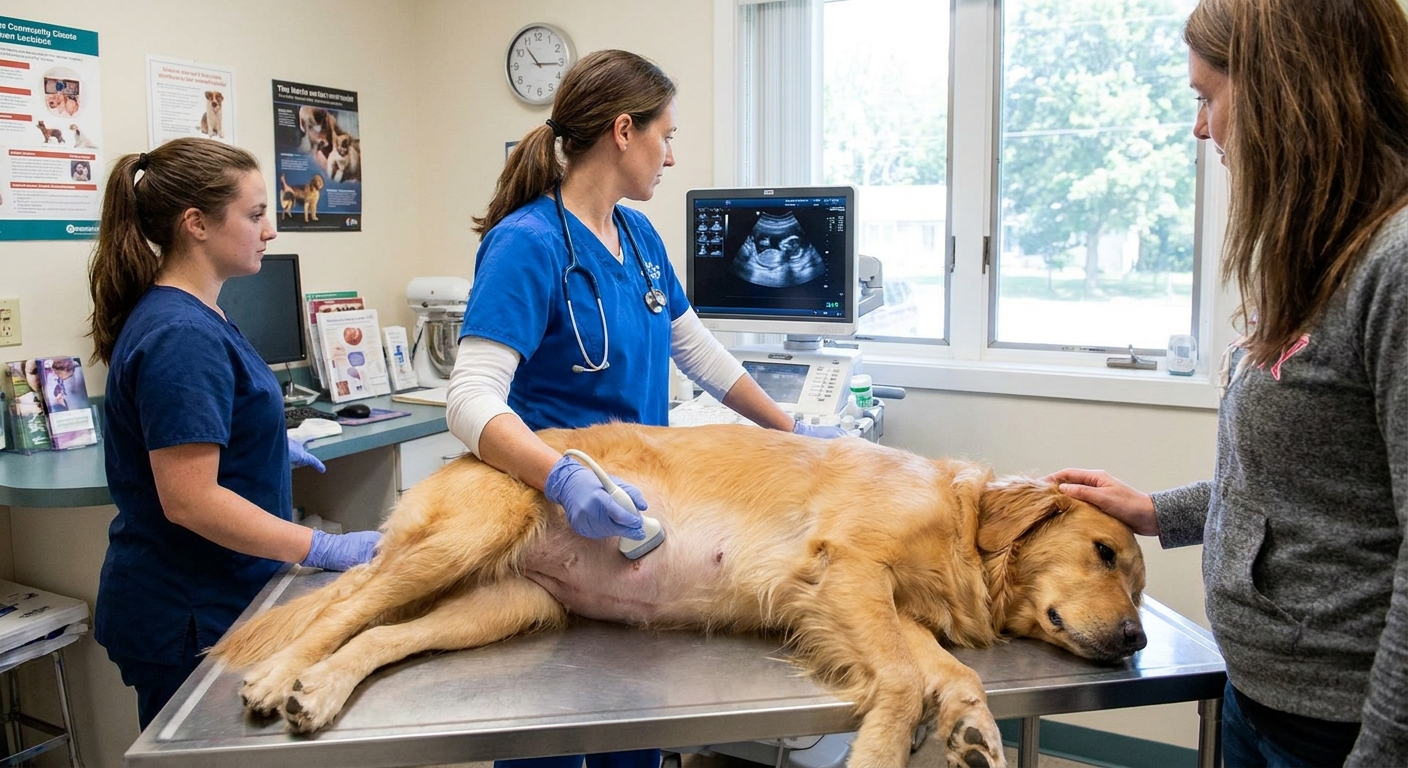
Ultrasound
Ultrasound is excellent for confirming pregnancy and checking fetal viability (seeing heartbeats). It can sometimes give a rough idea of litter size, but it is not the most accurate tool for counting.
- Best for: confirming pregnancy, assessing fetal heartbeats, uterine health
- Limitations: puppies can overlap, so counts are often estimates
In many clinics, ultrasound is commonly scheduled in the early to mid part of pregnancy, once your veterinarian feels it will be useful and reliable for confirmation.
Late-pregnancy X-ray
In late pregnancy, an X-ray (radiograph) can be very helpful for a more accurate puppy count because the fetal skeletons mineralize and become visible. Clinically, this often becomes much more useful after about day 45 of gestation, although timing varies by dog and by clinic.
X-rays also help your veterinarian evaluate factors that matter for delivery planning, like fetal skull and spine visibility, approximate size, and positioning. Even then, counting can still be off by one now and then, especially in big litters.
- Best for: counting puppies more accurately, evaluating fetal size and position
- Limitations: should be done late in pregnancy for visibility, not 100 percent perfect
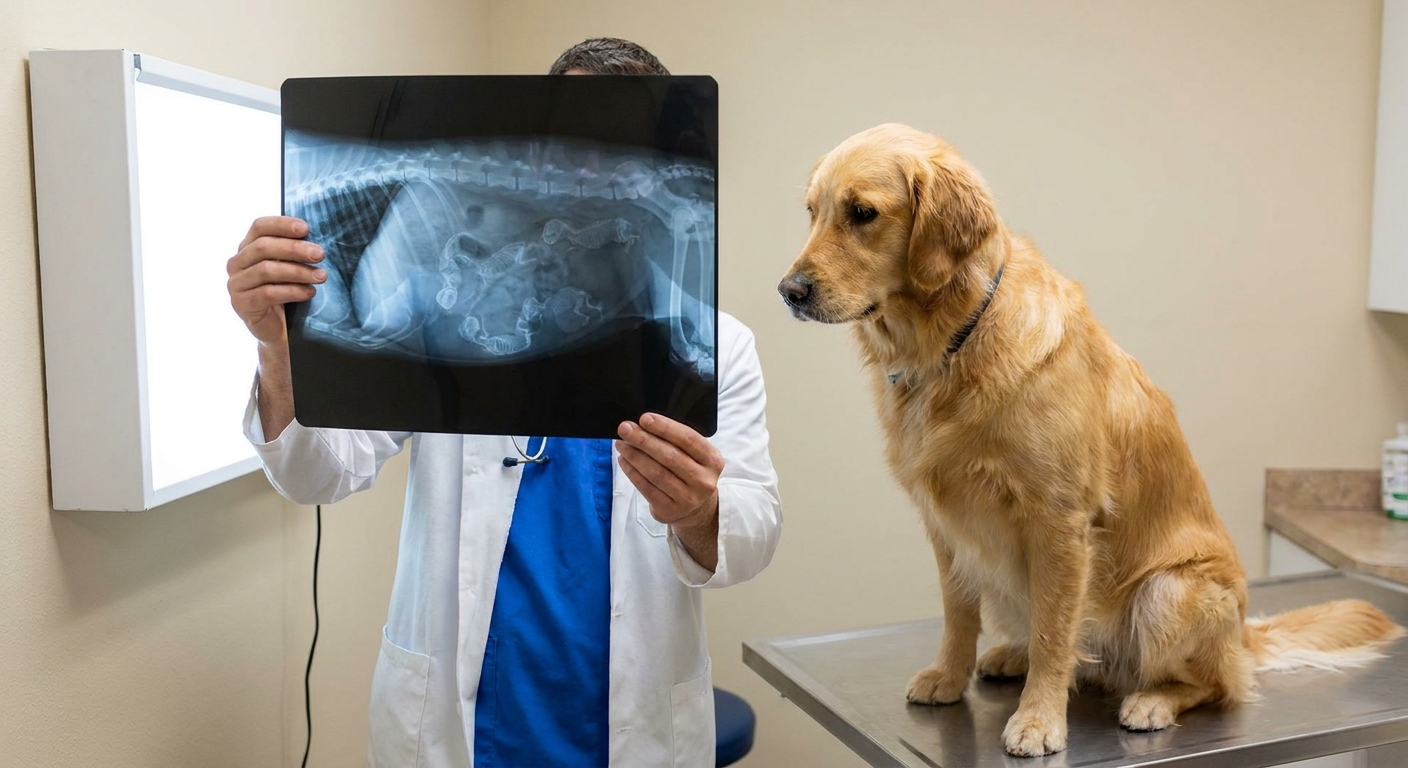
My practical take: Ultrasound helps answer “Is she pregnant and are the puppies viable?” X-ray helps answer “How many are we expecting, and do we anticipate a difficult delivery?” Your vet will recommend timing based on your dog’s situation.
Small litters
Small litters can be totally healthy, but they come with a few special concerns that owners are often surprised by.
Singletons and delivery risk
When there is only one puppy (or just two), the uterus may not stretch as much and labor signals can be weaker. Also, a singleton puppy can become larger in the womb, which may increase the risk of dystocia (difficult birth), especially in small breeds.
If your dog is carrying a singleton, this is a good time to ask your veterinarian what extra monitoring they recommend and whether your breed or situation makes a planned C-section more likely.
Less margin for error
If a dog is carrying only one or two puppies, each puppy becomes that much more precious in terms of outcome. Your vet may recommend closer monitoring.
Newborn care can be trickier
One puppy does not have littermates to cuddle for warmth or to compete with for nursing. That means you may need to pay extra attention to:
- Keeping the puppy warm
- Making sure nursing is effective
- Tracking daily weight gain

Large litters
Large litters are exciting, but they can be more demanding medically and logistically.
Long labor and exhaustion
More puppies often means a longer whelping process. Moms can become tired, and that can lead to stalled labor or the need for veterinary intervention.
Smaller puppies
In very large litters, puppies may be smaller at birth, and smaller puppies can struggle with temperature regulation and nursing strength.
More hands-on feeding
Not every mom has enough milk supply or enough functional teats for a big litter. Your veterinarian may recommend:
- Rotating puppies at the milk bar
- Supplemental bottle feeding or tube feeding guidance (only with professional instruction)
- Daily weights for every puppy
Stock your whelping setup
With many puppies, you will want a clean, organized space and supplies ready before labor starts. At minimum, most families do well with:
- A properly sized whelping box
- Clean towels and washable bedding
- A safe heat source (used carefully to avoid overheating)
- A baby scale for daily weights
- Your veterinarian’s emergency number and after-hours plan

Breeds with higher C-section risk
Litter size is not the only thing that determines whether whelping will be smooth. Some breeds, especially brachycephalic (short-nosed) breeds like English Bulldogs and French Bulldogs, are more prone to dystocia due to body shape and puppy head size. If you have one of these breeds (or a mix with similar features), talk with your veterinarian early about delivery planning, including the possibility of a scheduled C-section.
Different fathers?
Yes. If a female dog mates with more than one male during her fertile window, it is possible for a litter to have multiple fathers. This is called superfecundation. It does not happen in every multi-mating scenario, but it is possible.
When to call the vet
If your dog is pregnant or whelping, trust your instincts and call your veterinarian urgently if you notice:
- Green or foul-smelling discharge before any puppy is delivered
- Hard straining for about 30 to 60 minutes with no puppy produced (or any time you are worried)
- More than 2 hours between puppies with active straining, or a long pause that does not seem right for your dog
- A puppy visibly stuck
- Extreme weakness, collapse, pale gums, or heavy bleeding
- Known large litter and mom seems exhausted early in labor
It is always better to call and be told “this is normal” than to wait too long during an emergency.
FAQ
What is the biggest litter a dog can have?
Records exist, but they vary by reporting and are not as useful as planning for your dog. Clinically, what matters is your veterinarian’s best estimate of the expected count (often with a late-pregnancy X-ray) and a safety plan for delivery and newborn care.
Can a dog have zero puppies after appearing pregnant?
A pregnancy can be lost early, and sometimes what looks like pregnancy symptoms can be a false pregnancy. Veterinary confirmation with ultrasound and follow-up care are important if anything seems off.
Does more puppies mean a healthier pregnancy?
Not necessarily. A healthy pregnancy can produce a small litter or a large litter. What matters most is the mom’s health, good prenatal care, and a safe delivery plan.
Bottom line
Many dogs have somewhere around 1 to 8 puppies, with smaller breeds tending toward smaller litters and larger breeds often having more. The number can shift based on breed genetics, mom’s age and health, whether it is her first litter, and breeding timing. Ultrasound is great for confirming pregnancy and viability, while a late-pregnancy X-ray is typically the most helpful for estimating the final puppy count once fetal skeletons are visible.
If you learn you are expecting a very small litter or a very large litter, that is your cue to adjust your whelping plan and get your veterinarian involved early. A little preparation goes a long way for keeping mom and puppies safe.