Wondering how long a cat stays in heat? Learn the typical 3–7 day estrus, cycle frequency, common signs like yowling and escape attempts, home comfort tips...
Article
•
Designer Mixes
How Long Will My Cat Be in Heat?

Shari Shidate
Designer Mixes contributor
If you are hearing loud yowling at night, noticing extra affection, or watching your cat assume a “butt up” posture (hindquarters raised, also called lordosis), you are probably dealing with a heat cycle. As a veterinary assistant, I want you to know two things right away: heats are normal for unspayed cats (intact females), and they can feel intense and disruptive for both you and your cat, but you can absolutely get through it with the right plan.
This quick guide will help you understand how long your cat will be in heat, what is typical, what is not, and what you can do today to keep her comfortable and safe.
Quick answer
Most cats stay in heat for about 4 to 7 days, but there is real variation. Some heats are shorter, and some can last up to 10 to 14 days. If she does not mate and ovulate, heat cycles may repeat every 2 to 3 weeks during breeding season, and in some households they can seem close to back-to-back.
So while a single heat is often about a week, the bigger surprise for many pet parents is how frequently heats can return until a cat is spayed or becomes pregnant.
What “in heat” means
Heat is the common term for estrus, the part of the reproductive cycle when a female cat is hormonally “open” to mating. Cats are seasonally polyestrous, meaning they can cycle repeatedly during longer-day months (often spring through early fall). In warm climates, and in indoor cats exposed to lots of artificial light, some cats can cycle year-round.
Cats are also usually induced ovulators. In many cases, ovulation is triggered by mating, not by a predictable calendar day. (Less commonly, cats may ovulate without mating.) This helps explain why some cats seem like they are in heat again and again.
Timeline
Cat cycles are not perfectly predictable, but these time ranges are typical for many intact females.
Proestrus (about 1 to 2 days)
You might see mild clinginess or restlessness. Many cats do not show obvious signs yet.
Estrus: “in heat” (often 4 to 7 days, sometimes up to 10 to 14)
This is the stage most people notice. If she mates and ovulates, behaviors may lessen sooner, but they can also continue for several days. If she does not mate and ovulate, she typically moves out of estrus and may cycle again soon.
Interestrus (about 1 to 3 weeks if no ovulation)
She may seem back to normal, then heat behaviors return.
Anestrus (variable)
This is a quieter period when she is not cycling, more common when daylight is shorter. Indoor cats may have less predictable breaks.
Signs of heat
Many pet parents expect bleeding like a dog in heat, but most cats do not bleed during estrus. Instead, heat usually shows up as behavior changes.
- Loud vocalizing, often yowling or calling
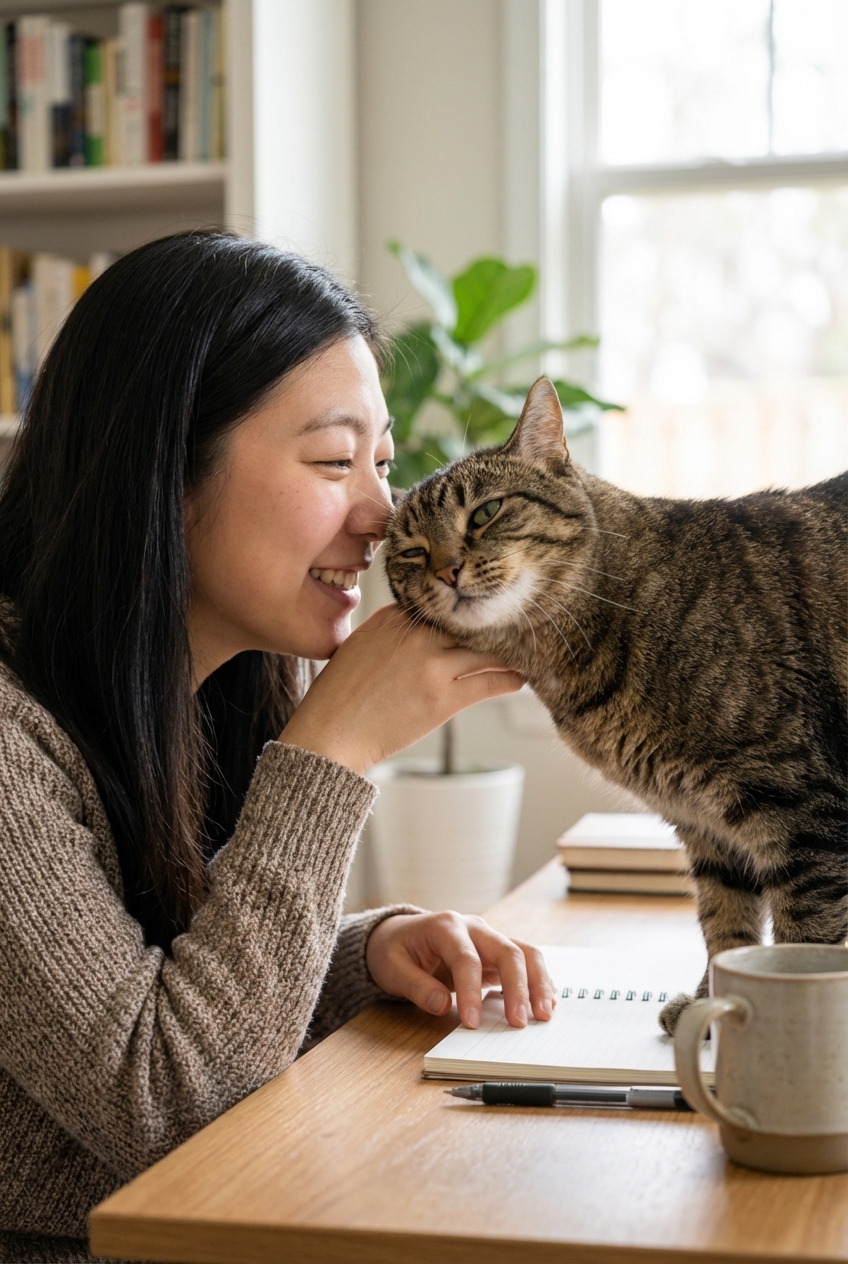
- More affection, rubbing, rolling, and head-butting
- Restlessness, pacing, difficulty settling
- Hindquarters raised with tail moved to the side when petted
- Increased desire to escape through doors or windows
- Decreased appetite in some cats
- Spraying urine or more frequent urination in some cats
Why it feels nonstop
If you feel like it never ends, you are not imagining it. Here are the most common reasons:
- Back-to-back cycles: If she does not ovulate, she may return to heat every couple of weeks.
- Indoor light exposure: Long light periods can encourage cycling, sometimes outside the typical season.
- Geography and climate: Warmer regions may have longer breeding seasons, and some cats cycle year-round.
- Young age: Cats that recently reached puberty can have erratic cycles at first.
- Another medical issue: Uncommon, but ovarian cysts or other hormone-related conditions can mimic or prolong signs.
If your cat has been showing heat-like behavior for more than 10 to 14 days straight with no break, it is smart to call your veterinarian for guidance.
Help your cat in heat
Your goal is to reduce stress, prevent escape, and avoid accidental pregnancy. Here are vet-team friendly, practical steps you can start today.
Keep her safely indoors
- Check window screens for gaps.
- Use a double-door routine: step in, close, then open the next door.
- Consider a baby gate “airlock” near entry doors if she darts.
- Keep her separated from any intact male cats in the home.
- If she goes outside at all, keep it supervised and secure (for example, harness and leash). Avoid unattended time on patios, balconies, or open garages.
Increase comfort and enrichment
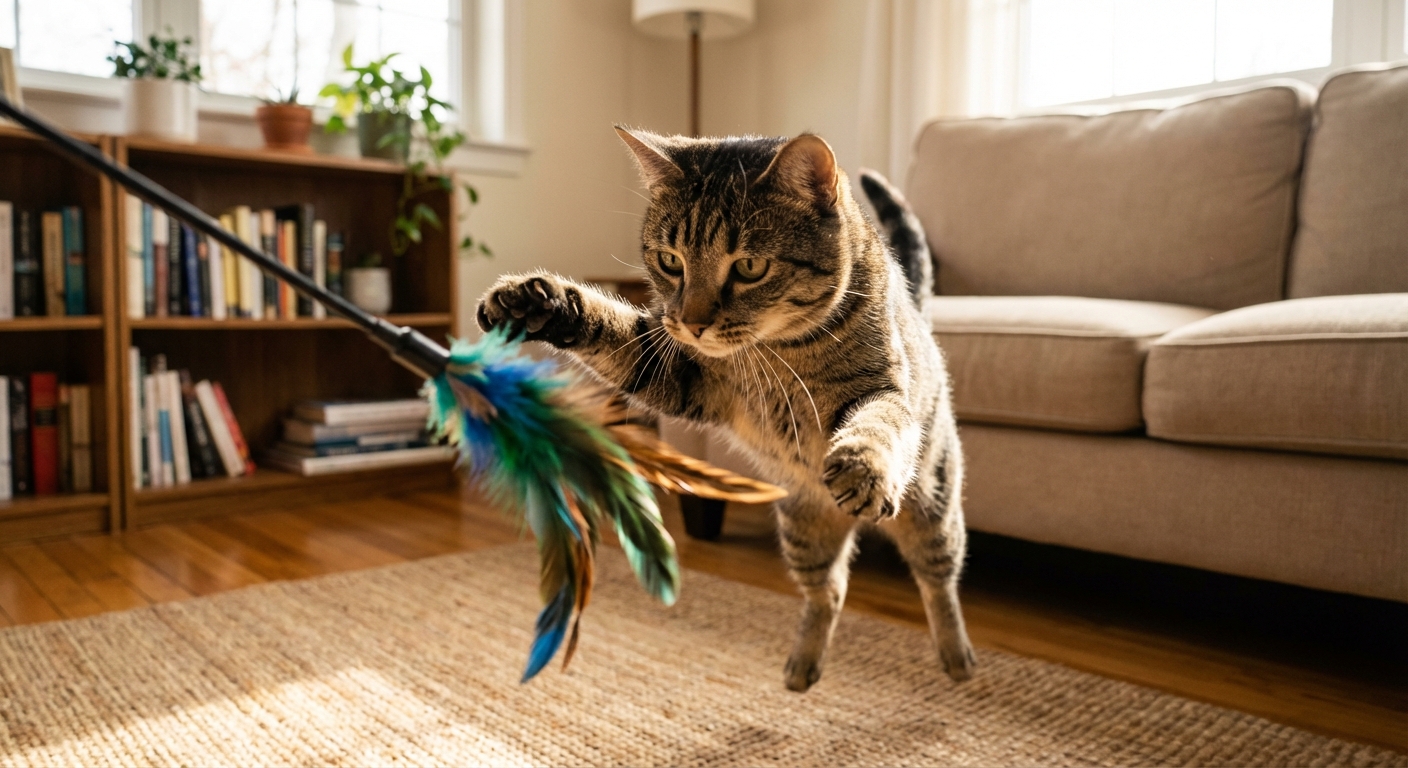
- Play sessions 2 to 3 times daily (wand toys, chase toys).
- Food puzzles or treat balls to occupy the brain.
- Soft bedding in a quiet room if she seems overstimulated.
Try calming supports
- Pheromone diffusers (cat calming pheromones) can help some cats settle.
- Gentle brushing if she enjoys it, but stop if it revs her up.
Skip unsafe remedies
Please do not give human medications, essential oils, or leftover sedatives. Many are toxic to cats or can cause serious side effects.
Also avoid over-the-counter or online hormone products meant to “stop heat” unless your veterinarian specifically prescribes them. Hormonal suppression (such as progestins) can carry significant risks and is not a DIY solution.
When to call the vet
Heat is normal, but some situations deserve a medical check.
- Signs last longer than 10 to 14 days with no break
- Vaginal discharge (especially yellow, green, bloody, or foul-smelling)
- She seems ill: lethargy, vomiting, not eating, hiding
- Distended abdomen or painful belly
- Excessive drinking and urination or straining in the litter box
- A spayed cat acting in heat (this warrants an exam to rule out hormone-related causes such as ovarian remnant syndrome)
These could point to issues like a urinary tract problem or, in intact females, more serious reproductive concerns that need prompt care.
Spaying
The most reliable way to stop heats is a spay surgery (ovariohysterectomy or ovariectomy, depending on your veterinarian’s approach). Spaying:
- Stops heat cycles and heat-related behaviors
- Prevents unplanned litters
- Reduces the risk of mammary cancer, with the greatest protective benefit when done before the first heat (the protective effect decreases after that)
- Prevents uterine infections like pyometra
If your cat is currently in heat, many clinics can still spay, but some may recommend scheduling shortly after the heat ends because the tissues can be more vascular during estrus. Your veterinarian will guide you based on your cat’s age, health, and their surgical protocols.
FAQ
How often will my cat go into heat?
Often every 2 to 3 weeks during breeding season if she does not mate and ovulate, but there is variation between cats and households.
Do cats bleed when in heat?
Usually no. If you see blood, call your veterinarian so they can rule out other causes.
Can my cat get pregnant the first time she is in heat?
Yes. Cats can become fertile as early as around 4 to 6 months, sometimes sooner depending on the individual.
My cat is spayed but acting like she is in heat. Why?
Occasionally, a spayed cat may show heat-like signs due to residual ovarian tissue (ovarian remnant syndrome) or other hormone-related causes. A vet visit is the right next step.
Bottom line
Most cats are in heat for several days to about a week, but some heats last longer and cycles can repeat quickly, which is why it can feel never-ending. Focus on safety and comfort in the short term, and talk with your veterinarian about spaying for a permanent fix. You and your cat both deserve calmer nights and a routine that feels normal again.