A practical guide to caring for a pregnant dog—from confirming pregnancy and feeding changes to safe exercise, whelping setup, labor warning signs, and pos...
Article
•
Designer Mixes
How Long Is a Dog Pregnant?

Shari Shidate
Designer Mixes contributor
As a veterinary assistant here in Frisco, Texas, one of the most common questions I hear is: How long is a dog pregnant? The simple answer is that most dogs are pregnant for about 63 days from ovulation. But real-life timelines can feel confusing because the mating date is not always the same as conception date.
In this article, I will walk you through a week-by-week dog pregnancy timeline, what is normal, what is not, and how to help your dog stay comfortable and safe. I will also share general guidance (not a diagnosis), because your veterinarian is the best source for advice tailored to your dog.

Dog pregnancy length
Most canine pregnancies last about 58 to 68 days, with an average of around 63 days from ovulation. You may also hear these timing references:
- About 63 days from conception (often used in general references)
- About 65 days from the LH surge (used in breeding management)
If you are counting from the first breeding, the range can feel wider. Dogs are often bred on multiple days, sperm can survive for several days, and fertilization depends on when ovulation occurs.
- Average: about 63 days from ovulation
- Common range: 58 to 68 days total gestation
- Why the range matters: ovulation timing varies, and breeding can occur before or after ovulation
Evidence-based tip: If you want the most accurate due date, ask your veterinarian about progesterone timing during breeding and pregnancy ultrasound later on.
Two due dates people mix up
1) Days from breeding
Counting from the first mating is common, but it is not very precise. A dog may mate before ovulation, and fertilization can occur later.
2) Days from ovulation
Ovulation-based timing is what veterinarians use when trying to estimate a true due date. This is why one dog can deliver “early” by breeding date but still be right on time biologically.
Pregnancy timeline
Below is a general timeline. Every dog is unique, and early signs can be subtle. Also, these week labels assume breeding happened close to ovulation. If breeding occurred earlier (which is common), early events like fertilization and embryo travel may occur a bit later than the “Day 1” you are counting from.
Week 1 (Days 1-7): timing varies
- Sperm can survive for several days after breeding.
- Ovulation may occur before or after the breeding date.
- Fertilization occurs after ovulation, not necessarily right after mating.
- Most dogs show no outward signs yet.
What you can do: Keep routines steady and avoid starting new medications or supplements unless your vet approves.
Week 2 (Days 8-14): early development
- Early embryos develop and begin moving toward the uterus.
- You still may not see clear changes in appetite or behavior.
What you can do: Focus on excellent nutrition and prevent exposure to toxins (certain flea and tick products, rodenticides, unsafe household cleaners).
Week 3 (Days 15-21): implantation
- Embryos implant into the uterine lining (timing varies by ovulation date).
- Mild nausea, a slightly lower appetite, or extra sleep can happen in some dogs.
What you can do: Offer smaller meals if she seems a little queasy, and call your vet if vomiting becomes frequent.
Week 4 (Days 22-28): early confirmation
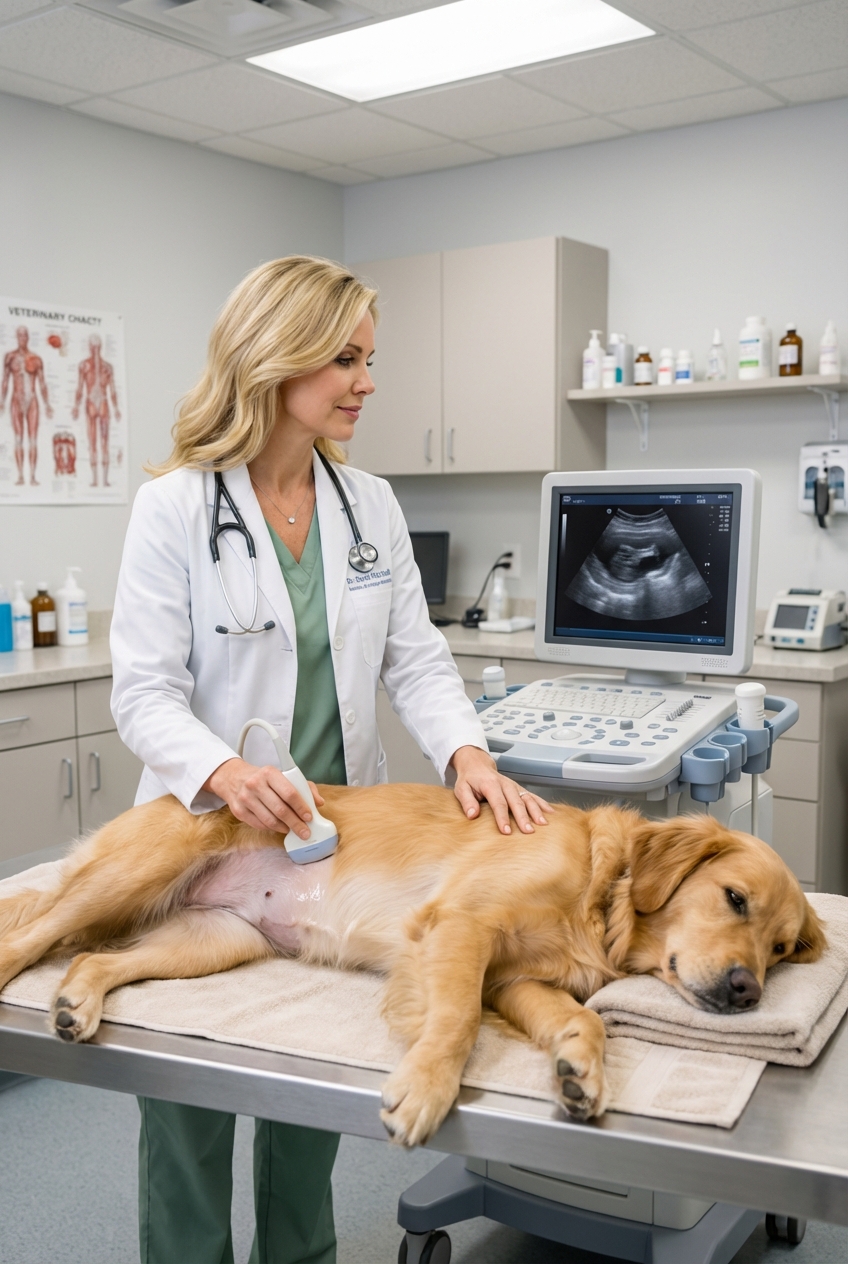
- This is often the earliest window when ultrasound can confirm pregnancy (commonly around day 21-28+, depending on dating and equipment).
- Nipples may start to look more prominent.
- Behavior can shift, including being more affectionate or more sensitive.
Vet note: Ultrasound can confirm pregnancy and check for heartbeat, but it is not always perfect for litter size. Your veterinarian may recommend later imaging for a better estimate.
Week 5 (Days 29-35): belly changes
- Fetal development accelerates.
- Weight gain can become noticeable, especially with larger litters.
- Appetite often increases.
What you can do: Ask your veterinarian when to transition to a diet appropriate for pregnancy and lactation. Avoid overfeeding early, but do not restrict needed calories either.
Week 6 (Days 36-42): mammary changes
- Mammary glands enlarge more noticeably.
- Many dogs slow down on longer walks.
- Puppies continue rapid growth.
What you can do: Keep exercise gentle and consistent. Think shorter walks instead of intense play sessions.
Week 7 (Days 43-49): nesting starts
- Nesting behavior may appear, like seeking quiet spaces or rearranging bedding.
- Hair loss around mammary glands can occur as the body prepares for nursing.
- Some dogs become more protective or more clingy.
What you can do: Set up a whelping area now so she has time to feel safe in it.

Week 8 (Days 50-56): labor prep
- Appetite may decrease as puppies take up space.
- Restlessness can increase.
- Milk may start in some dogs, but not always.
What you can do: Feed smaller, more frequent meals. Confirm you have your vet’s after-hours emergency number saved.
Week 9 (Days 57-63+): any day now
- Body temperature often drops within about 24 hours of labor in many dogs, but it is not foolproof.
- Pacing, panting, nesting, and clinginess are common in early labor.
- Active contractions and delivery follow.
What you can do: Keep the environment calm, limit visitors, and monitor closely.
Labor stages
Labor is usually discussed in three stages. Knowing the basics can help you recognize what is normal and what needs a call to your vet.
Stage 1
- Early labor: panting, restlessness, nesting, shivering, clinginess, and reduced appetite are common.
- This stage often lasts 6 to 12 hours, but it can be longer in some dogs.
Stage 2
- Active labor and puppy delivery.
- Strong abdominal contractions are typical.
Stage 3
- Placenta delivery (this may alternate with stage 2 as puppies are born).
Pregnancy signs
Some dogs show obvious changes, and others barely change until late pregnancy. Common signs include:
- Decreased appetite around weeks 3 to 4, then increased appetite later
- More sleep or lower energy
- Nipple enlargement or color change
- Weight gain and abdominal enlargement (often clearer after week 5)
- Nesting behavior in late pregnancy
Important: These signs are not proof. False pregnancy can mimic many of them.
False pregnancy
False pregnancy (pseudopregnancy) is when a dog shows pregnancy-like signs without being pregnant. It can happen in the weeks after a heat cycle and may include nesting, mothering toys, mammary enlargement, and even milk production.
When to call your vet: If symptoms are intense, last more than a couple of weeks, involve aggressive behavior, or you notice painful mammary glands, fever, or lethargy. Your veterinarian can rule out pregnancy and discuss safe ways to manage discomfort.
How vets confirm pregnancy
Ultrasound
Often used around day 21-28+ to confirm pregnancy, with many clinics commonly scanning around day 25 to 35 to confirm and assess viability.
Relaxin test
Relaxin is a hormone produced during pregnancy. It is often most reliable around day 25 to 30 post-breeding (timing varies by lab and the dog). Results should be interpreted by your veterinarian.
X-rays
Typically most useful after about day 55 when fetal skeletons are clearly visible. X-rays can help estimate litter size, which is important for knowing when labor is complete.
When to schedule vet care
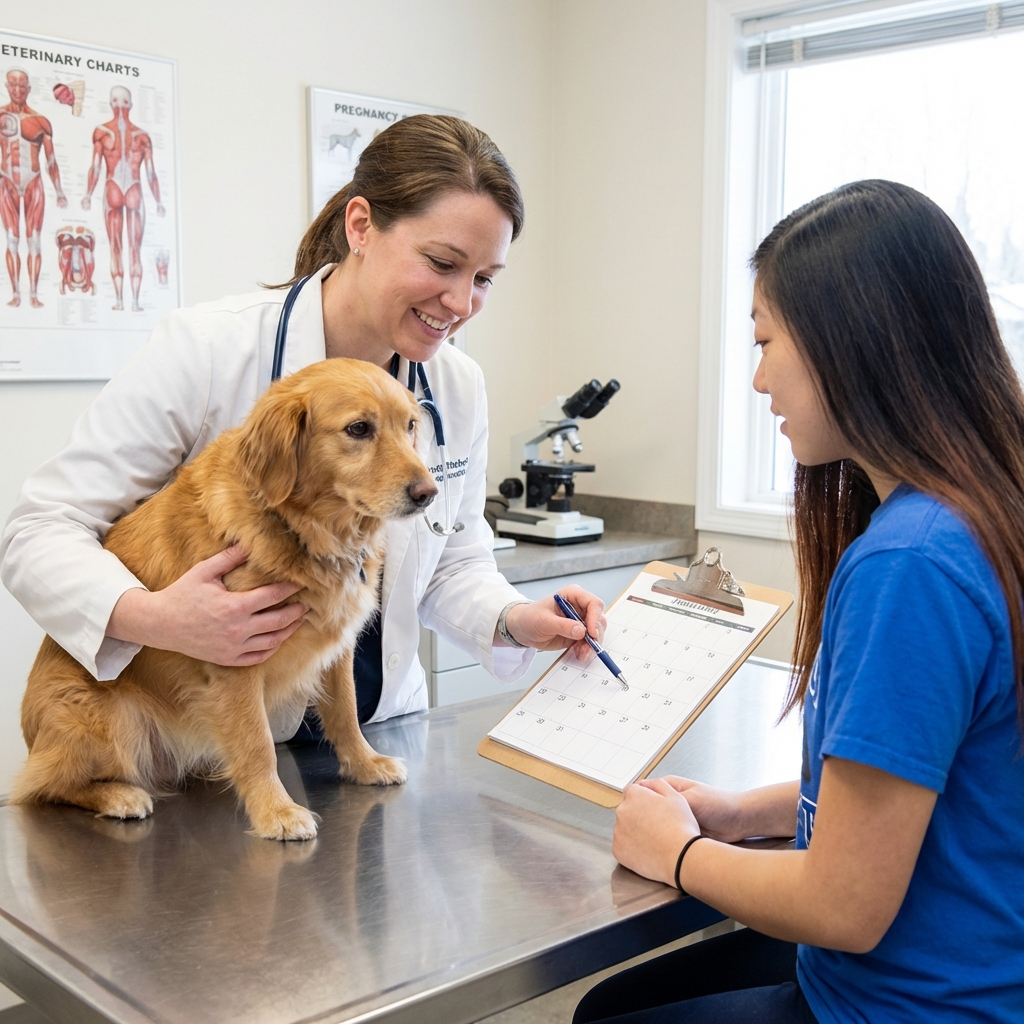
- Prenatal exam: If you suspect pregnancy, schedule a visit to review nutrition, parasite prevention, and any medication safety questions.
- Ultrasound window: Often day 25 to 35 (some clinics can confirm earlier).
- X-ray window: Often day 55+ for the clearest litter count.
Vaccines and deworming: Do not guess. Many products are not recommended during pregnancy. Ask your veterinarian what is appropriate for your dog and your area.
Whelping supplies
You do not need to turn your home into a veterinary clinic. A few basics make a big difference:
- Whelping box with washable bedding
- Clean towels and disposable gloves
- Kitchen scale (for tracking puppy weights)
- Heating pad or safe heat source (used carefully to avoid burns and overheating)
- Thermometer (if your vet recommends temperature tracking)
- Your veterinarian’s number and the nearest emergency clinic info
When to call a vet
Dog labor can be normal one minute and an emergency the next. Contact your veterinarian urgently if you notice:
- Green or foul-smelling discharge before the first puppy is born (green discharge can be normal after a puppy or placenta, but before the first puppy it can signal trouble)
- Strong contractions with no puppy produced for about 30 to 60 minutes, or sooner if your dog seems distressed
- Long pauses between puppies (often 2 hours is used as a guideline when you know more are coming, but call sooner if your dog seems weak, painful, or stuck)
- Extreme lethargy, collapse, or uncontrolled pain
- Heavy bleeding
- A puppy visibly stuck in the birth canal
- Pregnancy lasting beyond the expected window and your dog seems unwell
Trust your instincts. If something feels off, it is always appropriate to call.
High-risk pregnancies
Some dogs should be managed more closely during pregnancy and delivery. This includes brachycephalic breeds (like English Bulldogs and French Bulldogs), very small dogs with a large litter, older moms, dogs with a history of dystocia, and any dog with a known health condition.
If your vet recommends a planned C-section, ask early about timing and warning signs. Having a plan in place can prevent a last-minute emergency.
Nutrition and care
Healthy pregnancy support is not about doing everything perfectly. It is about being consistent and safe.
- Food: Many vets recommend transitioning to a high-quality growth or reproduction diet in the second half of pregnancy. Avoid sudden diet swaps without guidance.
- Supplements: Only give supplements your veterinarian recommends. Calcium supplementation can be risky if used incorrectly.
- Exercise: Keep walks and movement gentle and regular, especially late pregnancy.
- Parasite prevention: Ask your vet what is safe for pregnant dogs in your area.
The goal is a healthy mom, steady weight gain, and a calm environment. The “best” plan is the one you can follow consistently and safely.
Quick recap
- Weeks 1-3: usually no obvious signs
- Week 4: ultrasound confirmation often possible
- Weeks 5-7: belly and mammary changes become clearer
- Weeks 8-9: nesting, appetite shifts, and labor prep
- Around day 63 from ovulation: many dogs deliver