Understand how long a dog stays in heat (typically 2–3 weeks), the proestrus/estrus stages, when pregnancy is most likely, and vet-backed tips for hygiene,...
Article
•
Designer Mixes
How Long Is a Dog in Heat?

Shari Shidate
Designer Mixes contributor
If you are seeing a little blood spotting, extra clinginess, or a sudden uptick in male dogs paying attention on walks, it is very possible your girl is in heat. As a veterinary assistant here in Frisco, Texas, I have talked with a lot of families who are surprised by how long the heat cycle actually lasts, and how much it can vary from dog to dog.
This guide will walk you through what “in heat” means, how long it typically lasts, what you can expect week by week, and how to keep your dog safe and comfortable.
Quick answer: how long does heat last?
Most dogs are in heat for about 2 to 4 weeks. A common “average” you will hear is around 18 to 21 days.
But there is a big normal range. Some dogs are only noticeably in heat for 10 to 14 days, while others can show signs closer to 28 days.
- Small breeds can sometimes cycle a bit more frequently and may have more subtle signs.
- Large breeds may have more obvious swelling and discharge and sometimes longer cycles.
- Young dogs in their first heat can be irregular.
What “in heat” means (4 stages)
To understand what is happening, it helps to look at the full reproductive cycle (the estrous cycle). It has four stages, though your dog is only considered “in heat” during the first two (proestrus and estrus). The later stages still matter hormonally, but outward heat signs are typically gone.
Also, I cannot diagnose your dog online. If you need to pinpoint timing, your veterinarian can confirm where she is in the cycle with tools like vaginal cytology and progesterone testing.
1) Proestrus
Typical length: 7 to 10 days (sometimes longer)
What you may see: vulvar swelling, bloody discharge, more interest from male dogs, your dog may be extra affectionate or a little moody. Most females are not receptive to breeding yet during this stage.
2) Estrus (fertile window)
Typical length: 5 to 10 days
What you may see: discharge often becomes lighter in color (more watery or pinkish), and many females become receptive. This is the stage with the highest pregnancy risk.
3) Diestrus
Typical length: about 2 months
What you may see: outward heat signs have usually resolved. Hormones shift, and this phase lasts about the same length whether she is pregnant or not (pregnancy is about 63 days). Some dogs have hormone-related changes during diestrus, including false pregnancy.
4) Anestrus
Typical length: about 4 to 6 months (varies widely)
What you may see: no heat signs. This is the resting phase before the next cycle. Some dogs, especially large and giant breeds, may go 8 to 12 months between heats.
Week by week: what most owners notice
These are rough guidelines, not a perfect calendar. Some dogs move faster, slower, or blur the lines between “weeks.” Receptivity can start late in week 1 for some dogs and extend into week 3 for others.
Week 1
- Swelling starts
- Bloody spotting may begin, sometimes heavier, sometimes just drops
- Male dogs may show interest
- Your dog often seems more restless or clingy
Week 2
- Often the most “high alert” time for pregnancy risk
- Discharge may become lighter in color
- Some dogs start flagging (tail held to the side) when touched near the rear
- Escaping behavior can increase
Week 3
- Many dogs start to taper off
- Swelling gradually reduces
- Discharge decreases
- Behavior often returns closer to normal
Week 4
Some dogs still have mild swelling or spotting. If you are still seeing noticeable bleeding or strong heat behaviors beyond 4 weeks, it is time to call your veterinarian to make sure there is not an underlying issue.
How often do dogs go into heat?
Most dogs go into heat about every 6 months. That said, “normal” can range from every 3 to 4 months (some toy breeds) to every 8 to 12 months (common in some large and giant breeds), depending on breed, size, and individual biology.
- Smaller dogs often cycle more frequently.
- Larger dogs may cycle less frequently.
- First heats can be irregular for the first year or two.
Signs your dog is in heat
Not every dog reads the textbook. Some are obvious, and some are very subtle.
- Swollen vulva
- Bloody or pink discharge
- More frequent urination (she is leaving scent signals)
- Increased attention from male dogs
- Behavior changes: clingy, restless, less appetite, occasionally irritable, and sometimes more reactive with other dogs
- Tail flagging when receptive
If you suspect heat but see no discharge, it can still happen. Some dogs keep themselves very clean, and some have a “silent heat.” Your vet can help confirm.
How to care for your dog during heat
Prevent pregnancy first
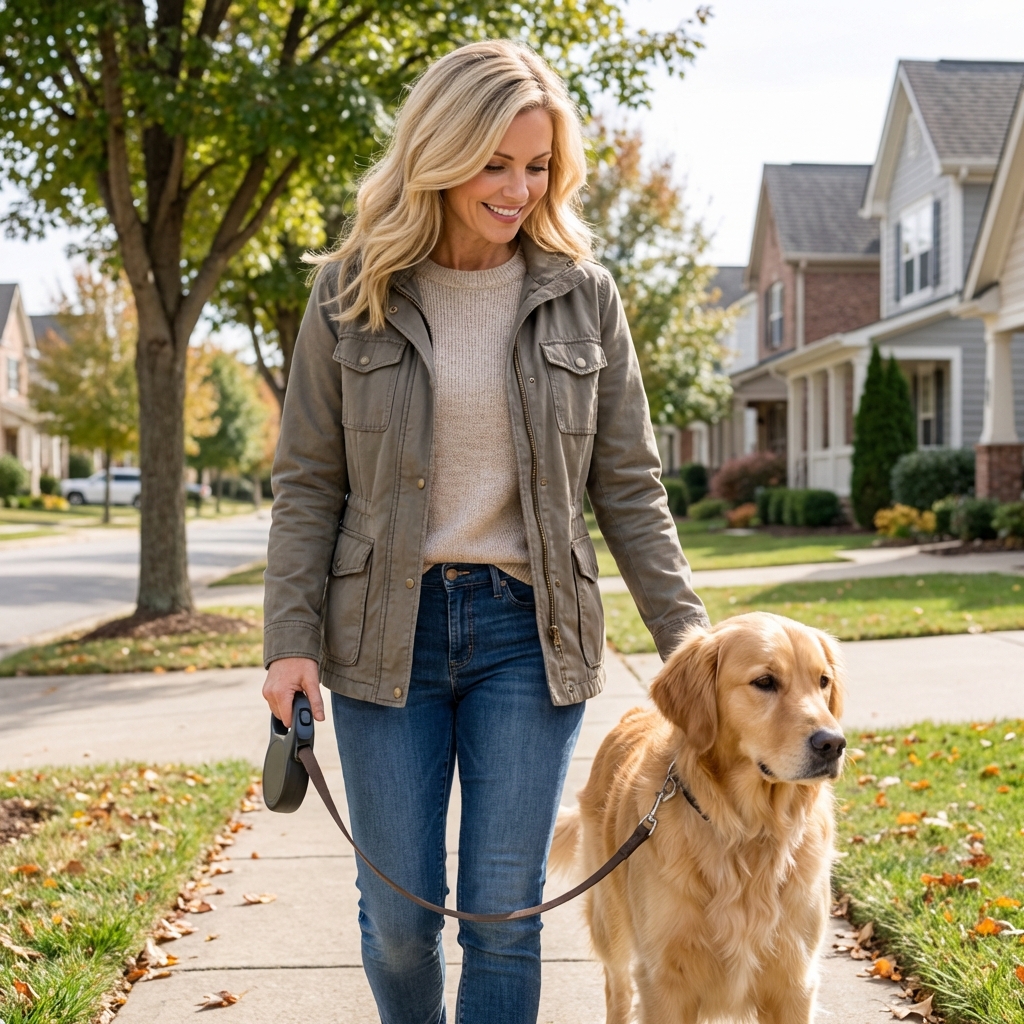
- Keep her on leash any time you are outside, even in a fenced yard. Determined dogs can climb, dig, or slip through gates.
- No dog parks, daycare, or off-leash playdates during heat.
- Supervise bathroom breaks. The fertile stage can sneak up fast.
- Separate from intact males in the home with solid barriers. Doors and crates are safer than baby gates.
- Remember that male dogs can be attracted from surprisingly far away, and some females will try to roam. This is the time to double check gates, latches, and routines.
Manage the mess
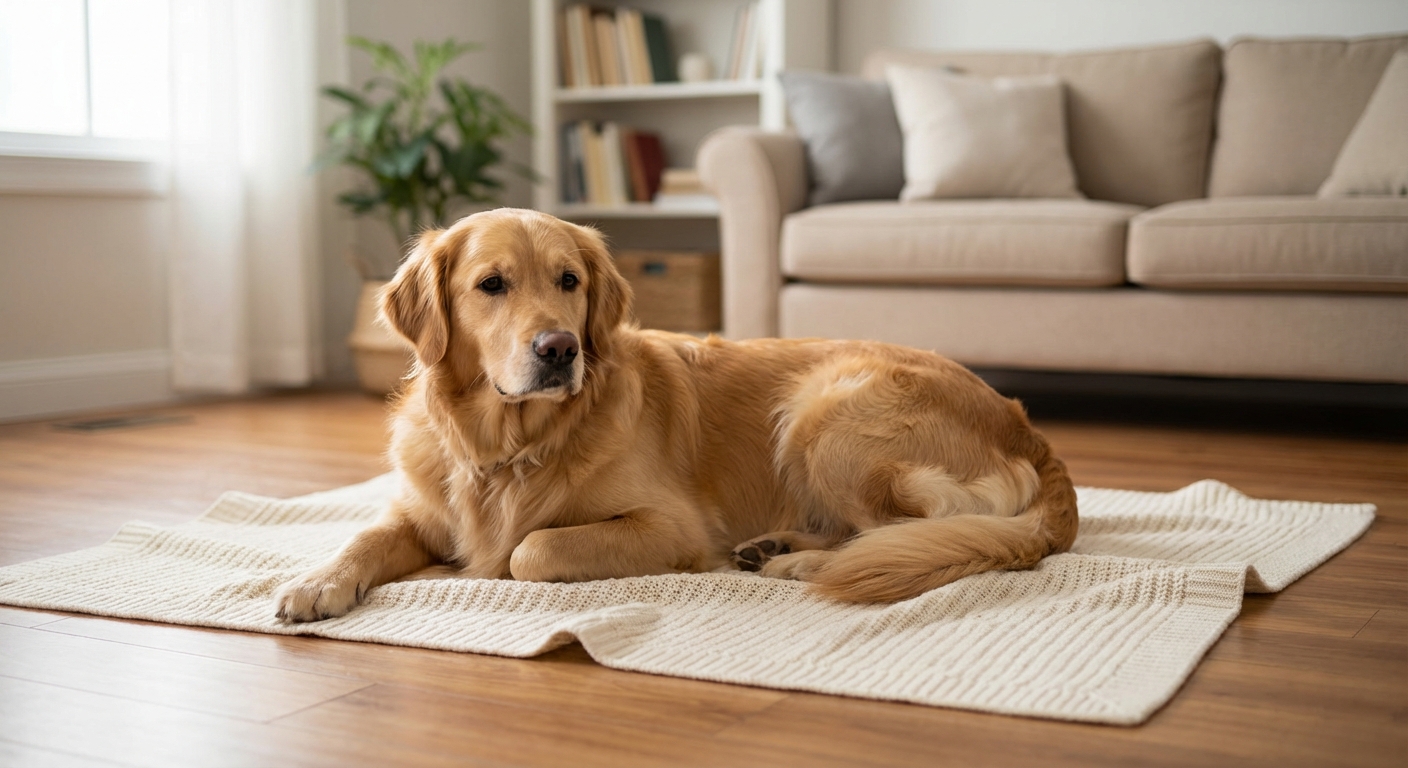
- Use washable bedding or old towels in her favorite resting spots.
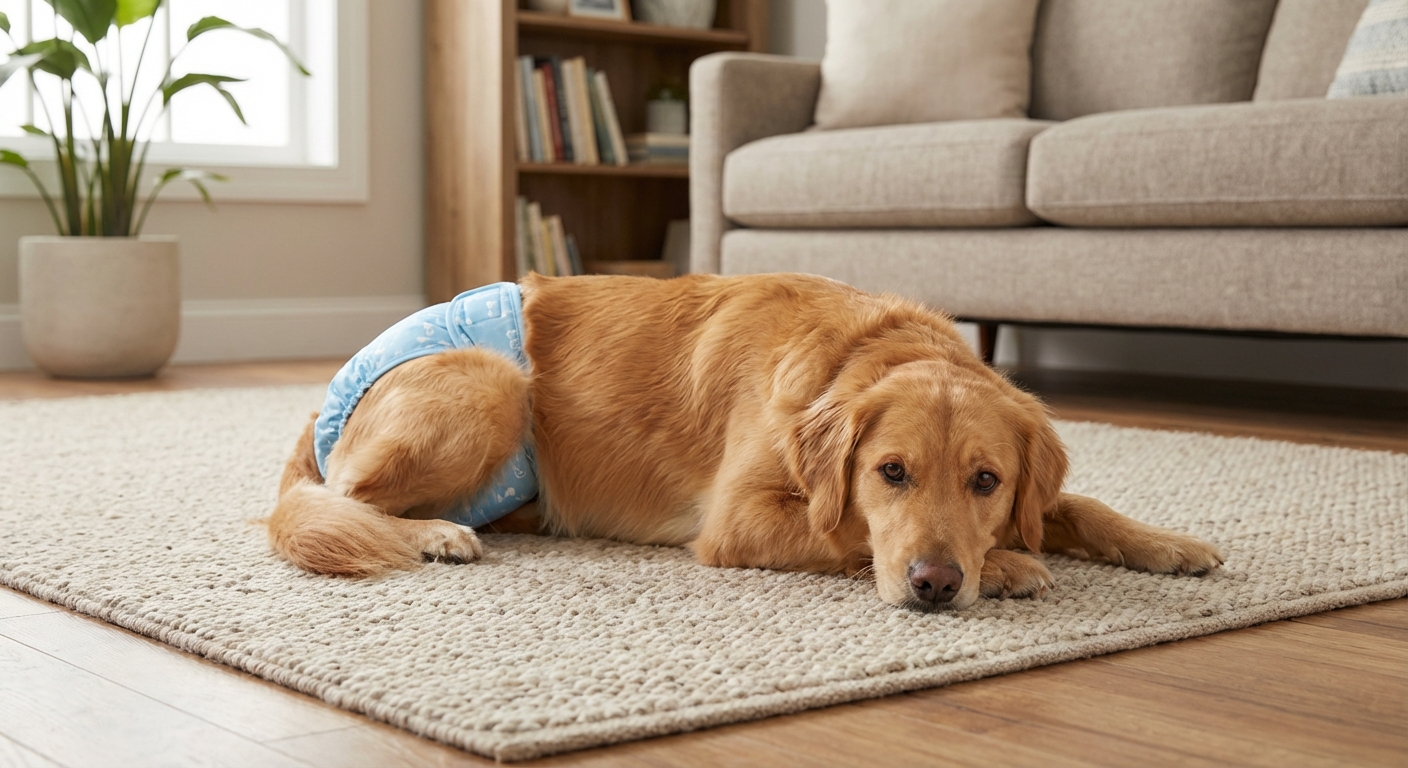
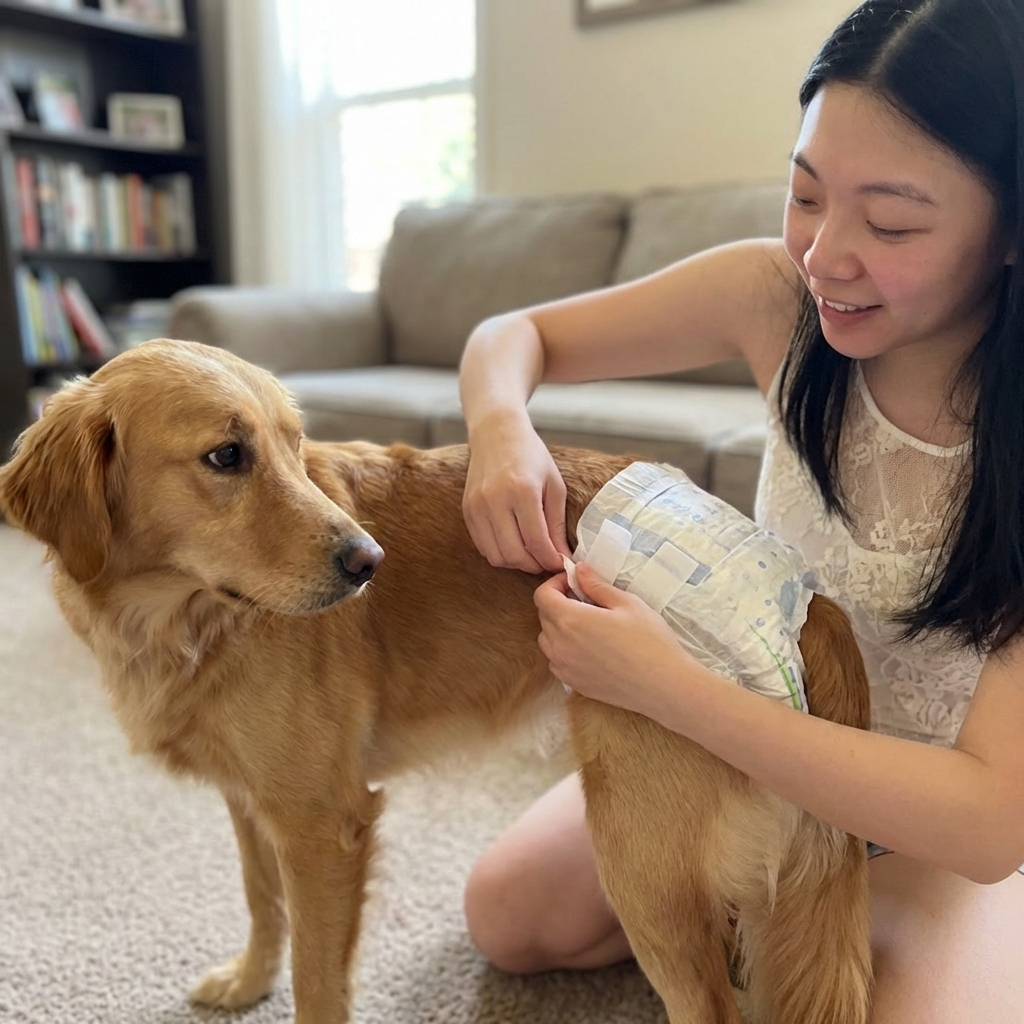
- Consider dog heat diapers or sanitary pants for indoor use. Change them frequently to keep skin healthy.
- Give supervised diaper-free breaks so the skin can dry out and breathe.
- Gently wipe the area with a warm, damp cloth if needed. Avoid harsh soaps or fragrances.
Support comfort and stress
- Stick to a predictable routine.
- Offer enrichment indoors: food puzzles, sniff games, short training sessions.
- Expect appetite changes. Focus on hydration and call your vet if she refuses food for more than a day or seems unwell.
A quick safety note
Please do not give human medications or attempt hormone products to “stop” a heat cycle unless your veterinarian specifically prescribes them. If you are worried about timing, behavior, or bleeding, it is always safer to call and ask.
When to call your veterinarian
Please call your veterinarian promptly if you notice any of the following:
- Heat signs lasting longer than 4 weeks or discharge that does not taper
- Foul odor, pus-like discharge, or discharge that becomes thick and yellow or green
- Lethargy, vomiting, fever, or loss of appetite
- Excessive drinking and urination alongside abnormal discharge
- Swollen belly or signs of pain
One reason we take these symptoms seriously is that intact females can be at risk for pyometra, a potentially life-threatening uterine infection that often occurs after a heat cycle.
Common questions
Can my dog get pregnant if she is still bleeding?
Yes, she can. Bleeding is more common in proestrus, but timing varies and fertility can overlap in real life. If there is any chance she is in heat, treat the entire period as pregnancy risk.
How long does a dog bleed in heat?
Many dogs bleed for 7 to 10 days, but it can be shorter or longer. The discharge often becomes lighter as she moves into estrus.
Will spaying stop heat cycles?
Yes. Spaying typically removes the ovaries (and often the uterus), so heat cycles and the risk of pregnancy stop. Spaying also helps prevent pyometra. Mammary tumor risk reduction appears greatest when a dog is spayed before the first or second heat, though individual risk can vary by breed and health. Talk with your veterinarian about the best timing for your dog.
Simple heat checklist
If you want an easy way to stay organized, here is what I recommend:
- Mark the first day you notice swelling or spotting on your calendar.
- Plan for 2 to 4 weeks of strict supervision and leash-only potty breaks.
- Fertility often peaks around days 9 to 15 from the start of signs, but timing varies. Treat the entire heat as high risk.
- Call your vet if signs go beyond 4 weeks or if she seems sick at any point.
With a little planning, most dogs do just fine in heat. Your goal is simple: prevent accidental breeding, keep her clean and comfortable, and watch for anything that feels off.