Your cat in heat? Learn common signs, how long estrus lasts, and practical at-home steps to reduce stress, prevent escape and pregnancy, and know when to cal...
Article
•
Designer Mixes
How Long Is a Cat in Heat? (And What to Do)

Shari Shidate
Designer Mixes contributor
If your sweet, quiet kitty suddenly turns into a vocal, restless escape artist, you might be dealing with a heat cycle. As a veterinary assistant, I see this a lot, and I promise you are not alone. The good news is that feline “heat” (estrus) is normal, temporary, and manageable once you understand the timeline and your options.
Note: This article is for general education and is not a substitute for veterinary care. If something feels off, trust your gut and call your clinic.
Quick answer: how long does heat last?
Most cats are in heat for about 4 to 10 days. Some cats have shorter heats (around 3 to 7 days), and a smaller number can show heat behaviors for up to 10 to 14 days, especially if they do not ovulate.
Here is the part that surprises many families: unspayed cats can cycle back into heat again fairly quickly. During breeding season, many cats return to heat about every 2 to 3 weeks if they do not become pregnant.
Bottom line: a single heat is usually about a week, but the overall pattern can feel like it goes on forever because the cycles can repeat for months during breeding season.
What “in heat” means in cats
Heat is the time when a female cat is fertile and actively signaling that she is ready to mate. Cats are what veterinarians call seasonally polyestrous, meaning they can have multiple heat cycles during times of year with longer daylight hours (often spring through fall).
Indoor lighting can sometimes keep cycles going more of the year than people expect.
Unlike dogs, most cats do not bleed during heat. What you will typically notice is behavior.
First heat: when does it start?
Many cats have their first heat around 4 to 10 months of age, but it varies a lot with breed, body condition, and daylight exposure. If you have a kitten and you are unsure what you are seeing, your vet can help confirm whether it is heat or something else.
Stages and timeline
Proestrus (often subtle, about 1 to 2 days)
Some cats get extra affectionate or a little restless. Many families miss this stage entirely.
Estrus (the “in heat” stage, often 4 to 10 days)
This is when the classic signs show up. If she does not ovulate, the behaviors may fade and then return again in a couple of weeks.
Interestrus (break between heats, often 1 to 3 weeks)
If she did not become pregnant, she may have a calm period before the next cycle begins.
Anestrus (out of season)
Many cats have fewer or no heat cycles during times of the year with shorter daylight, though indoor lighting can sometimes keep cycles going.
Common signs your cat is in heat
- Loud vocalizing (yowling, howling, persistent meowing)
- Extra affection, rubbing on people, furniture, doorways
- Restlessness and pacing
- Heat posture (lordosis, also called “elevator butt”) with the hind end raised and tail to the side when petted
- Rolling on the floor more than usual
- Trying to escape outdoors or bolting through doors
- Spraying or increased urine marking in some cats
- Decreased appetite (not always, but common)
If she mates, how long does heat last?
If mating occurs, heat behaviors may lessen within about 24 to 48 hours if ovulation is triggered, but there is a lot of individual variation. Some queens continue calling and may mate multiple times during the same heat.
Cats are induced ovulators, which means ovulation is triggered by mating. If ovulation happens and she becomes pregnant, she will not cycle again during pregnancy.
If she ovulates but does not become pregnant, some cats can have a pseudopregnancy (a hormone phase after ovulation without pregnancy). This can create a longer lull before the next heat.
What to do while your cat is in heat
When a cat is in heat, she is not being “bad” or “dramatic.” Her hormones are doing exactly what they are designed to do. Your job is to keep her safe, reduce stress, and prevent an unplanned litter.
1) Keep her strictly indoors
- Check window screens and sliding doors for gaps.
- Use a double barrier when possible (for example, keep her in a bedroom before opening exterior doors).
- Tell guests and kids ahead of time that the cat may try to dash out.
- Do not let her outside “just once.” It only takes a moment for mating to happen.
2) Reduce triggers and help her feel secure
- Close blinds at ground-level windows if neighborhood cats are visible.
- Provide a quiet, dim room with a comfy bed and hiding spots.
- Try structured play sessions (wand toy, short “hunt” games) to burn off nervous energy.
3) Add comfort tools (safe options)
- Pheromone diffuser (like feline facial pheromones) can take the edge off for some cats.
- Warmth (a warm blanket or covered heating pad designed for pets) can be soothing.
- Extra litter boxes and more frequent cleaning can help if spraying is an issue.
4) Do not punish heat behaviors
Yelling, spraying with water, or scolding can increase anxiety and make the situation feel worse for everyone. Focus on prevention, enrichment, and management.
5) Skip risky “fixes”
- Do not use leftover human medications or online hormone products to “stop” a heat. Hormonal suppression can carry serious risks and should only be used when prescribed and monitored by a veterinarian for a specific medical reason.
- Do not breed “to calm her down.” Pregnancy and birth carry real risks, and mating does not reliably solve the long-term cycle.
6) If you have an intact male cat
Expect household stress. Intact males may yowl, spray, and try to reach her. Keep them separated and secure, and talk to your vet about neutering to prevent ongoing frustration and marking.
When to call a vet
Heat itself is not an emergency, but you should contact your veterinarian if you notice:
- Vaginal discharge, especially if it is thick, yellow, green, bloody, or foul-smelling
- Lethargy or acting truly “sick,” not just restless
- Vomiting, or not eating at all for more than 24 hours
- Excessive drinking or urination
- A swollen abdomen or signs of pain
One reason we take these signs seriously is that intact female cats can be at risk for uterine infection (pyometra), which can become life-threatening.
The long-term solution: spaying
If you are not planning to responsibly breed your cat, spaying is the kindest, most practical option. It prevents heat cycles, helps prevent unplanned litters, and reduces health risks later in life.
In general, spaying:
- Stops repeated heats and the stress that goes with them
- Prevents pregnancy
- Reduces the risk of uterine infection (pyometra)
- Lowers the risk of mammary tumors when done early
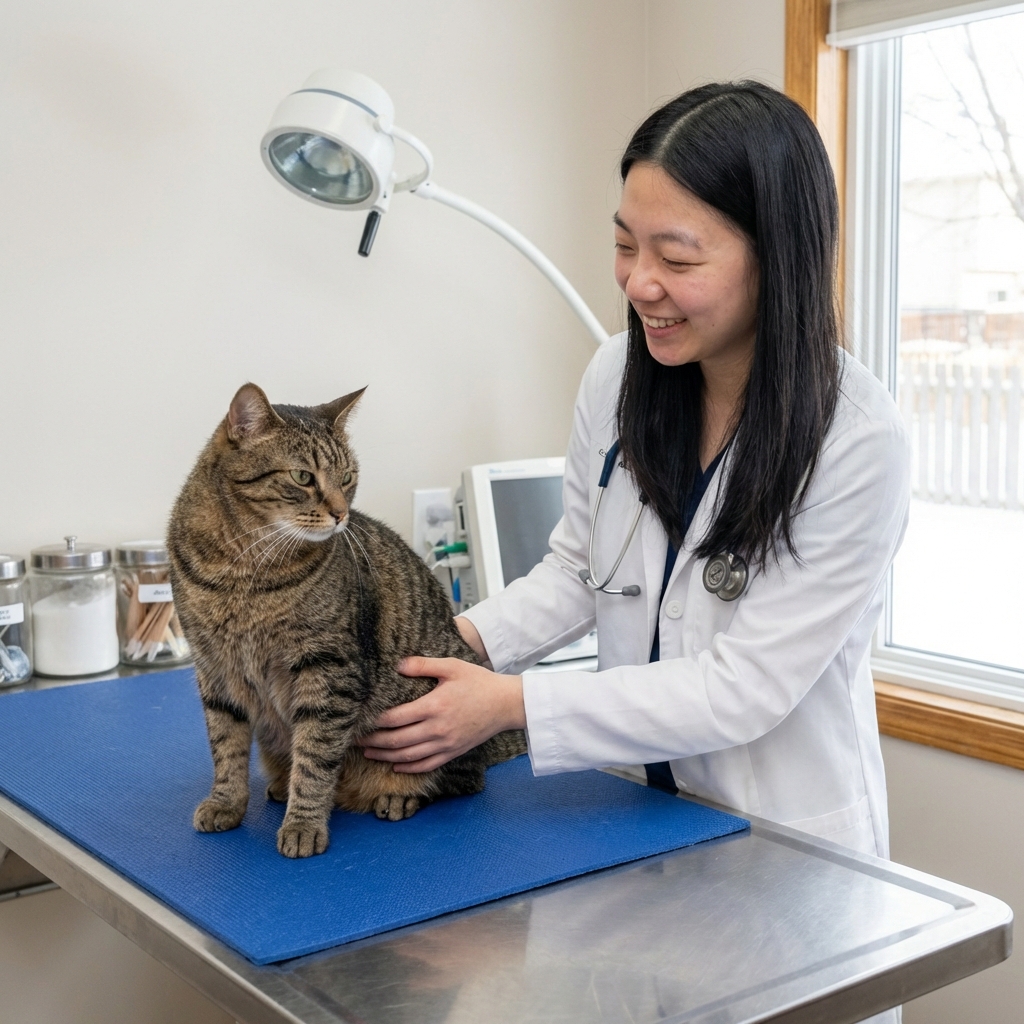
If your cat is currently in heat, ask your vet about timing. Many clinics can still perform a spay during heat, but blood flow to the reproductive tract can be higher, which may affect scheduling, cost, or your veterinarian’s recommendation.
FAQs
Do cats go into heat after being spayed?
A fully spayed cat should not go into heat. If a spayed cat shows heat-like behaviors, it is worth a veterinary visit. Rarely, a small amount of ovarian tissue can remain and continue to produce hormones.
Can my indoor cat still go into heat?
Yes. Indoor cats can still cycle, and artificial lighting can sometimes influence the pattern.
How soon can a cat get pregnant?
Cats can become pregnant very quickly once they are sexually mature, and they can mate with multiple males during one heat cycle. If there is any chance of exposure to an intact male, treat it as a serious pregnancy risk.
Takeaway
Most cats are in heat for 4 to 10 days, and some cycle longer. If they do not become pregnant, heats can repeat about every 2 to 3 weeks and can continue for months during breeding season. While your cat is in heat, focus on safety (keep her indoors), comfort (quiet space, play, pheromones), and prevention (schedule a spay if she is not intended for breeding). If anything seems unusual beyond typical heat behaviors, call your veterinarian for guidance.