

A step-by-step puppy crate training guide: choosing the right crate, building positive associations, first-week routines, nighttime potty breaks, and solutio...
Article
•
Designer Mixes
How Long Does It Take to Crate Train a Puppy?

Shari Shidate
Designer Mixes contributor
As a veterinary assistant here in Frisco, Texas, I get asked this all the time: How long does crate training take? The honest, evidence-based answer is: it depends on your puppy’s age, temperament, routine, and your consistency. The encouraging news is that many families see meaningful progress in days, solid improvement in a few weeks, and reliable habits over the next couple of months.
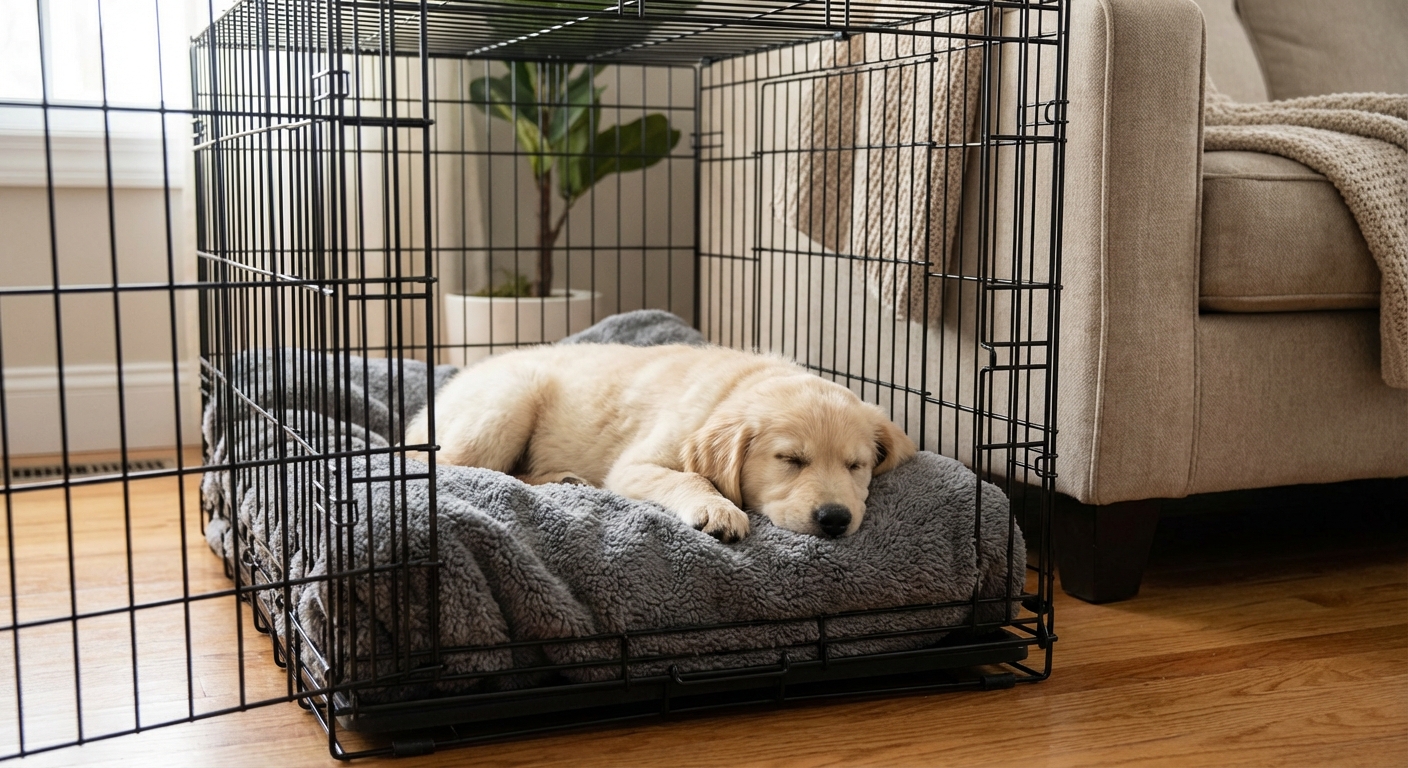
Let’s break down what “crate trained” really means, realistic timelines, and the most common problems with simple solutions that actually work.
Quick safety note: Remove collars, harnesses, and dangling ID tags before crating. Tags and straps can get caught on wire bars and create a serious strangulation risk.
Typical crate training timeline
Crate training is not one single milestone. It is a set of skills your puppy learns in layers: comfort, calmness, short alone time, and overnight success.
- Days 1 to 3: Many puppies will go in the crate for treats and short naps with the door open or briefly closed.
- Week 1 to 2: Many puppies can settle in the crate for short periods (10 to 60 minutes) when you are nearby, especially after potty and play.
- Weeks 3 to 8: Many puppies tolerate longer crated periods and show fewer vocal protests. Accidents often decrease with a good schedule, but temporary setbacks (teething, tummy upset, stress, diet changes) can happen.
- 2 to 4 months: Many pups become reliably comfortable with the crate as a routine part of life, including overnight, assuming their physical needs are met and training stays positive.
Important: Some pups adjust in a week. Others need 6 to 12 weeks to feel truly relaxed. If your puppy has a fearful temperament or a history of being confined too harshly, it can take longer, and that is not your fault.
What crate trained means
People often picture a silent puppy in a crate for hours. A better goal is a puppy who:
- Walks into the crate willingly
- Settles with a chew or naps calmly
- Can stay crated for age-appropriate durations without panicking
- Stays clean because the potty schedule is realistic
- Views the crate as a safe, predictable place
This mindset matters because it keeps training humane and helps prevent anxiety around confinement.
Scope note: I can share general guidance that helps most families, but if you’re seeing panic or intense separation distress, it is worth looping in your veterinarian and a credentialed trainer early.
Potty limits in a crate
Potty needs are the number one reason crate training feels “slow.” A common guideline for bladder holding capacity is:
- Age in months + 1 = hours (a rough maximum in ideal conditions, not a recommended everyday goal)
So a 2-month-old puppy may only manage about 3 hours at best, and many need to go sooner. Overnight is often easier because sleep reduces the urge to urinate, but young puppies still need a nighttime potty trip.
Guardrails: Smaller breeds, very young pups, recent big water intake, illness, diarrhea, and individual variation can reduce capacity. If a puppy is regularly left longer than their body can handle, they will have accidents, learn to dislike the crate, and training will drag out.
Water tip: Offer water regularly throughout the day. For longer crate periods, some families do best offering water, then picking the bowl up shortly before crating to reduce accidents. Never restrict water excessively, and if you have questions (especially for tiny breeds or medical conditions), ask your veterinarian.
Crate setup basics
Right size
Your puppy should be able to stand up, turn around, and lie down comfortably, but not have enough space to potty in one corner and sleep in another. If you bought an adult-sized crate, use a divider panel and make sure there are no gaps your puppy can get stuck in.
Good location
For the first couple of weeks, place the crate where your puppy can feel part of the family. At night, many pups do best with the crate in your bedroom so you can hear them wake up and take them out before an accident.
Inviting, not isolating
- Soft bedding for comfort (unless your puppy shreds and eats it, then go simple)
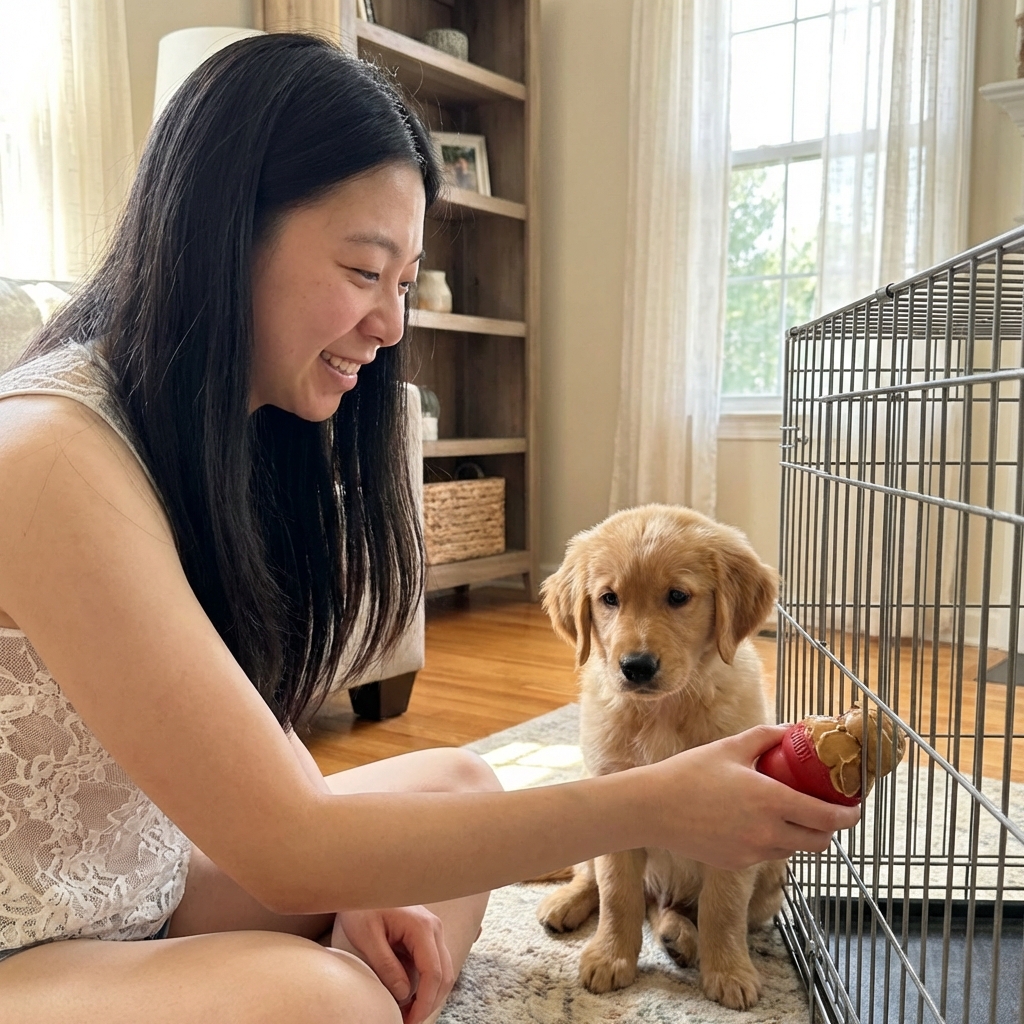
- A safe chew or food-stuffed toy
- Optional crate cover if it helps your pup relax (make sure airflow is good)
Toy safety: Choose size-appropriate chews, supervise new items at first, and toss anything that is cracked, sharp, or shedding pieces to reduce choking or obstruction risks.
Step-by-step plan
Step 1: Crate equals treats
Toss a treat in, let your puppy walk in, and praise calmly. Repeat several times a day. Keep it light and upbeat. Do not shove your puppy in.
Step 2: Short door closes
Once your puppy is happily entering, close the door for 3 to 10 seconds while they chew a treat, then open it before they worry. Gradually build time.
Step 3: Reward calm
Crate time should be boring and safe. Reward lying down or relaxing. Avoid big emotional greetings when you open the door.
Step 4: Use naps
Puppies sleep a lot. If you catch a sleepy moment, gently guide them into a positive crate nap with a chew. This speeds up comfort faster than only using the crate for “alone time.”
Step 5: Build distance and time
Once your puppy settles with you nearby, start stepping away for 10 seconds, then 30 seconds, then a minute. Return calmly. Keep sessions short and successful.
Common problems and fixes
“My puppy cries when I close the door”
Some vocalizing is normal. The key is to prevent panic and avoid teaching that screaming opens the door.
- Check the basics first: potty, comfortable temperature, not too much pent-up energy.
- Use a chew: licking and chewing are calming behaviors.
- Shorten sessions: build tolerance in tiny steps so your puppy stays under their stress threshold.
- Reward quiet: wait for a brief pause in crying, then calmly open the door or drop a treat.
If the crying escalates to frantic behavior (drooling, biting bars, throwing their body), pause and reassess. That can be a sign you are moving too fast.
“My puppy has accidents in the crate”
- Re-check crate size: too big is a common cause.
- Tighten the schedule: more frequent potty breaks, especially after meals, play, and naps.
- Clean with an enzymatic cleaner: regular cleaners may not remove odor cues that tell a puppy “this is a bathroom.”
- Talk to your vet: if accidents are frequent despite a good plan, rule out urinary tract issues, parasites, or GI problems.
“Night is fine, daytime is a mess”
This is incredibly common. Nighttime is easier because your puppy is tired and the environment is quiet. Daytime training needs more intentional practice.
- Do 3 to 5 mini sessions daily (1 to 5 minutes each)
- Crate after a potty break and short play session
- Use a high-value chew reserved only for crate time
“The whining is worse at night”
Night whining usually falls into two buckets: potty or protest. For the first couple of weeks, assume potty first.
- Keep nighttime potty trips brief, boring, and quiet (no playtime)
- Take your puppy out, wait a few minutes, then right back to the crate
- If your puppy does not potty, return them to the crate calmly and try again later
“My puppy is fine until I leave”
This can be early separation-related stress rather than crate dislike. Help your puppy learn that departures are safe and predictable using graduated departures.
- Practice “fake leaves” many times a day (pick up keys, open door, return)
- Keep exits and returns calm
- Consider white noise or calm background sound
If your puppy shows intense distress only when you leave, ask your veterinarian about a behavior referral early. It is easier to address sooner than later.
Signs of progress
Look for small wins. They add up fast.
- Your puppy enters the crate more quickly
- Vocalizing decreases in duration and intensity
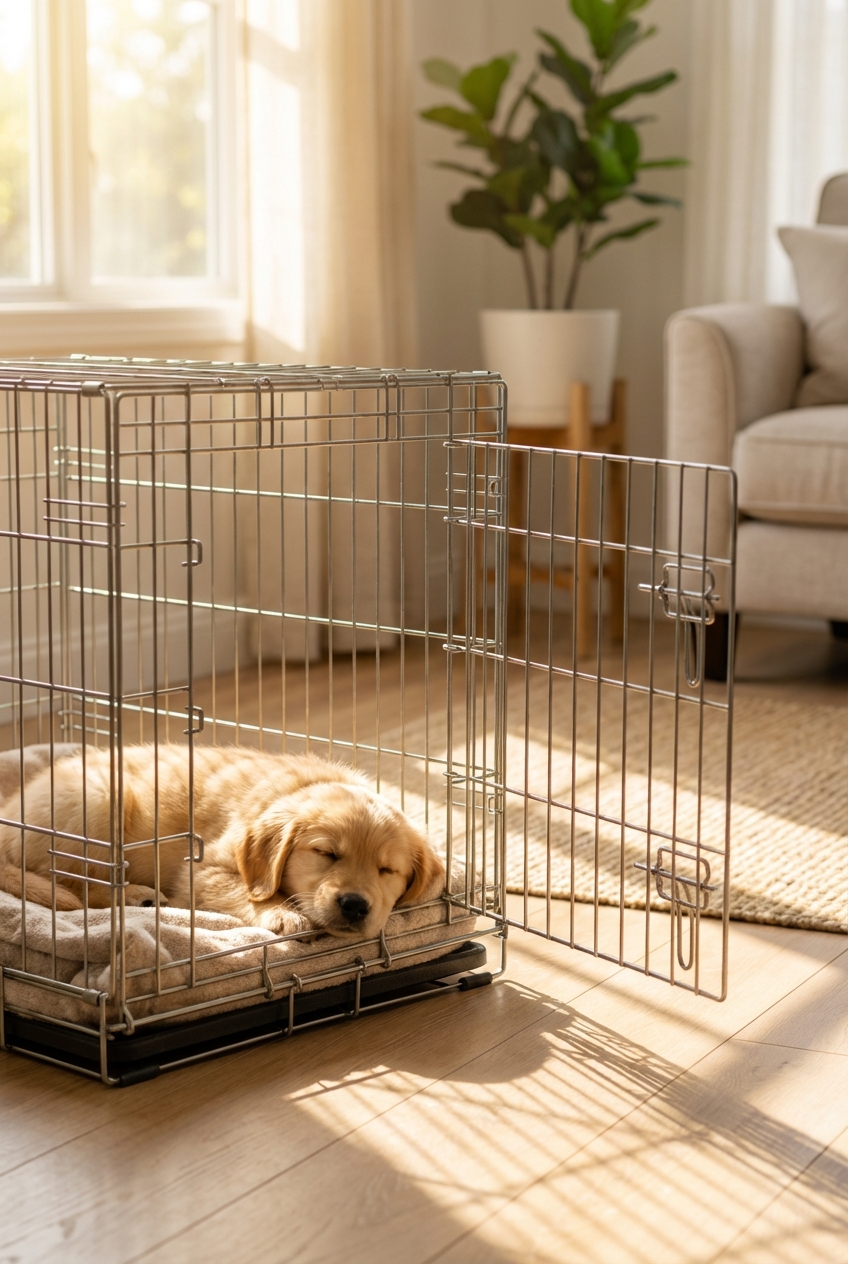
- Your puppy chooses to nap in the crate with the door open
- Accidents reduce with a consistent potty routine
- Your puppy can settle with a chew rather than scanning for escape
Sample 2-week routine
Puppies thrive on predictability. Here is a simple rhythm you can adjust to your household.
- Morning: potty immediately, breakfast, potty again, short play, crate nap
- Midday: potty, training or play, potty, crate time with chew
- Afternoon: potty, supervised free time, potty, crate nap
- Evening: dinner, potty, calm play, potty, short crate session
- Night: final potty right before bed, overnight crate, one nighttime potty trip if needed
Most crate struggles improve when the puppy’s day includes enough sleep. Overtired puppies get wound up and protest more.
Also important: A crate is a management and safety tool, not a lifestyle. Avoid crating for long stretches day after day without adequate exercise, enrichment, and social time.
Do and don’t
Do
- Keep crate training positive and reward-based
- Use the crate for naps and calm downtime
- Take your puppy out proactively before they get desperate
- Practice short sessions daily
- Remove collars and harnesses before crating
Don’t
- Use the crate as punishment
- Let your puppy “cry it out” into full panic
- Leave a young puppy crated longer than their body can handle
- Rush the process because someone else’s puppy learned faster
When to get help
Please reach out to your veterinarian or a credentialed trainer if you notice:
- Injury to teeth or gums from biting crate bars
- Excess drooling, vomiting, or frantic escape behavior
- Accidents that persist despite appropriate breaks and crate size
- Daily soiling in the crate despite a clean bill of health and an appropriate schedule (this can suggest a loss of normal cleanliness instinct and needs a specific plan)
- Extreme distress specifically tied to being alone
There is no prize for toughing it out. Getting help early can prevent long-term anxiety.
Bottom line
Many puppies show noticeable crate progress within 1 to 2 weeks, become fairly reliable within 3 to 8 weeks, and feel fully comfortable as part of a routine within 2 to 4 months. These ranges are common, not guaranteed. Your job is not to force it fast. Your job is to make the crate feel safe, keep potty expectations realistic, and practice in small, successful steps.
If you stay consistent, your puppy will get there. And once they do, you will have a safer home, an easier potty training process, and a pup who can truly relax.