Wondering how long a cat stays in heat? Learn the typical 3–7 day estrus, cycle frequency, common signs like yowling and escape attempts, home comfort tips...
Article
•
Designer Mixes
How Long Does a Cat Stay in Heat?

Shari Shidate
Designer Mixes contributor
If you have a female cat who is not spayed, her first heat cycle can feel surprising, noisy, and honestly a little stressful for everyone in the house. I am Shari Shidate, a veterinary assistant in Frisco, Texas, and I want you to know this up front: a cat in heat is not being “bad” or “dramatic.” She is responding to hormones that are doing exactly what nature designed them to do.
The good news is that once you understand how long cats stay in heat, what is normal, and what is not, you can support her safely and make a plan that prevents repeat cycles in the future.
Quick answer: how long does a cat stay in heat?
Most cats stay in heat for about 4 to 7 days. Some heats are shorter, around 2 to 3 days. Others last up to about 10 days (occasionally longer), especially if she does not mate. Every cat is a little different.
What throws many people off is that cats are seasonally polyestrous, meaning they can have multiple heat cycles during the breeding season. In practical terms, that often means cycling is more common from spring through early fall (timing varies with daylight and indoor lighting), and it can feel almost back-to-back.
- Typical heat length: 4 to 7 days
- Possible range: 2 days to about 10 days (occasionally longer)
- If she does not get pregnant: she may cycle again in as little as 1 to 3 weeks
What “heat” means in cats
Heat is also called estrus. It is the stage of a cat’s reproductive cycle when she is fertile and actively seeking to mate. Cats are usually induced ovulators, which means ovulation is triggered by mating. Without mating, many cats do not ovulate and will return to heat again.
Heat cycle timeline
Proestrus (about 1 to 2 days)
This is the lead-in phase. Many owners barely notice it. Your cat may be a little more affectionate or restless, but you usually will not see the full “heat behaviors” yet.
Estrus (about 4 to 7 days)
This is the main heat phase.
Interestrus (about 1 to 3 weeks)
If she did not mate, she may have a break, then cycle back into heat again.
Anestrus (varies)
This is a quiet period when cycling pauses. In many regions, this happens more in winter. Indoor cats who are exposed to lots of artificial light can cycle for more of the year.
Signs your cat is in heat
Most cats in heat do not bleed like dogs. Instead, you will notice behavior changes. Common signs include:
- Loud vocalizing that can sound like crying, yowling, or calling
- Extra affection, rubbing on people, furniture, and doorways
- Restlessness and pacing
- “Heat posture”: chest down, rear end raised, tail moved to the side
- Rolling on the floor
- Trying to escape outdoors or dashing through doors
- Spraying urine in some cats
- Decreased appetite in some cats
These behaviors can look intense, but they are typical during estrus.
Why it can feel nonstop
Sometimes it truly feels like it never ends. Here are the most common reasons:
- Repeated cycling: heat for several days, then a short break, then heat again.
- Indoor lighting: longer light exposure can keep cycling going.
- Young cats: early cycles can be a little irregular.
- Household stress: stress does not cause heat, but it can make behaviors feel more intense.
If your cat has been showing heat behaviors continuously for more than about 2 weeks, or if you are unsure whether it is heat versus a medical issue, it is time to call your veterinarian. Ongoing signs can also be seen with continuous estrus, hormone-related issues, or (more rarely) ovarian tissue remaining after a spay.
How to help during heat
You cannot “discipline” a cat out of heat behaviors. What helps is reducing triggers, keeping her safe, and making her more comfortable.
1) Keep her strictly indoors
This is the biggest safety step. Cats in heat will work hard to escape. Check window screens, watch doors, and remind kids and guests to be careful. Keep intact male cats completely away. Even a brief escape can lead to mating and pregnancy.
2) Add comfort and enrichment
- Use interactive play (wand toys, chase toys) to burn nervous energy.
- Offer a cozy, quiet room with a litter box, water, and bedding.
- Try cat-safe pheromone diffusers if your veterinarian recommends them.
3) Use soothing touch, but follow her lead
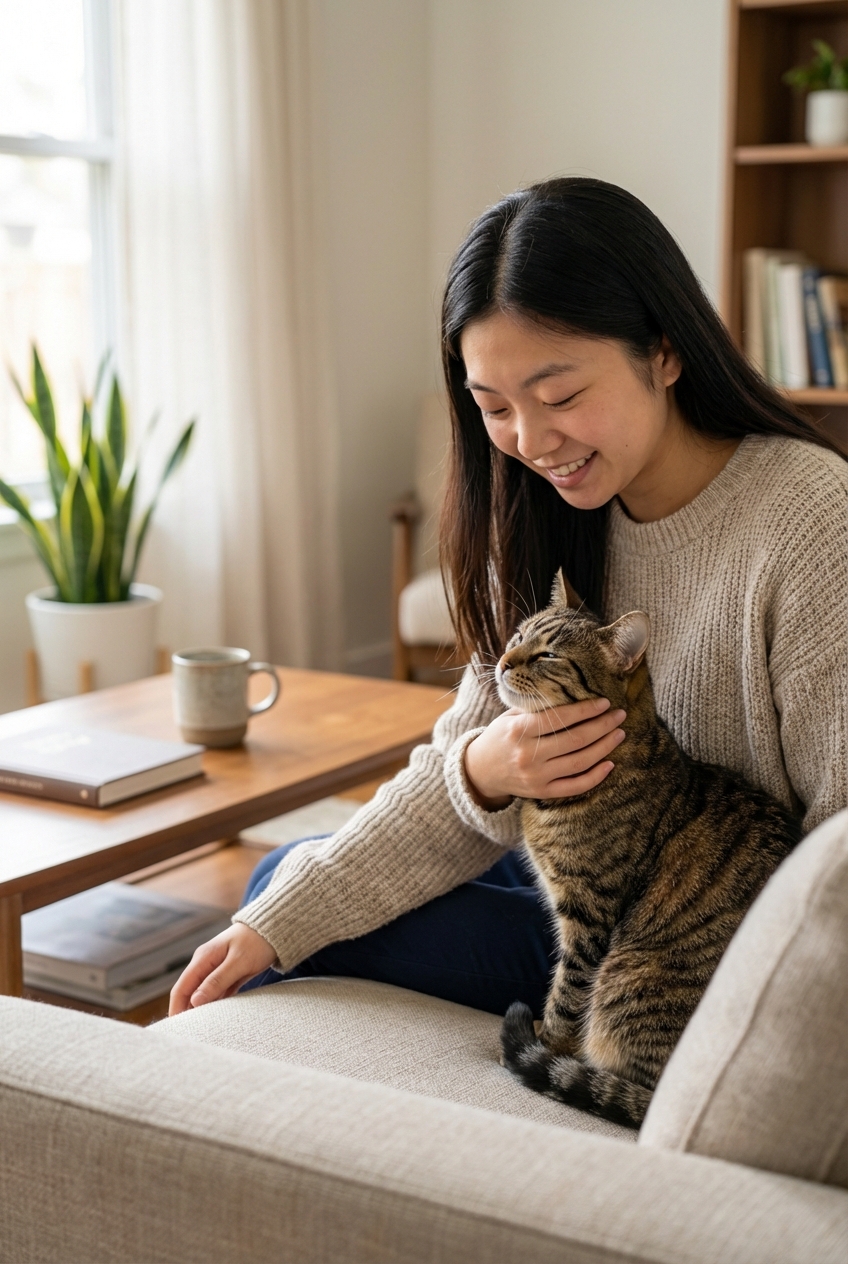
Many cats want more petting. Gentle cheek scratches and calm companionship can help. If she becomes overstimulated, give her space.
4) Avoid human meds and hormonal suppressants
Please avoid sedatives, human medications, or over-the-counter supplements unless prescribed by a veterinarian. Also avoid hormonal heat suppressants (progestins) unless specifically directed by a veterinarian, since they can increase the risk of uterine disease and mammary tumors.
5) Watch the litter box
Heat itself should not cause painful urination. If you notice straining, frequent small trips, blood, accidents outside the box, or crying in the litter box, contact your veterinarian promptly. In female cats, these signs are more consistent with a urinary tract infection or inflammation, and they can still become urgent.
Can a cat get pregnant in her first heat?
Yes. Cats can become pregnant as soon as they reach sexual maturity. Many cats have their first heat around 5 to 9 months, but some can cycle as early as about 4 months. Timing varies by breed, body condition, season, and whether they are indoor cats exposed to longer hours of light.
If there is any chance she has been with an intact male, assume pregnancy is possible and call your veterinarian to discuss next steps.
What about false pregnancy?
If a cat ovulates but does not become pregnant, some can develop a short-term pseudopregnancy (false pregnancy). This can slightly change timing between cycles and may come with nesting behavior or mild mammary development. If you notice milk, significant mammary swelling, or your cat seems unwell, call your veterinarian.
When to call your veterinarian
Heat is normal, but these signs are not and deserve a veterinary call:
- Vaginal discharge that is pus-like, foul-smelling, or bloody
- Lethargy, fever, vomiting, or refusing food for more than a day
- Swollen, painful abdomen
- Painful urination signs (straining, crying, frequent attempts, blood in urine)
- Heat behaviors lasting longer than 2 weeks without a break
One of the conditions we worry about in unspayed females is pyometra, a serious uterine infection. It is treatable, but it is time-sensitive.
The long-term solution: spaying
If you are not planning to responsibly breed your cat, spaying is the most effective way to stop heat cycles and prevent unplanned litters. It also lowers the risk of serious reproductive diseases.
- Stops heat cycles and the stress behaviors that come with them
- Prevents pregnancy
- Reduces risk of pyometra and greatly reduces mammary cancer risk when done early
If your cat is currently in heat, many clinics can still spay, but some prefer to wait until the cycle ends because increased blood flow can make surgery a bit more complex. Your veterinarian can advise what is best for your specific cat.
FAQ
Do cats bleed when they are in heat?
Most cats do not. If you see blood, call your veterinarian to rule out urinary or reproductive tract problems.
How often do cats go into heat?
During breeding season, many cats cycle every 2 to 3 weeks if they do not become pregnant.
Can spaying calm my cat down right away?
After spaying, heat behaviors should stop, but hormones can take a little time to settle. Most owners notice improvement quickly.
Bottom line
Most cats stay in heat about 4 to 7 days, but cycles can repeat often, especially during months with longer daylight. If you are in the middle of it right now, focus on safety, comfort, and keeping her indoors. Then, talk with your veterinarian about spaying so you and your cat can move on from the heat cycle rollercoaster for good.