
Turn teething chaos into calm with vet-informed tips: safe chew choices, what to avoid, bite inhibition training, mouth handling, daily routines, and when to...
Article
•
Designer Mixes
How Long Do Puppies Teethe?

Shari Shidate
Designer Mixes contributor
Puppy teething can feel like it lasts forever, especially when your sweet little fluff turns into a tiny, determined chewing machine. The good news is that teething follows a fairly predictable timeline. Once you know what is normal, you can support your puppy’s comfort and protect your hands, furniture, and sanity.
As a veterinary assistant in Frisco, Texas, I see a lot of worried pet parents who are surprised by the drooling, the nibbling, and the sudden “land shark” phase. Let’s walk through how long puppies teethe, what to expect stage by stage, and when it’s time to call your veterinarian.

Quick answer: how long does puppy teething last?
Puppy teething happens in two main waves:
- Baby teeth come in at roughly 3 to 6 weeks.
- The more intense chewing phase usually happens when adult teeth replace baby teeth, around 3 to 6 months.
Most puppies have their full set of adult teeth by about 6 months, though some finish closer to 7 months. In small and toy breeds, it is often less about “teething longer” and more about retained baby teeth that do not fall out on schedule.
So yes, teething is a “season,” not a weekend.
Puppy teeth timeline
Birth to 2 weeks: no teeth yet
Puppies are born toothless. At this stage, chewing behavior is not about teething.
3 to 6 weeks: baby teeth erupt
Puppies get 28 baby teeth. These little needles include incisors, canines, and premolars. (Puppies do not have baby molars.)
You might notice:
- Mild chewing
- Nursing changes (for those with the litter)
- Occasional fussiness
8 to 12 weeks: baby teeth are “in,” chewing ramps up
This is often when puppies go home to their new families, so it can feel like the chewing came out of nowhere. Your puppy’s mouth is learning, exploring, and self-soothing.
You might notice:
- Mouthing hands and sleeves
- Chewing baseboards, table legs, remote controls
- More interest in toys
3 to 4 months: adult teeth start pushing out baby teeth
This is the classic teething stage. Adult teeth begin erupting and baby teeth loosen and fall out. Many puppies swallow baby teeth, so you may never see them.
You might notice:
- Increased chewing and gnawing
- Drooling
- Occasional tiny spots of blood on a toy
- Gum sensitivity
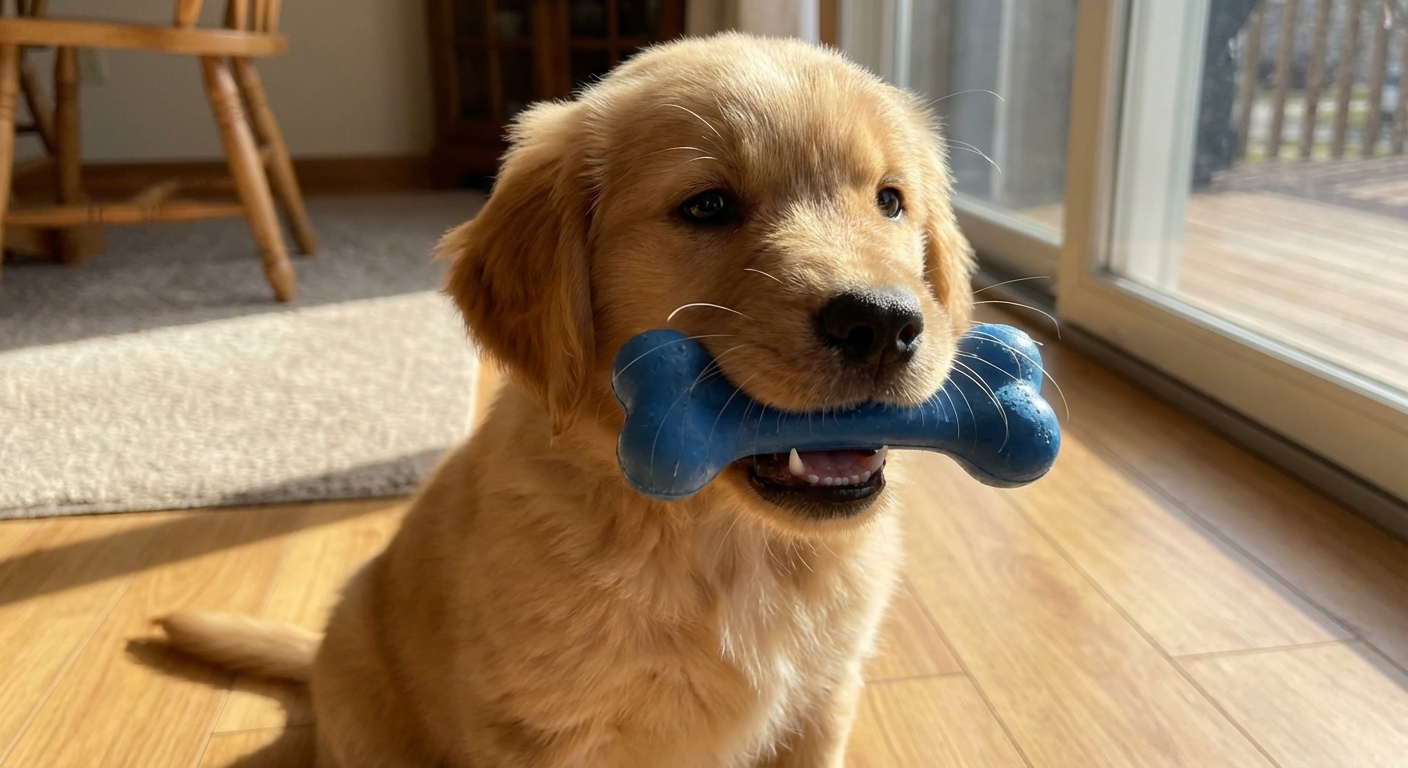
4 to 6 months: adult teeth continue erupting
Most puppies are actively losing baby teeth and growing adult teeth throughout this window. Chewing is often at its peak.
Adult dogs have 42 teeth, including molars.
6 to 7 months: teething wraps up
By about 6 months, most puppies have their adult teeth and the intense teething discomfort settles down. Some pups still chew because it has become a habit or because they are bored, under-exercised, or anxious. That is a training and enrichment issue more than a dental one.
Normal teething signs
Teething can look dramatic, but many signs are completely normal:
- Chewing everything (more than usual)
- Mouthing and nipping during play
- Drooling
- Mild gum redness
- Slightly decreased appetite for a day or two (especially for hard kibble)
- Finding tiny tooth “shells” or seeing a missing tooth
If you see a small smear of blood on a toy once in a while, that can be normal. Heavy bleeding is not.
How to help a teething puppy
1) Offer the right chew texture
Aim for chews that are firm enough to soothe gums but not so hard they risk cracking teeth.
- Great options: rubber chew toys (KONG-type), flexible nylon chews designed for puppies, braided rope toys (supervised), food puzzles
- Use caution: antlers, hooves, very hard bones, and anything that you cannot indent with your fingernail
Quick safety note: if your puppy can bite chunks off, it is also a choking or intestinal blockage risk. Size up, supervise, and toss chews that start shredding.
2) Use cold to reduce gum soreness
Cold can be a big relief for inflamed gums.
- Chill a rubber toy in the fridge (skip the freezer if it becomes rock hard)
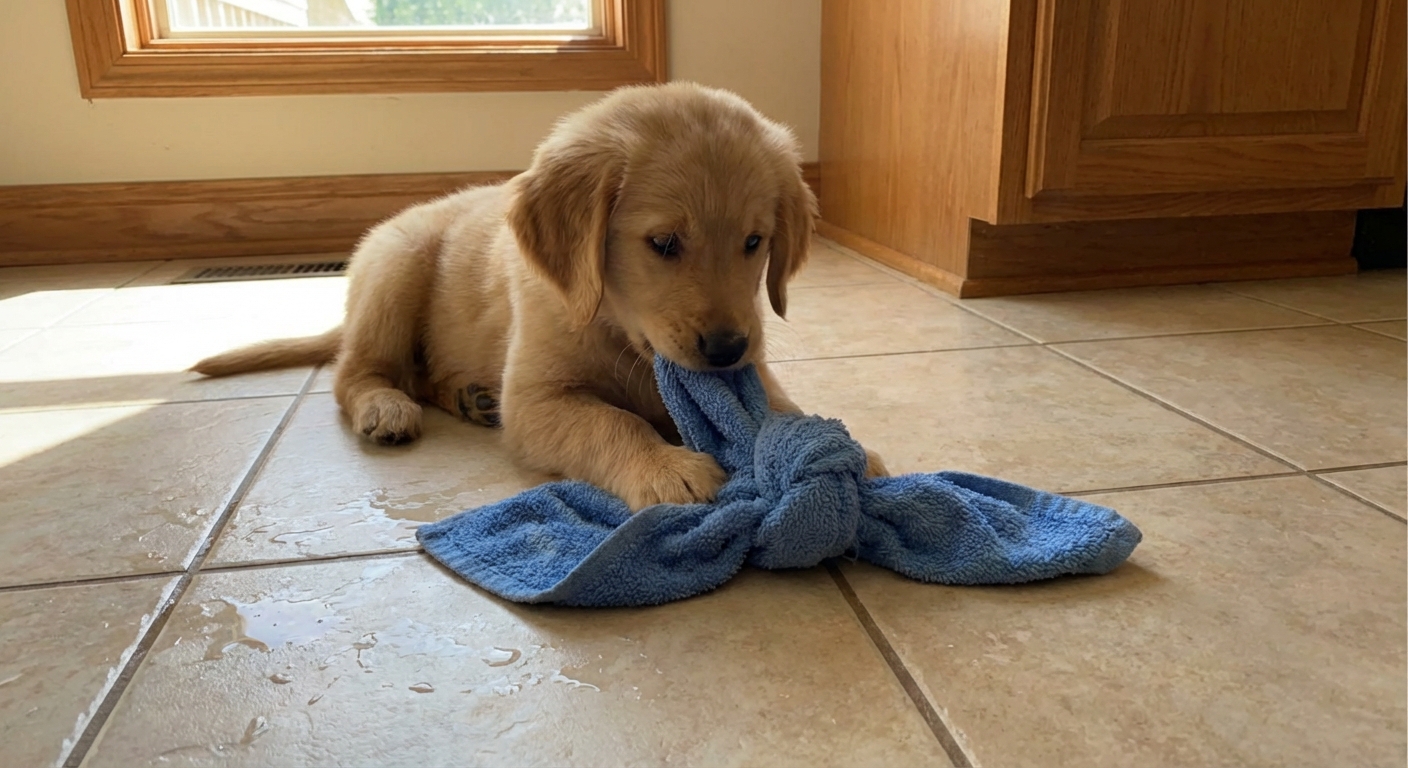
- Offer a cold, damp washcloth tied in a knot for supervised chewing
- Freeze puppy-safe goodies inside a rubber toy for a longer-lasting chew session
Puppy-safe ideas: a little canned puppy food, plain yogurt in small amounts (if your puppy tolerates dairy), or kibble soaked in water and then frozen in a toy. Always supervise frozen items and remove the toy once it gets small enough to become a choking hazard.
3) Redirect biting, do not punish
Puppies are not being “bad,” they are uncomfortable and learning boundaries. When teeth hit skin:
- Pause play immediately
- Offer a chew toy
- Praise when they choose the toy
- Keep sessions short and calm, especially when your puppy is overtired
4) Protect your home with smart management
- Use baby gates and a puppy-proofed area
- Crate train positively (safe rest helps reduce biting)
- Pick up shoes, kids’ toys, and anything tempting at puppy level
5) Build dental habits early
Teething is also a great time to start gentle mouth handling so brushing is not a battle later.
- Briefly touch lips and gums, then reward
- Introduce a puppy toothbrush or finger brush slowly
- Use a dog-safe toothpaste only (never human toothpaste)
6) Support overall health
Teething is easier when puppies have consistent routines and good nutrition. If you are changing foods, do it slowly and keep treats gentle on the stomach. If your puppy is skipping meals due to sore gums, ask your veterinarian if temporarily softening kibble with warm water is appropriate.
What not to do
- Do not use human pain meds like ibuprofen, acetaminophen, or naproxen. These can be dangerous for dogs.
- Avoid benzocaine gels or numbing products unless your veterinarian specifically approves. Many OTC oral anesthetics can be harmful if swallowed, and numbing can mask pain that needs evaluation.
- Avoid very hard chews that can break puppy teeth.
- Do not encourage rough hand play that teaches your puppy that biting people is a game.
When to call your vet
Teething is normal, but these signs deserve a veterinary check:
- Bad breath that is strong or sudden (beyond normal “puppy breath”)
- Swollen face or swelling around the mouth
- Heavy bleeding or bleeding that does not stop
- Not eating for more than 24 hours or acting lethargic
- Persistent diarrhea or vomiting (sometimes pups chew and swallow things they should not)
- Broken tooth, a tooth that looks chipped, or sudden sensitivity
- Refusing to chew on one side or pawing at the mouth
- Something stuck in the mouth (string, rope fibers, a splintered chew)
- An adult tooth coming in while a baby tooth is still firmly in place (a retained baby tooth)
Retained baby teeth are common, especially in small breeds, and may need to be removed to prevent crowding and future dental disease.
FAQ
Do puppies lose teeth like kids do?
Yes. Puppies lose baby teeth as adult teeth come in. Many puppies swallow their baby teeth, so it is normal if you never find any.
How long does the biting phase last?
The intense mouthiness often improves after adult teeth are in, around 6 months. But behavior also depends on training, sleep, enrichment, and breed tendencies. If biting is escalating, a positive-reinforcement trainer can help quickly.
Is it normal for my puppy’s gums to bleed?
A small amount of bleeding can be normal during tooth loss. Ongoing bleeding, significant blood, or obvious pain is not normal and should be checked.
Do certain breeds teethe longer?
Most breeds follow a similar schedule. Small and toy breeds are more prone to retained baby teeth, which can make the transition feel longer until addressed by a veterinarian.
Takeaway
Puppies typically get baby teeth around 3 to 6 weeks, then go through the toughest chewing stage as adult teeth come in around 3 to 6 months. With the right chew toys, cold soothing options, and gentle redirection, you can get through teething while teaching great lifelong habits.
If your puppy seems unusually painful, stops eating, breaks a tooth, or you suspect retained baby teeth, trust your instincts and call your veterinarian. A quick mouth check can prevent long-term dental issues.