Confused by your dog’s heat cycle? Learn the key signs, how long bleeding and discharge last, when fertility is highest, and simple steps to prevent pregna...
Article
•
Designer Mixes
How Long Do Dogs in Heat Bleed?

Shari Shidate
Designer Mixes contributor
If you have a female dog who is not spayed, her first heat cycle can feel a little mysterious, and the bleeding is usually the part that worries people most. The good news is that for most dogs, heat bleeding is normal, temporary, and manageable at home with a few simple routines.
As a veterinary assistant, I always remind families of two things: (1) there is a normal range, not one exact number of days, and (2) “normal” can still look messy. Let’s walk through what’s typical, what’s not, and the practical secrets that make this stage much easier.
Quick answer: how long do dogs bleed in heat?
Most dogs bleed for about 7 to 10 days during the first stage of their heat cycle (called proestrus). A shorter heat can be as brief as 3 to 5 days, and some dogs can bleed or spot closer to 14 days. Overall, proestrus is commonly described as ranging from about 3 to 17 days, with an average around 9 days.
After that, the bleeding usually tapers off and may change to a lighter, watery pink or straw-colored discharge as she moves into the fertile phase (called estrus).
- Typical bleeding window: 7 to 10 days
- Still can be normal: bleeding or spotting up to about 14 days (and proestrus can range wider, about 3 to 17 days)
- When to be cautious: heavy bleeding, foul odor, lethargy, fever, thick pus-like discharge, or a sudden change in the amount or smell of discharge
- Call if it keeps going: discharge that continues beyond about 21 days
Heat stages and what you see
Understanding the stages makes everything feel less random. Dogs do not have a “period” like humans. The blood you see is typically related to estrogen-driven changes in the reproductive tract and vulvar swelling, not monthly menstrual shedding like people.
Proestrus (bleeding stage)
This is when you usually notice swelling and visible blood or red discharge. Most dogs are not receptive to mating yet in this stage, although male dogs will be very interested.
- Length: commonly 7 to 10 days (overall range is often cited as about 3 to 17 days)
- What you see: red discharge, vulvar swelling, increased licking
Estrus (fertile stage)
Discharge often becomes lighter in color and more watery. This is the stage where many females will stand to be bred. Ovulation typically occurs during estrus, but timing varies. Some females still have a little spotting as they transition, so “less blood” does not mean “no risk.”
- Length: commonly 5 to 10 days (varies)
- What you see: less red blood, more pale pink or straw-colored discharge
Diestrus and anestrus (quiet stages)
Hormones shift again, and outward signs calm down. This is when the cycle ends and the body resets.
Practical secrets owners wish they knew
1) Bleeding varies a lot by dog
Some dogs leave obvious spots on the floor, and others stay so clean you barely see blood because they lick frequently. Light bleeding can still be a perfectly normal heat.
2) Messiness is more about habits than size
How “messy” heat looks usually comes down to your dog’s grooming habits, coat type, and where she spends time. Some dogs are fastidious cleaners. Others drip more. Also, when a dog spends a lot of time on laps, furniture, and bedding, you tend to notice even small spots.
3) First heats can be irregular
Young dogs can have shorter, longer, or “start-stop” spotting in their first one or two cycles while their hormones mature. Some also have a split heat (signs start, stop, then restart weeks later) or a silent heat with minimal visible discharge. Keep notes so you can compare future cycles.
4) She can be bred before the blood fully stops
This is a big one. Fertility typically lines up with estrus, often as discharge lightens. But because timing varies and some spotting can continue into the transition, it is safest to treat the whole season as a high-risk window for breeding.
5) “No blood” does not mean “not in heat”
Some dogs have very little visible discharge. Watch for swelling, behavior changes, increased urination, and male-dog attention.
What’s normal vs not normal
Likely normal
- Bleeding or spotting around 7 to 10 days
- Swollen vulva
- Extra licking and clingy behavior, or sometimes mild irritability
- Increased urination and marking
- Discharge fading from red to pink to pale
Call your vet promptly if you notice
- Heavy bleeding (soaking through diapers quickly or dripping continuously)
- Foul-smelling discharge or thick pus-like discharge
- Lethargy, vomiting, fever, loss of appetite
- Swollen belly, increased thirst, depression (possible signs of pyometra, a uterine infection, most often seen in the weeks after heat)
- Bleeding or discharge that persists beyond about 21 days
Safety note: Pyometra can become life-threatening quickly. If your dog is unspayed and seems sick during heat or in the weeks after, it is worth an urgent call.
Manage the mess without stress
Use the right supplies
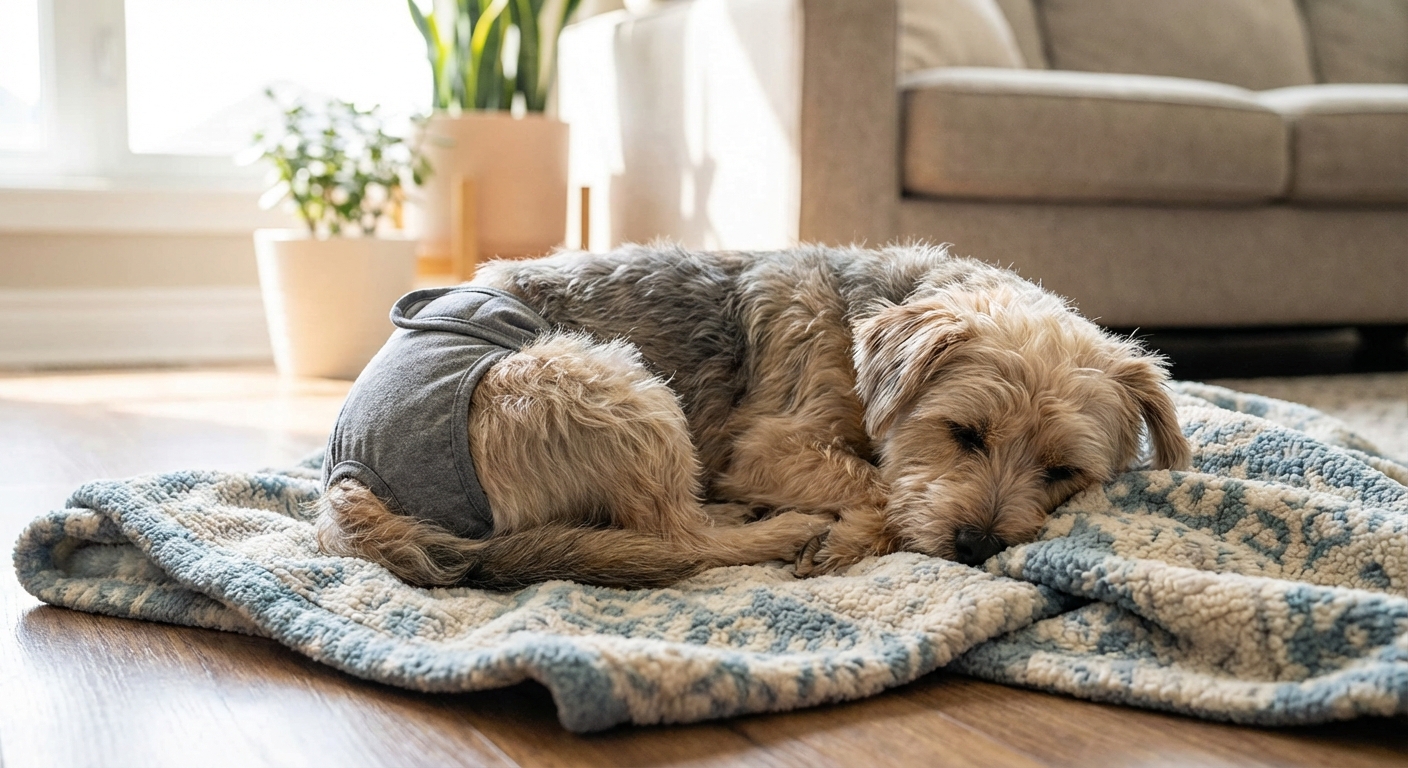
- Dog heat diapers (washable or disposable). Fit matters more than brand.
- Unscented baby wipes for quick cleanups.
- Washable throws or blankets for couch and bed protection.
- Enzyme cleaner for any accidents, especially if male dogs visit your home.
Diaper tips that work
- Change frequently to prevent skin irritation.
- Do not leave a diaper on if it stays damp for long periods. Moisture plus friction can lead to dermatitis.
- Most dogs need the diaper removed for urination and bowel movements unless your product is designed for that.
- Give supervised “air time” when possible.
- If your dog is itchy, check for rubbing at the waist or around the tail hole.
Bathing during heat
A gentle bath is usually fine if your dog tolerates it, but avoid frequent harsh shampoos. Focus on keeping the vulvar area clean and dry. If her skin looks red or irritated, ask your vet about safe soothing options.
Breeding prevention rules
If you do not want puppies, assume she could be bred and become pregnant at any point from the first signs of heat until the heat is fully over. Practical prevention is not about willpower, it is about physical barriers.
- No off-leash time in unfenced areas, even for a quick potty.
- Supervised backyard only, and check fences and gates.
- Separate from intact males. A determined male can break through screens and push past doors.
- Skip dog parks and daycare until heat is completely finished.
Many vets recommend keeping her away from intact males for 3 to 4 weeks from the start of bleeding, or until discharge and swelling have resolved for several days. When in doubt, ask your vet what they recommend for your dog’s cycle.
FAQ
When is a dog’s first heat?
First heat varies by breed and size, but many dogs start somewhere around 6 to 18 months. Very early or very late first heats are worth discussing with your veterinarian.
Do all dogs bleed the same amount?
No. Amount can vary by individual, how often she licks, coat length, and whether you catch spotting early. Light bleeding can be normal.
Can a dog be in heat without bleeding?
Yes. Some dogs have very minimal discharge or a silent heat. Behavior changes, swelling, and male-dog attention are big clues.
How often do dogs go into heat?
Many dogs cycle about every 6 months, but it varies by breed and individual. Some small breeds cycle more frequently, and some large breeds less often.
When should I consider spaying?
This is a personalized decision with your veterinarian based on breed, age, lifestyle, and health. Spaying can sometimes be done while a dog is in heat, but it may involve different surgical considerations. If you are unsure, ask for a consult that covers timing, cancer risk, orthopedic considerations, and pregnancy prevention.
Bottom line
Most dogs in heat bleed for about 7 to 10 days, with a normal range that can stretch toward about two weeks (and proestrus is often cited as ranging from about 3 to 17 days). The most helpful “secret” is to track what you see each day and focus on comfort, cleanliness, and strict pregnancy prevention until the heat is clearly over.
If anything feels off, especially heavy bleeding, foul odor, or your dog seems sick, trust your instincts and call your veterinarian. Calling early is one of the best ways to protect your dog.