Help your dog feel better with gentle homemade meals for sensitive stomachs. Learn a 3-ingredient bland reset, easy recipes, transition steps, and what signs...
Article
•
Designer Mixes
How Long Can a Puppy Be Left Alone?

Shari Shidate
Designer Mixes contributor
As a veterinary assistant here in Frisco, Texas, I hear this question all the time, and it makes sense. Puppies are adorable, but they are also babies. They need frequent potty breaks, gentle training, and a safe setup so they do not practice problem behaviors while you are gone.
The encouraging news is that independence is absolutely teachable. With a realistic schedule and a few smart tools, most puppies learn to rest calmly alone in short bursts, then longer stretches as they grow.
One important reminder: even if a puppy can “hold it” physically, they may not be emotionally comfortable alone for that long yet. Bladder capacity and comfort are related, but not the same thing.
The quick answer (by age)
There is no perfect number for every puppy, but a common starting point many trainers use is: puppy age in months is often a rough maximum number of daytime hours they can hold their bladder, up to around 6 hours for many dogs. This is a guideline, not a promise, and many puppies (especially under 16 weeks) still need more frequent breaks.
Also, while some adult dogs can manage 8 hours occasionally, regularly expecting an 8-hour hold is not ideal for many dogs. Most do better with a mid-day break when possible.
- 8 to 10 weeks: about 1 hour, sometimes 2 at most if they are sleeping
- 10 to 12 weeks: about 1 to 2 hours
- 3 months: about 3 hours
- 4 months: about 4 hours
- 5 months: about 5 hours
- 6 months: about 6 hours
Nighttime is different. Many puppies can go longer overnight because they are resting, but during the day, activity, excitement, and eating and drinking shorten the window.
What changes the time limit
Two puppies of the same age can have very different alone-time limits. Here are the most common factors that change what is realistic.
Potty training stage
If your puppy is still having accidents, that is not “being stubborn.” It usually means the schedule is too long, the supervision is too loose, or the potty routine is inconsistent.
Breed and body size
Smaller breeds often have smaller bladders, and toy breed puppies may need more frequent breaks even with great training.
Temperament and separation stress risk
Some puppies bounce back quickly, and others worry when people leave. A puppy who panics, screams, drools, or tries to escape should not be expected to “tough it out.” That is a training and support issue, not a willpower issue.
Where and how they are confined
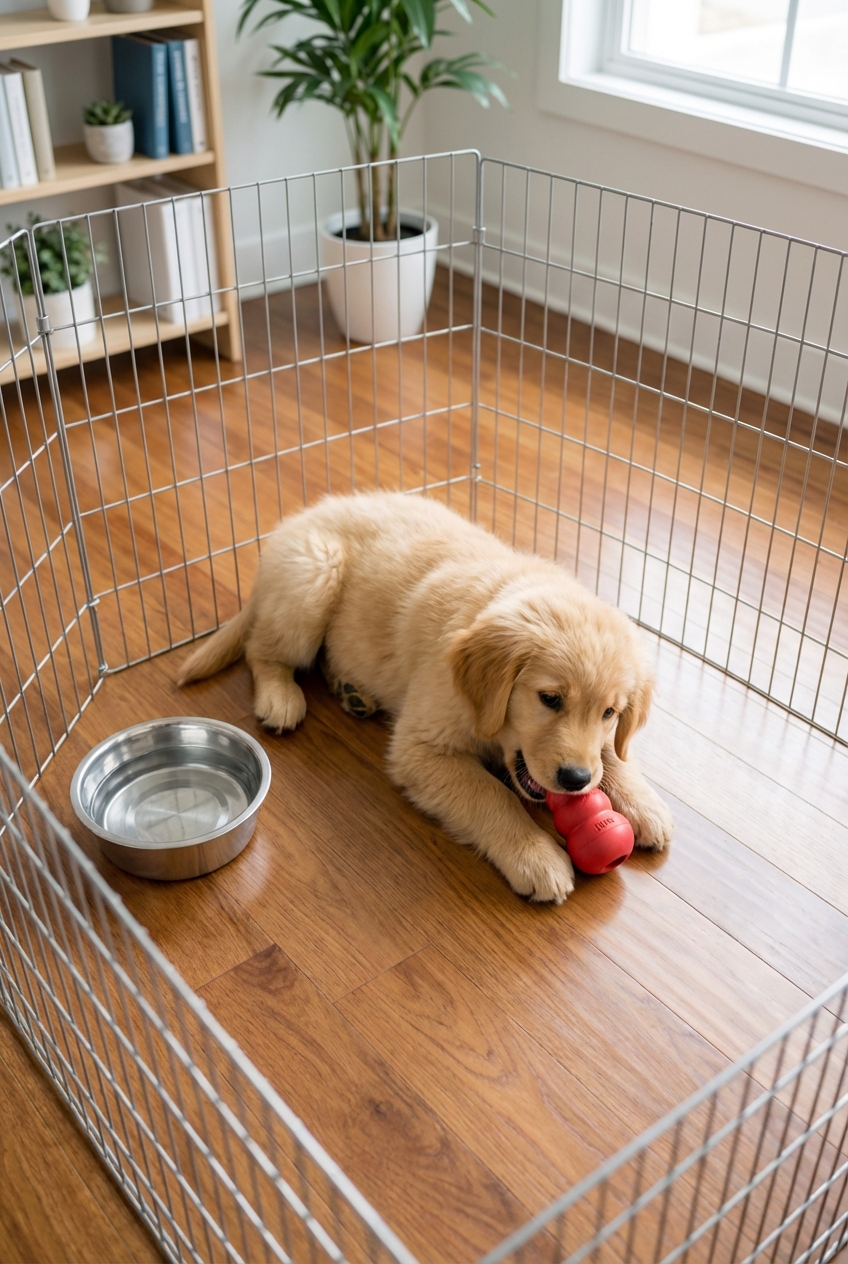
A safe, cozy confinement area prevents chewing, eating unsafe items, and rehearsing pacing or barking.
Crate, pen, or room?
Think of confinement like a seatbelt. It is about safety first, then comfort.
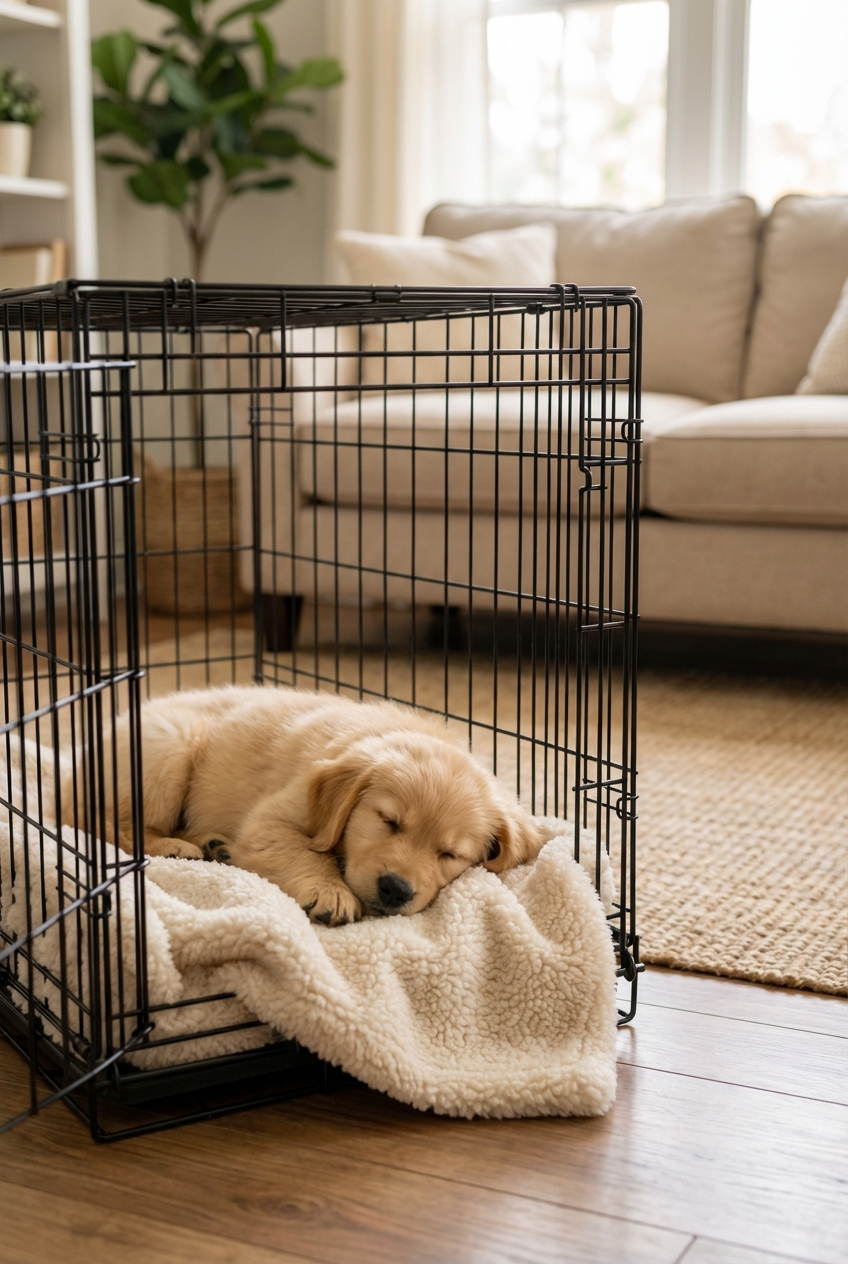
Crate (great for many puppies)
- Helps with potty training because many puppies avoid soiling their sleeping space
- Prevents dangerous chewing and house-training setbacks
- Best for shorter alone periods at first
Important: The crate should be large enough to stand, turn around, and lie down comfortably, but not so large that the puppy can potty in one corner and sleep in another.
Also important: this “avoid soiling” instinct is not universal. Puppies who were kennel-raised, pet-store pups, or any puppy who has been left too long may soil the crate. If that happens, it does not mean you failed. It means the setup, schedule, or training plan needs an adjustment.
Crate safety tip from the vet world: remove your puppy’s collar before crating to reduce snagging and strangulation risk.
Playpen (helpful for longer work blocks)
- Gives more room to stretch, play, and have a designated potty area if needed
- Can reduce stress in puppies who dislike a closed crate
Puppy-proofed room (best for some, risky for others)
A bathroom or laundry room can work if it is truly puppy-proofed. Many “safe rooms” still have temptations like trash cans, cords, cleaners, and toilet brushes.
Before you leave
This little checklist prevents most problems I see in clinic conversations.
- Potty first: do not skip the last-minute potty break.
- Short play or training: 5 to 10 minutes helps take the edge off without creating an overtired puppy.
- Set up the space: water, a safe chew or food toy, and a comfortable rest spot.
- Remove hazards: cords, trash, small objects, strings, and anything breakable.
- Remove collar before crating: safer for unsupervised time.
A realistic weekday schedule
If you work outside the home, the goal is to build a plan that matches puppy biology, not wishful thinking.
Example: 12-week-old puppy
- 6:30 a.m. potty break immediately after waking
- 6:45 a.m. breakfast, then potty again 10 to 20 minutes later
- 7:15 a.m. short training session and play
- 7:45 a.m. settle with a chew in crate or pen
- 9:00 a.m. potty break (this is where a dog walker, neighbor, or family member often helps)
- 12:00 p.m. potty, lunch (if still on 3 meals a day), potty again, then nap
- 3:00 p.m. potty break, then calm chew or nap
- After work potty, decompression walk, training, dinner, potty
Most young puppies need multiple daytime breaks. If that is not possible, a playpen setup with an appropriate potty option can be a temporary bridge while training is in progress.
Teach alone time
Independence is a skill. We build it the same way we build sit or leash manners: tiny steps, repeated often.
1) Practice micro-departures daily
Pick up your keys, step out for 10 seconds, return calmly. Repeat. Gradually increase time. Your puppy learns: people leave and people come back, and nothing scary happens.
2) Pair departures with something great
Offer a long-lasting, puppy-safe chew or food toy only when you leave. This creates a positive emotional association with alone time.
3) Keep greetings calm
It is tempting to throw a reunion party. Instead, return calmly, go straight to a potty break, then give affection once your puppy is settled.
4) Exercise, then rest
A puppy who has had a potty break, a little training, and age-appropriate play is much more likely to nap while you are gone.
Optional: use a camera
A pet camera can help you see if your puppy settles, how long it takes, and whether barking is a short protest or ongoing distress.
What to leave with your puppy
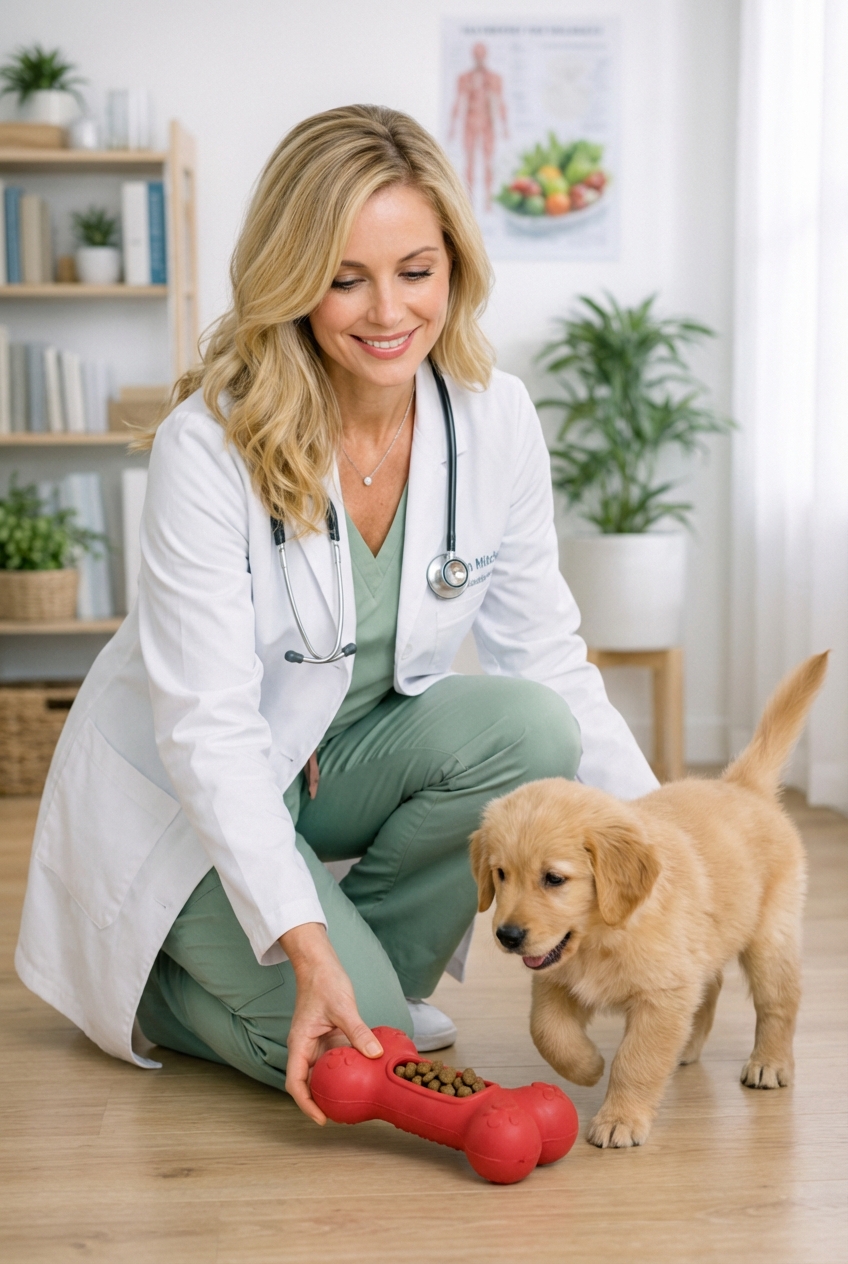
A safe setup prevents boredom, lowers stress, and protects your home.
- Water in a tip-resistant bowl (unless your veterinarian has instructed otherwise)
- Food puzzle or stuffed rubber toy with part of their meal
- Puppy-safe chews (vet-approved and size-appropriate, ask your vet team if you are unsure)
- Comfort item like a safe blanket
- White noise or a fan if outside sounds trigger barking
Safety note: Avoid leaving loose strings, small toys that can be swallowed, and chews that splinter. Introduce new food toys and chews with supervision first to confirm your puppy chews safely and does not break off big chunks. When in doubt, choose simple and sturdy.
Another safety tip: if your puppy will be crated, remove the collar before you leave.
Signs it is too long
Some stress is obvious, and some is sneaky. Watch for patterns.
- Frequent accidents despite consistent training
- Excessive drooling, frantic scratching at doors, or blood on paws or nails
- Destructive chewing focused on exits (doors, windowsills)
- Howling or nonstop barking that does not settle within about 5 to 15 minutes
- Panicked behavior when you pick up keys or put on shoes
If you see these signs, shorten the alone time and consider professional help. Early support can prevent a long-term separation problem.
When you must be away
Use a mid-day break
A dog walker, neighbor, trusted friend, or professional pet sitter can be a game-changer for puppies under 6 months.
Consider daycare carefully
Daycare can be helpful for some older puppies, but it is not ideal for every dog. Look for facilities that separate by size and play style, enforce rest breaks, and follow vaccine policies. Many puppies are not ready for group settings until they are farther along in their core vaccines, so ask your veterinarian what timing is safest for your puppy.
Talk to your veterinarian about vaccines and parasite prevention
Puppies exploring the world need thoughtful protection. Your vet can advise what is safe for your puppy’s age and lifestyle, especially if they will be around other dogs.
Common questions
Can I leave my puppy alone for errands?
Yes, if it is within their age-appropriate time limit and they have already pottied. Start small and build up. A calm 20 to 30 minutes today becomes an hour later, then longer.
Should I use pee pads?
It depends on your goals and your schedule. Pads can be a helpful temporary tool if your puppy cannot get outside often enough, but they can also slow outdoor potty training for some puppies. If you use them, place them in a consistent spot and still prioritize outdoor potty breaks whenever possible.
Is it cruel to crate a puppy?
A properly introduced crate is not cruel. It is a safe, cozy den. The key is training, comfort, and not expecting a very young puppy to stay crated for long stretches without breaks.
The bottom line
Puppies can be left alone, but they need a plan that matches their age, their training stage, and their emotional comfort. Start with short, successful alone periods, pair departures with positive enrichment, and build gradually. If your puppy is struggling, do not wait it out. Adjust the schedule and ask your veterinarian or a qualified trainer for help. Small changes early can make a huge difference for lifelong confidence.