A step-by-step puppy crate training guide: choosing the right crate, building positive associations, first-week routines, nighttime potty breaks, and solutio...
Article
•
Designer Mixes
How I Crate Trained My Dog

Shari Shidate
Designer Mixes contributor
Why I Decided to Crate Train Ollie
When I brought home Ollie, my Cavalier King Charles Spaniel, he was small enough to fit in the crook of my elbow and curious enough to follow me everywhere. Like many new puppy parents, I wanted him to feel safe, sleep well, and learn healthy habits from the start. Crate training was my way of giving him a predictable “home base” that supported both of us.
From a health and wellness perspective, good sleep matters for puppies just as much as it does for humans. Puppies are growing rapidly and learning constantly, and quality rest helps with mood, bite inhibition, and overall resilience. My goal was never to “contain” him. It was to teach him that his crate was a calm, cozy place where good things happen.
Setting Up the Crate for Success
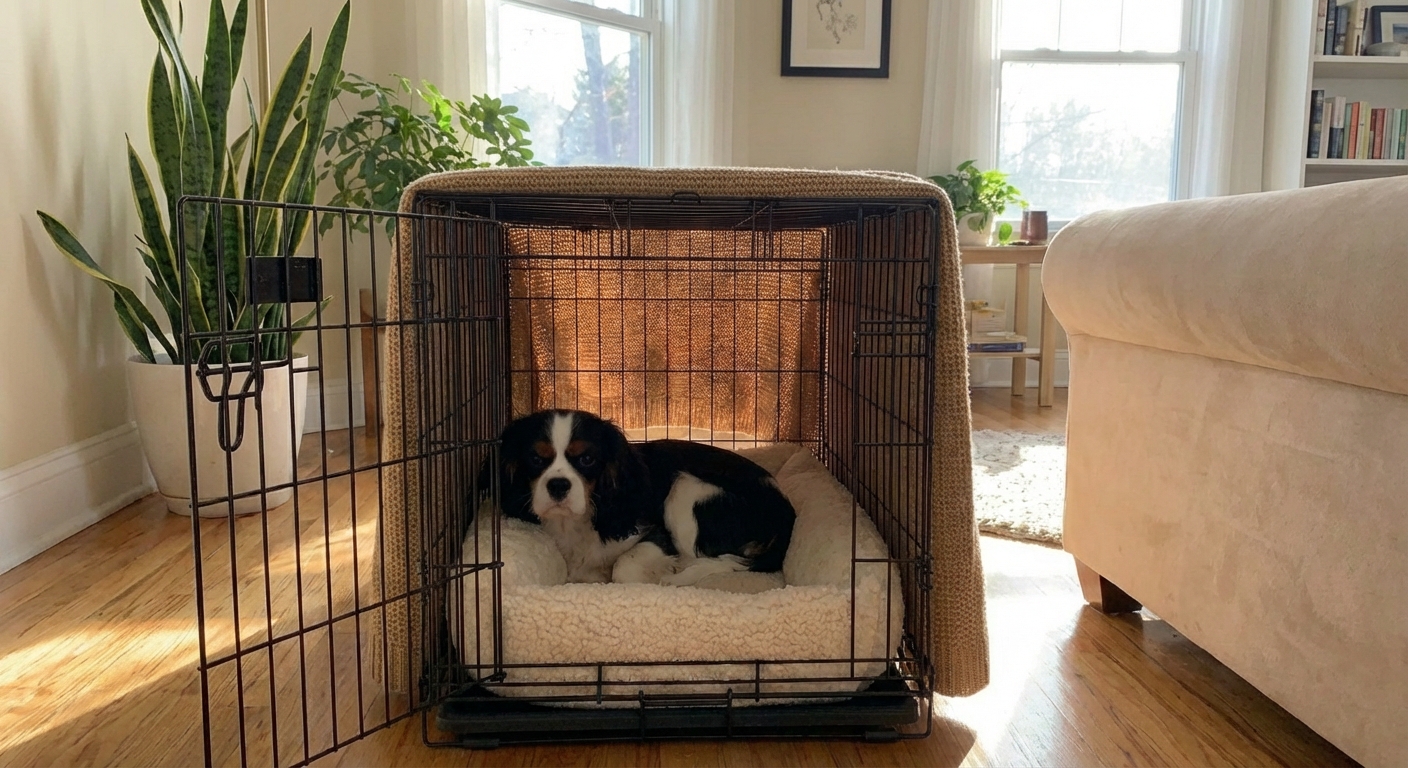
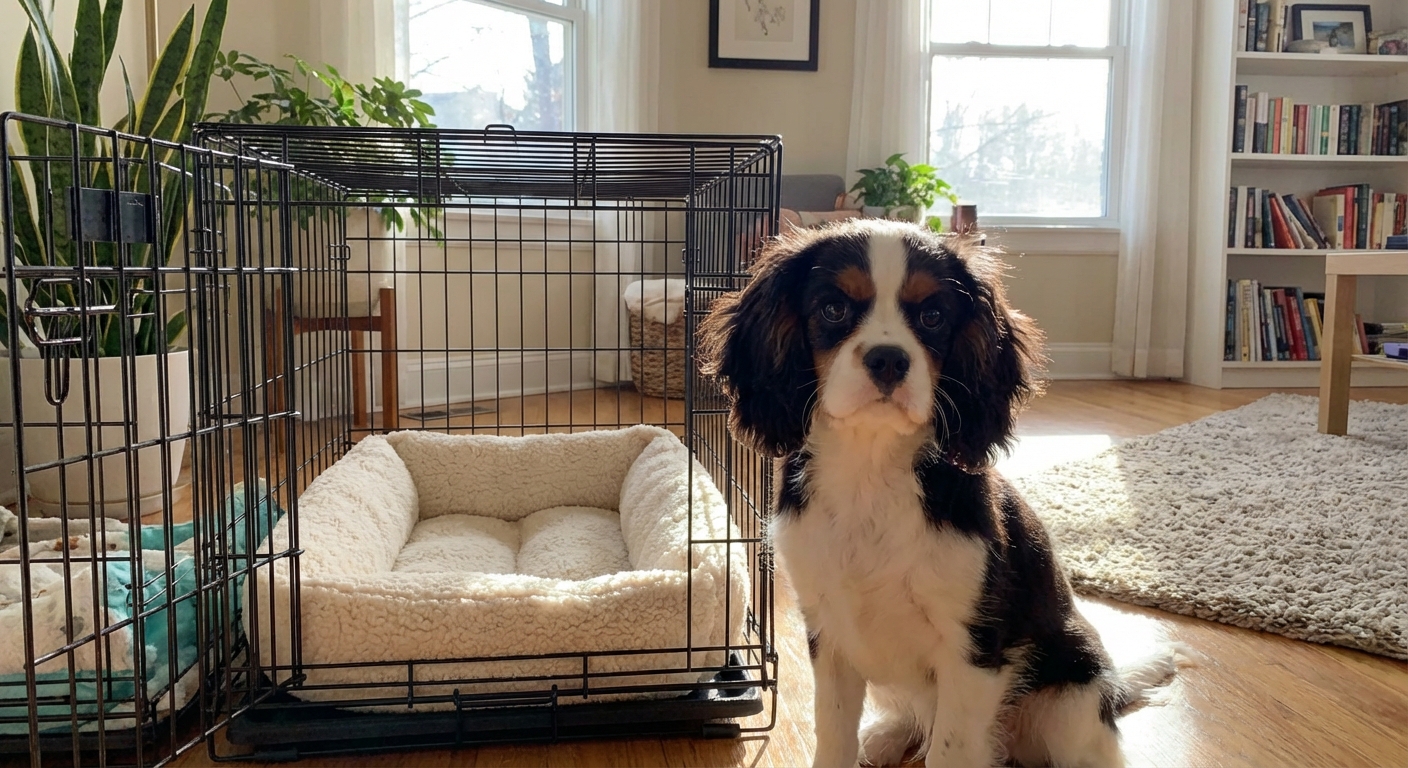
Before I asked Ollie to spend even one minute inside the crate, I set it up to feel inviting. Think of it like preparing a guest room for someone you care about.
What I chose and why
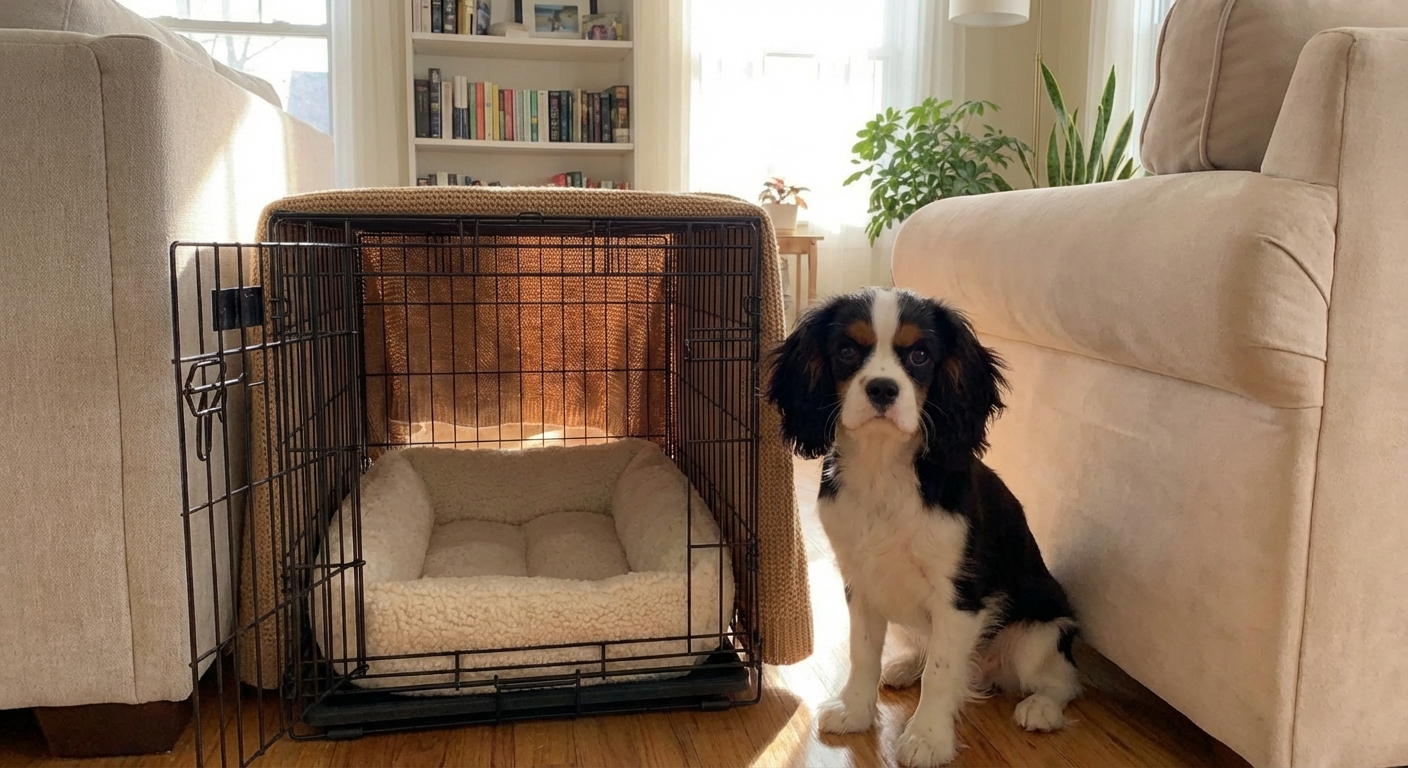
- Right-sized crate: Large enough for Ollie to stand up, turn around, and lie down comfortably, but not so big that one corner could become a bathroom.
- Comfortable bedding: A washable, supportive bed that stayed cool enough for a puppy who tended to run warm.
- Calming cover: I draped a light blanket over part of the crate to create a den-like feel, leaving airflow and visibility on the front.
- Safe chew option: A puppy-safe chew to occupy his mouth and help him self-soothe.
Quick safety note: Any time Ollie went into the crate, I removed his collar (and any harness). With wire crates in particular, tags and straps can snag, and it is not worth the risk.
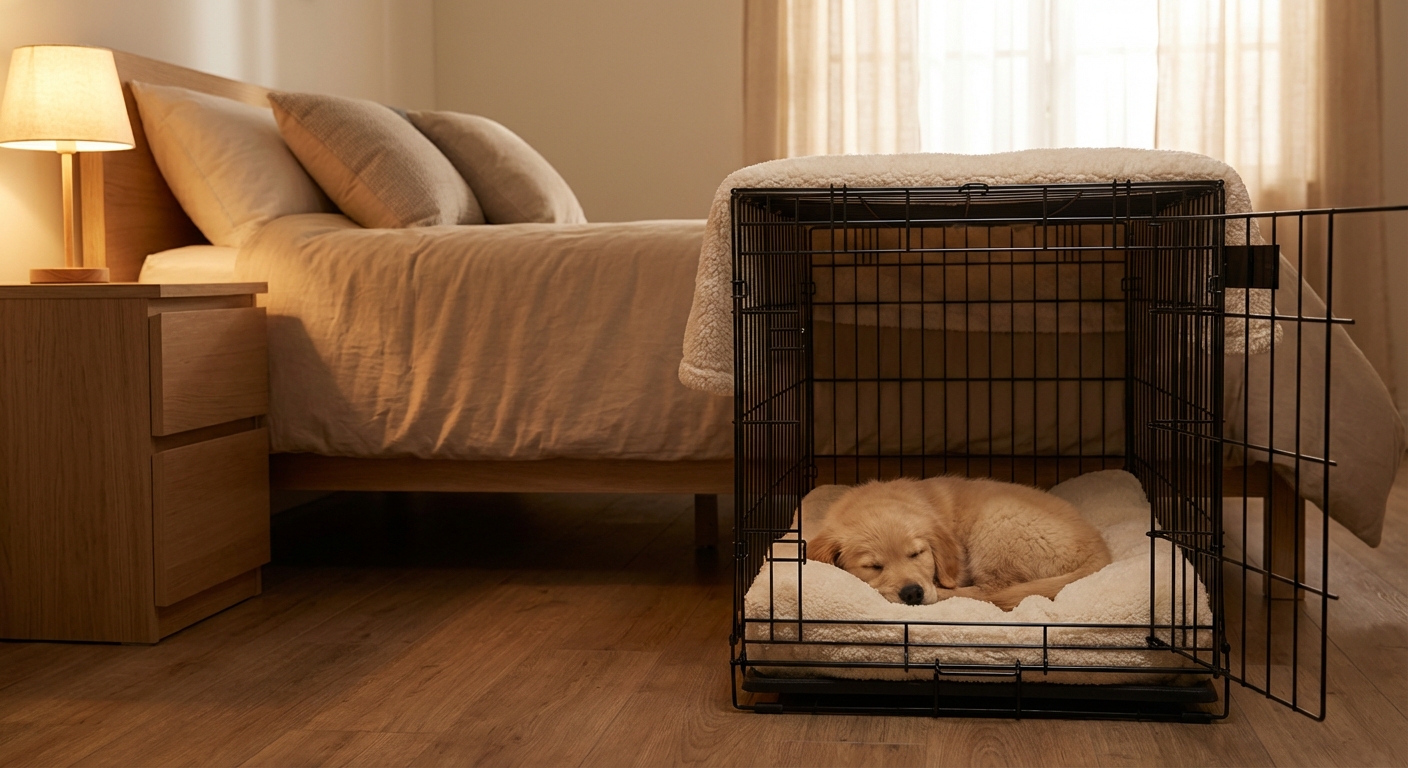
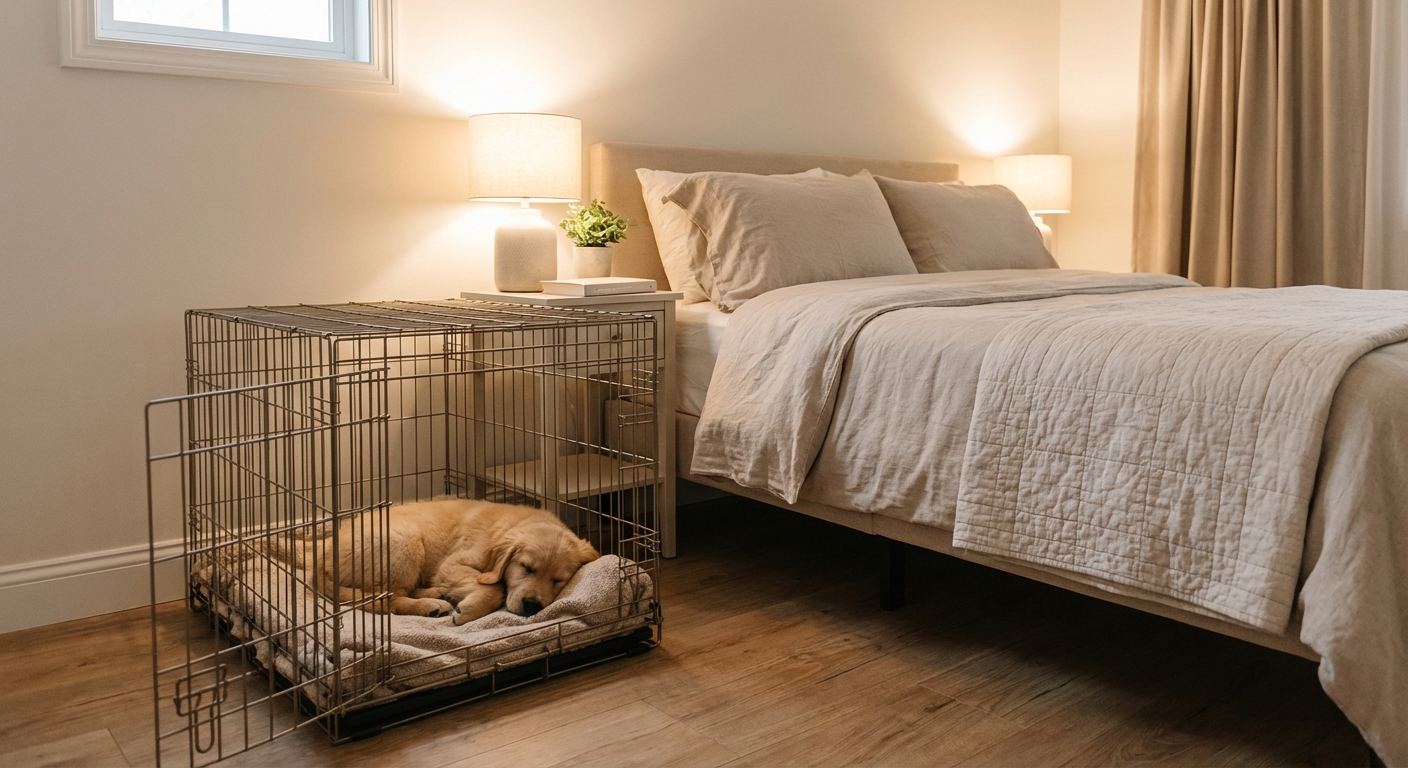
I also placed the crate in a spot where Ollie could still feel included. During the day it was near our main living area. At night it started in my bedroom. Puppies are social sleepers, and being close to me lowered his stress and made the whole process smoother.
Week 1: Making the Crate a Happy Place
The first week was all about one message: the crate predicts comfort, safety, and rewards. I did not rush the door closing. I focused on building positive associations.
Our first steps
- Door open, curiosity encouraged: I tossed a few pieces of kibble just inside the doorway and let Ollie walk in and out freely.
- Meals near the crate, then in the crate: I started by feeding him next to it, then gradually moved the bowl just inside, then deeper as his confidence grew.
- Praise for calm behavior: I praised him when he chose to settle, even for a few seconds. Calm is the skill we want, not just “going in.”
I kept sessions short, upbeat, and frequent. This is similar to building any new habit: small repetitions beat one big stressful event.
Teaching Ollie to Relax Inside (Not Just Enter)
A lot of people can get a puppy to step into a crate, especially if there is food involved. The real win is helping them relax once they are inside. That is where crate training turns into a lifelong tool for rest, travel, and recovery.
What worked best for us
- “Crate equals calm” routine: After a quick potty break, I guided Ollie into the crate with a treat and gave him something soothing to chew.
- Rewarding quiet moments: The instant I noticed a pause in whining or a deep breath, I calmly dropped a treat in. I was reinforcing the behavior I wanted to grow.
- Short closures with immediate success: I closed the door for 5 to 10 seconds, then opened it before he got upset. Then 20 seconds, then a minute, slowly building tolerance.
My mindset was simple: I wanted Ollie to feel like he had control and predictability. That lowers stress hormones and makes learning faster.
Our Nighttime Routine: How Sleeping in the Crate Became Normal
Nighttime can be the hardest part because puppies are tired, overstimulated, and adjusting to a brand-new environment. I treated bedtime like a gentle ritual, not a battle of wills.
What our evenings looked like
- Evening wind-down: A calm play session earlier, then quieter activities like chewing and cuddling closer to bedtime.
- Last call potty break: I took Ollie out right before bed. This one step prevented so many problems.
- Same bedtime cues: Lights dim, soft voice, into the crate with a small treat, then a brief reassuring “goodnight.”
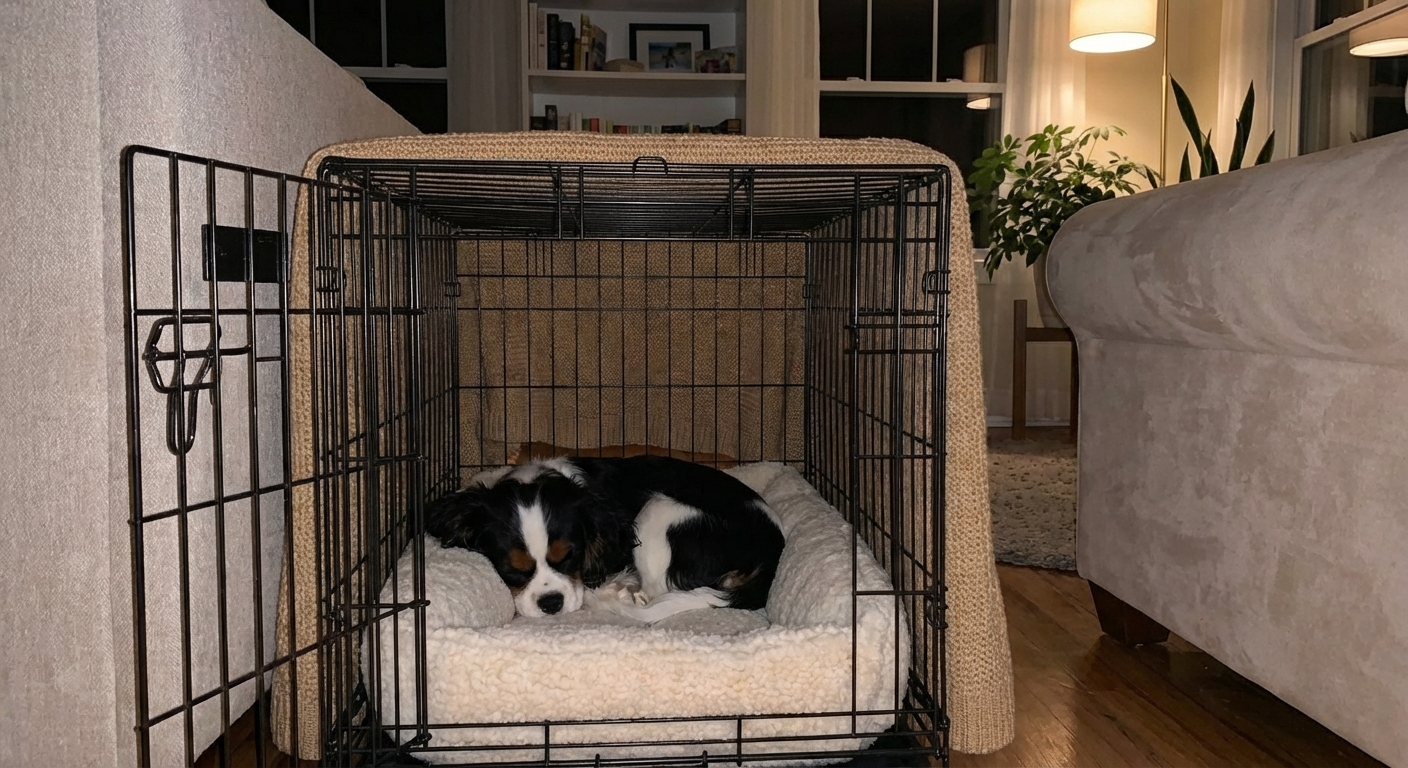
The first few nights, Ollie fussed. I kept the crate close enough that he could hear me breathing. If he cried, I paused, listened, and tried to differentiate “I need to potty” from “I do not love this yet.” If it had been a while since his last potty break, I took him out quietly and brought him right back with minimal interaction.
Within a short time, he started settling faster. And then something wonderful happened: he began choosing the crate on his own when he was sleepy. That was the moment I knew we were building comfort, not compliance.
Handling Whining Without Undoing the Training
This is the part most people ask about, and it is important to be honest. There were nights when Ollie protested, and moments when I wondered if I was doing it “right.”
Here is what helped me stay consistent and kind.
My personal rules
- I met needs, not demands: Potty, water, comfort, and safety came first. Attention for sustained whining did not.
- I waited for a brief pause: If I needed to open the door, I waited for a half-second of quiet, then calmly opened. That way I was rewarding calm, not the noise.
- I avoided big emotional reactions: Over-the-top soothing can accidentally teach a puppy that crying is how to get a dramatic response.
As with human sleep hygiene, consistency matters. The routine, the environment, and the timing all support the outcome.
Daytime Crate Time: Building Independence Gently
I wanted Ollie to be comfortable in his crate even when I was not in the room. This is a gift for both of you, especially if you ever need to leave the house, host visitors, or give your dog a safe place during busy moments.
How I practiced it
- Micro-departures: I crated him with a chew, then simply stepped out of the room (or just out of sight) for 10 seconds and came back calmly. Once that felt easy for him, I slowly extended the time and distance, and only later practiced actual leaving-the-house departures.
- Neutral arrivals and departures: I avoided turning crate time into a dramatic event. Calm in, calm out.
- Pairing with predictable rhythms: After potty and a little play, Ollie was ready to rest. Timing crate sessions with his natural sleepiness reduced frustration.
If you try to crate a puppy who is bursting with energy, it is like asking a toddler to nap right after a birthday party. The setup matters.
Common Mistakes I Avoided (and One I Made)
Crate training is straightforward, but it is easy to accidentally move too fast. Here are a few things I watched for.
What I avoided
- Using the crate as punishment: I wanted the crate to stay emotionally “clean” and positive.
- Too much time too soon: Puppies need gradual increases, not long stretches right away.
- Skipping potty planning: Many crate issues are actually bladder timing issues.
The mistake I made
One afternoon, I crated Ollie right after a slightly chaotic play session. He was overtired and amped up. He struggled to settle and whined more than usual. That taught me to prioritize a calm transition before crating, even if it is just two minutes of gentle petting or a chew in my lap first.
When Ollie Started Loving the Crate
The shift was gradual, then suddenly obvious. Ollie began walking into the crate on his own after dinner. He would circle, sigh, and flop down like it was his personal retreat. That is what I had hoped for from day one.
Now, the crate supports his sleep quality, helps during travel, and gives him a predictable safe space when life gets noisy. Most importantly, it taught him self-regulation, which is one of the most valuable skills a dog can have.
A Simple Crate Training Checklist You Can Use
If you are starting with a new puppy, here is the routine that made the biggest difference for us.
- Place the crate in a calm, social area at first, then adjust as your dog matures.
- Feed meals near the crate, then inside it.
- Practice short, positive sessions several times per day.
- Pair the crate with a safe chew or calming enrichment.
- Increase duration slowly and return before panic sets in.
- Keep nighttime consistent: potty, into the crate, lights down, minimal interaction.
- Reward quiet and relaxed behavior, not just entering.
- Remove collar or harness before crating to prevent snagging hazards.
If you ever feel stuck, it can be helpful to consult a qualified trainer, especially if your dog shows signs of true anxiety. There is no shame in getting support. You are building a relationship, not just a routine.