Cats’ amazing flexibility comes from a bendable spine, muscle-suspended collarbone, powerful hips, mobile tail, and the righting reflex. Learn safety risks...
Article
•
Designer Mixes
How High Can Cats Jump?

Shari Shidate
Designer Mixes contributor
If you have ever watched a cat launch onto a fridge with zero warmup, you have seen feline physics in action. Cats are small, but they are built like elite jumpers: powerful hindquarters, a flexible spine, and reflexes that help them place their paws with surprising precision.
So how high can cats jump? You will often hear the rule of thumb that a healthy adult cat can jump up to about 5 to 6 times their body length. To keep the math honest, that depends on how you measure “body length” (most people mean nose to base of tail). For an average-sized cat, that “5 to 6 times” idea can put exceptional jumps in the 7 to 8 foot range. In a typical home setting, though, many cats more commonly jump about 4 to 6 feet vertically from a standstill, especially when they have good traction and a confident landing spot.
Exact numbers vary by body size, age, motivation, surface grip, and overall health.
Typical jump heights (and why they vary)
Most cat owners want a simple measurement, but real life jumps are not a standardized test. A cat might clear the top of a tall dresser easily one day and hesitate the next because the landing spot feels unstable.
- Average healthy adult cats: often around 4 to 6 feet vertically in everyday situations, especially with good traction and a steady landing area.
- Very athletic, lean cats: may pull off higher jumps in the right conditions (including running starts, high motivation, and a “sticky” launch surface). Claims like 6 to 8 feet tend to represent exceptional efforts rather than an everyday baseline.
- Kittens and seniors: usually jump lower because they are still developing coordination or may have reduced muscle and joint flexibility.
- Overweight cats: often jump lower and land harder, which increases strain on joints.
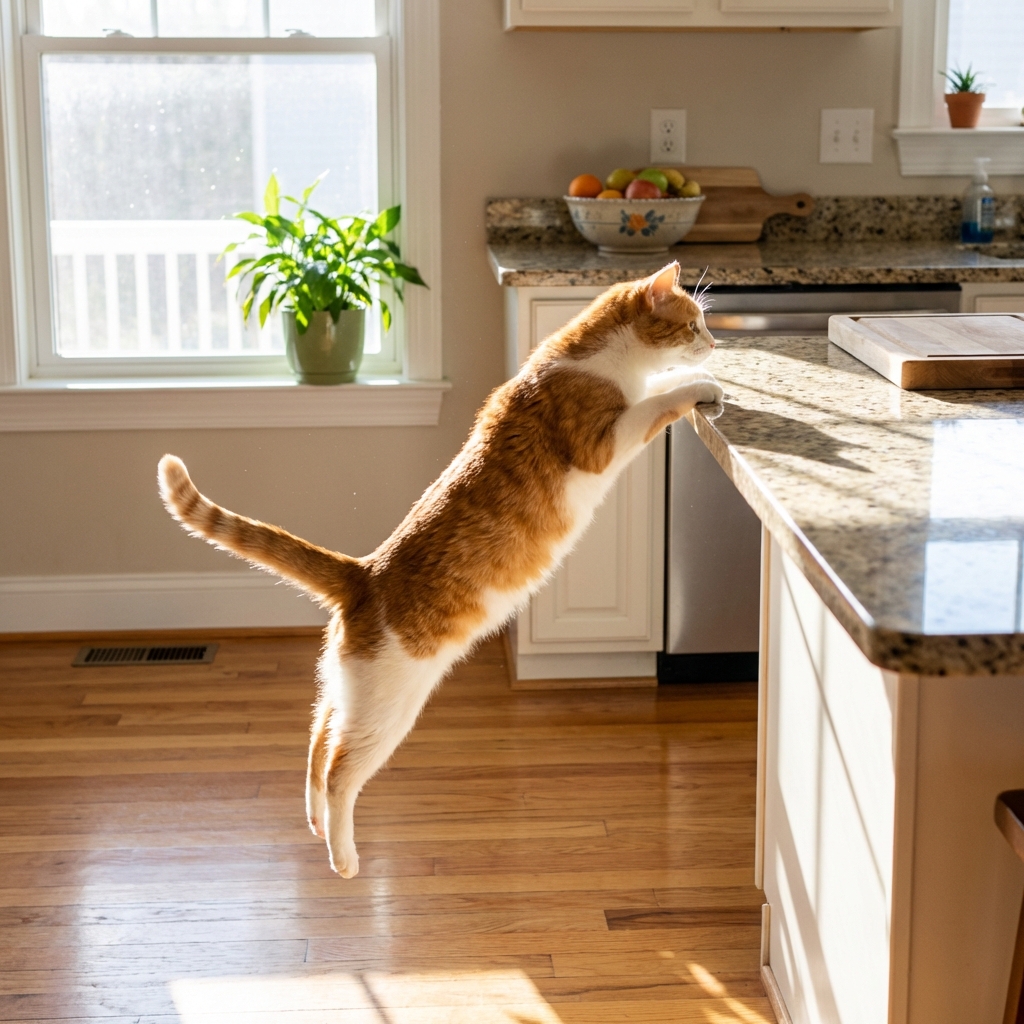
Quick visual reference: a standard kitchen counter is often around 3 feet high, while the top of a fridge can be 6 feet or more depending on the model and room layout. Many cats can clear a counter easily, but “fridge-top” jumps are more variable.
Important note: A cat that suddenly stops jumping, misjudges landings, or seems reluctant to use stairs or cat trees may be signaling pain, vision changes, or arthritis. That is worth a veterinary visit.
The physics of feline agility
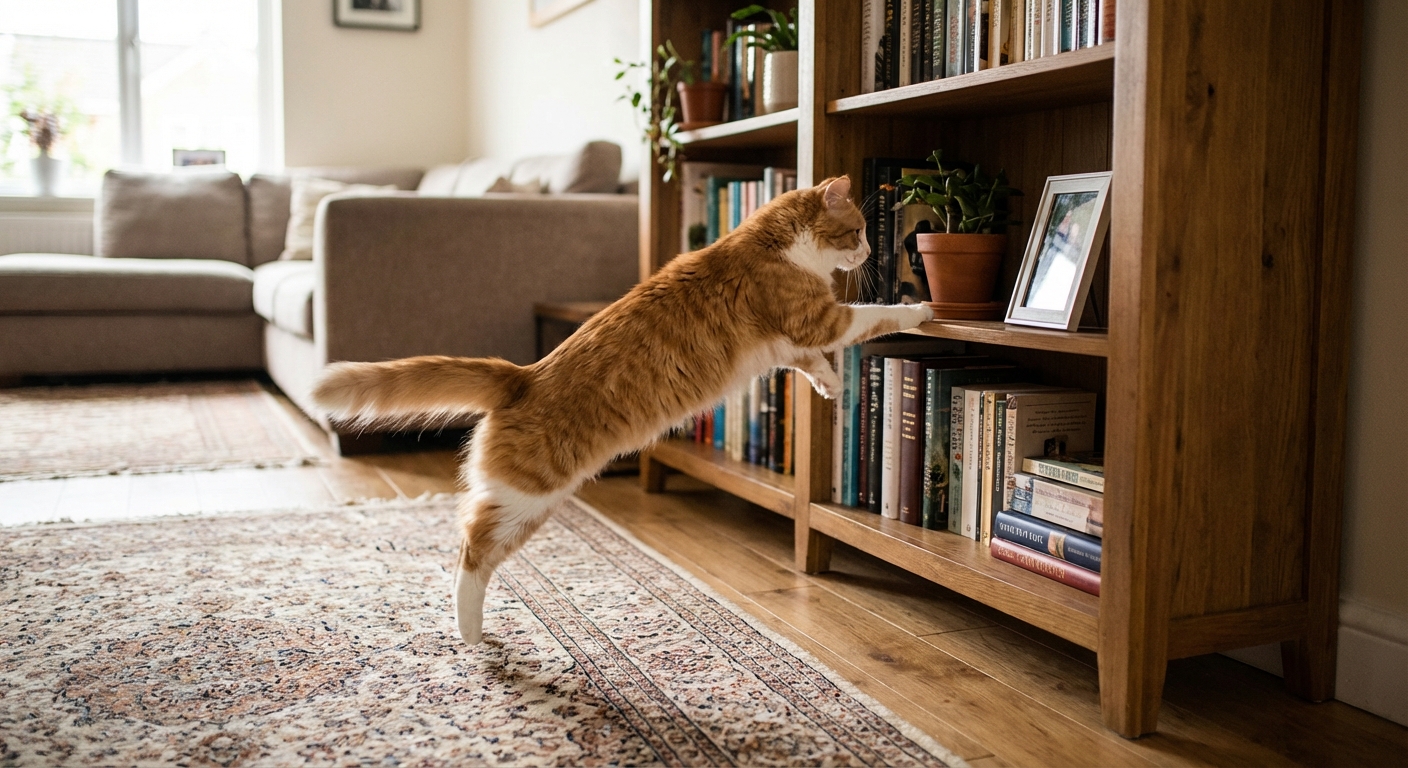
Jumping is basically a conversion of stored muscular energy into upward motion. Your cat bends the hind legs, loads the muscles like springs, then extends powerfully through the hips, knees, and ankles to generate lift.
1) Power-to-weight ratio
Cats have a high power-to-weight ratio. Their hind limb muscles and tendons can produce a lot of force for a relatively small body mass, which is a big reason they can jump multiple times their body length.
2) Momentum and launch angle
Most “vertical” jumps are not perfectly vertical. Cats usually create a blend of upward and forward motion to make landings more controlled. That small horizontal component helps them place their front paws first, then bring the back legs up smoothly.
3) Spine flexibility adds range
A cat’s flexible spine acts like an extra hinge. During takeoff, the back rounds and then extends, helping lengthen the jump and stabilize the body in midair.
4) Traction matters
Physics is not just about muscle. It is also about friction. On slick floors, cats may not be able to push off as confidently because the paw pads cannot “grab” the surface well. Claws can help in some scenarios (like carpet or upholstery), but for many household jumps, surface texture and paw pad grip do most of the work. That is why cats may jump better from carpet, textured mats, or other surfaces with good traction.
Why some cats jump higher
Even among healthy cats, jump performance differs a lot. Here are the factors that most often matter in real homes.
Body condition and muscle
Lean cats with good muscle tone typically jump higher and land more softly. Extra weight changes the math: it increases the force needed to lift the body and increases impact on landing.
Age and joint health
Arthritis is common in older cats and can show up earlier than many people expect. If your cat starts choosing lower surfaces, climbing with the front legs first, or avoiding favorite perches, it may be discomfort rather than “being lazy.”
Motivation and confidence
Cats do not jump their maximum height just to prove they can. They jump for a reason: food, a sunny window, a safe lookout spot, or to escape something stressful. If the landing area wobbles, is crowded, or is slippery, many cats will choose a different route.
Breed tendencies (with overlap)
Some breeds, like Abyssinians and Bengals, often seem especially athletic and climb-happy. Others may be calmer or heavier-bodied. But individual personality and health matter more than breed stereotypes.
How to support safe jumping
As a veterinary assistant, I love helping pet parents set up homes that work with a cat’s natural skills instead of against them. A few small changes can reduce falls and protect joints.
- Add step-up options: Place a chair, ottoman, or pet steps near high favorite spots like beds, window ledges, or couches.
- Improve traction: Use non-slip mats or rugs near common launch zones, especially if you have slick tile or hardwood.
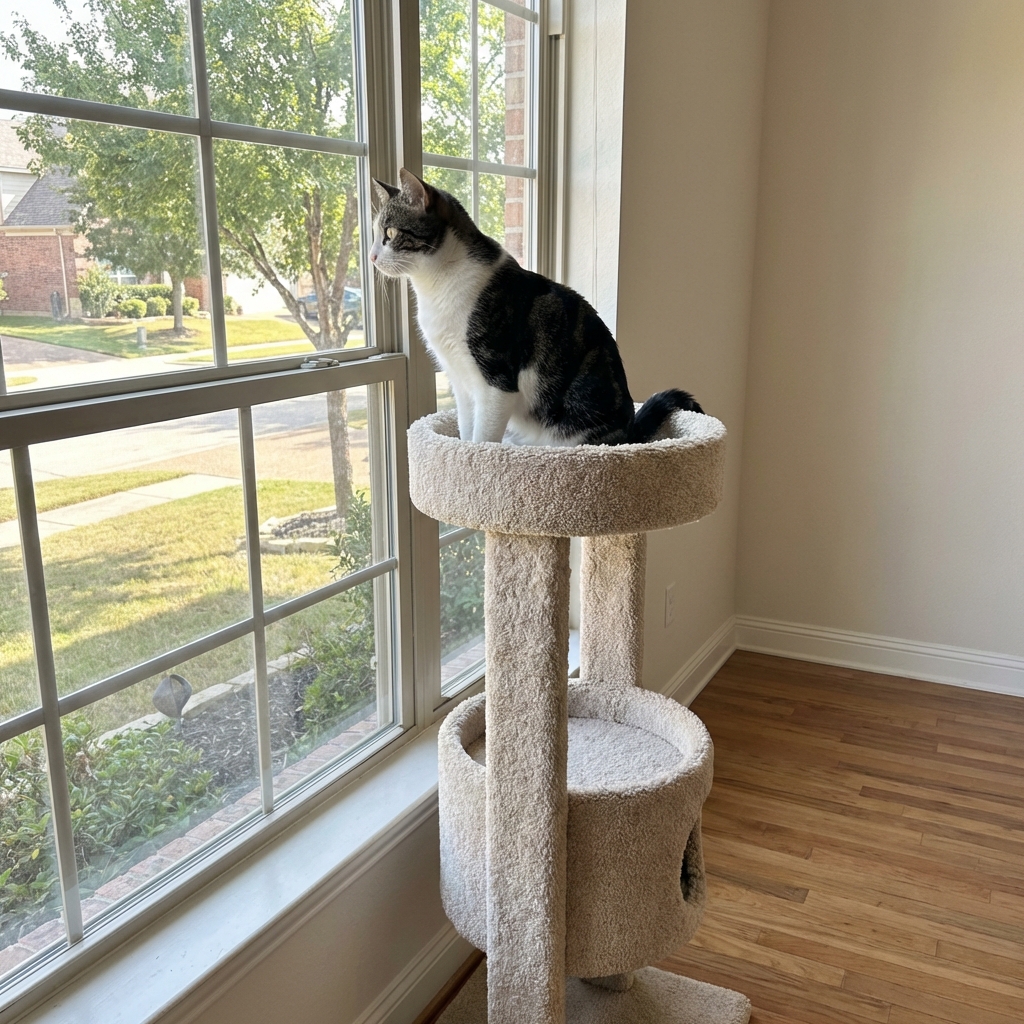
- Stabilize perches: Make sure cat trees are sturdy and not wobbling. Many cats avoid a perch that feels unsafe.
- Choose joint-friendly landings: Softer surfaces can reduce impact, particularly for seniors.
- Keep nails appropriately trimmed: Not too short, but maintained so your cat can grip and climb safely. Ask your vet team for a quick demo if you are unsure.
When jumping changes are a red flag
A cat that is less “bouncy” can be totally normal with age, but certain changes deserve attention.
Call your veterinarian if you notice:
- Sudden reluctance to jump up or down
- Stiffness, limping, or hiding more than usual
- Missed landings or hesitating before routine jumps
- Crying out when jumping or being picked up
- Changes in grooming (especially over the back end) or litter box avoidance
These signs can be linked to arthritis, soft tissue injuries, dental pain, vision issues, neurologic problems, or other conditions that are very treatable when caught early.
Cats are masters of hiding discomfort. A “behavior change” is often a health clue, especially when it involves mobility.
Reminder: This article is for general information and does not replace veterinary advice for your individual cat.
Quick takeaway
Many healthy adult cats can jump around 4 to 6 feet in everyday home situations. You may also hear that cats can jump up to about 5 to 6 times their body length, which can translate to roughly 7 to 8 feet for an average cat when everything lines up. Either way, the real story is the same: strong hind limbs, a flexible spine, and excellent coordination make cats impressive athletes. If your cat’s jumping ability changes, treat it as useful information, not just a quirky preference. With the right home setup and timely vet support, most cats can stay confident climbers for years.