Learn veterinarian-approved quality-of-life signs, how to track good vs bad days, use the HHHHHMM scoring tool, and what to ask your vet to plan a peaceful g...
Article
•
Designer Mixes
How Do You Know When To Put a Dog Down?

Shari Shidate
Designer Mixes contributor
Few decisions feel heavier than wondering if it is time to say goodbye to a beloved dog. If you are reading this, you are likely trying to do the most loving thing while hoping for clarity. I often remind families that this decision is not about giving up. It is about preventing suffering when comfort and joy are no longer possible in a meaningful way.
This guide will help you notice quality-of-life changes, prepare for a veterinarian conversation, and make a plan that honors your dog and your family.

Start With One Question
When I support people through hard health decisions, I come back to one grounding question:
Is my dog having more good days than hard days, and are the hard days marked by discomfort that cannot be managed?
Dogs cannot tell us exactly where it hurts, but they communicate constantly through behavior, appetite, movement, breathing, and sleep. Your role is to notice the pattern, not just one difficult day.
Signs Your Dog May Be Suffering
Every dog and diagnosis is different, but these are common changes veterinarians consider when quality of life is declining. Some signs may come and go. Trends over days and weeks matter most.
Pain that is hard to control
- Whimpering, panting, trembling, or restlessness
- Guarding a body part, flinching when touched, or hiding
- Grim facial expression, ears pinned back, tense body
- Medication no longer provides steady relief
Breathing distress
- Labored breathing, persistent coughing, or open-mouth breathing at rest
- Blue or pale gums, fainting, or collapsing
- Persistently increased resting or sleeping respiratory rate when your dog is truly at rest (not dreaming or overheated)
Urgent note: significant breathing difficulty is an emergency. Contact your veterinarian or an emergency clinic right away.
Not eating or drinking enough
- Refusing favorite foods for more than a day or two, especially with lethargy, vomiting, diarrhea, or known chronic illness (follow your veterinarian’s guidance)
- Difficulty chewing or swallowing
- Dehydration signs like dry gums, sunken eyes, or extreme lethargy
Mobility loss that limits comfort
- Struggling to stand, walk, or reposition without discomfort
- Frequent falls or slipping even with traction
- Inability to get outside to eliminate, despite support
Uncontrolled symptoms
- Persistent nausea, drooling, lip licking, or repeated vomiting
- Chronic diarrhea or signs of abdominal pain
- Uncontrolled seizures or frequent seizure clusters
Confusion, anxiety, or withdrawal
- Disorientation, staring, getting stuck in corners
- Nighttime pacing, vocalizing, or inability to settle
- Loss of interest in family, play, or normal routines
Loss of joy
This one is easy to dismiss because it is not a single medical symptom, but it matters. When a dog no longer seeks affection, responds to the people they love, or enjoys their few favorite things, that shift deserves attention.

Quality of Life Checklist
Many veterinarians use structured quality-of-life scales to make this decision less blurry. One widely used option is the HHHHHMM Quality of Life Scale (Hurt, Hunger, Hydration, Hygiene, Happiness, Mobility, More good days than bad), often attributed to Dr. Alice Villalobos. You can try this at home once a day for a week to look for trends.
- Hurt: Is pain controlled most of the day?
- Hunger: Is your dog eating enough to maintain strength and comfort?
- Hydration: Are they drinking or able to stay hydrated with support?
- Hygiene: Can they stay clean and dry without distress?
- Happiness: Do they still enjoy connection, attention, or favorite activities?
- Mobility: Can they move comfortably enough to meet basic needs?
- More good days than bad: Over the last two weeks, which days are winning?
Tip: Keep a quick “good day or hard day” calendar. When emotions are high, patterns on paper can be surprisingly clarifying.
Care Options to Ask About
Choosing euthanasia does not mean there are no supportive options. Sometimes there are ways to restore comfort, even if there is no cure. If you are unsure, ask your veterinarian about:
- Palliative care: pain control, nausea support, appetite support, anxiety relief
- Hospice support: help with day-to-day comfort and a plan for likely changes
- Mobility tools: harnesses, ramps, traction, slings, bedding changes
- Symptom tracking: what to measure at home (resting breathing rate, appetite, hydration, stool, sleep)
- A time-limited trial: a short, defined window to see if a new plan improves comfort
Even when comfort care is the right focus, planning ahead can reduce fear and prevent a rushed decision.
When Waiting Can Be Unkind
Many loving families worry about acting too soon. In practice, the more common regret I hear is waiting until a crisis forces the decision.
Consider talking with your veterinarian about euthanasia planning if any of the following are happening:
- Your dog has frequent emergencies, late-night crises, or repeated hospitalizations
- Comfort relies on intensive interventions that no longer restore quality of life
- Your dog has more hard days than good days for two straight weeks
- They cannot rest comfortably even with medication
- They are losing the ability to eat, breathe, or eliminate without distress
Planning ahead does not mean you must act immediately. It helps you avoid a rushed decision in a moment of panic.
What to Ask Your Vet
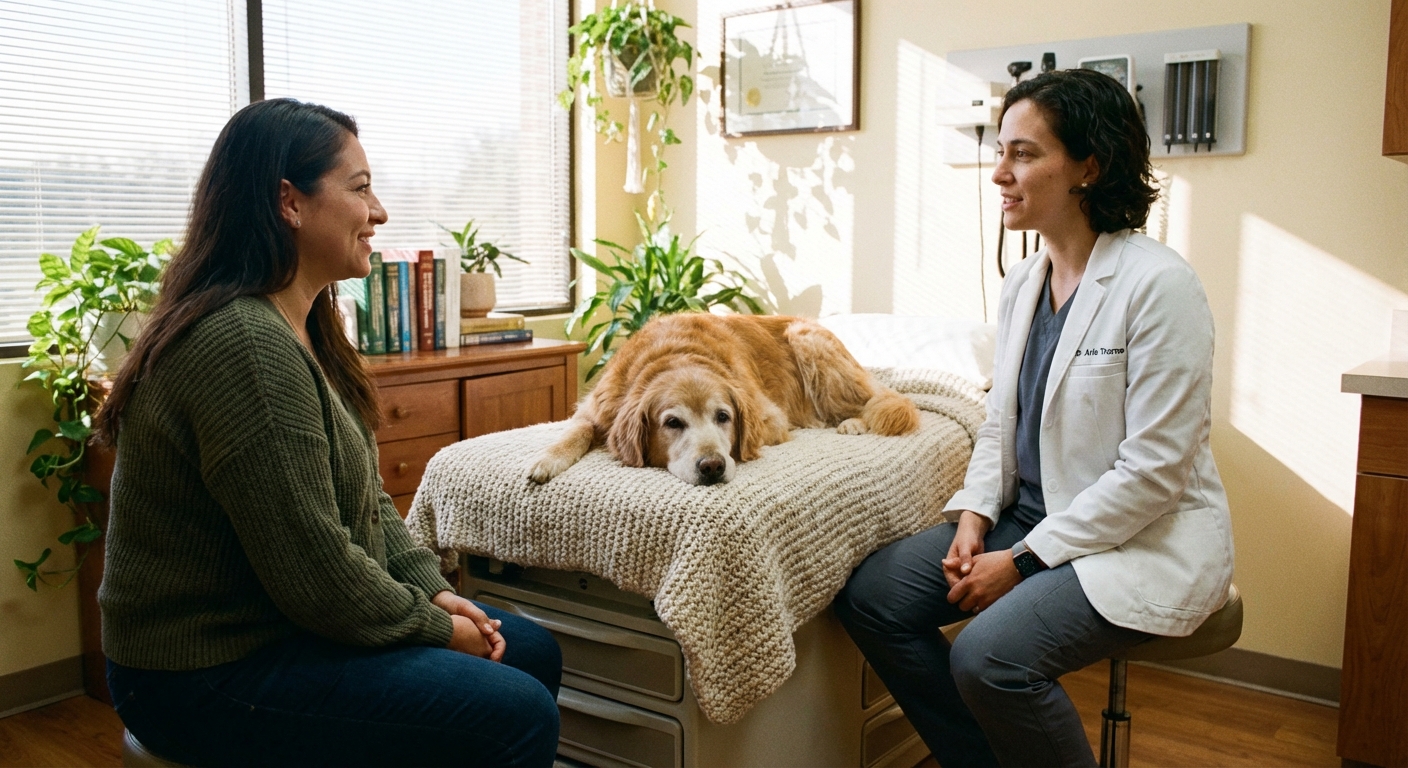
Your veterinarian can help you separate what is treatable from what is progressive and unlikely to improve. These questions are practical and compassionate:
- What is the likely trajectory over the next days to weeks?
- What symptoms should I watch for that signal suffering?
- What are realistic goals of treatment now: cure, comfort, or time?
- How will we know if medications are working?
- If my dog declines suddenly, what should I do and where should I go?
- Can you describe the euthanasia process step by step?
- Do you recommend a quality-of-life scale for my dog’s condition?
Common Illness Patterns
End-of-life changes can look different depending on the diagnosis. Your veterinarian can help you interpret what you are seeing, but these patterns are common:
- Cancer: pain, fatigue, reduced appetite, breathing issues if the chest is involved, and sudden declines near the end.
- Kidney disease: nausea, dehydration, weight loss, weakness, and “bad days” that become more frequent.
- Heart disease: cough, exercise intolerance, fainting, fluid buildup, and episodes of breathing distress.
- Cognitive dysfunction: disorientation, nighttime restlessness, anxiety, and withdrawal from normal routines.
Disease-specific care can sometimes buy meaningful comfort. It is also okay if your goal shifts from more time to a gentler time.
What Euthanasia Is Like
Details reduce fear. While protocols vary by clinic, euthanasia is generally designed to be peaceful and painless.
- Your dog is often given a calming medication first so they can relax or fall asleep.
- When you are ready, the veterinarian gives an injection that causes rapid unconsciousness.
- After your dog is unconscious, breathing and heart function stop.
Sometimes you may see reflexive breaths, small muscle twitches, or eyes that remain open. These responses can be upsetting to witness, but they are typically not signs of pain or awareness. Your veterinarian can tell you what to expect in your dog’s specific situation.
You can ask about options such as in-home euthanasia, a quiet room at the clinic, bringing a favorite blanket, and whether family members or other pets can be present if appropriate.
Plan Ahead
When possible, planning can turn an unbearable moment into a loving one.
Choices to decide
- Location: at home or at the clinic
- Who is present: which family members can realistically be there
- Comfort items: favorite bed, toy, or treats if safe
- Aftercare: private cremation, communal cremation, or burial where legal
- Timing: choose a time of day when you feel least rushed
If you have children, simple language helps: “The veterinarian will help our dog die peacefully because their body is not working anymore and they are suffering.”
Aftercare and Keepsakes
Many people feel steadier when they know what happens afterward. Clinics and in-home services can vary, but you can usually ask about:
- Whether you will have time alone with your dog before and after
- Private cremation (ashes returned) versus communal cremation
- How and when ashes are returned, and what the container looks like
- Paw prints, fur clippings, or other keepsakes, and whether you need to request them in advance
- Home burial rules in your area, if that is something you are considering
These choices are personal. There is no right way, only what feels most respectful to you.
Guilt and Grief
It is normal to feel torn. Love makes this decision feel impossible, even when it is medically clear.
Many people find comfort in reframing euthanasia as a final act of caregiving: you are choosing relief when your dog cannot choose it for themselves.
If you are stuck, try writing down two lists:
- What my dog still enjoys
- What seems to cause discomfort
Then ask, with kindness: is my dog’s daily life still mostly comfort and connection, or is it mostly struggle?
When It Is an Emergency
Seek urgent veterinary help if your dog shows any of these signs:
- Severe difficulty breathing
- Repeated collapse or inability to stand
- Uncontrolled bleeding
- Continuous seizures or multiple seizures close together
- Bloated, painful abdomen with retching
- Signs of extreme pain that do not improve quickly
In emergencies, euthanasia may be discussed quickly. That does not make it any less loving. It means you are preventing ongoing suffering.
A Gentle Closing
There is rarely a perfect day to say goodbye. But there can be a kind day. If your dog’s world has narrowed to discomfort, anxiety, and exhaustion, choosing a peaceful passing can be a compassionate gift.
If you are unsure, talk with your veterinarian and consider tracking quality of life for a short, defined window of time. Small, consistent observations can bring clarity, even in the middle of grief.