Stop fleas fast with a simple 3-part plan: use cat-safe medication, clean your home to break the life cycle, and prevent re-infestation for months. Avoid uns...
Article
•
Designer Mixes
How Do Indoor Cats Get Fleas?

Shari Shidate
Designer Mixes contributor
If your cat never sets paw outside, fleas can feel impossible. But as a veterinary assistant in Frisco, Texas, I can tell you this with confidence: indoor cats get fleas all the time. Fleas are tiny, fast, and very good at hitchhiking into our homes.
The good news is that once you understand how fleas get in, you can stop the cycle and keep your cat comfortable.
Quick note: This article is general education, not a substitute for veterinary care. Your vet can help you choose the safest product for your cat’s age, weight, and health history.
The quick answer
Indoor cats usually get fleas from:
- Adult fleas hitchhiking in on clothing, shoes, bags, or jackets after you have been outdoors or around animals
- Other pets that go outside, visit groomers, boarding, daycare, or interact with other animals
- Visitors who have pets at home (especially if a pet in their home has fleas)
- Wildlife near the home like squirrels, raccoons, opossums, stray cats, and rodents dropping flea eggs in yards, patios, crawl spaces, attics, or garages
- Nearby infestations in multi-unit buildings where eggs develop in carpeted shared areas or an adjacent unit, then adult fleas make their way into your space
Even one flea can start a problem if it is a fertile female and conditions allow the life cycle to continue, which is why early action matters.
How fleas get inside
1) Fleas can hitchhike on people
Most people picture adult fleas jumping in, and that is often the most realistic “ride” into a home. Flea eggs and larvae are less likely to survive a trip on shoes or clothing, but they can still get carried in when debris, dust, or pet bedding gets tracked indoors. In mild climates and warm months, even small exposures add up.
2) Dogs are common flea taxis
If you have a dog that goes outdoors, visits dog parks, daycare, grooming, or even just walks through grassy areas, they can bring fleas back in. Your cat may never leave the house, but fleas absolutely can.
3) Wildlife around your home matters
Fleas do not need your cat to go outside for your home to be exposed. They can ride on wildlife or stray animals that rest under decks, near doors, or in garages. From there, fleas can enter through doors, small cracks, and gaps, especially when pets or people pass through.
4) Apartments and condos raise exposure
In multi-pet buildings, the biggest risk is usually carpeted areas or spots where pets linger and shed eggs, like hallways with runners, stair landings, shared laundry rooms, or the space right outside doors. Adult fleas can also wander in from a nearby infested unit once they emerge.
Why fleas seem sudden
Fleas are sneaky because you often do not see them right away. Here is why:
- Adult fleas are only a small part of the problem. In a home issue, most of the flea population is in eggs, larvae, and pupae in the environment, not on the pet.
- Flea pupae are tough. They can sit in a protective cocoon and “wait” to emerge when they sense warmth, vibration, and carbon dioxide.
- One missed month of prevention can be enough. If fleas sneak in and your cat is unprotected, the life cycle can restart quickly.
Signs your cat has fleas
Some cats are obvious scratchers, and some are not. Watch for:
- Itching and over-grooming (especially around the tail base, back, belly, and neck)
- Small scabs or crusty bumps (common with flea allergy dermatitis)
- Hair loss from licking
- Flea dirt that looks like black pepper in the coat
- Restlessness or sudden sensitivity when you touch the back end
Quick flea dirt check
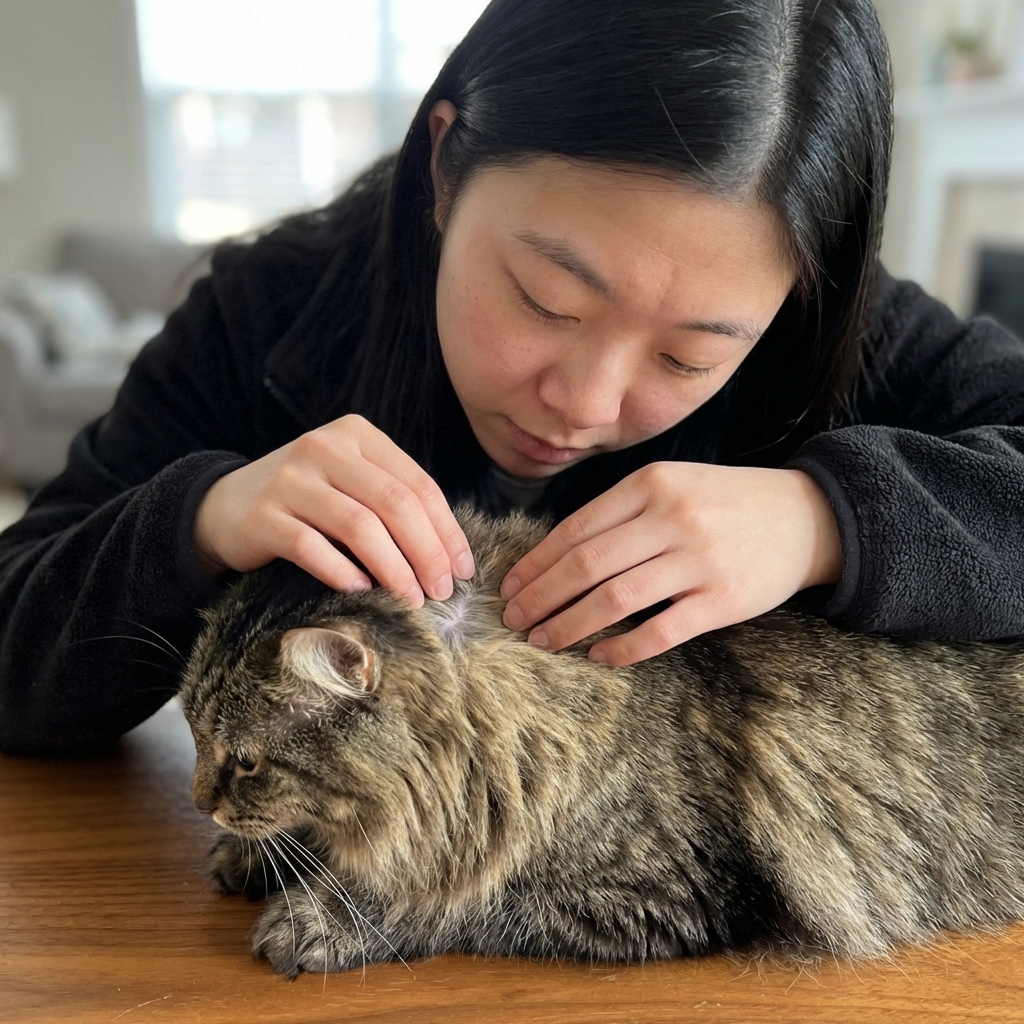
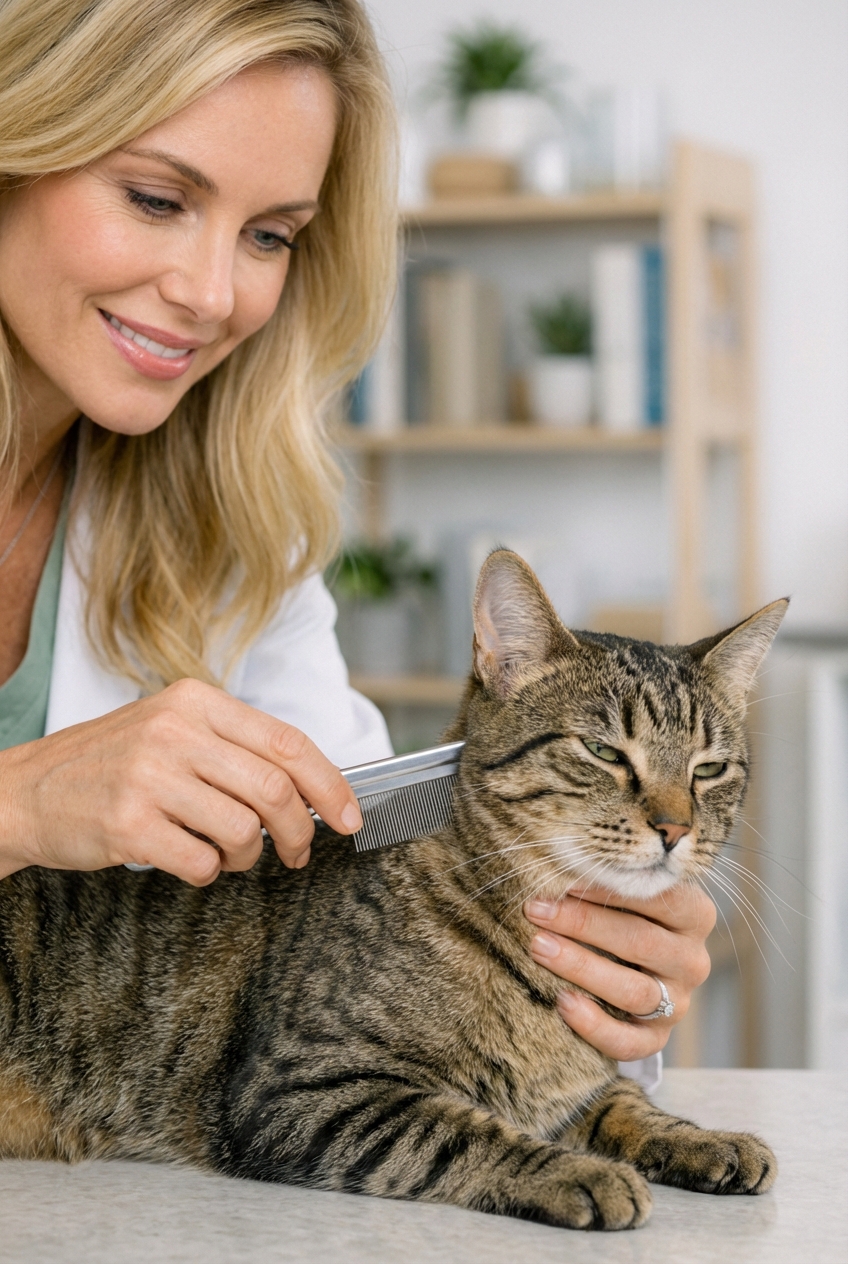
Use a fine-tooth flea comb over a white paper towel. If you see black specks, add a drop of water. If it turns reddish-brown, that is digested blood, a strong clue fleas are present.
If you are not finding fleas: itchiness and scabs can also come from mites, allergies, skin infection, or other causes. If you are unsure, your vet can help you get the right diagnosis fast.
What to do now
Step 1: Treat every pet
Fleas spread between animals. If you treat only the cat, the dog can keep the cycle going and vice versa. Use veterinarian-recommended flea preventives and give them on schedule.
Step 2: Pick cat-safe products
This is important: some dog flea products are toxic to cats, especially products containing permethrin (a common pyrethroid). Always use a product labeled for cats and the correct weight range, and check with your veterinarian if you are unsure.
Step 3: Avoid risky “home remedies”
I know it is tempting to try natural solutions, but many are unsafe or simply do not work well enough to stop an infestation. In cats, be cautious with:
- Essential oils (many can be toxic to cats)
- Garlic or supplements marketed for “flea control”
- DIY sprays that are not specifically labeled as cat-safe
Step 4: Clean the environment
- Vacuum daily for at least 2 weeks in high-traffic areas, along baseboards, under furniture, and where your cat sleeps. Then vacuum several times per week for another 2 to 6 weeks.
- Wash bedding weekly (pet beds, blankets, your bedding if your cat sleeps with you) in hot water and dry on high heat.
- Empty the vacuum right away into an outdoor trash bin.
Step 5: Use sprays or foggers only when needed
Many households resolve fleas with consistent pet treatment plus vacuuming and laundry. If you do need an environmental product, choose one that is cat-safe and ideally includes an insect growth regulator (IGR). Foggers often miss the spots fleas like most, such as under furniture and along baseboards, so they are not always the best first step. When in doubt, ask your veterinarian or a reputable pest professional familiar with pets.
How long it takes
With a solid plan, many homes improve quickly, but it is normal to see adult fleas for a while as pupae continue to emerge. A realistic timeline is:
- 1 to 3 months of consistent pet prevention and environmental cleaning to fully break the cycle in many homes
- Continue prevention even after you stop seeing fleas, since fleas can reappear if any life stages remain or if new fleas are introduced
If you are still seeing lots of fleas after several weeks of consistent treatment, it is worth checking in with your veterinarian. Sometimes the issue is product choice, missed doses, incorrect weight range, or re-exposure from outdoors or another pet.
When fleas are serious
Please call your veterinarian promptly if:
- Your cat is a kitten, senior, or medically fragile
- You see pale gums, weakness, or extreme lethargy (fleas can contribute to anemia, especially in kittens)
- Your cat has severe scabbing, open sores, or significant hair loss
- You suspect tapeworm segments (fleas can transmit tapeworms when cats ingest fleas while grooming)
Prevention that works
The most reliable way to keep an indoor cat flea-free is simple and steady:
- Year-round flea prevention as recommended by your veterinarian (many areas have fleas well beyond summer)
- Treat all pets, not just the one who is itching
- Reduce wildlife access by sealing crawl spaces, keeping garages closed, and discouraging stray animals from hanging around entryways
- Regular grooming checks with a flea comb, especially after visitors or travel
Warm tip: If you feel embarrassed that your indoor cat got fleas, please do not. Fleas are not a “dirty house” problem. They are a biology problem, and you can absolutely get ahead of them with the right steps.
Quick FAQ
Can fleas live in human hair?
Fleas may jump onto people briefly, but they prefer animal hosts and do not typically live in human hair long-term.
Do I need to treat my home?
Start with treating the pets and cleaning. Many homes do not need sprays. For heavier infestations, talk with your veterinarian about cat-safe options or consider a pet-aware pest professional.
Will one flea go away on its own?
Sometimes you get lucky. But if it is a fertile female and your cat is unprotected, it can lay eggs and create weeks of emerging fleas. Early action is easier.