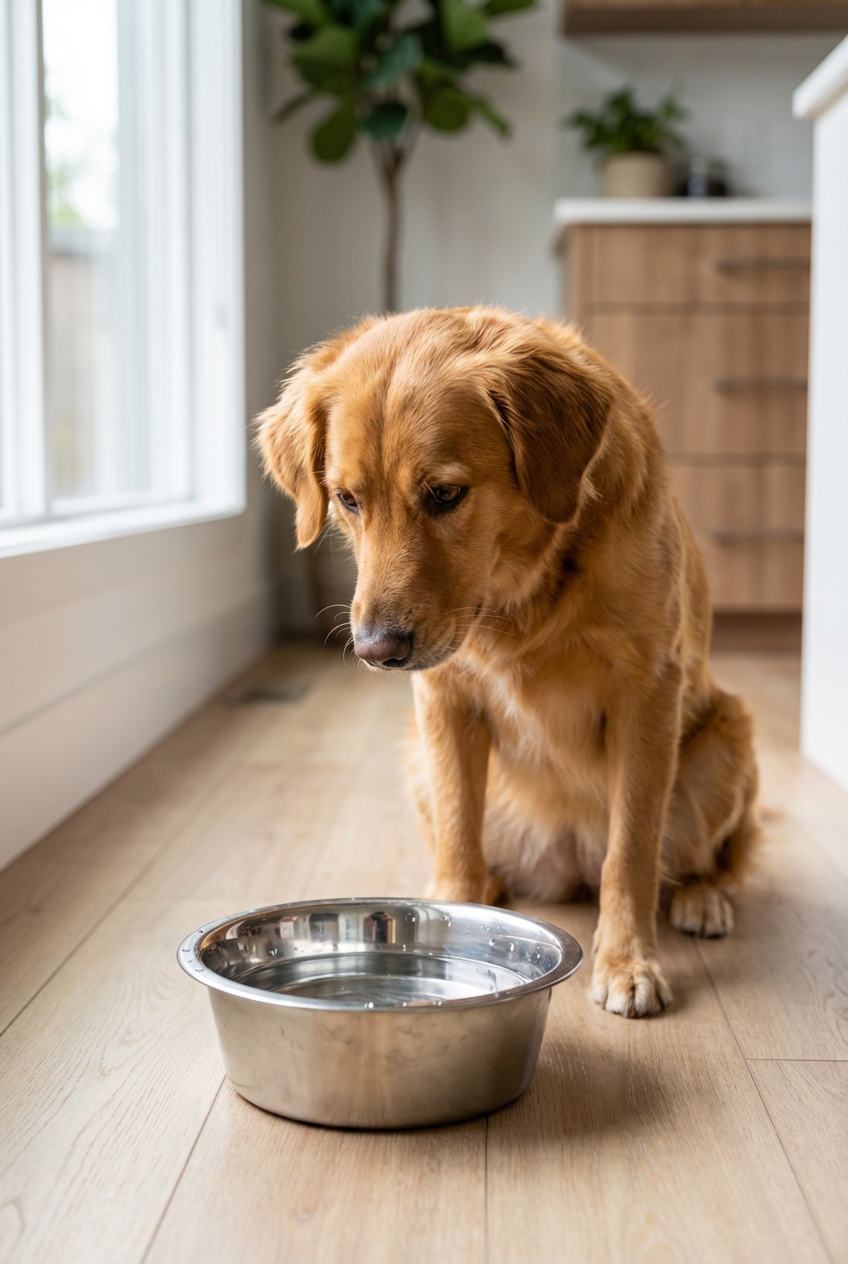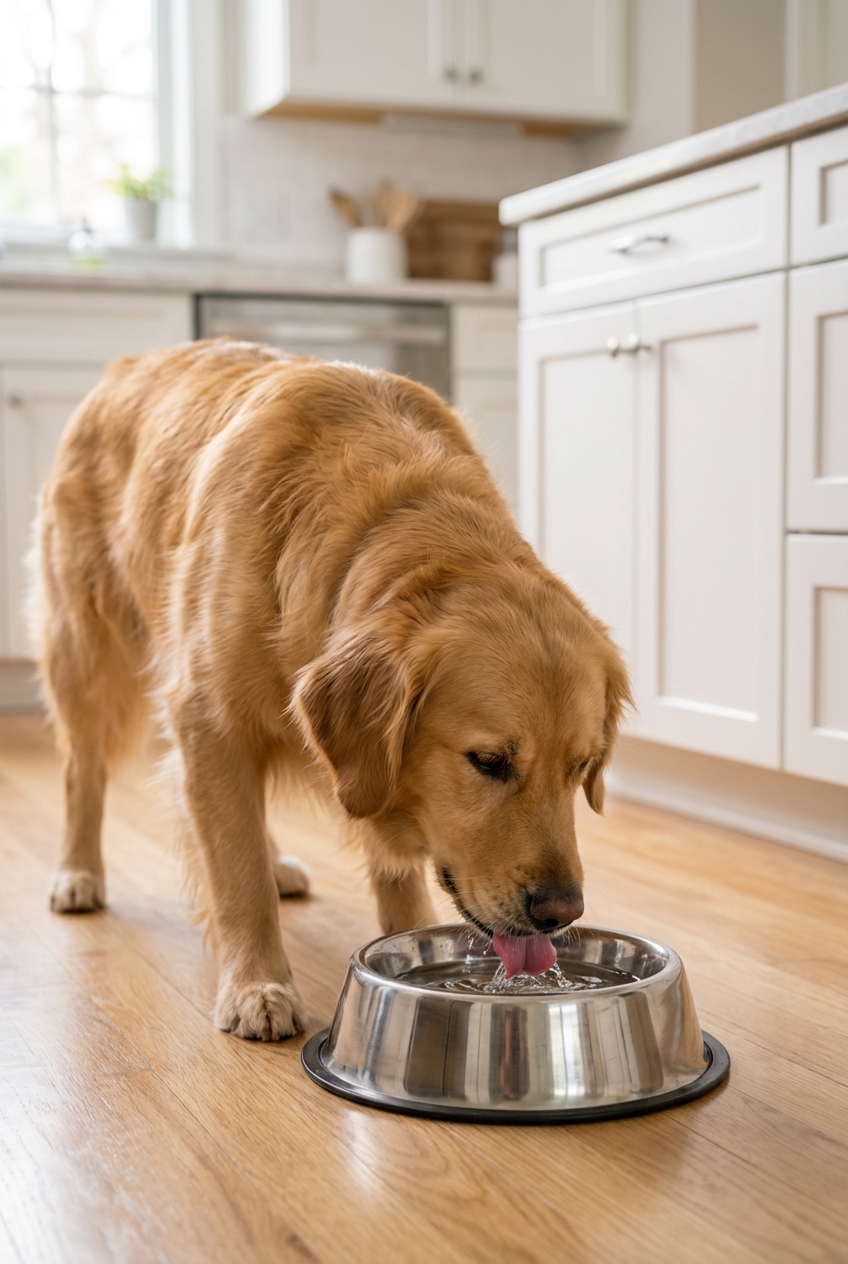
Hydration made simple: how much water dogs need, quick dehydration checks, why some dogs drink less, and proven tips like extra bowls, fountains, meal moistu...
Article
•
Designer Mixes
How Can I Make My Dog Drink Water?

Shari Shidate
Designer Mixes contributor
If you are asking, "How can I make my dog drink water?" you are already doing the most important thing: paying attention. Hydration supports everything from temperature control and digestion to kidney function and overall comfort. And in my experience as a veterinary assistant here in Frisco, Texas, most “picky drinkers” are not being stubborn. They are telling us something about comfort, routine, or health.
Let’s walk through simple, evidence-based ways to encourage drinking, plus the warning signs that mean it is time to call your veterinarian.
How much water does a dog need?
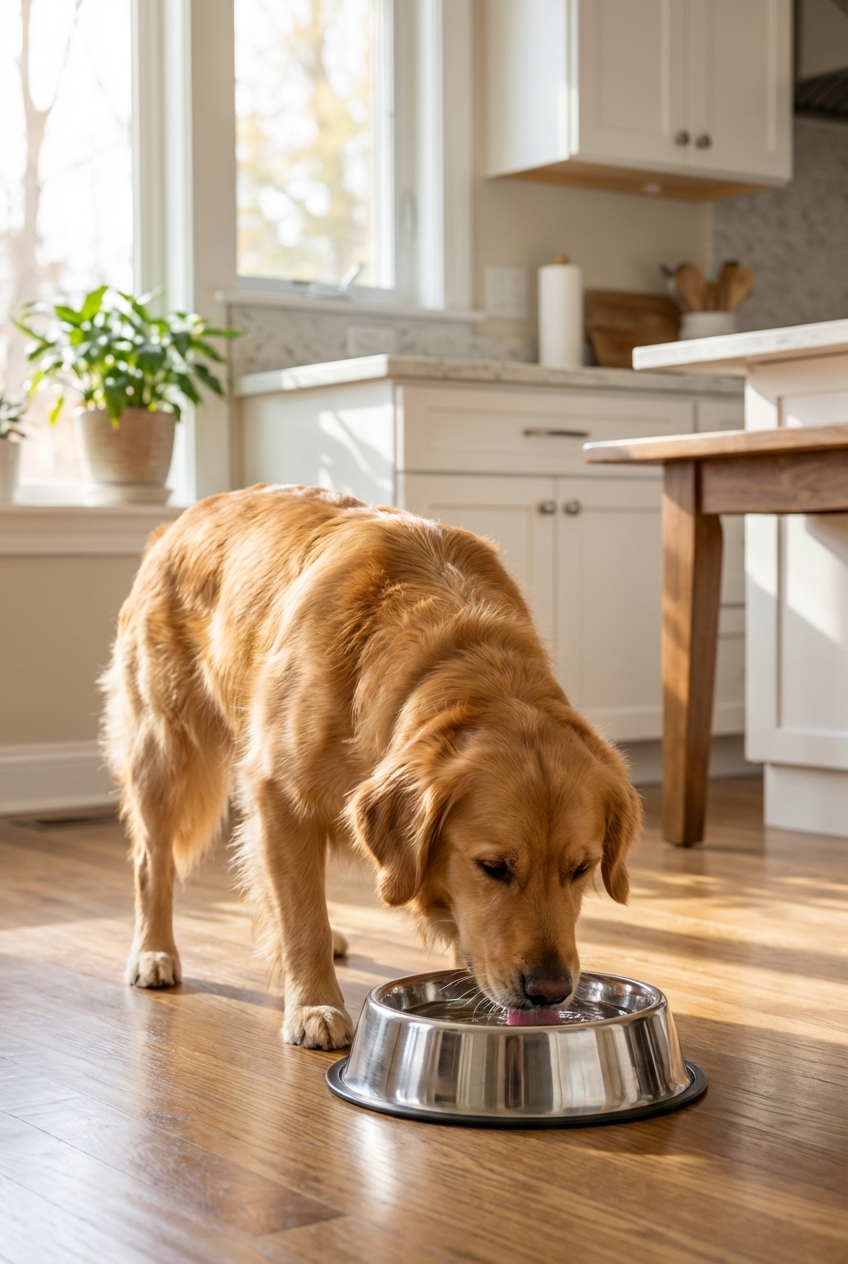
A commonly used veterinary guideline is that many dogs need roughly 40 to 60 mL of water per kilogram of body weight per day. That is about 0.7 to 1 ounce per pound per day. This is a general estimate, not a precise target. Needs can be higher or lower depending on diet (wet vs. dry), heat, exercise, nursing, and health conditions.
Rather than obsessing over the exact number, I recommend watching these practical hydration clues:
- Urine: Pale yellow is generally a good sign. Very dark urine or very low urine output can suggest dehydration.
- Gums: Moist and slick is normal. Sticky or tacky can indicate dehydration.
- Energy and behavior: Unusual tiredness, weakness, or acting “off” along with other signs can be a red flag.
- Note on noses: A dry nose alone is not a reliable dehydration test. Look at gums, urine, and overall behavior instead.
If you want a simple tracking option, measure how much water you put in the bowl each morning and how much is left at night for a few days. Patterns tell a story. Also check for “extra” water sources like toilets, puddles, dripping sprinklers, or licking condensation, since those can hide a real change in bowl drinking.
Share Your Experience
Why some dogs avoid drinking
There are everyday reasons and medical reasons. Some of the most common everyday causes include:
- Bowl issues: The bowl is too deep, slides around, smells like soap, or causes tags to clink.
- Location: The bowl is near the litter box, in a busy hallway, or too close to food for a dog who prefers separation.
- Water preferences: Some dogs dislike warm, stale, or strongly chlorinated tap water.
- Stress and routine changes: Travel, new pets, thunderstorms, or construction noise can reduce intake.
Medical causes can include dental pain, nausea, fever, kidney disease, diabetes, urinary issues, and more. The tricky part is that illness can either increase drinking or decrease it.
Easy ways to boost drinking
1) Refresh the water often
Many dogs prefer cool, fresh water. Dump, rinse, and refill at least once daily, and more often in hot weather.
2) Wash bowls the right way
Biofilm can build up quickly. Wash bowls daily with hot water and unscented dish soap, rinse thoroughly, and let them air dry. If your dog seems sensitive to odors, avoid strongly scented soaps.
3) Try a different bowl style
- Stainless steel is often a great default for cleanliness.
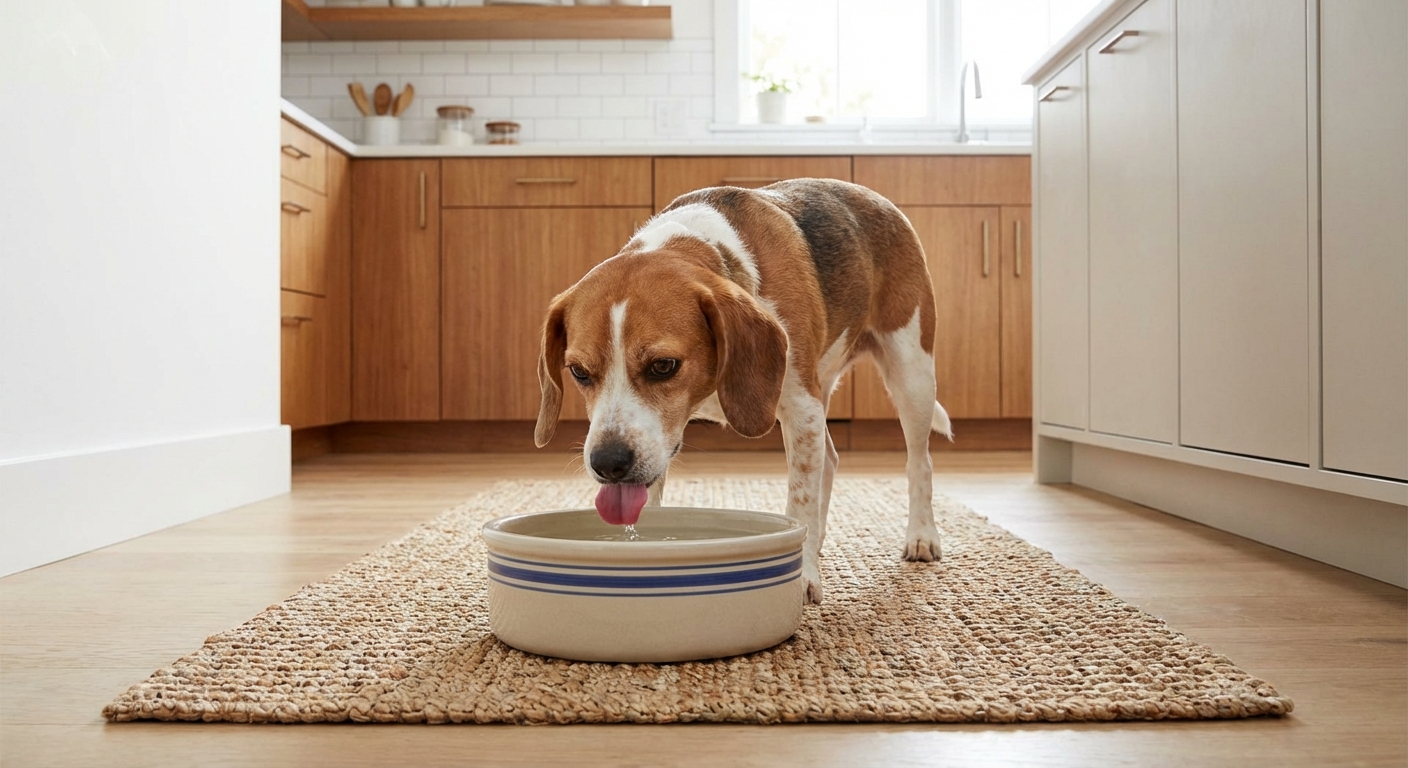
- Ceramic can be helpful for dogs bothered by reflections or tag clinking.
- Wide, shallow bowls may help flat-faced breeds or dogs with whisker sensitivity.
4) Add more water stations
Put bowls in the places your dog naturally hangs out: near the living room, your bedroom, and by the back door. More access usually equals more sipping.
5) Try a pet water fountain
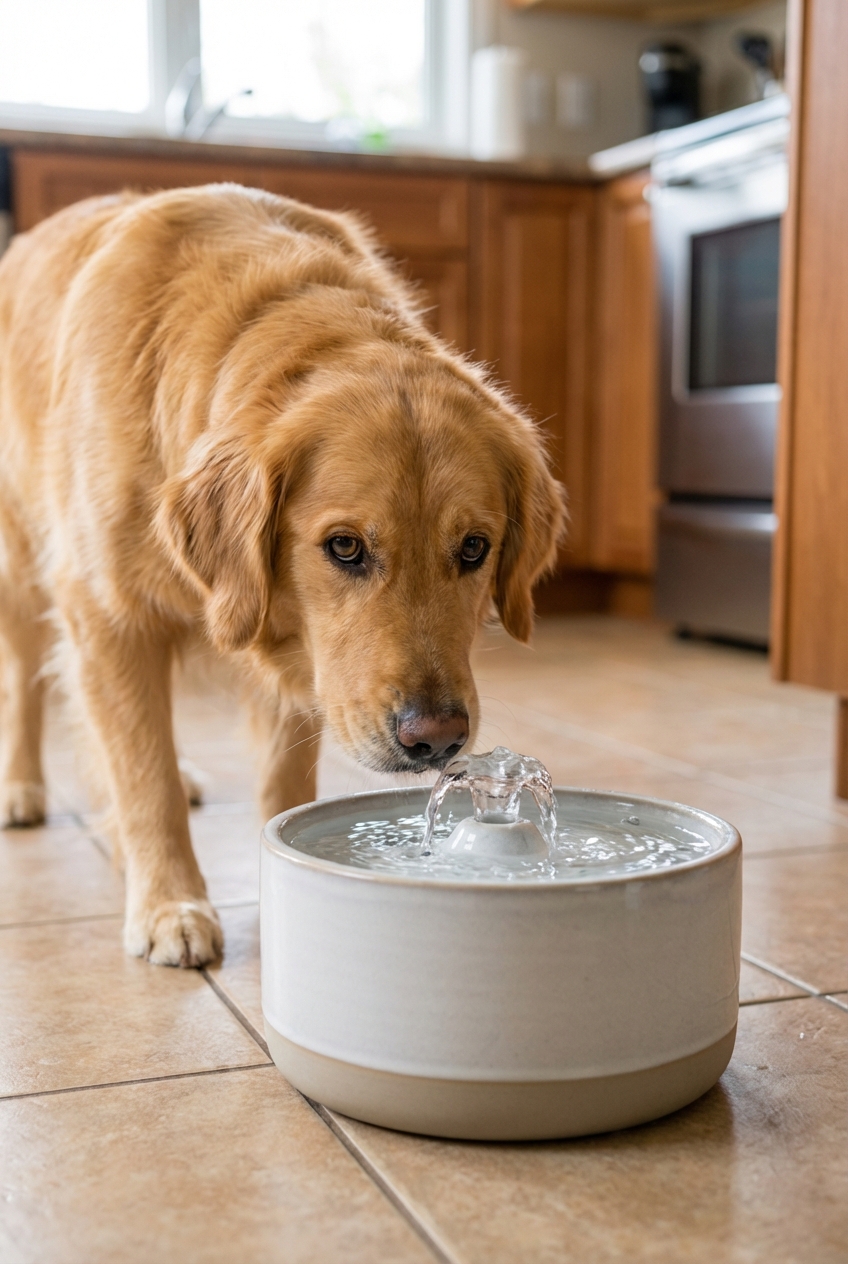
Some dogs are attracted to running water. A fountain can also keep water tasting fresher. Clean it on the manufacturer’s schedule. As a general rule, plan on a full wash at least weekly and change filters as directed, since fountains can grow slime if ignored.
6) Flavor the water safely
If your vet has not restricted fluids, sodium, or minerals, you can try:
- A teaspoon or two of low-sodium chicken broth in the bowl
- Water from unsalted canned tuna packed in water (small amount)
- A splash of water from cooking plain chicken (cooled, no onion or garlic added)
Avoid: bouillon cubes, salty soups, xylitol-sweetened products, and anything with onion or garlic added.
Extra note for some pets: “No-salt” broths sometimes use potassium chloride. If your dog has kidney disease, heart disease, or is on a prescription diet, ask your veterinarian before using those.
7) Offer ice chips or frozen treats
Many dogs enjoy crunching ice chips. You can also freeze diluted broth into cubes. This is especially useful after a walk, but go slowly for dogs who gulp. Skip ice for dogs with dental disease, very sensitive teeth, or dogs known to crack hard chews, since there is a small risk of tooth injury or choking in aggressive gulpers.
8) Increase moisture in meals
This is one of my favorite “quiet wins” for hydration.
- Add warm water to kibble and let it soak 5 to 10 minutes.
- Mix in wet food or toppers with high moisture content.
- If you feed homemade, aim for moisture-rich ingredients, but make sure the overall recipe is complete and balanced. Your vet or a veterinary nutritionist can help you do this safely.
If you transition foods, do it gradually to avoid stomach upset.
9) Build it into the routine
Offer water:
- Right after waking up
- After play sessions
- After every walk
- After training, especially if you are using dry treats
Quiet encouragement helps. Pressure can backfire, especially for anxious dogs.
What not to do
- Do not force water into your dog’s mouth unless a veterinarian instructs you. It can lead to aspiration, which is dangerous.
- Do not add electrolytes made for humans unless your vet approves. Some contain sweeteners or inappropriate mineral levels.
- Do not ignore a sudden change in drinking habits, either less or more, especially if it lasts more than a day.
When to call the vet
Please contact your veterinarian promptly if you notice any of the following:
- No water intake for 12 to 24 hours, especially in puppies, seniors, or small dogs
- Vomiting, diarrhea, fever, lethargy, or refusing food along with low drinking
- Signs of dehydration: dry or sticky gums, sunken eyes, weakness
- Pain signs: pawing at the mouth, reluctance to chew, drooling, bad breath (possible dental disease)
- Heat exposure or heavy panting that does not settle quickly
- Increased thirst and urination that is new or escalating (can point to endocrine or kidney concerns)
If your dog may have eaten something toxic, is bloated, or cannot keep water down, that is an urgent situation. Call your vet or an emergency clinic right away.
A simple plan for today
- Wash the bowl, refill with fresh cool water.
- Add a second water station in a quiet spot.
- Offer water after walks and play.
- Add a little water to meals for the next 3 days.
- Track intake and bathroom habits for 48 hours.
Most dogs respond to just a few small changes. And if they do not, that information helps your veterinarian, too. You are not overreacting by paying attention. You are being a great pet parent.