Learn a gentle, family-friendly nighttime crate training plan: ideal crate setup, predictable bedtime routine, potty-break expectations by age, and calm ways...
Article
•
Designer Mixes
House Training a Puppy at Night

Shari Shidate
Designer Mixes contributor
Nighttime potty training is one of the most stressful parts of raising a puppy, and I get it. Sleep is precious, and nobody wants surprises on the carpet at 2 a.m. The good news is that house training at night is very teachable when you combine puppy biology, a predictable routine, and kind, consistent follow-through.
As a veterinary assistant in Frisco, Texas, I see the full range of puppy parenting, from families who are exhausted and overwhelmed to those who feel confident within a week or two. The difference is almost always the same: a plan that matches the puppy’s age and bladder capacity, plus management that prevents accidents from becoming habits.
What “night trained” means
Night house training has two goals:
- Prevent accidents while your puppy is learning.
- Teach a clear bathroom routine that your puppy can predict and repeat.
Most puppies are not truly able to “hold it all night” until they are older, and even then there is variation. If your puppy is 8 to 12 weeks old, waking once or twice is normal. If your puppy is 4 to 6 months old, many can sleep a longer stretch, but size (especially toy breeds), individual development, anxiety levels, and evening water intake all matter.
Bladder basics
A common rough guideline is that puppies can hold their bladder for about one hour per month of age during the day. Many can go a bit longer at night because they are sleeping, but it is not a promise, and it is not unusual for an individual puppy to need more frequent breaks.
Typical ranges
- 8 to 10 weeks: often needs 1 to 2 potty trips overnight.
- 10 to 12 weeks: may manage one overnight potty trip.
- 3 to 4 months: some can sleep about 5 to 7 hours, but others still need a break.
- 5 to 6 months: many can sleep through the night with a consistent routine, but some (especially small breeds) still need a late-night or early-morning trip.
Water late in the evening, high activity, hot weather, certain medications, and GI upset can all increase nighttime needs.
Set up before night one
Pick a confinement plan
For most families, the fastest and cleanest approach is crate training paired with a consistent nighttime routine. Puppies are less likely to potty where they sleep, as long as the space is the right size.
- Crate: best for clear potty training signals and minimizing accidents.
- Exercise pen: helpful for puppies who panic in a crate, but it can slow training if they potty in one corner.
- Puppy-proof room: usually the hardest for night training because there is too much freedom.
Crate size matters
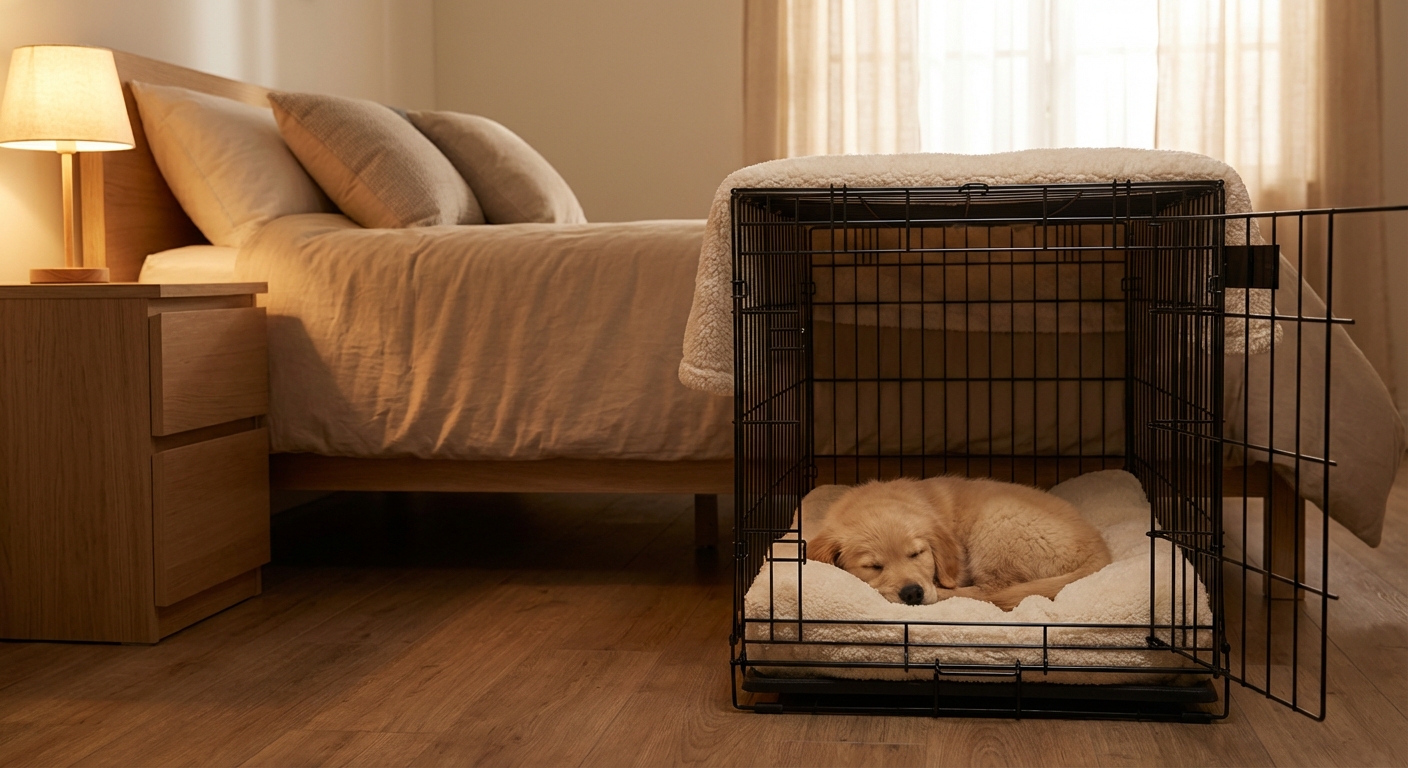
The crate should be big enough for your puppy to stand up, turn around, and lie down comfortably, but not so big they can sleep on one end and potty on the other. If you have a large-breed puppy, use a crate divider.
Your evening routine
Think of the evening as “setting the bladder up to succeed.” You are not trying to restrict water dangerously. You are building a predictable pattern and reducing last-minute chaos.
Meals, water, and timing
- Feed dinner early enough that digestion has time to happen before bedtime.
- Offer water normally throughout the evening.
- For many puppies, picking up the water bowl about 1 to 2 hours before bed can help, as long as your puppy has had adequate water and your veterinarian agrees. Skip this if your puppy is very young, is a toy breed prone to low blood sugar, has a medical condition, has been very active, or it is hot and they need extra hydration.
One hour before bed
- Calm play and connection: enough movement to trigger a potty, but not wild zoomies that lead to extra drinking.
- Last big potty chance: go outside and wait for a full pee and, if possible, a bowel movement.
Right before bed: the boring potty trip
Take your puppy out on leash to the same spot, stand still, and quietly wait. Use one cue like “go potty”. When they finish, calmly praise and offer a tiny treat. Then go straight to the crate. No extra play, no roaming the house.
A schedule that works
For young puppies, set an alarm. Waiting for crying can backfire, because some puppies only cry after they have already started to pee, and others learn that crying equals attention.
Sample schedules
Use these as templates, not exact clock times. Think in “bedtime plus X hours.”
8 to 10 weeks
- Bedtime potty: right before bed
- Alarm potty: about 3 hours after bedtime
- Alarm potty: about 3 hours after that
- Wake-up potty: when you get up for the day
10 to 12 weeks
- Bedtime potty: right before bed
- Alarm potty: about 4 hours after bedtime
- Wake-up potty: when you get up for the day
3 to 4 months
- Bedtime potty: right before bed
- Optional alarm potty: about 5 to 7 hours after bedtime, based on your puppy’s pattern
- Wake-up potty: when you get up for the day
How to phase out alarms
Once your puppy stays dry for 3 to 5 nights in a row, move the alarm later by 15 to 30 minutes every couple of nights. If you get an accident, go back to the previous successful time for several nights before trying again.
Night potty trips
This is where many well-meaning families accidentally slow progress by making nights too fun.
- Leash on even if you have a fenced yard.
- Same spot every time.
- Low lights and minimal talking.
- No play and no wandering.
- Reward potty outside within a couple seconds of finishing.
- Back to bed immediately once they finish.
If your puppy does not go within 5 minutes, return them to the crate and try again in 10 to 15 minutes. This prevents “outside time” from turning into a game.
Potty cry or attention cry?
Use the same straight-out-and-back routine every time. If your puppy consistently potties right away, it was likely a true need. If they go out and just want to sniff or play, your routine (leash, one spot, minimal talking, back to bed) will make that less rewarding, and the attention crying usually fades.
If your puppy comes back inside and struggles to settle, keep it quiet. Many pups do best with a little white noise, and some settle faster with a light sheet over part of the crate (only if airflow is good and your puppy cannot pull it in).
Night safety and vaccines
If your puppy is not fully vaccinated, ask your veterinarian what is safest in your area. In many cases, you can choose a low-traffic potty spot at home and avoid places where unknown dogs frequent. This is especially important for parvovirus risk.
Puppy pads at night?
It depends on your goals and your living situation.
Pads can help when
- You live in a high-rise and nighttime trips are not realistic.
- Your puppy is medically unable to hold it yet and you need a temporary plan.
- You are dealing with unsafe outdoor conditions.
Pads can slow training when
- Your long-term goal is outdoor potty only.
- Your puppy starts to think soft surfaces are toilets (pads, rugs, bath mats).
If you use pads, place them in a consistent location and treat it like a training step, not a permanent solution, unless indoor potty is your intended plan.
Common problems
“My puppy cries in the crate”
First, rule out the obvious: do they need to potty, are they too hot, are they thirsty, are they frightened?
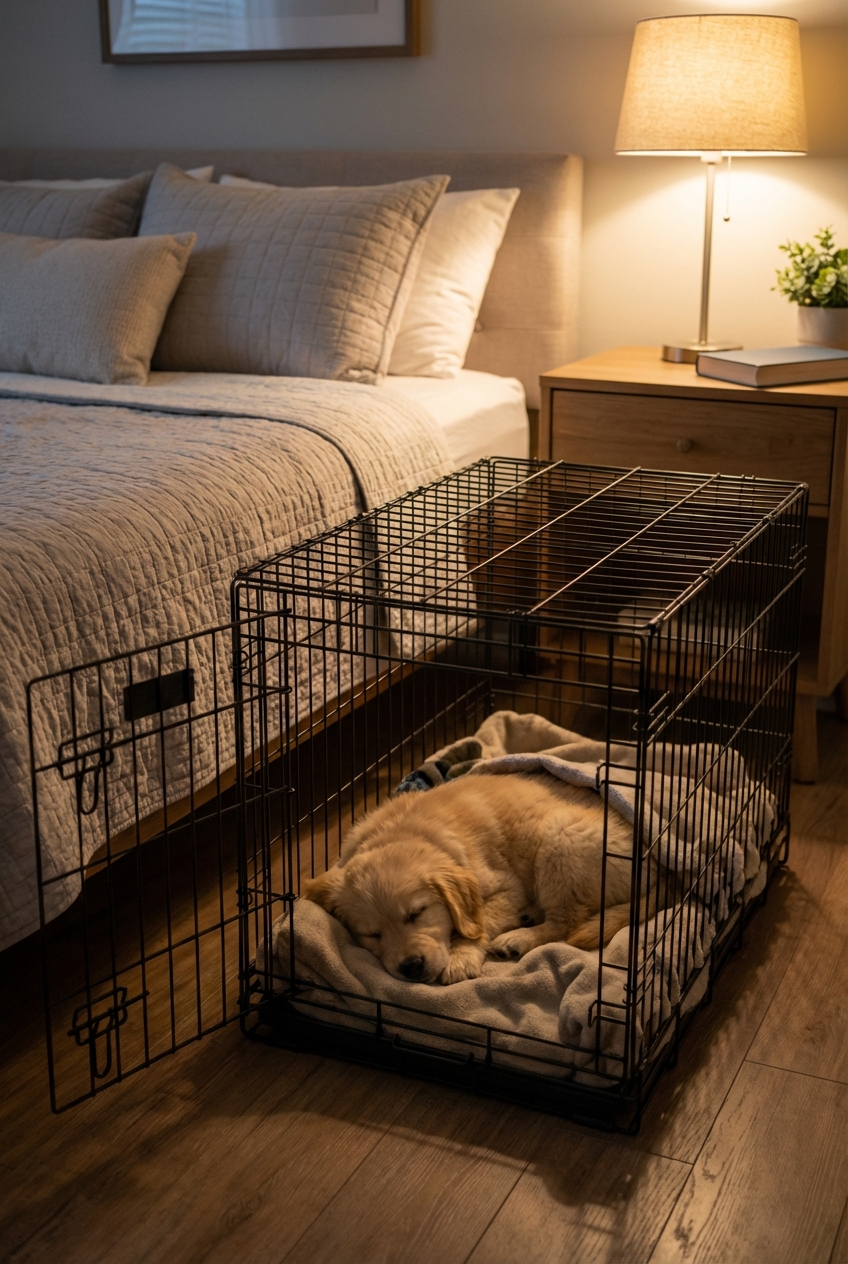
- Crate placement: for most puppies, the crate should be in your bedroom at first. Being close reduces panic and helps you respond quickly for potty trips.
- Comfort items: a safe crate mat and a worn T-shirt that smells like you can help some puppies settle.
- Predictable routine: same bedtime pattern every night builds security.
If crying continues intensely or escalates, consult a qualified trainer. Some puppies experience true separation distress, and we want to address that kindly and early.
“My puppy pees in the crate”
This usually points to one of these issues:
- Crate too large (add a divider).
- Alarm too late (increase overnight breaks temporarily).
- Medical problem such as a urinary tract infection or inflammation.
If your puppy is having frequent accidents, straining, blood in urine, unusually frequent urination, or sudden house training regression, call your veterinarian.
“My puppy poops in the crate”
This can happen when bedtime timing is off, the puppy is stressed, or there is a GI issue.
- Move dinner earlier and make sure you are waiting long enough outside for a bowel movement before bed.
- Talk to your veterinarian if there is diarrhea, mucus, blood, vomiting, or if accidents start suddenly. Parasites and other GI problems can create urgency.
“My puppy wakes up ready to party”
- Keep nighttime trips boring and brief.
- Do not offer food during the night unless your veterinarian instructs you to. Some very small or very young puppies may need different guidance, so ask if you are unsure.
- Make daytime enrichment stronger: training sessions, appropriate exercise, puzzle feeders.
“Accidents happen only at night”
- Re-check bedtime water habits and last potty trip timing.
- Make sure you are waiting long enough outside for a full emptying.
- Consider adding one temporary alarm potty trip again.
If there’s an accident
Accidents are information, not proof your puppy is “stubborn.” Puppies do what works in the moment, and they are still learning.
- If you catch them mid-stream: calmly pick them up and take them outside to finish. Praise when they go outside.
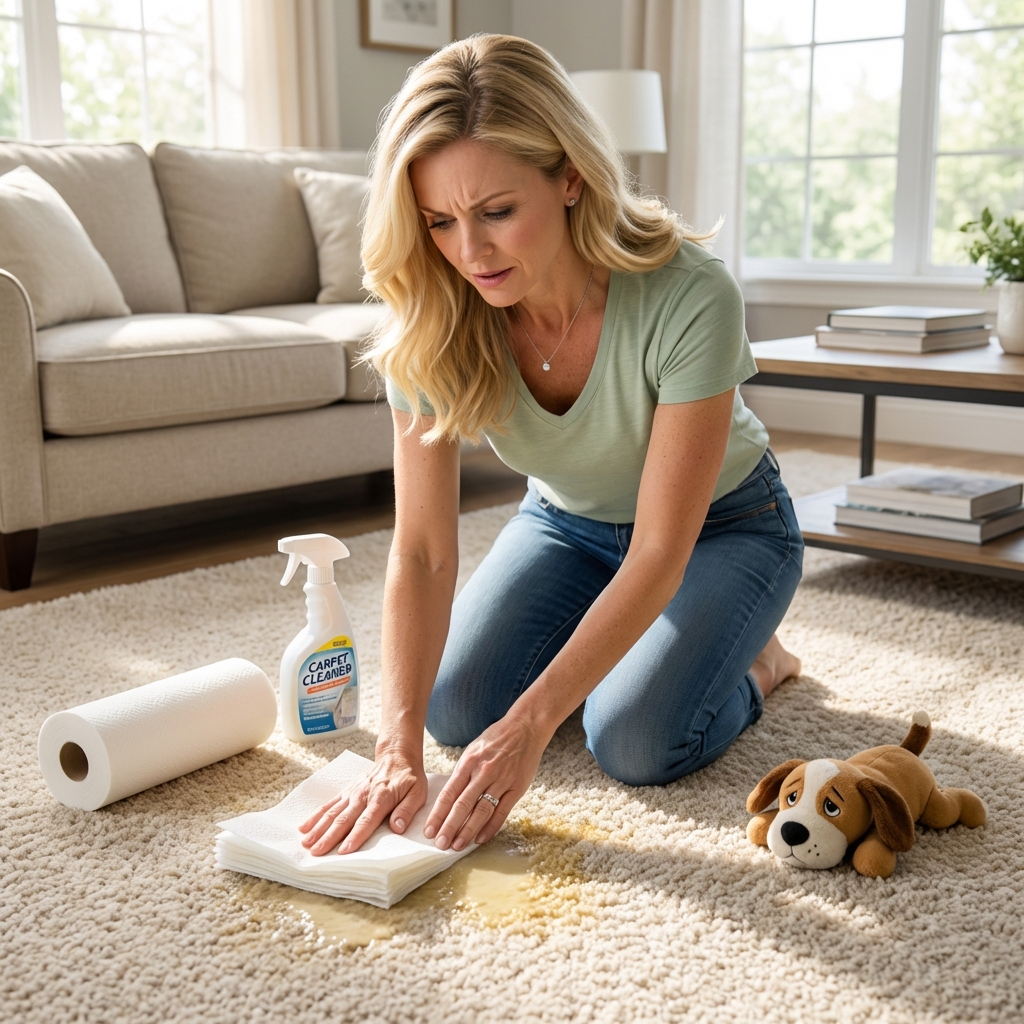
- If you find it later: do not scold. Clean thoroughly with an enzymatic cleaner designed for pet urine.
Avoid ammonia-based cleaners. They can leave odors that may attract repeat accidents or marking.
Tips that speed things up
Track patterns for one week
Write down:
- Last water
- Last meal
- Last potty
- Night wakings
- Accidents
Patterns show you exactly where to adjust.
Use one potty cue and reward immediately
Reward within a couple of seconds of finishing. That timing matters.
Keep a night kit by the door
- Leash and poop bags
- Treats
- Slip-on shoes
- Small flashlight
- Jacket
The fewer steps between waking up and getting outside, the fewer accidents you will have.
When to call your vet
Please reach out to your veterinary team if you notice any of the following:
- Accidents increasing suddenly after progress
- Frequent urination, straining, or discomfort
- Blood in urine
- Excessive thirst
- Diarrhea or vomiting affecting nighttime urgency
- Lethargy or reduced appetite
Nighttime potty trouble is sometimes training, and sometimes health. It is always okay to ask.
A gentle timeline
Many puppies show big improvement in 2 to 4 weeks with consistent management, and most are significantly more reliable by 4 to 6 months. Some take longer, especially smaller breeds, anxious puppies, or puppies who started with lots of indoor potty opportunities.
Progress is not always a straight line. If you need to go back a step for a few nights, that is not failure. That is smart training.
Bedtime checklist
- Potty trip 30 to 60 minutes before bed
- Boring potty trip right before bed
- Crate sized correctly
- Enzymatic cleaner on hand
- Alarm set (if your puppy is young)
- Treats by the door
With a steady plan and a little patience, your puppy will learn what you want. And you will sleep again, I promise.