Decode cat behavior changes with a health-first approach. Covers hiding, litter box issues, scratching, overgrooming, vocalizing, stress fixes, and when to s...
Article
•
Designer Mixes
House Cat Behavior Guide

Shari Shidate
Designer Mixes contributor
Cats are affectionate, funny, and surprisingly complex. As a veterinary assistant, I have learned that most “mystery behaviors” make perfect sense once you view your cat as a small predator who also happens to share your couch. This guide breaks down common house cat behaviors, what they mean, what’s normal, and when it is time to call your veterinarian.
How cats think: predator, prey, roommate
Domestic cats still run on the instincts of their wild relatives. Indoors, their world is smaller, so their natural needs show up as behaviors: stalking toys, scratching furniture, climbing shelves, watching birds through a window, and patrolling the home as if it is their territory.
- Predator brain: hunt, chase, pounce, bite, then groom and sleep.
- Prey brain: startle easily, hide when uncertain, dislike being cornered.
- Territory brain: scent-marking and routines help them feel safe.
When a cat’s environment does not allow these needs to be expressed, you may see stress behaviors like overgrooming, aggression, or litter box problems.
Body language you can trust
Cat communication is subtle. If you learn a few basics, you can prevent bites, reduce stress, and build trust fast.
Tail signals
- Upright tail with a gentle curve at the tip: friendly greeting.
- Low tail or tucked tail: fear, discomfort, or uncertainty.
- Puffed tail: intense fear or arousal. Give space.
- Fast tail flicking: overstimulation or irritation, especially during petting.
Ears and eyes
- Ears forward: curious, engaged.
- Ears sideways or flattened: stressed, defensive, or in pain.
- Slow blink: relaxed and affiliative. You can slow blink back.
- Dilated pupils: can mean excitement, fear, or pain depending on context and lighting.
Belly up does not always mean pet me
A cat showing their belly is often expressing trust, not requesting tummy rubs. Many cats will tolerate one or two gentle strokes, then switch to a grab-and-kick response because the belly is a vulnerable area.
Safety note: If your cat is hissing, swatting, or pinned in a corner, do not try to “push through” or pick them up. Give them space and use a towel, carrier, or a barrier if you need to move them safely.
Vocalizations: meows, purrs, yowls
Cats use sound differently than dogs. Many adult cats meow most often at people, and your cat may essentially have a “human language” that seems built just for you.
Meowing
- Short meow: greeting or request.
- Repeated meows: escalating demand, boredom, or anxiety.
- Sudden increase in meowing: can be stress, pain, hyperthyroidism in older cats, cognitive changes, or hunger from medical issues.
Purring
Purring often means comfort, but cats may also purr when they are injured, stressed, or trying to self-soothe. If purring is paired with hiding, reduced appetite, limping, or changes in litter box habits, it deserves a medical check.
Nighttime yowling
Common causes include boredom, attention-seeking, hunger, unspayed or unneutered hormonal behaviors, and in older cats, hearing loss or cognitive dysfunction. If this is new or intense, talk with your veterinarian to rule out pain or thyroid disease, and ask what screening makes sense for your cat. In some cases, your vet may also check blood pressure.
Scratching: why it happens
Scratching is not “bad behavior.” It is normal maintenance and communication. Cats scratch to shed nail sheaths, stretch the back and shoulders, and leave both visual marks and scent from glands in the paws.
Now that you know the “why,” the goal is to make appropriate scratching the easiest choice in the house.
Make scratching the easy choice
- Provide options: at least one tall vertical scratcher and one horizontal scratcher.
- Stability matters: a wobbly post gets ignored. A solid post wins.
- Placement matters: put scratchers where your cat already scratches, and near sleeping areas since cats love a stretch after waking.
- Reward: treats, praise, or play immediately after using the scratcher.
Extra tools that help
- Nail trims: short, regular trims can reduce damage from scratching. If you are unsure how, ask your veterinary team to show you the safe way.
- Nail caps: soft nail caps can be an option for some cats, especially during a training and redirection phase.
- Catnip and texture: some cats love sisal, others prefer cardboard. Trying a few textures helps you find what your cat will actually use.
Discourage without fear
Avoid yelling or punishment. It can increase anxiety and make the problem worse. Use double-sided tape, furniture covers, or a strategically placed scratcher to reroute behavior.
Note on declawing: Many veterinary professionals recommend avoiding declawing because it is an amputation of the last bone in each toe and can be linked to pain and long-term behavior problems. If scratching is overwhelming, ask your vet about a plan that combines environment changes, nail care, and behavior support.
Play aggression and love bites
Many cats bite during play because that is how predators practice hunting. Kittens who did not learn bite inhibition, cats who are under-stimulated, and high-energy young adults are especially likely to pounce on ankles.
What helps most
- Daily interactive play: 10 to 15 minutes, once or twice a day, using a wand toy so your hands stay safe.
- Complete the hunt: let the toy be “caught” at the end, then offer a small meal or treat. This mimics the natural hunt-eat-groom-sleep cycle.
- Never use hands as toys: it trains biting.
- Laser pointers: if you use one, end with a physical toy or treat your cat can catch so the session feels complete.
Petting-induced overstimulation
Some cats enjoy petting until their nervous system hits a threshold. Watch for tail twitching, skin rippling, sudden head turns, or ears rotating sideways. Pause before the bite happens, and keep petting sessions shorter but more frequent.
Hiding and height-seeking
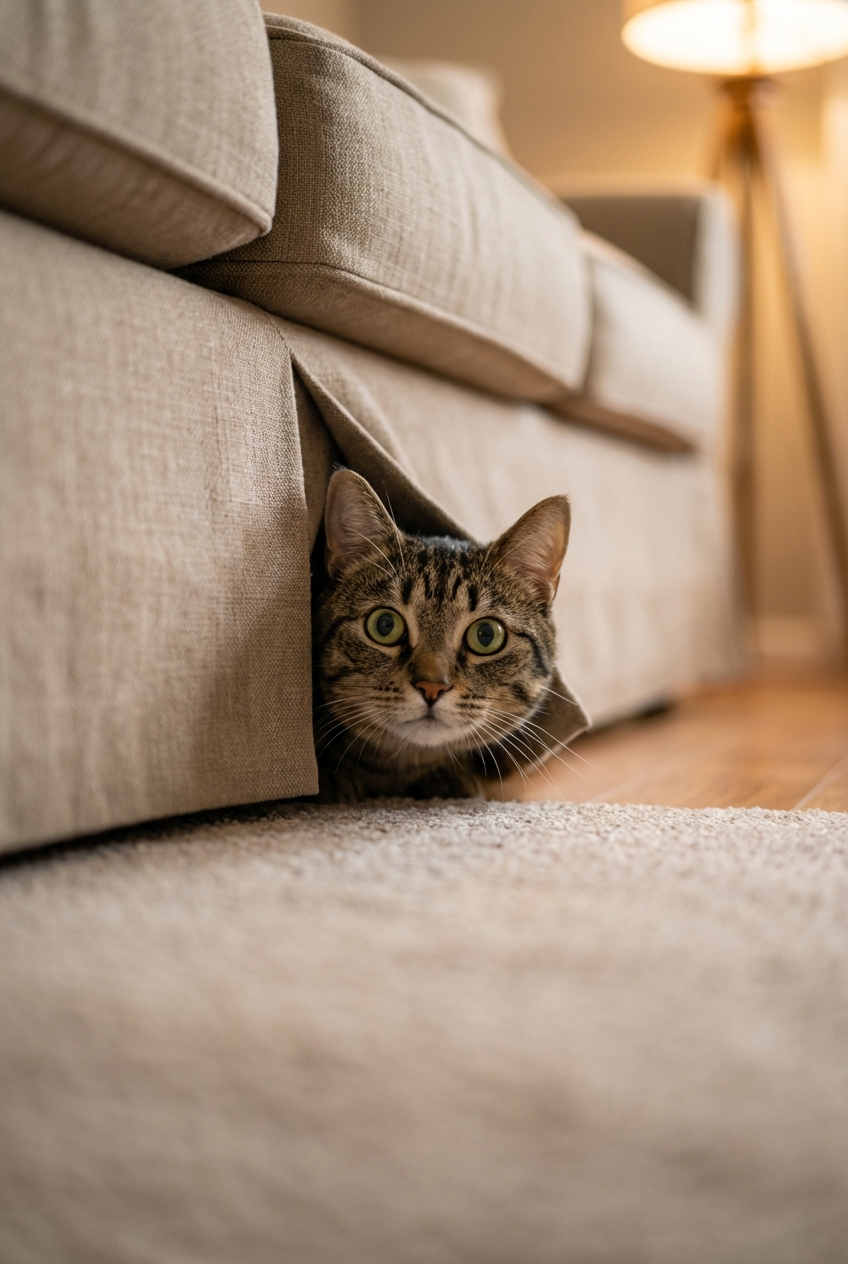
Hiding is a normal coping strategy. Some cats are naturally cautious, while others hide because something changed: new people, a move, construction noise, a new pet, or conflict with another cat.
Before you label it as “just behavior,” remember that cats also hide when they do not feel well.
Support a shy cat
- Create safe zones: covered beds, boxes, or a quiet room with food, water, and a litter box.
- Add vertical space: cat trees, window perches, or shelves help cats feel secure.
- Use predictability: feed and play at consistent times.
- Let them initiate: sit nearby, offer treats, and allow the cat to approach.
If hiding is new, prolonged, or paired with reduced appetite, vomiting, diarrhea, limping, changes in grooming, or breathing changes, assume discomfort or illness until proven otherwise.
Litter box behavior
Litter box issues are one of the top reasons cats are surrendered, and they are also one of the most fixable problems when you approach them medically and behaviorally.
Rule out medical causes first
If your cat is urinating outside the box, straining, crying out, licking the genital area, or urinating more often, call your vet promptly. In cats, these signs are often caused by bladder inflammation (sometimes called idiopathic cystitis), crystals, or stress, and sometimes by infection. Urinary blockage can be life-threatening, especially for male cats.
Emergency tip: if your cat is straining and producing little to no urine, seems painful, or is vomiting and lethargic, treat it like an emergency and seek care right away.
Set up the box for success
- Number of boxes: one per cat, plus one extra.
- Location: quiet, accessible, and on multiple levels in multi-story homes.
- Size: large enough to turn around comfortably. Many cats prefer big, open boxes.
- Covered vs. uncovered: many cats prefer uncovered boxes, especially if they feel trapped or if odor builds up under a hood.
- Litter type: unscented clumping litter is often best tolerated.
- Litter depth: many cats prefer a shallow-to-moderate layer they can dig in without sinking (about 2 to 3 inches is a reasonable starting point).
- Cleaning: scoop daily, wash the box regularly with mild soap and water. Avoid ammonia-based cleaners, which can smell like urine to cats.
Urine marking vs. toilet accidents
Spraying is typically a small amount of urine on a vertical surface, often tied to stress or territorial conflict. Squatting and leaving a larger puddle is more often a box aversion, a location issue, or a medical problem. Both warrant a veterinarian visit if new.
Grooming: normal vs stress
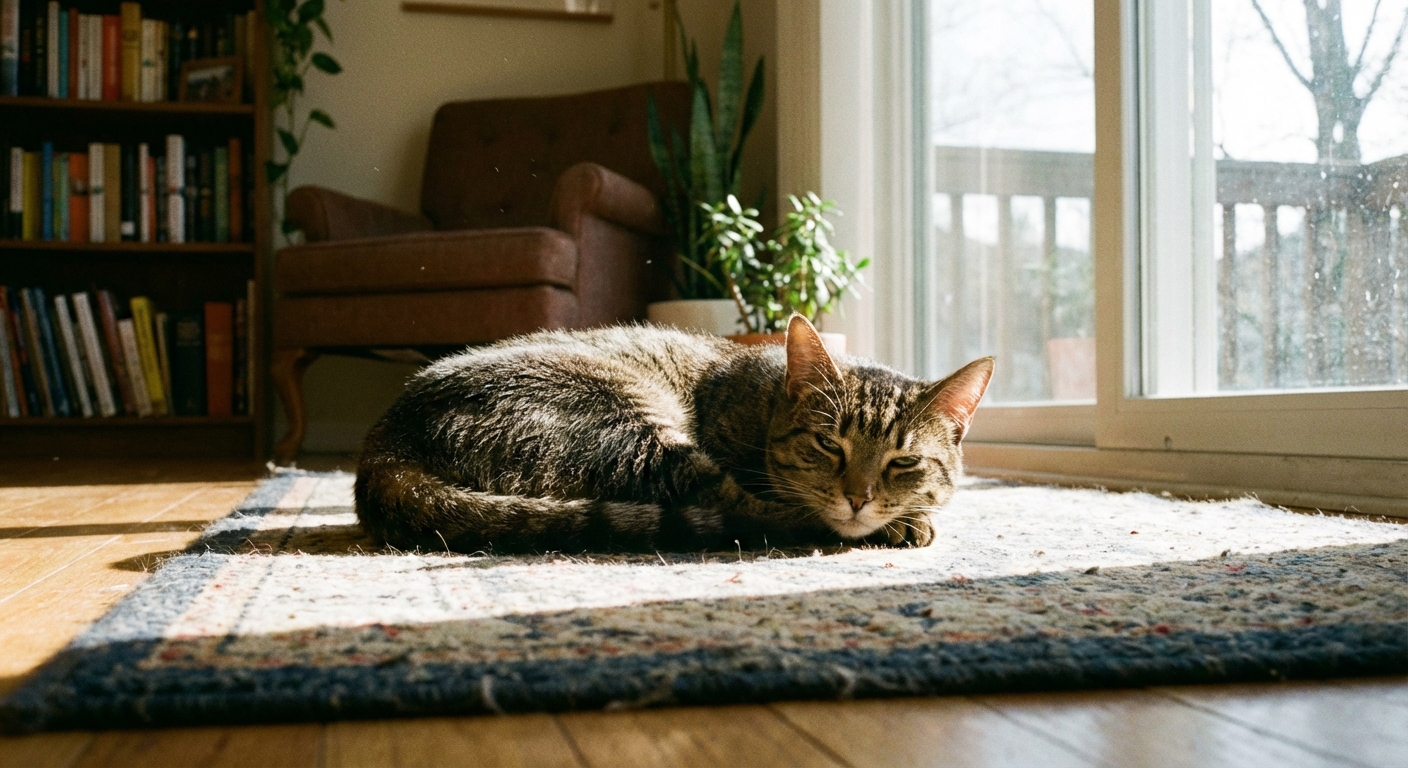
Most cats groom daily, and it is part hygiene, part relaxation. But grooming can also be a stress outlet.
When grooming can be a red flag
- Bald patches or broken hairs: overgrooming from stress, allergies, parasites, or pain.
- Greasy coat or dandruff: can reflect illness, dental pain, obesity limiting reach, or arthritis.
- Sudden decrease in grooming: often signals pain or systemic disease.
Because skin issues can look similar, it is best to get a veterinary exam before assuming it is “just anxiety.”
Why cats knock things over
Sometimes it is hunting practice, sometimes it is boredom, and sometimes it is the cat version of experimenting with gravity. Cats also learn quickly that pushing objects off a surface makes humans react, which can become a reliable attention tool.
Practical solutions
- Increase enrichment: food puzzles, window perches, short play sessions.
- Reduce temptation: clear fragile items from favorite shelves.
- Reward calm behaviors: give attention when your cat is sitting nicely, not mid-swipe.
Multi-cat households
Cats can live peacefully together, but they rarely “work it out” without resources. Subtle conflict is common and can show up as hiding, blocking access to litter boxes, staring, or one cat being chased.
If there is a fight, do not break it up with bare hands. Use a loud noise, a pillow, a piece of cardboard, or a blanket to separate them, then give everyone time to cool down.
Set up your home like a neighborhood
- Spread resources: separate food and water stations, multiple litter boxes, multiple resting areas. A simple goal is at least one resource “station” per cat, plus extra options.
- Create escape routes: vertical shelves and multiple paths through rooms.
- Watch doorway behavior: one cat guarding a hallway or litter box is a common stress trigger.
- Pheromones: some households benefit from feline pheromone diffusers or sprays as part of a bigger stress-reduction plan.
If you are introducing a new cat, go slower than you think you need to. A gradual, scent-first introduction prevents many long-term issues. Also be aware of “non-recognition aggression,” which can happen when one cat returns from the vet smelling different. A brief, calm reintroduction can help.
Indoor enrichment
Indoor cats can thrive, but they need their world to feel active. Think of enrichment as preventive care for behavior and health.
- Interactive play: wand toys, chase toys, and short sessions that end with a treat.
- Foraging: puzzle feeders, treat balls, hiding small portions of kibble in safe places.
- Visual stimulation: a bird feeder outside a window, cat TV videos in moderation.
- Scent enrichment: cat-safe herbs like catnip or silvervine, rotated weekly.
- Training: clicker training for sit, touch, or carrier comfort builds confidence.
Action step: Choose one new enrichment idea and try it for 7 days. Cats often enjoy novelty, but many do best with predictable routines. Keep the schedule steady.
When to call the vet
In veterinary medicine, we take sudden behavior changes seriously. Cats are masters at hiding illness, so behavior is often the first clue.
- Not eating for 24 hours, or eating much less than normal (call sooner for kittens, seniors, or cats with known medical conditions)
- Hiding more than usual or acting unusually clingy
- New aggression, especially if touched in certain areas
- Changes in litter box habits, straining, or blood in urine
- Inability to urinate or repeated trips to the box with little output (urgent)
- Vocalizing more, especially at night, in an older cat
- Overgrooming, bald spots, or sudden coat changes
- Weight loss, vomiting, or diarrhea
- Open-mouth breathing, rapid breathing at rest, collapse, or severe lethargy (urgent)
If you are unsure, it is always appropriate to call your veterinary clinic and describe the change. A quick conversation can prevent a small issue from becoming a big one.