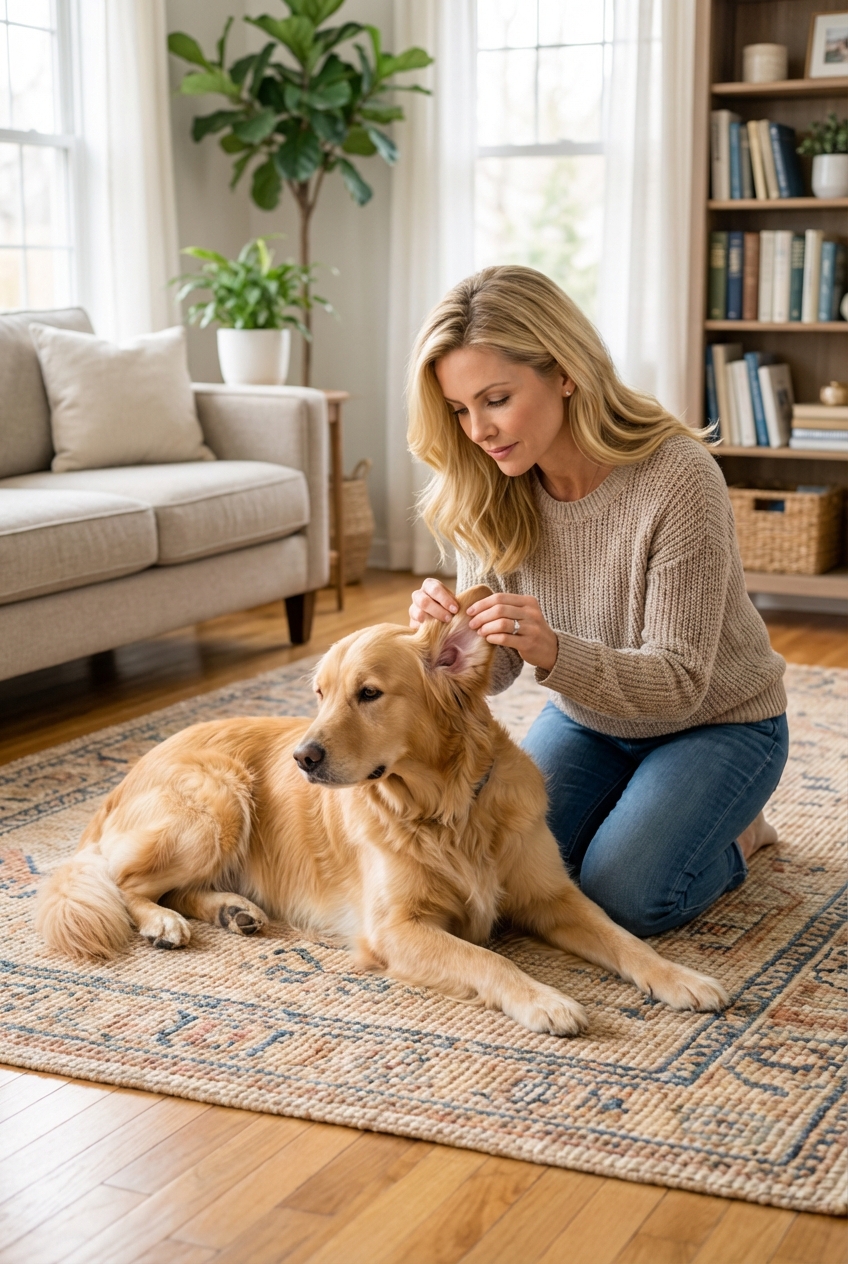
Learn what causes hot spots in dogs and how to treat mild cases at home: prevent licking, clip for airflow, clean and dry well, use pet-safe antiseptics, and...
Article
•
Designer Mixes
Hot Spot Treatment for Dogs

Shari Shidate
Designer Mixes contributor
Hot spots can look like they appear overnight, and honestly, they kind of do. One day your dog seems fine, and the next you see a red, wet, painful-looking patch that your pup cannot stop licking, chewing, or scratching. The good news is that most hot spots respond well to prompt, complete care. The key is to treat the skin and fix the reason the hot spot started in the first place.
In this guide, I will walk you through what hot spots are, what causes them, the safest at-home steps, what your veterinarian may prescribe, and how to prevent them from coming back.
What hot spots are
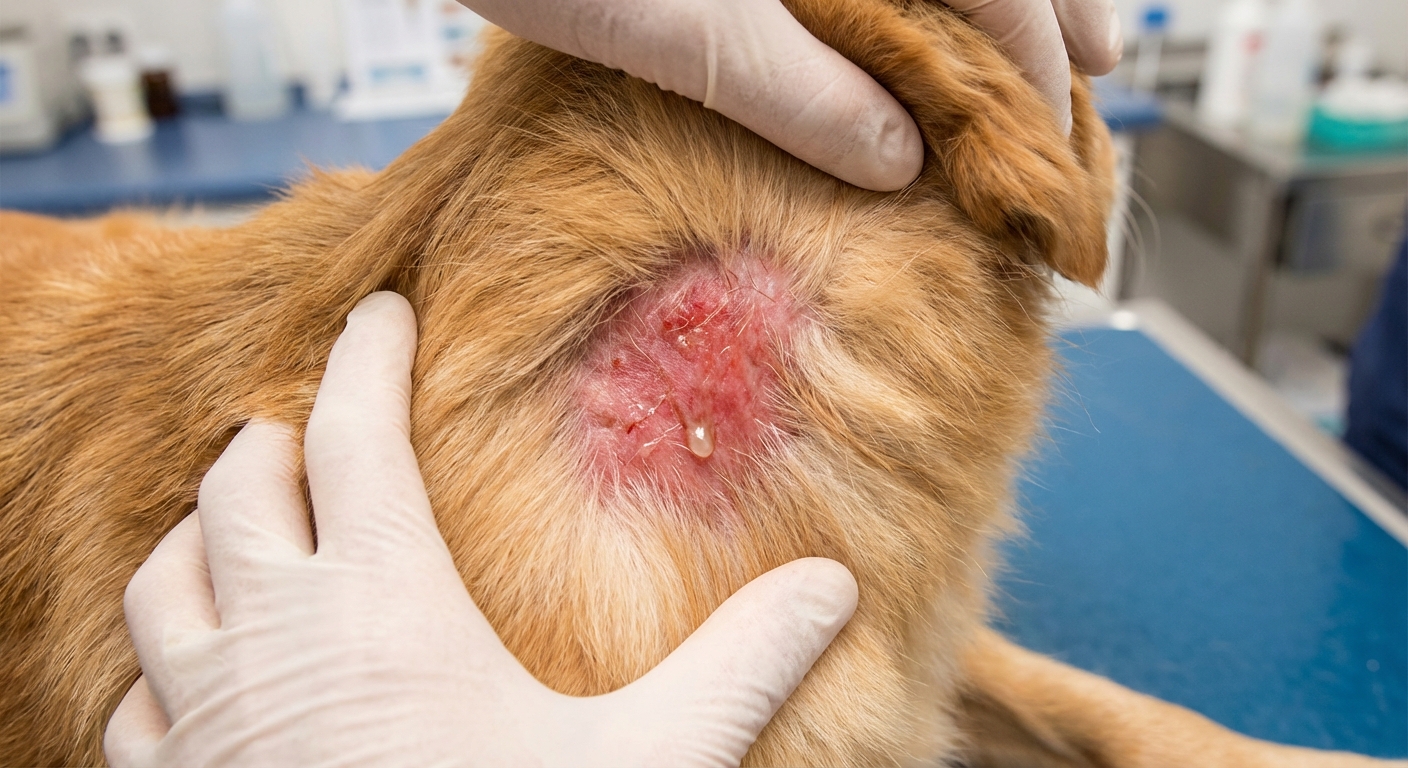
Hot spots are also called acute moist dermatitis. They are areas of sudden skin inflammation caused by itching and self-trauma, with secondary bacterial (and sometimes yeast) overgrowth being very common as the skin breaks down. Your dog feels itchy or painful, licks or scratches the area, the skin becomes damaged and moist, microbes multiply, and then it becomes even itchier.
Hot spots are common on the cheeks, neck, chest, hips, and legs, especially where fur is thick and moisture gets trapped.
Typical signs
- Red, inflamed skin that may look raw
- Moist, oozing, or crusty surface
- Hair loss around the lesion
- Odor or yellowish discharge (can suggest secondary infection)
- Sudden intense licking, chewing, or scratching
- Pain when touched
Why hot spots happen
A hot spot is rarely “random.” Something triggers itching or skin damage, and then the moisture and self-trauma allow the problem to take off. Finding that trigger is how you prevent repeat flare-ups.
Common underlying causes
- Allergies (environmental, food, flea allergy dermatitis)
- Fleas (even a single bite can trigger a big reaction in sensitive dogs)
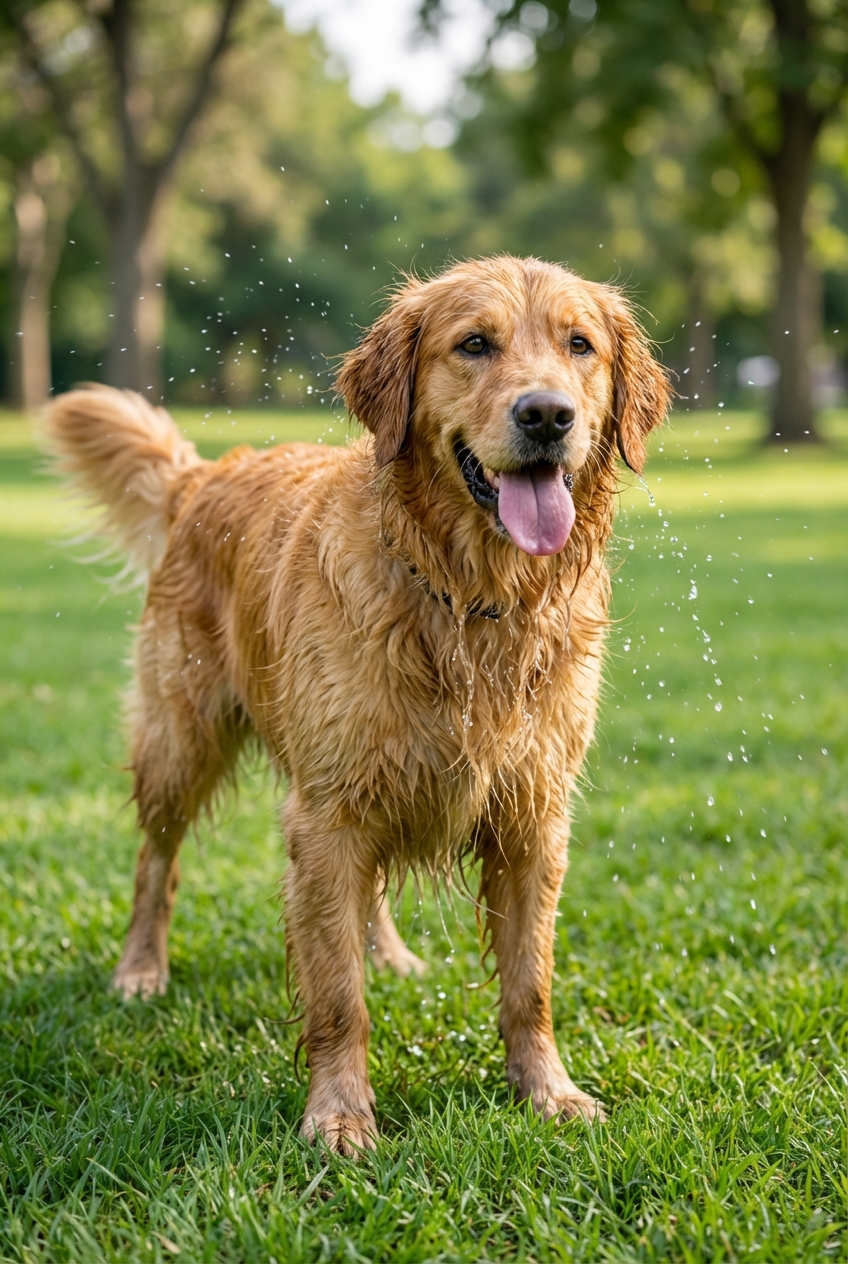
- Moisture trapped in the coat after swimming or bathing
- Ear infections leading to scratching around the head and neck
- Anal gland discomfort leading to chewing near the tail base
- Mats that pull on skin and trap moisture and bacteria
- Insect bites or small wounds
- Stress or boredom that leads to obsessive licking
Breeds with dense coats and dogs who swim often can be more prone, but any dog can develop a hot spot.
Look-alikes
Many skin issues can resemble a hot spot in the early stages. If you are not sure what you are looking at, a quick veterinary exam can prevent the wrong treatment.
- Ringworm (fungal infection)
- Mange (mites)
- Allergic dermatitis without infection
- Bite wounds or abscesses (especially if there is swelling or a puncture)
- Hot spot plus deeper infection (cellulitis) that needs oral meds
When to call your vet
Some hot spots can be handled early at home, but there are times when you should skip the wait-and-see approach. In veterinary clinics, we treat a lot of hot spots that started small and became severe within 24 to 48 hours.
Seek veterinary care urgently if
- The hot spot is larger than a couple of inches or spreading rapidly
- It is on the face, near the eyes, genitals, or between toes
- Your dog is very painful, lethargic, or not eating
- You see pus, heavy discharge, or a strong foul odor
- You suspect a fever (confirm with a rectal thermometer if you can do so safely; lethargy and poor appetite can be clues)
- There are multiple hot spots
- Your dog has a history of severe allergies
- Home care has not clearly improved things within 24 to 48 hours, or it worsens at any point
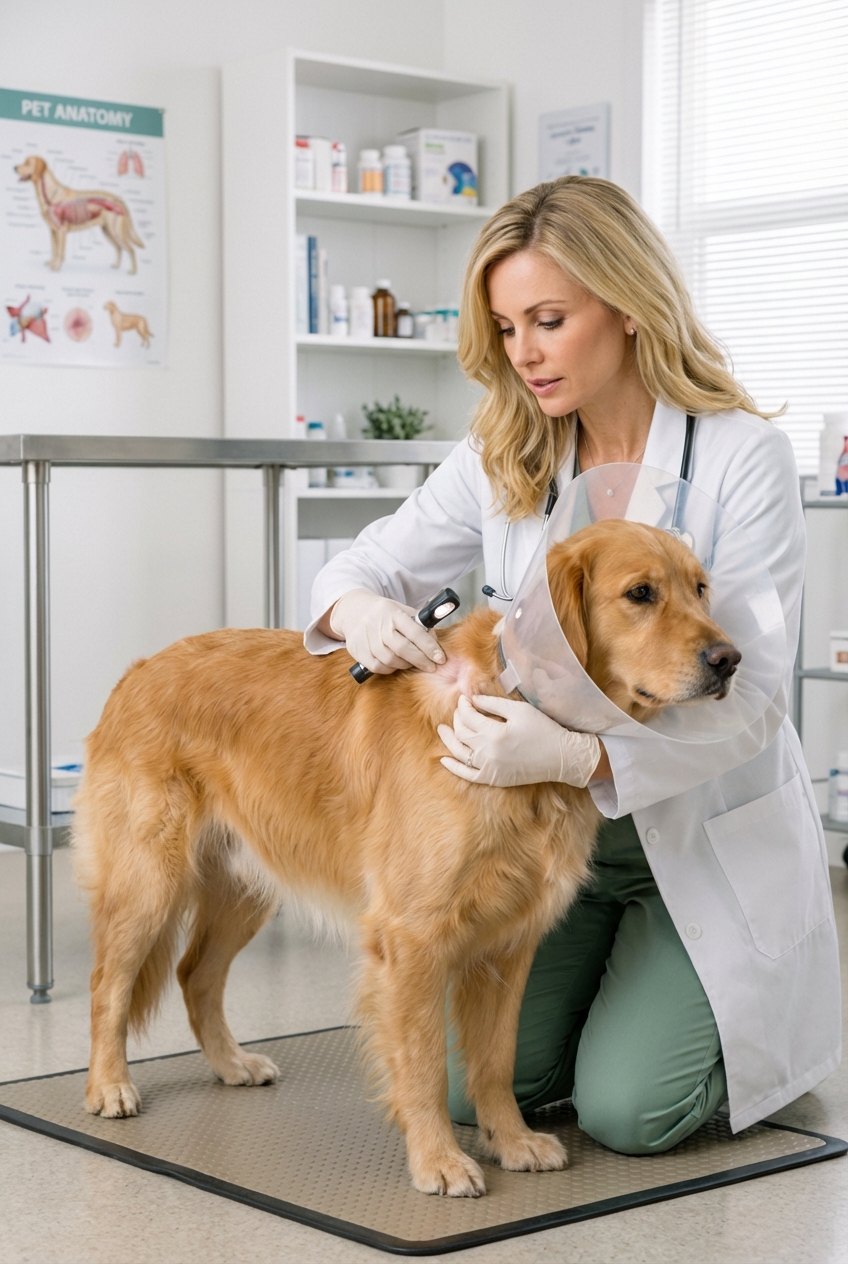
If your dog cannot stop licking or chewing the area, it is unlikely to heal without an e-collar or other barrier. Stopping self-trauma is not optional. It is the foundation of treatment.
At-home treatment steps
If the hot spot is small, your dog is acting normal, and you can prevent licking, these steps are a solid starting point. Think of this as first aid plus supportive care.
Step 1: Stop licking
Use an e-collar (cone), inflatable collar, or a well-fitted recovery suit. If your dog can still reach the area, adjust the tool until they cannot.
Step 2: Clip to expose
Hot spots hide under fur. If you cannot see the full lesion, you cannot treat it well. Carefully clip the fur around the hot spot by at least 1 inch (more if it is spreading).
- Avoid scissors. It is easy to cut skin that is inflamed and painful.
- If your dog is wiggly, painful, or the lesion is near the face, it is safer to have a veterinary team clip it.
- Dogs can bite when they hurt. Do not push through if your dog is distressed. Ask your vet about safe handling options.
Do not shave down to the skin with a razor at home. Clippers are safer. Razor burn can make irritation worse.
Step 3: Clean gently
Clean 1 to 2 times daily for the first few days.
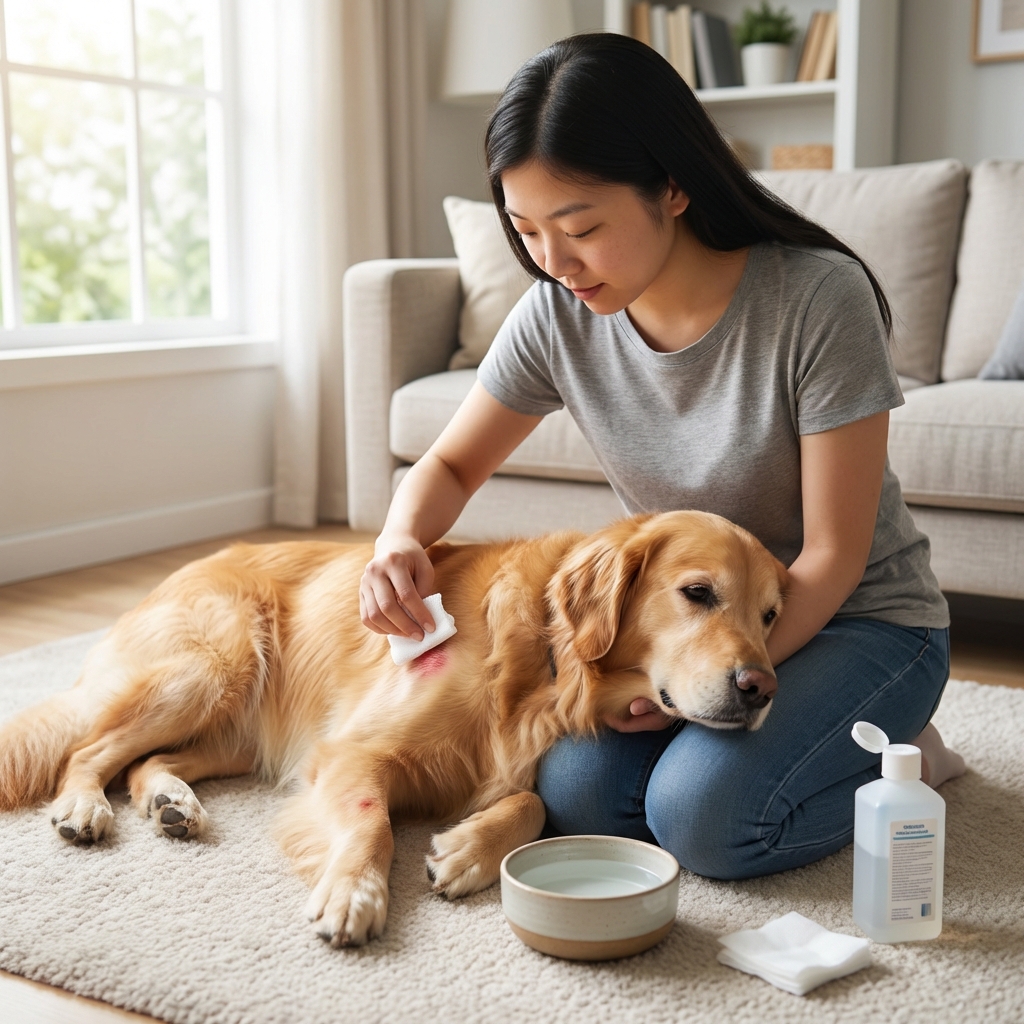
- Good options: a pet-safe chlorhexidine product (often 2 to 4%) or diluted povidone-iodine (should look like weak tea). Follow the label or your vet’s directions.
- Do not mix antiseptics (for example, chlorhexidine and iodine). Pick one and use it consistently.
- Avoid: hydrogen peroxide (damages healing tissue), alcohol (painful, overly drying), heavily scented soaps
Use gauze or cotton rounds to remove discharge and debris. Be gentle. The goal is clean skin, not scrubbing.
Step 4: Dry fully
Moisture keeps hot spots going. Pat dry with clean gauze or a soft towel. You can use a blow dryer on cool if your dog tolerates it.
Step 5: Use the right topical
After cleaning and drying, use a vet-approved topical product designed for superficial skin irritation and infection.
- Common OTC options include chlorhexidine sprays, wipes, or gels made for pets.
- Avoid products that are unsafe if ingested. If your dog might lick, do not apply it unless you can reliably prevent licking (for example, with a correctly fitted e-collar).
- Thick ointments can trap moisture. Unless your vet directs otherwise, choose lighter sprays, wipes, or gels.
Step 6: Do not cover tightly
Unless your veterinarian specifically tells you to bandage it, avoid tight wraps or coverings. Hot spots heal best when they can stay clean and dry, and occlusion can trap moisture and make things worse.
Step 7: Recheck twice a day
You should see the area look less wet, less angry red, and less painful within 24 to 48 hours if treatment is working and your dog is not able to lick it.
Vet treatments
If a hot spot is moderate to severe, veterinary treatment can bring relief quickly and prevent deeper infection. Your veterinarian will choose options based on the lesion size, how painful it is, and whether secondary infection is present.
What your vet may do
- Clip and clean the lesion extensively so medication can reach the skin
- Skin cytology (a simple microscope check) to look for bacteria and yeast
- Pain control if the area is very tender
Common prescriptions
- Topical antibiotic and anti-inflammatory medications for localized cases
- Oral antibiotics if the infection is deeper, spreading, or very oozy
- Anti-itch therapy to break the itch cycle, such as oclacitinib, lokivetmab injections, or a short course of steroids when appropriate
- Antifungal treatment if yeast is involved
- Medicated shampoos (chlorhexidine, miconazole, etc.) for wider skin involvement
If you have ever felt like your dog’s hot spots are “never-ending,” that is usually a sign we need to address an underlying allergy, flea sensitivity, chronic ear disease, or grooming and coat-management issue.
Home remedies to avoid
I am all for gentle, supportive care. But some popular DIY approaches can delay healing or cause chemical burns.
- Essential oils: many are irritating, and some are toxic to pets if absorbed or licked.
- Apple cider vinegar on raw skin: can sting badly and worsen irritation.
- Hydrogen peroxide: damages healing tissue.
- Alcohol: painful and overly drying.
- Thick ointments that trap moisture: can keep the lesion wet and slow recovery.
- Human antibiotic creams without guidance: some contain ingredients dogs should not lick, and they do not address itching.
If you are not sure whether a product is safe, your veterinary clinic can usually tell you quickly over the phone.
Healing time
With complete treatment, many mild hot spots improve noticeably in 2 to 3 days and heal within 7 to 14 days. Moderate or severe lesions can take longer, especially if there is a deeper bacterial infection or an untreated allergy driving the itch.
Signs it is healing
- Less licking and scratching
- Skin becomes dry instead of wet and weepy
- Redness decreases
- New hair starts to regrow
Signs it is getting worse
- Lesion expands or new lesions appear
- Worsening odor or thicker discharge
- More pain, less appetite, low energy
Prevention
Prevention is all about reducing itch triggers and keeping the coat and skin healthy.
1) Flea prevention
If your dog has flea allergy dermatitis, one bite can be enough. Use a veterinarian-recommended flea preventive consistently, and treat all pets in the household when appropriate.
2) Dry the coat
Towel dry, then use a blow dryer on cool or low. Pay attention to dense areas like the neck ruff, behind ears, and hips.
3) Brush and de-mat
Mats trap moisture and bacteria against the skin. If your dog mats easily, schedule regular grooming and keep a consistent at-home brushing routine.
4) Treat ear infections
Recurring hot spots near the cheeks and neck often trace back to ear discomfort. If you notice head shaking, odor, or waxy buildup, book a vet exam.
5) Manage allergies
Allergy management may include:
- Targeted anti-itch medications
- Medicated baths or wipes during flare seasons
- Food trials if a food allergy is suspected
- Omega-3 fatty acids (ask your vet for dose guidance)
6) Support skin health
Healthy skin is more resilient. A balanced diet, steady weight, and quality protein and fats can make a real difference in coat condition. If you are exploring fresh or homemade foods, do it thoughtfully and make sure the diet is nutritionally complete.

Hot spot checklist
If you want a quick summary, here is the complete treatment flow:
- Stop licking with an e-collar or suit
- Clip fur (use clippers, not scissors) to expose the full lesion
- Clean with a pet-safe antiseptic
- Dry completely
- Apply an appropriate topical product
- Avoid tight bandages unless your vet directs it
- Monitor twice daily
- See your vet if it is large, painful, smelly, spreading, on a sensitive area, or not improving within 24 to 48 hours
- Prevent recurrence by addressing fleas, moisture, mats, ear issues, and allergies
Hot spots are uncomfortable, but they are also very treatable when you act early and treat completely. If you are unsure whether you are dealing with a hot spot or something else, it is always okay to ask your veterinarian. That quick check can save your dog a lot of discomfort.