A vet assistant’s guide to safe homemade dog treats: vet-friendly ingredients, common toxins to avoid, 3 simple recipes, portion guidance, and storage best...
Article
•
Designer Mixes
Homemade Veggie Dog Treats: Easy Bakes

Shari Shidate
Designer Mixes contributor
If you have ever looked at a long pet treat ingredient list and thought, “What even is that?”, you are not alone. As a veterinary assistant here in Frisco, Texas, I talk with pet parents every week who want simpler, cleaner snack options for their dogs. The good news is that homemade dog treats with veggies can be easy, budget-friendly, and genuinely nutritious when you stick to dog-safe ingredients and smart portions.
In this article, I will walk you through why veggies matter, which ones are safest, and a few easy baked recipes you can start making today.
Why add veggies to dog treats?
Vegetables bring more to the table than just “filler.” In the right amounts, they can add fiber for healthy digestion and helpful micronutrients. Water-rich veggies can also support hydration in the overall diet, even though baked treats themselves are mostly dry once they come out of the oven. Many veggies are naturally low in calories, which matters because treats add up fast, especially for smaller dogs.
Benefits I see in clinic
- Weight support: Swapping high-fat treats for veggie-forward bakes may help reduce extra calorie load.
- Digestive regularity: Fiber from pumpkin, sweet potato, and carrots can support more consistent stools.
- Food variety: Variety is a simple way to broaden nutrition, especially for dogs who eat the same kibble every day.
One reminder I give every client: treats should be treats. A widely used guideline is to keep treats at 10% or less of your dog’s daily calories. If your dog has pancreatitis, diabetes, kidney disease, food allergies, or is on a prescription diet, check with your veterinarian before changing treat ingredients.
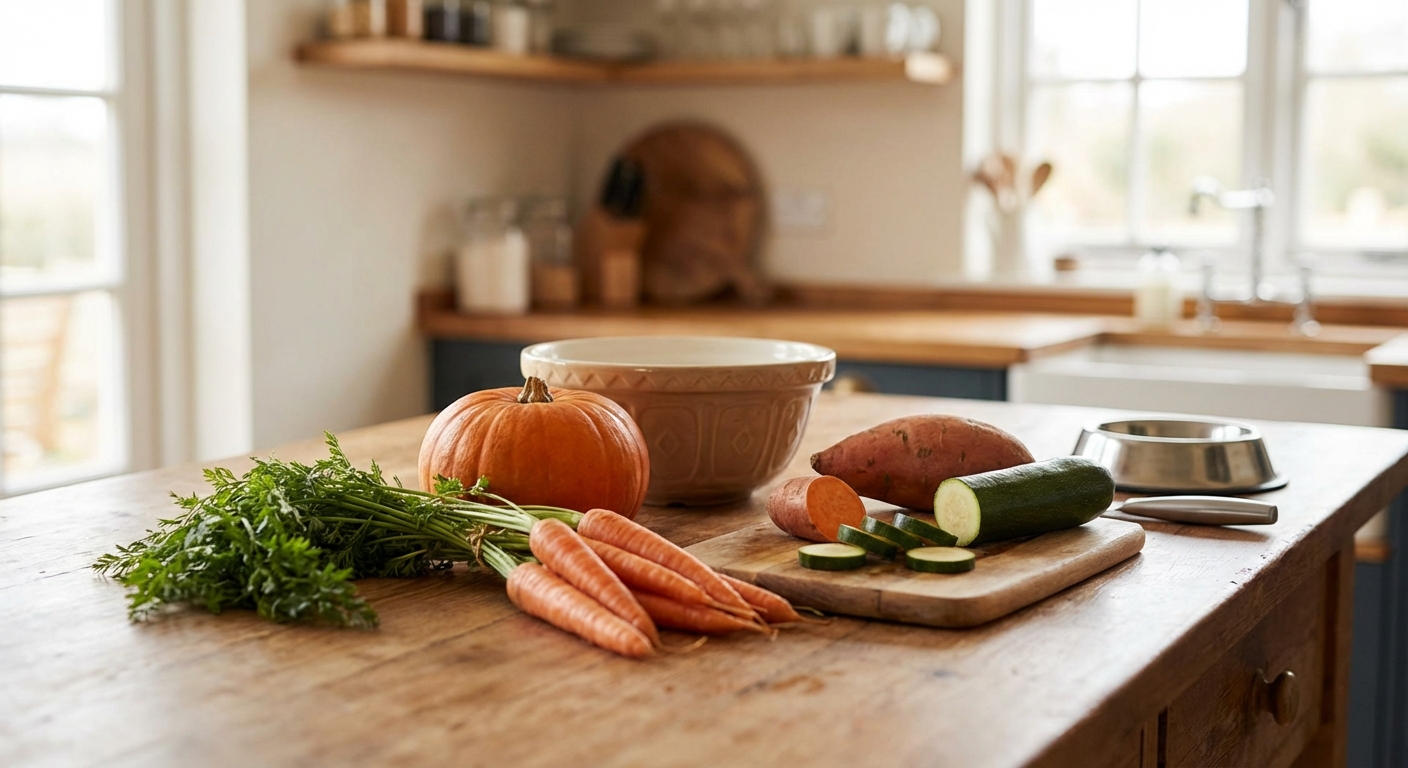
Dog-safe veggies for baking
For baked treats, the best veggies are the ones that puree smoothly and bake evenly. Many dogs find cooked, mashed, or finely shredded veggies easier to digest, but every dog is different. If your pup has a sensitive stomach, start with small amounts and see how they do.
Great veggie choices
- Pumpkin (plain): Use 100% pumpkin puree, not pumpkin pie filling.
- Sweet potato: Bake or steam until soft, then mash.
- Carrots: Steam and puree, or finely shred for texture.
- Zucchini: Shred and squeeze out extra moisture.
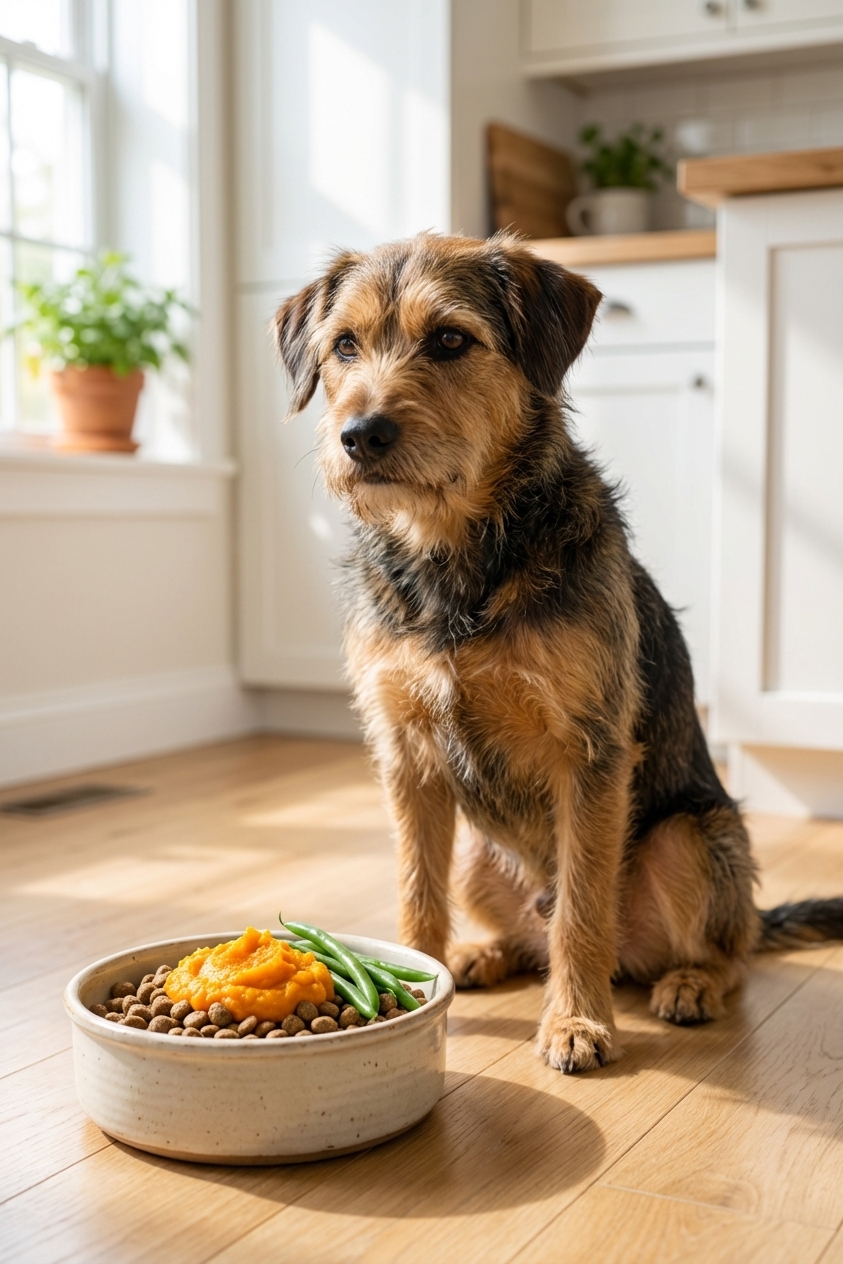
- Green beans: Finely chop and mix into dough.
Veggies to avoid
- Onion, garlic, chives, leeks: These are in the allium family and can damage red blood cells in dogs.
- Wild mushrooms: Avoid them. Store-bought edible mushrooms are generally considered non-toxic in small amounts, but they can still cause stomach upset and it is easy to confuse safe and unsafe varieties.
- Very salty canned veggies: Too much sodium can be risky, especially for heart or kidney concerns.
Baked treat basics
Most veggie dog treat recipes follow the same simple structure: a moist puree, a binder, and a flour base. Once you learn the pattern, you can safely improvise.
Simple formula
- Moisture: pumpkin puree, mashed sweet potato, or shredded zucchini
- Binder: egg (or plain yogurt in some recipes, if your dog tolerates dairy)
- Flour base: oat flour, whole wheat flour, or a mix (choose what your dog tolerates best)
Helpful baking tips
- Go small: Tiny treats help with training and portion control.
- Skip salt, sugar, and seasonings: Avoid spice blends and powders like onion or garlic powder.
- Watch moisture: Watery veggies (like zucchini) can make dough sticky, so squeeze out liquid before mixing.
- Crunchier treats: Bake a little longer at a slightly lower temperature to dry them out.
Recipe 1: Pumpkin Oat Crunch Bakes
These are a gentle, beginner-friendly treat that many dogs love. Pumpkin adds fiber, and oats are a simple, widely tolerated option.
Ingredients
- 1 cup plain pumpkin puree
- 1 egg
- 2 to 2 1/2 cups oat flour (or finely blended oats)
- Optional: 1 tablespoon ground flaxseed
Steps
- Preheat oven to 350°F.
- Mix pumpkin and egg until smooth.
- Stir in oat flour (start with 2 cups) and add the optional ground flaxseed at the same time. Add more flour if dough is too sticky.
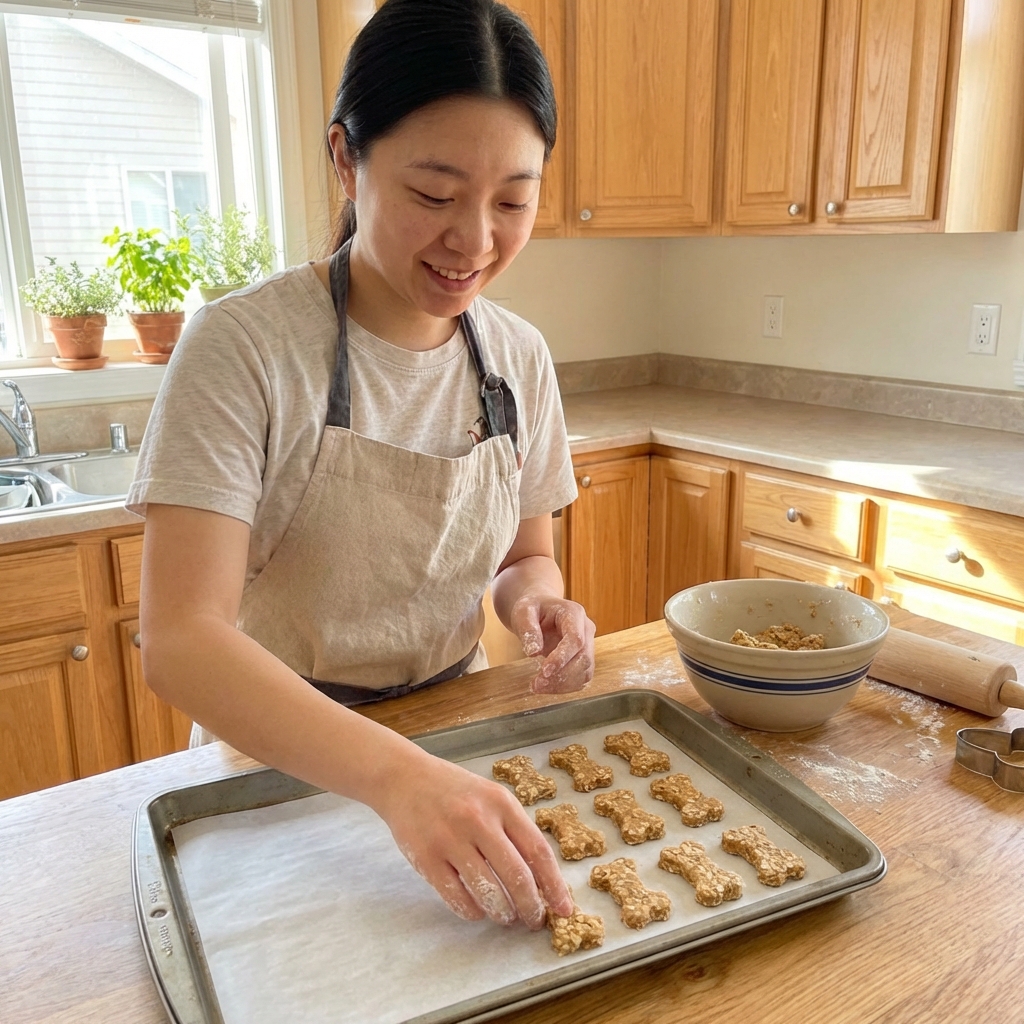
- Roll out between two sheets of parchment paper and cut into small shapes.
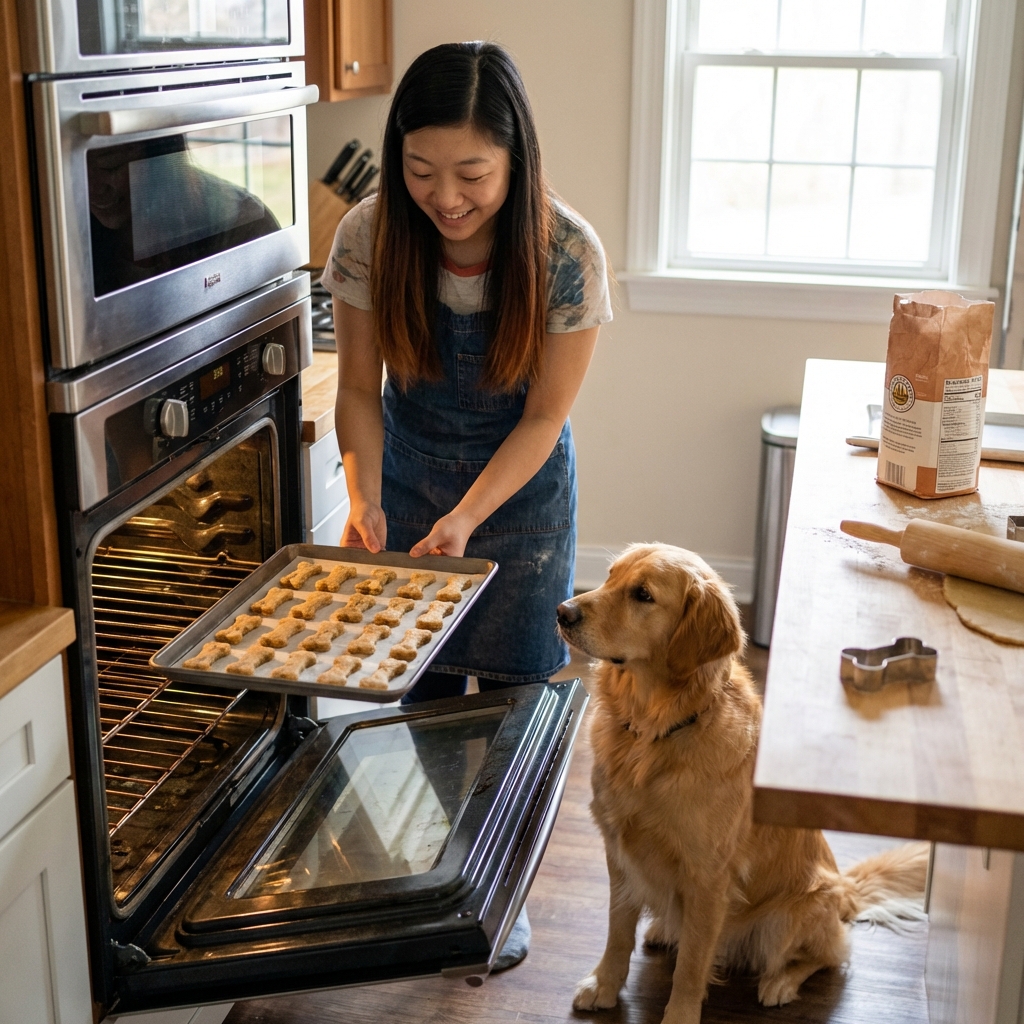
- Bake 20 to 28 minutes, depending on thickness.
- For extra crunch, turn off the oven and leave treats inside with the door cracked for 30 to 60 minutes.
- Cool completely before serving.
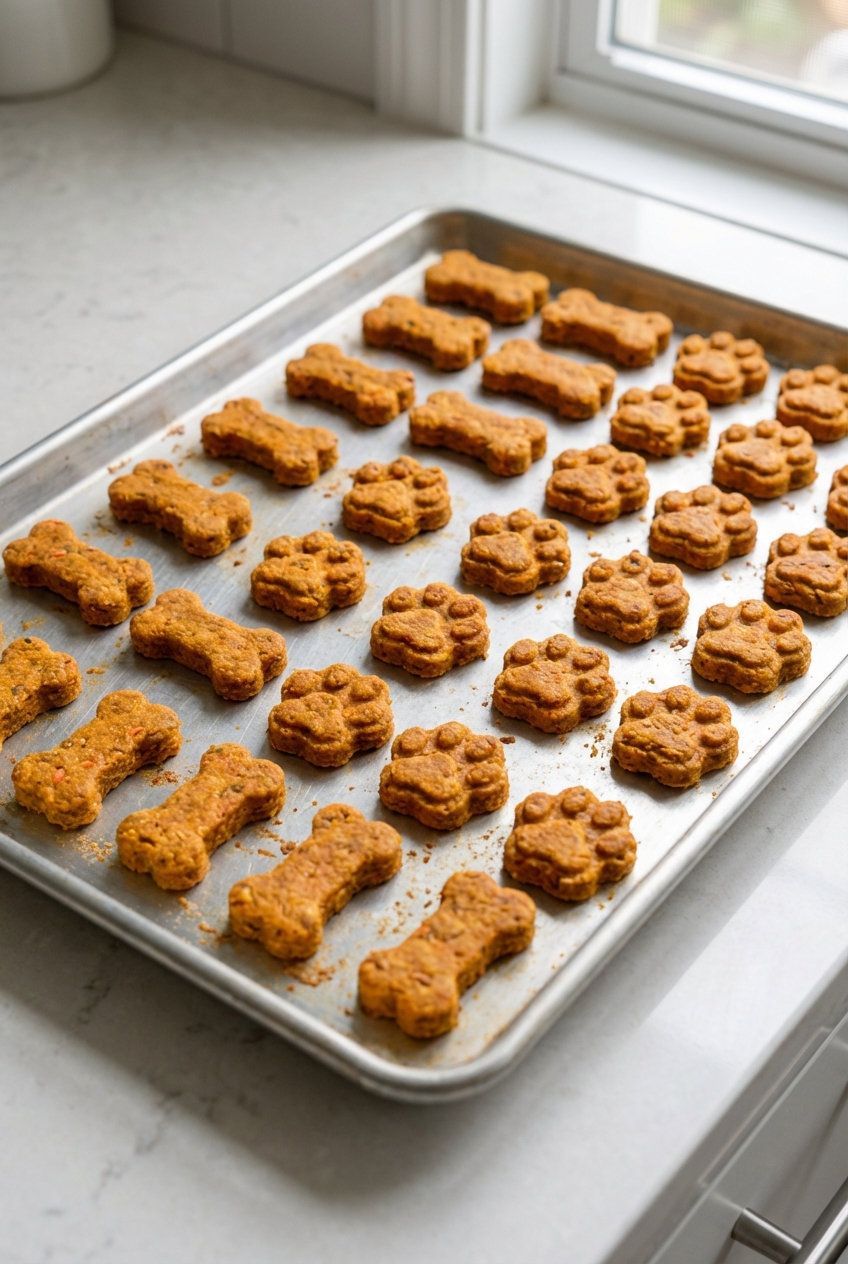
Yield and size: This usually makes 40 to 80 small treats, depending on thickness and cutter size. For training, aim for pea-size to thumbnail-size pieces.
Recipe 2: Sweet Potato Carrot Soft Bites
If your dog is a senior, has dental sensitivity, or just prefers softer treats, this bake is a nice option. You can make them slightly firmer by baking longer.
Ingredients
- 1 cup mashed cooked sweet potato
- 1/2 cup finely shredded or pureed cooked carrot
- 1 egg
- 1 1/2 to 2 cups whole wheat flour (or oat flour)
Steps
- Preheat oven to 350°F.
- Mix sweet potato, carrot, and egg.
- Add flour until you have a workable dough.
- Form small bite-size nuggets and place on a parchment-lined baking sheet. Gently flatten each one slightly with your thumb or a fork so they bake evenly.
- Bake 18 to 24 minutes.
- Cool completely before serving.
Yield and size: Plan on about 30 to 60 small bites, depending on how big you make them. Smaller is usually better for portion control.
Recipe 3: Zucchini Trainer Bites
Many people want to add cheese, but some dogs get loose stool (and a smaller number get itchier skin) with dairy. This recipe is dairy-free and makes small, quick training treats.
Ingredients
- 1 cup shredded zucchini, squeezed very dry
- 1 egg
- 1 1/2 cups oat flour
- 2 tablespoons unsweetened applesauce (optional, helps bind)
Steps
- Preheat oven to 325°F.
- Combine zucchini, egg, and applesauce.
- Add oat flour and mix.
- Press dough into a thin layer on a parchment-lined baking sheet.
- Score into tiny squares with a knife.
- Bake 25 to 35 minutes, then cool completely and break apart.
Yield and size: This typically makes 80 to 150 tiny trainer bites, depending on how small you score them.
Storage and shelf life
Homemade treats do not have preservatives, so storage matters, especially for softer bakes.
- Cool first: Let treats cool completely before storing to reduce condensation and mold risk.
- Fridge: Store in an airtight container for up to 7 days.
- Freezer: Freeze for 2 to 3 months. This is my go-to if the treats are on the softer side or you made a big batch.
- Crunch check: If you want a longer-lasting treat, bake a bit longer and dry them in the turned-off oven. If they still feel soft in the center, refrigerate or freeze.
Common questions
Can I use grain-free flour?
Some dogs do fine with grain-free options, but grain-free is not automatically healthier. If your dog tolerates oats or whole wheat, those are simple, accessible choices. If you need grain-free for a medical reason, ask your veterinarian which option fits your dog’s history best.
How many treats per day is okay?
A good starting point is keeping treats to 10% or less of daily calories. For small dogs, that can be just a few tiny treats. For larger dogs, you have a bit more wiggle room. When in doubt, make treats smaller rather than giving fewer large ones.
My treats came out too hard or too soft. What now?
- Too soft: Bake longer or dry them in the oven as it cools. Then store in the fridge or freezer.
- Too hard: Bake a little less time next round, or make thicker pieces.
- Crumbly: Add a bit more pumpkin or another binder like a small spoonful of plain yogurt (if your dog tolerates dairy).
Safety notes
- Skip xylitol (birch sugar): It is highly toxic to dogs and can be found in “sugar-free” products.
- Be cautious with peanut butter: Only use peanut butter that does not contain xylitol, and keep portions modest.
- Introduce new treats slowly: Especially for dogs with sensitive stomachs. Start with one small bite and monitor stool and itchiness.
- Choking risk: Always size treats appropriately for your dog.
If your dog vomits, has diarrhea, seems unusually tired, or shows facial swelling after a new treat, stop the treat and contact your veterinarian.
Your next step
If you are brand new to homemade treats, start with the Pumpkin Oat Crunch Bakes. Make a half batch, bake them small, and see how your dog does. Once you have a “yes” recipe, you can rotate veggies seasonally and keep treat time both fun and nourishing.
Good food supports good energy. And good energy is a big part of helping our dogs live long, happy lives.