Homemade Pill Pocket Ideas for Dogs

If your dog can sniff out a pill from across the kitchen, you are not alone. In my work as a veterinary assistant here in Frisco, Texas, I have seen plenty of clever pups who can eat the treat and spit out the medicine like a tiny magician.
The good news is you do not need store-bought pill pockets to make medication time smoother. With a few simple, minimal-ingredient foods, you can create soft wraps and mini “meatballs” that hide the pill well and go down easily.
Important note: Always confirm with your veterinarian or pharmacist whether your pet’s medication can be given with food. Some medications must be given on an empty stomach, and some should not be paired with certain foods. For example, calcium-rich foods (like dairy) can interfere with absorption of some medications, and some meds work best when given consistently in relation to meals (such as certain thyroid medications). When in doubt, ask before you wrap.
Before you hide any pill: quick safety checklist
- Ask if food is allowed. Many meds are fine with food, but some are not. If the label says “give on an empty stomach” or “avoid dairy,” follow that.
- Check interaction risks. A few foods can interfere with certain medications or conditions. When in doubt, ask your vet. For example, high-fat treats may not be appropriate for dogs with a history of pancreatitis.
- Consider allergies and sensitivities. Common triggers include chicken, beef, dairy, wheat, and some legumes.
- Watch the calories. Pill pockets can quietly add up, especially for small dogs. Use the smallest amount needed to fully seal the pill.
- Do not crush, split, or open capsules without guidance. Some tablets are time-released or coated for a reason. Some capsules can be opened, and some cannot. Altering the medication can change absorption and side effects.
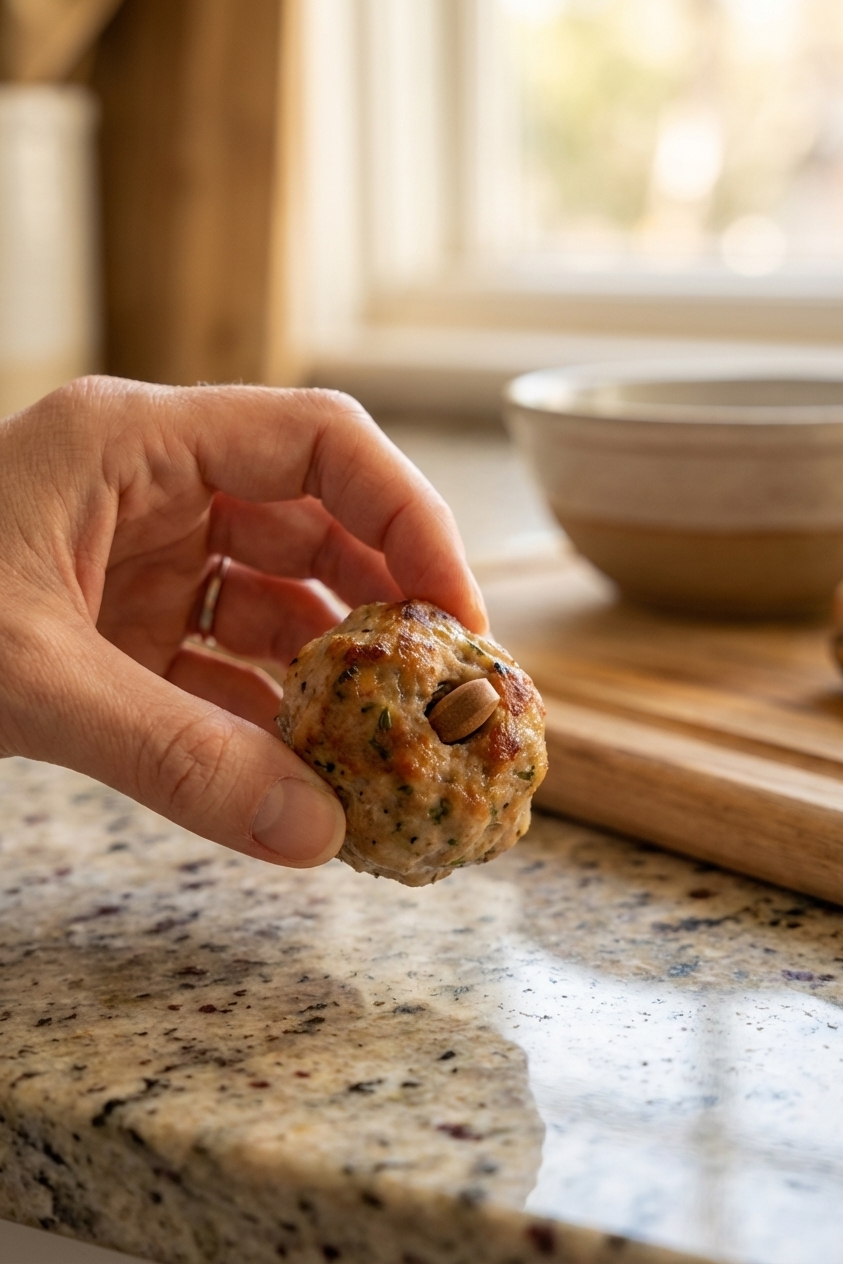
- Avoid toxic foods. Never use xylitol (often sold as birch sugar or wood sugar), grapes/raisins, chocolate, macadamia nuts, alcohol, or onions/garlic/chives/leeks. If using peanut butter, ensure it is xylitol-free.
Simple homemade pill pocket ideas (low ingredient)
Below are my favorite options because they are soft, moldable, and usually “high value” to dogs. The goal is to fully seal the pill so your dog cannot taste the bitterness.
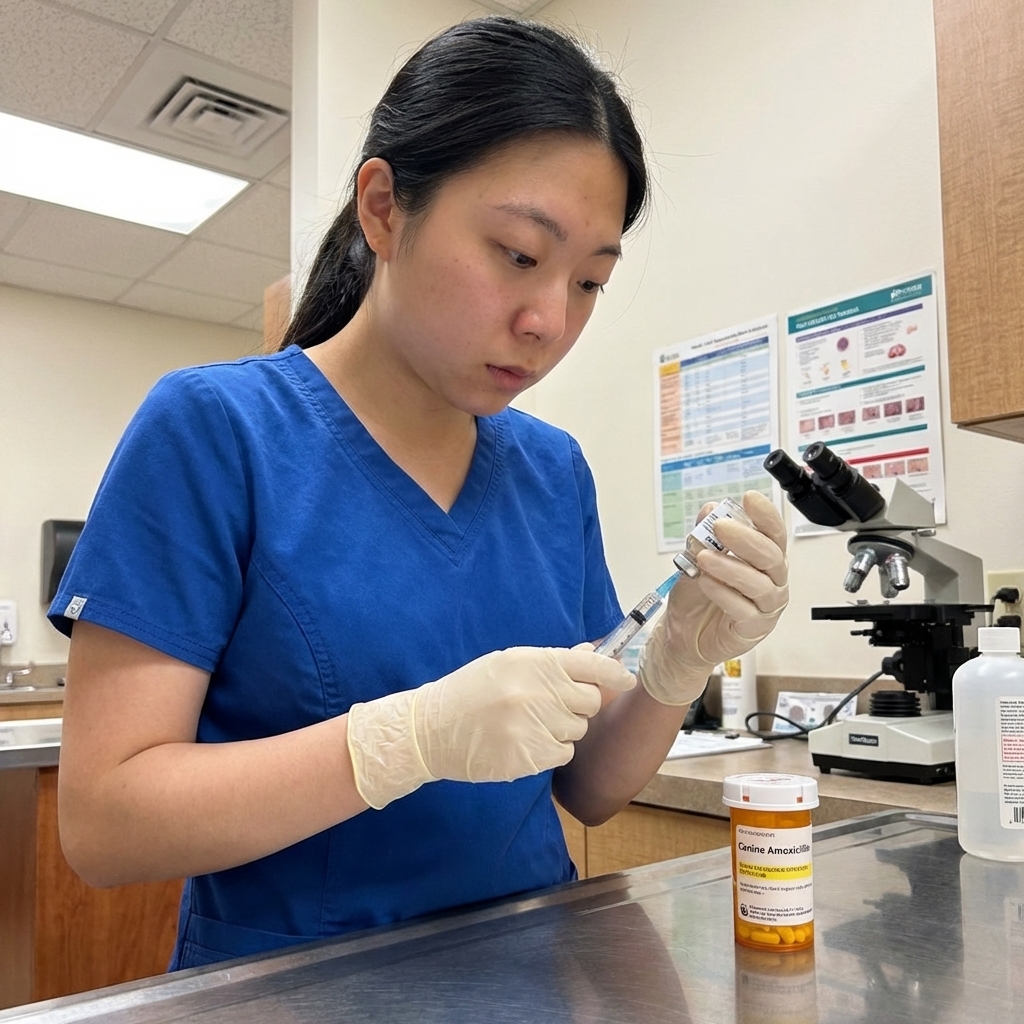
1) Tiny meatball wrap (best all-around)
What to use: A small amount of cooked ground turkey, chicken, beef, or pork.
How it helps: Warm meat has a strong aroma, which can mask the smell of many medications.
- Take about 1 to 2 teaspoons of cooked ground meat.
- Flatten it in your fingers, place the pill in the center, and seal completely.
- If your dog is suspicious, give a plain meatball first, then the medicated one, then another plain one.
Safety notes: Keep portions small for dogs on weight management plans. Skip high-fat meats for dogs with pancreatitis risk.
2) Cream cheese or cottage cheese dab (great for tiny tablets)
What to use: A small dab of plain cream cheese or cottage cheese.
How it helps: Soft texture wraps easily around small pills.
- Use just enough to fully coat the pill.
- Chill briefly if it is too soft to handle.
Safety notes: Avoid if your dog has dairy sensitivity or if the medication label says to avoid calcium or dairy. Calcium can interfere with absorption of some medications, so confirm with your vet or pharmacist. Also watch calories.
3) Peanut butter “plug” (sticky and effective)
What to use: A small amount of xylitol-free peanut butter.
How it helps: Sticky texture can prevent the pill from being pushed out with the tongue.
- Use a small amount to fully coat the pill.
- Offer a plain lick first to build confidence.
Safety notes: High calorie. Not ideal for dogs needing low-fat diets. Double-check the ingredient list for xylitol every time.
4) Pumpkin puree “dough” (gentle for many dogs)
What to use: Plain canned pumpkin (not pie filling).
How it helps: Mild flavor, soft texture. Some dogs do great with it, especially when mixed with a bit of protein.
- Mix 1 teaspoon pumpkin with a pinch of oat flour or crushed dog kibble to thicken.
- Wrap and seal the pill like a small dumpling.
Safety notes: Pumpkin can change stool (loosen or firm), depending on the dog and the dose. Start small.
5) Mashed sweet potato or potato wrap
What to use: Plain mashed sweet potato or white potato, no butter, no onion or garlic seasoning.
How it helps: Smooth and moldable, often very palatable.
- Use a small ball of mash, place the pill inside, and pinch closed.
- Chill if you need it firmer.
Safety notes: Starchy and calorie-dense, so keep portions small. Avoid seasonings.
6) Pill in a bite of hot dog (use sparingly)
What to use: A tiny slice of hot dog with a slit.
How it helps: Strong smell, soft texture, easy to hide tablets.
- Cut a small piece, tuck the pill into the center, and pinch shut.
Safety notes: Hot dogs are high in sodium and fat. This is an occasional “last resort” option, not a daily habit.
7) Banana or soft fruit wrap (for fruit fans)
What to use: A small piece of ripe banana, or a strawberry slice thick enough to cover a tiny pill.
How it helps: Sweet smell can distract from mild-tasting meds.
- Mash a bit of banana and fully coat a small tablet.
Safety notes: Not all dogs tolerate fruit well, and it can add sugar and calories. Avoid grapes and raisins entirely.
8) Soft bread ball (simple pantry option)
What to use: A small pinch of soft, fully baked bread, moistened with water or low-sodium broth.
How it helps: Forms a quick dough around a pill in seconds.
- Moisten, wrap, seal, and offer immediately.
Safety notes: Skip for dogs with wheat sensitivity. Keep the portion small. Never use raw bread dough.
How to make it work (no wrestling match)
This is not a full “how to pill a dog” tutorial, but these quick technique tweaks can make your homemade pill pocket work much better:
- Do a 3-treat sequence. Plain treat, medicated treat, plain treat. Many dogs swallow faster when they anticipate the next bite.
- Seal it like a dumpling. Pills that touch the tongue are more likely to be rejected, especially bitter antibiotics.
- Keep the bite small. Big treats invite chewing and pill discovery. Small bites encourage quick swallowing.
- Use scent to your advantage. Warm meat or a tiny bit of broth can make the “pill bite” smell irresistible.
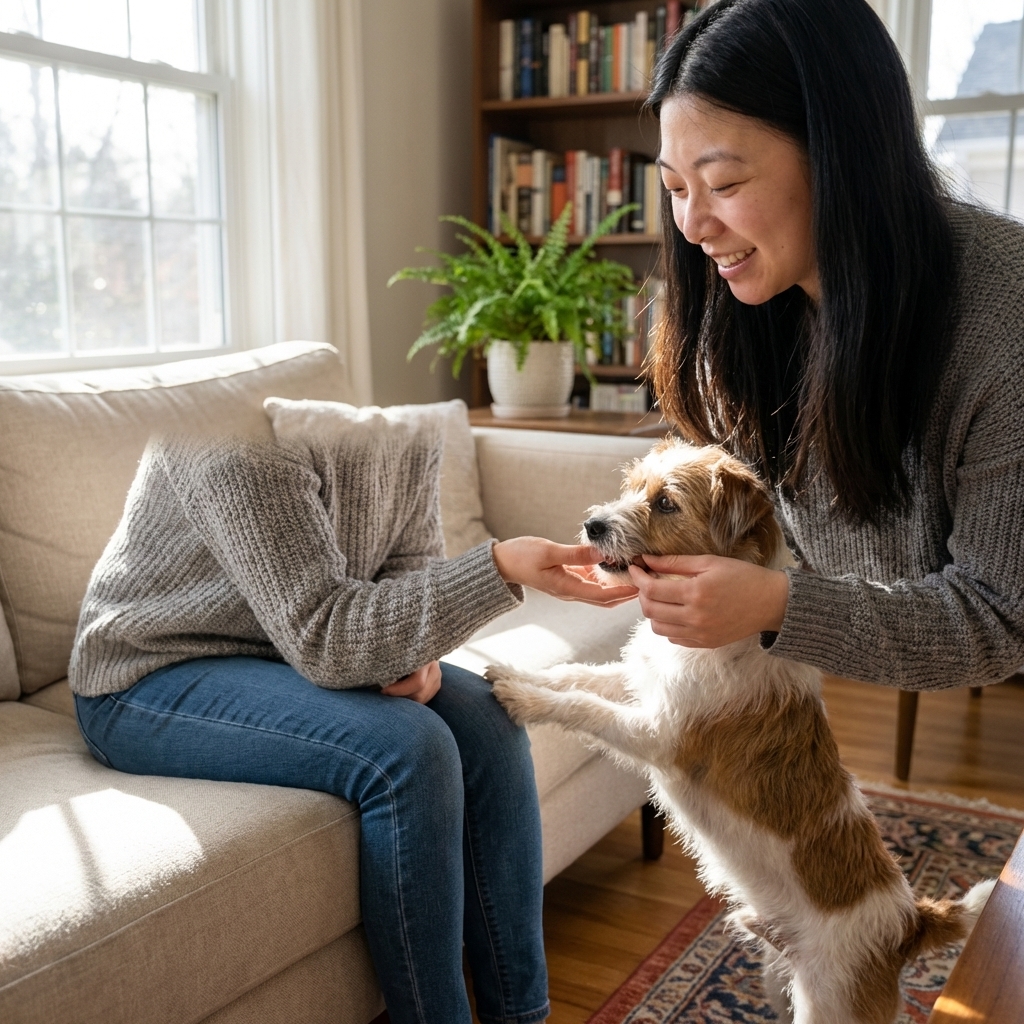
- Do a quick mouth check after. Some dogs stash pills in their cheeks and drop them later.
If your dog repeatedly refuses medicated food, you may need a different approach like a direct pill-giving technique or a different formulation. Ask your vet team about options like a compounded flavored chew or a liquid medication if appropriate for that prescription.
Medication timing: when food matters
Always follow your prescription label. Here are common situations where timing and ingredients are especially important:
- Empty stomach medications: Some drugs absorb best without food, or food can reduce effectiveness. If told “empty stomach,” ask your vet what counts as food and how long to wait.
- Calcium and dairy: Calcium-rich foods (including many dairy products) can reduce absorption of some medications. If you are using cheese as a wrapper, confirm it is allowed for that specific medication.
- Antibiotics and stomach upset: Many dogs tolerate antibiotics better with a small amount of food, but confirm first.
- Thyroid medications: Some are best given consistently with respect to meals. Consistency is key, even if your vet allows giving with food.
- Medications that cannot be crushed: Time-release tablets or enteric-coated pills should not be altered. Hiding whole is usually fine, but do not crush unless told.
When to stop and call your vet
- Choking, coughing, gagging, or trouble breathing after trying to give the pill.
- Repeated vomiting, severe drooling, or obvious distress after dosing.
- You think the dose was missed or spit out and you are not sure whether to re-dose.
- New swelling, hives, facial itching, or sudden lethargy after medication (possible allergic reaction).
If you suspect your dog aspirated food or a pill, or is struggling to breathe, treat it as an emergency.
Quick “do not use” list
- Xylitol (often in sugar-free peanut butter and gum, sometimes labeled birch sugar or wood sugar)
- Grapes and raisins
- Onion, garlic, chives, and leeks (all Alliums)
- Chocolate and cocoa
- High-fat leftovers for dogs prone to pancreatitis
- Anything spicy or heavily salted
If you are unsure whether a food is safe for your dog’s breed, age, or medical condition, it is always worth a quick call to your veterinarian.
My go-to homemade pill pocket
If you want one option to start with today, this is the one I recommend most often because it is simple and reliable.
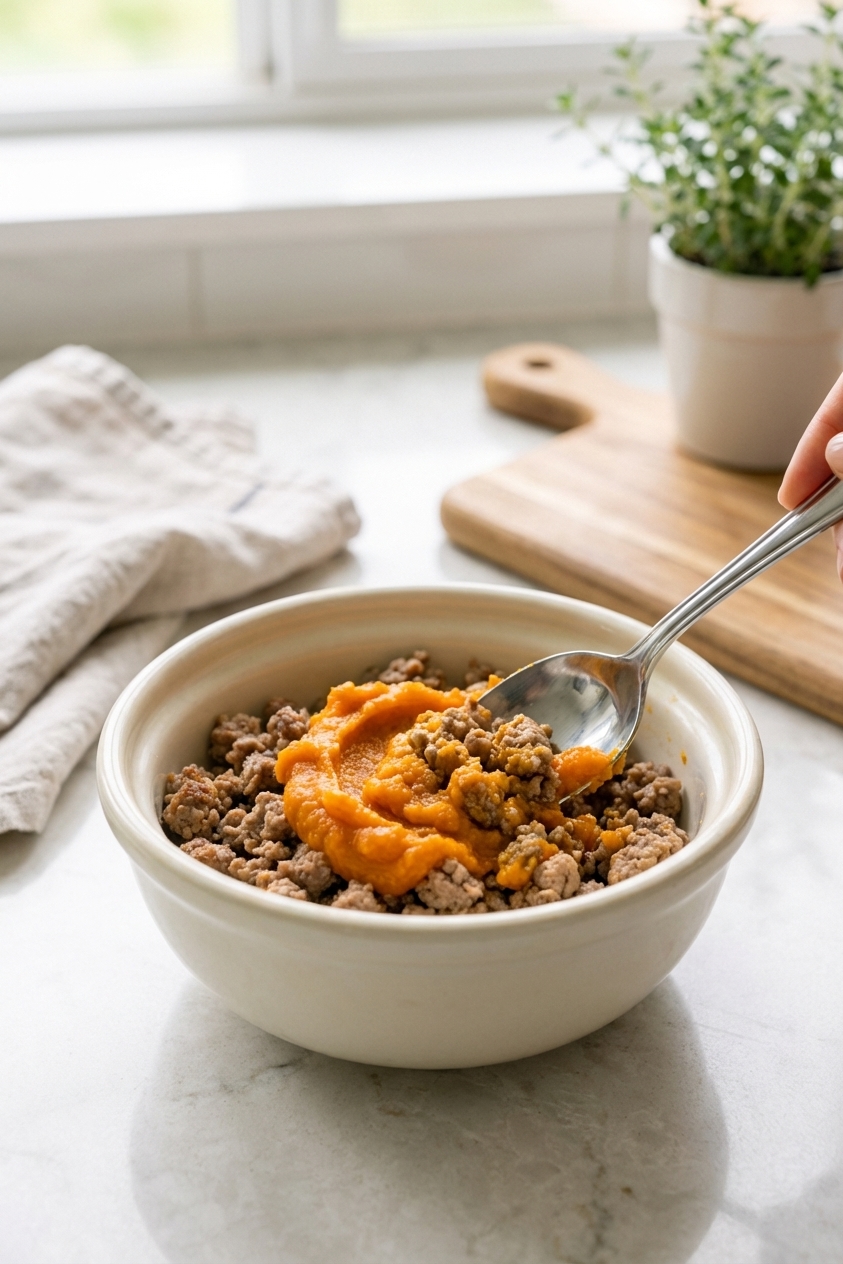
Two-ingredient meat paste
- 1 tablespoon cooked ground turkey (or chicken)
- 1 teaspoon plain canned pumpkin
Mash together until it forms a soft paste. Use just enough to wrap the pill and seal fully. Refrigerate leftovers in a sealed container and use within 2 to 3 days.