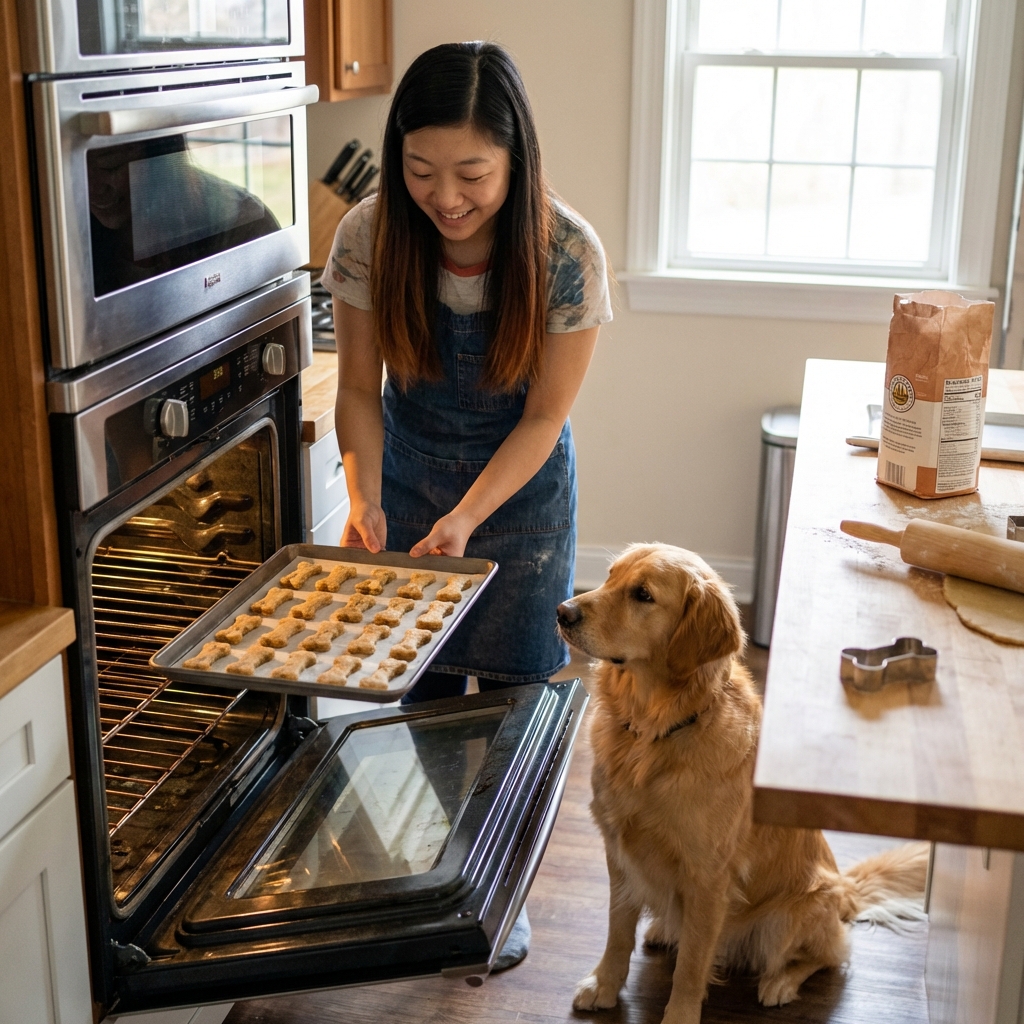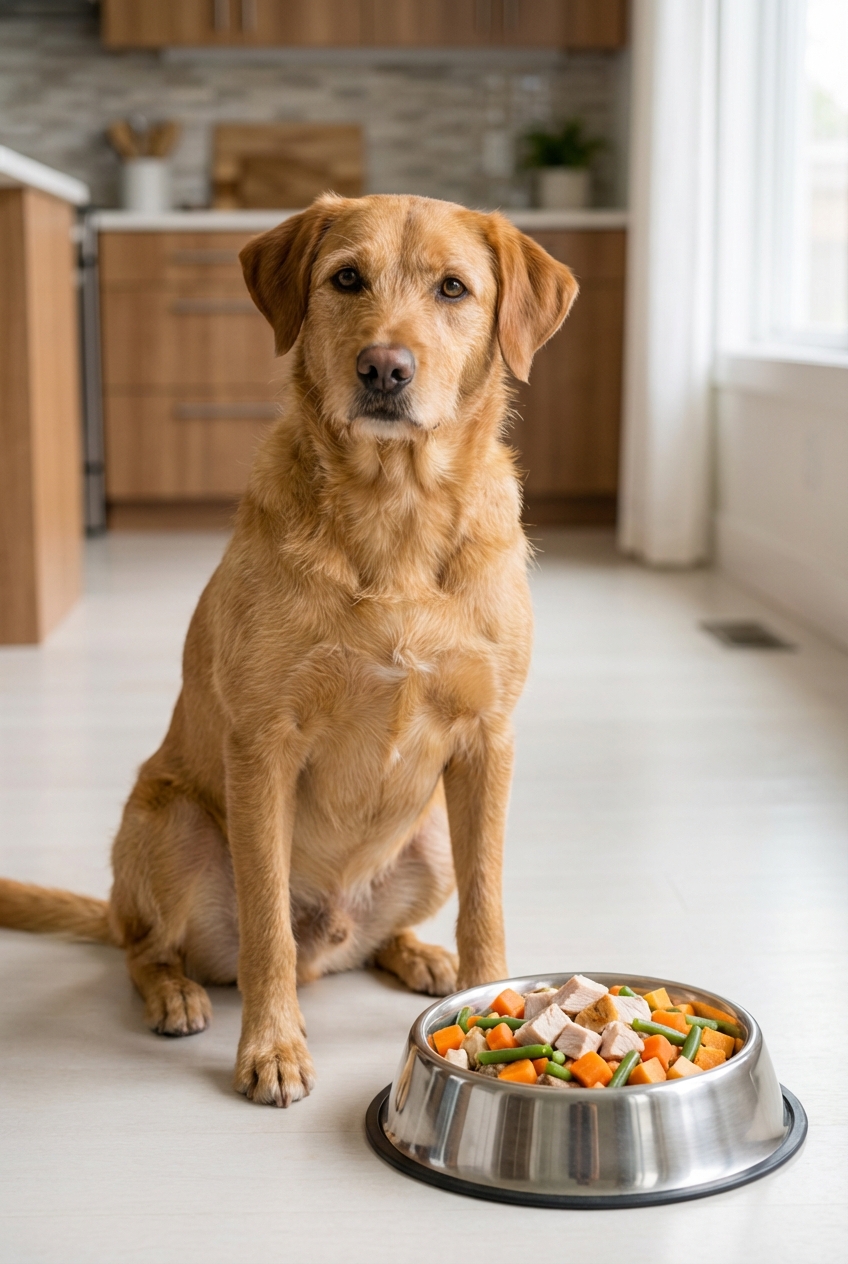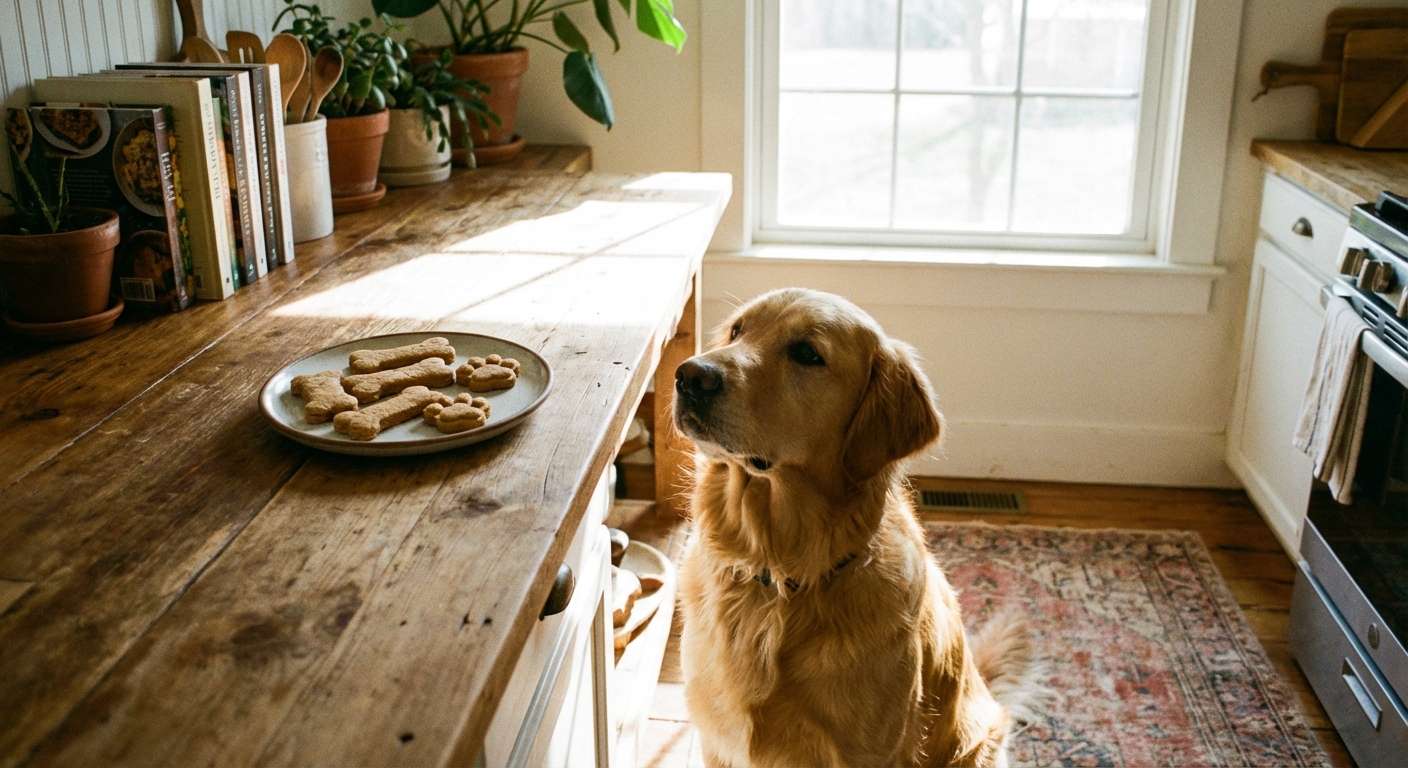
Skip pricey processed treats with 5 easy homemade dog treat ideas—from frozen pumpkin yogurt bites to sweet potato chews. Includes vet safety tips, portion...
Article
•
Designer Mixes
Homemade Dog Treats With Vet Safe Ingredients

Shari Shidate
Designer Mixes contributor
As a veterinary assistant here in Frisco, Texas, I love how excited pet parents get when they realize this: homemade dog treats do not have to be complicated. With vet-safe ingredients and sensible portions, they can be safer, simpler, and more nourishing than many people expect.
Below I’ll walk you through vet-friendly ingredients, what to avoid, and a handful of easy, reliable recipes you can make at home with confidence.
What “vet-safe” means
In practice, “vet-safe” treats follow a few evidence-based rules. They use ingredients dogs can digest well, avoid known toxins, and are portioned to help prevent tummy upset and unwanted weight gain.
- Simple ingredient lists: fewer items means fewer surprises if your dog has sensitivities.
- Appropriate texture: crunchy treats should be easy to break, not rock hard. A helpful rule many vet teams share is the fingernail test: if you cannot indent it with your fingernail (or it feels uncomfortably hard when tapped against your kneecap), it is too hard and can raise the risk of tooth fractures.
- Food safety: clean hands, clean surfaces, and proper cooking and storage.
- Balanced treat habits: as a general guideline, treats should make up about 10% or less of daily calories for most dogs. Your vet can help tailor this for your dog’s age, size, and health needs.
If your dog has a pancreatitis history, kidney disease, diabetes, food allergies, is on a prescription diet, or is a puppy under 12 months (especially large-breed puppies), check in with your veterinarian before changing treat routines.
Vet-safe ingredients
These are go-to options that tend to be well tolerated by many dogs when served in appropriate portions. Start small, especially if your dog has a sensitive stomach. Keep seasonings simple: no added salt, and skip blends that may include onion or garlic powder.
Proteins
- Cooked lean chicken or turkey (plain, no seasoning)
- Cooked lean ground beef (drain excess fat)
- Cooked salmon (plain, thoroughly cooked, no bones)
- Eggs (fully cooked)
Fiber and gentle bases
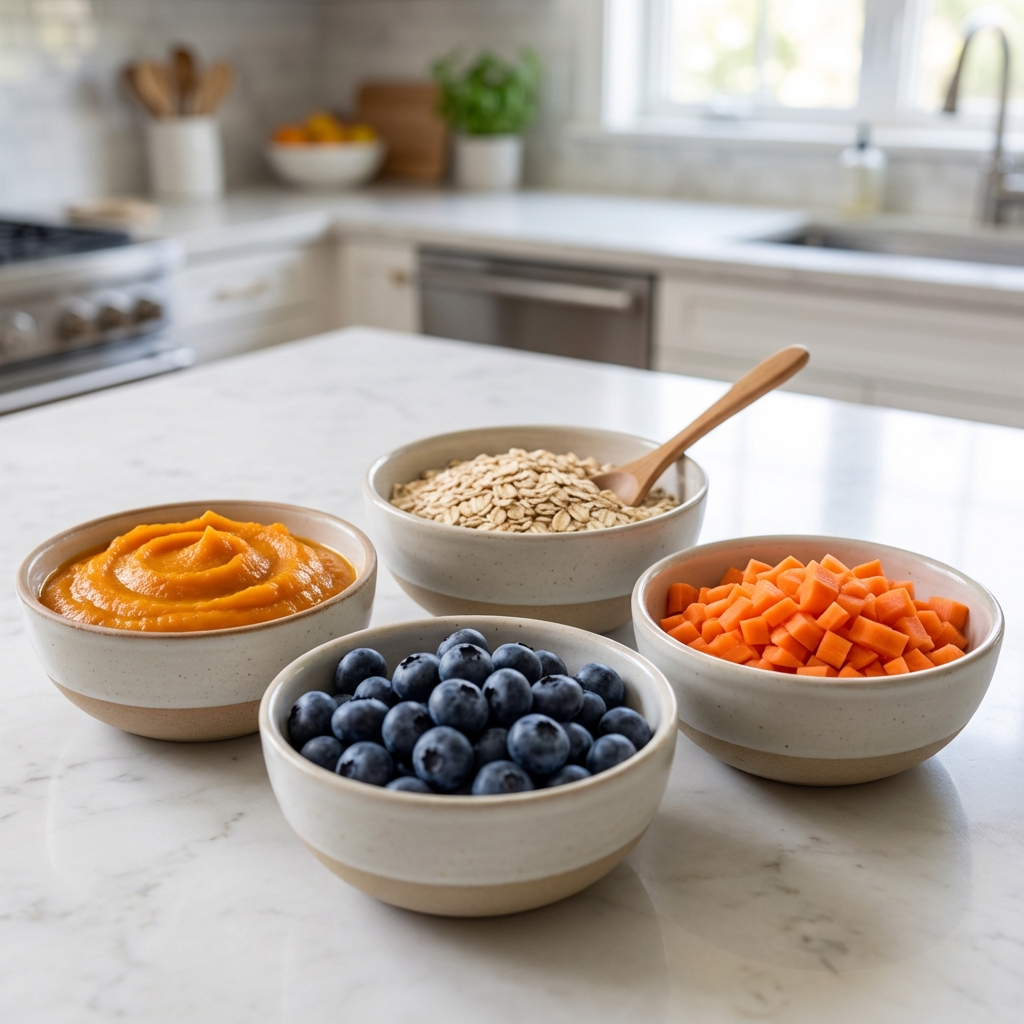
- Pure pumpkin (plain canned pumpkin, not pie filling)
- Oats (rolled or quick oats, ground if needed)
- Brown rice (cooked)
- Sweet potato (baked or steamed)
Fruits and veggies
- Blueberries (fresh or frozen)
- Apples (no seeds or core)
- Carrots (raw for crunch or cooked for easier digestion)
- Green beans (plain)
Binders and extras
- Plain yogurt or kefir (unsweetened, watch lactose sensitivity)
- Natural peanut butter (must be xylitol-free; also high-fat, so use sparingly and avoid for dogs prone to pancreatitis)
- Flour options: oat flour, whole wheat flour, or an allergy-friendly option recommended by your vet if your dog has sensitivities
Ingredients to avoid
Some foods are toxic, and others are simply too risky for certain dogs. When in doubt, skip it and keep treats simple. Also, skip sweeteners and never use “sugar-free” ingredients.
- Xylitol: extremely dangerous and can be life-threatening. Check labels closely since some peanut butters and baked goods now contain it.
- Grapes and raisins: can cause kidney failure in dogs.
- Chocolate, cocoa, coffee, caffeine: toxic.
- Onion, garlic, chives, and anything seasoned with them (including powders): can damage red blood cells and are best avoided. Garlic is especially tricky because concentrated forms and individual sensitivity can make it higher risk than people realize.
- Macadamia nuts: toxic.
- Cooked bones: can splinter and cause choking or internal injury.
- High-fat foods: bacon grease, fatty scraps, heavy cheeses (risk of pancreatitis and diarrhea).
- Very salty foods: deli meats, chips, heavily seasoned snacks.
If you suspect your dog ate something toxic, contact your veterinarian or an animal poison hotline immediately.
3 vet-friendly recipes
Each recipe is designed to be simple, portion-friendly, and made from ingredients that many dogs tolerate well. Start with small pieces and see how your dog does for 24 to 48 hours.
1) Pumpkin Oat Bites (bake)
Why it’s a favorite: pumpkin and oats are gentle for many dogs, and the treats break easily into training-size pieces.
- 1 cup plain pumpkin puree
- 1 egg
- 2 cups oats (blend into a flour if you want a smoother dough)
- Optional: 1 to 2 tablespoons plain yogurt for softness
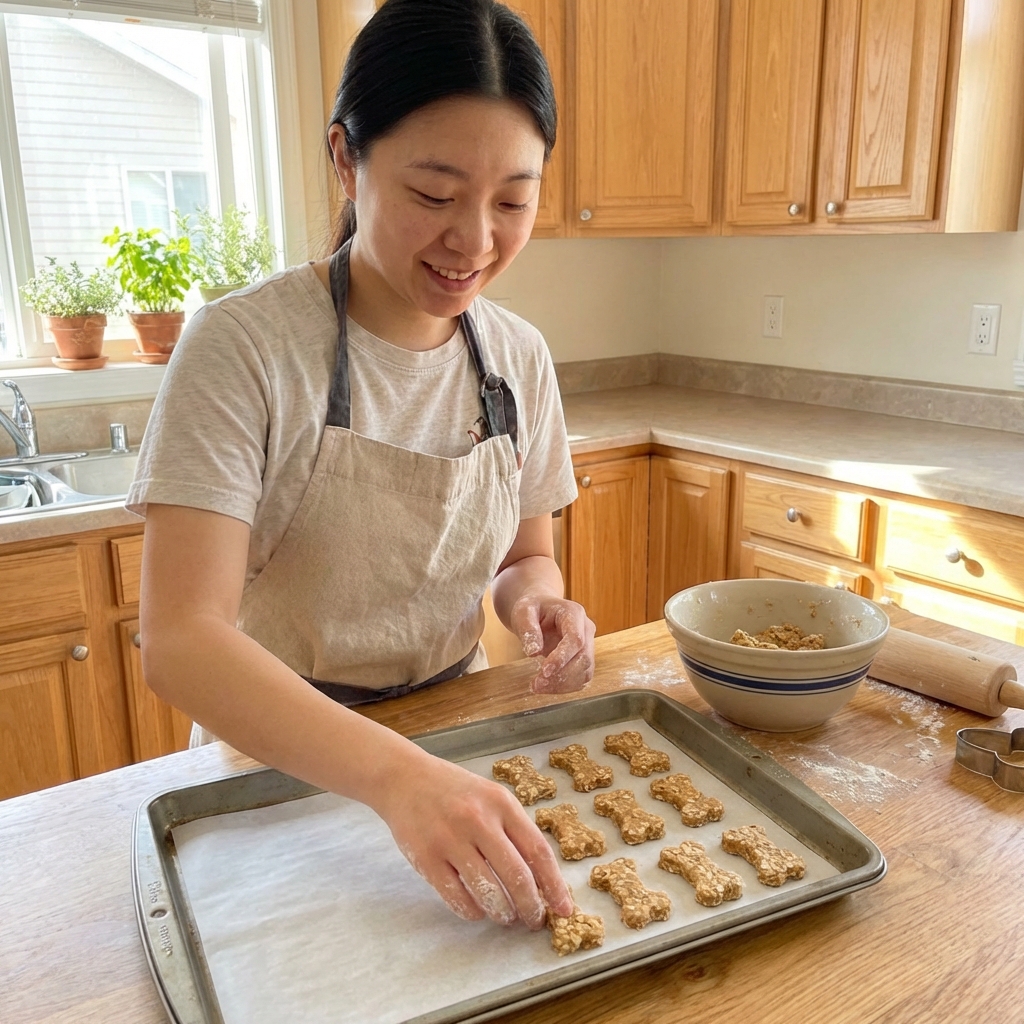
How to make: Preheat oven to 350°F. Line a baking sheet with parchment. Mix ingredients into a thick dough. Roll into small balls (about the size of a marble for most dogs) or press the dough about 1/4-inch thick and cut into small squares. Bake 18 to 25 minutes until just set and firm. Bake time varies by size. Cool completely.
2) Peanut Butter Banana Training Treats
Important: use peanut butter that is 100% xylitol-free, and keep portions small since nut butters are calorie-dense and can be too rich for some dogs.
- 1 ripe banana (mashed)
- 1 egg
- 1/3 cup natural peanut butter (xylitol-free)
- 1 to 1 1/2 cups oat flour (or whole wheat flour if tolerated)
How to make: Preheat oven to 325°F. Line a baking sheet with parchment. Mix wet ingredients, then add flour until you get a workable dough. Roll to about 1/4-inch thick and cut into tiny cubes (pea-sized is perfect for training). Bake 12 to 16 minutes until set and lightly firm. Cool completely.
3) Frozen Yogurt Blueberry Drops (no bake)
Why it’s great: fast, refreshing, and easy to portion. Best for dogs who tolerate dairy.
- 1 cup plain unsweetened yogurt (or lactose-free option)
- 1/2 cup blueberries
How to make: Blend until mostly smooth. Spoon small dots onto parchment paper on a tray. Freeze until firm, then store frozen.
Portions and frequency
One of the biggest health wins I see in clinic is not just better ingredients, but better portions. Many “treat problems” are really “treat size” problems.
- Use the 10% guideline: as a general rule of thumb, aim for treats to be about 10% or less of daily calories.
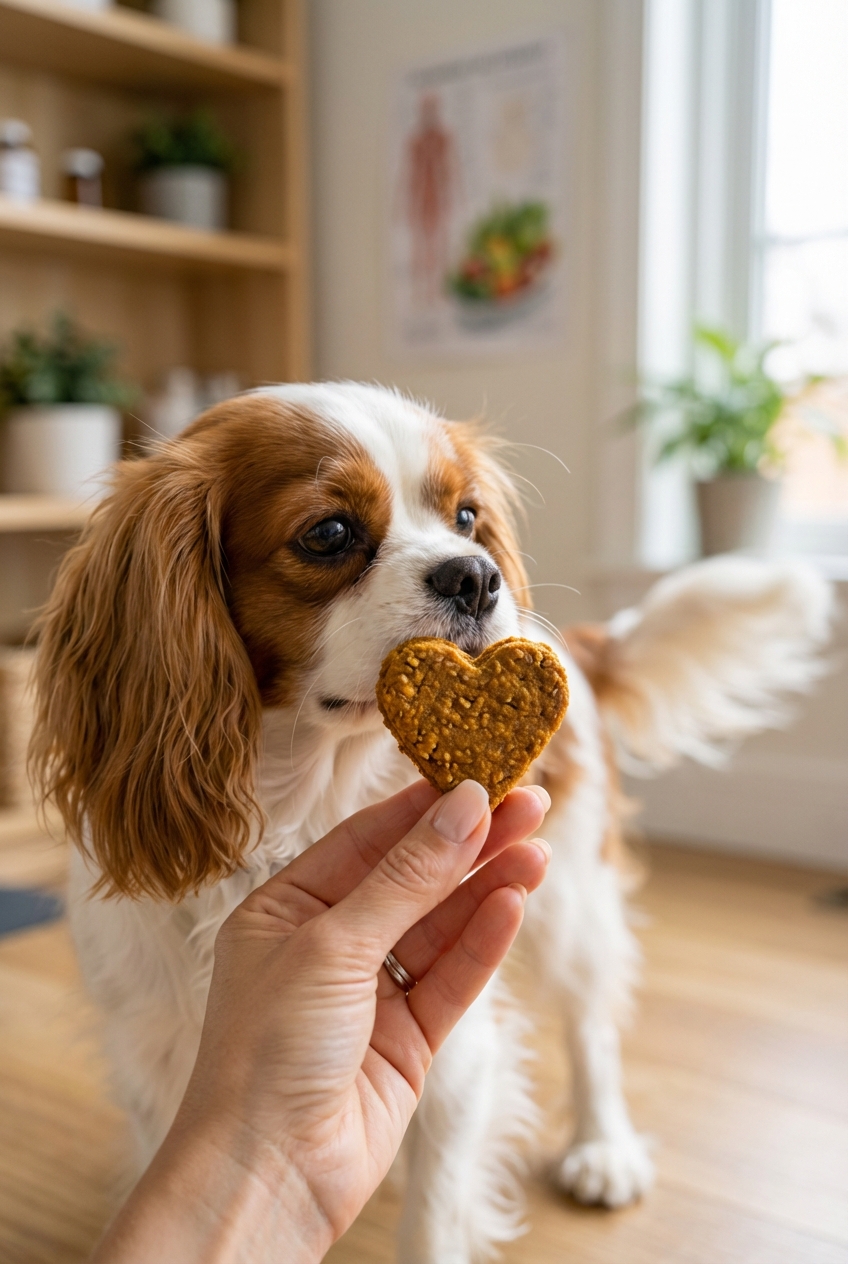
- Go tiny for training: pea-sized pieces work for most dogs and keep calories under control.
- Adjust meals if needed: if you have a heavy training day, slightly reduce meal portions.
For puppies, smaller is even better. Their stomachs can be more sensitive, and it is easy to accidentally crowd out balanced puppy nutrition with too many treats.
If you are not sure how many treats are too many, your vet team can help estimate daily calories and a reasonable treat budget based on your dog’s ideal weight.
Food safety and storage
- Refrigerate: moist treats or anything with meat, eggs, or dairy. A typical range is 3 to 5 days in the fridge, depending on moisture and ingredients.
- Freeze extras: freeze in small bags so you can thaw only what you need. A typical range is 2 to 3 months for best quality.
- Label and date: your containers so nothing sits too long.
- When in doubt, throw it out: homemade treats do not have preservatives like commercial products.
For many baked treats, a good routine is: keep a few days’ worth in the fridge and freeze the rest.
When to pause homemade treats
Homemade treats are wonderful, but some dogs do best with tightly controlled, veterinarian-approved options. Consider pausing homemade treats and asking your vet for guidance if your dog has:
- Recurring vomiting, diarrhea, or itchy skin that might suggest allergies
- Pancreatitis or frequent “fat intolerance” stomach upsets
- Kidney disease (protein, phosphorus, and sodium need careful control)
- Diabetes (carb choices and timing matter)
You are doing a good thing by caring about ingredients. Sometimes the safest choice is simply the most controlled one.
When to call your vet
Stop the new treats and call your vet if you notice:
- Vomiting or diarrhea that lasts more than 24 hours, or any blood in stool
- Lethargy, weakness, or collapse
- Facial swelling, hives, intense itching, or sudden coughing
- Repeated gagging, choking, or trouble swallowing after a chew or treat
My “start slow” plan
If your dog is used to packaged treats, introduce homemade options gradually:
- Days 1 to 3: offer 1 to 2 small pieces and watch stool and appetite
- Days 4 to 7: increase slowly if everything looks normal
- After a week: rotate recipes and ingredients to avoid overdoing any one item
Good food supports good energy. And good energy supports a happier, healthier life. Treats can be part of that story when we keep them simple, safe, and portioned with love.