Turn chicken and rice into a more balanced homemade dog meal with veggies, calcium carbonate, and omega-3s. Includes gram weights, portion guidance, swaps, a...
Article
•
Designer Mixes
Homemade Dog Food With Ground Beef

Shari Shidate
Designer Mixes contributor
If ground beef is the protein you always have on hand, you are in good company. In my vet clinic experience as a veterinary assistant here in Frisco, I have seen plenty of families successfully use lean ground beef as a simple foundation for homemade meals. The key is making it complete and balanced, not just tasty.
Below you will find 4 vet-aligned ground beef recipes, plus the “why” behind lean vs regular beef, safe cooking temps, portion guidance by dog size, and the most common homemade diet mistake I see: calcium-to-phosphorus imbalance.
Lean vs regular ground beef
Ground beef can absolutely work for dogs, but fat level matters. Too much fat can trigger stomach upset and, in some dogs, pancreatitis.
- Best everyday choice: 90 to 93% lean ground beef.
- Okay for active dogs: 85% lean, if your dog tolerates fat well and you are watching calories.
- Use cautiously: 80% lean or fattier. If you use it, brown it and drain well, then blot with paper towels.
Tip: If your dog has a history of pancreatitis, chronic diarrhea, or needs a lower-fat diet, check with your veterinarian before using ground beef regularly.
Food safety
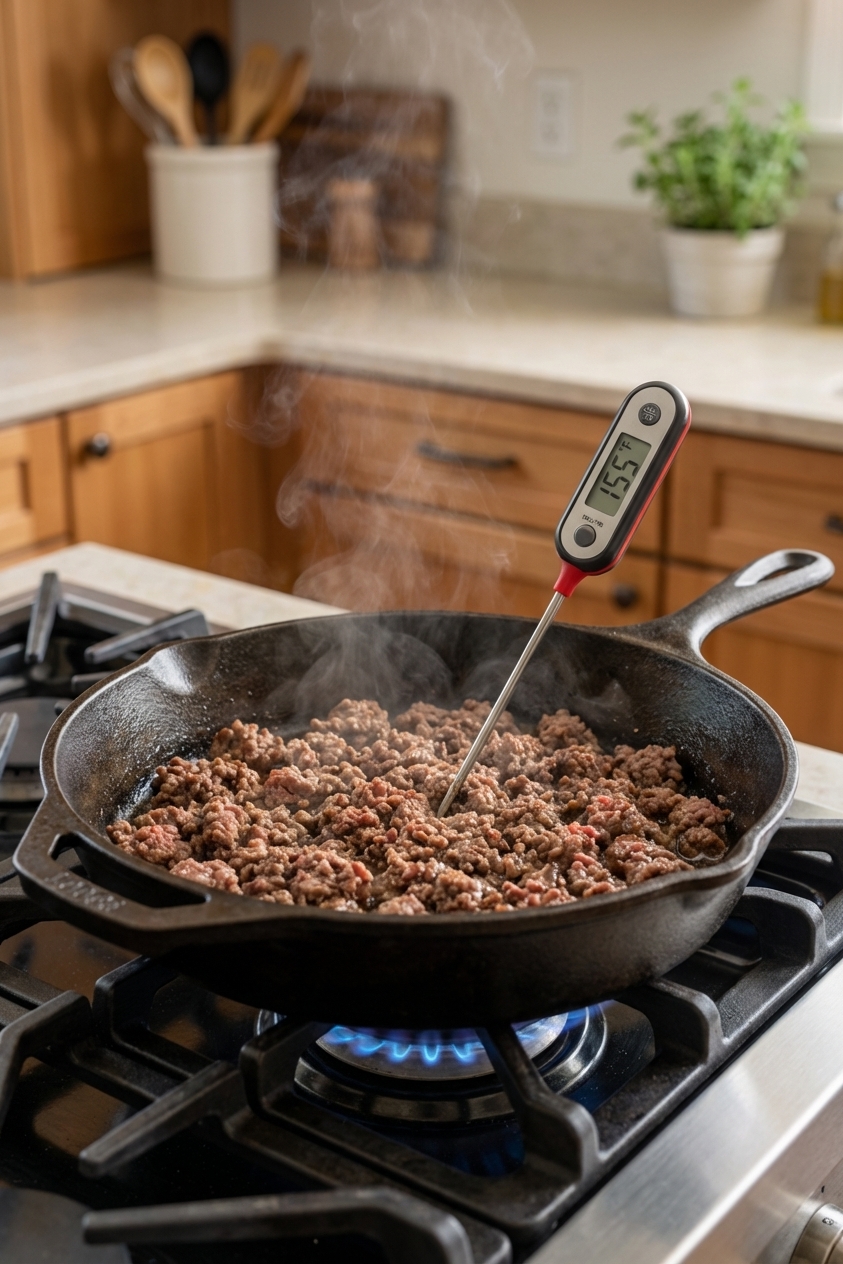
For safety, cook ground beef thoroughly.
- Cook ground beef to 160°F (71°C) measured with a food thermometer in the center of the thickest portion.
- Cook starches and vegetables separately or together, but avoid seasoning with onion, onion powder, or excessive salt.
- Cool quickly, refrigerate within 2 hours, and use within 3 to 4 days, or freeze portions.
Avoid: garlic, onion, leeks, and chives. Garlic is an allium and can cause oxidative damage to red blood cells. Because safe at-home dosing is unclear and mistakes are common, I keep these recipes allium-free for broad safety.
Calcium to phosphorus
Meat is naturally high in phosphorus and low in calcium. If you feed meat and rice and veggies without a calcium source, the diet becomes calcium-deficient over time, which can impact bones, teeth, and overall health.
General target: a calcium-to-phosphorus ratio around 1.2:1 (many veterinary nutrition references suggest a range close to 1:1 up to about 2:1 for adult dogs). Puppies, pregnant dogs, and large-breed growth are more sensitive and need veterinary guidance.
Easy calcium options
- Eggshell powder: Bake clean eggshells at 300°F for 10 minutes, grind to a fine powder. Eggshell powder is often quoted as about 2,000 mg calcium per teaspoon, but it can vary a lot depending on grind and how tightly you scoop. For best accuracy, measure by weight if you can.
- Calcium carbonate powder: A consistent option if you want predictable dosing.
- Veterinary-made complete supplement: The simplest way to ensure vitamins, minerals, and calcium are all covered.
Practical rule of thumb for adult maintenance recipes: When a recipe does not include edible bone, many vets use roughly 800 to 1,000 mg of calcium per 1 pound of finished food. This is a starting point for many adult dogs, not a one-size-fits-all prescription. The most accurate approach is to calculate calcium needs based on the recipe’s phosphorus and your dog’s requirements.
Worked calcium example
Let’s say your finished batch weighs 3 lb. Using 900 mg calcium per lb as a middle-of-the-road starting point:
- 3 lb × 900 mg = 2,700 mg calcium for the batch
- If your eggshell powder is about 2,000 mg per teaspoon, that is roughly 1 1/4 teaspoons for the batch
Note: Because eggshell density varies, this is an estimate. If you want consistency, weigh your eggshell powder or use a labeled calcium carbonate product.
How much to feed
Homemade food portions depend on calorie density, age, activity, and whether you are using lean or regular beef. The guidelines below are starting weights of food, not calorie counts. Since these recipes include drained beef plus carbs and vegetables, calorie density can vary from batch to batch.
As a starting point for adult dogs:
- General daily amount: about 2 to 3% of ideal body weight per day (split into 2 meals for most dogs).
Starting ranges
- 10 lb dog: 3.2 to 4.8 oz food per day (about 0.2 to 0.3 lb)
- 25 lb dog: 8 to 12 oz per day (about 0.5 to 0.75 lb)
- 50 lb dog: 16 to 24 oz per day (about 1 to 1.5 lb)
- 75 lb dog: 24 to 36 oz per day (about 1.5 to 2.25 lb)
Reality check: Watch your dog’s waistline and stool. If weight creeps up, reduce portions by 10%. If ribs are getting too prominent, increase by 10%.
If your dog is a puppy, pregnant or nursing, a large-breed puppy, or has kidney disease, pancreatitis, diabetes, or is on a prescription diet, ask your veterinarian or a board-certified veterinary nutritionist before switching to homemade meals.
4 ground beef recipes
Each recipe below is written as an adult maintenance template and includes vegetables plus a calcium strategy.
Not for growth or special cases: These recipes are not appropriate for puppies, pregnant or lactating dogs, or dogs with certain medical conditions unless a veterinarian or board-certified veterinary nutritionist has specifically formulated them for your dog.
Important: Calcium alone does not make a homemade diet complete. For long-term feeding, most dogs also need a complete canine vitamin-mineral supplement formulated for homemade diets (to cover nutrients like zinc, copper, iodine, selenium, and vitamin E). If you are not using a veterinary-formulated supplement, work with your veterinarian or a board-certified veterinary nutritionist to build a truly complete recipe.
What to look for in a supplement: choose one that is specifically formulated for homemade dog diets and is intended to help meet AAFCO and/or NRC nutrient targets for adult maintenance. A general “pet multivitamin” is usually not enough.
How to transition: Start with 25% homemade and 75% current food for a few days, then slowly increase every 2 to 3 days as stools stay firm.
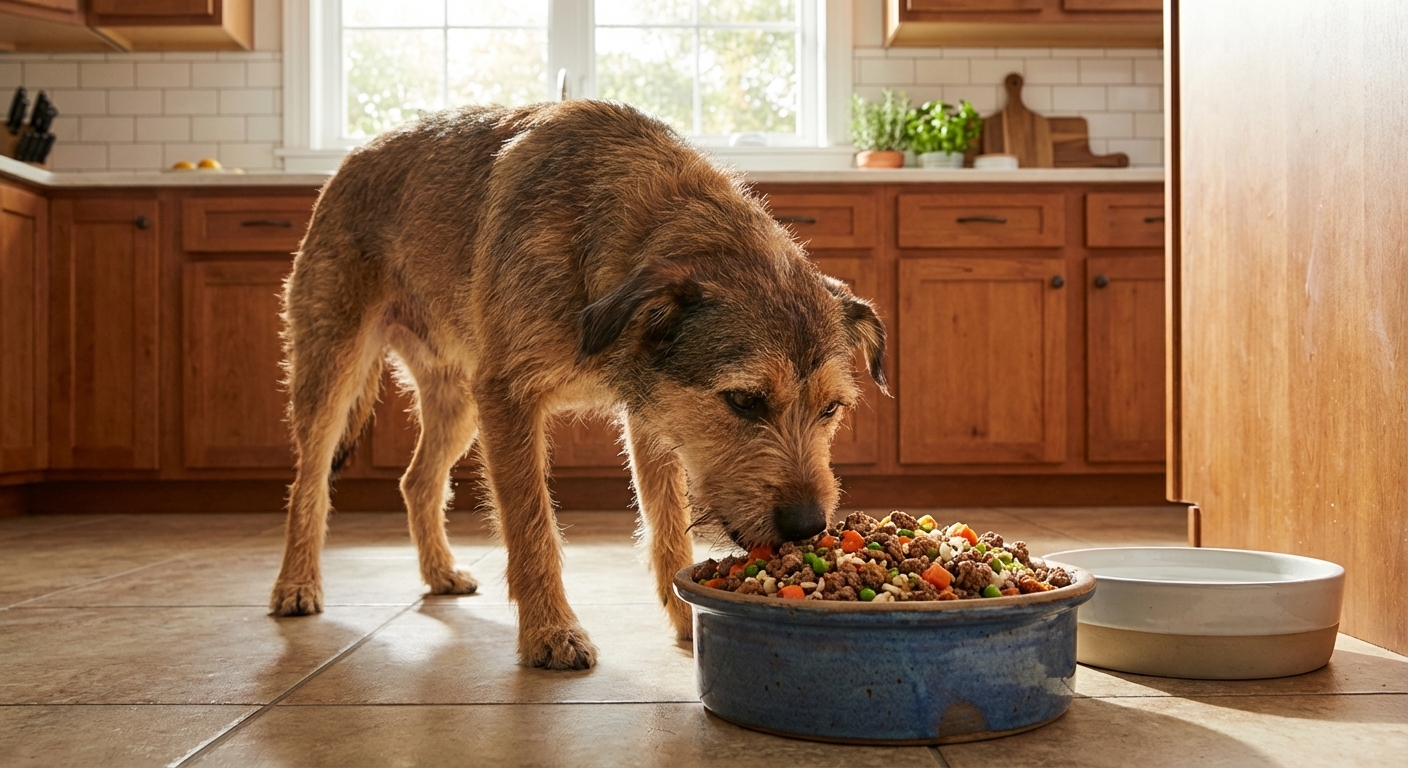
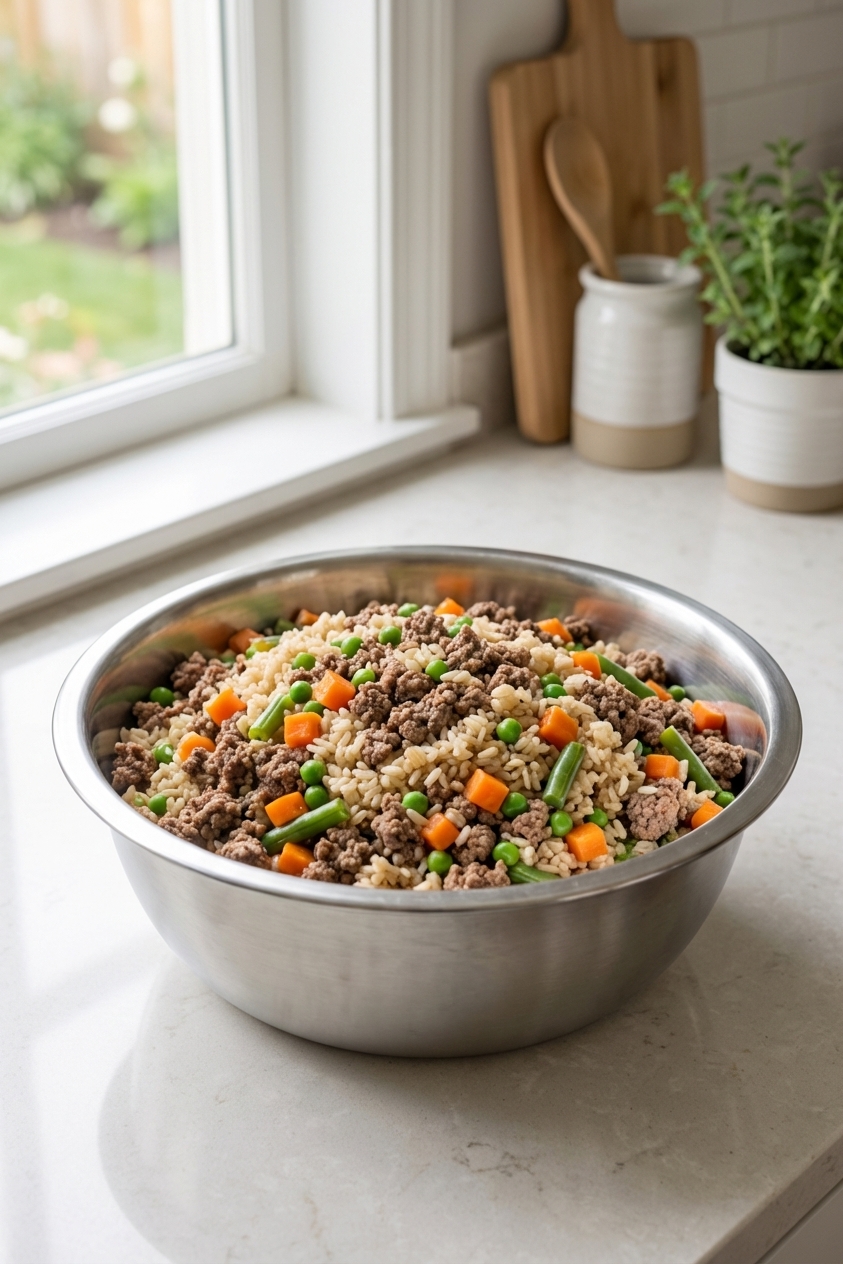
Recipe 1: Beef, rice, and veggies
Why this works: Mild ingredients, easy on many stomachs, and a nice balance of protein, carbs, and fiber.
- 1 lb lean ground beef (90 to 93%), cooked to 160°F, drained
- 2 cups cooked brown rice
- 1 cup chopped carrots, lightly steamed
- 1 cup chopped green beans, lightly steamed
- 1 to 2 tbsp fish oil or sardine oil (optional, for omega-3s)
- Calcium: add eggshell powder or calcium carbonate to meet roughly 800 to 1,000 mg calcium per pound of finished food
- Complete supplement: a canine vitamin-mineral supplement formulated for homemade diets (required for long-term feeding, use label dosing)
Directions: Cook beef, steam vegetables, combine with rice. Let cool. Add oils and supplements after cooling (helps protect heat-sensitive nutrients).
Makes: about 5 to 6 cups, depending on water content.
Approx batch weight: about 2.5 to 3.5 lb.
Recipe 2: Beef and sweet potato
Why this works: Sweet potato is a dog-friendly carb, and spinach adds folate and vitamin K in small amounts.
- 1 lb lean ground beef, cooked to 160°F, drained
- 2 cups cooked mashed sweet potato (baked or steamed)
- 1 cup spinach, lightly steamed, then chopped
- 1/2 cup blueberries (optional, can be mashed)
- 1 tbsp ground chia or ground flax (optional fiber and fats)
- Calcium: eggshell powder or calcium carbonate to balance the batch
- Complete supplement: canine vitamin-mineral supplement formulated for homemade diets (required for long-term feeding, use label dosing)
Directions: Mix all cooked ingredients. Let cool, then add oils and supplements after cooling. Start with smaller spinach amounts if your dog is new to greens.
Makes: about 5 to 6 cups.
Approx batch weight: about 2.5 to 3.5 lb.
Recipe 3: Beef, quinoa, and pumpkin
Why this works: Pumpkin can help regulate stool consistency, and quinoa provides extra amino acids and minerals.
- 1 lb lean ground beef, cooked to 160°F, drained
- 1 1/2 cups cooked quinoa
- 3/4 to 1 cup plain canned pumpkin (not pie filling)
- 1 cup zucchini, lightly cooked and chopped
- 1 tbsp olive oil (optional)
- Calcium: eggshell powder or calcium carbonate to balance
- Complete supplement: canine vitamin-mineral supplement formulated for homemade diets (required for long-term feeding, use label dosing)
Directions: Combine ingredients. Let cool, then add oils and supplements after cooling. If stools get too soft, reduce pumpkin slightly.
Makes: about 5 cups.
Approx batch weight: about 2.5 to 3.5 lb.
Recipe 4: Beef and egg skillet
Why this works: Eggs are a highly digestible protein and bring helpful nutrients. Broccoli adds fiber and phytonutrients when cooked.
- 1 lb lean ground beef, cooked to 160°F, drained
- 2 large eggs, scrambled (no butter, no salt)
- 1 1/2 cups cooked oats or cooked barley
- 1 cup broccoli florets, steamed and finely chopped
- Calcium: still needed, even with eggs. Add eggshell powder or calcium carbonate to balance the batch
- Complete supplement: canine vitamin-mineral supplement formulated for homemade diets (required for long-term feeding, use label dosing)
Directions: Cook beef and eggs separately, then mix with cooked grain and broccoli. Let cool, then add supplements after cooling.
Makes: about 5 cups.
Approx batch weight: about 2.5 to 3.5 lb.
Supplements
Homemade diets often need supplementation to be nutritionally complete.
Often helpful
- Calcium (essential unless you are feeding edible bone, which these recipes do not use)
- Omega-3s (fish oil) for skin, coat, and inflammatory support
- Complete canine vitamin-mineral supplement formulated for homemade diets (typically required for long-term feeding unless a veterinary nutritionist has built a complete recipe with specific organ meats and trace nutrient additions)
Usually skip
- Human multivitamins (doses and ingredients may be unsafe for dogs)
- Excess liver (too much can overdo vitamin A). If you add organ meats, keep it small and intentional, or work with a nutritionist.
- Salt, seasoning blends, onions (onion and related plants can be toxic)
Troubleshooting
- Loose stools: reduce fat, drain beef better, reduce new veggies, add a little less pumpkin, slow your transition.
- Itchy skin: beef can be a trigger for some dogs. Consider rotating proteins or talk to your vet about a diet trial.
- Dog refuses it: warm slightly, add a splash of warm no-salt broth, or mix 50/50 with their current food for a week.
Bottom line
Ground beef can be a wonderful, budget-friendly homemade dog food staple if you choose a lean grind, cook it safely, and balance the calcium-to-phosphorus ratio. For long-term feeding, do not stop at calcium. Use a veterinary-formulated complete supplement for homemade diets, or work with your veterinarian or a board-certified veterinary nutritionist to build a recipe that covers trace minerals and vitamins.
Want help choosing a starting point? Leave a comment with your dog’s weight, age, activity level, and any health concerns, and I will share which recipe is usually the best fit and what to discuss with your veterinarian.