
Homemade Dog Food Recipes That Are Easy and Nutritious
Starting with homemade dog food can feel like a big leap, but it does not have to be complicated. I always tell my patients that small, consistent habits compound into remarkable results over time, and the same idea applies to feeding your dog. With a few simple ingredients and a clear plan, you can make meals that are wholesome, easy to portion, and friendly to your budget when you buy in bulk, use frozen vegetables, and batch cook.
Important note: This article is educational and not a substitute for veterinary advice. Puppies (especially large-breed puppies), pregnant dogs, seniors, and dogs with medical conditions (like kidney disease, pancreatitis, food allergies, or diabetes) need individualized guidance from a veterinarian or a board-certified veterinary nutritionist.
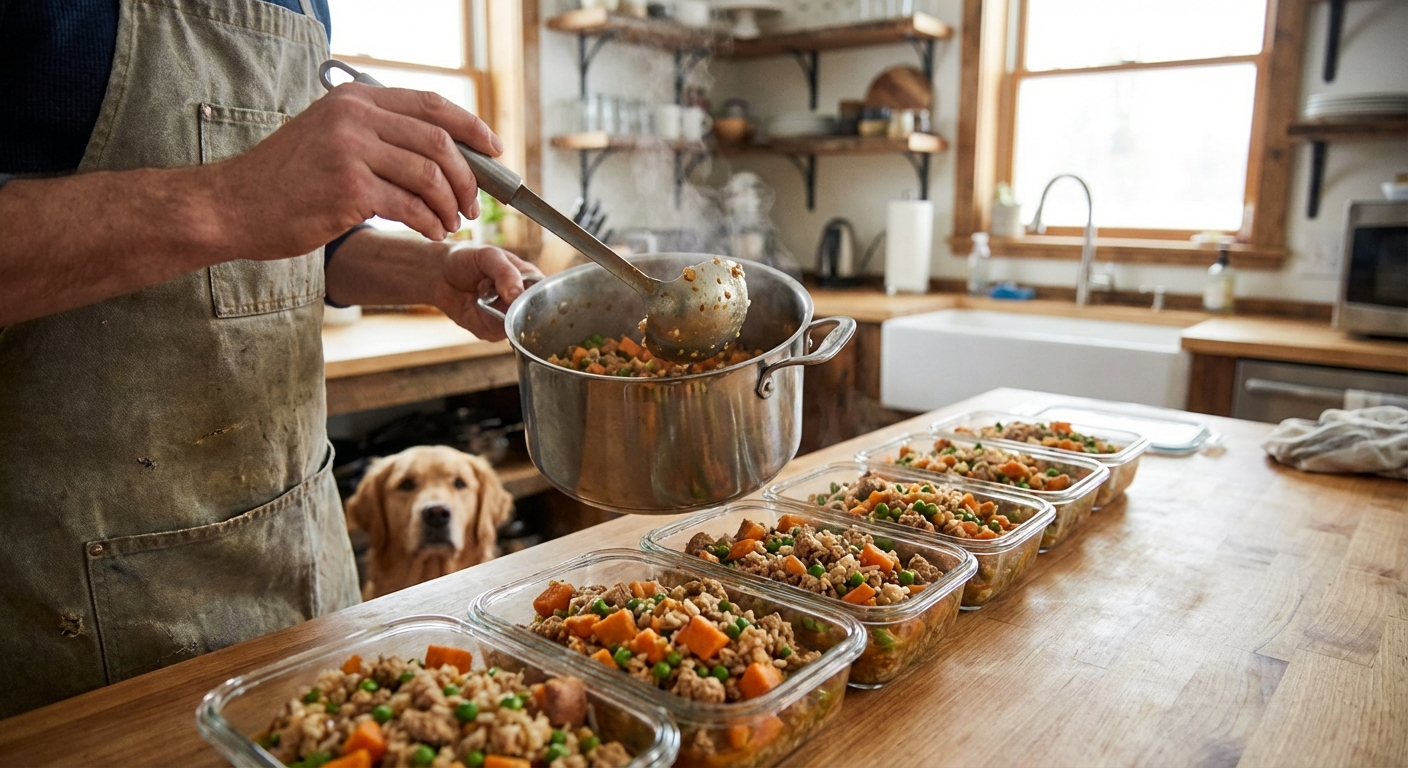
What a balanced homemade meal needs
Dogs thrive on routine and consistency, but they also need balanced nutrition. Many homemade meals fall short not because the ingredients are bad, but because key nutrients are missing over time. A practical starting structure looks like this:
- Protein: chicken, turkey, lean beef, eggs, sardines (in water), or salmon
- Carbohydrate or starchy vegetable: rice, oats, quinoa, sweet potato, pumpkin
- Vegetables: carrots, green beans, zucchini, spinach (cooked is often easier to digest, and best in small amounts)
- Healthy fat: small amounts of olive oil, flaxseed oil, or fish oil as advised
- Calcium source: this is commonly missing. If you are not using edible bone, ask your vet about an appropriate calcium supplement. Do not rely on meat alone.
Completeness matters: If you want homemade meals to be a primary diet long-term, aim for an AAFCO-aligned, vet-formulated recipe or a plan from a veterinary nutritionist. A balanced vitamin-mineral premix plus a correctly calculated calcium source is often the safest path.
Easy homemade dog food recipes
These recipes are designed to be simple, gentle on most stomachs, and easy to batch cook. They are not complete and balanced as written unless you add a veterinarian-directed calcium source and an appropriate vitamin-mineral supplement (or use a recipe that already includes them).
Simple ratio rule (starting point): For many adult dogs, a reasonable template is about 50% protein, 25% cooked starch, and 25% vegetables by volume. This is a practical training-wheels approach, not a guarantee of completeness. Dogs with medical needs may need very different proportions.
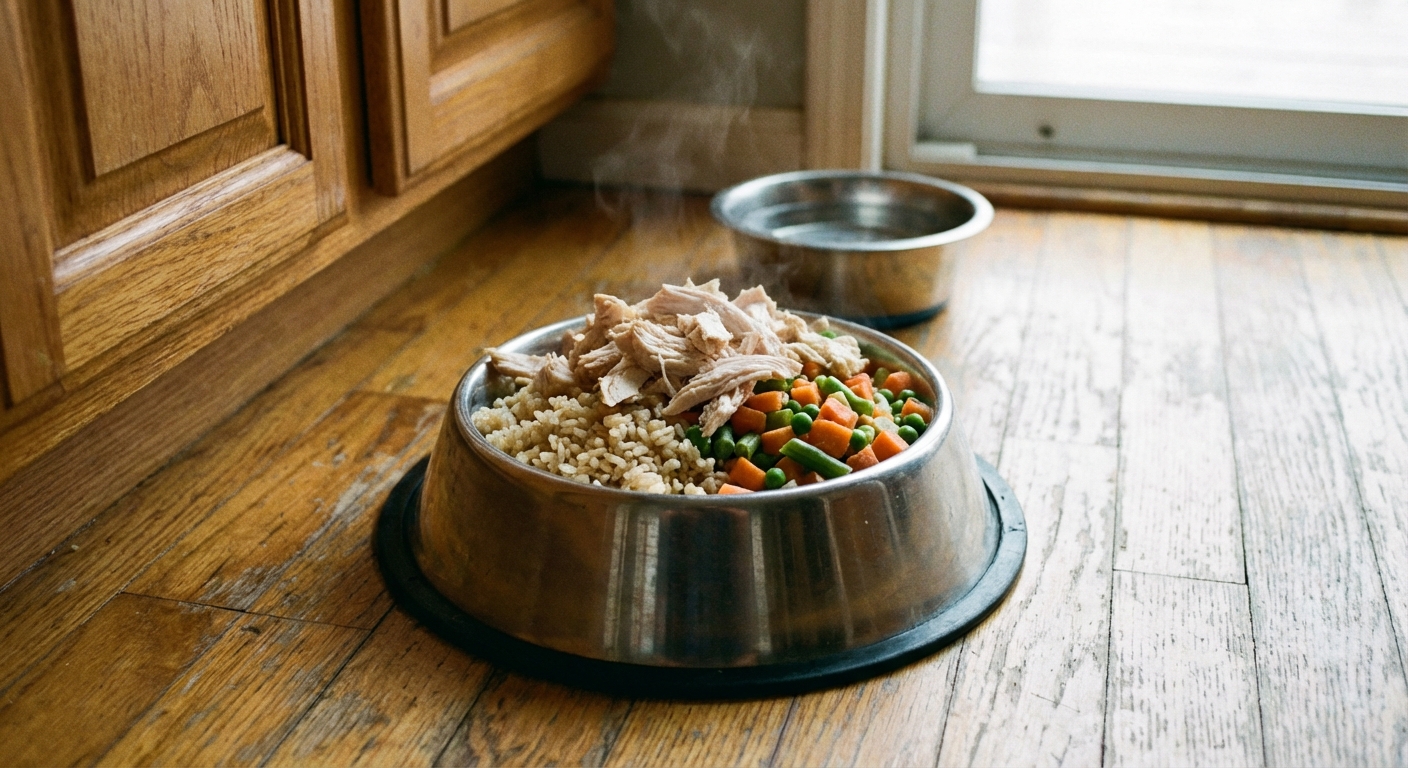
1) Chicken and rice comfort bowl
Best for: picky eaters, simple ingredient lists, gentle meals
Ratio guide: 2 parts chicken, 1 part rice, 1 part vegetables
- Ingredients: cooked shredded chicken breast or thigh (skin removed), cooked white or brown rice, finely chopped cooked carrots and green beans
- How to make: Cook chicken thoroughly, cook rice, steam vegetables until soft, then mix.
- Optional add-in: a spoonful of plain pumpkin for digestion
- Important: Not complete without a vet-directed calcium source and vitamin-mineral balance.
2) Turkey, sweet potato, and spinach skillet
Best for: meal prep, dogs who do well with slightly higher fiber
Ratio guide: 2 parts turkey, 1 part sweet potato, 1 part vegetables (use spinach in small amounts)
- Ingredients: lean ground turkey, cooked mashed sweet potato, cooked spinach (chopped), a small amount of olive oil
- How to make: Brown turkey in a skillet, drain excess fat, stir in sweet potato and spinach until warmed through.
- Important: Not complete without a vet-directed calcium source and vitamin-mineral balance.
3) Beef and quinoa veggie mix
Best for: active dogs who need more protein variety
Ratio guide: 2 parts beef, 1 part quinoa, 1 part vegetables
- Ingredients: lean ground beef, cooked quinoa, cooked zucchini and carrots (diced small)
- How to make: Cook beef fully and drain fat, cook quinoa according to package directions, steam vegetables, combine and cool.
- Important: Not complete without a vet-directed calcium source and vitamin-mineral balance.
4) Salmon and oat dinner
Best for: dogs who benefit from fish-based protein
Ratio guide: 2 parts salmon, 1 part oats, 1 part vegetables
- Ingredients: cooked salmon (no bones), cooked oats, cooked peas or green beans
- How to make: Bake or pan-cook salmon thoroughly, flake carefully, then mix with cooked oats and vegetables.
- Tip: Avoid seasoning, butter, and onions or garlic.
- Important: Not complete without a vet-directed calcium source and vitamin-mineral balance.
5) Egg and pumpkin breakfast bowl
Best for: quick meals, adding protein without heavy prep
Ratio guide: 2 parts egg, 1 part cooked grain, 1 part pumpkin
- Ingredients: scrambled eggs (plain), plain canned pumpkin, cooked rice or oats
- How to make: Scramble eggs without milk, cheese, or oil if your dog is sensitive, then stir into pumpkin and grains.
- Important: Not complete without a vet-directed calcium source and vitamin-mineral balance.
Portion reminder: Your dog’s calorie needs depend on size, age, activity level, and body condition. If you are unsure, ask your veterinarian for a daily calorie target and use that number as your anchor.
How to portion meals
If you want one simple, safe way to start, do this:
- Get a calorie target: Ask your vet for your dog’s daily calories (or use the calories your current food is already providing, then adjust with your vet).
- Weigh your portions: Homemade foods vary in calorie density. A kitchen scale helps you keep intake consistent.
- Split into meals: Divide the daily amount into 2 meals (or your dog’s usual schedule).
- Adjust by body condition: Recheck weight and body condition every 2 to 4 weeks. If your dog is gaining, reduce total intake slightly. If your dog is losing unintentionally, increase slightly.
Meal prep tips
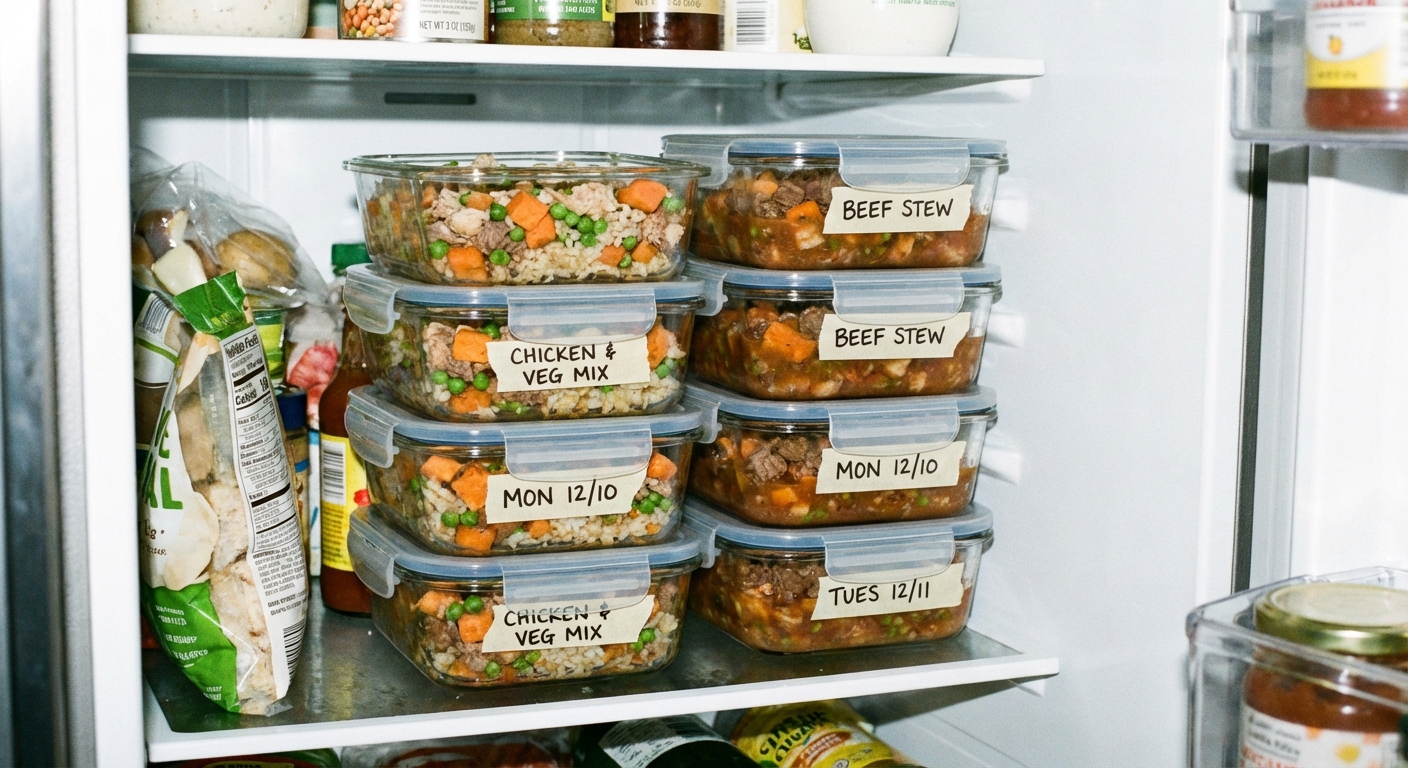
- Cook proteins thoroughly and cool food quickly before storing.
- Raw diets: Raw feeding carries additional pathogen risks for pets and people in the household. Discuss raw diets with your veterinarian before starting.
- Skip salt and seasoning. Dogs do not need it, and too much sodium can be risky.
- Store safely: Refrigerate portions for up to 3 to 4 days when stored promptly in airtight containers at 40°F/4°C or below. Freeze the rest in meal-sized containers.
- Warm gently: If you heat portions, stir and check temperature to avoid hot spots.
- Transition slowly: Mix new food into the old over 7 to 10 days to reduce stomach upset.
Ingredients to avoid
Some foods can be toxic or risky for dogs. Keep these out of homemade recipes:
- Onions, garlic, chives (risk is dose-dependent, but best avoided)
- Grapes and raisins
- Chocolate, xylitol, alcohol
- Macadamia nuts
- Cooked bones (splinter risk)
- Very fatty scraps (can trigger pancreatitis in some dogs)
If your dog gets into something questionable, call your veterinarian or a pet poison hotline right away.
How to make it complete
If homemade food will be more than an occasional topper, completeness matters. The most common gaps are not protein or vegetables. They are minerals, vitamins, and fatty acids.
Talk with your veterinarian about:
- A calcium plan: Many people ask about eggshell powder or calcium carbonate. These can work in the right amount, but the dose must be calculated for your recipe and your dog. Guessing is how imbalances happen.
- A vitamin-mineral supplement: Look for one formulated specifically for homemade dog diets, or use a veterinary nutritionist recipe that includes exact amounts.
- Fish oil dosing: Use a veterinary-directed dose. Human products vary widely in EPA and DHA content, and too much can cause diarrhea and other risks.
Nutrients commonly missed in DIY diets include calcium, iodine, vitamin D, vitamin E, zinc, copper, and omega-3s (EPA and DHA). This is why a premix or professional formulation is so valuable.
Practical takeaway: Homemade dog food can be wonderfully nourishing, but it should be thoughtfully built. A simple recipe plus the right supplements, correctly dosed, is often the safest path for long-term feeding.
Simple serving guidance
If you are just starting, think in small, measurable changes:
- Use as a topper: Replace 10 to 25% of your dog’s usual kibble with homemade food while you learn what works.
- Watch stool and energy: Loose stool can mean too much fat, too fast a transition, or an ingredient sensitivity.
- Track weight monthly: You should be able to feel ribs with a light touch, without seeing them prominently.
- If allergies are a concern: Keep it simple with a single protein and avoid changing ingredients frequently. If you are doing a true food trial, do it with your veterinarian’s guidance.
Frequently asked questions
Can I feed my dog homemade food every day?
Yes, but it should be nutritionally complete and balanced for your dog’s life stage. For many dogs, that means using a vet-formulated recipe that aims to meet AAFCO standards or working with a veterinary nutritionist to avoid deficiencies.
Is grain-free better?
Not necessarily. Many dogs do well with grains, and grain-free diets are not recommended unless there is a clear medical reason. Your veterinarian can help you decide.
What is the easiest protein to start with?
Plain cooked chicken or turkey is often a gentle starting point, but the best choice depends on allergies, fat tolerance, and your dog’s preferences.
Bottom line
Homemade dog food can be easy, nourishing, and genuinely enjoyable to make once you have a routine. Start with clear ratios, prioritize food safety, and work with your veterinary team if you plan to make homemade meals a daily staple. Your dog does not need complicated recipes. They need consistency, balanced nutrition, and your steady care.