
Homemade Dog Food Recipes That Are Easy and Nutritious
Starting your dog’s day with nourishing food can make a real difference in energy, digestion, coat shine, and even stool quality. I also tell my clients the same thing I tell families I work with: small, consistent habits add up. Homemade dog food does not have to be complicated, but it does need to be thoughtfully balanced.
Important note: This article is educational and not veterinary advice. If your dog is a puppy, pregnant, has kidney disease, pancreatitis, allergies, or is on medication, check with your veterinarian or a board-certified veterinary nutritionist before changing food.
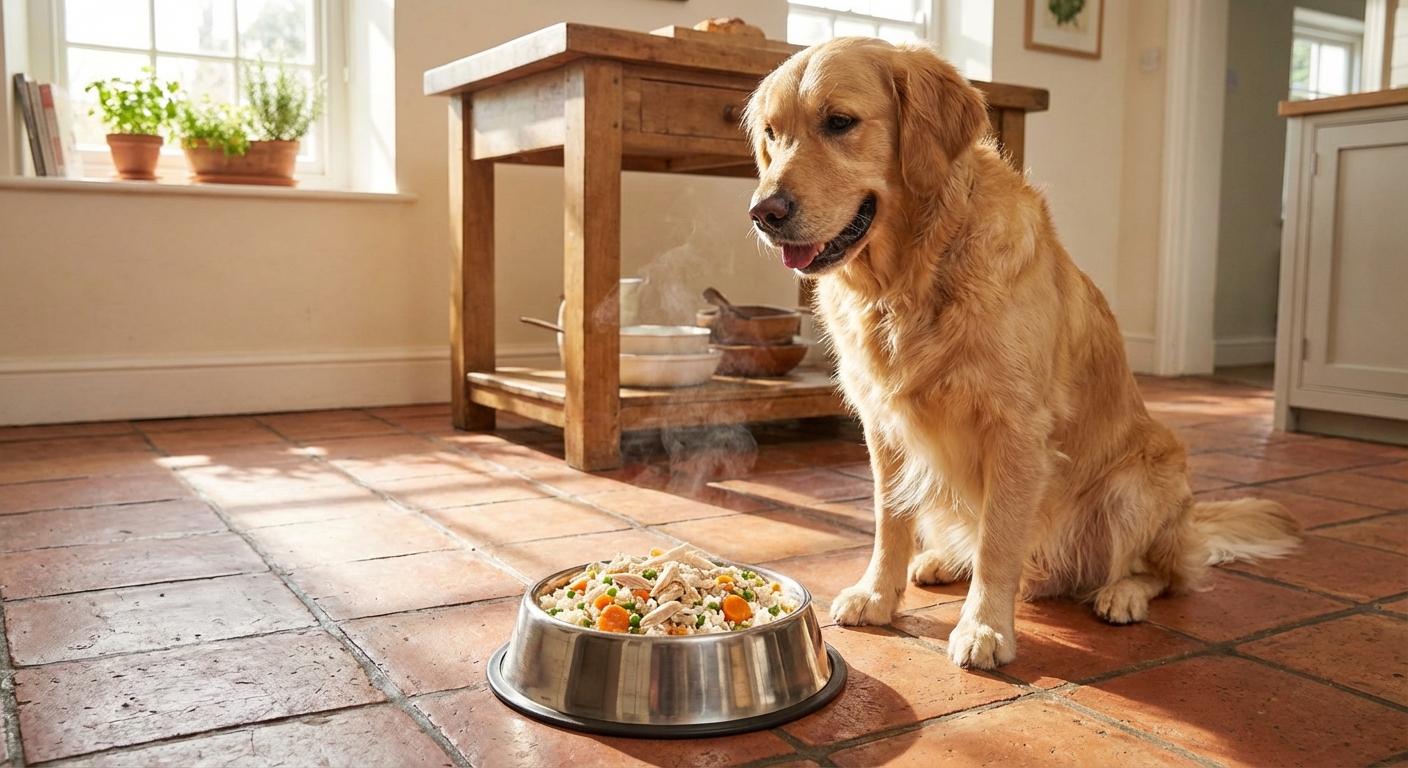
What “nutritious” means for dogs
Dogs thrive on a mix of protein, healthy fats, digestible carbohydrates, fiber, vitamins, and minerals. The biggest homemade pitfall is assuming that “real food” automatically equals “complete nutrition.” A balanced plan usually includes:
- Protein: chicken, turkey, lean beef, sardines, eggs
- Carbohydrates: rice, oats, potatoes, quinoa
- Vegetables and fiber: carrots, green beans, pumpkin, spinach
- Healthy fats: fish oil, small amounts of olive oil, fat from meats
- Calcium: a key missing nutrient in many DIY recipes
Calcium matters. When we cook meat at home without edible bones or a calcium source, the diet can become too low in calcium relative to phosphorus. Over time, that can impact bone and muscle health.
Also important: calcium is not the only nutrient that can run low in homemade diets. Iodine, vitamin D, vitamin E, zinc, copper, manganese, and essential fatty acid balance are also common gaps. This is why a veterinary vitamin-mineral mix (or a veterinary “balancer” designed for homemade diets) is often the simplest and safest way to make a recipe more complete.
Simple safety rules
- Avoid toxic foods: onions, grapes/raisins, macadamia nuts, chocolate, xylitol, alcohol, and cooked bones.
- Garlic: best avoided unless your veterinarian specifically recommends it. Garlic-related toxicity is dose-dependent, and it is easier to skip it than to guess.
- No seasoning: no salt, no pepper, no spice blends, no butter, and no fatty pan drippings.
- Go easy on fat: very rich meals can trigger pancreatitis in susceptible dogs.
- Cook thoroughly: especially poultry and eggs, to reduce (not eliminate) foodborne risk.
- Prevent cross-contamination: wash hands, knives, and cutting boards, and keep raw meat away from your dog’s bowl and treats.
- Introduce gradually: mix in increasing amounts over 5 to 7 days to prevent stomach upset.
- Keep portions consistent: sudden overfeeding is a common reason dogs gain weight on homemade food.
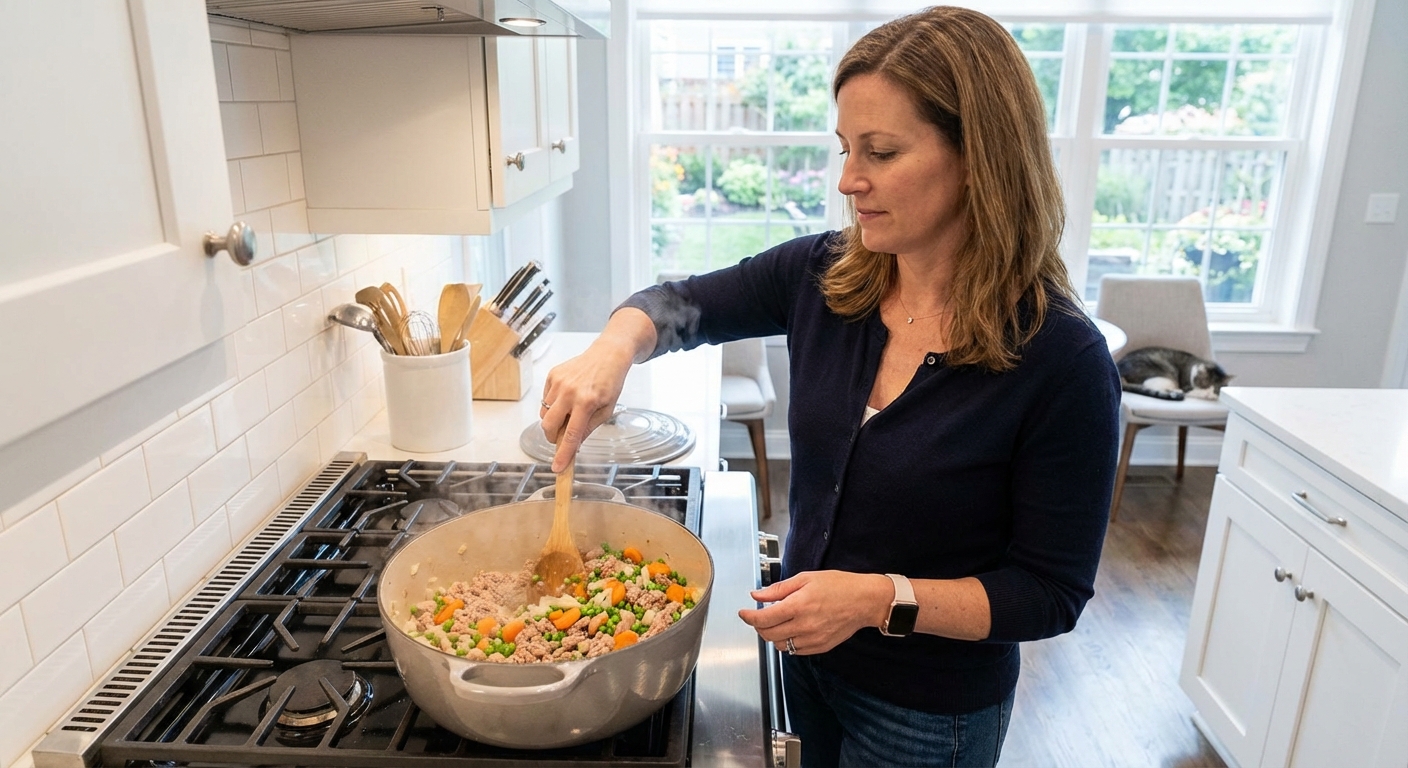
3 easy homemade dog food recipes
These recipes are designed to be straightforward and batch-friendly. For long-term feeding, work with your veterinarian to confirm your dog’s calorie needs and to choose a complete vitamin-mineral plan. Homemade calorie density can vary a lot, so the yield and calories below are estimates, not guarantees.
1) Turkey, rice, and veggie bowl
Why it works: Lean protein, gentle carbs, and fiber-rich vegetables. This is often a good “starter” recipe for dogs transitioning from commercial food.
- Protein: 1 lb ground turkey (lean)
- Carb: 2 cups cooked white or brown rice
- Veg: 1 cup chopped carrots and green beans (cooked until soft)
- Fat: fish oil per your vet’s dosing
- Calcium and micronutrients: add a veterinary vitamin-mineral mix (or other vet-approved plan) if feeding as a main diet
Approximate yield: about 6 cups of food
Approximate calories per batch: about 1,250 to 1,450 kcal (varies by turkey leanness and rice type)
How to make: Brown turkey in a pan, drain excess fat, then stir in cooked rice and cooked vegetables. Cool fully before serving. Refrigerate for 3 to 4 days (when kept cold and handled cleanly) or freeze portions.
2) Chicken, sweet potato, and spinach
Why it works: Many dogs do well with a simple chicken and sweet potato base, especially if they have a sensitive stomach.
Quick allergy note: chicken is a common trigger for some dogs. If your dog gets itchy or has recurring ear issues, talk with your vet about trying a different protein.
- Protein: 1 lb boneless, skinless chicken thighs or breasts (cooked and shredded)
- Carb: 2 medium sweet potatoes (baked or boiled, mashed)
- Veg: 1 to 2 cups spinach (lightly cooked and chopped)
- Bonus fiber: 2 to 4 tablespoons plain canned pumpkin (optional)
- Calcium and micronutrients: add a veterinary vitamin-mineral mix (or other vet-approved plan) if feeding as a main diet
Approximate yield: about 6 cups of food
Approximate calories per batch: about 1,100 to 1,350 kcal (varies by cut of chicken and sweet potato size)
How to make: Cook chicken thoroughly and shred. Cook sweet potatoes until very soft, mash, then mix with chicken and spinach. Let cool. Portion and store.
3) Beef, oats, and green beans
Why it works: Oats and green beans add fiber and fullness, which can help dogs that act hungry between meals.
- Protein: 1 lb lean ground beef (90% or leaner)
- Carb: 2 cups cooked oats
- Veg: 1 to 2 cups chopped green beans (cooked)
- Optional add-in: 1 egg (scrambled, fully cooked)
- Calcium and micronutrients: add a veterinary vitamin-mineral mix (or other vet-approved plan) if feeding as a main diet
Approximate yield: about 6 cups of food
Approximate calories per batch: about 1,350 to 1,700 kcal (varies by beef leanness and whether you add egg)
How to make: Brown beef, drain well. Mix with cooked oats and cooked green beans. Cool before serving.
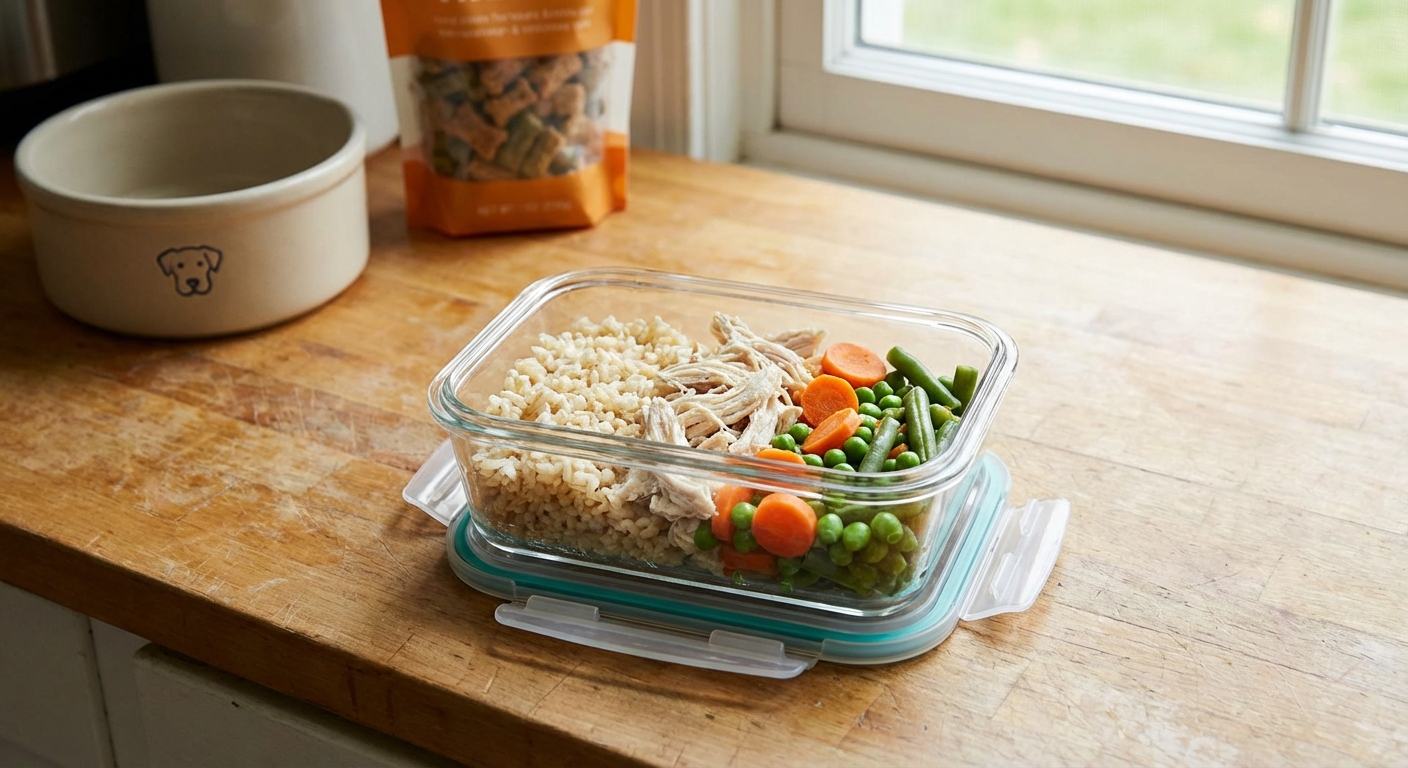
How much should you feed?
Calorie needs vary by age, size, breed mix, activity level, and whether your dog is neutered. Homemade foods also vary in calorie density, which is why recipe yield and estimated calories help.
As a rough starting point, many moderately active adult dogs do well around:
- Small dogs (10 to 20 lb): roughly 250 to 500 calories/day
- Medium dogs (25 to 50 lb): roughly 600 to 1,000 calories/day
- Large dogs (60 to 90 lb): roughly 1,100 to 1,800 calories/day
Those ranges are intentionally broad. The most practical approach is to watch your dog’s body condition: you should be able to feel ribs with light pressure, and your dog should have a visible waist when viewed from above. If weight is creeping up or down, adjust portions by 5 to 10 percent and reassess in about 2 weeks.
If you want a more personalized estimate, ask your veterinarian about using RER and MER (resting and maintenance energy requirement) calculations. It is a simple way to narrow down a starting calorie target.
Key add-ons for better balance
These are common, evidence-informed additions, but dosing and suitability depend on your individual dog.
- Fish oil (EPA and DHA): supports skin and coat and may help dogs with inflammatory conditions. Use a product made for pets and confirm dosing with your vet.
- Probiotics: may help some dogs with stool consistency during food transitions.
- Veterinary vitamin-mineral mix: the simplest way to help homemade diets meet micronutrient targets more consistently.
- Calcium plan: essential if you are not feeding edible bone and plan to use homemade food as the primary diet.
If you want to keep things truly “easy,” a veterinary-formulated supplement designed for homemade diets is often the most reliable step toward completeness.
Eggshell calcium basics
Some people use eggshell powder as a calcium source, but the key is safe prep and correct dosing. Too little calcium causes imbalance, and too much can create a different problem.
- Prep: rinse shells, remove the inner membrane if you can, bake at about 300 F (150 C) for 10 minutes to dry and reduce surface bacteria, then grind to a very fine powder.
- Amount: eggshell powder is concentrated. A level teaspoon often contains roughly 1,800 to 2,000 mg of calcium, but it varies.
- Best practice: get a veterinarian-recommended dose for your dog’s body weight and the specific recipe, or use a veterinary supplement that already includes calcium in the correct ratio.
Storage and meal prep
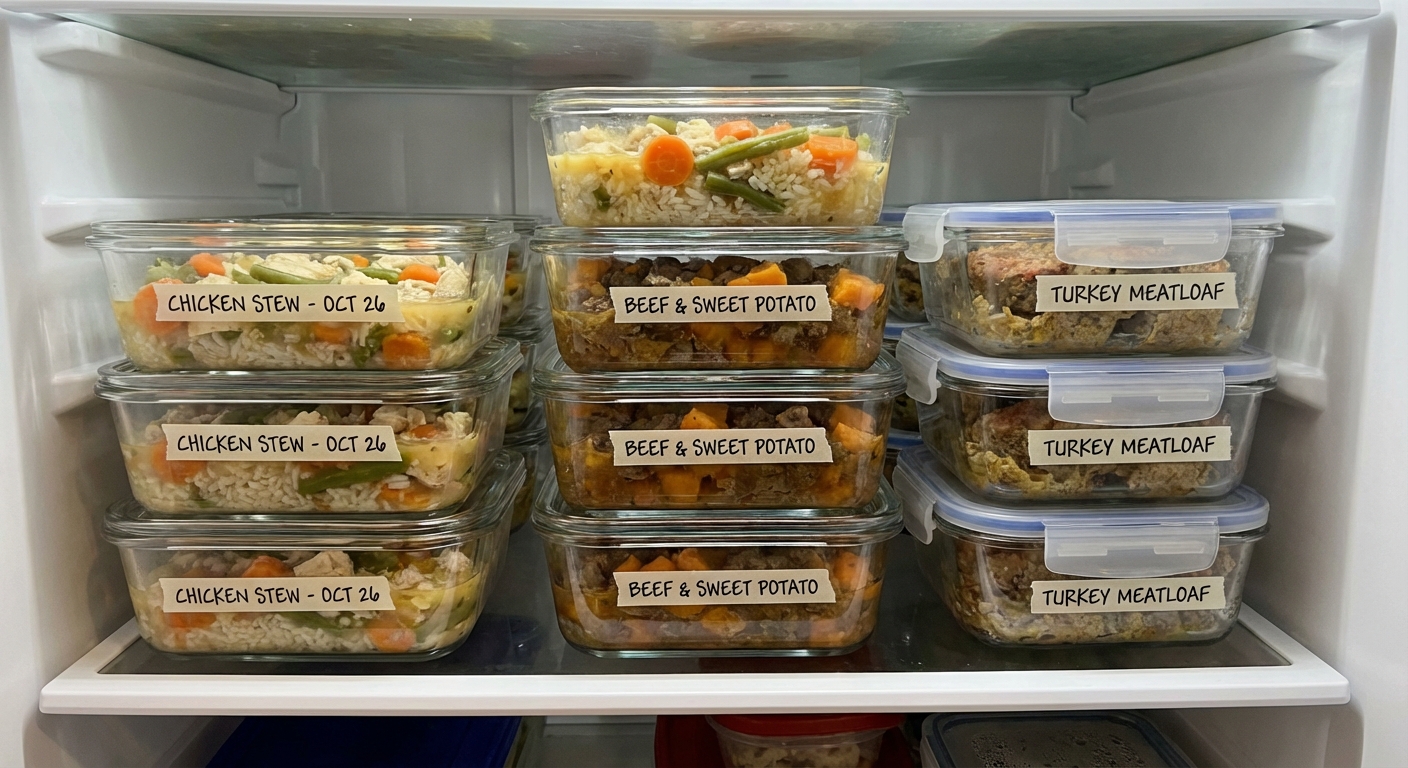
- Batch cook once: make 3 to 5 days at a time for the refrigerator.
- Freeze in portions: silicone molds or small containers help you thaw exactly what you need.
- Cool quickly: refrigerate within 2 hours for food safety.
- Keep it consistent: dogs often do best when the core ingredients stay stable.
- Track what works: note itchiness, stool changes, energy, or ear issues when trying new proteins.
When homemade may not fit
Homemade feeding can be wonderful, but it is not ideal in every situation. Consider extra professional guidance if your dog:
- Has pancreatitis or frequent vomiting
- Has kidney disease, liver disease, or heart disease
- Needs a therapeutic diet for bladder stones or severe allergies
- Is a growing puppy of a large breed, where mineral balance is especially critical
In these cases, a tailored plan is safer than guessing.
A realistic way to start
If you are new to homemade dog food, start with one recipe, keep ingredients simple, and transition slowly. Choose one supportive upgrade you can stick with, like batch cooking on Sundays or adding a veterinary vitamin-mineral mix to improve nutritional completeness.
Consistency is where the magic happens. You do not need perfection to make a meaningful difference for your dog, you just need a plan you can repeat.